Category: Weather

  • Recent Rains Helping Alleviate Parts of Florida’s Drought

    By Clint Thompson

    This week’s release of the U.S. Drought Monitor is expected to show improvement to Florida’s current drought conditions. That’s the belief of David Zierden, a state climatologist at Florida State University’s Center for Ocean-Atmospheric Prediction Studies.

    “I anticipate the drought monitor will show improvement, especially in north Florida. Right now, it seems the driest part of the state is down in southwest Florida, around the Big Cypress National Preserve and the Naples area. That’s looking to be the driest part of the state right now, after these recent rains,” Zierden said. “Now that we’ve been in this cycle of one storm after another and bringing frontal and low-pressure systems that bring rains to the state, we’re at least holding our own if not easing the drought situation.”

    Record Heat In March

    According to last week’s U.S. Drought Monitor, the central and southern parts of Florida were either in moderate drought or severe drought. It’s a continuation from March when there was little rainfall and extreme temperatures.

    “Especially the month of March was record-setting warm here in the state of Florida, like 7.1 degrees warmer than normal for March. For a state-wide average, it was definitely a record. On top of that, much of the peninsula, basically from Gainesville south, only received a few hundredths or a few tenths of an inch of rain during March. That’s what really accelerated the onset of drought quickly and pretty dramatically,” Zierden said.

    Water Shortage in SW Florida

    The drought has been so bad in the southwest part of the state that, according to a press release, the Southwest Florida Water Management District issued a Phase I Water Shortage for the District’s central and southern regions on Tuesday. This includes Charlotte, DeSoto, Hardee, Highlands, Hillsborough, Manatee, Pasco, Pinellas and Sarasota counties.

    The primary purpose for a Phase I water shortage is to alert the public that watering restrictions could be forthcoming.

    A Phase I water shortage order does not change allowable watering schedules, however it does prohibit “wasteful and unnecessary” water use.

     Zierden said the recent rains should ease the state into the summer thunderstorm rainy season.

    “These rains in April have really been important and help make this transition into the summer rainy season much easier than it would have been if we would have had a dry April,” Zierden said.
  • Farm Recovery Block Grant Deadline for Georgia Farmers is April 30

    disaster
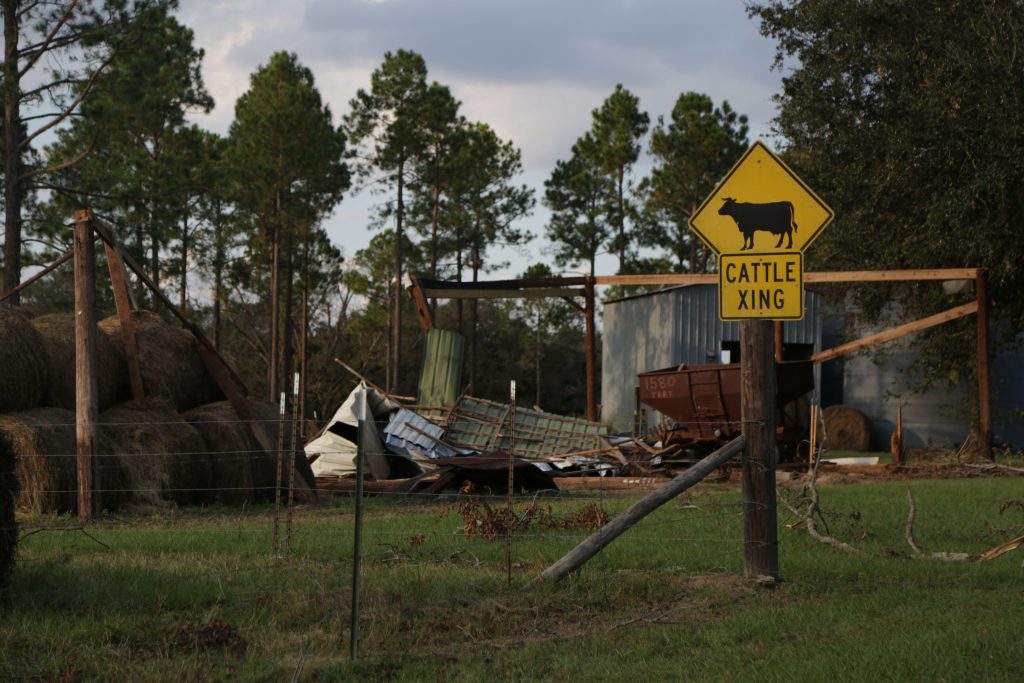
    Impact from Hurricane Michael.

    By Clint Thompson

    The Farm Recovery Block Grant deadline for Georgia farmers who were dealt financial losses by Hurricane Michael is Thursday, April 30.

    The Georgia Department of Agriculture is accepting online applications. The block grant funds include $347 million.

    This block grant program is designed to compensate producers for losses and expenses in seven categories of assistance, according to farm recovery. These include beef, dairy, fruit and vegetable, pecan, poultry, timber, and uninsured infrastructure.

    University of Georgia Cooperative Extension Ag economist Adam Rabinowitz believes all eligible farmers need to take advantage of the program.

    “Those block grants are really important for those who didn’t have any other assistance from USDA programs to recover from Hurricane Michael. It’s not your typical crop producers. It was some of your others in terms of trees and some infrastructure,” Rabinowitz said. “It certainly helps in a time when, just in general, we’re dealing with financial issues, continued recovery from Hurricane Michael and just real unknown. It’s essential to get those applications in by that extended deadline of April 30.”

    Georgia farmers and forest landowners in 95 eligible counties who suffered losses can enroll at farmrecovery.com.

    For more information and a guide to help prepare applicants for enrollment, visit farmrecovery.com.

    Hurricane Michael caused more than $2.5 billion in losses to Georgia’s agricultural sector, the state’s leading industry. This was according to estimates from the UGA Cooperative Extension agents and agricultural economists.

  • Long Drought Leads to Water Restrictions in One Florida County

    By Clint Thompson

    A water restriction has been placed on one Florida county because of the long drought. Gene McAvoy would not be surprised if more restrictions will follow.

    On Friday, the South Florida Water Management District (SFWMD) and Lee County announced mandatory irrigation restrictions. According to the press release, the restrictions were to address low aquifer levels. They went into place on Saturday.

     “On the coast, they rely a lot more on wells, well fields. Water levels in the aquifer has dropped to extreme levels. That’s why they started with Lee County,” said McAvoy, UF/IFAS Extension agent emeritus. “I haven’t seen anything like this (drought) since 2008.”

    Long Period of Dry Weather

    The most recent map of the U.S. Drought Monitor shows Florida either in abnormally dry, moderately dry or severely dry conditions. Lee County, whose county seat is Fort Myers, is experiencing a moderate drought and severe drought in different parts of its county.

    “We did have a little bit of rain in Southwest Florida (Sunday) night, but it was really (just) enough to settle the dust in most places,” McAvoy said.

    According to the press release, Florida’s southwest coast received only 14.72 inches of rain from September 2019 to March 2020. That’s a deficit of minus-7.64 inches. In March, the southwest coast recorded only 0.27 inches of rain, only 12% of average.

    Due to the extended drought and record heat, Florida agriculture has been negatively impacted.

    “I’m actually in a (citrus) grove right now. Because of drought stress and the record heat we’ve been enduring the past few months, the trees are shedding fruit,” McAvoy said. “Farmers are not able to harvest them quite as fast as the fruit is falling off the tree. (We) probably got two boxes per tree on the ground right now in the grove I’m in right now.”

    The current rainfall deficit, extreme heat and decreasing surface and groundwater levels are expected to continue throughout the remainder of the dry season. It typically ends around the end of May.

    In a previous VSCNews story, climatologists fear that the drought will get worse before it gets better.

  • UF Weather Alert Website for Farms now Mobile-Friendly, Among Other Updates

    By: Kirsten Romaguera, 352-294-3313, kromaguera@ufl.edu

    GAINESVILLE, Fla. — The Florida Automated Weather Network (FAWN) just relaunched its website with a new look and additional user-focused features. It is a University of Florida-operated service aiding agricultural decision-makers statewide since 1997.

    Larry Treadaway, coordinator of the Florida Automated Weather Network, adjusts equipment at a new monitoring station in Bronson, Fla. in 2017. The network includes 33 monitoring stations operated by UF’s Institute of Food and Agricultural Sciences, transmits real-time weather data to computers in Gainesville. Growers and others can access the data via phone or the FAWN Web site: http://fawn.ifas.ufl.edu.

    “Our main goal in revamping the site was to make it more efficient for users,” said Rick Lusher, UF/IFAS project manager for FAWN. “One of the most important changes is the now-seamless integration to mobile platforms, meaning users can access the same information straight from their phones.”

    The FAWN network includes 42 stations located from Jay to Homestead that record and report every 15 minutes. This includes information like air temperature, winds and rainfall. Some stations are even adding data from newer technologies like soil moisture sensors. Plans are being made to expand these offerings to more locations. Producers can use their nearest stations’ localized information to assist with critical decisions. These include crop and landscape irrigation, freeze protection, and chemical application.

    New Features

    Upon entering the new website, another new feature prompts users to allow location services to pinpoint the data to their nearest station. The website has always had a map feature. But Lusher explained that the site now utilizes interactive technologies that allow the user to filter for current conditions.

    Lusher consulted on ideas for the site with UF/IFAS faculty like Charles Barrett. Barrett is a regional specialized water resources agent based in Live Oak, Florida. He regularly advises growers on best practices given the information provided by the website.

    “The new look to the FAWN website makes it easier to access the data growers have come to rely on,” Barrett said. He advocated for the updates to create minimal disruption for regular users. “The changes streamline the use of the website. So it should be a better user experience. But with the same feel as the previous website.”

  • Drought Still a Problem for Florida

    The latest map from the U.S. Drought Monitor shows how dry conditions are in Florida and in parts of southern Alabama and Georgia.

    By Clint Thompson

    Even with much-needed rainfall this week and more expected this weekend, Florida remains in a drought; severe in some cases. The southern portions of the state and along the peninsula will remain drier than normal for the foreseeable future, according to Pam Knox, University of Georgia Cooperative Extension state climatologist, .

    “I’ve been watching the drought in Florida because we’ve had issues along the south border in Georgia. I know things have been worse in Florida. I heard David Zierden (state climatologist for the Florida State University Center for Ocean-Atmospheric Prediction Studies) give a talk about it this week. He thinks it’s probably going to get worse before it gets better,” Knox said. “I have a friend in Miami, and they’ve been setting records for the number of days in the 90s. I don’t see for most of the peninsula of Florida that they’re going to have big relief soon.”

    Much of the central part of the state, including Polk County and Hillsborough County, is classified in a severe drought or ‘D2’ status, according to the U.S. Drought Monitor, The majority of Florida is in ‘D1’ status or classified in a moderate drought.

    “Eventually the rainy season will come, and they’ll get some relief at that point. But in the meantime, it’s going to be pretty hard on producers, especially those who are growing forage or who need fairly moist conditions,” Knox said. “I don’t think there’s going to be short-term relief from the drought in the Florida peninsula.”

    In the northern part of Florida, as far west as Escambia County, across the state to Nassau County, conditions are a little better but still classified as abnormally dry, which is also the case for the southern part of Georgia.

    “It looks like to me the next couple of weeks are going to be fairly wet, not continuously wet, but I think we’re going to get two or three storms that will go through and bring us some rain,” Knox said. “For those areas, I think there will be some relief. But I think farther south in Florida, the front may not get that far and so they may be stuck in the warm and fairly dry air for at least the next couple of weeks until we switch into more of a summertime pattern.”

    The northern parts of Georgia and Alabama remain fairly wet as vegetable producers, especially those in Alabama, try to get their plants in the ground.

    According to the U.S. Drought Monitor, Mobile County and Baldwin County remain in moderate-to-severe drought status along the Gulf Coast.

  • N.C. State Specialist: Bumper Crop in Strawberries This Year

    By Clint Thompson

    The country’s No. 3 state in strawberry production is expecting a “bumper crop” this year, according to Mark Hoffmann, North Carolina State small fruits Extension specialist.

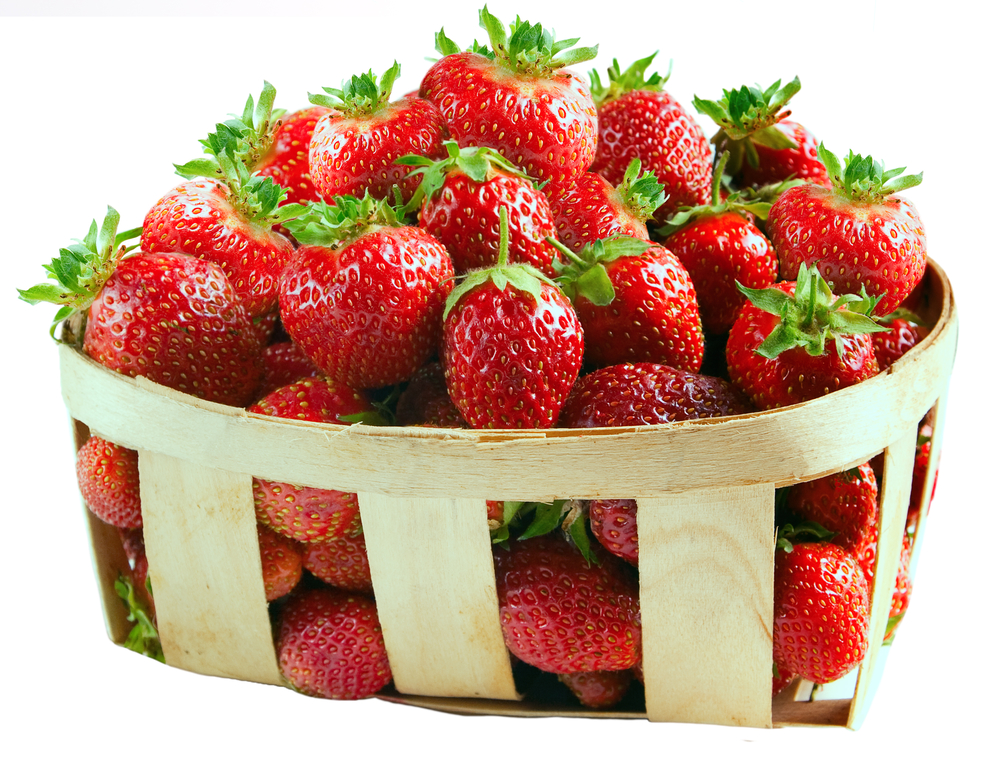
    Basket with fresh strawberries isolated on white background.

    “If the weather holds up, it’s going to be one of the best strawberry years in a long time,” Hoffmann said. “It’s a bumper crop right now.”

    Hoffmann made the comments before Thursday when a cold front moved through the area. Up until this week, though, the weather had been ideal for strawberry production.

    “We had good weather. We had a relatively mild winter. We didn’t have a lot of frost going on, just a few events where we had to cover. We’ve had a pretty good year so far, for strawberries,” Hoffmann said.

    While the crop appears to be bountiful, there is some uncertainty regarding sale of fruits and vegetables amid the ongoing coronavirus pandemic. Hoffmann appears confident his state’s strawberry producers will not have problems selling their crop.

    “With the whole COVID-19 situation, it’s very different right now. It looks like operations that can sell directly to customers, the direct-to-customer sales is something that’s picking up right now,” Hoffmann said. “Right now, I don’t think there’s a problem getting strawberries a home.”

    Hoffmann estimates that strawberries in North Carolina generates $26 million per year, which makes it the third largest in the country behind California and Florida.

    “It’s a great industry. I would say in the Southeast, it has a very good infrastructure. We have wholesalers and shippers. We have growers that have more than 100 acres. One has 150 acres of strawberries,” Hoffmann said. “I would estimate we have 300 to 400 growers in the state.”

    For more information about strawberry production in North Carolina, see N.C. State strawberry website.

  • South Carolina Strawberries Looking Good Despite Rainy Winter

    By Clint Thompson

    florida
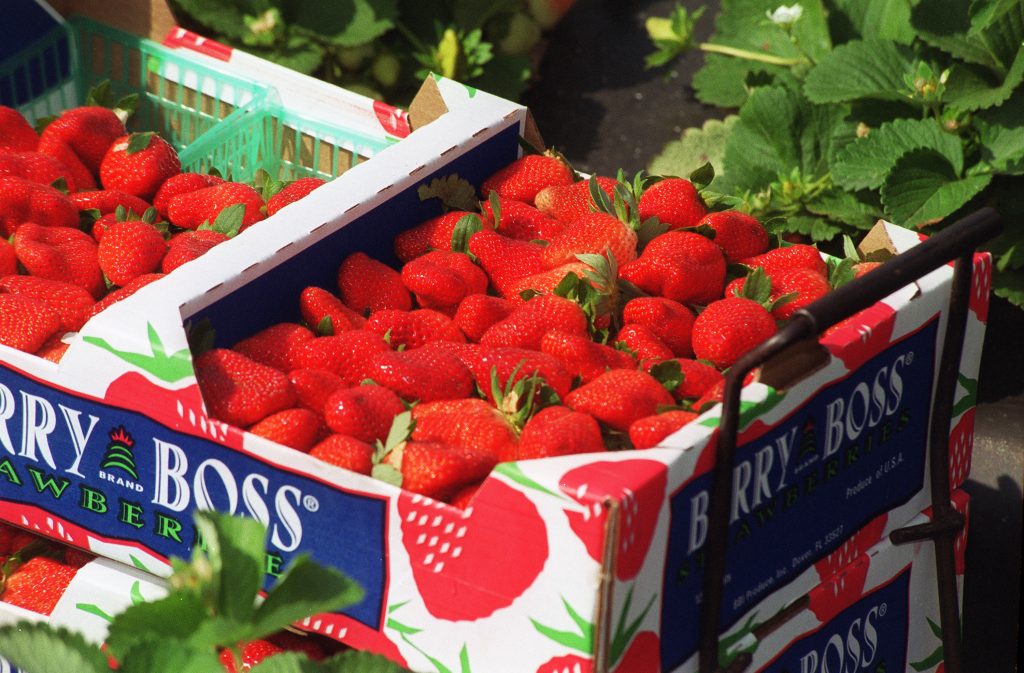
    Pictured is a file photo of fresh strawberries.

    A wet winter in South Carolina has presented challenges to the state’s strawberry producers. But South Carolina’s strawberry production is looking good this year despite the rainy winter, according to Bruce McLean, Jr., Clemson (S.C.) Extension area commercial horticulture agent for Dillon County, Horry County, Marion County and Malboro County.

    He said production this season is starting to pick up despite some disease issues associated with excessive moisture.

    “The quality looks really good,” McLean said. “Because of the wet weather that we’ve had; we’ve had some (disease) issues with botrytis (gray mold); angular leaf spot, we’ve seen in a couple of different areas; and also some anthracnose. For the most part, it seems like we were able to control it pretty well.”

    McLean said in his four-county area located in the northeastern part of the state, strawberry acreage is limited to smaller scale operations. He said there are approximately 10 to 12 strawberry farmers who tailor their crop to the retail market. All have had to deal with weather-related issues with this year’s crop. McLean said the rainfall totals have been “above normal.”

    “We’ve just had an excess of water and it’s really flared up the gray mold and anthracnose and angular leaf spot,” said McLean. He pointed out his area in South Carolina is not alone with production challenges.

     “Seems like everybody’s had very similar problems. The only other problem that we’ve really seen to any degree has been spider mites. It’s always kind of a perennial issue with strawberry production. It’s something that we are scouting for. Every time it seems like we have a hot spot, we identify it and make some recommendations and it quells it down a little bit,” McLean said.

  • Potential Frost Damage Could Impact North Carolina Grape Production

    By Clint Thompson

    Pictured are grapes and wine.

    Last weekend’s cold temperatures may have impacted North Carolina’s grape production this season. According to Mark Hoffmann, North Carolina State small fruits Extension specialist, he should know more in the upcoming days about the severity of any frost damage that may have occurred throughout the state.

    “The WineGrowers Association, they have a survey out to assess how much damage people are seeing. It’s going to take a couple of days before we know that,” Hoffmann said. “I know in the mountains they didn’t get a lot of frost. They didn’t get a lot of damage because they didn’t have a lot of shoot growth. In the lower areas, like the Yadkin Valley, they had shoot growth already two weeks ago. Pretty sure they got a lot of damage.”

    He said on Friday, April 10, temperatures dropped into the 30s in the Yadkin Valley, outside of the mountains in the Piedmont area. To know how to manage frost damage in grapes, see Hoffmann tips on frost management in grapes.

    “There’s so many other things in North Carolina that could impact yield production. If you get a lot of damage and you have to remove the shoot, then yes it will (impact yields). If you only have mild damage, then you might be okay,” Hoffmann said.

    Grape production in North Carolina

    Hoffmann said producers started harvesting two weeks ago in the eastern part of North Carolina. But the whole state should be picking at this point. Depending on how weather cooperates over the next month will impact how big the harvest window will be this year for grape producers.

     “If we have a good year, we can go ’til the end of June. In a bad year, it can be over in like mid-May already,” Hoffmann said. “If it gets humid pretty soon and if we get a large, heavy rain event, which happened two years ago in May; it was in 2018 I believe, in the second week in May, we had a large rain event and then the third week we had another large rain event that basically shut it down.

    “I would say April and the first two weeks of May, for sure, and then after that, I hope we have two to three more weeks.”

    Hoffmann estimates that more than 1 million bottles of wine are produced every year in the state and there are 1,500 acres of grape production in state.

    “Ten years ago, it was much smaller than that. We’re growing a lot. We have about 180 wineries which produces wine. The last 10 years it grew about 50%. It’s a pretty large industry,” Hoffmann said.

  • High Rainfall Probabilities Look Promising for Florida Agriculture

    By Ashley Robinson

    There may be light at the end of a dark and dry tunnel for Florida farmers with increased chances of rainfall over the upcoming week.

    According to the U.S. Drought Monitor, the majority of Florida is classified as moderately dry.

    According to Gary England, RSA/Director for the Hastings Ag Extension Center in Hastings, Florida, the same weather system currently ushering severe weather into the Southeast will elevate rainfall chances in the Hastings area beginning today.

    “The one system moving through right now is supposed to go stationary, meaning it will hang around, keeping things mixed up. So, we’ll have a pretty good chance of rain from that through Wednesday.”

    The front is expected to move south down the peninsula Thursday and stall once again, somewhere near the Big Lake, thus keeping a chance of some showers in northeast Florida through Friday. In addition, a second front is expected to pass through the region on Saturday, stalling in central Florida. This will keep rainfall chances moderate to high through the weekend. 

    According to the National Weather Service’s Weather Prediction Center, the Hastings area can expect to see 1.0 to 2.0 inches of rainfall through next Monday.

    “It seems like the regions who are experiencing the worst of the drought are in the areas we’re expecting some rainfall,” England says. “However, that still has to materialize. These stationary fronts may be predicted to be in one place but could remain 50 miles south or north. Rain chances can dramatically change so we’ll have to see how it plays out over the next week.”

    Lack of rainfall for the months of March and April have caused concerns for Florida farmers.

    According to the U.S. Drought Monitor, the state of Florida is experiencing abnormally dry or moderate drought conditions. Most of Wakulla County, Florida and parts of Liberty and Franklin County, Florida are deemed ‘D2’ status which is a severe drought.

    GROWERS CONCERNS

    Florida’s growers are no strangers to dry spells and having to utilize irrigation systems during periods of less than average rainfall. However, applying more irrigation than normal can create additional issues for growers on top of the high costs to operate the irrigation systems. 

    “Generally, we’re pumping water out of the Florida Aquifer. The chemistry of the water in the Hastings area tends to be a little more saline. So, with extended periods of irrigation you could see some harmful effects from that,” England says.

    In addition, increasing temperatures could be troublesome for growers.

    “It’s not always uncommon for March or April to be fairly dry. However, what we’re seeing in this situation is very warm temperatures,” England says. “We’ve had dry March’s and April’s, but the high temperatures were in the 70’s and low 80’s. These warm temperatures that we’re seeing during this dry period can move the crop ahead, possibly maturing a week or so ahead of time.”

  • Crop Insurance Hurricane Endorsement Offered

    The U.S. Department of Agriculture’s Risk Management Agency (RMA) has announced a new crop insurance endorsement, Hurricane Insurance Protection – Wind Index (HIP-WI). HIP-WI covers a portion of the deductible of the underlying crop insurance policy when a county, or adjacent county, is within the area of sustained hurricane-force winds.

    HIP-WI provides coverage for 70 different crops, including all citrus, insured under the Common Crop Insurance Policy, Basic Provisions for both Catastrophic and additional coverage policies.

    April 30 is the deadline to purchase HIP-WI coverage for the 2020 crop year. Crop insurance is sold and delivered solely through private crop insurance agents.  

    “This new hurricane endorsement provides some added protection for producers along the Gulf and east coasts as well as Hawaii,” said RMA Administrator Martin Barbre. All of Florida and Louisiana are on a map of available counties, along with parts of other states bordering the Gulf of Mexico. Parts or all of the states along the east coast are also on the map.

    To be eligible for the HIP-WI Endorsement, growers must have an insurance policy under the Basic Provisions with the same insurance provider and elect a HIP-WI coverage percentage.

    In the initial year HIP-WI is elected, coverage will not begin until 14 days after the sales closing date. If the underlying crop policy also requires a waiting period, the wait periods will run concurrently.

    Growers are not required to submit acreage reports for HIP-WI, because HIP-WI uses the underlying policy’s acreage report.

    “The full value of the HIP-WI Endorsement is paid if a county, or adjacent county, is within the area of sustained hurricane-force winds from a named hurricane based on data published by the National Hurricane Center,” a notice from RMA stated. “It is possible that your individual farm may experience reduced revenue or reduced yield due to hurricane-related causes and you do not receive an indemnity under HIP-WI.”

    Crops include: Wheat, Blueberries, Onions, Canola, Oats, Rice, Avocados, Pecans, Cotton, Cotton Ex Long Staple, Macadamia Nuts, Macadamia Trees, Forage Seeding, Forage Production, Peaches, Sugarcane, Corn, Sweet Corn, Fresh Market Sweet Corn, Processing Beans, Grain Sorghum, Grapes, Apples, Cranberries, Hybrid Corn Seed, Green Peas, Cabbage, Nursery (FG&C), Nursery Value Select (NVS), Peanuts, Sunflowers, Clary Sage, Hybrid Seed Rice, Soybeans, Peppers, Potatoes, Fresh Market Tomatoes, Tomatoes, Barley, Rye, Fresh Market Beans, Clams, Cucumbers, Sweet Potatoes, Tangerine Trees, Grapefruit, Lemons, Tangelos, Orange Trees, Grapefruit Trees, Lemon Trees, Lime Trees, All Other Citrus Trees, Avocado Trees, Carambola Trees, Mango Trees, Oranges, Flue Cured Tobacco, Fire Cured Tobacco, Burley Tobacco, Maryland Tobacco, Dark Air Tobacco, Cigar Filler Tobacco, Cigar Binder Tobacco, Cigar Wrapper Tobacco, Banana, Coffee, Papaya, Banana Tree, Coffee Tree, Papaya Tree, Pecan Tree, Mandarins/Tangerines, Sesame, Tangors, Limes, Hemp