Category: Weather

  • Cristobal Expected to Bring Rain to Southeast

    By Clint Thompson

    Tropical Depression Cristobal’s expected movement into the Gulf of Mexico should bring much-needed rainfall to North Florida and South Alabama. Pam Knox, University of Georgia Cooperative Extension Agricultural Climatologist, says rains over the next week should alleviate some of those drought conditions.

    Map from the National Hurricane Center and Central Pacific Hurricane Center shows Cristobal’s expected path this weekend.

    “The whole Florida Panhandle and then stretching west into the Mobile (Ala.) area has been quite dry. So, they were missed by a lot of the storms that hit north Georgia and north Alabama. They’ve been fairly dry,” Knox said. “They’ve gotten a little bit more relief lately but it’s still dry there. I’ve seen some reports of fires in the area and continuing problems with the dry conditions.

    “The latest seven-day forecast for rainfall, which includes the rainfall that’s coming from Cristobal, looks like the southern part of Georgia and Alabama and the whole panhandle of Florida and really all of north Florida is going to be affected by the rain from this.”

    According to the U.S. Drought Monitor, all of north Florida is either in abnormally dry, moderately dry or severe dry conditions. It’s also the case for southwest parts of Alabama.

    Cristobal is already the third named storm of the season. Knox said the average date for the first sea storm is Aug. 13 so it’s already a real active storm season. But she cautions weather enthusiasts that just because it’s active now doesn’t mean it will stay that way over the course of summer and into fall.

    “All of the ingredients are there for it to be an active season. We’re in neutral conditions and looks like we’re going to go into a La Nina. That definitely correlates with an active season in the Atlantic. 2019 was active but we only had a couple of storms that affected the Southeast. Even though it’s active, it doesn’t necessarily mean it’s going to be big impact for the Southeast. It could,” Knox said.

    While tropical storms and hurricanes can be intimidating with their heavy rains and fierce winds, Knox reassures that they are necessary to replenish dry soils.

    “Tropical storms have an important role to play in the Georgia climate because maybe up to 30% of our summer rain comes from these tropical systems. If we don’t get tropical storms, we could easily go into a drought,” said Knox, who described how Cristobal works. “If you think about how a tropical storm spins, it’s counter-clockwise. It’s going to move west of us most likely. That means we’re going to be in strong flow of air coming up from the south. It’s very juicy air. It’s going to really help set off a lot of rain.

    “Some of the forecasts for rain in the Florida Panhandle, we’re looking at 5 to 7 inches or more of rain over the next week. A lot of that’s going to come right ahead of Tropical Storm Cristobal.”

    Knox said north Alabama and north Georgia aren’t expected to receive as much rain.
  • Persistent Rains in South Carolina Cuts Short Strawberry Season for Some Growers

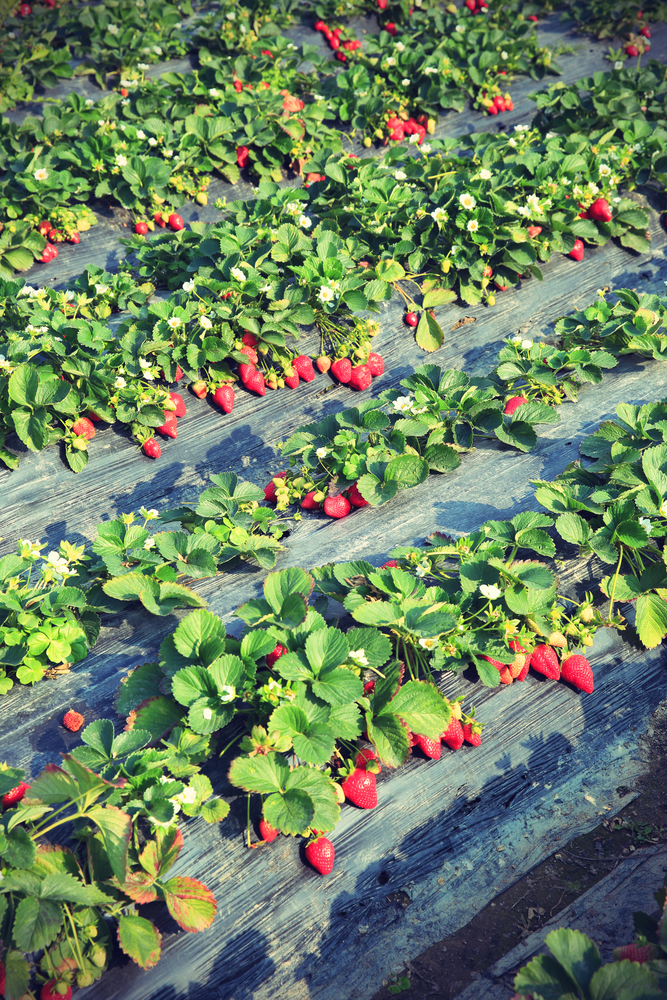
    File photo shows a strawberry field. Strawberries in South Carolina have been impacted by excessive rainfall.

    By Clint Thompson

    Excessive rainfall in South Carolina has cut short strawberry season for parts of the state, says Bruce McLean, Clemson (S.C.) Extension area commercial horticulture agent for Dillon County, Horry County, Marion County and Malboro County in the Pee Dee Region.

    “Last week, in certain spots was just torrential rains,” McLean said. “A lot of the fruit that I saw looked really good, but that rain, it wiped it out. There was just so much water damage on it. It really took out a lot of that late fruit that was coming on.

    “There’s still some fruit coming on but it’s to the point now, everybody’s basically having conversations now as far as is it worthwhile and is it time to go ahead and terminate the crop and go ahead to try to plant something else?”

    Rain is Everywhere

    Rain has been persistent in other parts of South Carolina as well. According to the South Carolina Grower, Justin Ballew, Clemson Extension agent in the Midlands, reported that rainfall has slowed strawberry picking and there were plenty of fruit that experienced water damage.

    “Botrytis is loving all the moisture. Most fields look like they will keep producing for a few more weeks. Just stay on top of fungicide programs. The moisture and warm temperatures have most other crops growing rapidly and looking good. Keep an eye out for disease,” Ballew said in the South Carolina Grower.

    According to McLean, rain is becoming widespread.

    “We’ve seen one place, even on some heavier ground, the grower was still able to go through and do a little plowing and run the cultivator a little bit and was having real good success trying to clean up some fields. But yet, you go a mile or two down the road and there would be water running out the ditches,” McLean said. “It’s one of those weird things that we’re having. It seems like the following day, the rain pattern shifts around a little bit and some of the areas that weren’t getting the heavy rains from the day before, all of a sudden they’re seeing heavier rains. It’s becoming more widespread.”

  • Challenging Season for South Georgia Agriculture

    By Ashley Robinson

    South Georgia farmers have been on edge as weather and impacts from the coronavirus pandemic (COVID-19) have taken a toll on their crops.

    “2020 has been a tough year overall for our growers,” says Andre da Silva, University of Georgia (UGA) Cooperative Extension vegetable specialist.

    COVID-19 Impacts

    South Georgia farmers have had their fair share of difficulties over the last few years. Hurricane Michael hit Georgia in 2018 causing $2.5 billion in crop damage, and 2019 brought Chinese tariffs that damaged trade and prices. Now, farmers are facing even more devastating impacts with COVID-19.

    According to da Silva, some growers have had to leave their ready-to-harvest produce sitting in the field.

    “Farmers weren’t able to get enough labor to harvest their crop or they weren’t able to sell their produce because there wasn’t a market to sell to. A lot of our farmers sell to restaurants and schools, so they saw the greatest impact once everything shut down. Our sweet corn growers’ biggest markets were schools, so when schools completely shut down due to COVID-19, they were greatly affected,” da Silva says.

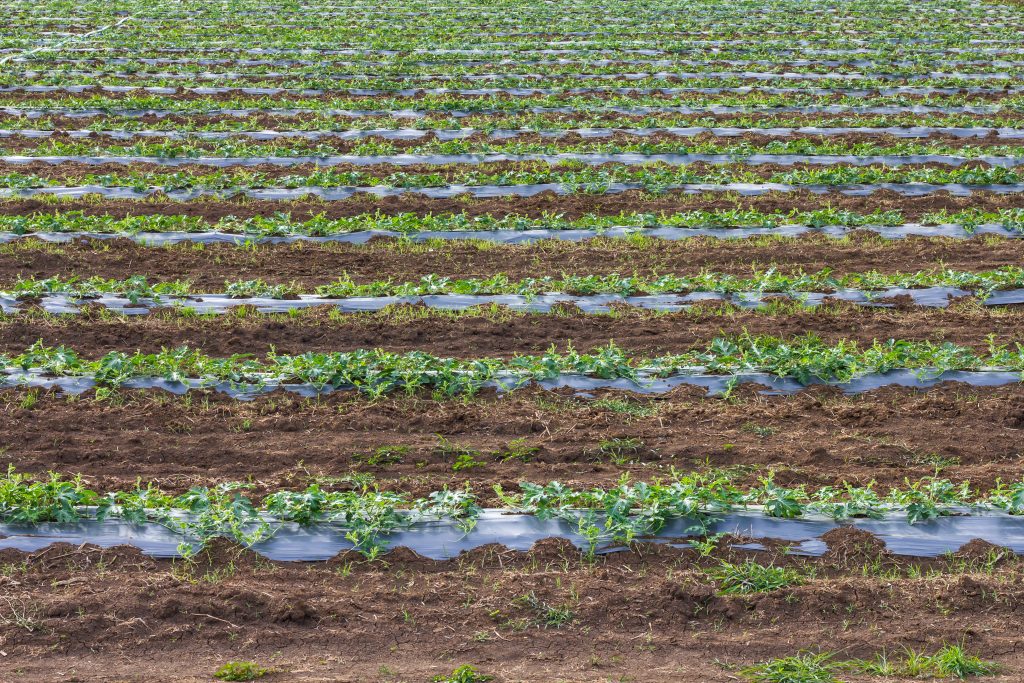
    watermelon
    Watermelons have been a crop impacted by the cooler temperatures in May.

    Unusual Weather Impacting Crops

    In addition to seeing impacts from COVID-19, Georgia has endured unusual weather this Spring.

    “We had very warm conditions in March, but the past three or four weeks we have had some impacts from the cold front. We’ve had nighttime temperatures of 47 to 49 degrees F, which isn’t good, especially for our watermelon growers,” da Silva says.

    According to da Silva, watermelon growers planted their crop at the end of March or early April, thinking the crop would do fine because of the higher temperatures. However, when the cold front arrived, the cool nighttime temperatures didn’t allow plants to bloom. While plants should be blooming and fruit should be setting right now to target the 4th of July market, this isn’t the case.

    “Watermelons are tough plants though. With warmer temperatures ahead, they will make a comeback. But I do predict that watermelon harvest will be delayed about a week or two this year because of the cold temperatures we received,” da Silva says.

    In addition to uncommon temperatures, South Georgia has experienced other unfavorable weather events.

    South Georgia has endured two tornadoes this spring. One of which crossed through the middle of a UGA Extension trial evaluating cabbage varieties. It caused significant damage. Additionally, they’ve also experienced a lot of rain accompanied by wind that has damaged crops.

    “We’ve also seen a lot of damage from sand blasting, cracking the plant’s leaf, leaving openings for diseases to enter. Also, the rainfall accumulation induced nutrient leaching, so growers have had to bump up their fertility program to reduce the impact on yield,” says da Silva.

  • Showers Soak North Carolina During Stormy April

    Posted by Corey Davis

    Rain was widespread in April in North Carolina. According to the N.C. State Climate Blog, the National Centers for Environmental Information (NCEI) reports a statewide average precipitation of 5.15 inches, which ranks as the 17th-wettest April since 1895.

    The highest totals came in the Mountains from a series of moisture-rich cold fronts that moved in from the west and southwest. The wettest site in the state, Highlands, recorded 12.73 inches for the month, while in the northern Mountains, Boone had its wettest April since 1982 with 11.70 inches.

    The western Piedmont also picked up heavy rainfall. In Mount Airy, it was the wettest April out of 120 years of observations with 8.84 inches of precipitation. Charlotte had 7.10 inches and its 6th-wettest April on record, and Gastonia had 6.33 inches for its 5th-wettest April since 1931.

    Latest U.S. Drought Monitor shows North Carolina is drought free.

    Dry Areas

    The driest spots were across parts of the Coastal Plain that didn’t see the same coverage of heavy rainfall, but even these sites finished the month close to normal. In New Bern, the monthly precipitation total of 2.84 inches was just 0.3 inches below normal.

    The southern coast did see the bulk of the severe weather activity on April 13 during that morning’s tornado outbreak. A total of 16 tornadoes were confirmed across the state that day, including nine EFOs, six EF1s, and one EF2.

    While those were the only tornadoes in North Carolina last month, it was still an active month for thunderstorms. The National Weather Service issued a total of 473 severe thunderstorm warnings across the state — the most in a single month since last August. It’s also an impressive total considering there were just five severe thunderstorm warnings in the state in March.

    Drop in Temperatures

    March may have ended with temperatures approaching 90 degrees F in parts of the state, but that extreme heat was non-existent in April. NCEI notes the statewide average temperature last month was 57.5°F, which was the 53rd-coolest April out of the past 126 years.

    Most sites finished the month with average mean temperatures within a degree or two of normal. The coolest sites were in the rain-soaked parts of the Mountains, including Jefferson, which tied for its 4th-coolest April out of 88 years with data.

    Along with cloudy, wet weather keeping temperatures down, pronounced troughing in the jet stream over the eastern US persisted throughout the month, which contributed to the overall unsettled April pattern.

    For full story, see N.C. State Climate Blog.

  • N.C. State Specialist: Weekend Frost Damages Some Grapes

    By Clint Thompson

    North Carolina State small fruits Extension specialist Mark Hoffmann confirmed that grapes in his state experienced frost damage during last weekend’s cooler temperatures. The state’s strawberries appear to have escaped damage.

    Hoffmann

    “We got lucky for the most part and didn’t see a lot of damage in strawberries. Still a pretty strong strawberry season,” Hoffmann said. “But we had more frost damage in the mountains on grapes. I expect some crop loss this year due to frost damage on grapes.” 

    Freeze warnings and frost advisories were issued for different parts of North Carolina. Heading into the weekend, Hoffmann expected that strawberry growers would implement row covers on their crop. Row covers help reduce radiation in the field and provide adequate frost protection from temperatures in the 30s. Strawberry production is currently in mid-season. If row covers were not used, the low temperatures could have harmed the open blossoms that are still on plants, which lead to late-season fruit. Temperatures could also harm the actual fruits in popcorn stage and other green fruits.

    He also confirmed this was the third frost event for the state’s grape crop. It was especially vulnerable this time since it is late in the season.

    Hoffmann estimates that more than 1 million bottles of wine are produced every year in the state and there are 1,500 acres of grape in state.

  • Hot, Dry Weather Impacts Florida’s Tropical Fruits

    By Clint Thompson

    Florida’s hot and dry weather this winter and spring has impacted its tropical fruits, according to Jonathan Crane, University of Florida tropical fruit crop specialist. From lychees to avocados and mangos, none were immune to high temperatures over the past few months.

    Lychees

    Lychee requires exposure to cooler temperatures. If they don’t get much of that, they don’t bloom very well.

    “The fact that we’ve had very warm winter; November, December and January, this has affected the natural bloom for lychee. They don’t flower much when that happens, when it’s too warm for too long. The fruit set on that is down, not everywhere, but I’m talking about in South Dade, mostly,” Crane said. “North of us, some of the other counties, Martin, Palm Beach and others, they get more cool weather. So, they’re probably okay, I’m not sure. Certainly, in Dade County, it’s been too warm of a winter to have good fruit set for lychee.”

    Avocados and Mangos

    As for mangos and avocados, they require a period when they’re not growing or are just dormant.

    Avocados

    “For some of our avocados, the bloom and fruit set was affected by the very high temperatures; the dry climate, low humidity, lack of rainfall even if you were irrigating. This has affected some of the fruit set on some of the early varieties of avocados,” Crane said. “It is not everywhere and in not all varieties and not in all locations but on some of them. There was some effect on the avocado bloom.

    “(For mangos) it looked like we were going to have a good bloom but it’s been sort of spotty. We sort of had two or three smaller blooms. Most of what I see out there didn’t set all that well. Not exactly sure what’s going on with that because usually they set pretty well. This year, the set hasn’t been as good as previous years, and I suspect again it’s because of the warm weather. They do require a period of no growth in order to flower. If we stay warm, then what happens is the flowers are mixed in with leaves and it’s generally not as good.”

    High Winds

    Mangos

    Crane also attributes high winds to a low fruit set.

    “Another thing that happens is if it’s very hot and dry, especially if it’s windy … just the banging of the flowers into the leaves and stems knocks the flower buds off and knocks the small fruit off,” Crane said.

    Crane said lychees will be harvested beginning in June. Avocados and mangos will begin to be harvested at the end of May.

  • Presence of Powdery Mildew a Concern for Southeast Vegetable Growers

    By Clint Thompson

    Powdery mildew disease is present on older squash in various vegetable fields across South Florida. According to the South Florida Vegetable Pest and Disease Hotline, respondents report that the disease has also started to show up on watermelon crops across the region as well.

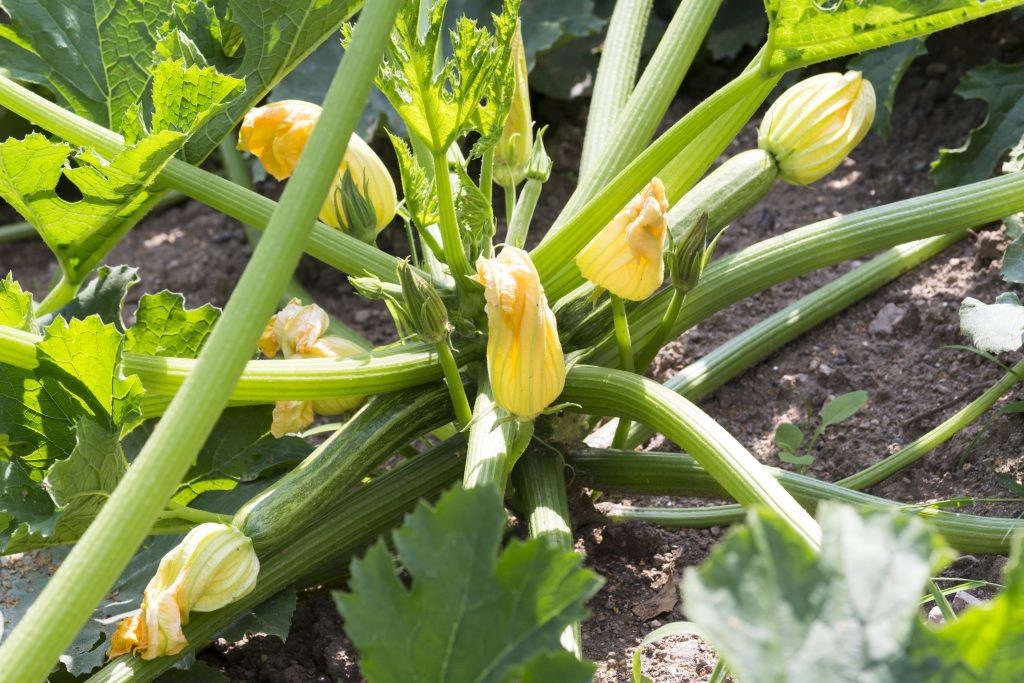
    File photo shows squash growing on a plant. Powdery mildew disease is present on some squash plants in South Florida.

    It’s also reported that powdery mildew is showing up on squash and cantaloupe in the Manatee Ruskin area.

    The disease thrives in high humidity, making the Southeast region a prime target for powdery mildew. Places in Georgia, Florida and Alabama are especially vulnerable the next two weeks. Temperatures in Tifton, Georgia are expected to go back up into the 80s this week and 90s next week. And there’s little to no chance of rainfall. It’s the same forecast for Mobile, Alabama, whose best chance of rain is a 40% chance on Monday, May 18 and Saturday, May 23. Temperatures in Tampa, Florida are going to be in the high 80s the next two weeks.

    The disease can develop rapidly under these favorable conditions.

    Disease Symptoms

    Symptoms on watermelon plants appear as yellow blotches on the oldest leaves first.  If the disease is left untreated, the fungus spreads to the entire leaf. These blotches become bronzed and turn dark brown or purplish as the disease progresses during the season. Eventually the leaf dies and has a crisp texture.

    Powdery mildew normally appears in the middle of the production season. Preventive treatments can help maximize the crop’s yield potential and prevent plant damage. Growers need to scout fields regularly to know if the disease is a factor in their fields.

    There are some vegetables that can tolerate or are resistant to the disease. Most commercial cucumber varieties grown in Florida have acceptable levels of resistance.

    Podosphaera xanthii and Erysiphe cichoracerarum, are the two pathogens that cause powdery mildew disease on cucurbits, particularly cucumbers, year-round. P. xanthii is an aggressive pathogen that attacks during warmer months. E. cichiracearum strikes during cool spring and early summer.

  • Expected Temperature Drop in N.C. Leads to Extra Protection for Strawberries

    A file photo shows a strawberry field.

    By Clint Thompson

    Potential freezing temperatures this weekend in North Carolina could impact strawberry production. Unless farmers utilize row covers for protection.

    According to Mark Hoffmann, North Carolina State small fruits Extension specialist, row covers, which help reduce radiation in the field should provide adequate frost protection from temperatures in the 30s on Saturday and Sunday.

    “It looks like in most areas, what’s happening is that if the wind slows down Saturday night to Sunday and we have no cloud cover, that’s probably the most critical time. When it’s Sunday morning and still dark and there’s a lot of radiation, that’s probably the most critical time. With row covers, they will be safe,” Hoffmann said.

    Low Temps

    According to weather.com, temperatures are forecast to drop to as low as 39 degrees on Sunday morning in Raleigh, North Carolina. Temperatures that low are abnormal this late into May for that part of the world.

     “It’s pretty late. I wasn’t expecting it. We were not recommending taking the covers out of the field because we had seen such odd weather patterns this year. It’s very, very late,” Hoffmann said. “Most of the growers had taken their row covers out of the field. They have to put them back in over this weekend.”

    Strawberry production is currently in mid-season. If row covers are not used, the low temperatures could harm the open blossoms that are still on plants, which lead to late-season fruit. Temperatures could also harm the actual fruits in popcorn stage and other green fruits.

    The drop in degrees this weekend could also impact the state’s grape production.

    “This is the third frost event to affect grapes this year already. Usually they grow out of it. This is pretty late in the season again. Unless you have a sprinkler system or wind machine, there’s not a lot you can do, unfortunately,” Hoffmann said.

  • Frost and Freeze Protection for Vegetable Crops

    Written By Chris Gunter, N.C. State Extension Vegetable Production Specialist

    Weather predictions for this weekend include clear skies with minimal or calm winds, which are conducive to cold temperatures and could lead to freeze or frost conditions in North Carolina.

    On Sunday morning, May 10,  low temperatures are predicted to drop into the 30s with some temperatures possibly below freezing in low lying rural areas. Record low temperatures for May 10 are in the lower 30s at the Greensboro and Raleigh-Durham locations, and 39 ºF at Fayetteville. Not only are daily low-temperature records threatened, but the latest spring freeze on record is May 10 for Raleigh (31 ºF) and May 8 for Greensboro (32 ºF).

    Frost

    As cold temperatures are threatening, agents and specialists are getting calls from concerned vegetable growers worried about potential damage on their crops. A frost occurs when temperatures dip to 32 ºF and water starts to freeze on low lying surfaces. If water within the plant cell or between the plant cells freeze, this can result in damage to plant tissue. The following vegetable crops can be grouped according to their cold tolerance based on their physiology. It is important to remember that cold damage results from the actual temperature and the duration of that temperature.

    We usually think of frost as occurring at temperatures from 31-33 ºF and this will result in damage or killing the foliage of warm-season plants like beans, corn, cantaloupe, cucumbers, eggplant, okra, southern peas, peppers, potatoes, sweet corn, sweetpotatoes, squash, tomatoes, and watermelon.

    When temperatures dip below 26-31 ºF, this is a hard frost or freeze. There are cool-season crops that will tolerate a temperature dip to these temperatures for a limited period of time. These include broccoli, cabbage, cauliflower, chard, English peas, lettuce, mustard, onion, radishes, and turnips. They will likely show foliage damage due to the cold and this may result in a yield reduction later in the season, but the plant will survive.

    In the event that the temperature drops below 26 ºF during a hard freeze for a longer period of time, there are some vegetables that will survive these temperatures. Cold season crops like Brussels sprouts, beets, collards, kale, parsley, and spinach should survive.

    Charlotte Glen wrote a great article about seeds and seedlings surviving cold temperatures. We encourage you to check it out here:

    Will My Vegetable Seedlings Survive This Weekend’s Cold

    Protecting from these cold temperatures can be a little more difficult to answer. Growers who have solid set irrigation in place and have experience with frost protection using overhead water applications, may be planning to use this method. This requires large volumes of water and continuous applications throughout the cold event. For most vegetable growers however, overhead solid set sprinkler irrigation is less common than drip irrigation or travelling guns and pivot irrigation systems.

    Usually maintaining good soil moisture prior to the event can be helpful, as the water in the soil retains heat longer and releases it slowly during the cold event. For this reason, it is also recommended not to cultivate just prior to a frost or freeze, so that as much water can be retained in the soil as possible. The cultivation can damage plant roots and increase stress on the plants. In addition, cultivation opens additional spaces in the soil, allowing cool air to penetrate deeper into the soil profile.

    Other methods for frost protection include using row covers, which come in various lengths and thicknesses depending upon the level of protection needed. Growers can also use waxed paper cups, to cover the transplants in the field, during an overnight cold period. These are labor-intensive methods, but may be an option if areas are small enough and the farm has sufficient labor to put on and remove the covers as temperatures warm back up. If coverings are used, it is important to monitor temperatures under the covers. Be prepared to remove the covers before temperatures under the cover rise too high and result in heat stress.

    For full story, see freeze protection for vegetable crops.

  • Whiteflies Already a Concern for Georgia Farmers

    By Clint Thompson

    University of Georgia Cooperative Extension vegetable entomologist Stormy Sparks said whiteflies are present in Georgia vegetables. This is not good since cotton farmers have begun planting their crop, and whiteflies like to feed on cotton plants as well.

    “There’s some. I don’t know if it’s worse or better or whatever compared to other years. Apurba’s been running those traps and checking some fields and he’s finding whiteflies,” said Sparks, referring to Apurba Barman, a postdoctoral researcher under UGA entomologist Michael Toews.

    “Apparently, they’ve always been here. But yeah, noticeable numbers in April is early, particularly in any fields. Where he’s finding most of them is kale which is not a good sign. That’s one of the crops they overwinter in. This time of year, having numbers is not good in any crop.”

    Why So Early?

    While colder temperatures don’t eliminate whiteflies, they do kill many of their wild hosts. They also slow population development in cultivated hosts. Warmer temperatures this winter allowed for larger whitefly populations to overwinter and become mobile earlier.

    “They’re able to carry through on crops a little easier. It never really gets cold enough here to really kill them, it just slows them down. Hopefully, the crops we have out there in the winter are not as good of hosts as some of our spring, summer or fall crops. You’re always hoping they’ll crash during the winter. But yeah, the mild winter undoubtedly plays a role in them overwintering a little better.”

    Whiteflies cause feeding injury issues in vegetables and transmit two viruses: cucurbit leaf crumple virus and cucurbit yellow stunting disorder virus. Vegetables like squash, zucchini, cucumber, cantaloupe and snap beans are highly susceptible to these viruses. Commercial cultivars that have resistance or tolerance to these pathogens are not available.

    Will They Get Worse?

    The weather patterns over the next couple of months will determine if the whiteflies continue to worsen. How much rain will there be? How heavy are the rains and when will they occur? This is especially important as farmers move from winter crops to spring crops and then to cotton. Freezes in the winter and a tropical storm-type of weather system really impact populations.

    “You never want a tropical storm but a good tropical storm at the right time really knocks them back,” Sparks said.

    Sparks and other specialists continue to preach sanitation with whitefly management. He said farmers have done better in recent years in getting rid of winter vegetables once they’re done harvesting. That needs to continue with the spring crops once they’re done.

    “If you’ve got crops where you know you’ve got them, if you’re done with the crop, get rid of that crop,” Sparks said. “I think overall we’ve been doing a better job with sanitation. That’s something we always need to hammer on and remind them that sanitation is critical.”