Category: Weather

  • A Stressful Living: UF/IFAS Meeting a Need

    The U.S. Department of Agriculture Farm and Ranch Stress Assistance Network Program connects farmers, ranchers and others with agriculture-related jobs to programs designed to combat stress.

    The University of Florida/IFAS is one of more than 50 partners joining the effort in the Southeast.

    Kendra Zamojski, family and consumer sciences regional specialized Extension agent, will lead the UF/IFAS team which encompasses Extension agents, economists, agriculture teachers and communicators.

    National Weather Service graphic shows projected path of Hurricane Eta when it moved across Florida in November.

    “With University of Florida Extension being the land-grant university and arm of the Extension Service, we have agents in every county working, not only with farmers and growers and producers but also with the citizens in the counties. Florida has been pretty heavily impacted by hurricanes recently. We have seen the stress that farmers are under and wanted to be a part of this project to determine what the needs are and figure out strategies to address them and inform the research going forward,” Zamojski said.

    Tragic Statistics

    She noted that according to a 2016 CDC report, the suicide rate among farmers, fishermen and forestry workers was the highest for all occupations. In 2015, a CDC report also showed suicide rates were higher, almost double, in rural regions compared to urban.

    It is especially stressful for Florida producers, who have to deal with hurricanes every year and a COVID-19 pandemic this year that shut down restaurants in March. It took away a huge chunk of Florida’s vegetable and specialty crop business in the process.

    Coronavirus Impact

    “I live here in the Panhandle, so I know the stress from hurricanes that farmers face. Having been through (Hurricane) Michael and the devastation of that, I have definitely seen some of the stress first-hand. But now with the COVID-19 pandemic, there’s definitely stress in how supply chains have changed,” Zamojski said.

    UF/IFAS will also provide a financial planner to assist farmers with economic decisions.

    “So much of it is economics. So on the team we have going forward with this grant, we do have a certified financial planner who will be helping us do some trainings with farmers on economic issues and planning that they can do in such an uncertain environment,” Zamojski said.

    Needs Assessment

    The three-year grant includes plans for a needs assessment; reaching out to the community and understanding what the needs are and tailoring resources to meet those needs. Trainings will be held for farmers and Ag students. A hotline will be established to provide immediate access for support.

    “I think everybody’s feeling the stress of the pandemic right now but definitely our farmers. Not only on a daily basis where they have to deal with pests, disease and the challenges they face with their crops, but also 2020 was a pretty active hurricane season and weather season. There were a lot of impacts to agriculture from that. Throw in a pandemic and that has thrown our supply chains for a loop. I think 2020 has been a pretty stressful year,” Zamojski added.

  • Increased Rainfall Not Helpful for South Florida Producers

    The additional rainfall South Florida received earlier this week is not going to help vegetable and specialty crop producers still drying out from a wet November.

    McAvoy

    Gene McAvoy, University of Florida/IFAS Regional Vegetable Extension Agent IV Emeritus, estimated his area in Immokalee, Florida had received almost three inches by the end of Monday.

    “(The rain’s) not going to help, especially on the muck soils, they’re much harder to dry out than the sands. We can pump water off fields that are on mineral soils, and they’ll dry down in a couple of days. That muck is like a sponge so even if you pull the water off, it stays wet,” McAvoy said.

    “We’ve already seen stand loss, and we’re going to continue to see more of that; increased disease in things like lettuce, damping off in beans.”

    Bloom Dropping

    McAvoy said producers are already seeing bloom dropping in peppers and tomatoes, as well as higher incidences of bacterial spot as a result of increased moisture in the soil.

    Weather has been a challenge the last couple of months in South Florida. The region has experienced multiple months of excessive rainfall. McAvoy estimated in mid-November that in the Fort Lauderdale area it had received 26 inches over the previous month.

    Fortunately for Florida growers the upcoming forecast looks dry. According to weather.com, Immokalee is expected to receive little to no rain for the next 10 days, except for Saturday, which is only 35%.

  • Ripple Effect: Hurricane’s Aftermath to be Felt for Years on Alabama Pecans

    Picture from Adam Bertolla/Shows pecans and limbs on the ground, knocked over by Hurricane Sally.

    Two counties in Alabama known for pecan production had little to zero pecans harvested this year after being hit hard by Hurricane Sally.

    Unfortunately, it is likely to have a ripple effect on pecan production in Baldwin and Mobile Counties for years to come, says Bryan Wilkins, Alabama Extension Research Associate.

    Extension Testimonial

    “This was the biggest crop some of them ever had but there was probably, in Baldwin and Mobile Counties, there was probably 3.5 million pounds on a rough guess. Everything was loaded,” Wilkins said.

    “We’re going to be in an alternate bearing year next year. You can figure that a lot of these trees got damaged, and the ones that didn’t get blown over, they’re going to have to have some pretty severe pruning on a lot of them. You’re probably looking at three or four years before Baldwin County is back to doing anything terribly, terribly significant.”

    The Category 2 storm hammered Alabama pecan producers like Gary Underwood on Sept. 16. Underwood, who is based between Mobile, Ala. and Pensacola, Fla., lost a substantial amount of his pecan crop, as he estimated he lost 600 trees.

    Loss to This Year’s Crop

    Wilkins said Baldwin County experienced a complete loss of its pecan crop this year. Mobile County experienced a 50% to 60% loss in its crop.

    However, the more pressing concern right now is cleaning up all of the debris left behind.

    Lot to Clean Up

    “We’re going to be cleaning up on into the new year. They’re slowly making some progress but the trees, a lot of them weren’t completely broke off at the roots. They were still attached, just blown over. Those trees haven’t started drying out yet,” Wilkins said.

    “They’re still green for the most part. Even once they get them up, they’re not going to be able to just start burning. They’re going to have to let them dry some. The time you get everything burnt and cleaned up and limb raked and picked up and holes filled in, it’s going to be doggone close to spring, bloom time.”

  • Potential Frost in Forecast for Areas in Florida

    Graphic shows temperature outlook for December.

    In an email, Gary England, UF/IFAS Extension Agent IV Emeritus, cautions Floridians about potential frost that could linger in some areas throughout the week.

    Lows in South Georgia and along the I-10 Corridor are expected to bottom out in the low-to-mid 30s tonight and mid-to-upper 30s in the Hastings area and further south.

    “NWS/JAX is including patchy frost as Tuesday morning approaches for south Georgia on down to the Ocala area tonight. Tuesday night and Wednesday morning should be the coldest weather for the week, with potential for a light freeze from south Georgia down to Gainesville and low-to-mid 30s further south to central Florida,” England said. “Widespread frost is in the forecast for the middle of the Florida Peninsula down to the Marion/Lake County line for Wednesday morning; patchy frost in the Hastings area.

    “Temperatures should remain slightly below normal for the week, with some improvement by Friday. Could be a little more frost for north Florida Wednesday night/Thursday morning and we’ll have a better idea in a day or so.”  

  • December 2020 Final Outlook Shows No Strong Trend

    Graphic shows a drought outlook for the country for December.

    According to the UGA Extension Climate and Agriculture blog, the NOAA’s Climate Prediction Center released the latest 30-day climate outlook on Monday. It shows that there is no strong trend towards warmer or colder conditions in December except in southern Florida.

    Early December will be colder than normal. It is still expected to be warmer than normal in late December. Pam Knox, University of Georgia Extension Agricultural Climatologist, said the combination for the month as a whole could go either way, leading to a forecast of equal chances.

    The precipitation is also for equal chances of near, above or below normal except for a slight tilt towards dry conditions in Alabama. The latest drought outlook shows a large part of eastern Georgia and adjacent areas of South Carolina and Florida with likely development of drought.

  • Freeze Warning Tonight for Parts of Florida

    Photo from National Weather Service shows northern Florida and southern Georgia expecting a frost tonight.

    University of Florida/IFAS is warning its vegetable and specialty crop growers of low temperatures expected tonight in some parts of the state.

    In an email sent by Gary England, UF/IFAS Extension Agent IV Emeritus, he reminds growers that the National Weather Service has issued free warnings for all north Florida locations west of the St. Johns River tonight. The warning area stretches south along the west coast to Hernando County and includes Sumter and most of Marion Counties in north central Florida. A Freeze Watch is posted for Pasco County.

    Temperatures are expected to dip as low as the upper 20s from south Georgia down to Gainesville, Florida and at or a few degrees below freezing further south in the warning areas.

  • UF Still Calculating Damages Following Eta

    The University of Florida Food and Resource Economics Department estimates between $85 million and $320 million in agricultural losses and damages stemming from Tropical Storm Eta.

    Court

    Christa Court, assistant professor of regional economics, said the storm’s timing was significant since it impacted Florida’s vegetable crops two weeks before Thanksgiving.

    “I know that we grow a lot of the vegetables and things like sweet potatoes that do go into a Thanksgiving meal here in Florida. We grow those fresh market vegetables. The timing is not good, especially for those producers that do rely on that market this time of the year,” Court said.

    Additional Information Needed

    Court said her department will be able to narrow the scope of the damage as additional information comes in from farmers and county agents.

    Farmer’s Perspective

    Florida farmer Sam Accursio reported that Eta devastated his squash crop. He farms in Homestead, Florida. He estimated an extra 10 inches of rain from the storm, which followed an already wet couple of months. Squash melted on the plant.

    “The further north we went, the more likely it was that we were hearing everything is okay. But in that south Florida area we were hearing some significant losses from the sugar cane and vegetable fields,” Court said. “We spent some time on the team mapping things out a little bit. In one of our maps, we do what we typically do and overlaid the storm path with the agricultural lands to determine what was impacted. It was a large part of the peninsula impacted by tropical storm force winds. But we started to hear from a lot of those counties; all good, not too much more than what a Florida producer is used to dealing with from a strong rain storm.

    “But there were several parts of the state that already had saturated soil and took a much higher precipitation amount during the storm event. When we overlaid the precipitation with information we had on agricultural lands, it was clear that the areas that were experiencing higher wind speeds were not the same as the areas that were experiencing high precipitation amounts. The really high precipitation was in that South Florida, Palm Beach, Broward, Miami-Dade County (areas). There was some locally heavy precipitation around the Tampa Bay and Sarasota areas as well.”

  • La Nina a Concern for Fruit, Vegetable Producers

    Graphic from UGA Extension Blog.

    A La Nina weather pattern is expected to last through early spring and bring warm and dry conditions to the Southeast.

    According to the Climate and Agriculture in the Southeast blog, Pam Knox, University of Georgia Extension Agricultural Climatologist, said that the NOAA’s Climate Prediction Center predicts a 100% chance of a La Nina through the winter and better than 90% chance through early spring.

    This scenario could be gloomy news for vegetable fruit farmers, especially peach growers in Alabama, Florida and Georgia who need chill hours to make a crop for the following year. It also means pests could linger longer than desired since the lack of cold temperatures will alive them to survive longer.

    Pam Knox Comments

    Knox

    “In La Nina years, they’re much less likely to get the chill hours that they need. That’s going to be a problem for fruit producers,” Knox said.

    “Another thing is when you have warm temperatures, it’s not cold enough to kill the bugs very effectively. So you have more overwintering of bugs like whiteflies and other things that will bring disease to the plants next year. They could get an earlier start, but they’re also going to be more numerous because they’ve been able to survive the winter because of the warmer temperatures.”

    The lack of sufficient chill hours does not mean there will be zero cold weather. That’s still expected but will be overshadowed by the warmer temperatures to follow.

    “Even in La Nina years, we have some outbreaks of cold weather. It’s still winter, so we’re still going to see some of those cold outbreaks. There’s a lot of variability over time. I would definitely expect to see some colder weather. We could have some pretty big outbreaks,” Knox said.

    “It’s just that over the course of the whole winter, we’re likely to see those outbreaks punctuated by warmer spells. That’s not at all surprising. Winter is like that any way. It’s just that the whole average is a little higher. Those outbreaks come less frequently because the storm track is pushed to the north. The storm track is what controls whether we’re in the warmer air, because the warmer air is usually south of the storm track and also whether or not we’re getting rainfall because the rainfall usually happens along the storm track.”

    Prolonged Dry Spell?

    Winter is also a time when the soil moisture gets recharged due to rainfall. That’s not expected to happen this year amid La Nina, but it does appear the Southeast is in decent shape to withstand prolonged dry conditions.

    “Temperatures are lower and evaporation is lower, and plants are dormant so they’re not using a lot of water. I think from a water standpoint, at least right now, it doesn’t look too bad,” Knox said.

    According to the US Drought Monitor, southeastern counties in Georgia, as far south as Pierce and Ware, stretching as far north as Burke and Jefferson are classified as abnormally dry. The rest of Georgia, Alabama and Florida have sufficient moisture.

  • Eta Impacts Florida’s Sugar Industry

    essential
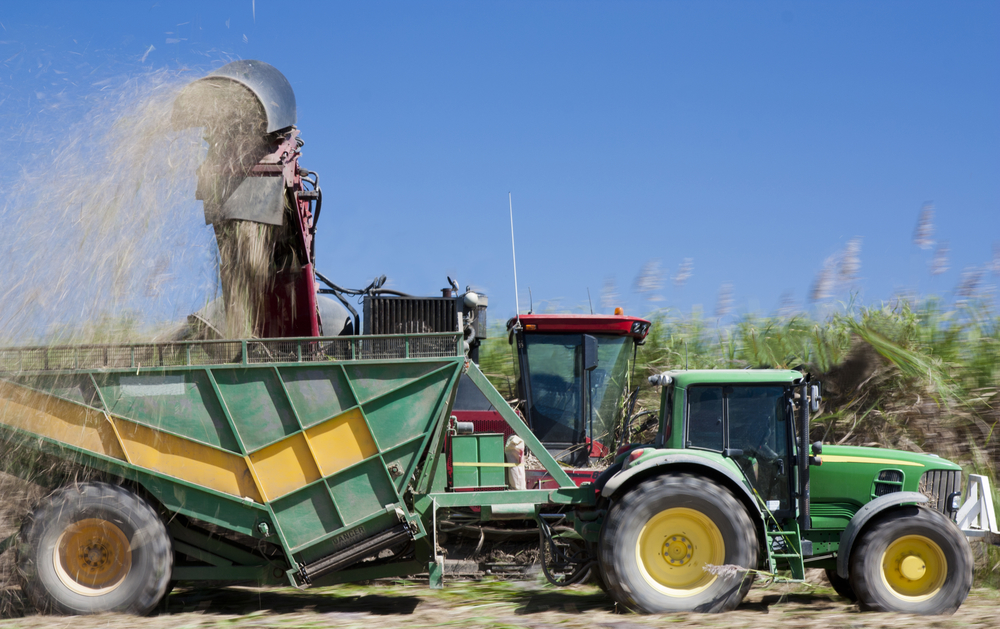
    File photo shows the harvest of sugarcane.

    The sugarcane industry in Florida was impacted by Hurricane-turned-Tropical Storm Eta last week. Farmers like Keith Wedgworth in Belle Glade, Florida continue to feel the effects of the rain-driven storm.

    As of earlier this week, Wedgworth still couldn’t get into fields to harvest his crop following Eta, which made landfall on the heels of an already wet fall.

    “We were already saturated to begin with. We probably got, in those couple of days, anywhere from 5 to 8 inches. The further south you went, down to say Homestead, they were getting over a foot in that short amount of time,” Wedgworth said.

    “I’m the president of our county Farm Bureau and I was talking to some growers and they’re trying to get some of their produce out now. They think they can save most of it but there’s a lot of damage done; mold, all the other disease that you get when it gets real wet, saturating rain like we received.

    “It was a rain event. I wouldn’t say it was a wind event. It was a tropical storm when it came and it went a lot further south. We got a lot of rain over those 24 to 48 hours.”

    Quiet Sugar Mill

    With the way the sugarcane operation operates, the sugar mill is normally running every day for 24 hours per day, 7 days a week this time of year. All of the harvested sugar needs to be processed. But with producers unable to get tractors in the field because of wet, muddy conditions, it’s delayed what is sent for processing.

    “Before this storm came across, we had only been back in the field for maybe 5 or 6 days. Before that we had other rain events that kept us out of the field for a week or two. When you have something like the sugar mill where we have a crop that you have to get in at a certain time, it just really delays everything,” Wedgworth said.

    “When you try to start up a month ago and right now they might have only run less than two weeks out of that month timeframe, you’re losing a lot of time to get that crop in the desired time you want to get it in.”

    Additional Comments from Wedgworth

    “When you have all this acreage and you delay it a few weeks already this early in the season, all it’s going to do is push it back further into the springtime. The later you go into the springtime and that heat starts returning, and it’s starting to want to grow again, your sugar content goes drastically down. You want to make sure you harvest it during these cooler months.”

    When sugar is not harvested in a timely fashion, it also delays the planting that producers can do with other crops they use to rotate with sugar, like corn, radishes and green beans. Not only are farmers being hurt now but also in the future.

  • Plethora of Plant Diseases Following Rainy Season for Alabama Producers

    University of Georgia photo shows effect of downy mildew disease.

    A wet 2020 has had Alabama vegetable and specialty crop producers fending off plant diseases. Even before the state encountered a couple of hurricanes, including Sally in mid-September and Zeta in late October, it had already received its share of rainfall

    Not surprisingly, the excess moisture led to numerous plant diseases, according to Ed Sikora, professor and Extension plant pathologist in the Department of Entomology and Plant Pathology at Auburn University.

    Sikora Comments

    “We saw quite a bit of gummy stem blight on watermelons. We also saw downy (mildew) and anthracnose on things like cucumbers as well as pumpkins,” Sikora said.

    “I think most of the established growers realize that when it’s wet conditions like we had this summer, that they’re going to see more disease problems. Or they see the disease problems and realize it’s so wet, and sometimes they can’t get out to spray. Sometimes it’s too wet to spray after a storm and they can’t into the fields.”

    It can be challenging for farmers to get back in the field to apply much-needed fungicides to manage any potential plant diseases following a storm.

    Be Prepared

    Sikora encourages producers to monitor upcoming weather conditions and apply fungicide sprays. Do this before a storm hits or before conditions become favorable for disease development.

    “Don’t wait until the third of the canopy is gone due to disease before you start spraying because it’s usually a lost cause by then. Growers need to anticipate the weather conditions and what diseases they’ve historically had in their fields,” Sikora said.

    “Newer growers, though, are sideswiped by these diseases because they just haven’t seen them. They get a year like this year where they’ve had adequate moisture and they’re happy. Suddenly some of these plant diseases take off on them. They don’t know what it is before they even think about spraying for them.”