Category: Weather

  • QLA Deadline: Pecan Producers Reminded to Sign Up

    UGA CAES photo: Uprooted pecan trees due to Hurricane Michael. 10-11-18

    University of Georgia Cooperative Extension pecan specialist Lenny Wells encourages producers to apply for the Quality Loss Adjustment (QLA) program. The deadline for the USDA program, which provides assistance to farmers who suffered eligible losses due to natural disasters in 2018 and 2019, is Friday, March 5.

    Wells reminded growers of the program in the UGA Pecan Extension blog.

    Hurricane Michael

    Georgia producers were significantly impacted by Hurricane Michael in 2018. According to UGA Extension, pecans suffered $100 million in direct losses to the crop in 2018, $260 million in losses due to lost trees and $200 million in direct losses for future income.

    According to the USDA, the program will assist producers whose eligible crops suffered quality losses due to such natural disasters as qualifying drought, excessive moisture, flooding and hurricanes.

    Wells also noted that in addition to Hurricane Michael, pecan producers would also qualify for the 2019 season when hot and dry conditions late in the year led to losses in pecan quality.

    “The best documentation you can provide will be an invoice from your buyer with the price and percent kernel showing loss of quality and price along with another invoice from this buyer within the same time period for similar lots showing no quality loss or perhaps even a letter from the buyer verifying this quality-based loss,” Wells said in the UGA Pecan Extension blog.

    Click here for more information about the program.   

  • Winter Weather: What to do When Storms Bring Ice, Potential for Damaged Trees Across North Carolina

    RALEIGH – Ice and freezing rain can be common weather events during the winter months. These types of weather events can severely impact trees and forested areas across the state. The N.C. Forest Service urges property owners and anyone preparing for or cleaning up after a storm to be cautious and think safety first.

    Troxler

    “If you’re out preparing trees for a winter storm or cleaning up after one, be extra cautious,” said Agriculture Commissioner Steve Troxler. “If you’re a landowner with concerns about your woodlands, you have resources available to help you with a plan for managing damaged trees and timber. Contact your county ranger or a consulting forester.”

    If you are a property owner preparing for a winter storm or cleaning up after one, here are some helpful tips and guidelines:

    Before the Storm

    • Prevention is key. Properly pruned trees with strong branch attachments will hold up better in an ice storm.
    • Prune branches with weak attachments, co-dominant trunks and other defects. Hire a qualified arborist to ensure trees are pruned properly. Look for tree service companies with a certified arborist on staff and/or Tree Care Industry Association (TCIA) accreditation.
    • Do not top your tree. Topped trees will quickly regrow new branches which are weakly attached and more likely to break during storms.

    During the Storm

    • Safety first! Stay indoors in a safe place. Your safety is most important.
    • Do not attempt to knock ice or snow from branches. This will likely cause the branch to break, possibly injuring you. Branches are designed to bend and stretch. Quick shocks or instant bends will cause them to break more easily rather than bending slowly.
    • Do not spray water on a tree, attempting to melt ice or snow, as it will likely add more weight to the tree.
    • Do not try to prop up bending or sagging limbs.
    • Do not touch limbs that may be in contact with power lines.

    After the Storm

    • Wait until ice or snow has melted before cleaning up.
    • Cleaning up downed debris presents many safety risks. First, assess safety conditions of your family, home and neighborhood. There may be a debris field, making for poor footing. There may be potentially downed power lines. If electrical wires are an issue, do not attempt tree work. Contact your utility company and let them remove the electrical wires.
    • Only attempt to clean up minor tree debris.
    • Operating a chainsaw on storm-damaged trees is dangerous. Historically, more people are injured by chainsaws than the storm that caused the tree damage. Never operate a chainsaw alone and always use it in accordance with the manufacturer’s instructions. Work only on the ground, and always wear personal protective equipment such as a hard hat, a full-face shield or safety goggles, and hearing protection. Be aware of cutting any branches under tension or pressure.
    • Avoid leaving broken limbs on your tree. All broken or torn parts of the tree should be properly pruned. A proper pruning cut will promote sealing off the wound and reduce further threat of decay or excessive sprouting.
    • Hire an arborist with experience in storm restoration pruning.
    • Consider hiring an arborist with Tree Risk Assessment Qualification (TRAQ) to fully evaluate the condition of your tree(s) after a damaging storm.

    Choose a qualified and insured tree service or consulting arborist. To find qualified arborists in your area, visit www.treesaregood.com, www.asca-consultants.org, or the www.treecareindustry.org.

    For more information and advice on proper tree care and tree assessment following a storm, visit www.ncforestservice.gov/Managing_your_forest/damage_recovery.htm. Additional advice on proper tree care can be found at www.ncforestservice.gov/Urban/Urban_Forestry.htm  or by calling 919-857-4842. To find contact information for your local NCFS county ranger, visit www.ncforestservice.gov/contacts.

  • Soggy Soils: Excessive Rains Concern Onion Producers

    Photo by Chris Tyson/UGA: Shows an onion field that’s saturated from the excessive rains.

    The wet winter weather has Georgia Vidalia onion producers concerned about not getting into their fields to apply fungicide sprays or make fertilizer applications. Certain diseases could soon become problematic considering how much rain the Vidalia onion region has received this year.

     “They’re just not able to get caught up with their applications or get out there and do what they need to do,” said Chris Tyson, University of Georgia Extension Area Onion Agent at the Vidalia Onion & Vegetable Research Center in Lyons. “We are always concerned about disease. This is the time of the year when we’re spraying for fungal diseases like Botrytis and Stemphylium. They’re actually not as bad right now as they normally are. But because of the weather, we’ve had below-average temperatures, and they just haven’t gotten fired up and going like they normally would at this time of the year.

    “They’re definitely creeping up on us out there. We just hope it will dry out and we can and try to play catch-up with everything. That’s the biggest concern right now.”

    Rainy Conditions

    Vidalia, Georgia received 9.73 inches of rain from Jan. 1 to Feb. 14 with 25 rainy days, according to the UGA Weather Network. That’s almost triple what it received in 2019 when it amassed 3.83 inches. That doesn’t even account for cloudy, overcast days when it is not raining. Sunny days have been few and far between lately.

    “Looking at some of the weather data, we got almost two inches over the weekend and we were already wet. We had a half-inch to an inch last weekend and some during last week. We haven’t been able to dry out,” Tyson said.

    The onions continue to progress, though, through the adverse conditions.

    “The onions that are out there look good. They’re a little smaller than they usually are. But overall, I think we have a good-looking stand of onions out there across the industry. They’re a little on the smaller side right now,” Tyson said. “We know that can change real fast. We’re just looking for a little bit of warmer weather and sunny days to help them do that.”

  • Freeze Effect: Peach Producers Wary of Late-Season Frost

    File photo shows a peach bloom blossoming.

    Chill hours are no longer a concern for peach growers in Alabama and Georgia. So, what is their biggest worry heading into the spring?

    “March 28, the full moon in March. We always tend to have some cold in that full moon in March. But with it being later, maybe we’ll be out of the woods and in the clear. You just never know. March can be so up and down. Even the last few years, February has gotten pretty warm,” said Jeff Cook, University of Georgia Cooperative Extension Agriculture and Natural Resources agent for Peach and Taylor counties.

    Cook said there are early varieties that begin to bloom towards the end of the third week in February.

    Growers in both states are cautiously optimistic about the state of the peach crop. The cold winter temperatures provided enough chilling hours for the trees to make a crop this year. But what will happen if temperatures warm up? Trees will be vulnerable to a late-season freeze.

    “We’ve got some peach producers around. They’re not all in one area, they’re kind of spread out. When I talked to them, they’ve done some pruning,” said Eric Schavey, Alabama Regional Extension agent in Northeast Alabama. “They’re just hoping we don’t get one of those late freezes. Their early varieties, they’re not blooming but they’re swelling. Those buds are swelling. That’s because we had those 68 and 70-degree days.

    “I guess that early crop is always kind of a gamble here in our area.”

    That makes what happened on Feb. 2 so important for farmers eyeing the upcoming weather forecast. Punxsutawney Phil saw his shadow and predicted six more weeks of winter.

    “When the groundhog saw his shadow, it was like, ‘Okay, that’s good. Stay cool,’” Cook said.

  • Saturated Soils: Rainy Winter Provides Hope of No Drought This Summer

    Photo taken by Clint Thompson/Shows wet, muddy conditions in a field in Tifton, Georgia.

    Excessive winter rains have kept some Georgia farmers out of the field because of saturated conditions. But they provides hope that a potential summer drought is less likely than originally feared.

    “We were expecting a more typical La Nina winter which is usually warm and dry in that part of the country. It has not been that way so far this year,” said Pam Knox, University of Georgia Extension Agricultural Climatologist. “La Nina winters, anytime we make a forecast, it’s based on statistics, but this has not been a very typical year.  Instead of having that storm track farther to the north, it’s been perched right over that area.

    “It’s good because usually when we have a La Nina winter, it means that we’re much more likely to go into a drought next summer. For me at least, this has alleviated some of the worries about going into drought early in the season. Now, it brings up a whole set of other issues. It delays people getting out into the field and they’re late planting. That could run into issues at the other end of the growing season.”

    Wet Winter

    According to the University of Georgia Weather Network, Tifton, Georgia has received almost twice as much rainfall (9.86 inches) so far this year than in 2020 (4.94) and 2019 (5.24).  The same can be said for Moultrie, Georgia where rainfall totals 9.15 for 2021, compared to 4.87 in 2020 and 5.87 in 2019.

    “The weather pattern this year has sort of gotten stuck in place. There’s this band of rain that’s gone from southwest Georgia stretching up to the northeast all the way through North Carolina and Virginia. I’ve heard from farmers all along that band that they’re having a lot of trouble getting out into the field,” Knox said.

    Farmers had La Nina concerns last November. Since the weather pattern’s normal tendency is to bring warm and dry weather conditions, there were concerns of insufficient chilling hours for fruit farmers and lack of moisture in the soil prior to vegetable and specialty crop producers planting the spring crops. Chill hours are no longer a concern. Neither is soil moisture.

    “Even if we go into a more typical La Nina situation at this point, that moisture’s not going to go away, at least not immediately,” Knox said.

  • Rain, Rain Go Away: Dry Weather Needed

    Excessive rainfall in January and so far in February has vegetable producers playing catch-up in preparing for the upcoming season.

    Field in Tift County, Georgia shows how wet and muddy it is right now.

    “We’re way behind as far as laying new plastic for the spring and everything,” said Bill Brim, part owner of Lewis Taylor Farms in Tifton, Georgia on Friday. “We probably still like about 600 acres of plastic to lay. We laid a little bit (Thursday) and a little bit (Friday) and that’s it; about 40 or 50 acres. We really need some dry weather now to try to get some stuff done.”

    Brim and other farmers in south Georgia got some sunshine on Sunday and Monday. But according to weather.com, there is a high chance of rain the rest of the week.

    According to the University of Georgia Weather Network, Tifton, Georgia has received 8.67 inches from Jan. 1 to Feb. 7, compared to 4.93 in 2020 and 5.18 in 2019. In Moultrie, Georgia where the Sunbelt Ag Expo is located, it has recorded 8.37 inches from Jan. 1 to Feb. 7, compared to 4.86 in 2020 and 5.83 in 2019.

    The Lewis Taylor Farms website states it produces more than 6,500 acres of produce every year. Fortunately, it started laying plastic when it did near the end of 2020. If not, it would really be behind in getting row beds ready to plant.

    “We started back at the end of November laying (plastic). I’m sure glad we did, because if we hadn’t, we’d be in a real mess. We wouldn’t have gotten anything laid, probably from mid-December to now,” Brim said.    

  • Winter Weather Impact: Alabama Strawberries Progressing

    Strawberries in north Alabama are progressing despite sporadic temperatures and high wind speeds.

    florida
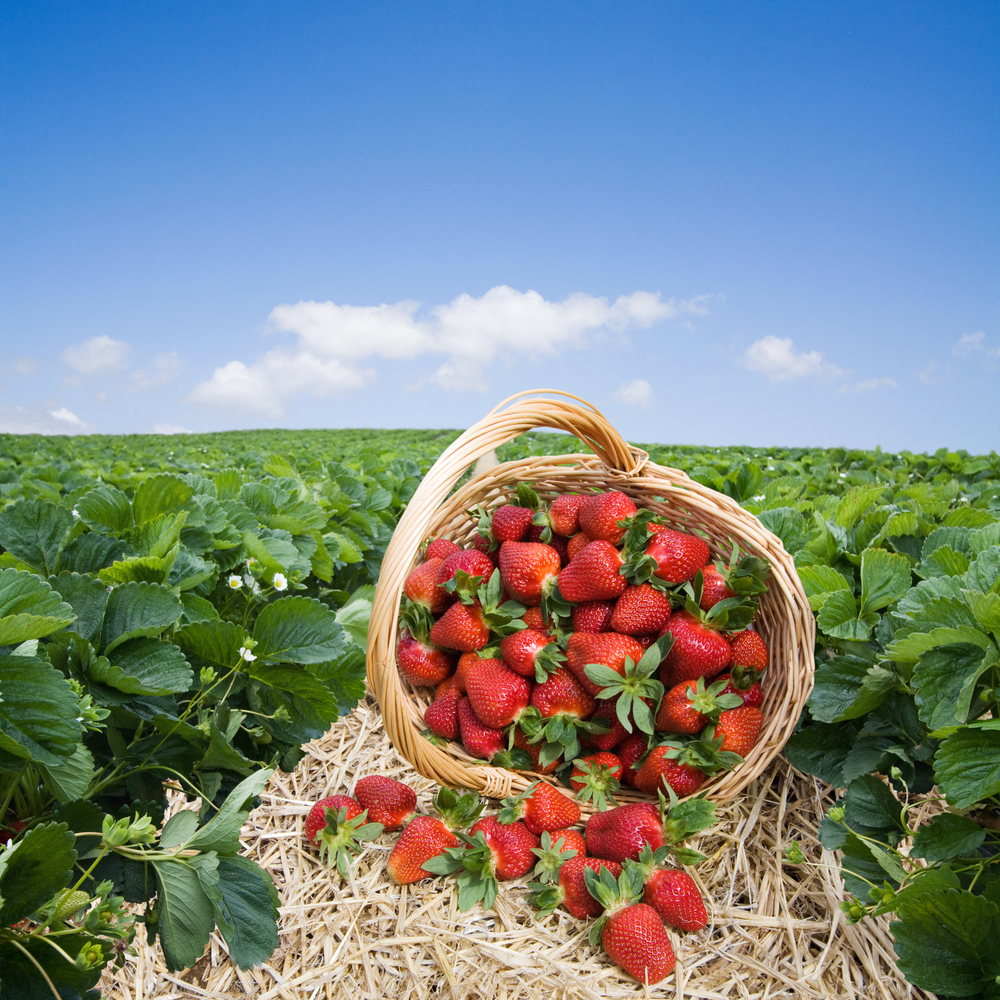
    File photo shows strawberries picked in a field in a prior season.

    “Our cold weather hasn’t been like a constant. It’s been more of a, we’ll have three or four days, maybe seven or eight days of colder weather, and then we’re back up in the 50s and 60s,” said Eric Schavey, Alabama Regional Extension agent in Northeast Alabama. He admits the plants are almost confused when growing through the different spikes or drops in temperature.

    “It’s like, I want to work but no I don’t need to. I feel like a plant burns a lot of energy when that happens. We’ve had wet weather. We’ve had wind. We’ve had a lot of days here in the past month or so where the wind has blown 12, 15 miles per hour. You’re just keeping frost cloth on and trying not to damage plants. It doesn’t help the situation.”

    Moving Forward

    The biggest challenge producers face moving forward is the uncertainty of what February will hold. According to weather.com, temperatures in Gadsden, Alabama are expected to climb as high as 63 degrees on Tuesday before dropping steadily over the next several days to highs that are only in the low to mid 30s next weekend.

    “For the most part, strawberries are on track to be good this year; depends on what February brings. You never know about February here in north Alabama,” Schavey said. “February has always been one of the coldest months. It seems like in my lifetime growing up here in north Alabama, February has always been one of the coldest months.”

  • Wind Damage: This Week’s Weather Impacting South Florida Vegetables

    Less than ideal weather conditions this week severely impacted vegetables grown in the South Florida area. Sam Accursio, who’s harvesting green beans and yellow and green squash in Homestead, Florida area, confirmed damage to his crops following this week’s extreme wind speeds.

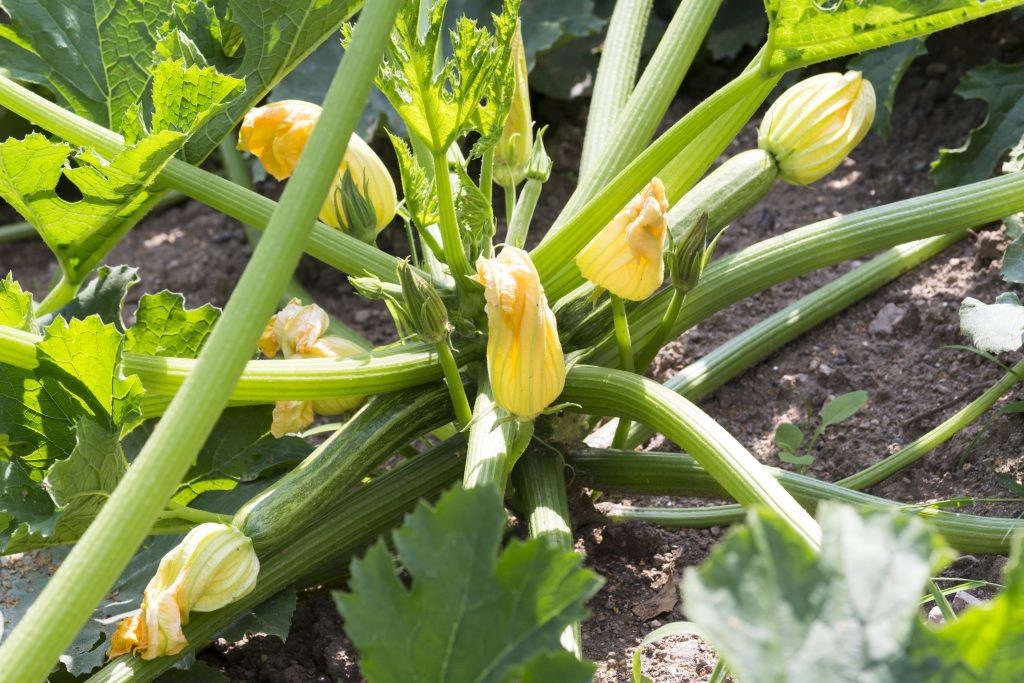
    File photo shows squash. Squash, a crop produced in South Florida, was one of numerous crops impacted by high wind speeds this week.

    “What we’ve had the last three days is 30 mile per hour winds,” said Accursio on Wednesday. “That’s what has really hurt us. It has burned the west side of the bean plant. The squash took it a little better, but the beans, the plant is burned.

    “It’s just like me and you standing outside, and our faces will just get burned if we stand there long enough.”

    Challenging Winter Weather

    It continued a pattern of difficult weather conditions for South Floridians trying to produce a crop. Cooler than normal temperatures significantly slowed volumes of produce headed to the market, according to South Florida Pest and Disease Hotline.

    The challenging weather conditions started in the fall with extreme rain events, including Hurricane Eta in early November.

    “We’ve been behind on everything maturing,” Accursio added. “We have been unseasonably cool. This is the coolest we’ve been in 10 years for the last 45 days. It’s been crazy, because prior to that, the rain devastated us. We grew our crops in October, November and December with 30 inches of rain. When that finally stopped, we had beautiful weather in January, a little bit too cold but it was beautiful; not a drop of water.

    “We have some outstanding crops, but now, this three days of wind, it has just devastated the actual squash; not the plant. The plant took it better. But with the beans, the plants took it worse and the beans still look pretty. It’s kind of opposite.”

    Accursio said they still harvested the damaged fruit but either had to throw it away or package as a No. 3 for food service.

    South Florida producers can take solace in knowing calmer and sunnier days are ahead.

    “We are going to see 80 degrees by the weekend here. We’ll get things growing again pretty quick,” he added.

  • Chilling Effect: Winter Weather Impacting South Florida Vegetable Production

    Cool temperatures and wet conditions are impacting South Florida’s vegetable production. According to the South Florida Pest and Disease Hotline, yields are way below normal. As a result, prices have been good for various crops.

    The most recent U.S. Drought Monitor shows South Florida is in good shape with having sufficient rainfall this winter.

    “Volumes have been light with yields of many items 30% to 50% of normal or less,” the hotline reported.

    South Florida vegetable production has numerous crops coming to market. These include celery, cucumbers, green beans, peppers, squash, sweet corn, tomatoes and watermelons.

    According to weather.com, warmer temperatures and drier conditions are expected later this week, with high temperatures in Belle Glade, Florida expected at 82 degrees Fahrenheit on Friday.

    South Florida has received sufficient rainfall this winter. According to the US Drought Monitor, the only areas of the state listed as abnormally dry include a portion of north-central Florida. It extends as far south as Orange County, Florida to as far north as Columbia County; along with areas in the Panhandle and on the Georgia-Florida line.

  • Georgia Producers Adjust to Unpredictable Winter Weather

    A projected La Nina weather pattern consisting of drier conditions and warmer temperatures has been anything but this winter for Georgia fruit and vegetable producers. With colder temperatures and consistent rainfall, producers have had to adjust.

    The latest US Drought Monitor shows the majority of Georgia has received enough moisture this winter. Only a few counties are abnormally dry.

    “Overall, I think everything’s looking pretty good. It’s been a wet winter and then a cold winter. Now, we’re back into a little bit of a cold snap. I think overall, it was a little wetter than what we would like for it to be. But you have to just deal with what Mother Nature gives you. You can’t be real choosy about that,” said Charles Hall, executive director of the Georgia Fruit and Vegetable Association.

    According to the most recent US Drought Monitor, only a few areas of the state are abnormally dry; a small area in north Georgia, a section of about 10 counties in western Georgia and then along the Atlantic Coast, from Effingham County to Camden County and into Echols County along the Georgia-Florida state line.

    The cooler temperatures should boost the state’s peach crop potential. Chill hours are needed for peaches to properly mature. The specific chill hour requirements depend on what variety is planted.

    “I think they’re where they need to be or better than where they normally are with chill hours at this time. If everything turned warm, the issue would be early bloom. Hopefully, the weather continues on a normal pattern and we move on into the peach season the way we ought to,” Hall said.