Category: Weather

  • Chilly Forecast: Georgia Peach Producers Brace for Upcoming Temperature Drop

    UGA CAES file photo/ Shows peach trees blooming in middle Georgia.

    Georgia peach producers are eyeing the weather, as temperatures are expected to dip into the 30s later this week. It could impact this year’s crop.

    Jeff Cook, University of Georgia Cooperative Extension Agriculture and Natural Resources agent for Peach and Taylor counties, said Georgia’s peach crop is post bloom on most everything with fruit forming on most of the varieties. They are susceptible to cold damage if temperatures drop considerably.

    “When you get post bloom and the shucks gone, your flower’s gone and you’ve got exposed fruit, if frost forms on that fruit, then you’ll get damage,” Cook said. “It’s not always on every fruit, not every fruit’s exposed. I’ve never seen frost destroy a crop. We are more worried about getting down below 30 (degrees) for a few hours. That would be more of a killing type cold. Right now, I think forecasts are 32 to 34 depending on which one you look at. And then it’s going to vary, depending on the orchards.

    “I tell everybody, most of the planning goes in way before the cold comes. You put the orchard in a place where that cold air’s going to (go) away and you’ve got warm air left behind. That’s what we always hope.”

    Copper Applications

    Cook also said there has been research done with copper applications and their impact in keeping frost from forming.

    “There’s bacteria that will help take cold water and form ice. If you can spray copper, it’s been proven that it can help reduce ice formation,” Cook said.

    Temperatures are expected to drop to 33 degrees Thursday night and Friday night, according to weather.com.

    With the cold winter temperatures, peach trees across the Southeast received sufficient chilling hours. But now producers are hoping to avoid cold temperatures that could impact this year’s harvest.

  • Fingers Crossed: Farmers Hoping No Frost with Week’s Cold Temperatures

    UGA CAES photo shows a frost on a bloom.

    Easter is Sunday, which means it’s time for at least one more cold snap for vegetable and specialty crop producers to contend with. On cue, temperatures are expected to drop as low as 39 degrees on Thursday and 36 degrees on Friday in Lake Park, Georgia, according to weather.com.

    Echols County is where Justin Corbett and his brother, Jared, farm bell pepper, chili pepper, eggplant, yellow squash, zucchini, cucumbers, cabbage and satsumas. Justin is holding out hope that they can avoid a frost, which could be devastating.

    “We’re hoping that we don’t wind up with a frost out of it. It’s looking like it’s going to be very close this weekend,” Corbett said. “It could be yield-altering at least. If we get a severe frost out of it, it could be catastrophic.

    “You’re going to have different vegetables that are a lot more susceptible. A cucumber’s probably the most susceptible that we grow.”

    Corbett Brothers Farms are back on schedule after winter rains delayed most South Georgia producers from applying plastic and fumigation on a timely basis. However, warmer temperatures in recent weeks allowed fields to dry out and farmers to get plants in the ground.

    “We’re on schedule right now. It put us behind early on. We’ve done some catching up in the past couple of weeks,” Justin added.

  • North Carolina Strawberry Growers Be Wary of Weekend Weather

    N.C. State Extension recommends strawberry producers to secure their row covers to protect against high wind speeds and to implement cooling measures against warmer temperatures now and into the weekend.

    Increasing temperatures are expected to be 10 to 20 degrees above normal, especially in the mid-Atlantic area. This will undoubtedly speed up the development of buds and blooms this weekend.

    High winds with 20 mph to 30 mph wind gusts are in the region today and will stay that way until Saturday.

  • Warmer and Drier Winter? Not So Much

    Photo by UGA’s Chris Tyson: Shows a saturated onion field.

    What was expected to be warm and dry turned out to be cold and wet for most of the Southeast. Don’t blame La Nina, says Pam Knox, University of Georgia Extension Agricultural Climatologist.

    “It’s unusual, but it’s not unprecedented. I think the last time it happened was early in the 21st Century, close to 20 years now. We did have a similar kind of winter that was cold and wet even though it was a La Nina. It has happened before, but statistically, it’s pretty rare,” Knox said. “That’s why when we know when a La Nina’s coming, we usually go with the statistically most likely prediction which is more warmer and drier. It just didn’t work this year, and it wasn’t the fault of La Nina, it was because we had a Sudden Stratospheric Warming that just threw things off.”

    Sudden Stratospheric Warming

    According to blog by Knox, the SSW shoved the cold polar vortex that is usually around the North Pole off center, pushing the storm track back down south towards us and bringing the unexpected cooler, cloudier and wetter conditions that we experienced this winter, especially in southern Georgia.

    For the most part, farmers aren’t complaining. The cooler temperatures helped peach trees accumulate enough chilling hours that could produce a bountiful crop in Georgia and Alabama.

    Excessive rainfall in January and February also provides hope for producers that there won’t be a summer drought this year. Again, it’s not something farmers would normally experience in a La Nina. But it’s definitely been an atypical weather season so far.

    “What we often see in a La Nina in early summers, we don’t recharge the soil over the winter, and then as soon as the plants come out of dormancy and the temperatures rise, we get really dry conditions,” Knox said. “We can have a pretty quick onset drought in late spring or early summer in a La Nina summer, after we’ve had the La Nina all winter.

    “This year that’s not going to be a problem. There’s been so much moisture that I think the soils are really. In some places they’re saturated, although in other places, not so much.”  

  • Warmer Temps Mean Increased Pest Pressure in South Florida

    Temperatures are starting to warm considerably in South Florida. Vegetable farmers need to be mindful of various insects that thrive in hot conditions.

    “It’s been warming up so you kind of expect to see a flush of pests in the near future. It’s kind of hit and miss in some places with whiteflies and things,” said Craig Frey, University of Florida/IFAS Hendry County Extension Director.

    Conditions are certainly favorable for insect pressure to increase. According to the US Drought Monitor, Hendry County and most of South Florida are listed as abnormally dry.

    “The life cycles of the insects tend to shorten some. It’s been a couple of weeks since we’ve had cold weather. Instead of it being moderate for a little while, it’s been pretty hot,” Frey said. “They’re just reproducing quickly and starting to become more of an issue in different areas.”

    “Pepper weevils, definitely, if you’re growing peppers; whiteflies for a lot of different things. They can be an issue on beans, even. Thrips are an issue on beans and tomatoes. Really, thrips and whiteflies on most crops. They’re two of the big ones.”

  • To Fumigate or not to Fumigate?

    Excessive rains in February continue to impact South Georgia vegetable producers who are trying to plant this year’s crop.

    UGA photo/Fusarium wilt is a fungal disease that can considerably damage a watermelon crop. Fumigation can help with nematode and fusarium control.

    Some fields are still too soggy to apply fumigation, a necessary component of vegetable production in how it controls nematodes and other diseases like fusarium. Farmers are faced with the difficult decision that could impact yields come harvest season: Apply fumigation or don’t?

    “The rain kept everybody out of the field. Everybody’s running a couple of weeks late, probably,” said Ty Torrance, University of Georgia Cooperative Extension Vegetable Agent for Colquitt, Tift and Worth Counties. “There were a couple of folks that were able to get some plastic laid. They’re starting to set some plants. There are some plants going into old plastic. But a lot of the new ground is either too wet for them to lay their plastic or they laid it when it was too wet and we’re having a lot of problems with fumigation right now. When you fumigate when it’s too wet, you can trap the gas and it takes a long time for it to come out of there, longer than it normally would.

    “Some people are leaving out the fumigation altogether, so they don’t have to worry about that. That’ll present a whole nother list of problems throughout the season.”

    Farmer-by-Farmer Basis

    Torrance said that producers with access to drip tape can apply nematicides throughout the season that help with nematode management. However, it’s not as effective as fumigation and not all producers utilize drip tape.

    “It is a farmer-by-farmer basis because a lot of it depends on when their plants are going to be ready. How much time do they have before they have to do something?” Torrance said.

    According to the University of Georgia Automated Weather Network, Tifton, Georgia received 8.77 inches of rainfall in February, compared to 6 inches in 2020 and 2.1 in 2019. In Moultrie, Georgia, 8.47 inches were recorded, compared to 6.27 in 2020 and 3.1 in 2019.

    “As widespread as the rain was and as consistent; it wasn’t like we had one big rain, you could do a little bit and then it rained again; it was to the point where they had to stay out of the fields for extended periods of time,” Torrance said.

    Fields still had trouble drying out last week amid sunshine and high temperatures.

    “You get past that top couple of layers of soil and it’s still wet down there, which is the problem with the fumigation. The Telone goes 12, 16, 18 inches deep,” Torrance said. “It’s still wet at that depth.”

  • Tale of Two Blueberry Seasons

    Florida Grower: It’s not going to be like it was last year

    File photo shows highbush blueberries.

    It’s a tale of two seasons for Florida blueberry growers. Producers were early with last year’s crop but encountered COVID-19 that kept prices low.

    This year’s cooler weather has slowed the growth of the blueberry crop, which means it’ll likely be ready for its normal timeframe. Hopefully, that’ll mean better prices for growers like Ryan Atwood.

    “The weather was colder for January and for a good bit of February. Weather’s been warming up of late. We’re probably catching up here a little bit lately. It’s not going to be like it was last year,” said Atwood, who lives in Mount Dora, Florida and farms 56 acres of blueberries, manages another 350 acres and is part-owner of the largest packing house in the Southeast United States. “That was horrible the way that all played out last year. It was almost like the rug getting yanked out underneath your feet. But you live to fight another day.”

    Warmer Temperatures in 2020

    A milder winter last year accelerated growth in last year’s blueberries. Atwood started picking high volumes of blueberries around March 18. But it also coincided with the pandemic shutting down the country. Market prices reflected the pandemic’s impact.

    Early harvests have already begun for this year’s crop.

    “We started scrapping, lightly picking on Evergreen stuff,” Atwood said. “We’re a ways off from the main part of our crop. We grow a small acreage of evergreen production. But most of our production is deciduous production, and that won’t crank up til later. “We picked 400, 500 pounds two weeks ago. Then we picked 1,800 pounds last week. Now, we’re picking 3,000 pounds this week.”

  • Flash Drought: Potentially Devastating to Crops

    Latest US Drought Monitor shows dry conditions in Alabama.

    Parts of the Southeast have experienced excessive rainfall this year. But periods of prolonged dry spells could be just around the corner and be detrimental to the growth of vegetables and specialty crops.

    What is really concerning to Pam Knox, University of Georgia Extension Agricultural Climatologist, are those flash droughts. She spoke about the impact flash droughts can have on farmers’ crops during a discussion with the U.S. House Agriculture Committee.

    “Flash drought, if you don’t know, is a drought that comes on very rapidly. Because it’s coming on rapidly, often with high temperatures or complete lack of rainfall or maybe some of both, it really accelerates stress on a plant,” Knox said.

    “Plants need to have regular amounts of rainfall or irrigation water to survive. When we have flash droughts, the plants can go from healthy and thriving to very stressed and sick plants in a very short time, sometime even in as much as week. Our ability to identify those flash droughts is important because it will tell the farmers they need to do something about it.”

    According to the US Drought Monitor, much of the central to southwestern part of Alabama is either abnormally dry or in a moderate drought. A few areas in central and southern Florida are abnormally dry as well.

    Research Needed

    Farmers can utilize irrigation and cover crops to protect against flash droughts. But Knox insists more research is needed to help farmers.

    “All of those are things that need to be looked at. One of the projects we’re working on right now looks at soil moisture. That’s an important piece of information that farmers need to have. There’s not a lot of inexpensive pieces of equipment that people can use to do that,” Knox said.

    “Some of the projects I’m working on right now are to identify some of these less expensive ways to monitor soil moisture and provide that information to the farmers in a way that they can use it to put on just the right amount of water. They don’t need to over-water, but they need to put on enough water to keep the plants alive.”

  • Climate Change: Weather Event Impacting Agriculture

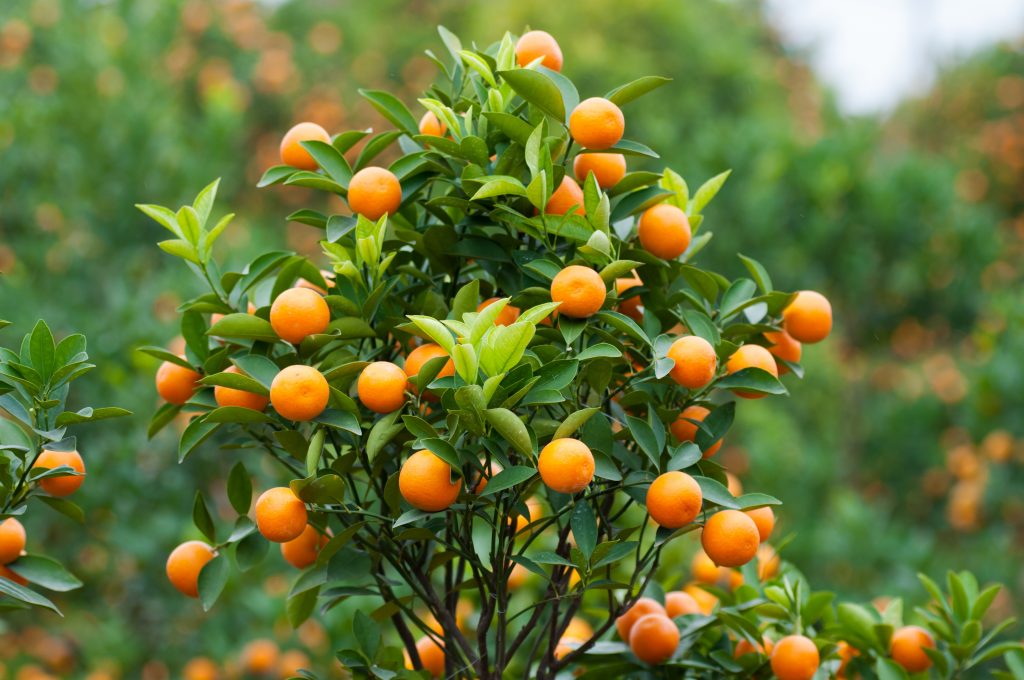
    File photo shows satsuma oranges. Satsuma production is growing in Georgia amid climate change.

    Climate change is impacting the agricultural industry across the U.S. Increased temperatures since the latter part of the 20th century have had a major impact on farming operations, especially in the Southeast.

    Pam Knox, University of Georgia Extension Agricultural Climatologist, spoke about the impact climate change has had on farmers during a discussion with the U.S. House Agriculture Committee.

    “We know agriculture and forestry are highly affected by swings in weather and climate. Year-to-year changes in temperature and precipitation can be hard for farmers to deal with. Making a bad choice in crops and management practices can be costly,” Knox said.

    Increased Temperatures

    “Average temperatures in the U.S. have gone up almost 2 degrees Fahrenheit in the last 60 years. Higher temperatures mean longer growing seasons… more time for diseases and pests that threaten crops and a more unpredictable water cycle,” Knox said. “It also means more extreme events, such as heat waves, droughts and floods that put farmers and foresters at risk by destroying crops and forests and flooding fields and pastures.”

    Knox added that although agriculture and forestry are affected by climate, those industries contribute to warmer temperatures by adding greenhouse gases to the atmosphere and changing the surface of the land.

    “To top it off, between 30% and 40% of all the food produced is never used. This means that the fuel, water and fertilizer that’s used to produce it is wasted. More greenhouse gases are produced as that food waste is dumped into landfills and tractors and water pumps are run for no good reason,” Knox said.

    Fighting Back

    Those two industries can also play key roles in fighting back against climate change. Knox said that planting cover crops can prevent greenhouse gas emissions tied to fertilizers and irrigation by keeping water, carbon and nutrients in the ground. Producing more trees and improving crop land productivity can pull carbon dioxide from the air.

    Farmers Adapting

    Farmers have also adapted to the new conditions.

    “Some farmers are taking advantages of the longer growing seasons by double cropping or growing new crops like satsumas and olives in Georgia, for example,” Knox said. “Foresters are testing out new varieties of pine and other commercial tree varieties that can survive and thrive in the future. Many producers are also using smart irrigation techniques and other climate smart management practices to use water efficiently while protecting and improving the soils.”

    She added that information and training need to be available so farmers can learn how to best use their land.

  • Wacky Weather: Alabama Planting Season Nears Amid Excessive Rainfall, Drought

    The most recent US Drought Monitor shows parts of Alabama in a moderate drought.

    Planting season nears for Alabama vegetable producers. Once again, weather will play a key role as farmers prepare to plant this spring’s crops.

    Joe Kemble, Alabama Extension vegetable specialist, implores producers to wait until soil temperatures increase above a certain level and stay that way for several days straight. That will be a better environment for seed to germinate and transplants to grow.

    “We like to plant by the calendar but unfortunately that just doesn’t work out really well sometimes. So, the best way to do that is to measure your soil temperature. For small and large growers, you want your soil temperature to be above 60, 65 degrees Fahrenheit for several days in a row,” Kemble said. “That’s actually a better indicator of when it’s time to put in your squash planting or your tomatoes. Anything below that, it can hamper seed germination and stand establishment. It can also knock back some of the warm season crops that go in as transplants.”

    Excessive Moisture

    Some growers may not have much choice than to wait for soil temperatures to warm. Parts of the state have experienced excessive rainfall this month. Some growers are still waiting for fields to dry out.

    “Between Alabama and South Georgia, we’ve gotten a lot of rain over the last couple of weeks. That’s hampering a lot of growers getting in the field and getting things prepared,” Kemble said.

    Moderate Drought

    But then there is a portion of southwest Alabama that could use some rainfall. According to the US Drought Monitor, Dallas County, Lowndes County, Marengo County, Monroe County, Wilcox County are classified in a moderate drought why surrounding counties are abnormally dry.

    “They’re definitely drier than the rest of Alabama. Most of Alabama got a lot of rain over the last couple of weeks. A little dry is okay,” Kemble said. “You still need a little bit of moisture though to plow effectively. If it’s too dry, you end up plowing and you create soil clots. You can sort of create a real mess for yourself.”