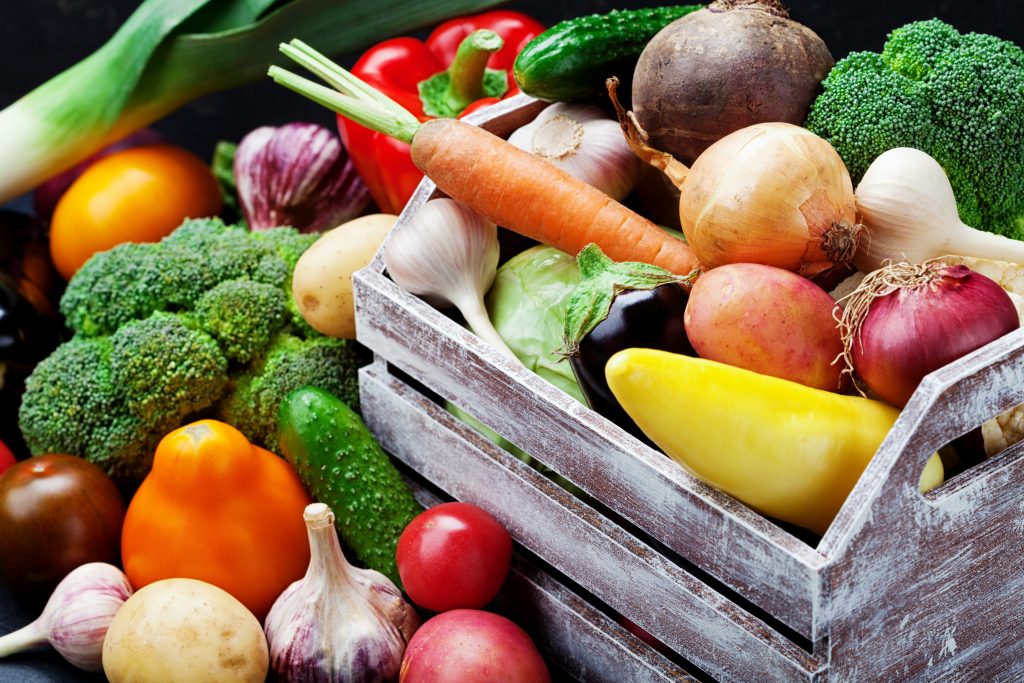
University of Florida post-harvest plant physiologist Jeff Brecht cautions consumers about putting some fruit and vegetables in their refrigerators. Quality commodities like tomatoes, melons, avocados and peaches are chilling sensitive. Consumers need to be wary that too much cooling can affect the quality of certain produce.
“I hear complaints about all of those where people say, ‘They’re tasteless. They’re not like I remember in the garden when I grew up. They don’t have flavor.’ What it really is, those are all chilling sensitive, and they’ve been exposed to low temperatures for too long. They stop producing the aroma,” Brecht said. “The aroma is a super important component of flavor. That’s what it really is when you hear people complain about tasteless tomatoes is because they’ve been chilled. It’s a big problem that we have.”
Clearing Up a Misunderstanding
Brecht said there is a misunderstanding on the part of consumers about how best to handle different fruits and vegetables when they have them in their possession. Many of the vegetables can be injured by exposure to temperatures that are too low. Sensitivity is especially a concern for immature produce.
“You can keep them too long in your refrigerator because you’ll actually start to compromise the quality,” Brecht said. “Even though I preach cooling, cooling, lower the temperature to maintain the quality, there’s a whole lot of fruits where you can’t go too far with that. That limits what you can do to keep them in good shape after harvest. You can’t cool them right down to 32 degrees or something like that, which you can do with a strawberry.”
He also encourages consumers to buy local as much as possible. They’re not only providing much-needed business for producers amid tough financial times, they’re also getting fresher fruit.
“Consumers are getting even better quality that way because they’re going to pick it up at the farm, take it home and probably eat it within a day or two. I would encourage people to patronize the direct sales farming operation to whatever extent they can,” Brecht said.
A severe drought in Mobile County, Alabama and Baldwin County, Alabama is not negatively influencing fruit and vegetable production, says Joe Kemble, Alabama Extension vegetable specialist.
“Most of the veggies down there are irrigated,” Kemble said. “I don’t know anyone that doesn’t irrigate, frankly, in that area.”
Irrigation is important in that area right now. In the most recent release of the U.S. Drought Monitor, parts of both counties are classified as ‘D2’ status or a severe drought.
“Mobile and Baldwin Counties, they’re opposite each other, Mobile Bay. They are definitely well under. I think there was a trending hashtag of #mobilethedesert or #desertmobile. Guys were saying how dry it is down there,” Kemble said.
There’s cause for concern, especially considering how much produce is grown in that area. Growers cater to a lot of road-side produce stands and farmers markets in that area.
“In that area, it’s pretty diverse, production wise. Large acreage wise, sweet potatoes are still a pretty important crop in that area, and to a lesser extent, some irish potatoes as well. After that it’s tomatoes, watermelons, corn are probably the staples in that area, as well as peppers,” Kemble said. “There’s a lot of road-side stands in those areas, farmer’s markets in that area. They tend to feed a lot of product into those. They’re always looking for a diverse background of crops. But I would say the major ones are still going to be the tomatoes, watermelons and sweet corn.”
Kemble said the crops are progressing well.
“I was speaking to a regional agent down there. He was saying things are on track,” Kemble said.
Integrated techniques are needed for fusarium wilt management.
By Nicholas S. Dufault
It has been more than 120 years since an unknown watermelon wilt disease was observed to cause heavy losses in the southern United States. The re-emergence of this disease, identified as fusarium wilt (FW) caused by the fungus Fusarium oxysporum f. sp. niveum (Fon), has led to a need for alternative control practices.
MANAGEMENT STRATEGIES
Numerous FW disease management strategies have been developed such as fumigation, long-term (>7 years) crop rotation, delayed planting, grafting and host resistance. This article will briefly discuss the pros and cons of current management techniques and explain how improved diagnostics with a better understanding of risk is important for future management of FW.
The techniques listed above can all be effective at managing FW. However, inconsistent results related to fumigation as well as delayed planting in Florida have led to a need to further investigate when and how to implement these management options. Grafting and cultivar resistance both provide effective control of Fon, but cost or mixed pathogen populations can impact their usefulness, respectively.
For example, the deployment of a resistant cultivar, even if it is not specific to all the races in the field, can result in less wilting than cultivars without resistance. The effectiveness of this technique is increased when the predominant pathogen present is the same race as the resistance trait. Unfortunately, there are times when the Fon population present in the field is not affected by resistance, which leads to significant wilting and losses.
NEW TOOLS AND MORE KNOWLEDGE NEEDED
Thus, deployment of new resistance sources is needed in combination with more accurate pathogen diagnosis techniques. Integrating these techniques, as well as others, will likely provide more consistent results for disease management. Finding the optimum integrated technique will require more information about the pathogen and disease risk.
To improve risk assessment for FW, a bioassay is being assessed that can help detect the pathogen in the field after a long rotation. In addition, a climate/risk index tool is being developed to determine FW risk. These tools can provide further insights into the risk associated with FW but should only be considered as decision support aides and not prediction tools. The effectiveness of these tools will be improved by better documenting the Fon genotype present within a given field.
Research currently being conducted across the Southeast is focused on expanding the understanding of the pathogen’s genetics. This genetic information can also be used to improve the understanding of the FON races and maybe even provide insights into what makes the pathogen virulent. As further information is gained about the pathogen’s genetics, it can be combined with breeding programs to focus on these virulence traits and used to improve disease diagnostic methods in the field and on the seed.
Substantial progress has been made on understanding FW management. Unfortunately, no single method has proven to be completely effective or economically feasible for disease control. Improved knowledge about the pathogen’s genetics will be critical to implementing proper integrated management techniques as well as accurately assessing disease risk related to field history, climate and diagnostics.
Phytophthora fruit rot has been a concern for watermelon growers not only in Georgia but also in other states that grow watermelon. No single measure has been shown to suppress the disease consistently and effectively, especially when environmental conditions are favorable for disease development.
Compared to other watermelon diseases, this disease is difficult to manage and strictly requires an integrated management program. Unlike on other cucurbit hosts (squash and cucumber, for example), phytophthora symptoms often appear on fruit and not on foliage. However, research indicates that all growth stages and plant parts are susceptible to infection.
In watermelon, fruit symptoms are quite common. Some of the common symptoms that can be observed on fruits are irregular to round, water-soaked lesions that become brown. As the disease progresses, concentric rings of pathogen sporulation may appear within a lesion.
Lesions can appear on the upper and/or lower surfaces (contact with the soil) of fruit. As the pathogen is soilborne, symptoms on the lower surface are quite common. Symptoms on the upper surface are presumed to be related to the dispersal/spread of the pathogen from contaminated soil. Under favorable conditions, complete rotting of fruit is common.
Phytophthora capsici can survive in soil or in host plant debris by means of thick-walled spores (oospores). Researchers have associated irrigation from contaminated pond water with P. capsici outbreaks in watermelon and other vegetable crops in Georgia.
The pathogen has two mating types (A1 and A2). Both mating types are necessary for oospore production. Presence of both mating types in vegetable fields is not uncommon in Georgia, which makes management more difficult. Spread of the pathogen is aided by zoospores, which are asexual spores that can swim in free moisture in the soil or on the plant surface and can infect the host. Zoospores are formed in specialized saclike structures called “sporangia” that can also spread by wind-blown rain and be carried through water.
Resistant watermelon varieties are not available. As a cultural control, it is recommended not to use retention pond water for irrigating watermelon crops. It is also advised to have good drainage in watermelon fields, which is sometimes difficult to achieve.
A preventive fungicide program is the key to get ahead with this disease. A fungicide program comprised of Presidio, Orondis Gold, Revus and Elumin may help.
Downy mildew has been a sporadic issue in watermelon as its incidence varies from year to year in Georgia. Unlike classical angular leaf spot symptoms that are observed in cucumber, symptoms on watermelon can be difficult to diagnose. Symptoms may start as irregular yellowish to brown spots that gradually become necrotic and often appear on upper surfaces of leaves. Lesions are often visible near the crown. As the disease progresses, necrotic lesions may appear on both sides of the leaf.
This disease can spread rapidly, aided by high humidity and wind-driven rain. Severe defoliation can be seen if timely management practices are not employed. Fruit rot due to sun scalding soon follows.
Resistant varieties are not commercially available. Crop rotation is impractical as the inoculum doesn’t survive locally in Georgia and arrives from Florida via wind current or any kind of weather events.
A preventative fungicide program is the key to get ahead with this disease. A fungicide program comprised of Ranman, Orondis Ultra, Revus and Elumin may help. Chlorothalonil (Bravo) can be used as a protectant until fruit set.
With U.S. watermelon production ramping up, now more than ever promotional positioning and marketing efforts matter
Winter Springs, FL — April 21, 2020 — The National Watermelon Promotion Board (NWPB) is realigning resources to adapt to the new climate, continuing to adjust marketing and promotional efforts to positively position watermelon as the go-to for health and happiness while making the most out of precious shoppers’ dollars.
“Watermelon holds a special place with consumers, and it’s so much more than a sweet treat for summertime,” says Jesse Wiggins of Wiggins Farms, Texas, and current president of the NWPB. “Watermelon provides important basic health benefits like hydration at 92% water. It’s an excellent source of Vitamin C.”
Customers are looking for health, value and versatility all in one package.
“It’s the best value among fruit to stretch families’ budgets at only $0.17 per serving. Furthering the value position for watermelon is that it is 100% edible, so there is zero food waste, and so versatile to use in many recipes or in delicious slices,” Wiggins added.
The NWPB has pivoted from planned marketing activities to those more conducive to the current landscape.
“While every audience is impacted, NWPB is working hard to continue to educate about those important health benefits, the terrific value for families of buying a whole watermelon, and how to use that one watermelon in various ways,” says Wiggins. “The opportunities for watermelon in the shopping basket, whether whole, mini, fresh cut or juice, are endless.”
The following are adjusted activity highlights listed by division:
Communications
· Special flight of YouTube television commercial – April through June flight of National YouTube television commercial highlighting watermelon’s health benefits and showing watermelon value and versatility
· Amplify hydration and vitamin C health benefits and at-home usage in social media post calendar
· Partner promos on Instagram Live with #WatermelonWednesday Home Workout and Watermelon Beverage Recipes
· “Kid-Friendly Creativity in the Kitchen” national paid feature syndication
· Jump with Jill “digital” live tour reaching virtual students and teachers with lessons, video content, P.E. classes and more
· Master class media event for press and editors goes virtual in July
Foodservice
· Digital outreach and in-office deliveries to inspire Foodservice media with watermelon
· Foodservice refocus to support takeout and delivery opportunities
· Reaching culinarians and culinary educators with digital Watermelon Culinary Curriculum
Retail & International Marketing
· Actively distributing Retail Kit and advertorial released April 8
· Ibotta redemption offer planned for early summer
· Shoppable recipe activation with Fexy Media in development
· Independent grocer outreach via Live. Balanced activation kit
· Retail and international account management teams at the ready In these unprecedented times, watermelon provides a solution to consumers’ needs to feed their families nutritious meals and snacks. It is a smart value with zero food waste and is tremendously versatile in recipes and even provides hands-on activities and crafts for the at-home world. For more information and to explore the resources available to retailers, foodservice and consumer audiences, visit Watermelon.org.
1) A bumblebee and sweat bee forage on the same flower, Cosmos sulphureus. 2)Sweat bees (Lasioglossum spp.) are so small they often go unnoticed. Sixteen species of these bees were collected visiting watermelon. 3) The Southern plains bumblebee (Bombus fraternus) is a frequent watermelon and wildflower pollinator on farms in South Carolina.
By Mimi Jenkins
A resilient and stable pollinator community includes a diverse suite of pollinators with a range of nesting habits, foraging behaviors and activity periods. These different behaviors and traits complement each other and can buffer against any year-to-year fluctuations or environmental changes that affect species differently.
BEYOND HONEY BEES
In many pollinator-dependent crop systems, honey bee colonies are brought onto the farm to provide the pollination services necessary to produce the crop. In the case of watermelon, a monoecious plant with separate male and female flowers that make it entirely dependent on pollinators to set fruit, using honey bee hives to pollinate the crop is widely recommended for growers to achieve high yields. While honey bees are an important agricultural pollinator, especially for industrial scale farms, considering alternative pollination sources that already exist in the natural environment helps buffer against ongoing honey bee losses and the rising cost of renting honey bee hives.
Wild native bee communities rely much more on the natural habitat of an area than honey bees because of their different nesting habits and because they are not actively managed by humans. Wild bees require habitat that provides food (flowers) and shelter (nesting materials and proper soil/environmental conditions). Other pollinating insects, such as flies and butterflies, share the need for floral resources with bees but many do not have a nest, and others require certain plant hosts or prey in their larval stage.
The flowering period of the wildflowers in this South Carolina strip began in May before watermelon bloom and lasted long after watermelon was done flowering, into August.
Implementing on-farm enhancements such as wildflower strips is one way to increase the availability and diversity of food resources for pollinators beyond the crop bloom period. Traits that should be considered for wildflowers in farm fields include: drought-tolerance, native to eco-region, fast germination rates, hardiness, difference in flowering period, length of flowering period and attractiveness to a variety of pollinating insects.
RESEARCH RESULTS
In a study I conducted from 2016 to 2018, the number of visits to watermelon was significantly higher for one group of pollinators (sweat bees in the genus Lasioglossum) when wildflowers were in a watermelon field compared to fields without wildflowers. These small, metallic grey-green bees nest underground and do not forage more than a few hundred meters from their nest.
In addition, the overall biodiversity of the pollinator community was higher in watermelon fields with wildflowers strips, with nearly twice the number of pollinator species collected on watermelon fields with wildflowers compared to control fields. The mean number of watermelon pollinating species per field was 15 species, and the mean number of total pollinators (including wildflower pollinators) per field was 24 species.
More than half (64 percent) of the watermelon pollinator species collected were also collected visiting one or more of five wildflower species in the study. This demonstrates that social colonies of bees, solitary bees and other insects like syrphid flies and butterflies utilize the multiple floral species as resources on the watermelon field in addition to the crop flowers when they are available. In fields with wildflowers, we also observed and collected a wide range of pollinators and insects that do not visit watermelon flowers but visited the wildflower species, such as several swallowtail butterfly species, cleptoparasitic bees and sunflower bees.
In conclusion, when wildflowers and weedy flowers are available on the farm landscape, a more diverse community of beneficial insects is supported. This community included declining species like Monarch butterflies, the American bumblebee and the Southern plains bumblebee as well as parasitic and predatory flies and wasps that can control crop pests.
A watermelon sits among leaves in a watermelon field. Photo taken on 05-10-17. Photo credit: Camila Guillen, UF/IFAS
By Clint Thompson
The watermelon season in Florida has already soured and a huge chunk of the state’s crop has yet to be harvested.
Prices for South Florida watermelons started at a robust 40 cents per pound but have since dropped to 12 cents amidst a deflated market during the ongoing coronavirus pandemic, according to Mark Warren, University of Florida/IFAS Extension agent in Levy County.
He is worried about the farmers in the Levy County, Gilchrist County area where 20% of the state’s crop or approximately 5,000 acres are produced, and where harvest season is approximately a month away.
“They’re optimistically hoping that things are going to turn around, but in all honesty, I’d have a hard time continuing investing in the crop. I’m not telling them that,” Warren said. “But if we’re eight weeks leading up to the (COVID-19) ‘peak’ and there’s eight weeks on the back side of it where we’re coming down off the ‘peak,’ by then our melon season is over.”
Unfortunately, farmers were already committed into producing this year’s crop before the coronavirus was even a concern.
“So much of that investment is already made on the front end. By the time you do land, rent, land prep and fertilization, they buy their seed, contract with a transplant producer in the greenhouse, so much is invested at the front end there wasn’t any difference than to just go ahead,” Warren said.
Florida is the No. 1 producer of watermelons in the country. But interest in watermelons has dropped dramatically as restaurants have been forced to close and unemployment has skyrocketed.
“I was talking to one of our farmers (Tuesday) and he said this is a non-essential item. (He said), ‘If I had to make a decision between bread and eggs and watermelon, you can just about bet, I’d leave the watermelon sitting there,’” Warren said. “They recognize that’s where they are on the food chain as a non-essential.”
He added that watermelon sales that normally shipped out 20 loads per day has dropped to four.
Warren said they are exploring the possibility of teaming up with a farm to school program or even the (Supplemental Nutrition Assistance Program) SNAP program, to see if there’s a way to get fresh produce included as an alternate way to move the product out of the area. But even that would not be a complete problem solver.
“One of our farmers could probably meet all of the demands of the food stamp and the school program,” Warren said.
Submitted by Gene McAvoy, Regional Vegetable Extension Agent IV Emeritus with UF/IFAS
“Up to the end of Feb our growers were having a banner year and it looked like this season would be one of those homeruns that come around every 5-6 years.”
Here is a report that I prepared on the state of S Florida ag and shared with officials. (Long read but may shed some light on how COVID-19 is impacting agriculture in our area.)
Markets
On Tuesday, March 24, a local broker says, everything changed. From brokers, orders stopped and everything got quiet. On Wednesday, March 25, it got super quiet.
Since then tomato volumes are down 85%, green beans are like 50% and cabbage is like 50%.
R.C. Hatton has plowed under 100 acres of green beans, around 2 million pounds, and 60 acres of cabbage, or 5 million pounds.
Florida’s tomato growers target 80% of their production to restaurants and other food service companies, rather than to supermarkets. In this sector, growers are walking away from big portions of their crop.
Tony DiMare estimates that by the end of the growing season, about 10 million pounds of his tomatoes will go unpicked.
Some crops like potatoes and oranges are faring well, whileother produce isn’t selling like it used to.
With a lot of people staying home and buying mostly comfort foods, products like peppers, tomatoes and cucumbers have actually slowed down incrementally,” said Chuck Weisinger, president of Weis-Buy Farms, Inc.
“The biggest challenge we have right now is getting the stores to start buying,” said John Stanford, farm manager at Frey Farms.
As you know. produce is highly perishable and three weeks into this, many companies around Immokalee, Florida have already had to empty their coolers and dump produce. One dumped 20,000 pounds a day last week, let that sink in… 20,000 pounds of tomatoes a day. They dumped a total of 100,000 pounds so far. This is from one farm.
Three weeks in, most farms have exercised triage dumping and emptying coolers and are terminating fields for which they have no foreseeable markets. They are concentrating on maintaining fields that they still have demand for, unfortunately, depending on the crop – this is only 20-50% of the total planted.
Impacts on Ranchers
The cash market and futures prices are lower than anyone can remember. One local rancher sold calves this week and averaged $250 per head at the Arcadia auction barn. A few weeks ago he would have received $450 per head average, and that constitutes below breakeven.
In normal times, strategy would be to hold calves until the crisis is over, and hope prices will take an upswing. But there is huge uncertainty about how long this will last. A major compounding problem is the dry conditions, and lack of reserve forage. These weather patterns would normally dictate early weaning of calves. Hay costs, when available, and low market prices are a formula for hardship.
The extended impact on ranchers will be the cows not breeding back on schedule. Holding calves longer in hot and dry conditions puts a strain on a cow’s reproductive system. This has been well-documented by University of Florida researchers.
Many growers are exploring alternative methods of moving product.
Sam S. Accursio and Sons Farms’ in Homestead packing house opened direct sales to consumers, selling boxes at $10 in each of the past two weekends. They had cars stretched for half a mile in front of the packing house and were able to move 120,000 pounds of Redland-raised squash, tomatoes, beans and cukes. They also partnered with a farmer out of Mount Dora, Florida who had 30,000 flats of unsold blueberries and sold these at 12 pints for $20. Similar efforts were conducted by Alderman Farms in Bonita Beach, Florida, Farmers Alliance in Immokalee and others.
Martin County, Florida opened a pop-up drive-thru market that saw 500 cars in one day. Traditional commercial farms in South Florida have been overwhelmed by the support for the sales at their packinghouses – all fruit that would have otherwise gone unsold if waiting on traditional markets to purchase.
Growers are still concerned that a large amount of produce seen in the supermarket comes from Mexico.
According to Bill Braswell, since March 1, the start of the Florida blueberry season, Florida has produced 6.1 million pounds through last Thursday April 2. In that same time period, Mexico has imported 17.4 million pounds into the U.S., according to a USDA report. Mexico market price is $12 for a 6-ounce flat delivered to Chicago which translates to $2.60 per pound.
Labor
Growers are taking aggressive steps to protect workers from COVID-19, including keeping truckers separate from on-farm labor.
They have been taking advantage of training resources and posters supplied by IFAS Extension and others.
Agents have also shared information on essential services exemption and supplying growers with template essential services exemption letters to facilitate movement of their essential staff and labor.
Labor shortages – reports indicate that COVID-19 has delayed the U.S. government’s processing of H-2A work visas. This will impact growers in central and north Florida and up the coast.
Food banks
Last week, growers in Immokalee alone donated more than 3 million pounds of vegetables to Harry Chapin food bank, overwhelming their ability to store, transport and distribute the produce – they had to call a halt.
Farm Share, which partners with more than 2,000 food pantries, churches, schools and other nonprofits throughout Florida, is running at maximum capacity, despite having 25 refrigerated trucks, six warehouses of between 10,000 to 35,000 square feet and 40 to 50 drop sites from Jacksonville, Florida to Florida City, Florida. They usually help more than seven million pounds of food reach the hungry and now are faced with moving a lot more.
Over the past two weeks, Wish Farms has donated 220,000 pounds of fresh strawberries — equivalent to 241 pallets or nine semi-trailer loads — to feeding Tampa Bay.
Growers are having a tough time adapting because everything is happening so quick. Faced with a highly perishable product, growers are struggling to survive right now, with picking, packing and shipping everything that they can. Because of the coronavirus, things have changed. Buyers are demanding tight security, heavier sanitation, distancing and more.
We have heard many ideas and suggestions from the public and even local officials – what many people fail to realize is that picking, packing, cooling, storing and transporting vegetables costs money, and growers who have already lost millions of dollars are understandably reluctant to throw good money after bad. It also costs money to maintain fields with no hope of sales in sight. Growers are disking up fields and maintaining just what they feel they have markets for. Unfortunately, this is only about 20% to 30% of the total acreage. Each acre of tomatoes costs $10,000 to $12,000 to grow and $5,000 to $6,000 to pick and pack. Unmaintained fields rapidly succumb to pests and diseases and soon become a breeding ground threatening the health of nearby fields that growers are trying to save for their remaining markets.
It is not only veggies, as of yesterday about 7.7 pounds of milk has been dumped by one Central Florida co-op (there are a few in Florida). Milk is sold by the pound so that is 900,000 gallons.
While I don’t have the exact amount from the other co-op I would expect their numbers to match ours in north Central Florida and South Georgia. Unfortunately, we can easily say that 10 million pounds of milk has been dumped throughout Florida.
There are efforts to help farmers all over our state. In the dairy industry, there is a grassroots group of passionate producers, processors, promotion people, school representatives and Extension agents trying to get more milk moving. This group includes people from Florida and Georgia, that in normal times might view each other as the competition (different co-ops and different promotion boards). These efforts range from delivering school lunches, buying and delivering milk to food banks and those in need; contacting schools to increase their milk in each meal, contacting legislators to allow whole milk in school lunches (we need help with this), and asking stores to stop limiting the purchase of milk.
People really have no concept of the amount of food we are taking about – Immokalee alone ships approximately 400 to 500 semis of vegetables a day from March through mid-May. This is 15,750,000 pounds of vegetables headed to market every day. Add to this Belle Glade, Palm Beach Co, Homestead and the amounts are staggering. I know of one grower in Belle Glade who is disking up 1 million pounds of green beans every three days.
South Florida vegetable growers supply more than 150 million people in the eastern U.S., from Miami to Chicago, from late October to mid-May.
Here is a resource a producer may be interested in sharing – this is a clearing house for finding food – donating food etc.
(UF/IFAS) — As fruit and vegetable farmers in South Florida decide what to do with produce once destined for now-closed schools and restaurants, watermelon farmers in North Florida have recently finished planting their crop.
Given the uncertainty around the market for fresh produce, the decision to plant came down to economics, said Mark Warren, agriculture agent for UF/IFAS Extension Levy County.
“For many, this crop represents a large portion of their annual income, and they have already invested in land rent, tillage, fertilizer, seed, transplant costs, irrigation and plastic mulch,” Warren said.
Watermelons are an important part of the economy in Levy and surrounding counties. According to the 2017 USDA Census of Agriculture, Levy County has the largest acreage of watermelons in the state, with Gilchrist a close second. More than 20% of the state’s watermelon crop is produced in these two counties.
Florida itself is the No. 1 producer of watermelons in the United States. But as the coronavirus pandemic creates a new normal across the country, it’s unclear whether stores and consumers will be buying this favorite summertime treat when the watermelons are ready for harvest in May and June.
Blair Beauchamp says life on his Levy County farm hasn’t changed much since the pandemic, but the uncertainty of the situation has touched him just like everyone else.
“Farming is still farming—you’ve got to look after your crops, feed the cattle. But whether you’re talking about watermelons, beef or the stock market, it’s all uncertain and everyone is nervous,” said Beauchamp, a fifth-generation farmer who grows about 145 acres of watermelon each year and ranches cattle, as well. He manages the watermelon operation with Aaron Lane.
Beauchamp sells his watermelon through a broker, who distributes his product to supermarkets in the northeastern United States. With a warm March in North Florida, the watermelon crop will likely be ready for harvest in early May, about two weeks earlier than usual, he said.
“I hope by then the situation with the market for fresh produce is clearer,” he said.
Until then, Warren and Bob Hochmuth, assistant director of the UF/IFAS North Florida Research and Education Center – Suwannee Valley, and other county Extension agents in the region are advising watermelon producers through group text or email messages on disease issues, irrigation and fertilizer recommendations to help ensure the success of their crop.
In addition, farmers can share photographs via their mobile device with their Extension agents to get an early start on diagnosis. “We just have to be more creative and use technology more to help our growers,” Hochmuth said
“Watermelons are a short season and potentially temperamental crop that requires a close eye and timely decisions,” Warren said. “A small disease or pest issue discovered this morning can reach destructive levels in a matter of hours. Farmers require dependable analytical support from IFAS soil and plant diagnostic labs to correctly make these kinds of timely decisions, which is why those labs are still operating and receiving samples by mail.”
For now, this year’s watermelon crops appear to have few disease or pest issues, Hochmuth said.
While social distancing has meant Extension agents are working with farmers in different ways than they usually do, Beauchamp said he’s glad to still have UF/IFAS as a resources for his business.
“My hat’s off to them for all they’ve done to stay in communication and serve us as the situation and safety allows,” he said.
Consumers can help Florida farmers affected by the uncertainty brought on by COVID-19, Warren said.
“Even if we do everything we can to produce a crop, success for our farmers doesn’t happen until the crop is sold and delivered. Consumers can help farmers in these uncertain times by asking for and buying Florida-grown produce,” Warren said.
(HCCGA) — FDACS has created the attached form for producers to fill out with their product availability. Once submitted, FDACS will utilize to forward to their Fresh From Florida contacts, as well as the Florida Department of Corrections, food banks and make connections with other State Departments of Agriculture in hopes of providing market opportunities to move product during the Coronavirus pandemic.