Category: Watermelon

  • Watermelon Board Pivots Nutrition Education Strategy to Digital Model

    With growing season in and home schooling out, NWPB is meeting an essential need for parents working from home and teachers preventing the summer slide

    WINTER SPRINGS, FL — June 3, 2020 — The National Watermelon Promotion Board (NWPB) is realigning resources to adapt to a new climate while focusing on summer sales.
    Watermelons are very nutritious.

    Unlike years past when summer months meant in-person events, the socially-distanced approach adjusts marketing and promotional efforts to continue to position watermelon as the go-to choice for kids and families. NWPB has been partnered with the world’s only rock & roll nutrition show Jump with Jill for over eight years, with a national live tour partnership as the leading line item. With stay-at-home orders in place, Jump with Jill and NWPB are teaming up to bring consumers a digital version of the program called the Jump with Jill Digital Tour with unplugged songs, dances, workouts, activities, and tutorials.

    “Jump with Jill is our longtime partner for kids content and in-school outreach and their primary delivery mechanism was through a powerful live musical show,” says Stephanie Barlow, Senior Director of Communications. They have realigned so that songs about eating fruit like Nature’s Candy and The Sweet Beat can still reach kids even when they are distance learning.”

    Just as the watermelon domestic growing season hits its peak, these free resources and tools serve an important need useful while families are at home. Parents are craving content that can hold their kids’ attention while they work from home and teachers need summer study materials they can use to prevent the summer slide, or the slide backwards that many children make in reading and math skills over the summer.

    “From our homes to families everywhere, we are thrilled to be able to perform and teach,” says Jump with Jill creator, Jill Jayne, who brings her credentials as a Registered Dietitian and singer into everything she touches. “When they announced school closures, we were forced to accept that a screen would be a mandatory feature in our relationship with our audience. So we wanted to use it to communicate to kids in a powerful way letting them know that – we are still here, we are still singing, and we still love you.”

    For more information and to explore the resources available from NWPB and Jump with Jill, check out Facebook, YouTube, visit Watermelon.org or JumpwithJill.com.

  • Georgia Watermelon Season Ramps Up Next Week

    Photo by UGA CAES/Shows watermelons piled the side of a row at the UGA Tifton Campus in 2016.

    By Clint Thompson

    Georgia’s watermelon harvest will ramp up next week.

    According to Samantha Kilgore, executive director of the Georgia Watermelon Association, acreage is projected to decrease this year to 19,000 acres. It would mark a significant drop from previous years’ harvests.  According to the National Agricultural Statistics Service, from 2016-2018, Georgia averaged a harvest of just more than 23,000 acres.

    “In 2019, we probably had upwards of 21,000 or 22,000 acres. If anything, it’s kind of evidence of the market leveling out a little bit from having a higher amount of watermelons harvested last year and then people pulling back to adjust to demand,” Kilgore said.

    No Watermelon Shortage

    There was concerns that there could be a watermelon shortage by Memorial Day. With South Florida’s crop ending a little early due to torrential rains, farmer Carr Hussey, chairman of the board of the Florida Watermelon Association, feared there might be a shortage. However, Kilgore reassures watermelon lovers that there is plenty of locally grown crop in stores.

    “I picked up a Georgia grown watermelon at Kroger on Tuesday. We’re not hearing anything about a shortage,” Kilgore said. “The bulk of Georgia product will be ready the first week of June. There could be a little bit of a lag. But I don’t see that stores will be empty by any means.”

    Kilgore is confident in how the Georgia crop has progressed this year. Good weather during the growing season has been a huge plus.

    “Everything’s been really good. The past few years we’ve had some weather events that have made the harvest season difficult. We haven’t had that this year,” Kilgore said. “I was talking to one of our marketers last week and they expect watermelons shipping this week to get in stores next week.

    “The quality of these Georgia watermelons is good. Because like I said the weather’s been pretty mild and not too wet. They’re not battling any major disease issues that could be caused by flooding or bad weather.”

  • Georgia Watermelon Season Kicks Off June 3

    May 27, 2020 — LAGRANGE, GA – Sweet, refreshing Georgia watermelon is coming to a store near you in early June. The 2020 watermelon crop is expected to have the crisp, sweet flavor and high quality unique to Georgia watermelon. 

    Georgia watermelons will soon be ready for purchase.

    While Georgia has had a cool spring, consumers should still start seeing Georgia Grown watermelons in stores the first week of June.  The Georgia season typically peaks around June 20.  

    “We expect excellent quality and even more, we are eager to have a successful growing season,” said Rob Greene, Georgia Watermelon Association (GWA) President and owner of Lime Creek Farms in Arabi, Georgia.

    Planting for Georgia’s watermelon crop began in March. From planting to harvest, watermelons typically need 90 days to grow, ripen, and be ready for harvest. With more than 18,000 acres of watermelon harvested on average each year, the state of Georgia ranks in the top 4 in the United States for production among Texas, Florida, and California. 

    Georgia watermelon is expected to hit stores by June 3. Consumers can pick up watermelon in local stores and markets throughout the southeast. The 2020 GWA Queen Ambassador, Lindsey Westberry, would normally be in stores this summer, but due to COVID-19 restrictions, she is helping consumers through serving in other ways in her local community. 

    Georgia Watermelon Association Queen Ambassador Lindsey Westberry helped members of the National Guard at Second Harvest of South Georgia to pack food boxes in Valdosta, Georgia.

    Just before Memorial Day, Westberry joined with members of the National Guard at Second Harvest of South Georgia (SHSG) to pack food boxes for the local community in Valdosta, Georgia. SHSG provides more than 3 million meals to those with food insecurity. 

    “Having the opportunity to give back to my community alongside many of our service men and women was truly a blessing,” she said.  “I believe in living a life of use to others and I look forward to continuing to bring smiles to people’s faces through watermelon.”

    On social media, Westberry will be putting together many recipes, safety and how-to tutorials so consumers can enjoy their local watermelon. 

    “It’s more important now than ever to support your local economy – and we do that from purchasing in season produce like watermelon when it comes in stores,” said Samantha Kilgore, GWA Executive Director.  “Let watermelon help cool you off this summer and rest assured that your local growers do everything they can to provide a safe, sweet, and satisfying product!”

  • Watermelon Shortage Keeps Prices Up for Famers

    By Clint Thompson

    Times have changed in the past two months for watermelon farmers in the Southeast. When farmers in Alabama, Florida and Georgia began planting their crop in late winter and early spring, the coronavirus pandemic struck and created a cloud of uncertainty for growers.

    Watermelon prices are good right now for farmers.

    What would harvest season look like? Would there be customers to purchase the crop? What kind of market value would there be?

    Fast forward two months later; watermelons are in high demand amid fears of a shortage.

    “Six weeks ago, a lot of these guys down here, including myself were concerned about, with the pandemic, just getting their money back,” said Greg Leger, a grower and shipper in Florida and Georgia. “Everybody was like, ‘If we can just get our money back.’ Everybody was scared to death because we didn’t know if there was going to be movement and consumption.

    “(But) I had a friend tell me he was in a store up in Atlanta and people were social distancing waiting to get to the watermelon bin. Everybody in there was putting a watermelon in their buggy, which is good. It is a value and always has been. That’s promising to me, especially for Georgia and the Southeast for the fourth of July. I just hope that as long as consumption stays up and movement stays good, it should be a good season for us.”

    First Signs of Lack of Fruit in Florida

    Carr Hussey, a watermelon farmer in Florida and Alabama and chairman of the board of the Florida Watermelon Association, addressed the possibility of a watermelon shortage on May 12. He said the reason Florida is running out of melons is due to three straight weekends of rain events. Heavy rains on mature vines led to a quick harvest season.

    South Georgia watermelons are poised to be ready between June 10-15. If there continues to be a shortage of melons, prices should remain strong for farmers in Georgia and Alabama. Currently, they’re around 22 cents per pound.

    “Pricing is good. The reason pricing is so strong is that availability is shorter than normal,” Liger said. “I think we’re going to be a week earlier than we’ve been in the past couple of years. Two years ago, we didn’t even start til, we only had like 2 ½ weeks to get the crop off before the holiday. This year I think if things stay like they are now, we’re going to get started around the 15th with decent volume. I hope we do anyway.”

  • Connecting the Watermelon Industry with Retail and Foodservice Buyers

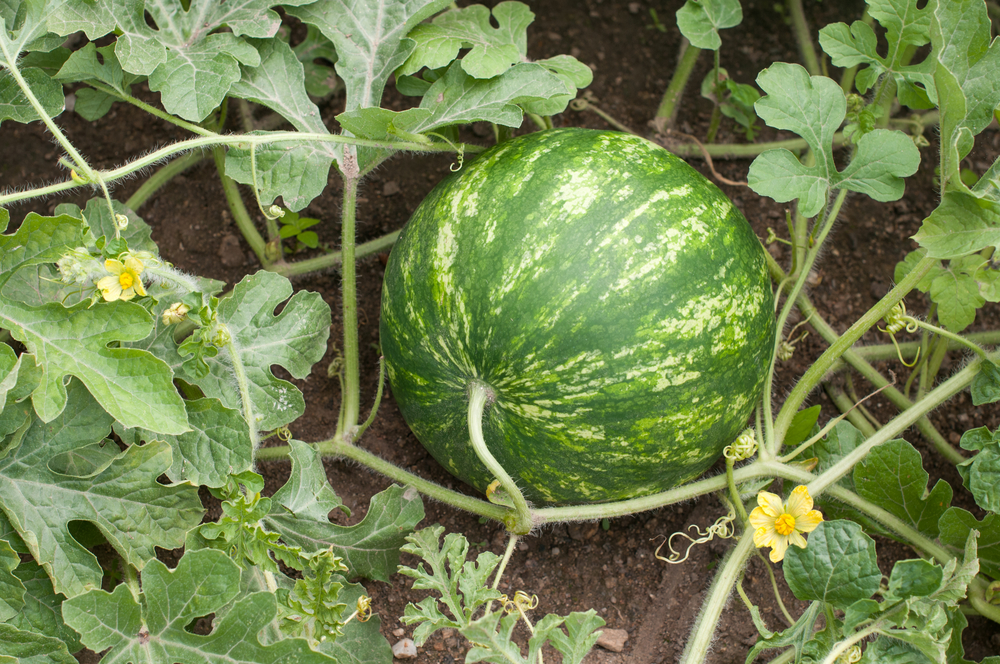
    File photo shows a watermelon in a field ready to be harvested.

    Winter Springs, FL — May 20, 2020 – The new National Watermelon Promotion Board (NWPB) Watermelon Supplier Database is the perfect platform to connect retail and foodservice buyers with suppliers as the summer season takes off for America’s favorite melon.

    Each year the NWPB staff promotes watermelon to retail and foodservice audiences, both in person and digitally. When a contact asks where they can get watermelon, this new database with help connect the dots. The new Watermelon Supplier Database is based on the new watermelon.org in the Industry, Retail and Foodservice sections and at watermelon supplier database, so all interested groups can easily access the database.

    The Board is still working to populate the database so if a member of the watermelon industry is interested, please visit watermelon supplier database. Multiple roles in the industry are encouraged to be a part of the database including wholesalers, growers, importers, brokers, processors, seed, transportation companies and more.
    Please reach out to supplierdatabase@watermelon.org with any questions.

  • Clemson Vegetable Pathologist Cautions Growers About Potential Diseases

    Pictured is downy mildew disease’s impact on vegetables.

    By Clint Thompson

    One Clemson Extension vegetable pathologist has observed downy mildew disease and fusarium oxysporum f. sp. niveneum disease on his research plots and cautions vegetable growers in South Carolina to be on the lookout for both.

    “This is strictly based on observations from my research plots here in Charleston. I have not been out to any commercial fields,” Tony Keinath said.

    Keinath reported downy mildew, a cool-season pathogen, on brassicas and can especially impact kale and collard.

    “For downy mildew on collard, the pathogen prefers to grow in cool temperatures. Once the temperature reaches 85 degrees F, the pathogen basically goes dormant until late fall. And it probably survives in crop debris. It’s dormant, it’s not active at all,” Keinath said.

    South Carolina has experienced cooler temperatures this spring, especially the timeframe between the end of April and first two weeks in May. Downy mildew mainly affects the lower leaves but will sometimes move to the larger leaves in the middle of the plant.

    “Because it causes leaf spots on the leaves and the leaves are what the growers are harvesting … even a small amount of downy mildew means the leaves can not be harvested,” Keinath said.

    Fusarium’s Impact

    Fusarium is also active in cool soil temperatures. It infects roots when the soil temperatures are below 82 degrees F. Unfortunately, if growers observe fusarium damage, there isn’t anything they can do to treat the disease. Fungicides need to be applied during transplanting.

    “If you spray them at this stage it’s too late because all the fungicides do is prevent infection. Once the fungus has gotten into the plant, then the fungicide does not work anymore,” Keinath said. “If they want to use grafted plants because the rootstocks are resistant to fusarium, that’s obviously something that has to be done at transplanting.

    “They should make note of how widespread it is in a given field this year. Then if it’s (bad) enough to cause yield loss, they need to plan to use a control measure the next time they plant watermelons in that same field.”

    There are different control measures available. One could be the watermelon variety and if it’s tolerant to the disease. Growers can also utilize varieties that produce medium to large size fruit. If you plant a variety that was bred to produce small fruit and you plant that in a fusarium-infested field, then a lot of those fruit will not reach marketable size.

    Growers can also utilize hairy vetch as a winter cover. It will provide some suppressive effect on fusarium. Producers can also apply fungicides to the row bed before they lay plastic. Or they can do it through drip irrigation the same day as transplant.

  • Produce Market Ripening With Success for Some Vegetables

    Cabbage is a strong commodity right now, selling for $20 per box, says farmer Bill Brim.

    By Clint Thompson

    The produce market is ripening with success for some commodities. Prices are incredibly high for some vegetables, while others are still struggling to compete with imports from Mexico, says Tift County farmer Bill Brim. The co-owner of Lewis Taylor Farms said watermelons, round tomatoes and cabbage are three commodities really doing well for farmers right now.

    “I think watermelon prices are pretty good. We don’t have any ready yet. It’ll be two or three weeks before we’ll be ready,” Brim said. ““Tomatoes were $33 per box (Wednesday), I think for rounds. Romas are really bad. They’re terrible price because Mexico is pouring them in here. Grapes are bad too. Rounds, they must not have many because they’re like $33 per box. Of course, they won’t last that long or stay there. But if we could stay in the high 18s to the 20s, we’d be tickled to death.”

    Brim expects to start picking his tomato crop in two weeks. Cabbage is also selling well at $20 per box.

    Watermelon Shortage?

    Watermelons are a hot commodity right now. Carr Hussey, a watermelon farmer in Alabama and Florida and chairman of the board of the Florida Watermelon Association, said the crop is already in short supply and that a watermelon shortage is likely by Memorial Day weekend next week.

    Brim said he’s heard that the crop in Georgia is going to be way down compared to last season.

     “I think it was such a bad deal last year, everybody lost their heinies,” Brim said. “They couldn’t even hardly give a watermelon last year. I got like 7 and 8 cents per pound. You can’t even grow them for that; 12 cents per pound is probably break even. It’s just so bad people said, I can’t lose any more money or I’m going to be out of business. If I do, I’m just going to go with my row crops and forget the watermelons.

    “North Carolina’s going to be late too, because a lot of them got killed out in that last freeze. It might be pretty fair for us, hopefully, anyway.”

    The watermelon market is ripening with success for farmers who have the crop to sell. Hussey said prices are around 20 cents per pound right now but could improve to 22 or 24 cents around Memorial Day weekend.

    Brim also believes watermelon farmers in north Florida are going to be done harvesting earlier than they believed they would.

    “They started pretty early down there; a bunch of them,” Brim said. “In the next two weeks, they should be done at about the time we’ll start.”

  • Watermelon Farmer Hopes to Capitalize on High Prices

    Watermelons are in short supply and high demand right now.

    By Clint Thompson

    Watermelons are in short supply and high demand right now. Alabama produce farmer Art Sessions hopes to capitalize when his crop becomes ready the first week in June.

    “We’ve been getting watermelons out of Florida and they are scarce. Everything coming out of Florida is really tight on account of this virus deal,” said Sessions, who also said there’s high demand for tomatoes as well. “It’s really affecting the supply chain pretty bad. A lot of the product are short, like tomatoes. Tomatoes are as high as I’ve ever seen them for this time of year. From what I’ve gathered, a lot of the pickers left on account of this virus.”

    Sessions Farm is in Grand Bay, Alabama. It produces approximately 50 acres of watermelons, starting with a few yellow-meat varieties in the next couple of weeks. He has had to buy watermelons from Florida and can attest to the high costs farmers can sell their crop for.

    “They’re pretty high right now, sure are. They aren’t outlandish. They’re pretty reasonable. We’ve been buying a lot of Florida. They are higher than normally what we would sell ours for,” Sessions said.

    Shortage by Memorial Day?

    Carr Hussey, a watermelon farmer in Florida and Alabama and chairman of the board of the Florida Watermelon Association, confirmed on Tuesday that watermelons are in short supply and there could be a shortage by Memorial Day. He said prices are around 20 cents per pound right now but could improve to 22 or 24 cents around Memorial Day weekend.

    This could lead to continued higher prices for farmers in North Florida, Alabama and Georgia when they start harvesting their crops in June.

    Sessions wonders if the current coronavirus pandemic impacted the supply chain.

    “I think a lot of guys, when this thing hit, they backed out of planting. They didn’t plant as much,” Sessions said. “We had already planted when this thing hit, or we would have backed way off. Just the uncertainty of not knowing if you’re going to be able to sell your crop. A lot of folks we sell to shut down and they are just now opening things back up. That’s one reason the prices on some of this stuff is strong because everybody now is wanting stuff and it’s hard to get.”

  • Watermelon Shortage by Memorial Day?

    By Clint Thompson

    Watermelons are already in short supply. There soon could be a watermelon shortage, said Carr Hussey, a watermelon farmer in Florida and Alabama and chairman of the board of the Florida Watermelon Association.

    “It’s drying up by the minute. There’s going to be shortage for Memorial Day, I do believe,” Hussey said. “The kicker is, how fast can North Florida come in? Right now, today’s it’s 91 degrees here right now. North Florida can’t be too far behind. A few days like that will bring them ahead a little bit.

    “I can tell you this weekend, South Central Florida is going to be done. When I say done, there will be a few loads come. But they’re going to be done with any volume shipping. I think in my mind the bigger part of next week is going to be a shortage. They won’t be out completely, but there will be a shortage. It’ll drive the price up pretty good.”

    Hussey farms between 500 and 600 acres in the Southeast under Sweet Mama Produce. His Florida crop is done, though he’s helping other farmers in Lake Placid and Wauchula, Florida. Hussey also has about 300 acres in Cottonwood, Alabama. He expects to be shipping the last week of the May.

    Positive Prices for Producers

    He said prices are around 20 cents per pound right now but could improve to 22 or 24 cents around Memorial Day weekend. He said the reason Florida is running out of melons is due to three straight weekends of rain events. Heavy rains on mature vines led to a quick harvest season.

    “It’s going to be short supply next week, I don’t know what it’s going to be like after that. I don’t know how fast they’ll come on (elsewhere) and with what kind of volume,” Hussey said. “I understand that Georgia’s late. That’s what I’m hearing. There’s going to be a small gap next week and it could be another gap going into the fourth of July if Georgia’s late.”

    Another reason there could be a watermelon shortage is due to an extreme low supply in Mexico. They’ve had poor weather conditions in Mexico.

    “Their quality’s all shot to pieces right now,” Hussey said.

  • Watermelon Supply Down; Prices Stay High for Farmers

    By Clint Thompson

    The watermelon supply chain is currently down. As a result, prices are up. It’s a pleasant surprise for Florida growers who are currently harvesting this year’s crop, according to Gene McAvoy, University of Florida/Institute of Food and Agricultural Sciences Extension agent emeritus.

    The watermelon supply line is currently decreased, due in large part to less imports from Mexico.

    “(The farmers) were a little bit apprehensive that with all of this COVID-related decline in demand that there might not be a demand for the (watermelon) product. They’ve had poor weather growing conditions in Mexico, so supplies are down from that side,” McAvoy said. “Even here in Florida, we had a really hot and dry March and April which affected pollination. The fruit set is less than what we would consider to be normal.”

    Other Florida produce farmers have struggled with selling this spring’s crop amid the coronavirus pandemic. The pandemic has shut down the country since the second week in March. The resulting shutdown led to closures of restaurants across the U.S.

    Positive Prices

    But as businesses begin to open up and states begin loosening the restrictions on self-quarantining, demand for fresh fruits and vegetables is improving. The same appears to be true for watermelons.

    “The supply is down a bit, kind of lining up with demand. Prices are good. They’re getting 20 cents, 19 cents per pound, which is decent for starting out the season. Sometimes it’s a little higher. But things are moving,” McAvoy said.

    The bulk of Florida is still harvesting or nearing harvest of watermelons. McAvoy said farmers in the extreme South Florida area, around Immokalee, Florida, are done harvesting this year’s crop. He added that watermelon harvests are continuing in Glades County, Charlotte County, Desoto County and up into Hillsborough.

    Georgia and Alabama should start picking in early-to-mid June.