Category: Watermelon

  • Breeding Better Cucurbits

    University of Georgia breeders developed the Orange Bulldog pumpkin.

    By Cecilia McGregor and George Boyhan

    Cucurbit crops are some of the most widely grown vegetable crops in the Southeast. However, the hot and humid climate is conducive to pest and disease development, which presents a challenge to growers. Cucurbit breeding at the University of Georgia (UGA) is focused on breeding pumpkin, watermelon and squash with excellent fruit quality and enhanced disease resistance.

    PUMPKINS

    Pumpkins are an important crop in the United States, particularly as decorations during the fall. Unfortunately, pumpkins are difficult to grow in the Southeast because of diseases. There are several diseases (particularly viruses) that affect traditional pumpkins. These diseases are transmitted by aphids in a non-persistent way. This means that as soon as the insect probes the tissue, the virus is transmitted. Control is difficult, because even with 90 to 95 percent insect control, the remaining 5 to 10 percent can effectively infect the crop.

    UGA began a breeding program in 1996 with a collection of pumpkin seeds from Brazil. Seed from both elongated and flattened fruit of Cucurbita maxima were obtained and interplanted. Putative hybrids were collected. This began several years of selection for fruit with a round shape, pleasing color and open cavity. These pumpkins have a greater degree of virus resistance compared to traditional pumpkins (C. pepo), so they produce more consistently.

    The resulting variety, Orange Bulldog, was released in 2006. Since there was no interest among seed companies, UGA has been handling sales. The primary audience for this variety is pick-your-own and roadside marketers. The vines hold up particularly well into the fall for direct marketers that “reseed” their pumpkin patch with new fruit each day.

    Pumpkin research concentrated on developing disease resistance into commercially acceptable pumpkin lines has continued at UGA.

    WATERMELON

    UGA is also actively breeding for gummy stem blight and fusarium wilt resistance in watermelon. Resistance to gummy stem blight was first described in 1962 when it was discovered in a wild relative of watermelon, Citrullus amarus. This is the same species that was used to breed the fusarium-resistant, non-harvested SP pollinizer cultivars.

    Breeding disease resistance into commercial, edible cultivars from this wild germplasm has proven difficult since the wild relative has hard, inedible flesh. This is further complicated by the fact that there are different species of the Stagonosporopsis pathogen that cause gummy stem blight and different races of Fusarium oxysporum var. niveum that cause fusarium wilt. The resistances to these diseases are quantitative, meaning that a single resistance gene does not give field-level resistance to the diseases. All these factors have delayed the development of cultivars resistant to these diseases.

    Susceptible (left) and resistant (right) watermelon seedlings infected with gummy stem blight.

    The breeding effort at UGA focuses on using modern selection methods to accelerate selection for resistance genes to speed up breeding efforts. Currently, selection is in progress for fusarium race 2 resistance and gummy stem blight resistance.

    In addition to these disease-resistance breeding efforts, UGA breeds cultivars specifically for homeowners and farmers’ markets. The focus here is on novel traits like a variety of flesh colors and rind patterns and the egusi seed trait.

    Egusi watermelon is very popular as an oilseed crop in many parts of Africa. The seeds are very high in oil (40 to 50 percent) and protein (25 percent) and are eaten as snacks or as a thickener in soups and stews. Egusi seed is large and flat with a unique fleshy outer layer that dries into a very thin seed coat that can easily be shelled. Traditional egusi watermelon has hard inedible flesh, which goes to waste. UGA is breeding egusi watermelon with edible flesh. These plants will produce fruit that pack the health benefits associated with the antioxidants in red- and orange-fleshed watermelon while also being a source of high oil and protein seed.

    SUMMER SQUASH

    In 2019, UGA started a squash breeding program. This program was launched in response to the severe yield losses experienced by Georgia growers in recent years due to whiteflies and whitefly-transmitted viruses.

    The sweetpotato whitefly (Bemisia tabaci) can directly cause yield losses in many different crops due to feeding, but an even bigger cause of yield losses are the viruses it transmits. Sweetpotato whiteflies can transmit more than a hundred different viruses. Cucurbit leaf crumple virus (CuLCrV) and Cucurbit yellow stunting disorder virus (CYSDV) are some of the most important to squash growers.

    Commercial squash cultivars have proven to be very susceptible to these viruses, and sources of resistance have not been identified. UGA, in collaboration with the University of Florida, has started large-scale evaluations of squash germplasm from all over the world in search of resistance. Several genotypes with resistance to CuLCrV and CYSDV were identified in 2019 and are now being evaluated further for use in the breeding program.

    The UGA cucurbit breeding programs are committed to developing cultivars well adapted to the Southeast, with high disease resistance and exceptional fruit quality for both large- and small-scale growers in the region.
  • North Alabama Watermelons Winding Down

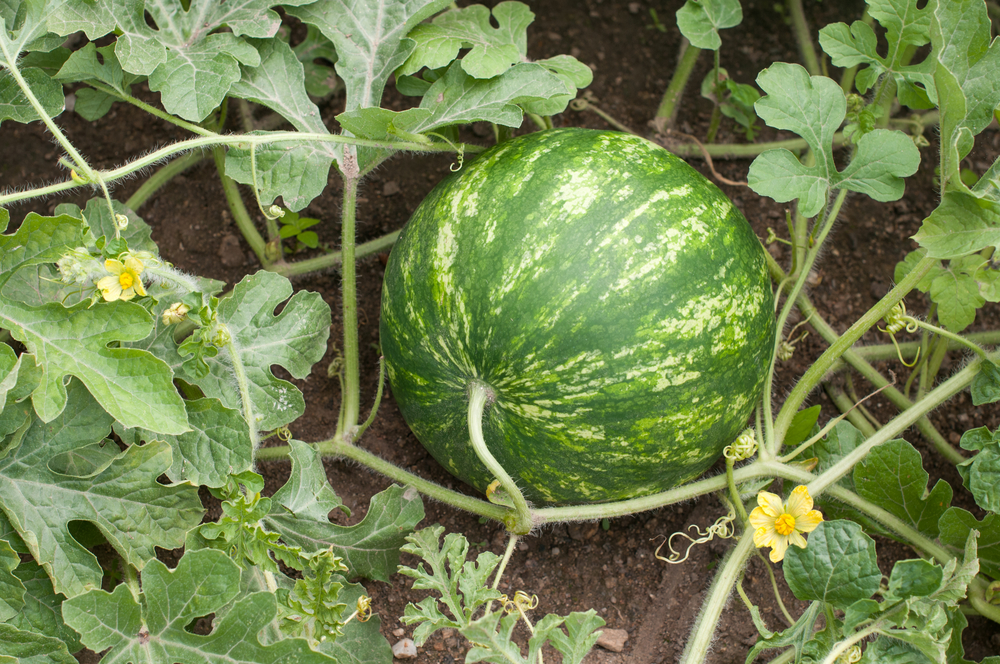
    File photo shows watermelon growing in a field.

    Watermelon season is winding down in Alabama this week. Just like its southern counterparts, north Alabama producers enjoyed a successful season, according Eric Schavey, Alabama Regional Extension agent in Northeast Alabama

    “Overall, watermelons in our area, in Northeast Alabama was good,” said Schavey, who serves Blount County, Cherokee County, Cullman County, DeKalb County, Etowah County, Jackson County, Madison County and Marshall County.

    “We got a premium price for them. Up until the last 20 days, 15 days, the watermelons, you were getting a premium. The wholesale side of it went down to $3.25, $3.50, depending on what you had. I’m talking about a good marketable, large watermelon; that 20-pound and even getting up in that 30-pound watermelons.”

    Crazy Start

    Watermelon producers in North Alabama had to overcome challenges throughout the growing season, starting when seed were put in the ground. Schavey said the northern part of the state experienced a frost on May 26. Normally, seed are in the ground way before that. Growers had to wait, and subsequently, the plants were put in the ground late.

    It didn’t impact the fruit’s quality, however.

    “As far as quality, everything was really good. We didn’t have a lot of stunted melons or odd-shaped melons. We had real good marketable watermelons this year,” Schavey said.

    Production in Alabama

    Watermelon production is divided between the southern and northern portions of the state. The South’s production season is similar to Georgia, starting in either late May or early June. Growers in north Alabama are about a month to a month and a half behind, says Schavey.

    “We have to wait on those soil temperatures. You’re right on the foothills of the Appalachians when you get into my area. It’s very mountainous up in Etowah, Cherokee, DeKalb and even over in Blount County. You get a lot of terrain change. We can get some cool temperatures,” Schavey said.

    He estimated that there are at least 600 to 700 acres of watermelons in his region with most being grown in less than 10-acre plots.

  • New Ways to Promote Watermelon

    Winter Springs, Fla. – Watermelon continues to find its place on menus throughout the country despite the rapidly changing foodservice landscape. Partnering with both quick service and full service national chains in the spring and summer months, the National Watermelon Promotion Board (Board) focused on takeaway-and delivery-friendly options to not only include watermelon on the menu, but keep it top of mind with their customers.

    Juice and smoothies played a prominent role in all of these promotions, allowing operators to experiment with watermelon’s flavor profile, while understanding that away from home, consumers most enjoy watermelon raw, as a snack or with lunch.

    The Board worked with the following foodservice outlets:

    •Another Broken Egg – Chain wide usage in 74 outlets included a fruit side and Watermelon Cucumber Cooler. This year, the promotion started earlier in the year (March 17) and, for the first time, the chain tested a savory application, Tacos Verano with Watermelon Salsa.

    •First Watch-Running June 1 through the end of August in 380 locations, the Watermelon Wake Up juice scored a 96/100 for frequency of ordering desire on Datassentials SCORES, a monthly report that tracks and ranks new menu items tested with consumers. Promotions included in-store chalkboards, e-blast, blog post and social.

    •Nektar -Expanded social media promotional elements including Instagram Live and Stories withNektar founder Alexis Schulzeand Board beverage consultantTony Pereyra, amplified on Board channels. Offeringsin 165 unitsincludeda smoothieand juice, running from June 15 until Labor Day weekend.

    •Robeks – Custom graphics on Instagram and Facebook promoting the Wailea Watermelon Smoothie, a customer favorite,in 84 locations.

    “Adjusting to operators’and consumers’ needs was a top priority this year,” said Megan McKenna, Senior Director of Marketing and Foodservice. “Additionally, leveraging existing relationships with past partners has made executing programming straight forward and incredibly successful.”

    “You know you have a hit when guests ask for more watermelon salsa on an already generous portion or my favorite, when a guests asked how much for a container to take home because they know a dozen other things that the bright, sweet, spicy, crunchy, salty goodness would go with!” said Jason Knoll, Vice President of Culinary, Another Broken Egg of America Franchising, LLC.

    Looking forward to fall/winter programming, the Board will continue to monitor foodservice needs and consumer trends. For more information about the Foodservice program, including how NWPB can support watermelon usage in the foodservice sector, visit watermelon.org/foodservice or contact Megan McKenna at mmckenna@watermelon.org.

  • Flavorful Fruit Yields Sweet Results for Melon Farmers

    Southeast watermelon growers delivered a flavorful crop this year that yielded a sweet price at the market, said Mark Arney, executive director of the National Watermelon Promotion Board.

    Photo taken by Clint Thompson/Shows watermelons for sale at the Farmers Market in Cordele, Georgia.

     “We’re happy, we’re happy for the guys. Obviously, the guys that didn’t have a crop, it doesn’t matter how hot the market is, they’re not going to make money. We feel terrible for those guys,” Arney said. “The crop has been excellent quality, that’s helped.”

    High Prices

    Carr Hussey, a watermelon farmer in Florida and Alabama and chairman of the board of the Florida Watermelon Association, said in early July that prices were averaging 22 cents per pound. It was a huge increase from the 14 cents growers had grown accustomed to in previous seasons.

    Watermelons were in high demand due in large part to the short supply. Georgia acreage decreased almost 4,000 acres this year. Imports from Mexico were down 10% overall for the season, according to Arney. Because of weather-related issues, Georgia’s crop did not start until 7 to 10 days later than normal.

    Typically, Georgia and North Florida harvest watermelons at about the same time, which could lead to a surplus on Memorial Day weekend. That did not happen this year, however.

    There were even fears of a shortage at various times during the growing season.

    “You had a combination of the lateness of Georgia, of the Mexican crop being down around 10% overall for the season and the flavor being exceptional. All of those things brought a situation where you did have a shortage,” said Arney, who’s concerned about the current impact that Hurricane Isaias will have on watermelon production along the Atlantic Coast. “Who knows, there may even be more of a shortage (now) with the weather. Watermelons like rain, but too much rain means the guys can’t get into the fields if they’re using these school buses to harvest. They have to wait until things dry out. That could delay as well.”

    Little Impact From COVID-19

    While COVID-19 impacted the food service industry, as restaurants closed in response to the pandemic, watermelons were not one of commodities that felt the brunt of the impact.

    “The first couple of weeks it was panic time. We saw some pretty big slumps. Then all of a sudden, things started taking off. It was like, wow, what’s going on. Well, No. 1, flavor has been really good. I had one grower describe it as a vintage year. He’s been in the watermelon business forever and said, ‘I can’t remember a crop with this good of a flavor.’ That certainly helped,” Arney said. “I think produce in general is up because so many people are sheltered and can’t go to restaurants even though there’s been a little bit of openings. But because so many people are not eating in restaurants; they’ve got to eat, so they’re going to either order online or go to the grocery store. Watermelon’s a great bargain. It’s healthy.

    “Watermelon’s an excellent source of Vitamin C and it’s also probably one of the better bargains, if not the best bargain for fruits at costs per serving, which is around 17 cents.”

  • FWA Annual Meeting Postponed Until 2021

    In an email sent to Florida Watermelon Association members, President Mark Bryan confirmed that this year’s annual convention scheduled for November has been postponed until 2021.

    Next year’s convention dates will be Oct. 27-29 at the Rosen Hotel in Orlando, Florida.

  • Watermelon Market Continues to Produce Sweet Results for Farmers

    The watermelon market continues to be a sweet success for producers in the Southeast. One South Georgia watermelon farmer attests to the strong season he and his colleagues have had this year.

    Watermelons for sale at the Farmers Market in Cordele, Georgia.

    Bill Brim, co-owner of Lewis Taylor Farms, said on July 10 that he is had an “excellent year” with his watermelon crop.

    “Prices dropped a little bit after (July) 4th. But I think they’ll pick back up after about another week. We’re still harvesting melons. We’ll probably still harvest for another 10 days any way before we’re done,” Brim said.

    Similar to a belief shared by farmer Carr Hussey, Brim believes there may soon be a shortage of watermelons available in the U.S.

    “There’s going to be a gap in there, probably about a two-week gap, I think. Talking with some guys up in Indiana, they’re already harvesting a few melons that they had on their hoops; but they didn’t’ have many acres on their hoops,” Brim said.

    Crop Shortage

    Hussey, a watermelon farmer in Florida and Alabama and chairman of the board of the Florida Watermelon Association, said there may soon be a shortage as producers in the Southeast region finish harvesting their crop, while the northern states are still not close to begin picking their crop.

    He believes the cool, wet spring impacted the crop’s production and why there is less watermelons than normal.

    Another South Georgia producer, Terrell Rutland, said farmers in the Carolinas and Midwest normally plant three or four weeks after he does but their plants were damaged by a late spring frost. They replanted, which delayed their harvest window another three weeks.

    Acreage is down in Georgia this year. According to Samantha Kilgore, executive director of the Georgia Watermelon Association, acreage is projected to decrease this year to 19,000 acres. It would mark a significant drop from previous years’ harvests. According to the National Agricultural Statistics Service, from 2016-2018, Georgia averaged a harvest of just more than 23,000 acres.

  • Watermelon Shortage? One Farmer Thinks So

    Watermelons on sale at the farmers market in Cordele, Georgia.

    By Clint Thompson

    Watermelon producers continue to enjoy high prices, though, there may soon be a shortage. Carr Hussey, a watermelon farmer in Florida and Alabama and chairman of the board of the Florida Watermelon Association, said there may soon be a shortage as producers in the Southeast region finish harvesting their crop, while the northern states are still not close to begin picking their crop.

    “Georgia is finishing up. I’m here in Alabama and we’re finishing up. North of us, North Carolina and Delaware and Indiana where we normally go, won’t be ready until the end of the month,” Hussey said. “There’s not going to be a lot of fruit available for the next two weeks.”

    It is a shame, too for farmers. Hussey estimates prices are averaging 22 cents per pound, a huge improvement from the 14 cents average growers normally get this time in previous years.

    Hussey believes the cool, wet spring impacted the crop’s production and why there is less watermelons than normal.

    “The crop never set the way it should have. What you should have harvested in four weeks took six weeks to harvest,” Hussey said. “The fruit movements in Georgia are usually around 700 to 800 trailers a day. They’ve been 400, 450, once in a while maybe at 500. There just hasn’t been the fruit.”

    While producers have benefited this year, the strong prices could encourage more farmers to grow watermelons next year. At least, that is what Hussey is expecting.

    “Everybody’s looking back to see how much everybody made last year so they want to cash in on it so they’ll plant, plus the fact, Georgia in particular, cotton and peanuts haven’t been worth much, isn’t worth much. So, they’re looking for something that is worth something. For those two reasons, they’ll really bunch up on watermelons next year,” Hussey said.

  • Watermelon Prices High, Supply Low

    University of Georgia pic/Watermelons on display at a farm on the UGA Tifton campus. 6-14-19

    By Clint Thompson

    Watermelon prices remain high for farmers in the Southeast. Unfortunately, there’s not enough crop ready for producers to take advantage, according to Bill Brim, co-owner of Lewis Taylor Farms in Tifton, Georgia.

    “Prices are still good. They’re around $155 to $160 a bin. There’s not many melons out there that’s ready right now. It’s unfortunate,” said Brim, who estimates individual watermelons are selling for an average of 24 cents per pound.

    He also believes the rainy weather has played a role in watermelons not maturing as quickly as they would in previous years.

    “Maybe too much water right now and they’re just not ripening as fast. We’ve got all of these showers in the afternoon, probably part due to that,” said Brim, who had to pause harvesting his own watermelon crop over the weekend.  “We had some stuff that was planted later, too than what we would normally plant; because the plants weren’t ready or the fields weren’t ready. It could be anything. Fumigants hadn’t been out of the soil long enough.

    “It’s quite a bit of difference from last year. Last year we were probably through by the (July) 4th.  We won’t be through for three weeks after the 4th (this year),” Brim said.

    This is typically a busy week for producers leading up to the July 4th Holiday on Saturday. Demand is normally very high this week.

    Drop in Georgia Acreage

    According to Samantha Kilgore, executive director of the Georgia Watermelon Association, acreage is projected to decrease this year to 19,000 acres. It would mark a significant drop from previous years’ harvests.  According to the National Agricultural Statistics Service, from 2016-2018, Georgia averaged a harvest of just more than 23,000 acres.

    Wet Planting Weather

    According to Andre da Silva, University of Georgia Cooperative Extension vegetable specialist, wet weather in February and early March could have delayed farmers’ planting window. If growers had to wait to plant their crop, it could have also impacted when their crop would be ready for harvest.

    He said that watermelon planting season in Georgia starts as early as March 1, but the bulk of farmers start March 15 and continue to the end of April. The watermelon market in Georgia begins in early June and usually concludes a week after July 4.

  • Downy Mildew Found on Watermelon in South Carolina

    File photo shows downy mildew disease on watermelon.

    According to the The South Carolina Grower, downy mildew disease was found Wednesday in one watermelon field in Bamberg County, South Carolina.

    Justin Ballew, Clemson Extension commercial horticulture agent, said all growers should immediately spray watermelon with Ranman, Revus, or Gavel to protect their crops from the disease. In addition to direct yield loss, loss of vine cover can expose fruit to sunburn. Growers who find downy mildew in a field should apply Orondis Ultra or Orondis Opti in a weekly rotation with Ranman or Gavel.

    According to a previous UGA news release, the downy mildew pathogen thrives in wet, humid conditions and needs moisture on the surface of the plant for successful spore germination and further infection.

    Cucurbit crops — like cucumbers, melons, squashes and pumpkins — are susceptible to the disease.

  • Sweet Market for Melon Farmers

    UGA file photo/Shows watermelons being researched on the UGA Tifton Campus. 6–6-17

    By Clint Thompson

    Watermelon prices are holding strong for Southeast farmers, according to one South Georgia producer. Terrell Rutland believes extenuating circumstances could help extend the strong market, currently at 20 cents per pound, for growers an extra few weeks.

    “Anything north got frost bit about the first of May. Florida is through so that kind of puts us in the driver’s seat right now,” said Terrell Rutland, who grows 50 acres in Tift County, Georgia and Cook County, Georgia. “Every year, the very first people to pick in Georgia might get 20 cents, but generally, the majority of the crop is sold around 15 cents. It’s good in that respect.”

    It’s especially good for Southeast farmers since it appears their melons are the only game in town right now.

     “(The Carolinas and the Midwest) always plant three or four weeks behind us but this year they planted, go two or three weeks and the frost killed them, and they planted again. That threw them another three weeks behind. I really wouldn’t be surprised if we don’t get some imported melons to catch some slack up,” said Rutland.

    He began harvesting this year on June 4, the earliest he’s ever started.

    “When they put on, they grew. They made melons quick. It was kind of shocking, I’ve never had none to grow off that quick. About half of mine, I do put on bare ground and I put about half of them on plastic. The bare ground melons are not ready yet. The cold really affected them a lot worse than it did the ones that were on raised plastic,” Rutland said.

    Rutland expects to harvest three days per week through July 4.

    Decrease in Acreage

    Acreage is down in Georgia this year. According to Samantha Kilgore, executive director of the Georgia Watermelon Association, acreage is projected to decrease this year to 19,000 acres. It would mark a significant drop from previous years’ harvests.  According to the National Agricultural Statistics Service, from 2016-2018, Georgia averaged a harvest of just more than 23,000 acres.

    Rutland already projects additional acres next year, however.

    “It’ll probably be many folks who want to grow watermelons next year where you can’t sell them for a dime a pound. It’s the way that usually works,” Rutland said.