Category: Vegetables

  • Nikki Fried: Our Growers Cannot Compete

    Florida Ag Commissioner Makes Comments on USMCA

    commissioner

    By Clint Thompson

    Not every leader in the agricultural community believes the United States-Mexico-Canada Agreement (USMCA) was the right move for American farmers.

    Even after the USMCA entered into force on Wednesday, Nikki Fried, Florida Ag Commissioner, remained vocal to her opposition to the agreement, mainly due to its impact on specialty crop producers.

    commissioner
    Nikki Fried
    Florida Agriculture Commissioner

    “Florida’s farmers, who have always faced challenges like hurricanes, droughts and so much more, have always been able to be adaptable in the face of all of that adversity. Now, as they face COVID-19 with disruptive supply and market chain which caused major crop losses of over half a billion dollars, they’re also facing increased and unfair foreign competition,” said Fried during a virtual press conference on Thursday. “I’ve been outspoken on this, spoke out against NAFTA and fought against USMCA, which could cost Florida another 8,000 jobs and almost $400 million. For years NAFTA allowed Mexico to tilt the playing field with unfair advantages. Our growers cannot compete like that.”

    New Study

    Fried said the Florida Department of Agriculture and Consumer Services (FDACS) sent a new research study to the U.S. Trade Representatives to show how negatively seasonal producers have suffered from unfair trade.

    1. Mexico has expanded its share of US domestic markets by 217% since 2000, while Florida lost market share by 40%.
    2. There has been a 551% increase for seasonal crop imports from Mexico from 2000-2019. An $11 billion gap exists between Mexican Ag exports and Florida’s total Ag value.
    3. Florida producers lost sales of up to 20% due to Mexican Ag export expansion since 2000. This resulted in $3.7 billion in total economic losses in Florida’s economy along with 37,180 lost jobs.

    Florida farmers voiced their displeasure with Mexican imports this year, amid the coronavirus pandemic that already impacted a huge chunk of the market. Blueberry farmer Ryan Atwood said, “he is a fan of having his own domestic supply of food.”

    Florida vegetable farmer Sam Accursio believes the only solution is for “people to vote and get people that are like-minded and want to support our nation in office.”

    Lack of Support

    Fried also expressed her displeasure with fellow Florida leaders for lack of support in opposition to USMCA.

    “Of course, I’m disappointed that we couldn’t get some of the other members of the leadership in the Senate or the House as well as the governor to speak up united on this issue. The agriculture commissioners across the country meet on a pretty normal basis. We had a meeting probably about six months ago where USMCA was brought up. I was the only one who voted no. Because everyone has their own benefits that they’re seeing, the problem is these specialty crops are the ones who have been hit the most,” Fried said. “You’re starting to see it trickle it down (though). Bud (Chiles of Demand American Grown) hosted a meeting, felt like forever ago, last year with growers from Georgia, who are starting to experience it.

    “It’s been hit heaviest by Florida. But now you’re starting to see expanding into Alabama, Georgia and the Southeast and a little bit in California. We were really kind of hopeful that we were going to get some more support on the opposition to USMCA and certainly would have loved some assistance from other statewide leaders. But unfortunately, we did not get them.”

    According to the USMCA press release, the agreement marks the beginning of a historic new chapter for North American trade by supporting more balanced, reciprocal trade, leading to freer markets, fairer trade, and robust economic growth in North America. However, Southeast farmers still will compete against imports of Mexican produce.

  • Expos Canceled Due to Changing COVID-19 Conditions

    Although grower and exhibitor interest remains high, AgNet Media has canceled the 2020 Citrus Expo and Vegetable & Specialty Crop Expo in the interest of public safety.

    For nearly three decades, Citrus Expo has been a tradition that growers look forward to each year. Unfortunately, that tradition will be on hiatus this year, due to the recent rapid escalation of COVID-19 cases in Florida.

    Robin Loftin, president of AgNet Media, the host of Citrus Expo, made the difficult decision on Monday to cancel this year’s event citing safety and health concerns associated with the increasing coronavirus pandemic. While AgNet Media had every intention of producing the event, a public health advisory issued by Florida State Surgeon General Scott Rivkees prompted the company to change its decision. The advisory, which recommends wearing masks in public places, advises all individuals to refrain from gatherings of more than 50 people.

    “When we made the decision to move forward with the Citrus Expo event, Florida had just entered phase two of reopening, COVID-19 cases were down, and the decision to continue with the event made sense,” Loftin said. “Unfortunately, though, as we have seen with this pandemic over the past three and a half months, there are new developments almost daily. Cases have been spiking recently in Florida. Our top priority will always be the health and well-being of our Citrus Expo attendees, exhibitors, sponsors and the AgNet Media team. Therefore, we feel it is prudent to cancel the event amid the uncertainty with COVID-19.”

    AgNet Media, in conjunction with the University of Florida Institute of Food and Agricultural Sciences, is planning to host virtual seminar programs for citrus, vegetable and specialty crop growers. This will include seminars that would have been presented at Expo. The details are still being finalized, but it will take place in August.

    “We understand the value that Citrus Expo brings to growers and industry leaders and we are working to provide a virtual resource that will continue to benefit the industry,” said Event Manager Josh McGill. “Please stay tuned for more information.”

  • Watermelon Prices High, Supply Low

    University of Georgia pic/Watermelons on display at a farm on the UGA Tifton campus. 6-14-19

    By Clint Thompson

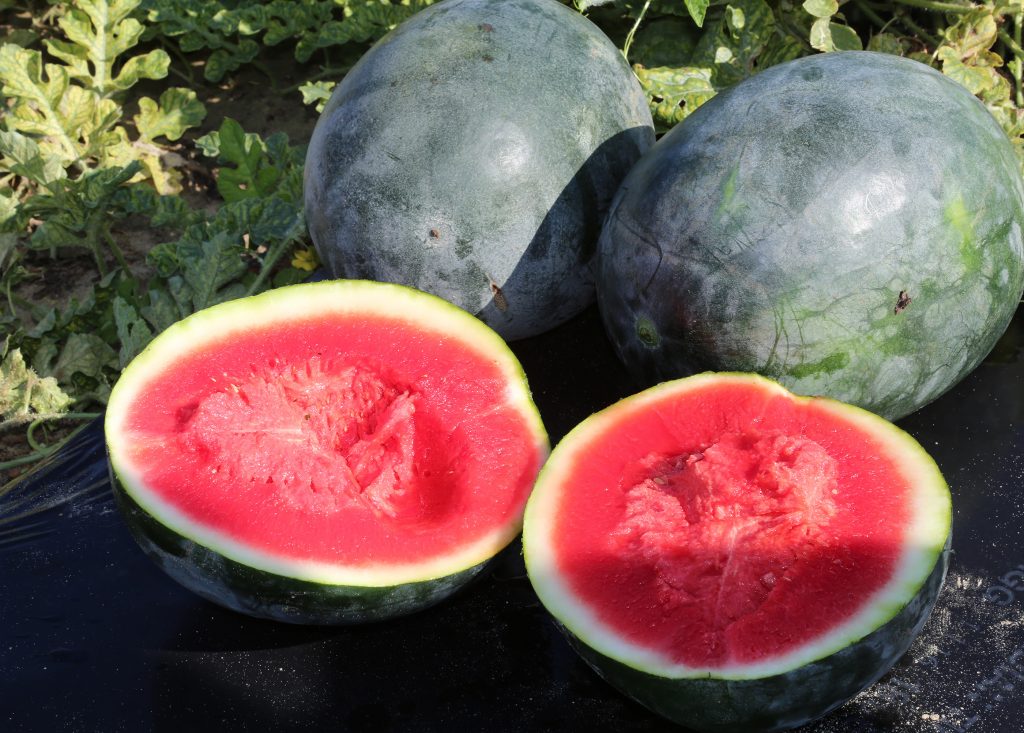
    Watermelon prices remain high for farmers in the Southeast. Unfortunately, there’s not enough crop ready for producers to take advantage, according to Bill Brim, co-owner of Lewis Taylor Farms in Tifton, Georgia.

    “Prices are still good. They’re around $155 to $160 a bin. There’s not many melons out there that’s ready right now. It’s unfortunate,” said Brim, who estimates individual watermelons are selling for an average of 24 cents per pound.

    He also believes the rainy weather has played a role in watermelons not maturing as quickly as they would in previous years.

    “Maybe too much water right now and they’re just not ripening as fast. We’ve got all of these showers in the afternoon, probably part due to that,” said Brim, who had to pause harvesting his own watermelon crop over the weekend.  “We had some stuff that was planted later, too than what we would normally plant; because the plants weren’t ready or the fields weren’t ready. It could be anything. Fumigants hadn’t been out of the soil long enough.

    “It’s quite a bit of difference from last year. Last year we were probably through by the (July) 4th.  We won’t be through for three weeks after the 4th (this year),” Brim said.

    This is typically a busy week for producers leading up to the July 4th Holiday on Saturday. Demand is normally very high this week.

    Drop in Georgia Acreage

    According to Samantha Kilgore, executive director of the Georgia Watermelon Association, acreage is projected to decrease this year to 19,000 acres. It would mark a significant drop from previous years’ harvests.  According to the National Agricultural Statistics Service, from 2016-2018, Georgia averaged a harvest of just more than 23,000 acres.

    Wet Planting Weather

    According to Andre da Silva, University of Georgia Cooperative Extension vegetable specialist, wet weather in February and early March could have delayed farmers’ planting window. If growers had to wait to plant their crop, it could have also impacted when their crop would be ready for harvest.

    He said that watermelon planting season in Georgia starts as early as March 1, but the bulk of farmers start March 15 and continue to the end of April. The watermelon market in Georgia begins in early June and usually concludes a week after July 4.

  • Sneak Peek: July 2020 VSCNews Magazine

    By: Ashley Robinson

    The July issue of VSCNews magazine focuses on a variety of topics, including machine harvesting of blueberries, strawberry pests and diseases and technology for vegetable production.

    Blueberry growers and packers are adopting the latest innovations and technology to reduce harvesting costs and put less reliance on contract laborers. Fumiomi Takeda, a research horticulturalist with the United States Department of Agriculture (USDA) Agricultural Research Service Appalachian Fruit Research Station in Kearneysville, West Virginia and Steven Sargent, professor and Extension postharvest specialist at the University of Florida Institute of Food and Agricultural Sciences (UF/IFAS), discuss the results from a study with USDA and several land-grant institutions, comparing different harvesting methods of blueberries.

    Takeda returns for another article, this time joined by Wojciech Janisiewicz, a research plant pathologist at the USDA Agricultural Research Service Appalachian Fruit Research Station in Kearneysville, West Virginia. They take a look at how USDA researchers are successfully using Ultraviolet light to control pests and diseases in strawberry production.

    Vegetable growers face a variety of challenges. However, new advancements in technology may help growers address these production issues. Yiannis Ampatzidis, an assistant professor at UF, presents growers with examples of state-of-the-art technologies that may be useful in vegetable production today or in the near future.

    Tomato and Pepper Spotlight

    The crop spotlight returns in July, this time with a focus on peppers and tomatoes.

    Xavier Martini, an assistant professor, and Joe Funderburk, a professor, both at the UF/IFAS North Florida Research and Education Center in Quincy, Florida, provide tomato growers with thrip management strategies.

    Anthracnose is a serious disease that occurs across pepper-growing regions worldwide. Pam Roberts, a professor at the UF/IFAS Southwest Florida Research and Education Center (SWFREC) in Immokalee, Florida shares management measures with growers.

    In the tomato and pepper spotlight, Gene McAvoy, associate director for stakeholder relations at the UF/IFAS SWFREC, shares some tips and tricks with growers on how to select varieties with profit potential.

    VSC Expo Set For Aug. 12-13

    Finally, readers will get a preview of the upcoming Citrus Expo and Vegetable & Specialty Crop Expo.

    The annual event will take place Aug. 12-13 at the Lee Civic Center in North Fort Myers, Florida. Growers can register here and automatically be entered for a chance to win a John Deere gun safe courtesy of Everglades Equipment Group. To learn more about the Citrus Expo and Vegetable & Specialty Crop Expo, including host hotel information, visit http://citrusexpo.net/. To receive future issues of VSCNews magazine, visit click here.

  • FFVA Accepting Applications for ELDP Class 10

    The Florida Fruit and Vegetable Association is accepting applications for Class 10 of its Emerging Leader Development Program (ELDP). The deadline for submission is Sept. 1. The program, which launched in 2011, develops leaders to be strong advocates for Florida agriculture.

    Since then nearly 100 participants have graduated from the program. Sessions and production trips provide a wealth of information on the many issues facing the industry. The year-long program includes seminars provided by FFVA staff members and other experts, meetings with legislators and state officials in Tallahassee, Florida and visits to specialty crop production areas in Florida and California. Ultimately, ELDP graduates can get involved to strengthen the future of specialty crop agriculture.

    Those interested can fill out the application form and the written agreement form and send directly to Sonia.Tighe@ffva.com. Class 10 starts its year November 2020.

  • Florida Farmer Accursio Reflects on Challenging Season

    By Clint Thompson

    With the majority of his spring and summer crop harvested and sold, Florida vegetable farmer Sam Accursio reflects on the challenges and struggles he faced this year amid the coronavirus pandemic and Mexico’s daily exports of produce into the U.S.

    “With our vegetable season, way back to February when things started shutting down and then in March and April; in March it was just very tough to operate with no restaurants opening. Then in April, it kind of smoothed out a little bit. Then as we were ending our season it started getting real bad, thinking about the growers up above us and it must have been a horrible situation for them entering their season right in the middle of everything shut down,” Accursio said. “The early part of our year was good. Mexico wobbled a few times with weather. Every time they wobbled or got some kind of serious rain or cold, everybody comes to the Southeast to buy produce. That happened a few times and made it interesting early on.”

    Accursio operates in Homestead, Florida and is in the process of finishing his okra harvests. He is also planting his cover crops and fixing machinery, typical producer responsibilities when the crops are not in the ground. He will plant his fall crop in September.

    Alternative Ways to Sell Produce

    He was one of many producers in the Sunshine State who felt gloom in March through June. When the pandemic struck in mid-March, restaurants closed their doors. When expected buyers of Florida produce shut down for multiple months, it forced farmers to think outside of the box in how they sold their crops.

    Accursio posted on social media about produce for sale as part of his new marketing initiative, selling directly to consumers. Cars lined up for a two-hour wait the first day. He sold 40,000 pounds followed by 60,000 pounds the following week. It was an amazing turnaround for a farmer who is contemplating something similar in the fall but on a smaller scale.

    “Time will tell if it’s something we can do to provide a service to the local community. My local community, there’s 2 to 3 million people here. I have all of Miami, and south of Orlando there’s 8.2 million people. Just give me that market, I’ll be happy,” Accursio said.

  • Florida Blueberry Farmer: USMCA Not a Good Deal For Vegetable, Specialty Crop Producers

    By Clint Thompson

    One of the most vocal critics of Mexican imports into the U.S. is adamant that the United States-Mexico-Canada Agreement will not help or protect vegetable or specialty crop producers.

    Blueberries are a popular commodity in the U.S. but also as an import from Mexico.

    “No, that’s not a good deal for specialty crops. They didn’t really address our issues at all. That was not a good deal for us,” said Ryan Atwood, blueberry farmer, who lives in Mount Dora, Florida, and is one of the state’s blueberry leaders. He farms 56 acres of blueberries, manages another 350 acres and is part-owner of the largest packing house in the Southeast United States.

    USMCA Background

    According to the USMCA, the agreement, once it enters into force on July 1, will support mutually beneficial trade leading to freer markets, fairer trade and robust economic growth in North America. But critics of the agreement will point to lack of protection for specialty crop farmers who already have to compete against imports of Mexican produce. U.S. Secretary of Agriculture Sonny Perdue even acknowledged concerns by specialty crop growers.
    The idea of fair trade seems more like a fantasy than reality for growers in the Southeast who, not only had to overcome the coronavirus pandemic this year but had to compete against the constant influx of Mexican imports.  

    “They don’t have the regulations we have. They don’t have to abide by the same rules. Their labor is definitely cheaper. They pay somebody $12 per day. I’ve got to pay them $12 an hour to get labor. It’s hard to compete with that. It’s real hard to compete with that,” Atwood said.

    Domestic Supply of Food

    Atwood commented in late April that he was “a fan of having our own domestic supply of food.” Agricultural imports from Mexico may be cheaper, but they’re not American grown. Atwood and Florida vegetable farmer Sam Accursio continue to preach the importance of supporting the American farmer.

    “I think it’s a security issue for our country,” Atwood said in late April. “We’ve got to grow our own food. You saw what happened 10 or 12 years ago when we used to import all that oil and then we got our own domestic supply going again. Other countries are going to be able to control you if they control your food supply.”

    Accursio added, “If you take Florida and California away in the winter, what do you have? You have third-world countries feeding this great nation, and I’m not going to eat it. I’m not going to do it.”

  • Georgia Vegetable Growers Should Prepare Now for Harvesting

    By Andre Luiz Biscaia Ribeiro da Silva for UGA CAES News

    Watermelons being researched on the UGA Tifton Campus. By Clint Thompson 6–6-17

    As we approach the harvest season for watermelon, bell pepper, tomato, yellow squash, zucchini, cucumber, sweet corn and other crops, Georgia vegetable growers can move ahead and prepare seasonal workers to mitigate the spread of COVID-19 during harvest time.

    According to the National Watermelon Association, there was an increase in the incidence of COVID-19 among seasonal workers in the watermelon industry of north Florida during harvest, and positive coronavirus tests were reported in 75% of seasonal workers. That means that 3 of every 4 workers tested were positive for COVID-19.

    Florida is a few weeks ahead of the Georgia watermelon industry for harvesting, and similar numbers can be expected in our state if agricultural operations don’t take action. Prepare for the possible transmission of coronavirus on your farm, packinghouse or other agricultural operation by stocking proper personal protective gear, instituting social distancing measures, and protecting the health of your employees, workers and customers.

    Regardless of the crop and how long or short the season may be, growers can do their part and University of Georgia Cooperative Extension is here to help. Below is a list of actions recommended by the National Watermelon Association:

    • Require all workers and employees to wear masks. There can be no exceptions outside of ADA restrictions.
    • Explain to workers that it’s in their best interest to take precautionary steps.
    • Put social distancing practices in place on the farm, in the sheds and in H-2A housing as much as possible.
    • Require workers and employees to regularly wash their hands and use hand sanitizers, if available.
    • Limit ridership on buses to allow for social distancing, and keep teams of workers together.
    • Sanitize buses and living spaces (H-2A housing) regularly. 
    • Pre-screen workers with temperature checks daily before work begins.
    • Ask workers to help with reporting. Encourage them to speak up if they see that others have symptoms.
    • Provide separate housing to quarantine workers who test positive. 

    For more resources on COVID-19 from UGA Extension, visit extension.uga.edu/emergencies. Contact your local Extension office by calling 1-800-ASK-UGA1.

  • Downy Mildew Found on Watermelon in South Carolina

    File photo shows downy mildew disease on watermelon.

    According to the The South Carolina Grower, downy mildew disease was found Wednesday in one watermelon field in Bamberg County, South Carolina.

    Justin Ballew, Clemson Extension commercial horticulture agent, said all growers should immediately spray watermelon with Ranman, Revus, or Gavel to protect their crops from the disease. In addition to direct yield loss, loss of vine cover can expose fruit to sunburn. Growers who find downy mildew in a field should apply Orondis Ultra or Orondis Opti in a weekly rotation with Ranman or Gavel.

    According to a previous UGA news release, the downy mildew pathogen thrives in wet, humid conditions and needs moisture on the surface of the plant for successful spore germination and further infection.

    Cucurbit crops — like cucumbers, melons, squashes and pumpkins — are susceptible to the disease.

  • Extension’s Mobile Farmers Markets Rolling Again in Metro Atlanta

    Fulton County Extension staff and volunteers prepare to distribute produce bags through curbside pickup at a Fulton Fresh mobile market stop in Atlanta. (Photo by Molly Woo)

    By Josh Paine for UGA CAES News

    Mobile farmers markets are rolling again in metro Atlanta to continue serving fresh produce and delivering nutrition education to communities through curbside pickups and digital content.

    University of Georgia Cooperative Extension agents and staff have modified the markets to reduce contact, loading mixed bags of produce like corn, onions, squash, potatoes, tomatoes and various fruit right into vehicles for citizens in Fulton and DeKalb counties to reach areas where fresh food can be hard to find or cost-prohibitive for some families.  

    The Fulton Fresh mobile market runs from now until July 9 and again from July 14 to August 13. The new van, furnished by the county government, will make six stops a week on Tuesdays, Wednesdays and Thursdays throughout the county.

    The Fresh On DeK mobile farmers market will be held from now until September 18 and will make eight stops per week on Tuesdays, Wednesdays and Fridays.

    Both markets are open to the public, but preregistration online is preferred to assist with contactless pickup. Onsite registration is available for Fulton Fresh for citizens who are unable to register online.

    In addition to produce, the markets provide recipe cards and information about online Extension resources to educate consumers about healthy preparation methods and lifestyles.

    “The organizations we partner with are always excited to see us,” said Laurie Murrah-Hanson, a 4-H agent in Fulton County. “In the past, people really enjoyed the food demonstrations, and we still wanted to offer similar resources.”

    Fulton Fresh, which began in 2012, started a dedicated, grant-funded Kids Market program this year to disseminate smaller bags of produce with recipes and at-home science experiments for youth. Videos of farm tours will be released on social media weekly in conjunction with the mobile market.

    UGA Extension staff have also partnered with the Fulton County Library System to provide digital resource lists for students in kindergarten through 12th grade.

    “I think stronger partnerships like this are going be a benefit that comes out of the current situation,” said Murrah-Hanson, who is coordinating the Kids Market.

    Fresh on DeK, now in its sixth year of operation, has made updates to the market in sourcing and delivery by switching to a free pickup system rather than a walk-up, fee-based model.

    “This year, we’re also partnering with a nonprofit called Global Growers to source culturally relevant food for our Clarkston community, which is one of the most diverse parts of the county,” Jamille Hawkins, a Family and Consumer Sciences agent and coordinator of the market.  

    The mobile markets are an office-wide endeavor across Extension program areas, and support for the programs comes from county governments. Fresh on DeK was made possible with additional funding from the Centers for Disease Control and Prevention and the DeKalb County Board of Health.

    For more information about Fulton Fresh and to preregister, visit extension.uga.edu/county-offices/fulton/fulton-fresh and follow on Facebook at facebook.com/UGAExtensionFultonCounty.

    Connect with Fresh on Dek by visiting extension.uga.edu/county-offices/dekalb/fresh-on-dek, following on Facebook at facebook.com/FreshonDeK or calling 404-298-4080.