Category: Vegetables

  • Organic Management Methods for Squash Pests

    A squash bug lays its eggs in a crop.

    By Ayanava Majumdar, Rammohan Balusu and Neil Kelly

    Many pests feed on squash from seedling to harvest. They are generally broken down into two groups: the chewing insects and the sucking insects. Chewing insects of squash consist of common pests like cucumber beetle, squash vine borer larva and pickleworm. Sucking insect pests consist of aphids, squash bugs and whiteflies. The pests a squash grower experiences may depend on location.

    PREVENTION STRATEGIES
    Remember that prevention of pests is the No. 1 goal of organic integrated pest management (IPM) systems. Rapid control after pest establishment becomes a difficult aim later in the production season. Cultural control tactics that include selecting virus-resistant varieties, timely planting and harvest (reduces pickleworm buildup), crop rotation and timely removal of crop debris after harvest (reduces squash vine borer buildup), consistent irrigation and trap cropping are some basic preventive approaches, also called Level 1 control.

    Perimeter trap cropping with Baby Blue and New England Hubbard squash in a mixed system is effective in reducing cucumber beetle and squash bug damage to yellow squash (main crop).

    PEST EXCLUSION FABRIC
    For Level 2 control, growers should use temporary or permanent pest exclusion fabric to create a barrier between insect pests and the main crop. Two lightweight materials tested in Alabama include the Super-Lite Insect Barrier (Gardens Alive, Inc.) and AgroFabric Pro 19 (Seven Springs Farm, Inc.). Both these materials look like lighter versions of the common row cover used for frost protection, but these materials are much lighter with 85 to 95 percent light and rain penetration.

    The trick is to put these light fabrics on low hoops (inverted loops) almost immediately after transplanting or after the seeds have germinated. These materials deflect much of the aphids and squash vine borers that fly early in the season. Squash plants can be grown inside the fabric for several weeks and removed or partially opened when flowering begins. Growers can also release beneficial insects like lacewings and lady beetles under the fabric for controlling accidental pest infestations.

    For both trap crops and pest exclusion tactics, check out the short IPM videos on the Beginning Farm Project channel at www.youtube.com/playlist?list=PLkNoAmOtt___MKj6IBxvWzOdWP0btBq4D.

    INSECTICIDE USE
    Growers also have a wide range of organic insecticides to choose from (Level 3 control). See the Organic Materials Review Institute website (www.omri.org) to find hundreds of approved organic products.

    Remember to scout squash crops for timely pest detection and identification, then use insecticides per the label with equipment that gives good coverage. For example, highly mobile squash bug adults are difficult to control with natural pyrethrin and spinosad, but the flightless small nymphs are far better targets for organic spray applications.

    Several premix insecticides are available commercially today in a variety of packaging, making them affordable for farmers. Squash vine borer and pickleworm larvae are internal pests, which are difficult to manage with topical spray applications. Initiate timely sprays with targeted placement where insect pests are hidden.

    Don’t quit spraying too soon since weather patterns can reduce insecticide persistence. Always spray in the evening hours when bees are not around and so that the solution can dry out overnight. Stop spray applications of organic materials when pests become inactive. You can save on the cost of insecticides and protect natural enemies this way.

    Finally, it is recommended that growers get in touch with Extension personnel in their state to develop an IPM strategy suitable for their farm. Producers in Alabama can download the Farming Basics mobile app to keep in touch with Alabama Extension. Subscribe to the Alabama IPM Communicator e-newsletter (www.aces.edu/ipmcommunicator) to stay informed throughout the season.

    Ayanava Majumdar is an Extension professor and Rammohan Balusu is a research fellow, both at Auburn University. Neil Kelly is a regional Extension agent with the Alabama Cooperative Extension System.

    This story was from the July edition of VSCNews Magazine. To subscribe, see http://vscnews.com/subscribe/.

  • Clemson Extension Agents Provide Crop Updates

    Downy mildew looks a little different on zucchini and pumpkin. Photo from Zack Snipes.

    Clemson Extension agents provided updates in The South Carolina Grower this week about the status of various crops being produced throughout the state.

    Coastal

    Zack Snipes reports, “It has been a hot week in the Lowcountry. Most spring and summer crops have finished up. Ground is being prepared and planted for fall crops. I have received a few texts from growers that have yellow dots on their zucchini plants, which is downy mildew. Even in this heat downy can still be an issue. I have also had some reports of green-colored squash in fields which is an indication of a viral pathogen. The crop handbook has recommendations for cultivars that are resistant to these viruses that cause this discoloring. Fall is notoriously bad for cucurbit viruses, so plan accordingly.  I have also seen some flea beetle damage on crops as of late.”

    Midlands

    Justin Ballew reports, “It’s been hot in the midlands and we’ve gotten to the point where there isn’t much relief at night. We had some scattered rain throughout the week, but overall we’re still quite dry. Lots of land is still being prepped for fall crops. We’ve had some fall brassicas and cucurbits planted already and they’re looking good so far. Last week I got to watch a pecan grower in Lexington thin some pecan trees. Without thinning, he would have seen a massive yield this year, which would result in a significantly diminished yield next year. Pecan growers aim for nuts on just 70% of the terminal buds.”

    Pee Dee

    Tony Melton reports, “Pickles are still being harvested and planted. We still have hundreds of thousands of bushels in contract to be planted and harvested.  Peas for processing are being rapidly harvested and replanted; some seed is short.  Sweet potatoes are starting to swell and size.  Processing peppers are being harvested, but we have a shortage of labor and multi-millions of pounds left to harvest. Processing tomatoes will be finished harvesting this coming week. Spring planted fresh market butterbeans and peas are mostly harvested, but seed is short to plant the fall crop. Still have some flooded fields and drowned crop.”

    Upstate

    Kerrie Roach reports, “Spotty rain across the county again last week has led to continued issues for growers without irrigation. Fall planting for vegetables is in full force. Peaches are looking good, and apples are coming along. Most growers will be putting on a fungicide cover spray this week before significant rains are forecasted.”

    Andy Rollins reports, “Bacterial speck and bacterial spot of tomato are major problems in plum tomato varieties in the upstate right now.  They were not able to control this disease even with a vigorous spray program using mancozeb + copper on several farms. In nearby plantings of large fruit varieties, the disease is present but not a problem. Samples have been sent to researchers at Auburn University where they have confirmed the presence of copper resistant isolates from other farms. Call on your extension agent for assistance with identifying and controlling this problem.”

  • Sweet Grown Alabama Director Advocates Buying Local

    Photo submitted by Ellie Watson/Gov. Kay Ivey declared July 22, 2020 as Sweet Grown Alabama (SGA) Day. The proclamation recognizes the state’s new branding program and honors farmers who grow food across the state.

    Ellie Watson, Sweet Grown Alabama Director, believes when consumers support local farmers, it provides them with a source of high-quality produce that helps growers remain sustainable.

    “It’s so important for consumers to support local farmers because not only does that money help the local economy; we know that about 60 cents of every dollar stays in the local community when you support local, so not only do you support your local economy when you buy from local farmers but you are also receiving the highest quality, freshest product available,” Watson said.

    “It’s really important for consumers to continue to support our farmers so they will be sustainable into the future and will be able to provide these high quality, local products to us for years to come.”

    Sweet Grown Alabama Day

    Watson and other industry leaders used Wednesday’s celebration of Sweet Grown Alabama Day to stress the importance of Alabama agriculture and launch the Sweet Grown Alabama’s online searchable database. It connects consumers with sources of locally grown produce which has garnered much interest in the last few months amid the coronavirus pandemic.

    “We have seen an increase in interest for locally-grown products since COVID-19 has hit. We really find that consumers are so much more interested in knowing how their food has been grown and most importantly whose hands have been on their product,” Watson said.

    “When you buy local and shorten your supply chain, you are able to know that the hands that have touched your food are right there local. It really just shortens that supply chain and takes out a lot of risk for disease and other things that we’re all so worried about in these unusual times.”

  • Sweet Grown Alabama Day Produces Sweet Results

    Picture submitted by Ellie Watson/Gov. Kay Ivey declared July 22, 2020 as Sweet Grown Alabama (SGA) Day. The proclaimation recognizes the state’s new branding program and honors farmers who grow food across the state. Gov. Ivey was joined by SWG Director Ellie Watson, Alabama Farmers Federation President Jimmy Parnell, Alabama Agriculture Commissioner Rick Pate, PowerSouth’s Horace Horn, and Montgomery Mayor Steven Reed.

    Sweet Grown Alabama Day will forever be July 22.

    Kay Ivey, Alabama Governor; Rick Pate, Commissioner of the Alabama Department of Agriculture and Industries; and other agriculture leaders and farmers joined forces at the Alabama State Capitol on Wednesday to celebrate the launch of a new online searchable database, which connects Alabama farmers and families.

    The celebration was highlighted by a special farmers market and Gov. Ivey issuing a proclamation that declared July 22, 2020, Sweet Grown Alabama Day.

    “Alabama’s farmers have a significant impact on our great state with over 580,000 Alabamians working in agriculture and related industries,” said Ivey in a press release. “Connecting with local farmers through Sweet Grown Alabama is a great opportunity to show your support for our neighbors and enjoy the wonderful products grown right here at home.”

    Picture submitted by Ellie Watson/Alabama Agriculture Commissioner Rick Pate speaks during Sweet Grown Alabama Day.

    Membership Database

    Originally launched in September 2019, Sweet Grown Alabama’s online membership database includes more than 150 farmers and businesses that sell Alabama-grown products directly to consumers.

    Nearly 30 vendors and Sweet Grown Alabama members joined the celebration on Wednesday with a farmers market on Bainbridge Street. They sold produce, meat, honey, pecans and other locally produced items.

    “We feel like we had a great morning. We just wanted to serve those farmers and do everything we can to make sure they had a good morning. That was the whole goal,” Sweet Grown Alabama Director Ellie Watson said. “We were glad to have them all in Montgomery today.”

    Industry leaders continue to preach the importance of buying locally grown produce and supporting Alabama farmers.

    “People are asking different kinds of questions about their food. They want more information about where it’s grown; who grew it; how it’s grown. We knew that’s what people wanted,” Pate said. “You don’t talk to anybody that doesn’t say, they want to know that the tomatoes that they’re buying at the grocery stores or the tomato they’re buying at the road-side stands are actually from Alabama.”

    Consumers can go to the Sweet Grown Alabama website and find local farms in their area. It also lists a harvest calendar so consumers can know when specific fruits and vegetables are ready to be picked. Anything from satsumas and watermelons on the fruit side to bell peppers and kale on the vegetable side are listed.

  • Clemson Extension Agents Provide Crop Updates

    Clemson Extension agents provided updates in The South Carolina Grower this week about the status of various crops being produced throughout the state.

    Statewide

    Dr. Matt Cutulle reports, “It is always good to control goosegrass even if it is past the critical period for competition with the crop. Lack of late-season control made hand-harvesting tomatoes difficult. Also, there will be a huge deposit of goosegrass seeds into the soil seed bank for next year unless the seeds are destroyed after the harvest.”

    Coastal

    Wilting of hemp is very common and often sporadic throughout fields. Photo from Zack Snipes

    Zack Snipes reports, “We experienced a nice hot week of weather in the Lowcountry.  Most crops are finishing up with the heat and recent rains.  On later season tomato I have seen bacterial leaf spot on the fruit which makes fruit unmarketable. I am seeing this on the second cluster of fruit set and not on the first or third clusters. Hemp seems to be off to the races and looking pretty good so far. There are within every hemp field occasional wilted, stunted and yellowed plants. These plants always have a weak root system and most of the time have girdling and interveinal discoloration.  Peppers and eggplants are loving this heat and are producing in high volumes.”

    Midlands

    Justin Ballew reports, “Last week was hot and mostly dry, though we did have some scattered thunderstorms come through over the weekend. Field prep for fall crops continues. We’ve had some fall tomatoes, peppers, and brassicas transplanted already and more to come this week. Everything is growing pretty fast right now and we’re still picking spring crops. Keep an eye out for spider mites, as they love the hot, dry weather we’ve had lately.”

    Sarah Scott reports, “We are still ahead of schedule on peach varieties being harvested. Early August Prince and August Prince are being picked now which is over a week earlier than usual. The fruit quality is still good with slightly smaller than ideal fruit. With the extreme heat and lack of rain in the past week, summer crops like tomatoes and cucumbers are looking rough. Bell peppers are doing well.”

    Pee Dee

    Bruce McLean reports, “Sweet potatoes are looking good. Establishment seems to be very good for the most part. Long green cucumbers, yellow squash, zucchini, cantaloupe, peas, okra, and sweet corn are harvesting well. Condition is good to very good. Sweet corn will be wrapping up shortly. Blueberries are pretty much finished, with only a few remaining fruit on Powderblue. Fruit condition is fair to good. Muscadines are coming along nicely and appear to have an excellent crop. Fresh muscadines should be beginning harvest soon, with wine/juice grapes still a few weeks from harvest. Be on the lookout for Grape root borer moths. They are starting to emerge. They were being caught in traps placed in vineyards in Marion and Horry counties.”

    Tony Melton reports, “Harvested first crop of processing peppers. Continuing to pick and plant pickles. Processing greens are over for the spring crop. Harvesting the first crop of processing and seed peas and planting fall crop. Getting processing tomatoes out of the field as quickly as the plant can take them.  Things are drying out, hope we don’t go into drought with the heat.”

    Upstate

    Kerrie Roach reports, “Spotty rain and high temperatures have left many small growers scrambling for irrigation options throughout the Upstate. Peaches and nectarines are still being harvested. Blueberries are just about finished, and farmers’ market produce is starting to wind down with the heat. Apples should begin next week with early varieties like ‘Ginger Gold’  and ‘Golden Supreme’.”

    Andy Rollins reports, “Plenty of early blight, bacterial spot/speck on tomatoes this season, but some of the more troublesome problems have been various tomato virus problems. When diagnosing virus problems it is important to get lab verification because herbicide injury can look very similar when just going by visual symptoms. If you suspect herbicide drift from a neighboring farm. Look for damage to other broadleaf plants in the area in between the suspected source and the damaged plants. Follow the wind direction.  You should have more severe damage on the leading edge. Also, herbicide residual from a previous crop like sunflowers can also give you herbicide damage that you did to yourself. Read and follow all pesticide label directions. There are plant back restrictions on some herbicides so be careful. If this is the case the damage should be fairly consistent/uniform throughout the area that was planted in the other crop.

    Unlike both of these other situations, virus problems may come from your seed source, the greenhouse where plants were grown or from weeds in the field. Pokeweed is commonly a source, as are many other broadleaf weeds. Thrips, aphids, and whiteflies are all known to vector viruses into plants. Symptoms are what you see below with “shoestring” looking leaves, leaves with distorted veins, and mosaic yellow and green coloration. There are many viruses that infect plants. Each of them can show different symptoms and also they can each look different on other plants as well. It’s even possible for a healthy-looking plant with no symptoms to be infected with several viruses.”

  • SE Regional Fruit and Vegetable Conference Still Scheduled for January

    It is never too early start thinking about next year’s Southeast Regional Fruit and Vegetable Conference. In the age of the coronavirus pandemic, industry leaders like Charles Hall, executive director of the Georgia Fruit and Vegetable Growers Association, must start thinking about an event still several months away.

    “We’re operating on the premise that we’re going to have a show in January in Savannah (Georgia). But we’re looking at, if the outbreak doesn’t calm down, if the requirements are such that we can’t hold the show, we’re looking at what the options are,” Hall said. “We’re just trying to do some preliminary, looking at different ways of doing that and whether we have virtual shows, live presentations. We’re just hoping that things calm down enough that we can have the show and get things going from there.”

    Scheduled for Jan. 7-10

    The conference is slated to be held in Savannah, Georgia on Jan. 7-10. It’s one of the largest events in the Southeast. It attracts 3,200 attendees and 280 companies that have booths to showcase their agricultural products.

    Hall believes a final decision will be made in the fall on whether the conference will be in-person or virtual. A lot will depend on the availability of companies being able to travel for meetings at that point.

    “If some of the national companies make the decision that their employees can’t travel in January, that will begin to affect our decision of whether we do with the conference,” Hall said. “We will have a conference. The real question is, hopefully, we’ll have an in-person conference and not a virtual conference.”

    The other dilemma is if the conference proceeds as normal, how will social distancing guidelines be followed with that many people expected to attend?

    “Right now, if we had that conference in Savannah, you would have to be at a 50-person maximum in a room. I think is what the requirements are, and then they have to be social distancing. Those classrooms have been wall-to-wall people and they’re standing along the sides, you can’t have that many people in a classroom right now,” Hall said.

  • FFVA Still Hoping for Celery, Watermelons to be Added in CFAP

    The Florida Fruit and Vegetable Association (FFVA) did not get all of its wishes granted with the recent revisions to the Coronavirus Food Assistance Program (CFAP) by the United States Department of Agriculture. FFVA President Mike Joyner confirmed that there are two commodities that his organization hopes the USDA will include in Category 1.

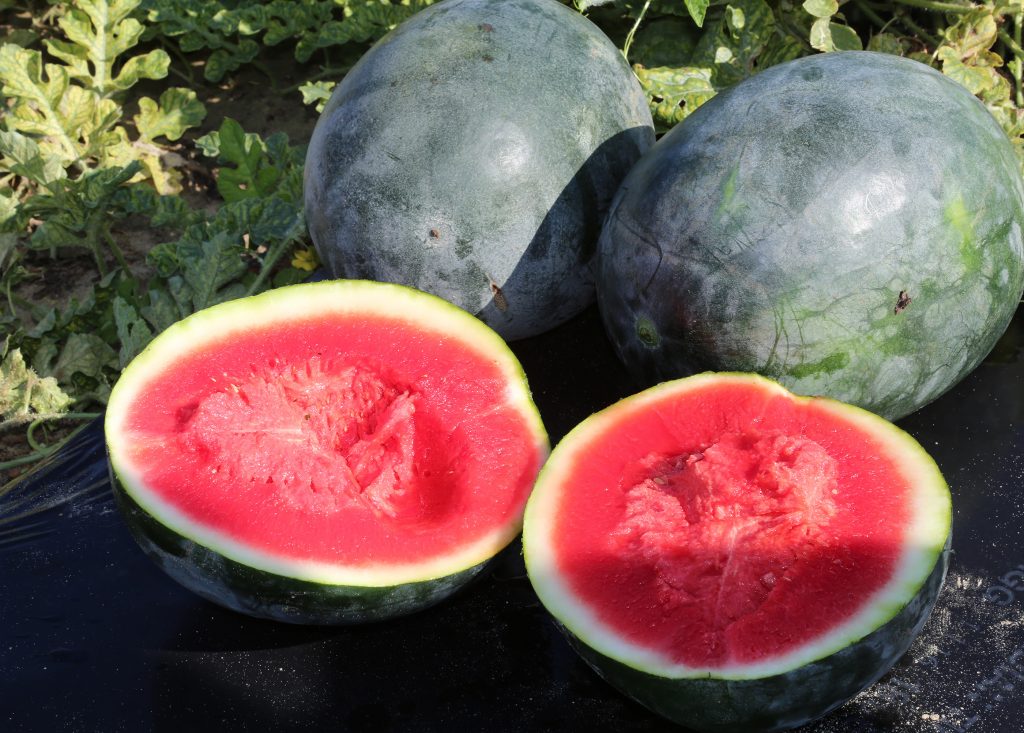
    Watermelons on display at a farm on the UGA Tifton campus. Watermelons are a commodity that the FFVA hope will be added to Category 1 of CFAP.

    “The two commodities that we also submitted for consideration also in column 1; we had blueberries, but we also had celery and watermelons. We’re hoping that in that second round, the USDA approves those two commodities for column 1,” said Joyner, who added that 13 of the 29 commodities that FFVA petitioned for were revised by the USDA. “We submitted information in the NOFA (Notice of Funding Availability) that clearly made the argument that the losses for watermelons for about a four-week period, the price just dropped off the table.

    “We appreciate the decision on the 13 of the 29. We hope that when the second round comes, they will approve the others.”

    According to https://www.farmers.gov/cfap/specialty, eligible specialty crops in CFAP are broken down into three categories:

    1. Had crops that suffered a five percent-or-greater price decline between mid-January and mid-April as a result of the COVID-19 pandemic,
    2. Had produce shipped but subsequently spoiled due to loss of marketing channel, and
    3. Had shipments that did not leave the farm or mature crops that remained unharvested.

    According to the USDA press release, additional commodities were added to CFAP and that the USDA made other adjustments to the program based on comments received from producers and organizations and review of market data.

    The USDA’s Farm Service Agency (FSA) is accepting applications for CFAP through Aug. 28.

  • New Format Planned for Educational Sessions During Virtual Citrus Expo

    While coronavirus will prevent the citrus industry from gathering this year at Citrus Expo, it will not stop growers from getting the education they need.

    The 2020 Citrus Expo educational program will be held live online Aug. 19–20 and will include door prizes. If you’re lucky, you could walk away with one of four $200 Bass Pro gift cards!

    The online virtual event will include three parts: 1) a general session for everyone, 2) a citrus program and 3) a vegetable and specialty crop program.

    In the general session, Florida Department of Agriculture and Consumer Services Director of Cannabis Holly Bell will give an update on the state’s hemp program. Bell made a big splash at last year’s Expo, and we are excited to welcome her back to the event. She’ll discuss how the Florida hemp program is becoming the role model for the country. The general session also is expected to cover trade and water issues, two major current concerns for Florida growers.

    Some of the topics University of Florida Institute of Food and Agricultural Sciences researchers are planning to speak about in the citrus program include:

    • Soil health and cover crops
    • Soil amendments and conditioners for root health
    • Tree care considerations for individual protective covers
    • Economics of grove management
    • Nutrition and irrigation practices for HLB management
    • Exotic viral diseases
    • Performance of rootstocks and varieties

    The seminars will remain available online after the live event, but there will be additional content available exclusively for those who attend the live two-day program. It is expected that continuing education units will be available toward the Florida restricted-use pesticide license as well as the Certified Crop Adviser designation for those viewing the seminars.

    Not to be missed in the virtual event will be a special vendor corner. This is where exhibitors and sponsors will share their industry expertise and connect with attendees.

    Registration is sponsored by Syngenta, and details will be provided soon on how to sign up for the event. For now, mark your calendar for virtual Citrus Expo on Aug. 19–20. Please note that this is one week later than Citrus Expo was originally planned for.

    For more information, stay tuned to CitrusExpo.net, email CitrusExpo@AgNetMedia.com or call 352-671-1909.

    About the Author

    Tacy Callies

    Tacy Callies

    Editor of Citrus Industry magazine

  • FFVA President: Pleased With Decisions USDA Made Regarding CFAP

    Florida’s fruit and vegetable (FFVA) growers were big winners in the United States Department of Agriculture’s (USDA) decision last week to amend certain commodities to the list covered under the Coronavirus Food Assistance Program (CFAP).

    FFVA President Mike Joyner said almost half of the commodities that his organization petitioned the USDA for were accepted.

    FFVA President Mike Joyner
    florida fruit
    Joyner

    “We’re pleased with the decisions that the USDA made. We submitted 29 additional crops for consideration in that NOFA (Notice of Funding Availability), 29 additional crops, working with our members and 13 were approved,” Joyner said. “But we understand that there’s going to be a second round of decisions that are going to be made. We don’t know if those that we didn’t get a decision on, we don’t know if they looked at those and rejected them. Our hope is that this will be in the second phase. I think as important as that, the decision that the USDA made to include blueberries in column one was a big decision.”

    According to the prior VSCNews story, blueberries were one of seven eligible commodities added to Category 1 of CFAP. According to the USDA press release, the USDA found these commodities had a 5% or greater price decline between mid-January and mid-April as a result of the COVID-19 pandemic. Originally, these commodities were only eligible for marketing adjustments, which Florida blueberry farmer Ryan Atwood believes would not have helped growers like himself at all.

    “Not many individuals qualified for 2 or 3. But everyone in Florida is going to qualify, just about for Category 1. That’s why it is a big deal,” Atwood said.

    According to https://www.farmers.gov/cfap/specialty, eligible specialty crops in CFAP are broken down into three categories:

    1. Had crops that suffered a five percent-or-greater price decline between mid-January and mid-April as a result of the COVID-19 pandemic,
    2. Had produce shipped but subsequently spoiled due to loss of marketing channel, and
    3. Had shipments that did not leave the farm or mature crops that remained unharvested.
  • UF/IFAS Extension To Assist in FDACS Project Connecting Food-Insecure Families With Florida-Grown Produce

    By: Kirsten Romaguera, 352-294-3313, kromaguera@ufl.edu

    GAINESVILLE, Fla. — The UF/IFAS Extension Family Nutrition Program (FNP) is among the organizations partnering on a Florida Department of Agriculture and Consumer Services (FDACS)-led grant project to fight food insecurity in several rural Florida communities.

    commissioner
    Nikki Fried
    Florida Agriculture Commissioner

    In a virtual press conference last Thursday, Agriculture Commissioner Nikki Fried announced the project, funded by a $100,000 Walmart Foundation grant and benefiting selected food banks in Flagler, Highlands, Levy, Putnam, Walton and Palm Beach counties.

    “Despite Florida growing over 300 commodities and enough fresh produce to feed 150 million Americans, nearly 3 million Floridians suffer from food insecurity, including 850,000 children – and this was before the public health and economic crises of COVID-19,” Commissioner Fried said. “We’ve had to get creative to help fight chronic hunger, and that includes public-private partnerships, particularly in rural areas. That’s why we’re so grateful to the Walmart Foundation for their generous support, providing $100,000 to rural food banks and farmers that will help Florida’s families in need. This partnership is a great example of government, the private sector, and nonprofits coming together to serve our neighbors during a crisis.”

    Karla Shelnutt, UF/IFAS Extension state program leader for nutrition and principal investigator of FNP, spoke on the call in her capacity as vice president of the (UF-unaffiliated) Living Healthy in Florida board, which is a direct support organization of FDACS.

    Karla Shelnutt

    “This work aligns perfectly with the Living Healthy in Florida mission,” Shelnutt said. “COVID-19 has resulted in a significant increase in the unemployment rate in Florida, which has led to more and more families visiting food banks and pantries for assistance. Many of these programs have been unable to meet this increase in demand. This grant initiative is going to make a huge impact for several rural food banks and pantries to obtain the infrastructure needed to help meet this demand and increase their capacity to serve.”

    Shelnutt explained that the project merges her roles, as UF/IFAS Extension FNP public health specialists will partner with the recipient food banks to provide a consultation to determine infrastructure and nutrition education needs.

    “The Family Nutrition Program will lend the expertise of our public health specialists to provide one-on-one consultations to each participating organization to help them assess their space and identify ways to not only expand their infrastructure but also to encourage families to make healthier eating choices,” she said. “This work also aligns perfectly with UF/IFAS Extension priorities to increase access to healthy food for all Floridians.”

    Another way the project is accomplishing that access is by connecting Florida-fresh produce to food-insecure families. A nonprofit farmer network, the Center for Sustainable Agricultural Excellence and Conservation (CSAEC), will provide pre-made produce boxes to the selected food banks for distribution to families.

    “Partnering with these food pantries will make a difference in many lives, and we are honored to play a small role in it,” Shelnutt said. She also expressed gratitude to both the Walmart Foundation for supporting the “innovative solution that will help feed hungry Floridians, decrease commodity waste, and increase the operational capacity of rural food banks and pantries,” as well as Commissioner Fried for “her commitment to bringing more awareness to food security issues throughout our state.”

    Find more information on the program in FDACS’s press release at tinyurl.com/y73pdkby. Video of the press conference, courtesy of FDACS, is also available at tinyurl.com/yb3joul4.