Category: Vegetables

  • Clemson Extension Agents Provide Crop Updates

    Clemson Extension agents provided updates in The South Carolina Grower this week about the status of various crops being produced throughout the state.

    Statewide

    Dr. Tony Keinath with a word on crop rotation. “To keep the soil on your farm productive over the long term, do not replant the same vegetable, or a related crop, in the same field “too often.” How often is “too” often depends on the crop and the pathogens present in the soil. Almost always, “too often” is less than 12 months between disking the old crop and planting the new crop.

    The main risk in replanting “too often” is building up root pathogens that survive in the soil for years. Even in the heat, diseased roots and stems take several months to decay enough so they are not a source of pathogens.

    Another risk is foliar diseases that start on volunteers from the previous crop. The pathogens may be in or on some of the seed that sprouts; for example, black rot on leafy brassica greens or gummy stem blight on cantaloupe and watermelon. A small number of infected volunteers means the disease has a head start right at the beginning of the crop.

    Controls for soilborne pathogens (fungi, water molds, and nematodes) are limited.

    • Many vegetable crops have no resistance to these pathogens.
    • Fungicides do not penetrate soil well, or they are quickly inactivated.
    • Fumigants have many restrictions that require time-consuming record keeping and air monitoring.

    Root-knot nematodes are a special problem, because they form galls on many vegetables and some field crops (cotton, for example) grown in rotation with vegetables. Summer cover crops of sunn hemp can lower nematode numbers.

    Without crop rotation, more fungicide sprays will be needed, which raises the risk of fungicide resistance. Fungicides and fumigants are not a substitute for good crop rotation.”

    Midlands

    Justin Ballew reports, “Many areas got a little more rain last week, and we had a break from the heat over the weekend. We have a lot of the fall crop planted now, including squash, zucchini, tomatoes and brassicas. So far everything is mostly growing well. We are seeing bacterial wilt develop in some of the fall-planted tomato fields. Bacterial wilt loves hot soil temperatures, which is typical this time of year. Be sure to follow a proper crop rotation plan (at least 3 years) to help manage bacterial wilt buildup in fields. Since the heavy rain we got a few weeks ago, we’ve also seen plenty of bacterial spot in what’s left of the spring tomatoes.”

    To test for bacterial wilt in tomatoes, place the cut stem in a jar of clean water. If the plant is infected, within about 30 seconds you will see milky, white bacterial ooze begin to stream from the stem. Photo from Justin Ballew.
    Bacterial wilt commonly causes discoloration of the vascular tissue within the stem. Photo from Justin Ballew.

    Pee Dee

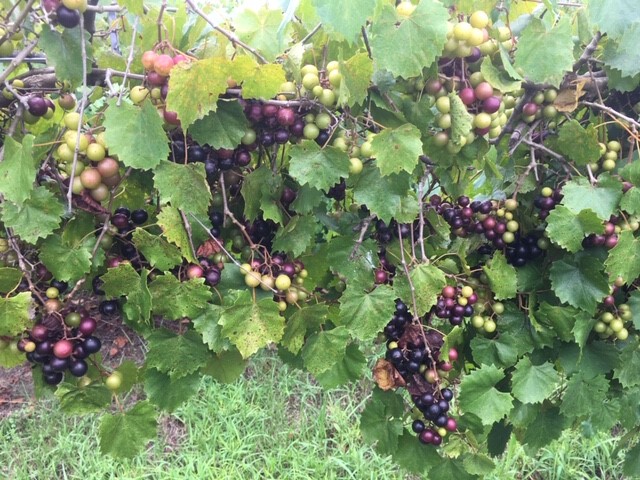
    Bruce McLean reports, “Most summer vegetable crops are starting to wind down. Peas, okra, watermelon and cantaloupe are still being harvested at some volume. Late summer/fall squash, cucumbers and tomato harvest are a couple of weeks away. Fresh market muscadines are being harvested now. Juice and wine muscadines are getting close – maybe 7 to 14 days away, depending upon location. In most juice and wine muscadine vineyards, Carlos is around 40% colored (ripe); Noble is around 60%; and Doreen is around 25%. Grape root borer (GRB) flight is still occurring, with moderately high moth counts in traps.”

    Eumorpha pandorus, a.k.a Pandorus Sphinx Moth caterpillar, found in the muscadine vineyard at Pee Dee REC. Photo from Bruce McLean.
    ‘Noble’ muscadines getting close to harvest. Photo from Bruce McLean.

    Tony Melton reports, “‘Another Crop Bites the Dust’ from spreader/stickers. I have seen too many farmers sing this sad song. Be careful and know what you are doing when adding a sticker/spreader when spraying vegetables. Short season, tender vegetable crops will burn very easy in our heat and do not have time to come back like long season row-crops. Our state’s second major watermelon/cantaloupe season is in full season in Chesterfield County. Harvest is in full swing and will continue until frost. Curculio sprays are beginning to be applied to the fall pea crop. Looks like pickle harvest will continue until frost.”

  • Peak Time for Insect Pressure

    Heat and dry weather conditions make this a peak time for insect pressure. Ayanava Majumdar, an Auburn Extension Professor in Entomology and Plant Pathology, cautions fall vegetable growers about insect pests and to scout regularly.

    Pictured is a fall armyworm.

    “Insects love the heat because they grow through their life cycle faster because of the extra heat. They grow faster. They mate and reproduce faster plus the plants are stressed. It’s like a perfect storm and it leads to massive crop losses for farmers,” Majumdar said.

    Armyworms

    There are various insect pests the growers need to be mindful of this time of year. Majumdar is concerned with caterpillars, in particular, the armyworm sisters: beet armyworm, fall armyworm, yellow striped armyworm and southern armyworm.

    “These four, often times there’s mixed populations in the field. They can be very difficult to identify when they’re small. As they grow bigger it’s easier to identify. Those armyworms have very distinct patterns and head structures,” Majumdar said. “Those armyworms, along with horned worms, loopers; everything is just exploding right now. This is the peak of insect activity now.; August and then into September, to some extent. We are constantly telling farmers to watch; caterpillars on tomatoes and then you will see sucking insect pests, which cause quality loss like stink bugs, leaf footed bugs.

    “Often, it’s hard to tell the yield loss from just the weight of the produce, but they will destroy the appearance or the taste of the produce. There’s a huge quality loss with the sucking insect pests. Those are increasing as well.”

    Squash Bugs

    He also warns of squash bugs on squash. They feed on the crop and can transmit yellow vine disease. This can shut down plants during harvest and is exacerbated by the current drought-like conditions.

    While scouting is important, knowing when to apply insecticides can be just as key to pest management. Majumdar implores farmers to always consider the current weather conditions.

    “We can not do calendar-based spraying anymore, at least not in Alabama. We go from drought to extreme wet weather in a week. That has a huge effect on insects,” Majumdar said. “Have some flexibility in the IPM plan. That’s very important to check the weather patterns. I’ve described flash drought versus prolonged drought. There’s different kinds of drought we’re experiencing now. That affects our pest management.”

  • Clemson Extension Agents Provide Crop Updates

    Clemson Extension agents provided updates in The South Carolina Grower this week about the status of various crops being produced throughout the state.

    Coastal

    Rob Last reports, “Across the area fall plantings are growing on and developing well. Scouting for pests and diseases will remain critical to ensure timely applications are made where necessary. For those without fall planted crops thoughts are turning to next year with soil sampling. One key thing to consider at this point in the year is the use of cover crops. Not only will cover crops help to prevent erosion or loss of soil they also capture nutrients. In addition, as these crops are incorporated, they act as a source of organic material to aid in nutrient cycling in the soil as well as moisture retention.”

    Zack Snipes reports, “We were spared from the worst of Hurricane Isaias.  We clocked 21 MPH wind gusts and 1.66 inches of rain at the Coastal Research Station in Charleston. Most growers are working their fields after the much needed rain and are laying plastic for the fall crops. This is the time of year when insects, diseases and weeds usually have parties in fields if they are left unattended. Remember to clean fields, remove crop residue, turn under weeds, and, if possible, plant a cover crop. I would recommend buckwheat, sorghum-sudan or cowpeas this time of the year to build soil, suppress weeds, improve nutrient capacity and increase beneficial insect habitat.”

    Midlands

    Justin Ballew reports, “Most areas received at least a little rain last week, and we had a temporary break from the heat. The increased moisture in some areas has led to an increase in powdery mildew and downy mildew in cucurbits. Folks are still busy preparing fields and planting fall cucurbits and brassicas. What’s been planted is growing well. Some of the earliest planted fall crop tomatoes are already being staked.”

    Sarah Scott reports, “Peach season is winding down along the Ridge. Late varieties like Big Red are being harvested, and end of season tasks are starting like summer pruning. Usually this is done to open up tree centers and remove any damaged or dying wood. Cuts at this time should be made no larger than a quarter. Late season peppers, eggplant and squash are being planted. Greens like collards and kale are being seeded as well. Afternoon storms have provided some much needed rain in some areas while others remain dry still.”

    Upstate

    Kerrie Roach reports, “Things in the ‘Golden Corner’ are in full force when it comes to tree fruit. Peaches are still coming off and we about 60%-70% of the way through the season. Asian pears and nectarines are coming off now, and apples are beginning to gain steam with early varieties starting to ripen. Late season rot issues are showing up in orchards where afternoon rains have prevented cover sprays. Merivon has been a consistent player for disease control, but a timely Pristine application has been shown to have much more efficacy on these late season rots.

  • Bringing Technology to Specialty Crops

    United States Department of Agriculture

    Posted by Greg Astill, Markets and Trade Economics Division, Economic Research Service and Suzanne Thornsbury, Senior Advisor for Agricultural Economics and Rural Communities, Office of the Chief Scientist in Research and Science

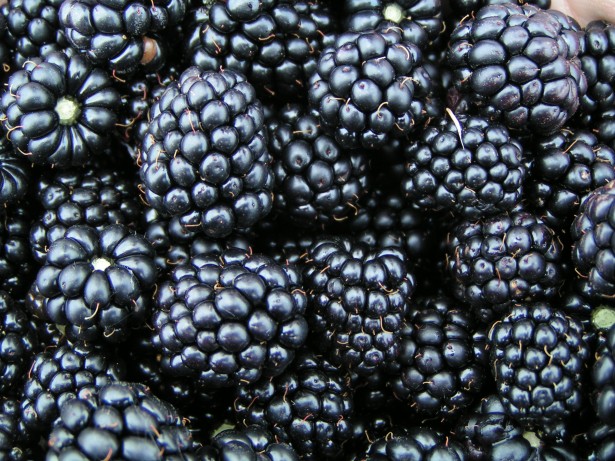
    File photo shows blackberries.

    Advances in technology, automation, and remote sensing is a cross-cutting, macro movement in science impacting agriculture outlined in the USDA Science Blueprint (PDF, 2.6 MB). The Science Blueprint guides USDA’s science priorities for the next 5 years, building from past success. Relative to other crops, many specialty crops are more dependent on agricultural labor for production, harvesting, and processing. This is part of a blog series that highlights research investments to advance automation and mechanization for specialty crops.

    Each day we use technologies to solve problems and accomplish tasks that once would have taken much longer. Whether facial recognition software, a smart thermostat, or a robotic vacuum, technology has changed the way we live and work. Farmers are also using technology to make production of specialty crops, such as fruits, vegetables, and tree nuts, more efficient. These crops make up one third of U.S. crop production sales and one sixth of U.S. agricultural sales.

    Between 2008 and 2018, USDA funded $287.7 million towards diverse research projects to develop and enhance the use of automation or mechanization in specialty crop production and processing. Most of these projects focused on precision agriculture, which includes a set of complex or “smart” technologies that tailor the needs of the plants to its specific environment or growing conditions, such as precise water, fertilizer, or pest or weed control. For example, a smart sprayer identifies individual trees in an orchard, their size, shape, and leaf density to adjust spray and reduce herbicide use. A smart irrigation system provides water only to the plants that need it, when they need it, continually adapting to crop conditions as the weather changes.

    Some USDA projects focus on development of specific components that will eventually be combined into more complex technologies. Sensors generate high-quality data on crops, weather and soil. Remote sensing data, gathered by satellites, includes information like crop growth, soil moisture, or weather conditions while drones gather more localized data on weed, pest, or disease prevalence. Machine learning algorithms convert the data into useful forms of information to help manage the farm.

    Other projects include development of job aids or automated machinery to help farm workers work more efficiently, such as an adjustable trellis system to make harvesting blackberries easier or mechanical thinners and pruners for vineyards and orchards. And some automation or mechanization technology helps with harvesting and processing, such as a flash freezing system or a mobile, in-field computerized apple sorter.

    USDA funded $287.7 million toward a diversity of research projects to develop or enhance the use of automation or mechanization in specialty crops between 2008 and 2018

    USDA funding for research into mechanization or automation for specialty crops, 2008-2018 chart
    Source: USDA, Economic Research Service, based on data provided by USDA’s Agricultural Marketing Service, Agricultural Research Service, and National Institute of Food and Agriculture.

    For more information, see the recent ERS report Developing Automation and Mechanization for Specialty Crops: A Review of U.S. Department of Agriculture Programs.

    This research supports the “value-added innovation” theme outlined in the USDA Science Blueprint and moves us closer to meeting the goals outlined in USDA’s Agriculture Innovation Agenda.

  • Cowpea Curculio Troubling for Alabama Producers

    A tiny insect continues to take a bite out of the southern pea crop in Alabama.

    Ayanava Majumdar, an Auburn Extension Professor in Entomology and Plant Pathology, believes insecticide resistance is a huge issue in why farmers in Alabama and Georgia cannot get a handle on cowpea curculio.

    “I think many people just don’t believe that resistance is an issue or at least in their backyard, but it’s a pest you cannot kill with any traditional conventional insecticide. You have to think out of the box when you’re trying to manage this cowpea curculio. It’s been like that for many years,” Majumdar said.

    Where It’s Located

    Majumdar said the insect has been spotted in Alabama counties below the I-85 corridor, moving in a west-southwest direction.

    “I have plots in Headland and also in Brewton. We started in both of these places, and very soon within a few years we had a population you cannot control,” Majumdar said.

    According to UGA CAES story in 2018, cowpea curculios are small, dark weevils that originated in Mexico. They feed and lay eggs in the pods of Southern peas, making the peas unmarketable. 

    “It is an insect that’s limiting our bean area production. I’m telling farmers not to increase any other production unless you know how to manage this pest for cowpeas or southern peas. That’s a big limiting factor across south-southeast,” said Majumdar, who said there’s two generations of this pest. “It’s the second generation that completely ruins the crop for us. It increases the pressure so much you can’t even manage it.”

    Majumdar implores farmers to be timely with their early plantings and then with their harvests.

    “Often times the later plantings will be the worst hit. Timing is very critical,” Majumdar said. “Crop rotation is critical, but crop rotation may be difficult for a small farmer.

    “If you are using insecticides, there are a few choices but none of them will give you 100% control. The point is, the cultural practices; timing, crop rotation, these things are more important to manage it right now.”

  • UF/IFAS to Host Vegetable Growers Meeting

    The University of Florida/IFAS will host a vegetable growers meeting on Aug. 20 from 10 a.m. to noon. It will be a virtual meeting and feature talks from Extension agents and specialists.

    Extension agent Craig Fey will discuss fundamentals of weed management and focus on principles such as exclusion, prevention, cultural and chemical strategies.

    UF/IFAS weed scientist Ramdas Kanissery will talk about managing difficult weeds in vegetables. Nathan Boyd, UF/IFAS weed scientist, will talk about weed management programs for plasticulture vegetables, focusing on cover crops, fumigants and herbicides. Calvin Odero, UF/IFAS Associate Professor in agronomy with a specialty in weed science, will focus on weed management in sweet corn.

    Yiannis Amptazidis, UF/IFAS Assistant Professor in Precision Agriculture and Smart Machines, will present smart technologies for precision weed management in vegetables.

    There will also be time to for scientists to discuss upcoming research as well.

    Those interested in attending can RSVP by calling 239-658-3400 or email Zoe Watson at zshobert@ufl.edu.

  • Soil Sample for Nematodes Now

    UGA Extension photo/Stubby root-knot nematode on onion plants in 2017.

    The time is now to soil sample for nematodes, says Pablo Navia, Adama Technical Development Leader for East Region.

    “This is the best time since populations of nematodes are really high right now in the soil. There’s still some roots that they are feeding on. This is the best time to sample,” Navia said. “It’s a good way to know what enemy you’re dealing with next season.”

    Navia said growers need to coordinate with the Extension agents in their county to take samples and arrange to take their samples to the appropriate lab.

    “Each state’s Extension agent will know where to send the sample. Each university will have their lab and you can send the sample to their lab,” Navia said.

    Navia recommends that producers take between 4 and 8 samples in a field, which will provide growers a good representation of the entire field.

    There are different types of nematodes that impact vegetables, with root-knot nematodes being the most widespread and can cause the most damage. Nematodes are especially troubling because of the wide range of potential hosts. In addition to vegetables, nematodes cause problems in cotton, peanut and tobacco plants.

    “It’s one of the most damaging pests out there,” Navia said. “It’s as important as a soil-borne disease or a foliar disease. There are many diseases that can affect a particular crop. But nematodes will make everything worse. If you have nematodes, then you have high chances of losing your crop.”

    Soil sampling better prepares growers for the following season and will help them know if numbers are beyond threshold and if further action is warranted.

    “If you have root-knot nematode and you find one nematode in your sample, that means you may be in trouble next season. Nematodes, like stubby root for example, the threshold is 200. Depending on the crop, like the citrus nematode, the threshold is 1,000,” Navia said. “It really depends on the species.”

  • Clemson Extension Agents Provide Crop Updates

    Clemson Extension agents provided updates in The South Carolina Grower this week about the status of various crops being produced throughout the state.

    Statewide

    Dr. Matt Cutulle reports, “Hurricanes or tropical storms can lead to increased seed dispersal from seeds that can be transported by wind and water. Two notorious weeds that come to mind when planning for hurricanes are Horseweed (Conyza canadenis), which due to lightweight seeds and plant architecture, can be dispersed for miles during wind storms. A troublesome weed that can be dispersed through water (overflowing irrigation ditches, river surges etc.) is curly dock (Rumex crispus) due to the bladder-like structure of the seed. If you have access to a flame weeder or maybe Gramoxone it might be a good idea to get out to any fallow fields right now and start torching weeds with seed heads prior to this incoming storm to prevent unwanted widespread dispersal of weed seed.

    Coastal

    Zack Snipes reports, “We are anxiously awaiting to see what Hurricane Isaias will do today and tonight.  Hopefully, we will be spared of heavy rains and winds. Some rain from the storm would not be a bad thing as many fields are dry.  I have been finding some leaf spots in rabbiteye blueberry, which is common for this time of year. What is unique about the leaf spots is that they have caused the variety Tifblue to shed its leaves and then attempt to grow out more leaves. The plant is weak and nutrient-starved so the new leaves are very small and red. You will see red shoot flagging symptoms on Tifblue but no other varieties. The other varieties will have the same leaf spot but they will still hold onto their leaves. Increased fungicide applications between bloom and harvest should help with management of this disease and increase yields on Tifblue and other cultivars.”

    Midlands

    Justin Ballew reports, “Some of the midlands got some heavy rain this past week, while others remain dry as a bone. Parts of Lexington had a strong storm come through Wednesday night that washed out areas in some fields and left ponds in others. We will have to replant some areas where fall crops had just been planted. The weather has cooled of slightly since. Aside from that, folks are still prepping fields and planting fall tomatoes, peppers, and brassicas. We’re still thinning pecans also. For anyone planting strawberries this fall, now is a good time to start taking soil samples.”

    Pee Dee

    Damage from powdery mildew is starting to show up on muscadines. Photo from Bruce McLean.

    Bruce McLean reports, “Most vegetable and fruit crops look surprisingly good for the amount of heat we have had recently. Sweet potatoes are growing very well. Peas, squash, zucchini, cantaloupe, watermelons, okra, and cucumbers are all looking good and harvesting good quantities. Downy mildew is still showing up on cucumbers, and powdery mildew on squash and zucchini. Sweet corn and butterbeans are wrapping up. The blueberry crop is finished. Muscadine grapes are looking very good. Wine/juice muscadines are just starting to color (maybe around 2-3%) and should be ready to begin harvest in about three weeks. Fresh market varieties should be just getting ready to harvest now on the earliest varieties. Grape root borer (GRB) activity was high this past week, with some traps capturing 50+ moths. Too late for any type of treatment for GRB. Just monitor and plan for control next year. Powdery mildew damage is starting to show up in the vineyard. No signs of fruit rot yet. Stink bug damage has been very light in vineyards with a strong spray program.”

    Tony Melton reports, “All processing peas are harvested for the spring crop, but we have some cowpea curculio because of uneven crop due to excessive rain.  Fall cowpea crop is planted or is rapidly being planted. If they found seed, farmers have already planted fall butterbean crop. Getting ready to plant fall brassica crops. Hopefully, all vegetable growers sprayed potassium phosphide on all vegetable crops before all the rain comes for root rot control.”

    Upstate

    Kerrie Roach reports, “Rain has still been spotty around the Upstate, so irrigation has been extremely important for vegetable production. Storm tracks are showing that the Isaias will bring some relief for the entire area. Early apple varieties are beginning to ripen, but sugar levels are still a little low. Blueberries are about finished for the season, and peaches are hitting mid-stride. Cover sprays on tree fruits will be necessary as soon as the rain event passes. Insect pressure is increasing on vegetable crops as we move later into the season and into early parts of fall cropping, so scouting is extremely important.

  • Protecting Peppers From Anthracnose

    Anthracnose lesions can occur on leaves and stems, but infections on the fruit have the largest economic impact.

    By Pam Roberts

    Anthracnose is a serious disease problem that can occur throughout pepper-growing regions worldwide. Extensive outbreaks of the disease have developed on bell and other specialty peppers types, such as hot peppers.

    The disease is more common when both the inoculum and warm weather combined with frequent rains occur. Fruit infections cause significant losses of either mature (red, yellow or orange) or immature (green) fruit due to non-marketability.

    The causal agents of anthracnose are fungi within the genus Colletotrichum. Species of Colletotrichum cause many common plant diseases on a wide variety of different hosts worldwide. Colletotrichum gloeosporioides and Colletotrichum acutatum are the two species found on pepper in Florida, but they have a host range beyond pepper.

    SYMPTOMS AND SPREAD
    C. gloeosporioides
     is mainly associated with infecting ripe fruit, whereas C. acutatum produces lesions on immature fruit. Anthracnose lesions can occur on leaves and stems, but infections on the fruit have the largest economic impact.

    Fruit symptoms begin as water-soaked lesions that are soft and slightly sunken. As the lesions age, they appear concentric and become covered with a wet, gelatinous spore mass. Fruit infected with C. acutatum will have lesions that are salmon-colored from their spore mass. C. gloeosporioides lesions will generally be darker in appearance.

    Peppers that are grown in fields with a history of anthracnose are at higher risk. Rainy weather, occurring with temperatures around 80°F or higher, enhances disease spread and increases disease severity due to the spread of spores via splashing onto fruit. In addition to rain splashing, spores may be moved mechanically by workers or equipment that come into contact with infected plants.

    The pathogen is seedborne. Anthracnose may be introduced into the field on infected transplants or it can survive between growing seasons in plant debris or on alternate weed hosts.

    MANAGEMENT MEASURES
    An integrated approach to disease management is required to control anthracnose.

    Select seed sources that are certified or known to be pathogen-free.

    Transplants should be protected from the disease by eliminating weeds and solanaceous volunteers around the transplant facility.

    Fields should have good drainage and be free from infected plant debris. If the disease was previously present, crops should be rotated away from solanaceous plants for at least two years. Field sanitation practices include control of weeds and volunteer peppers plants.

    Resistance is available in some varieties of specialty peppers, such as chile, but not in bell peppers. For bell pepper production, a cultivar that bears    fruit with a shorter ripening period may allow the fruit to escape infection by the fungus through an earlier harvest.

    Wounds are sites of entry for the fungus, so any measures that reduce wounding fruit, such as managing insects and mechanical damage, should help decrease fruit infections. Wounds that can be entry points for Colletotrichum spp. also make the fruit susceptible to other pathogens, such as bacterial soft rot. All crop debris should be destroyed at the end of the season to reduce inoculum survival for infecting subsequent crops.

    Organic growers will need to consider crop rotation, scouting to detect and remove infected fruits, and applications of copper and/or biopesticides approved by the Organic Materials Review Institute.

    For conventional farms, fungicides are effective in managing anthracnose on pepper, but applications need to begin as soon as fruit is set and continue a weekly schedule thereafter. According to several studies, fungicides that are labeled for anthracnose on pepper were effective when used in rotation with chlorothalonil or mancozeb.

    Pam Roberts is a professor at the University of Florida Institute of Food and Agricultural Sciences Southwest Florida Research and Education Center in Immokalee.

    This story was from the July edition of VSCNews Magazine. To subscribe, see http://vscnews.com/subscribe/.

  • Sweet Grown Alabama is a ‘One-Stop Shop’ for Consumers

    The Alabama Pecan Co. was represented as part of Sweet Grown Alabama Day last week on July 22.

    More than 150 farmers are part of the Sweet Grown Alabama database. Director Ellie Watson believes the sweetgrownalabama website is an integral part of connecting the state’s producers with its consumers.

    “We have a pretty great representation across all counties and all areas of the state. Of course, we’re still looking to grow that database,” Watson said. “We know that 150 folks is just a drop in the bucket of great farmers in the state of Alabama. We’re still looking for great farmers to join our network and become part of this family.”

    Watson and other Alabama agricultural leaders continue to promote the “buy local” initiative which focuses on consumers supporting farmers in their state. This new website allows consumers to access information relevant to the commodity they’re searching for as well as determine where growers are located.

    “It’s been really tough for consumers to connect with farmers directly up until now. Now consumers have a one-stop shop where they can find all of the local farmers in their area. It may even connect them with farmers who are right down the road,” Watson said.

    “One of my growers told me (the other) week that he had a lady who lived not three miles down the road who didn’t even know he existed. Through Sweet Grown Alabama she was able to connect with him. He said she purchased about $250 worth of his product. To find those local farmers and allow consumers to make those connections with folks right in their neighborhood is an invaluable resource.”

    Variety of Options

    The website is also not limited to traditional fruits and vegetables, either.

    “Not only do we have a great listing of produce growers, but we also have farmers who are producing things like beef and pecans and other non-traditional produce products. It really is a network you can find any product that is grown in Alabama,” Watson said. “We don’t grow everything in the state of Alabama, but we encourage consumers, when they have the option and when it’s in season, to purchase from Alabama farmers first.”