Category: Vegetables

  • FDACS Agricultural and Seafood Availability Notice

    fdacs

    (HCCGA) — FDACS has created the attached form for producers to fill out with their product availability. Once submitted, FDACS will utilize to forward to their Fresh From Florida contacts, as well as the Florida Department of Corrections, food banks and make connections with other State Departments of Agriculture in hopes of providing market opportunities to move product during the Coronavirus pandemic.

    Producers, please download the attached Ag and Seafood Availability form and submit

    Source: Highlands County Citrus Growers Association

  • Florida Farmer: We’ve Left About 5 Million Pounds of Cabbage in the Field

    By Clint Thompson

    One of the largest produce farmers in the Southeast has already lost quite a bit of his spring crop and fears what the future might hold amid the ongoing coronavirus pandemic.

    Cabbage growing in a field.

    “We’ve left about 2 million pounds of green beans already (in the field) and about 5 million pounds of cabbage,” said Paul Allen, president of R.C. Hatton Farms in Belle Glade, Florida and chairman of the Florida Fruit and Vegetable Association. “Hopefully the (government is) going to help us some. They’ve done a good job and allocated money to help specialty crops. We’re going to need it. Here we are harvesting in Florida but we’re planting in Georgia. We don’t know what that’s going to look like.”

    R.C. Hatton Farms produces 12,000 acres of vegetables and specialty crops, including sweet corn, green beans, cabbage, sugar cane and corn silage. While most crops are produced throughout Florida, some are grown in Poulan, Georgia, which is in Worth County.

    Like other fruit and vegetable farmers in Florida, Allen’s spring crop was dealt a devastating blow when restaurants closed across the country and took away a substantial amount of business following concerns of the COVID-19 outbreak.

    “The food service sector of our business has really taken a hit. A lot of our crops we grow, especially our beans and cabbage, we grow specifically for food service because it’s about 50% of that market. It’s been shut down,” Allen said. “The supermarkets can’t absorb that much. They can absorb some of it but just not that much.”

    It’s been nearly a month since the country was turned upside down, and agriculture has been one of the sectors impacted the most. Like many other farmers, Allen didn’t see this coming at all.

     “Nobody’s ever dealt with this before so how would you know? We had no idea. Hopefully it’ll get turned around. We’ll see,” Allen said. “We’re dependent on all supermarkets to buy hopefully, 100% US-grown products. If we can get 100% support, that’ll go a long way.”

  • Asian Vegetable Crop Interest Increasing in Florida

    By Mary Dixon, Yanlin Wang and Guodong Liu

    At the 2019 Florida Ag Expo, visitors gathered at the Gulf Coast Research and Education Center (GCREC) for a trade show and field tour. Students and faculty from the University of Florida (UF) set up an Asian vegetable display that was visited by approximately 75 growers, educators, students and Extensions agents. Visitors conversed with students, read a flyer, took an identification quiz and watched a cooking video featuring Asian vegetables. They also had the opportunity to speak with UF associate professor Guodong Liu, who has dedicated much of his time toward exploring how to grow Asian vegetables.

    Yanlin Wang, a UF graduate student, presented research on nutrition of Asian vegetables. She determined optimal fertilization of conventional luffa and long bean to be 150 and 200 pounds per acre of ammonium nitrate, respectively. Luffa was on display as well as nine other vegetables.

    Luffa grows well in Florida because of the heat and moisture (Herklot, 1972; Purseglove, 1968). The two typically grown species are smooth (Luffa aegyptiaca) and ridged (Luffa acutangular). Mature fruit can be made into a fibrous sponge, and immature fruit are rich in minerals (phosphorus and potassium) and vitamins A and C (U.S. Department of Agriculture-Agricultural Research Service). The young leaves, flowers and buds can be eaten (Xie et al., 2016). Luffa has been used medicinally to treat diabetes and reduce risk of heart disease (Schilling et al., 1981).

    Tong hao is an annual that grows highly branched foliage. It is slightly aromatic and has high quantities of beta carotene and antioxidants. It can be used culinarily, ornamentally or as green manure.

    Nappa cabbage is a mild elongated Chinese cabbage also known as wong bok (meaning yellow white) because of its typical yellow heart. It is an incredibly healthy vegetable that is an excellent source of folic acid, vitamins (A and B) and calcium (Mendes de Lira et al., 2015).

    Daikon radish is a mild Japanese radish with diuretic properties. Daikon radish forms a large taproot and dense foliage which may help reduce weed pressure. It decomposes quickly, releases nutrients and opens channels in the soil from decomposing roots, indicating cover crop potential (Gruver et al., 2016; Weil et al., 2009).

    Yu choy is a cool-season leafy annual with slender, pale green stems. It is typically harvested after one month, but harvest time may vary. Yu choy has high concentrations of antioxidants and mineral nutrients (Kamarudin, 2012). The leaves, stems and flowers are all edible and taste peppery and sweet.

    Shanghai bok choy has a light-green stem with smooth, spoon-shaped leaves. This crop can be grown in most parts of Florida year-round (Stephens, 1994). Harvest typically occurs after 30 to 45 days, and bitterness may develop if left in the soil too long (Tay and Toxopeus, 2016).

    Bitter melon is a vine from south Asia that has spread through the tropics and subtropics (Hossain et al., 2006). It grows rapidly, so trellis-support is recommended. Immature fruit tastes pleasantly bitter and is an excellent source of vitamins (A, B and C) and minerals (calcium, phosphorus, potassium and iron). Chinese bitter melon tends to be smoother and less bitter than Indian bitter melon. Bitter melon also has medicinal benefits like lowering blood sugar (Zhang et al., 2018).

    Kabocha is a winter squash that grows best in well-drained soil with organic matter (Liu et al., 2017; Purdue Extension, 2014). The yellow-orange flesh is sweet, starchy and firmer than common pumpkin. The seeds can be roasted and taste like pumpkin seeds.

    Long squash is an herbaceous vine that needs trellis support. Long squash is a good source of vitamin C and potassium and has anti-inflammatory and cardioprotective effects. While not edible, the mature fruit can be used as containers, musical instruments or fishing floats.

    Chinese eggplant is a perennial typically grown as an annual. It is long and has thin skin and few seeds. Chinese eggplant has been used medicinally for its antioxidant properties and for symptom reduction of toothaches, sores and intestinal disorders (Moore, 2007).

    Asian vegetables grow well in Florida and have high market potential. John Sykes, a potato farmer with more than 1,000 acres of land, now grows Asian vegetables. He sees a market for them throughout the United States and in Canada.

    Asian vegetable cultivation may be a novel and profitable experience. To learn more, search the UF Institute of Food and Agricultural Sciences Electronic Data Information Source website (https://edis.ifas.ufl.edu/) or visit https://hos.ifas.ufl.edu/people/on-campus-faculty/guodong-david-liu/how-to-grow-asian-vegetables/.
  • United Fresh Start Foundation Starts COVID-19 Donation Program to Help Kids and Familes

    Lancaster Foods’ President John Gates joined United Fresh’s President & CEO Tom Stenzel delivering 1,000 3-pound bags of apples to the ALIVE community feeding program in Alexandria, Virginia on Saturday, April 4.

    Contact: Mary Coppola mcoppola@unitedfresh.org 202-303-3425

    WASHINGTON, DC (April 6, 2020) – In response to the COVID-19 pandemic, the United Fresh Start Foundation is offering a new grant program — COVID-19 Rapid Response FRESH Grants — to increase access to fresh fruits and vegetables for children and families in need, while also creating opportunities for foodservice distributors who face the loss of markets due to the restaurant and hospitality industry shutdown. 

    “These are two pressing needs facing our country today that are interconnected,” said United Fresh Start Foundation Chair Lisa McNeece, Vice President, Foodservice and Industrial Sales, Grimmway Enterprises, Inc. “Kids are out of school and families are out of work. We need to make sure they have access to fresh produce through remote feeding sites or community programs. And at the same time, our foodservice distributors have been devasted by the immediate shutdown of their markets. This is an attempt to inspire our greater industry to recognize both needs and do what we can to help.”

    The United Fresh Start Foundation will fund (25) $1,000 grants to produce companies and foodservice distributors who can provide fresh fruits and vegetables to schools, community groups, and other emergency feeding sites for those in need. If a distributor can donate at least $1,000 worth of produce, or more, the Foundation will reimburse them $1,000. The goal is to break down the barriers that impact access to fresh produce, and bring community members and the supply chain together during this extraordinary time.

    The first grant was used to support a donation of 1,000 3-pound bags of apples by Lancaster Foods to the ALIVE community feeding program in Alexandria, Virginia on Saturday, April 4. Lancaster Foods’ President John Gates joined United Fresh’s President & CEO Tom Stenzel in delivering the fresh produce to ALIVE for distribution to needy residents in the community. “I thank John and the Lancaster team for going above and beyond to help our community,” Stenzel said. “And, for me personally, this feeds my own neighbors in need.”

    This program is funded through the generosity of those individuals who have agreed to donate their prepaid registration fees for the United Fresh 2020 Convention in San Diego to the United Fresh Start Foundation. “I want to thank each of those individuals for inspiring us with their generosity and making this program possible,” McNeece said.

    “In addition, we encourage individuals to consider making a tax-deductible donation directly to the United Fresh Start Foundation so we can continue to serve kids everywhere as best we can. And, of course, company contributions are welcome! Make your donation here to ensure kids are growing up fresh!”

    Interested produce distributors should complete this simple form to request a grant from the United Fresh Start Foundation. We ask that you immediately implement community feeding programs and we will get back to you on a first-come, first-served basis as long as funds are available.

    Visit www.unitedfreshstart.org for complete details on the COVID-19 Rapid Response FRESH Grants program.


    For more information, contact Mollie Van Lieu, Senior Director of Nutrition Policy at 202-303-3403 or mvanlieu@unitedfresh.org.

  • Here’s Some Tips on Handling COVID-19 on Produce Farms and in Packinghouses

    By Laurel Dunn (UGA CAES News)

    Wash hands with soap and water for at least 20 seconds.

    While there is no evidence that the COVID-19 virus is a food safety concern, it is a worker health concern as it spreads via close person-to-person contact or by contact with contaminated surfaces.

    Food does not appear to be a likely cause of COVID-19 transmission, but many of the same practices used to prevent foodborne illness on foods should be used to reduce the likelihood of COVID-19 contamination on fresh produce and the risk of COVID-19 spreading among workers.

    Producers should educate workers on COVID-19 symptoms, how it spreads and how to reduce the spread of the disease.

    Following are some guidelines from University of Georgia Cooperative Extension to share with employees:

    • Instruct workers to stay home if they are sick (coughing, sore throat, fever, diarrhea, vomiting, etc.).
    • Reassure employees that they will not be punished for missing work due to illness.
    • Have a plan in place and communicate in advance how you will address workers who do not want to miss a paycheck (paid sick leave, etc.).
    • All employees must wash their hands frequently throughout the day with soap and water for at least 20 seconds. This includes when employees arrive to work, before they handle food, after breaks or after using the restroom, etc.

    For more information, see: UGA CAES Newswire.

  • Fruits and Vegetables Next Stop on AFF’s Virtual Field Trip

    By Clint Thompson

    Children quarantined at home because of the coronavirus pandemic have a unique opportunity to learn about fruits and vegetables via social media. Alabama farmers, including Allie Logan and sister Cassie Young, will teach about fruits and vegetables as part of an ongoing virtual field trip offered through the Alabama Farmers Federation Facebook page, on Friday, April 10.

    The sisters are part of Backyard Orchards, an Agritourism attraction in Barbour County, Alabama. They’ll be discussing strawberries, which is part of their U-pick business.

    The Alabama Farmers Federation wants to take children on virtual field trips to help them learn about the different agricultural sectors that comprise the state. It will be offered every Friday morning at 10 (CT) through May 22.

    Last Friday, Jonathan Sanders, a farmer in Coffee County, talked about peanuts and other row crops that are produced in the Wiregrass. The show attracted more than 5.2 thousand views.

    Mary Wilson Johns, Alabama Farmers Federation Director of News Services, said the program offers parents and caretakers a chance to allow farmers to educate children about all things agriculture.

    “I know that this is just uncharted territory for a lot of parents, a lot of students. By Fridays at 10 in the morning, you might be at the end of your rope trying to figure out what you are going to do today to keep the kids engaged,” Wilson said. “Hopefully, these farm tours will fill that need and these links to those other resources will continue that education so that students will learn a whole lot more about where their food, fiber and timber products come from.”

  • Produce Market Sours on Florida, Georgia Farmers

    covid
    Vegetables on sale at a market.

    By Clint Thompson

    One of the largest produce farmers in Georgia is nervous about the impact the coronavirus impact is having on produce farmers in the Southeast.

    Bill Brim, part owner of Lewis Taylor Farms in Tifton, Georgia, is in the middle of harvesting some of his fruits and vegetables and has already seen a decrease in demand, amid the virus leading to closures of restaurants nationwide.

    “Our greens and broccoli season, it’s way down. We’ve lost thousands of boxes of orders because of this coronavirus,” Brim said. “We’re not harvesting right now unless we have an order on greens, (otherwise) we’d just have to dump it. We’re just not able to sell it. Food service has just dropped down where, we were doing two or three loads per week for food service, just on kale, and it’s gone to nothing.

    “It’s way down from what it normally is.”

    Brim said his produce is divided 60% food service to 40% retail. Like his brethren in Florida, Brim has been impacted by the orders of self-quarantine.

    “When it first started with the coronavirus down in Florida, prices were real high. Cucumbers went from $42 per box to $10 per box and then to no sales at all down in Florida,” Brim said. “They’re harrowing up cucumber fields and squash fields. Anything that’s on bare ground they’re harrowing it up and getting rid of snap beans and sweet corn. It’s not good.”

    Lewis Taylor Farms grows more than 6,500 acres of produce each year. Brim produces strawberries, turnips, mustard, kale, collards and broccoli as part of his farming operation. A once hopeful outlook for the 2020 season has soured quickly.

    “Crop’s coming on, looks good, I just hope we’ll have a market to send it,” Brim said.

    Brim established himself as an industry leader when he, along with Ed Walker, purchased Lewis Taylor Farms in 1985. Over the next five years, Brim helped transform Lewis Taylor Farms into a diversified transplant and vegetable production farm operation.

    When Brim became a co-owner of Lewis Taylor Farms, it had only 87,000 square feet of greenhouse production space. The farm now boasts 81 greenhouses with more than 649,000 square feet of production space.

  • Florida Farmer: It’s a Very Tough Situation

    By Clint Thompson

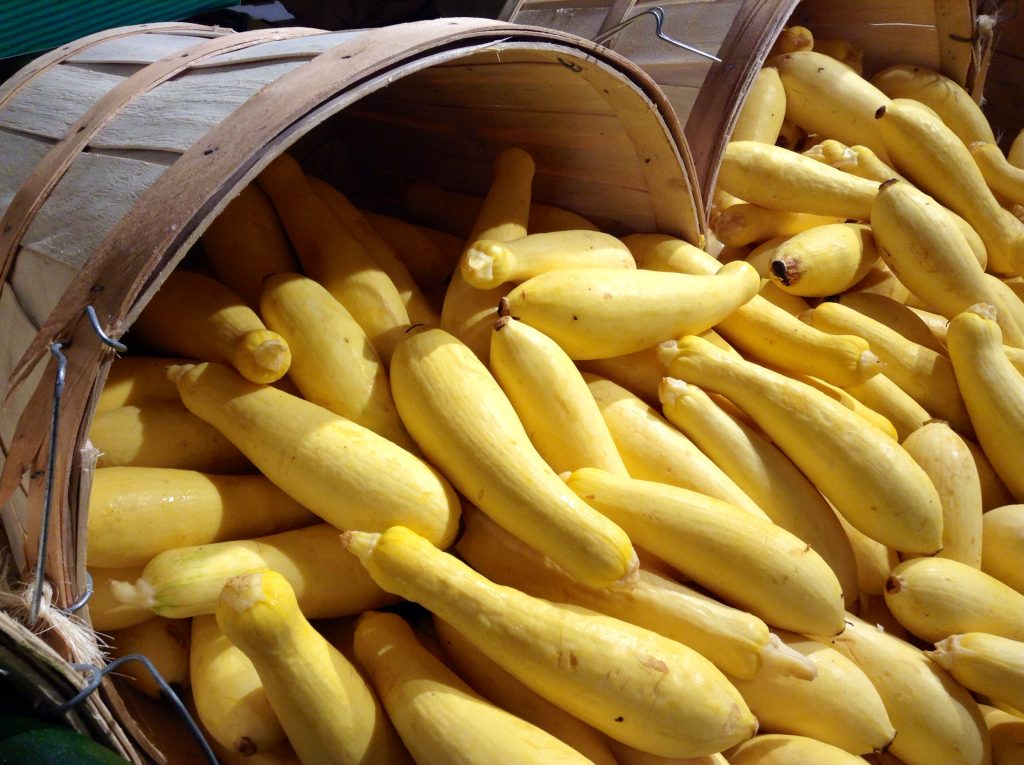
    Yellow squash

    Every day the coronavirus lingers in the United States means more business that is not coming the way of Florida farmers, including Sam Accursio.

    Restaurants remain closed. So many citizens are unemployed. Fruit and vegetables are not being consumed as much like they were.

    Accursio produces pickle and cucumber, green beans and yellow and green squash on 4,400 acres in the Homestead, Florida area. Up until approximately 11 or 12 days ago, business was peaking. That’s not the case anymore, however.

    “They just stopped buying. Monday, Tuesday and Wednesday of last week, we had orders on the books from the previous week, and we came into work Monday and they gave them all back to us. They didn’t take what they had ordered,” Accursio said. “It’s a very tough situation, and to top it all off, the cherry on top of the whipped cream, you look at the USDA Market Report; while I’m dumping squash down here in the field and stopping harvest, Mexico shipped 3 million pounds of squash per day across the border into Texas to ship into the United States. Why does our federal government allow this?”

    It’s similar frustration to what Florida farmer Kim Jamerson voiced to VSC News as she recalled how she reached out to the office of U.S. Senator Marco Rubio (Fla.) and spoke to one of his aides about the government helping out its farmers by purchasing their crops and distributing the food to its citizens since many are unemployed. It would help the American farmer stay in business, while keeping its citizens fed.

    To make matters worse for Accursio, he said this season has been a bumper crop due to the warm, summertime conditions Florida has experienced this year. Crops that are normally ready for harvest around April 15 are currently being picked. Accursio estimates that he has already picked 50% of April’s crop but is losing about 75%. It’s been like this for almost two weeks.

    Cucumbers

    “I think what happened, everybody who was out of work ran out of money and the chain stores never lowered their price to help the situation out. Right here in Homestead, beans are selling for $3 per pound in Publix and the growers are only getting 30 cents,” Accursio said. “It’s pathetic that the chain stores won’t help the situation with the consumer, help the growers and things will get back to normal again. We’re in a real funk right now.”

    Accursio said he likes to pick, pack and load his crops on trucks. He noted that consumers can buy squash and store in their refrigerator, and it’s still edible for 21 days. But he sees it from a different vantage point, in that if his crops have to be stored in coolers before being sold, he starts getting “nervous” at the four-day mark.

    “When you take a squash that’s been in the cooler for a week, you take it out, load it on a tractor trailer, bounce it around to New Hampshire for two and a half days, take it out of the truck and put it on a grocery shelf. Being handled and bounced around, it just doesn’t last as long.”

  • Georgia Vegetable Growers Should Plan Ahead to Prepare for Harvest in Light of COVID-19 Pandemic

    By Andre Luiz Biscaia Ribeiro da Silva/UGA CAES News

    Eggplant is a vegetable grown in Georgia.

    Most vegetable crops in Georgia — such as bell pepper, specialty peppers, tomato, eggplant, cucumber, yellow squash, and zucchini — are currently being planted and will continue to be into early April. These crops should be harvested in May and June. However, in light of the current coronavirus (COVID-19) situation, Georgia growers, who rely on seasonal workers, need to plan ahead to be prepared for the harvest.

    The indefinite closure of U.S. consulates and borders may cause a delay in the processing of agricultural workers’ visas (H-2A) or prevent them from entering the U.S.

    According to the Bureau of Consular Affairs, the number of agricultural workers entering the country on H-2A visas has increased dramatically since 2000. In 2019, 204,801 of all U.S. agricultural workers were workers on H-2A visas, and a significant portion of those workers help to keep the Georgia vegetable industry viable. In 2018, Georgia’s vegetable industry generated $1.13 billion in farm gate value and 13,900 jobs (Wolfe and Stubbs, 2018).

    As of March 26, there is an authorization to grant interview waivers for H-2 applicants whose visa expired within the last 48 hours, who have not previously received an H-2 visa or whose visa expired more than 48 months ago. This will speed the process for growers to get labor, however, planning ahead is still vital for timely harvest of spring crops.

    Estimating the number of workers required to harvest the planted acreage is the first step to ensure vegetables and fruits are out of the field in a timely manner. Furthermore, it is important to highlight that harvested products must be packed before reaching the consumer. Labor in the packing line is also a key point in this process.

    Overall, farms have different activities and crop management practices and, consequently, labor requirements vary widely. Producers should identify activities and periods of intense labor demand in their operations and try to stagger these periods, rather than coinciding labor peak needs.

    For more information, see UGA CAES Newswire.

  • Hoop Houses Benefit Organic Vegetable Production

    Hoop houses help organic vegetable farmers.

    By Clint Thompson

    Hoop houses help protect vegetables from rain-induced diseases while providing organic growers the opportunity to produce a crop throughout the year, according to Elizabeth Little, University of Georgia associate professor and Extension plant pathologist.

    BETTER QUALITY, LESS SPACE
    Hoop houses, also known as high tunnels, are types of greenhouses that help organic growers produce high-quality crops if managed appropriately.

    “These growers are producing all winter in tunnels and selling direct to customers and restaurants,” Little said. “The houses are also useful in the summer to avoid foliar diseases, which are very difficult to control in the field when conditions are wet. Hoop houses give you a controlled environment so you can grow a better-quality crop.”

    Hoop houses are used extensively in the Georgia Piedmont and further north. A variety of vegetables and flowers are produced, including lettuce and other greens during the winter months, and tomatoes and peppers in the warm season. Hoop houses are a valuable production tool, but the growing space is often the limiting factor.

    Hoop houses vary in size but typically average 40 feet wide and 100 feet in length. They are unheated plastic-covered houses with roll-up sides that allow for ventilation to control temperature and humidity.

    “There’s more demand for local organic produce than there is supply. The local organic produce is high quality … The problem is we have a challenging hot and humid climate which leads to more disease and pests,” Little said.

    BEWARE OF ROOT-KNOT NEMATODES
    Little stresses that root-knot nematodes are a potential problem for both home and organic vegetable growers across the state. Root-knot nematodes are tiny parasitic worms that feed on roots of many plants and cause a loss in productivity. Most vegetables are highly susceptible to nematode damage.

    A University of Georgia Cooperative Extension Survey of 431 vegetable fields found that more than 60 percent contained root-knot nematodes. These pests enter plant roots and feed on nutrients. They quickly produce eggs and eventually, as more nematodes infect, the roots swell into characteristic galls. The damaged roots result in reduced plant growth and lower yield potential.

    Root-knot nematodes can increase to high numbers in hoop houses due to warm temperatures, loose soils and intensive production of susceptible crops year-round. Cover crops are usually grown in fields part of each year, which can keep root-knot nematode numbers low, but hoop houses are often kept in production longer due to economics.  

    “Root-knot nematode damage in organic high tunnels is becoming more of a problem in Georgia,” Little said. “We’re approaching the problem with the mindset that you’ve got to balance the use of organic best management practices to keep numbers low with the economics. After a highly susceptible summer crop, such as tomato, you try to grow a fall crop like carrots and end up with damage on the root crop from the nematodes.

    “We’re looking at ways to break that cycle. I have been working with growers on optimizing the length of time for summer cover cropping and solarization, as well as incorporating different rotations and organic amendments to lower nematode numbers. The goal is to get root-knot nematode numbers low enough so you can successfully produce the next crop, which is the same goal in both conventional and organic soils when managing nematodes. The nematodes never disappear entirely.”

    (For an outlook of organic farming, see Future of Organics.)