Category: Vegetables

  • UF/IFAS Awarded USDA Grant to Lead Multistate Research, Study Disease Resistance in Lettuce

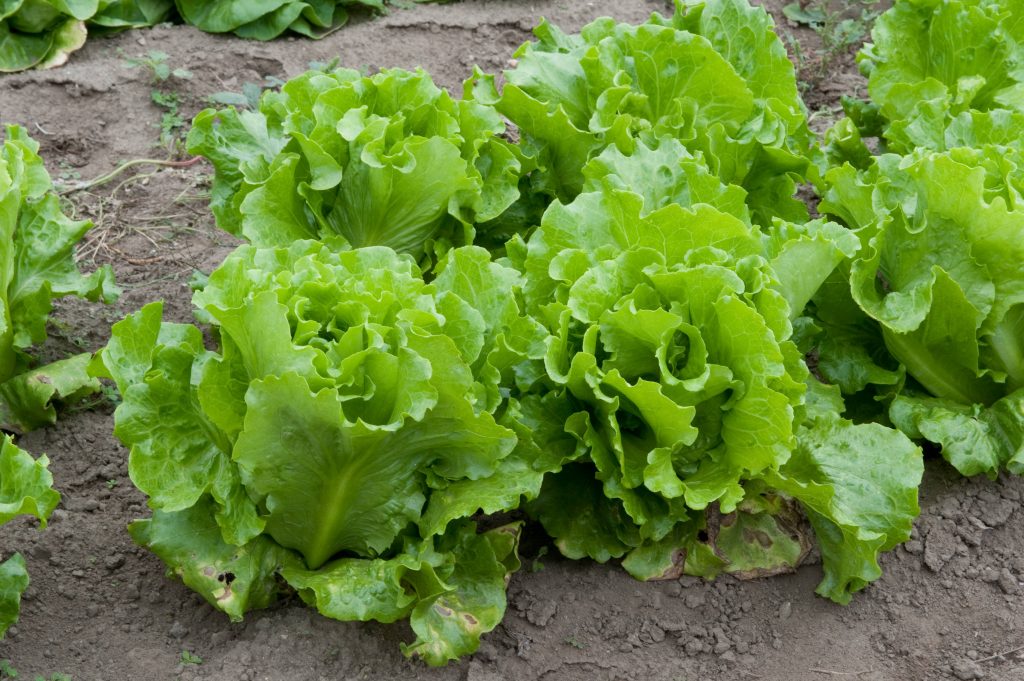
    lettuce
    University of Florida researchers are part of a research project focusing on lettuce.

    By: Lourdes Rodriguez, 954-577-6363 office, 954-242-8439 mobile, rodriguezl@ufl.edu

    BELLE GLADE, Fla. – Lettuce is one of the top 10 vegetables cultivated in the United States and for good reason. Romaine, iceberg, leaf and butterhead types of lettuce are staples in refrigerators around the world. Used as a basis for salads, as a topping for burgers and sandwiches, as a bread substitute for wraps, and even as a garnish for elegantly plated cuisines, lettuce serves as a recommended source of extra nutrition, much-needed fiber and fewer added calories to diets.

    But the crop has experienced devastation nationwide with the emergence of the deadly Bacterial Leaf Spot (BLS). It’s a disease caused by a pathogen known as Xanthomonas campestris pv. vitians (Xcv). This unpredictable disease can cause severe economic losses and devastate entire harvests. Currently, there is no control method.

    University of Florida scientists at Everglades Research and Education Center in Belle Glade, along with other land grant universities and federal agencies, have been at the forefront of research since the disease emerged. Focus has been on studying BLS and how it destroys lettuce.

    An $850,816 grant will fund the continuation of research led by UF/IFAS scientists in a multistate endeavor with Pennsylvania State University and the United States Department of Agriculture – Agricultural Research Services (USDA-ARS) in Salinas, California. The grant, managed by the Florida Department of Agriculture and Consumer Service (FDACS) through the Specialty Crop Multistate Program of the USDA-AMS to UF/IFAS, is designated for the study of disease resistance in lettuce, to boost cultivar variations that are BLS-resistant through breeding and genetics, and to research BLS-lettuce interaction.

    Germán V. Sandoya-Miranda, assistant professor of lettuce breeding and genetics at Everglades Research and Education Center, and overseer of the project as principal investigator, has been researching BLS since 2016.

    Sandoya is joined by UF’s Calvin Odero, UF/IFAS associate professor of agronomy specializing in weed science as co-lead; UF/IFAS Extension Palm Beach staff; Pennsylvania State University’s Carolee Bull, a professor and department head of Department of Plant Pathology; Maria GorgoGourovitch, an Extension educator and Plant Pathology affiliate instructor at Pennsylvania State University; and lettuce plant breeder and geneticist Ivan Simko of the USDA-ARS in California.

    “This is the first time that experts in plant breeding, genetics, bacteriology, and weed science partner to develop sustainable and long-term solutions to battle an unpredictable and devastating disease in lettuce”, said Sandoya. “I have intentionally brought together the leading experts representing the strongest possible group to work on this disease for a variety of geographic impacted areas and assorted farm-size growers.”

    For more information, see University of Florida press release.

  • Connecting the Watermelon Industry with Retail and Foodservice Buyers

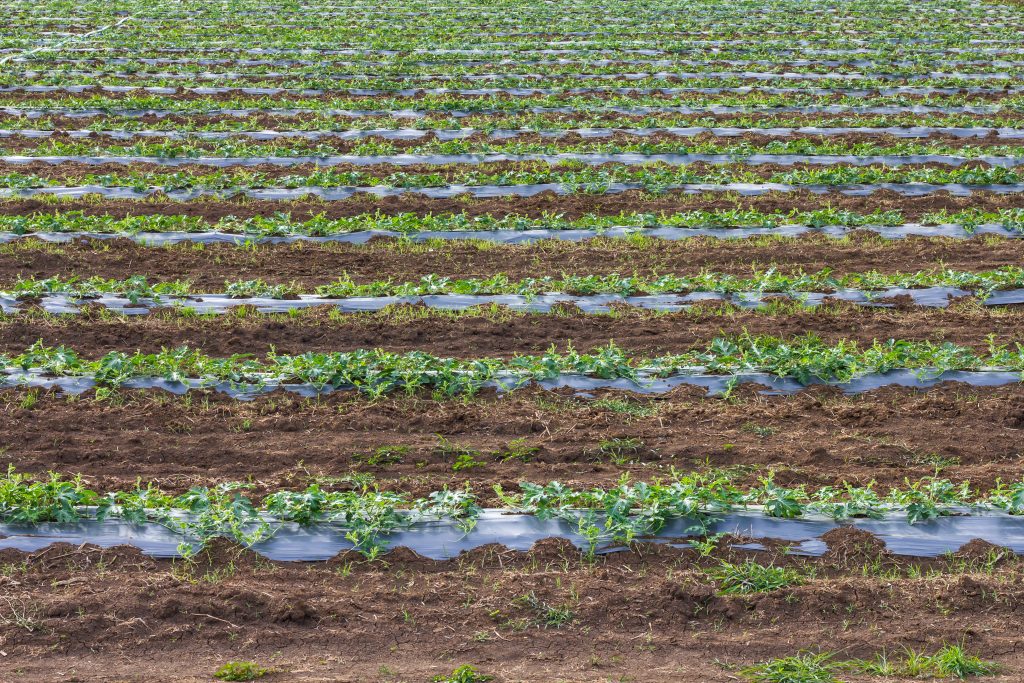
    File photo shows a watermelon in a field ready to be harvested.

    Winter Springs, FL — May 20, 2020 – The new National Watermelon Promotion Board (NWPB) Watermelon Supplier Database is the perfect platform to connect retail and foodservice buyers with suppliers as the summer season takes off for America’s favorite melon.

    Each year the NWPB staff promotes watermelon to retail and foodservice audiences, both in person and digitally. When a contact asks where they can get watermelon, this new database with help connect the dots. The new Watermelon Supplier Database is based on the new watermelon.org in the Industry, Retail and Foodservice sections and at watermelon supplier database, so all interested groups can easily access the database.

    The Board is still working to populate the database so if a member of the watermelon industry is interested, please visit watermelon supplier database. Multiple roles in the industry are encouraged to be a part of the database including wholesalers, growers, importers, brokers, processors, seed, transportation companies and more.
    Please reach out to supplierdatabase@watermelon.org with any questions.

  • Challenging Season for South Georgia Agriculture

    By Ashley Robinson

    South Georgia farmers have been on edge as weather and impacts from the coronavirus pandemic (COVID-19) have taken a toll on their crops.

    “2020 has been a tough year overall for our growers,” says Andre da Silva, University of Georgia (UGA) Cooperative Extension vegetable specialist.

    COVID-19 Impacts

    South Georgia farmers have had their fair share of difficulties over the last few years. Hurricane Michael hit Georgia in 2018 causing $2.5 billion in crop damage, and 2019 brought Chinese tariffs that damaged trade and prices. Now, farmers are facing even more devastating impacts with COVID-19.

    According to da Silva, some growers have had to leave their ready-to-harvest produce sitting in the field.

    “Farmers weren’t able to get enough labor to harvest their crop or they weren’t able to sell their produce because there wasn’t a market to sell to. A lot of our farmers sell to restaurants and schools, so they saw the greatest impact once everything shut down. Our sweet corn growers’ biggest markets were schools, so when schools completely shut down due to COVID-19, they were greatly affected,” da Silva says.

    watermelon
    Watermelons have been a crop impacted by the cooler temperatures in May.

    Unusual Weather Impacting Crops

    In addition to seeing impacts from COVID-19, Georgia has endured unusual weather this Spring.

    “We had very warm conditions in March, but the past three or four weeks we have had some impacts from the cold front. We’ve had nighttime temperatures of 47 to 49 degrees F, which isn’t good, especially for our watermelon growers,” da Silva says.

    According to da Silva, watermelon growers planted their crop at the end of March or early April, thinking the crop would do fine because of the higher temperatures. However, when the cold front arrived, the cool nighttime temperatures didn’t allow plants to bloom. While plants should be blooming and fruit should be setting right now to target the 4th of July market, this isn’t the case.

    “Watermelons are tough plants though. With warmer temperatures ahead, they will make a comeback. But I do predict that watermelon harvest will be delayed about a week or two this year because of the cold temperatures we received,” da Silva says.

    In addition to uncommon temperatures, South Georgia has experienced other unfavorable weather events.

    South Georgia has endured two tornadoes this spring. One of which crossed through the middle of a UGA Extension trial evaluating cabbage varieties. It caused significant damage. Additionally, they’ve also experienced a lot of rain accompanied by wind that has damaged crops.

    “We’ve also seen a lot of damage from sand blasting, cracking the plant’s leaf, leaving openings for diseases to enter. Also, the rainfall accumulation induced nutrient leaching, so growers have had to bump up their fertility program to reduce the impact on yield,” says da Silva.

  • CFAP Coverage Dates Exclude Bulk of Specialty Crop Farmers in Alabama, Georgia

    By Clint Thompson

    The United States Department of Agriculture released details of the Coronavirus Food Assistance Program (CFAP) on Tuesday. It will provide up to $16 billion in direct payments to provide relief for farmers and ranchers impacted by COVID-19. It includes relief for livestock, dairy and specialty crops.

    Cabbage producers will be covered under the CFAP program.

    But according to Charles Hall, executive director of the Georgia Fruit and Vegetable Association, the bulk of Georgia and Alabama growers will not be eligible just due to the timing restrictions detailed in the program.

    “This particular package, the problem is the dates of the loss. This package puts January 1 to April 15, which excludes 90% of Georgia’s specialty crop growers. At that point, as of April 14, we’ve had little product on the market at that point. When you’re looking at peaches, blueberries, vegetables, we’re not covered in that,” Hall said. “From January to April, we had broccoli on the market. We had greens, turnip greens, cabbage; some of those cole crops were on the market then and would be eligible to be covered under that. It’s going to help some growers.

    “Georgia blueberries may have been on the market a week or two at that point.”

    CFAP will benefit mostly Florida farmers who have had to overcome produce loss and low market prices  as a result of the pandemic striking the U.S. in mid-March.

    CFAP Background

    According to the USDA press release, CFAP provides financial assistance to producers of agricultural commodities who have suffered a 5%-or-greater price decline due to COVID-19 and face additional significant marketing costs as a result of a drop in demand, excess production, and disruptions to shipping patterns and the orderly marketing of commodities.

    CFAP also includes the USDA’s Farmers to Families Food Box program. It is partnering with regional and local distributors, whose workforces have been significantly impacted by the closure of many restaurants, hotels, and other food service entities, to purchase $3 billion in fresh produce, dairy, and meat and deliver boxes to Americans in need.

    Beginning May 26, the U.S. Department of Agriculture (USDA), through the Farm Service Agency (FSA), will be accepting applications from agricultural producers who have suffered losses.

    For eligible specialty crops, the total payment will be based on the volume of production sold between January 15 and April 15, 2020; the volume of production shipped, but unpaid; and the number of acres for which harvested production did not leave the farm or mature product destroyed or not harvested during that same time period, and which have not and will not be sold. Specialty crops include, but are not limited to, almonds, beans, broccoli, sweet corn, lemons, iceberg lettuce, spinach, squash, strawberries and tomatoes. A full list of eligible crops can be found on farmers.gov/cfap. Additional crops may be deemed eligible at a later date.

    Another Stimulus Package?

    Hall is hopeful that if Congress passes another stimulus package, his growers would be sufficiently covered. It would provide a boost to farmers as the economy tries to recover from the current recession.

    “The bill that passed the House last week would cover Georgia specialty crop growers because it covered the first two quarters of the year. Most of our growers’ harvest will be through the end of June. That will be helpful from that standpoint,” Hall said.

  • Clemson Vegetable Pathologist Cautions Growers About Potential Diseases

    Pictured is downy mildew disease’s impact on vegetables.

    By Clint Thompson

    One Clemson Extension vegetable pathologist has observed downy mildew disease and fusarium oxysporum f. sp. niveneum disease on his research plots and cautions vegetable growers in South Carolina to be on the lookout for both.

    “This is strictly based on observations from my research plots here in Charleston. I have not been out to any commercial fields,” Tony Keinath said.

    Keinath reported downy mildew, a cool-season pathogen, on brassicas and can especially impact kale and collard.

    “For downy mildew on collard, the pathogen prefers to grow in cool temperatures. Once the temperature reaches 85 degrees F, the pathogen basically goes dormant until late fall. And it probably survives in crop debris. It’s dormant, it’s not active at all,” Keinath said.

    South Carolina has experienced cooler temperatures this spring, especially the timeframe between the end of April and first two weeks in May. Downy mildew mainly affects the lower leaves but will sometimes move to the larger leaves in the middle of the plant.

    “Because it causes leaf spots on the leaves and the leaves are what the growers are harvesting … even a small amount of downy mildew means the leaves can not be harvested,” Keinath said.

    Fusarium’s Impact

    Fusarium is also active in cool soil temperatures. It infects roots when the soil temperatures are below 82 degrees F. Unfortunately, if growers observe fusarium damage, there isn’t anything they can do to treat the disease. Fungicides need to be applied during transplanting.

    “If you spray them at this stage it’s too late because all the fungicides do is prevent infection. Once the fungus has gotten into the plant, then the fungicide does not work anymore,” Keinath said. “If they want to use grafted plants because the rootstocks are resistant to fusarium, that’s obviously something that has to be done at transplanting.

    “They should make note of how widespread it is in a given field this year. Then if it’s (bad) enough to cause yield loss, they need to plan to use a control measure the next time they plant watermelons in that same field.”

    There are different control measures available. One could be the watermelon variety and if it’s tolerant to the disease. Growers can also utilize varieties that produce medium to large size fruit. If you plant a variety that was bred to produce small fruit and you plant that in a fusarium-infested field, then a lot of those fruit will not reach marketable size.

    Growers can also utilize hairy vetch as a winter cover. It will provide some suppressive effect on fusarium. Producers can also apply fungicides to the row bed before they lay plastic. Or they can do it through drip irrigation the same day as transplant.

  • Ag Commissioner Gary Black Announces Georgia Grown To-Go Program

    As part of the Georgia Department of Agriculture’s (GDA) “Buy Georgia Grown, Now More Than Ever” campaign, Georgia Grown is partnering with local governments to connect produce farmers directly to consumers in highly populated areas. Georgia Grown To-Go is a series of pop-up markets, primarily in metro Atlanta, that will give customers an opportunity to purchase fresh produce directly from farmers with limited contact, drive-through service. 

    Black

    “We are excited to offer this great opportunity to help bridge the gap between consumers in metro areas and our farmers in South Georgia,” says Georgia Agriculture Commissioner Gary W. Black. “With foodservice channels limited, Georgia Grown To-Go pop-up markets are a great and innovative way to make sure our consumers have access to the Georgia Grown products they crave.  We have enjoyed joining forces with our local government and non-profit partners in an effort to best serve our communities during this unprecedented time.” 

    After testing the markets in Northwest Georgia and Dekalb County, Georgia Grown To-Go is continuing in different communities statewide. The next pop-up style market is in partnership with the City of Marietta, Cobb County Government, Cobb Chamber of Commerce and Cobb Community Foundation. The event is Saturday, May 23 from 10 a.m. to 2 p.m. at Al Bishop Park, 1082 Al Bishop Dr. SW Marietta, Georgia 30008. 

    “Cobb County is pleased to welcome the opportunity to buy Georgia Grown and giving our residents easy, direct access to the best of fresh farm vegetables, Georgia grown,” says Marietta Mayor Steve Tumlin. “We are bringing the best in farm harvest direct from the farm to our front porch with Marietta’s own Tip Top Poultry as a participant in this pop-up market. Additionally, our charities will be well supported thanks to Cobb neighbors who have the opportunity to make Georgia Grown available to our local food banks during these challenging times.”   

    While supplies last, customers can drive through and have produces boxes placed directly in their trunks. For payment, cash, credit and debit cards will be accepted. Customers can also pre-order boxes for a reduced rate until Thursday, May 21 at noon.  

    In addition to purchasing personal boxes, customers can support their local community by donating boxes to a neighbor or local charity. Several nonprofits will receive produce boxes through the Cobb Community Foundation, including MUST Ministries, Sweetwater Mission, Family Life Restoration Center, Reflections of Trinity, Storehouse Ministries, and Noonday. 

    Following the Cobb County event, more Georgia Grown To-Go events will be announced.  

    For more information on produce offerings, pricing and upcoming events, please visit www.GeorgiaGrownTo-Go.com.    

  • Clemson Extension Agent: South Carolina Produce Farmers Enjoying Good Spring

    By Clint Thompson

    South Carolina’s produce season is producing sweet results with its farmers. Clemson Extension Commercial Horticulture agent Justin Ballew said fruit and vegetable farmers in the Palmetto State are enjoying a strong spring season so far.

    Strawberry season has been really strong in South Carolina this year.

    “For the most part, we’re having a good spring. We’re in the last month of strawberry season and we’ve had a decent strawberry season for the most part. Demand has been really good this year. Folks are selling everything they pick with no problems at all,” Ballew said. “Other crops, we’ve got stuff growing pretty quickly, growing pretty well. Disease pressure has been low for the most part this year. Insect pressure hasn’t been terrible. We’re doing pretty well as far as growth.”

    And with one exception, growers have experienced little problem with Mother Nature.

    “The only weather-related issues we’ve had recently was from hail damage in … Chesterfield County, that area. They had some pretty tremendous damage to their peach crop up there, some strawberries and other stuff.  There was one large grower up there that was affected pretty badly,” Ballew said. “There were some thunderstorms that came through and dumped a bunch of hail up there.”

    According to the Agricultural Marketing Resource Center, South Carolina is the country’s No. 2 producer of peaches behind California.

  • More Questions Than Answers With Respect to CFAP

    By Clint Thompson

    The Coronavirus Food Assistance Program (CFAP) has brought more questions than answers with respect to financial aid for growers in response to the ongoing coronavirus pandemic.

    The $19 billion program includes $16 billion in direct payments for farmers and ranchers. CFAP has payment restrictions of $125,000 per commodity and a total of $250,000 per applicant for all commodities. Growers and industry leaders hope that cap on payment restrictions gets removed.

    “For specialty crop growers, $125,000 is a drop in the bucket for most of their losses,” said Charles Hall, executive director of the Georgia Fruit and Vegetable Growers Association.

    Florida vegetable farmer Paul Allen, talked about the financial toll the pandemic had on him and his farming brethren.

    “The biggest thing right now is the government allocated per crop a cap of $125,000, which is nothing. We’re really working trying to get the USDA to see and understand the massive hit that Florida is taking and raise the direct payment caps,” Allen said. “What is fair is not always equal.

    “It costs 10 times to grow vegetable crops what it does regular commodity crops.”

    Pandemic Punishes Producers

    In a previous interview in early April, Allen said he left about 2 million pounds of green beans in the field and about 5 million pounds of cabbage. All due to the coronavirus pandemic that shut restaurants down and closed off a major supply chain to foodservice industries.

    Perdue

    According to an AgNet West story, a group of lawmakers, which included 28 members of the U.S. Senate and 126 members of the U.S. House of Representatives, issued a letter to President Donald Trump and USDA Secretary Sonny Perdue. They asked for the removal of payment caps from CFAP before the final program details are announced.  The letter points out that the payment restrictions would limit the effectiveness of the program. This is especially true for livestock, dairy and specialty crop producers.

    Another concern is how payments will be divided between losses sustained before and April 15. An 85% payout will be issued for losses sustained from January 1 to April 15 but only 30% after April 15.

    “Our concern was what’s the difference in a loss after April 15 and before April 15. After April 15, that grower has got the same loss as before April 15. Most of our growers’ losses will come after April 15,” Hall said. “We’ve been told that’s going to be fixed, too. I haven’t seen anything firm from the USDA on that.”

  • Produce Market Ripening With Success for Some Vegetables

    Cabbage is a strong commodity right now, selling for $20 per box, says farmer Bill Brim.

    By Clint Thompson

    The produce market is ripening with success for some commodities. Prices are incredibly high for some vegetables, while others are still struggling to compete with imports from Mexico, says Tift County farmer Bill Brim. The co-owner of Lewis Taylor Farms said watermelons, round tomatoes and cabbage are three commodities really doing well for farmers right now.

    “I think watermelon prices are pretty good. We don’t have any ready yet. It’ll be two or three weeks before we’ll be ready,” Brim said. ““Tomatoes were $33 per box (Wednesday), I think for rounds. Romas are really bad. They’re terrible price because Mexico is pouring them in here. Grapes are bad too. Rounds, they must not have many because they’re like $33 per box. Of course, they won’t last that long or stay there. But if we could stay in the high 18s to the 20s, we’d be tickled to death.”

    Brim expects to start picking his tomato crop in two weeks. Cabbage is also selling well at $20 per box.

    Watermelon Shortage?

    Watermelons are a hot commodity right now. Carr Hussey, a watermelon farmer in Alabama and Florida and chairman of the board of the Florida Watermelon Association, said the crop is already in short supply and that a watermelon shortage is likely by Memorial Day weekend next week.

    Brim said he’s heard that the crop in Georgia is going to be way down compared to last season.

     “I think it was such a bad deal last year, everybody lost their heinies,” Brim said. “They couldn’t even hardly give a watermelon last year. I got like 7 and 8 cents per pound. You can’t even grow them for that; 12 cents per pound is probably break even. It’s just so bad people said, I can’t lose any more money or I’m going to be out of business. If I do, I’m just going to go with my row crops and forget the watermelons.

    “North Carolina’s going to be late too, because a lot of them got killed out in that last freeze. It might be pretty fair for us, hopefully, anyway.”

    The watermelon market is ripening with success for farmers who have the crop to sell. Hussey said prices are around 20 cents per pound right now but could improve to 22 or 24 cents around Memorial Day weekend.

    Brim also believes watermelon farmers in north Florida are going to be done harvesting earlier than they believed they would.

    “They started pretty early down there; a bunch of them,” Brim said. “In the next two weeks, they should be done at about the time we’ll start.”

  • Sweet Grown Alabama Connects Growers to Consumers

    By Clint Thompson

    Alabama fruit and vegetable farmers have an outlet to market their produce statewide. Thanks to Sweet Grown Alabama, a non-profit foundation that connects farmers in the state to retailers and consumers, growers can market their produce anywhere in the state.

    Thanks to the Sweet Grown Alabama website, vegetables are marketed across the state.

    “This database launch is the culmination of many months of work,” said Ellie Watson, Sweet Grown Alabama director. “We have been focused since September on recruiting farmers and just spreading the word about our program to the folks in the agricultural community, so we can build a database of members and a network of folks that have product available.”

    Consumers can go to the Sweet Grown Alabama website and find local farms in their area. It also lists a harvest calendar so consumers can know when specific fruits and vegetables are ready to be picked. Anything from satsumas and watermelons on the fruit side to bell peppers and kale on the vegetable side are listed.

    Perfect Timing

    It is perfect timing for the website’s release. A push to support American farmers has been made during the coronavirus pandemic. Consumers are wanting to purchase fresh, local produce.

    “Consumers, now more than ever, desire to know whose hands have been handling the product that they’re eating and where it’s been and where it’s been grown and how it’s been grown. COVID-19 has really given folks a heightened sense of awareness about the supply chain,” Watson said. “Sweet Grown Alabama can really meet a need to connect Alabama farmers and families who are looking for high quality, safe, healthy products. This database launch timing was perfect. It was something we wish could have been launched at the beginning of COVID-19. But we’re thrilled it’s at least up and running now.”

    Sweet Grown Alabama is a membership organization. Watson said there are more than 130 completed applications that have been submitted.