Category: Vegetables

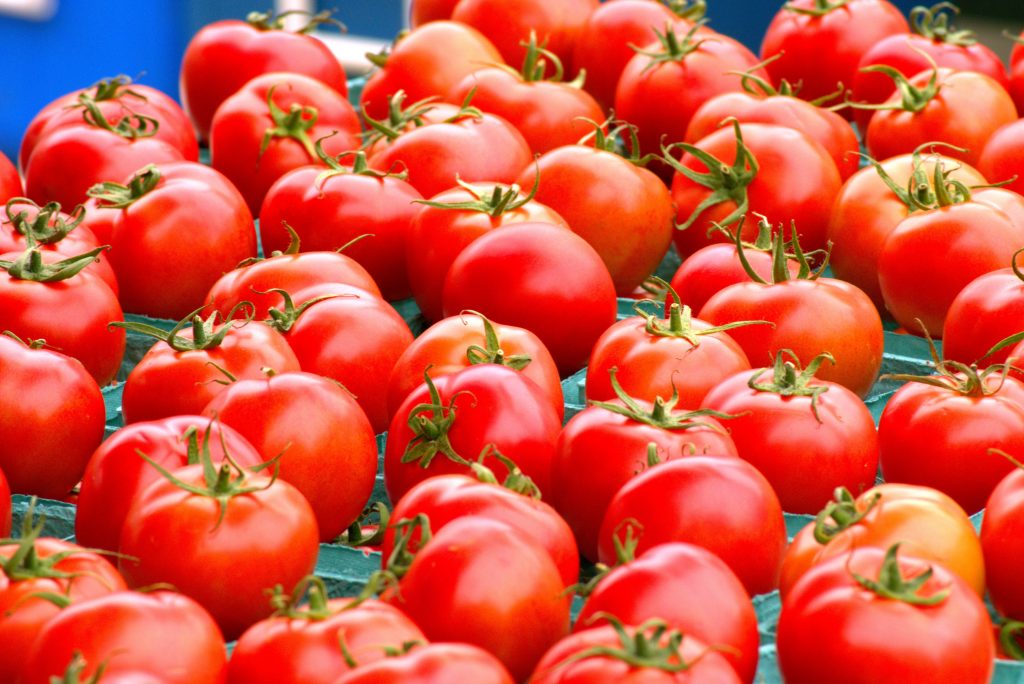
  • Market Looking Good for Tomato Growers

    itc
    The tomato market is currently strong for growers in the Southeast.

    By Clint Thompson

    Tomato growers across the Southeast are enjoying high prices right now, which marks a significant change from March when Florida producers had to leave many in the field amid the coronavirus pandemic. That is not the case anymore, however, says Michael Schadler, executive vice president at the Florida Tomato Exchange.

    “Market price has been high. Coming down a little bit the last couple of weeks, but overall, prices have been pretty good,” Schadler said. “That’s just a function of supply has been light out of Florida and supply has been light out of Mexico as well. We would have liked to have had a little bit better yields in Florida this spring. We’ve had yield issues that have limited supplies but the fact that market prices are high after what happened back in March and April, it’s real nice.”

    Schadler attributes Florida’s poor supply to pest and disease pressure.

    COVID-19 Impact

    Florida tomato growers have experienced an up and down season. This is especially true for South Florida production impacted by COVID-19 when it struck in mid-March.

    “It was a situation where we had never seen the markets turn off like that overnight. We’ve certainly gone through our share of bad markets over the decades, usually based on over-supplies coming in from Mexico and even over-supply in Florida. Having bad markets is nothing new,” Schadler said. “Having it come about in that way where everything shuts down, price didn’t matter at that point.”

    Growers could not give their crop away. Tens of millions of tomatoes were lost. But to see the market recover, which will benefit other states like Georgia and Alabama, is encouraging to see.

    “When we were looking at this thing in early April, when we were doing an assessment right around April 1 and going through two or three weeks in an unprecedented environment, we were thinking, ‘Man if this thing doesn’t turn around, we’ve got a big spring crop; the Florida spring crop is pretty big in April and May, we’re going to have devastating losses,’” Schadler said. “Right around April 5 or April 6, demand started to come back. I think what happened was, the buyers that sell into food service, when everything hit the fan in mid-March, they kind of shut down. I think they let the pipeline clear out a little bit. The pipeline was completely empty after the first week in April and they realized, obviously, there’s still demand for tomatoes.

    “That demand came back a little bit, coupled with the fact that Mexico was quite light and Florida volume was lighter than normal. We had lower yields through the spring. We actually were able to bounce back for a big part of April and so far in May as well.

    “As far as an industry as a whole, looking back over the six or seven months of the Florida tomato season, it’s going to average out to be a decent season for us.”
  • Economist Fearful CFAP Funds Won’t Be Enough

    blueberry
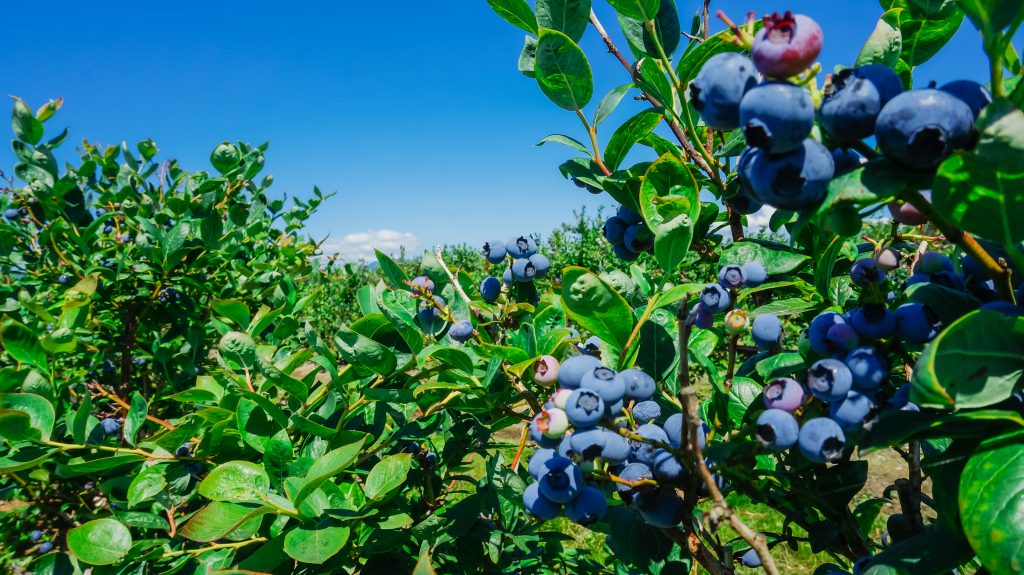
    Blueberries are one of the many commodities covered by CFAP.
    File photo of blueberry production.

    By Clint Thompson

    One agricultural economist fears there might be insufficient funds to cover farmers who apply for the Coronavirus Food Assistance Program.

    Max Runge

    Max Runge, Extension specialist in agricultural economics and rural sociology at Auburn University, believes the 80% of maximum total payment allotted for applicants will not be enough considering the number of producers impacted by the coronavirus pandemic.

    “I don’t think that will be enough. I think it’ll be short. Agriculture’s big across the U.S. The program covered a lot of it,” Runge said. “I hadn’t sat down and tried to put any kind of numbers to it. But I would be surprised if there’s enough money there to cover it.”

    CFAP Background

    According to www.farmers.gov, CFAP will provide $16 billion in direct support for agricultural producers where prices and market supply chains have been impacted and will assist producers with additional adjustment and marketing costs resulting from lost demand and short-term disruptions for the 2020 marketing year caused by COVID-19.

    To ensure funds will be available throughout the application period, producers will receive 80% of their maximum total payment upon approval of the application. The remaining portion of each payment, not to exceed the payment limit, will be paid at a later date as funds remain available.

    “I know that it was a daunting task to try to come up with something to cover everything. I thought it was a good effort. It’s like everything else, you can always look back and say, ‘They should have done this.’ Or ‘This should have been done differently,’” Runge said. “It’s not perfect, but it is something.”

    While the program will largely aid vegetable and specialty crop producers in Florida, Georgia and Alabama farmers are hurt by the timeframe. Charles Hall, executive director of the Georgia Fruit and Vegetable Association, says the program’s end date of April 15 doesn’t help his farmers much. Not much is on the market then. The same is true for Alabama farmers.

    “We don’t have that much produce maturing at that time and ready for market during that time frame,” Runge said.

  • United Fresh Says Produce Buying Climbed During COVID-19

    Fresh market produce for sale.

    United Fresh Produce released its first quarter of 2020 issue of Fresh Facts on Retail report that details the rising number of fresh produce purchases in 2020. The unprecedented rise in food and beverage consumption at home was brought about by shelter-in-place orders issued to slow the spread of the coronavirus.

    “Those closures have led to consumers drastically restructuring their eating habits, especially increasing their consumption of meals and snacks at home,” says Miriam Wolk, Vice President of Member Services with United Fresh. “Our current and future Fresh Facts reports will help the produce industry in leveraging current consumer behaviors and fresh produce purchasing trends.”

    First-quarter data highlights show that with health as a top concern, consumers continued to buy fresh food with immune-boosting properties, while also supplementing with shelf-stable and frozen food options. Strawberries and raspberries benefited by extending their reach into more U.S. households. Among vegetables, potatoes, tomatoes, and cucumbers were purchased in higher amounts by U.S. consumers. The report also shows a variety of fruits and vegetables continue to influence overall organic growth, presenting many opportunities to innovate and attract health-conscious consumers.

    (From the National Association of Farm Broadcasters)

  • UGA Extension helps Georgia Grown connect to consumers

    UGA photo/UGA Extension staff joined Georgia Grown staff to load boxes of produce into hundreds of waiting cars at the Gwinnett Georgia Grown to Go event on May 27.

    By Maria M. Lameiras for UGA CAES News

    Like the moments before a race begins, dozens of staff with Georgia Grown and University of Georgia Cooperative Extension prepared to load thousands of pounds of fresh fruit and vegetables into hundreds of waiting cars and trucks stretched out in long lines at the Gwinnett Georgia Grown To Go event in Lawrenceville, Georgia, on May 27, even before the 3 p.m. start time.

    Held at Coolray Field, the event was the third in a series of events being held around metro Atlanta to give consumers a chance to purchase produce straight from the farm — and to give farmers the opportunity to sell crops that have seen the marketplace narrow due to the COVID-19 crisis.

    “There is food that is growing in Georgia that is just going to rot in the fields if the farmers can’t find buyers, and we have hunger on the other end,” said Mary Black, county coordinator and Family and Consumer Sciences agent with the Gwinnett County UGA Extension office. “We hope this will help connect the farmers with the people who need the food.”

    In addition to helping coordinate the event with county officials, Gwinnett County Extension provided each customer with information packets that included recipes, nutrition information, and tips on food preservation and food safety, as well as links to UGA Extension resources available at extension.uga.edu/topic-areas/food-health.

    The event’s online presale orders totaled $82,733 for mixed vegetable boxes, flats of blueberries, cases of peaches, bags of Vidalia onions, as well as artisan cheeses and gourmet cooking sauces; all from Georgia producers, said Paul Thompson, deputy director of marketing and promotion with Georgia Grown. It’s a division of the Georgia Department of Agriculture focused on promoting agribusinesses. Day-of sales generated another $21,146.

    Tina Fleming, director of community services with Gwinnett County, said that the event served as an opportunity to bring fresh produce to the county’s residents and to assist disadvantaged members of the community. Those who ordered online ahead of the event were given the option to pay to donate a box of produce to local service organizations, resulting in the donation of 118 boxes of produce. After the event, farmers donated another 1,004 boxes of vegetables, 218 flats of blueberries, 10 boxes of peaches and 120 pounds of onions for food-insecure Gwinnett citizens. 

    “This has been a multi-agency event and a great partnership for us,” said Fleming. “There was a lot of talk about the event on social media and it has been a benefit for our county residents, as well as generating donations for 11 community nonprofit agencies that serve the county.”

    Coolray Field, where the event was held, is a Gwinnett County-owned venue that is the home of the minor league Georgia Stripers baseball team. The setting offered an ideal location, with nearby access to I-85 and the space to accommodate the trucks needed to deliver the produce as well as customer traffic.

    “We hope to be able to do this again this year,” Fleming said.

    Corbett Brothers Farms from Lake Park, Georgia, and Southern Valley Fruit and Vegetable from Norman Park, Georgia, worked together to bring 2,750 boxes of mixed vegetables to Gwinnett for the event.

    Ken Corbett, founder of Corbett Brothers Farms, said the Georgia Grown to Go events have helped fill a void left when revenues from food service and restaurant customers dropped due to COVID-19 restrictions.

    “I have been pleasantly surprised in the amount of interest we’ve seen and, just as important, is educating consumers on what Georgia farmers grow,” said Corbett, whose family farm started in 1987 with 1 acre of bell peppers and now primarily grows bell peppers, cucumbers, zucchini and yellow squash, along with about a half dozen smaller scale crops, on 3,000 acres. “As farmers, we help each other out all the time, and it has been good to have Georgia Grown on our side in this.”

    Customers were encouraged to post about their experience on social media using #GeorgiaGrownToGo.

    “Great event in Gwinnett yesterday! Well run and very organized, even with long lines and rain. My fridge is stocked with wonderful fresh veggies and fruits! So happy to support our Georgia farmers,” wrote Gwinnett County consumer Debbie Holmes Martin on Facebook.

    Information on upcoming Georgia Grown to Go events is available at georgiagrowntogo.com and additional resources for producers and consumers are available at extension.uga.edu.

  • In COVID-19 Era, UF/IFAS Research Adapts

    pepper
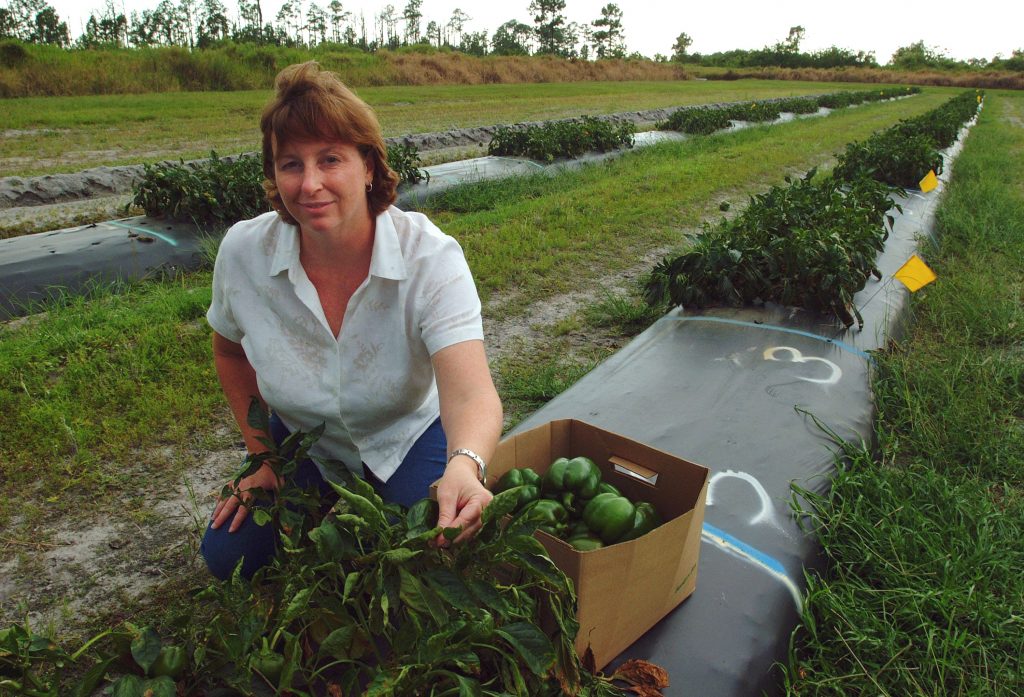
    Pam Roberts checks pepper plants for bacterial leafspot at UF’s Southwest Florida Research and Education Center in Immokalee. (Photo by Eric Zamora UF/IFAS)

    By: Kirsten Romaguera, 352-294-3313, kromaguera@ufl.edu

    As Florida moved to “safer at home” measures, not all work could be put on pause.

    When it came to University of Florida research, many UF/IFAS projects could not wait. There are living plants, animals and insects to feed and maintain; some projects have regular monitoring procedures for which postponement could have broader environmental consequences.

    “We are very proud of our faculty, staff and students for continuing their essential research safely during the COVID-19 crisis,” said Robert Gilbert, dean for UF/IFAS Research and director of the Florida Agricultural Experiment Station. “We have approved many critical and time-sensitive research projects as this situation has evolved, and we continue to do so, with the number of approved projects well over 1,000 at this point. We expect other ongoing projects to ramp up in the near future.”

    The UF/IFAS research portfolio includes thousands of projects totaling millions of dollars in funding.

    “Our projects are continuing, but we have adapted to reflect COVID health and safety concerns to keep our research teams safe,” said Damian Adams, interim associate dean for UF/IFAS Research. “Some programs were able to transition very well to remote work and were largely uninterrupted or even accelerated.”

    Below is just a sampling of the projects that have continued during the pandemic.

    georgia
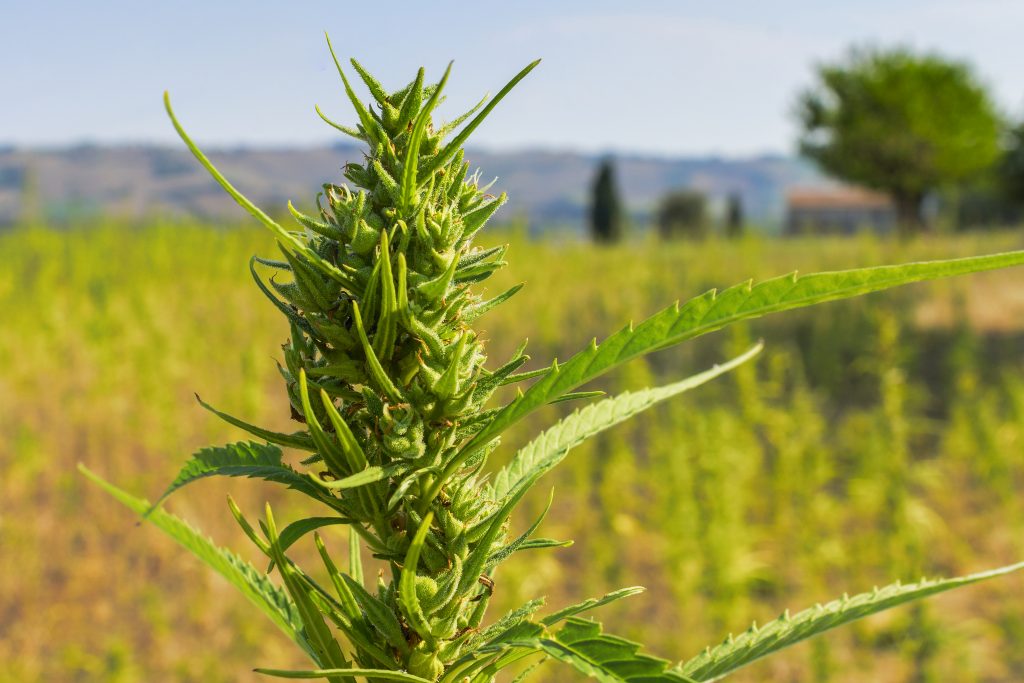
    On-farm hemp trials around Florida are slated to begin soon.
    • Out of the Citrus Research and Education Center (CREC) in Lake Alfred, Florida, professor of nematology Larry Duncan leads a study for citrus grove nematode management. Florida citrus growers, whose success is already being challenged by widespread citrus greening, rely on UF/IFAS research to recommend best practices for a productive fruit yield. Disrupted continuity of Duncan’s project would have caused a two-year delay in recommendations as well as potential productivity losses in CREC’s citrus groves.
    • From the Fort Lauderdale REC in Davie, Florida, a team led by algae expert Dail Laughinghouse, an assistant professor, keeps tabs on the quality of several water bodies: Lake Okeechobee, Lake Tohopekaliga, St. Lucie Canal and St. Lucie Estuary. The project conducts monthly sampling to remain on the forefront of the fight against harmful algal blooms and their toxins, which present a constant threat to environmental and public health. During an active bloom, the consequences have proven to be far-reaching, with every Florida industry depending on our water resources in some direct or indirect way, from tourism to healthcare. Long-term data and continuous monitoring are necessary to support the understanding of triggers and dynamics of these toxic blooms.
    • At the Florida Medical Entomology Laboratory (FMEL) in Vero Beach, molecular biologist Chelsea Smartt, an associate professor, has a living Culex mosquito population that can salivate Zika virus. As one of few such populations in the world, continuous maintenance is required, as the loss of these insects would mean this critically important research is unable to continue. The work done at FMEL has implications for populations around the world, as mosquito-borne diseases are easily spread and kill many people each year.
    • The university’s main campus in Gainesville, Florida has greenhouses that are home to the blueberry breeding program, the basis of the state’s successful blueberry industry, which was valued at $82 million in 2015 (USDA-NASS, 2016). Patricio Munoz, horticultural sciences assistant professor, and his team must continue maintenance of the living plants, without which irrecoverable losses could occur.
    • Work at the Range Cattle REC in Ona proves the ability for some projects to continue virtually. Maria Silveira, soil and water sciences professor, is leading a project that investigates phosphorous (P) inputs and outputs for cow-calf operations in the state of Florida. As part of this effort, an online survey has been administered to beef cattle producers statewide. The project, developed in collaboration with the Florida Cattlemen’s Association and funded by the Florida Cattle Enhancement Board, is expected to provide a better understanding of role that beef cattle industry plays in the overall P inputs and outputs throughout the state.
    • With the UF/IFAS hemp program beginning its second year, a delay could affect future plantings and research. The program, led by Zachary Brym, agronomy assistant professor at the Tropical REC in Homestead, requires continuous maintenance of the fields to remain in a cultivatable status, which are now in the process of being planted with hemp. In addition, on-farm trials around the state are slated to begin soon. This critical work will help the fledgling industry by providing growers with guidance for success.
    • Robert Fletcher, a wildlife ecology and conservation professor based in Gainesville, leads an ongoing project to monitor the federally endangered snail kite for several Florida agencies. The species has broader legal implications, factoring into water management decisions in central and south Florida.

    “This crisis has highlighted the importance of Florida agriculture more than ever,” Gilbert said. “The pandemic has presented difficult conditions for our researchers to adapt to professionally and at home, but working as a team has made us well-positioned to ramp up research quickly and safely to serve our stakeholders around the state. We value our partnerships with funding agencies and grower groups to perform this impactful research.”

    Gilbert adds that UF/IFAS is investing in new research that will kick-start new interdisciplinary studies, as well as research into emerging opportunities for Florida agriculture.

  • Diversification Key for Nutsedge Control in Vegetable Fields

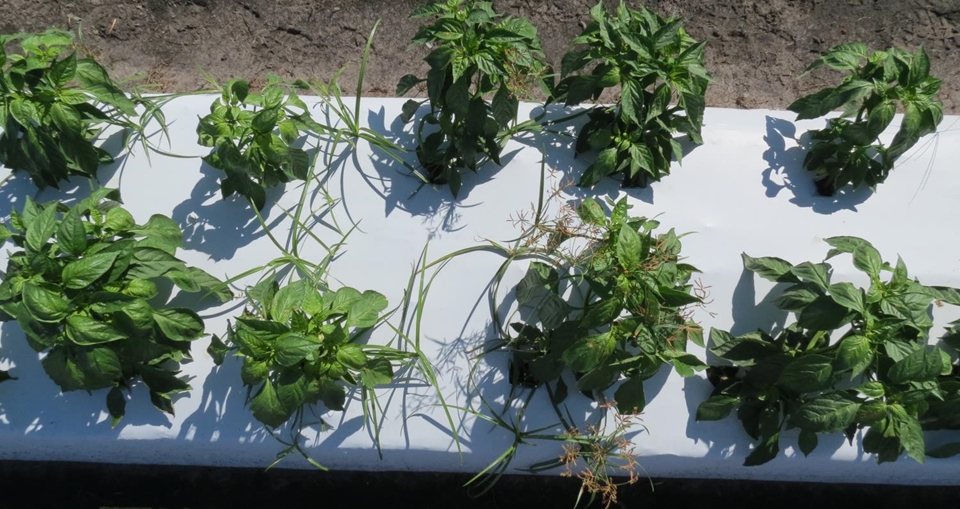
    An overhead view of a plasticulture vegetable bed shows nutsedge weeds emerging through the plastic.

    By Clint Thompson

    University of Georgia Cooperative Extension weed specialist Stanley Culpepper encourages vegetable growers to diversify their management programs against nutsedge. This protects against potential resistance and provides adequate control.

    “In general, I would say with our guys, I’m not overly concerned because our fields with our most nutsedge, they get fumigation, they get tillage and they get herbicides,” Culpepper said. “My guys are quite diverse. Will we have resistance one day? Sure, we will, but we are quite diversified in our management approach. We’re not selecting for resistance, say compared to an agronomic guy who goes out and sprays roundup or dicamba three times.”

    According to Alabama Cooperative Extension, purple nutsedge and yellow nutsedge are prevalent in most areas where vegetables are grown. Both are perennial weeds that propagate mainly by the production of tubers. While growers maintain control of nutsedge, it comes at a cost, says Culpepper.

    “That pest is still the most problematic. Doesn’t necessarily mean we’re not controlling it, but we’re spending a lot of money to control it that we wouldn’t have to spend if it wasn’t so problematic,” Culpepper said. “The one that’s causing us the most money without a doubt in the plasticulture system is nutsedge.”

    Why Is It So Problematic?

    Farmers who implement plasticulture still struggle with nutsedge because it can penetrate mulch.

    “Even if you haven’t poked a hole in the mulch, nutsedge can penetrate it itself. It can damage the mulch and be there before you plant. It can come at any time even if your plant is shading out the plant hole. It’s very unique that way,” Culpepper said. “Is it killing us? Is it hurting our guys? No, I think we’re doing a pretty daggum good job. It’s a repetitive challenge and costing us a lot of money to try to manage.”

    Diversification is key since there are very few herbicides that are effective regardless of the vegetable crop being grown. It is not like peanuts where farmers can apply Cadre or cotton where Roundup can be applied. Nutsedge control in vegetables is limited to a couple of products.

    “It’s there and probably in every single field but they’re doing a really good job controlling it. It’s not like some disease that jumped on us last week and is going to wipe us out. That’s not it at all,” Culpepper said. “But that’s the one I still say is most challenging for our vegetable growers in plasticulture systems.”

  • Georgia Watermelon Season Kicks Off June 3

    May 27, 2020 — LAGRANGE, GA – Sweet, refreshing Georgia watermelon is coming to a store near you in early June. The 2020 watermelon crop is expected to have the crisp, sweet flavor and high quality unique to Georgia watermelon. 

    Georgia watermelons will soon be ready for purchase.

    While Georgia has had a cool spring, consumers should still start seeing Georgia Grown watermelons in stores the first week of June.  The Georgia season typically peaks around June 20.  

    “We expect excellent quality and even more, we are eager to have a successful growing season,” said Rob Greene, Georgia Watermelon Association (GWA) President and owner of Lime Creek Farms in Arabi, Georgia.

    Planting for Georgia’s watermelon crop began in March. From planting to harvest, watermelons typically need 90 days to grow, ripen, and be ready for harvest. With more than 18,000 acres of watermelon harvested on average each year, the state of Georgia ranks in the top 4 in the United States for production among Texas, Florida, and California. 

    Georgia watermelon is expected to hit stores by June 3. Consumers can pick up watermelon in local stores and markets throughout the southeast. The 2020 GWA Queen Ambassador, Lindsey Westberry, would normally be in stores this summer, but due to COVID-19 restrictions, she is helping consumers through serving in other ways in her local community. 

    Georgia Watermelon Association Queen Ambassador Lindsey Westberry helped members of the National Guard at Second Harvest of South Georgia to pack food boxes in Valdosta, Georgia.

    Just before Memorial Day, Westberry joined with members of the National Guard at Second Harvest of South Georgia (SHSG) to pack food boxes for the local community in Valdosta, Georgia. SHSG provides more than 3 million meals to those with food insecurity. 

    “Having the opportunity to give back to my community alongside many of our service men and women was truly a blessing,” she said.  “I believe in living a life of use to others and I look forward to continuing to bring smiles to people’s faces through watermelon.”

    On social media, Westberry will be putting together many recipes, safety and how-to tutorials so consumers can enjoy their local watermelon. 

    “It’s more important now than ever to support your local economy – and we do that from purchasing in season produce like watermelon when it comes in stores,” said Samantha Kilgore, GWA Executive Director.  “Let watermelon help cool you off this summer and rest assured that your local growers do everything they can to provide a safe, sweet, and satisfying product!”

  • Georgia Grown To-Go Sizzles With Local Products

    By Clint Thompson

    The Georgia Grown To-Go program generated excitement last weekend for consumers in Marietta and provided a boost in sales for some of the state’s farmers, including Bill Brim.

    Pictured by Clint Thompson/Boxes are prepared at Lewis Taylor Farms in Tifton, Georgia to be sold directly to consumers. Similar boxes were sold last Saturday at the Georgia Grown To-Go event in Marietta, Georgia.

    As part of the Georgia Department of Agriculture’s (GDA) “Buy Georgia Grown, Now More Than Ever” campaign, Georgia Grown partners with local governments to connect produce farmers directly to consumers in highly populated areas throughout the state. Last Saturday, Lewis Taylor Farms, along with about other semi-loads that included chicken, beef, blueberries, sweet corn, and dairy, were represented in Marietta, Georgia.

    Brim, who co-owns Lewis Taylor Farms in Tifton, Georgia, complimented Georgia Ag Commissioner Gary Black in his efforts of connecting Georgia producers with a consumer base yearning to purchase Georgia Grown products.

    “I think he was trying to help us as farmers and move some of our product and let people know that with the coronavirus, we’re still in business. We’re still trying to do everything we need to do for Georgia Grown and American Grown,” said Brim. “Of course, Georgia Grown is important to us but we want people to buy American Grown if they’re not from Georgia. Commissioner’s really pushed that really hard.”

    Quite the Response

    Brim said they prepared 1,540 produce boxes that included beans, blueberries, onions, cabbage and zucchinis. Boxes costs $36 presale and $40 on site. Brim estimated there was about 70% pre-ordered. Brim said there were between 7,000 and 10,000 cars in line to purchase products.

    “They’re looking for (Georgia Grown), I think. Gary has done a good job of pushing the media to let them know. Jessica (Kirk) got interviewed and she talked about Georgia Grown and American Grown,” said Brim about his daughter, who helped represent Lewis Taylor Farms last Saturday. “It’s been pushed out there in the media pretty hard.”

    What is Georgia Grown To-Go?

    Georgia Grown To-Go is a series of pop-up markets, primarily in metro Atlanta, that provides customers an opportunity to purchase fresh produce directly from farmers with limited contact, drive-through service. 

    In a press release, Black said, “We are excited to offer this great opportunity to help bridge the gap between consumers in metro areas and our farmers in South Georgia. With foodservice channels limited, Georgia Grown To-Go pop-up markets are a great and innovative way to make sure our consumers have access to the Georgia Grown products they crave. We have enjoyed joining forces with our local government and non-profit partners in an effort to best serve our communities during this unprecedented time.” 

    Lewis Taylor Farms Background

    Brim established himself as an industry leader when he, along with Ed Walker, purchased Lewis Taylor Farms in 1985. Over the next five years, Brim helped transform Lewis Taylor Farms into a diversified transplant and vegetable production farm operation.

    When Brim became a co-owner of Lewis Taylor Farms, it had only 87,000 square feet of greenhouse production space. The farm now boasts 81 greenhouses with more than 649,000 square feet of production space.

  • Mexican Imports Still a Concern for American Farmers

    By Clint Thompson

    Mexican imports of blueberries were a big problem for American blueberry farmers as prices dropped.

    Mexican imports of produce into the United States continues to be a problem for American farmers. They especially felt the sting this year amid the ongoing coronavirus pandemic.

    Southeast growers had to overcome a declining market when restaurants and schools closed in March for fears of COVID-19. They also were overshadowed by the constant influx of Mexican produce.

    “It’s insulting to the specialty crop growers who are suffering with COVID-19. It’s taken away markets. Then on top of that, we’ve got Mexican products coming in on top of us to drive the prices even further down,” said Charles Hall, executive director of the Georgia Fruit and Vegetable Association.

    Charles Hall comments on Mexican imports into the U.S.

    Further Evidence

    Florida blueberry farmer Ryan Atwood attributed blueberry’s declining prices to Mexico. In a previous VSCNews story that was published on April 30, Atwood said Mexico had just shipped in 5 million pounds of blueberries the prior week.

    Ironically, poor weather conditions in Mexico this year led to a low watermelon supply, which was confirmed by watermelon farmer Carr Hussey. This has led to a current watermelon shortage and higher prices for American watermelon farmers.

    Unfair Trade

    American farmers have voiced their concerns about unfair trade with Mexico. Blueberry farmer Russ Goodman said hourly pay in Mexico is around $1, much lower than the rate outlined in H-2A that American producers are on the hook for. Hopefully, that will soon be a thing of the past.

    USMCA

    senate
    The USMCA will be implemented July 1. Hopefully, unfair trade practices with Mexico will soon be a thing of the past.

    According to a prior AgNet West story, United States Trade Representative Robert Lighthizer announced that the U.S.-Mexico-Canada Agreement (USMCA) will be ready to be put into effect on July 1.

    “The crisis and recovery from the COVID-19 pandemic demonstrates that now, more than ever, the United States should strive to increase manufacturing capacity and investment in North America,” Lighthizer said in a press release. “The USMCA’s entry into force is a landmark achievement in that effort.”

    However, specialty crops groups have voiced their concern about the lack of support for the sector in the USMCA. Read more here.

  • UGA Helps Produce Growers With Water Quality Calculations and Education

    Drip irrigation lay in a tomato field.

    By Josh Paine for UGA CAES News

    An online tool developed by the University of Georgia College of Agricultural and Environmental Sciences is helping produce growers assess their water quality and prepare for increased testing requirements.

    Uttam Saha, a program coordinator at the UGA Agricultural and Environmental Services Labs, developed an online calculator and simulator to help educate farmers and Extension agents with necessary actions related to the water quality component of the Produce Safety Rule (PSR) in the Food Safety Modernization Act (FSMA).

    The water quality subpart of the rule covers produce types that are frequently consumed raw to ensure growers use water that does not contribute pathogen contamination — like E. coli, norovirus or parasites — to produce so that it is ultimately safe for human consumption.

    “The rule requires a lot of technical knowledge to understand the water-testing needs and to determine whether a farm is in compliance,” said Saha.

    The PSR requires farms to establish a Microbial Water Quality Profile (MWQP) for each untreated water source used on the farm, as well as conduct annual microbial water quality surveys. This MWQP is based on the levels of generic E. coli measured in a water source over time, and testing frequency varies depending on the source of the water.

    The program, available at aesl.ces.uga.edu/calculators/FSMA, also provides various model situations to train users.

    “The biggest change for most farmers is the production (preharvest) water requirements, due in part to increased testing frequencies and the required calculations to determine water microbial quality,” said Laurel Dunn, an assistant professor of food science. “These calculations are not intuitive, so a tool was needed to assist farmers interpreting the results of their water tests.”

    Dunn and her colleagues produced an instructional video on preharvest sample collection available at t.uga.edu/5Zj and another on postharvest sampling at t.uga.edu/5Zi.  

    Requirements for the smallest and final group of farms covered by the PSR began in January 2020. However, the water requirements don’t go into effect until January 2022 for large farms (more than $500,000 in average sales), January 2023 for small farms (between $250,000 to $500,000 in average sales), and January 2024 for very small farms (between $25,000 and $250,000 in average sales).

    “Farms aren’t required to even begin taking water samples until 2022, but are strongly encouraged to do so, and many third-party audits require them to do it already,” said Dunn. 

    Fruits and vegetables grown for the fresh market are Georgia’s third-largest agricultural sector, with a combined farm gate value of more than $1.8 billion, according to UGA agricultural economists.

    In addition to testing, at least one person on each farm covered by the PSR must have attended a Produce Safety Alliance Grower Training by the compliance date. The Georgia Department of Agriculture and UGA Department of Food Science and Technology have partnered to offer courses. Learn more about the trainings and more at agr.georgia.gov/produce-safety-program.aspx.

    Georgia produce growers can contact their local UGA Cooperative Extension office for more information about testing frequency and requirements, for submitting water samples for testing by UGA Agricultural and Environmental Services Labs, and for interpretation by UGA experts including Saha and Dunn.

    To learn more about UGA Extension food science programs, visit extension.uga.edu/programs-services/food-science.