WASHINGTON, D.C. – The U.S. Department of Agriculture (USDA) announced today that it has purchased more than $2.2 billion of meat, fruits, vegetables, specialty crops and dairy products in fiscal years 2019 and 2020 in its ongoing efforts to feed people in need and assist American farmers and ranchers suffering from damage due to unjustified trade retaliation by foreign nations.
Perdue
USDA is on target to reach its fiscal year goal of about $1.4 billion of trade mitigation purchases in the next phase of fiscal year purchasing, which ends Sept. 30. The purchases were made through the Food Purchase and Distribution Program (FDPD), one of USDA’s three programs in its Support Packages for Farmers. Most of the food purchased is provided to states for distribution to nutrition assistance programs such as The Emergency Food Assistance Program and child nutrition programs.
“Over the past two years, USDA has issued more than $2 billion in payments to American farmers, ranchers and producers for U.S.-grown food that is used to help Americans in need,” said U.S. Secretary of Agriculture Sonny Perdue. “Early on, President Trump instructed USDA to make sure our farmers did not bear the brunt of unfair retailiatory tariffs. Our farmers work hard and the most productive in the world, and we crafted the FPDP to help protect them. The FPDP represents just one of the many ways USDA is working hard to fulfill its mission to do right and feed everyone.”
The Coronavirus Food Assistance Program (CFAP) excludes 90% of Georgia’s specialty crop growers with its timeline restrictions of January 1 to April 15. Georgia Fruit and Vegetable Association Executive Director Charles Hall hopes additional commodities added to the list covered under CFAP will aid Georgia growers.
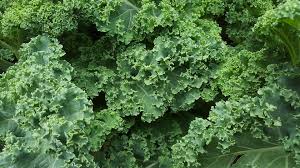
Kale is one of the commodities that Georgia farmers want added to CFAP.
“We are looking at commodities in Georgia that didn’t get into the commodity list,” Hall said. “We’re trying to determine what data we need to provide to USDA to get those listed. Primarily, it is within the greens area; kale, mustard, collards, turnips, and we’ve got a couple of growers we found that had some specialty lettuce for the Atlanta restaurant market. We’re looking at those commodities, too.”
CFAP Background
CFAP applications will be accepted through Aug. 28. There is a Notice of Funding Availability (NOFA) where stakeholders and producers of other commodities can submit information and data for consideration to be included in the program. These must be submitted by June 22. This is specifically for data on any commodity not currently eligible for CFAP.
CFAP will benefit mostly Florida farmers who have had to overcome produce loss and low market prices as a result of the coronavirus pandemic striking the U.S. in mid-March.
In a previous VSCNews story, Hall was hopeful that Congress would pass another stimulus package and that his growers would be sufficiently covered. It would provide a boost to farmers as the economy tries to recover from the current recession.
“The bill that passed the House would cover Georgia specialty crop growers because it covered the first two quarters of the year. Most of our growers’ harvest will be through the end of June. That will be helpful from that standpoint,” Hall said.
According to this week’s edition of The South Carolina Grower, Clemson Extension agents responded how different crops are progressing this production season.
Coastal
Zack Snipes reports, “It’s the time of year when crops are starting to look ugly. We are in the middle of tomato harvest and it seems to be a pretty good crop this year. Bacterial spot is starting to spread up the plants due to a heavy fruit set, perfect weather, the inability to spray, and constant handling by pickers. Keep up with spray programs as the last few weeks of development are critical to size and taste. Rabbiteye blueberries are coming in strong right now and look really good with the occasional berry having Exobasidum. Stink bug pressure has been very high this year and I’m seeing damage on a multitude of crops.”
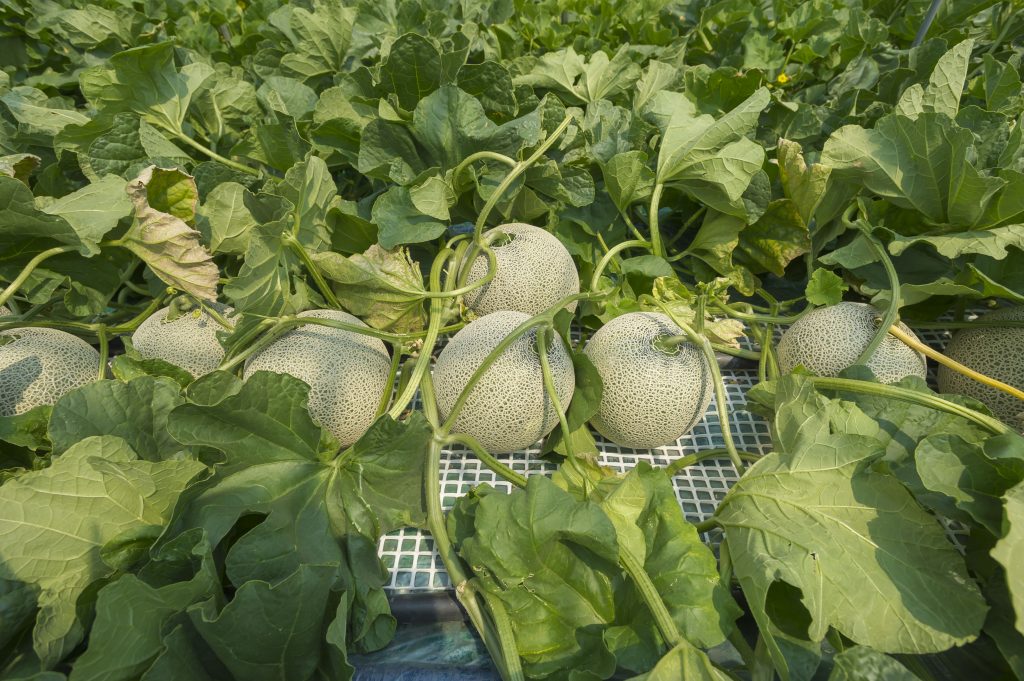
Rob Last reports, “In our area, we are seeing some good quality watermelons and cantaloupes coming to harvest. We are seeing some manganese toxicity related to low pH in both crops. Also given the sporadic storms we have seen leaf potassium levels have been lower than ideal. It would be recommended to monitor tissue nutrient levels and adjust fertilizer applications accordingly.”
Midlands
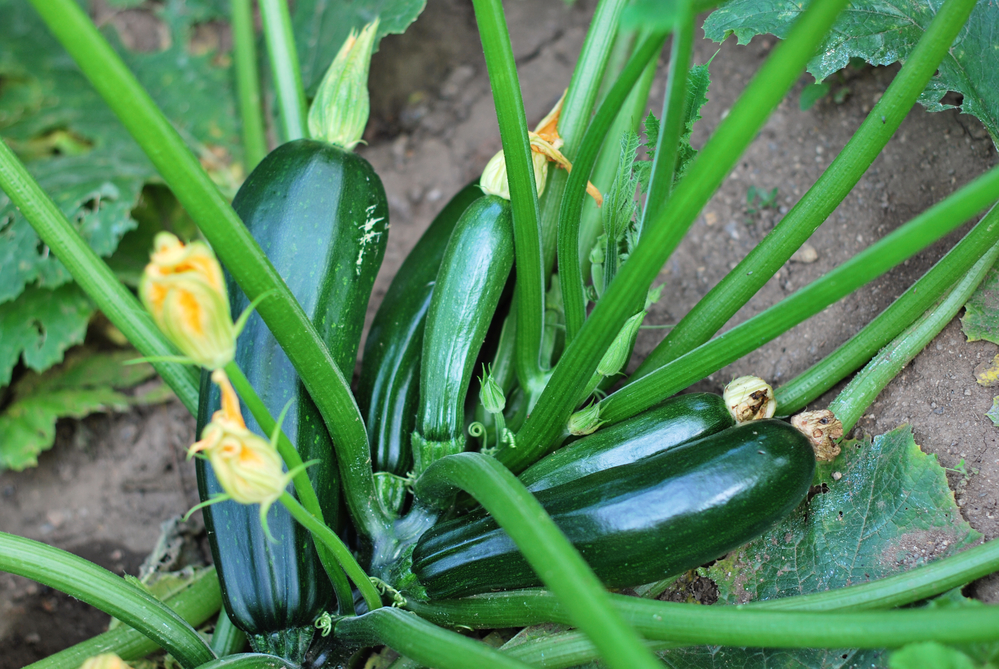
File photo shows zucchini plants.
Justin Ballew reports, “We got a little much-needed rain last week. Crops are developing quickly and growers have started harvesting the oldest planted sweet corn as well as squash, zucchini, cucumbers, beans, and what’s left of spring brassicas. Cucurbit downy mildew has not yet been found in the midlands, but it probably won’t be long. Keep applying preventative fungicides.”
Sarah Scott reports, “Peach season is in full swing. Bacteriosis and brown rot continue to show up in many fields. Warm temperatures during an extended bloom period as well as rain and cold at critical times in the early season are likely the culprits for these issues.”
Pee Dee
Bruce McLean reports, “Cucumbers are being harvested in good numbers. Squash and zucchini yields are increasing. Sweet corn will be ready to begin harvest in a few days. Disease pressure is increasing in cucumbers, primarily Cucurbit Downy Mildew (CDM). CDM has caused significant damage and severely reduced the crop in two locations. Forecasted rains for the next 7-10 days will make it extremely difficult to spray fungicides (as well as applying insecticides, herbicides, and fertilizer). Fruit crops are being negatively impacted by the weather, as well. Reduced fruit quality is caused by increased disease pressure and wet field conditions. And, the forecast over the next 7-10 days is for more rain.”
Tony Melton reports, “Cucurbit downy mildew is increasing rapidly with the rain, glad we started spraying Ranman or Orondis 2 weeks ago. With the rain, ponds have returned to our fields. As one of my vegetable farmers said “Not a good year to be in the Pee Dee vegetable business.” Hundreds of acres of beans, squash, cucurbits, and peas have drowned. Farmers are probably tired of me saying “Potassium Phosphide will help.” Regretfully, on brassicas, the yellowed margined beetle has become established in the Pee Dee, and downy mildew is awful. However, sweet potatoes are growing like a weed (its close kin morning glories).”
Was your crop not eligible for the Coronavirus Food Assistance Program (CFAP), or COVID-19? There is still a chance to try to get that crop on the list of eligible commodities. (Stephanie Ho and Latrice Hill, FSA Director of Outreach)
With limited to no in-person contact with customers during the COVID-19 pandemic, for many growers, expanding online capabilities is crucial to business continuity. Join Georgia Grown and UGA Extension on June 17 for an e-commerce workshop featuring experts from the UGA Small Business Development Center.
By Kelly Simmons for UGA CAES News
The University of Georgia is partnering with the Georgia Department of Agriculture to present a free digital marketing webinar for agribusiness owners looking for alternate ways to sell their products.
The webinar will be held on Wednesday June 17 at 10 a.m. by the UGA Small Business Development Center (SBDC), the Department of Agriculture’s Georgia Grown division and UGA Cooperative Extension.
Agriculture-related businesses from across the state have had trouble getting their fresh produce, meat and seafood to market during the COVID-19 pandemic.
The webinar will introduce participants to e-commerce, best practices for social and email marketing, and suggestions for packaging products for shipping.
“We’ll provide good takeaways on ways to market their business online,” said Bill Boone, SBDC entrepreneur outreach specialist. “If they need additional help or resources to implement the techniques covered in the class, the SBDC is available to assist.”
Additional webinars may be scheduled as needed, he said.
Georgia Grown helps agribusiness thrive by bringing producers, processors, suppliers, distributors, retailers and agritourism together to increase their exposure to customers suppliers and partners through an online searchable database. Find out more at georgiagrown.com/find-georgia-grown.
UGA Extension assists producers and consumers with information and resources through its network of county agents and specialists throughout the state. Visit the Extension website for more information at extension.uga.edu or call 1-800-ASK-UGA1.
Emran Ali, Owen Hudson, Justin Hand, and Sumyya Waliullah
Georgia ranks among the top three states in the nation in vegetable production. One of the most serious diseases in vegetable production in Georgia is Phytophthora blight, caused by the oomycete pathogen Phytophthora capsici. It is a water mold that attacks the roots, foliage, and fruit, causing root rot, crown rot, leaf lesions, fruit rot, and plant wilt (Fig.1). The disease affects peppers, squash, watermelon, cucumber, cantaloupe, and other vegetable crops.
Fig. 1 Example of watermelon fruit rot caused by Phytophthora capsici (Photo credit: Dr. Pingsheng Ji)
The continuous rainfall in Georgia makes Phytophthora blight a widespread problem on vegetables. Because this pathogen produces spores (sporangia and zoospores) on the surface of diseased plant tissues, the spores can be easily washed out by splashing rain and can contaminate nearby irrigation sources like irrigation ponds or lakes.
Previous studies indicated that this pathogen can survive in irrigation water that may serve as an inoculum source. Due to a lack of efficient diagnosis systems, the production of vegetables is severely impacted by contaminated irrigation water.
Detection of P. capsici in irrigation water is difficult using traditional culture-based methods because of other microorganisms present in the environment, such as Pythium spp., which usually overgrow on culture media making P. capsici undetectable. To detect the presence of P. capsici spores in water sources (irrigation ponds, runoff, etc.), we developed a hand pump-based filter paper (8-10 µm) method that captured zoospores and was used to amplify DNA of the pathogen through a novel loop-mediated isothermal amplification (LAMP) assay designed for specific amplification of P. capsici (Fig. 2).
This method amplified and detected DNA from a concentration as low as 1.2 x zoospores/ml, which was 40 times more sensitive than conventional PCR. No cross-amplification was obtained when closely related species were tested.
Fig. 2: Pictures showing the sampling and processing of recycled water for the detection of Phytophthora capsici in the field.
To validate our detection protocol, water samples from the field where P. capsici was suspected to be present was taken to test the designed method with a practical scenario. Out of the seven farms tested, three were positive for the presence of P. capsici using our hand pump filter paper-based LAMP assay. Only one farm was positive when using the conventional PCR assay (Table 1), showing LAMP to be a more sensitive assay for this method of testing irrigation water.
Table 1. Detection of irrigation water from Southern GA
Pond name
County, State
Target crops
Filter paper-based LAMP detection
PCR Detection
History of Disease (Y/N)
P1
Tift, GA
Vegetables
+
-
N
P2
Tift, GA
Vegetables
–
–
N
P3
Tift, GA
Vegetables
–
–
N
P4
Tift, GA
Vegetables
+
+
N
P5
Tift, GA
Vegetables
–
–
N
P6
Tift, GA
Vegetables
+
–
N
P7
Tift, GA
Vegetables
–
–
N
This improved detection method will enable researchers and extension agents to directly utilize the protocol described here to detect P. capsici. spores from a water source in less than two hours. We hope that this will lead to an increase in awareness of using pond water as an irrigation source which will eventually improve disease management of P. capsici, reduce production cost and increase crop yield. This protocol could be adapted to other pathogens that reside, accumulate, or are dispersed in contaminated irrigation systems.
Moving forward, growers should have their irrigation sources like ponds tested for the presence of P. capsici. The Plant Molecular Diagnostic Laboratory, a lab service of the University of Georgia Department of Plant Pathology, is now providing P. capsici testing support for vegetable growers in Georgia. The clinic can accept water samples (generally 2 L water samples per site) to test for the presence of P. capsici. The tests currently available, their pricing, a submission form, and submission information are available at the MDL web page at https://site.caes.uga.edu/alimdl/
Again, we would highly encourage you to take advantage of this service. If you have questions or need help, please contact your local county extension agent for additional information. It would be good to communicate with the lab so that they can expect the samples on the day of arrival.
The University of Florida/IFAS will host a Produce Safety Alliance Grower Training on July 21 through July 23 via Zoom. The trainings will be held from 2:30 p.m. to 5:30 p.m. each day. The cost to attend is $25. Those interested can click here to register.
Per the Food Service Modernization Act, every farm must have at least one Produce Safety Alliance Grower Training certified individual.
Seats are limited. For general registration questions, email Sarah McCoy at sarahmccoy@ufl.edu.
This training is being offered temporarily via remote delivery amid the coronavirus pandemic. In order to participate, individuals must have video and audio capabilities and will be required to have both operating during the entire training.
Photo by UGA/The pepper weevil is one of the most serious pests of peppers.
By Clint Thompson
Pepper weevils are once again a problem for pepper growers in the Southeast. Weevils are a problem wherever present, whether it is in high populations or low populations.
“Anytime you have pepper weevil it’s a problem and in very low populations because of the contamination. High populations can cause fruit abscission. It can hurt your yields considerably. But even low populations just because the potential contamination causes marketability problems,” University of Georgia Cooperative Extension vegetable entomologist Stormy Sparks said. “We’ve had some fields where we’ve had enough to collect populations which is pretty bad.”
Prevention Is Key
Sparks said there are a limited number of pesticides available that are relatively effective.
“Pepper weevil is difficult to control just because it’s a weevil, its biology. The only stage you can control is the adults. Once it lays an egg, you don’t get a shot at that particular insect until it’s an adult again,” Sparks said. “The egg is inside the fruit. The larvae is inside the fruit. It pupae inside the fruit. It emerges inside the fruit. Then when it comes out looking for a mate, you’ve got to try to kill it before it mates and starts laying eggs,” Sparks said. “With pepper weevil, it’s basically preventative. You try to prevent establishment in a field. Once they become established in a field, it’s almost impossible to spray your way out of it.”
According to a prior story on pepper weevils, they were out of control in Florida vegetable fields along the East Coast.
“Pepper weevil, which five years ago was not a consistent problem, but it’s been a consistent problem the last three years. We’re overwintering them,” Sparks said. “Pepper growers are fighting pepper weevils on a consistent basis.”
Unless changes are made by the Georgia Legislature to the Department of Agriculture’s proposed budget cuts, five state farmers market locations could soon become business casualties.
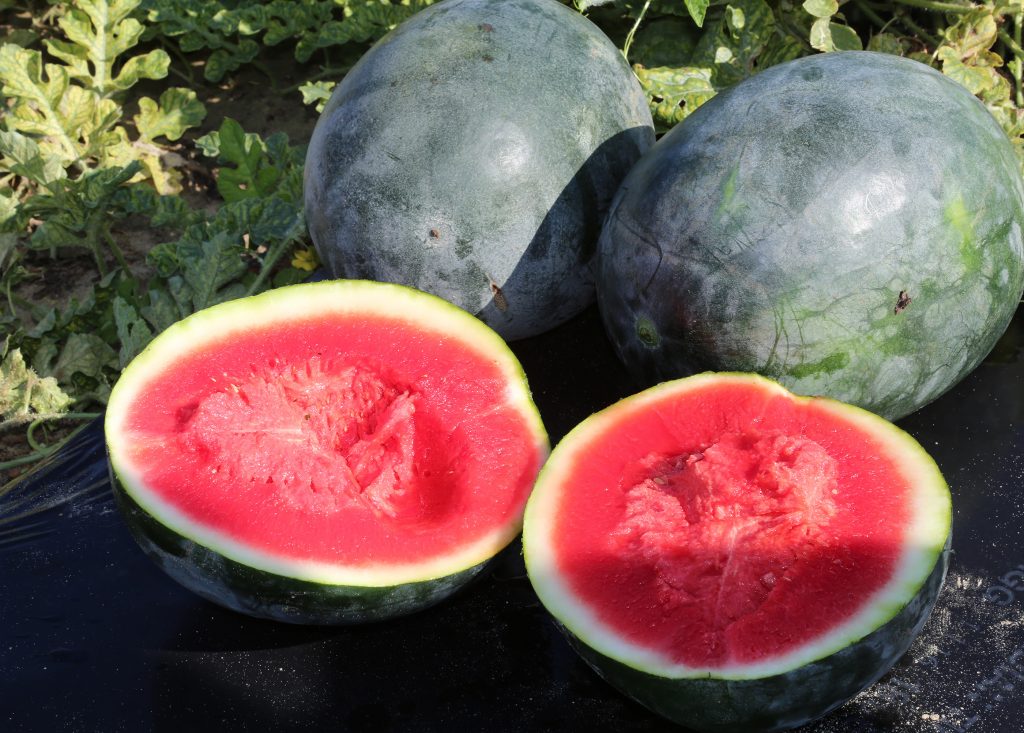
Watermelons on display at a farm on the UGA Tifton campus. Watermelons are a main commodity sold at the Cordele Farmers Market.
Locations in Augusta, Cordele, Macon, Savannah and Thomasville are on the list to be cut. Julie McPeake, Georgia Department of Agriculture Chief Communication Officer, said the proposal has been sent to the Legislature. It’s up to its members to either accept or make any necessary adjustments.
Budget cuts are unfortunately a necessary evil that must be done during this recession which is a result of the coronavirus pandemic.
“With the 14% budget cuts that were requested, you’ve got to make some decisions. Unfortunately, some of those tough decisions require looking at hard numbers. When you have some markets that are having trouble to turn a profit, that’s one of the first places you’ve got to turn to, to save that money,” said Paul Thompson, marketing director for the Georgia Department of Ag.
11% Budget Cuts Instead
Multiple media outlets reported this week, though, that Kemp informed government agencies that they only had to cut the fiscal year 2021 budget by 11%.
“That would be good if that does indeed come to pass. That’ll be wonderful,” Thompson said. “There’s a lot to be determined yet and worked through, but certainly anything would help. It absolutely could have some effect.”
The different farmers market locations vary in what commodities are mainly sold there. In Cordele, the “Watermelon Capital of the World,” it is known for watermelons and cantaloupes being bought and sold this time of year through the early part of July.
“The Cordele Market is most definitely in its season as we speak. It’s a very busy market for the melon season, and we are in that now. Thankfully, we’ve got time to work through this. I don’t see any impact as far as the market for this melon season,” Thompson said. “We will be able to get through this season. Again working with those folks, hopefully, there’s a way everybody can come to the table and some interested parties can get together and we can make it work out in the end.”
July 1 begins the next fiscal year. Thompson said they should know something in the next few weeks as to the future of each of the markets.
The Coronavirus Food Assistance Program (CFAP) will bring much-needed relief to farmers impacted by COVID-19. Unfortunately, the funds allocated per farmer is not enough, says Florida Fruit and Vegetable Association (FFVA) President Mike Joyner.
Joyner
“Florida agriculture was just crushed by the pandemic. A lot of our members have had some really, really big losses. When that direct payment was first mentioned with that $250,000 cap, we were extremely disappointed. We are very appreciative that the cap has been raised,” Joyner said. “We’re grateful for the increase. But it still falls short because we did have members that lost millions. These are family farms.
“We still wish we could get a little bit more. We might try to do that as they begin to talk about a CARES (Act) 4 package. We’ll push to see if we can get that cap raised a little bit more and some more money into Florida.”
CFAP Background
According to https://www.farmers.gov/cfap, CFAP provides vital financial assistance to producers of agricultural commodities who have suffered a 5%-or-greater price decline or who had losses due to market supply chain disruptions due to COVID-19 and face additional significant market costs. Many of the fruits and vegetables, including tomatoes, watermelons and strawberries are covered under CFAP and were in production in Florida when the coronavirus struck in mid-March.
Much of the produce season for this year is completed in Florida, especially in the southern portion of the state. Many are already thinking about next season and need CFAP funds in place so they can proceed accordingly. Thankfully, CFAP payments are already being issued.
“We just hope they turn those checks around pretty quickly because these growers in south Florida are going to make decisions on inputs into July, first part of August.That’s when they’ll start ordering seed and fertilizer and all that kind of stuff,” Joyner said.