Category: Trade

  • Charles Hall: Hearings Are One Step in the Process

    rubio
    According to many farmers, fair trade is more of a fantasy than reality.

    Charles Hall, executive director of the Georgia Fruit and Vegetable Growers Association, understands changes to the unfair trade practices that are being experienced by seasonal growers in Georgia and Florida with regards to Mexican imports are not going to happen overnight.

    But he is hopeful the virtual hearings on Thursday, Aug. 13 and the one next week on Thursday, Aug. 20, will make a difference.

    Hearing Next Week

    Hall is one of numerous farmers and industry leaders in Georgia who will testify in a virtual hearing on Thursday with the U.S. Trade Representative’s Office. The hearings provide the U.S. Department of Commerce and Trump Administration an opportunity to hear from growers in both states about the urgent need for federal action regarding unfair trade.

     “I think it is big that we have this opportunity to talk with some of the decision makers in Washington. I know that our Congressmen and Congressional delegations have been fighting for us. I think it could very well be of some remedy, but I say that cautiously because there’s an awful lot that has to happen for this to be any remedy for us,” Hall said. “I don’t think after these hearings, they’re going to say we believe you and we’re going to do what we need to. I think the hearings are one step in the process. Hopefully, we can continue to keep the administration on our side and continue to work towards some remedy to this.”

    Trade Distorting Policies

    Hall hopes the discussion over the two days of hearing will center on trade distorting policies and how to address the competitive disadvantage American farmers are facing.

    “All of the testimony that was presented on Thursday (13th) or next week on the 20th is to show the U.S. Trade Representative’s Office what we consider to be trade distorting policies. Over the last 15 years, since NAFTA was created, particularly over the last five years you can look at the increase of Mexican imports into the U.S. and how much the Mexico imports have taken over the U.S. domestic market for produce. You can really see what those imports are doing,” Hall said.

  • Fried Testifies in Virtual Hearing

    commissioner
    Nikki Fried
    Florida Agriculture Commissioner

    Florida Agriculture Commissioner Nikki Fried testified on Thursday about unfair trade in a virtual hearing with the U.S. Trade Representative’s Office.

    The hearing, which will continue throughout the day, provides the U.S. Department of Commerce and Trump Administration an opportunity to hear from seasonal produce growers in Florida on the urgent need for federal action regarding unfair trade.

  • Virtual Hearings Begin Today

    Blueberries are one commodity at stake with competition with Mexico.

    Gene McAvoy, associate director for stakeholder relations at the University of Florida/IFAS, is speaking up about unfair trade practices.

    He’s one of numerous farmers and industry leaders in Florida who will testify in a virtual hearing today with the U.S. Trade Representative’s Office. The hearings, scheduled for today and next Thursday, Aug. 20, will provide the U.S. Department of Commerce and Trump Administration an opportunity to hear from seasonal produce growers in Georgia and Florida about the urgent need for federal action regarding unfair trade.

    Today’s hearing is scheduled for 9 a.m. To view the live recording of the hearing, visit USTR’s website here. The livestream will be made available on August 13.

    Fair Trade More Fantasy Than Reality

    McAvoy has substantial statistical data to support his belief that the idea of fair trade is more fantasy than reality.

    “When I first came to Immokalee (Fla.) 25 years ago, we had 300 mostly medium-sized vegetable growers. I don’t think we have 80 (now). Some of them have gotten bigger, but the majority have had to get out because they just couldn’t compete,” McAvoy said.

    McAvoy echoes what other farmers have been complaining about as they try to compete against Mexican imports.

    “They’re paying their labor less per day than we’re paying per hour. We see produce coming in a $5 a box on tomatoes, and it’s impossible to fathom how that can be done when you think about the cost of production,” McAvoy said. “A tractor in Mexico’s going to cost just as much and more than it does here. Chemicals cost just as much and more than here. The cardboard box itself costs $1.50. When they’re putting stuff on the market at $4 or $5, I don’t care if labor is cheaper, there’s something else going on there.”

    Multiple Commodities Impacted

    Multiple commodity groups are vulnerable to unfair trade practices with Mexico.

    “It started with tomato and then it progressed over the years. Tomatoes in 2000, we were about equal in Mexico, above Mexico in terms of total production of tomato on an annual basis. Now, they’re sending in three times what Florida produces into the United States on an annual basis. It moved to peppers. It moved to blueberries, strawberries; I’m hearing from growers now that have switched to organic production to carve out a niche and they’re starting to encroach on that market now,” McAvoy said.

    Click here to view the hearing schedule and list of participants on August 13. Additional information regarding the August 20 hearing will be released closer to the date. The Federal Register notice regarding the hearings can be viewed here.

    NOTE:  Full transcripts of the hearings will be posted online after the hearings.

  • Florida Farmer: Administration Needs to be Real Careful with Upcoming Hearings

    Paul Allen, president of R.C. Hatton Farms in Belle Glade, Florida and chairman of the Florida Fruit and Vegetable Association, believes the outcome of the upcoming virtual hearings about unfair trade practices with the U.S. Trade Representative’s Office could have significant ramifications come November.

    This file photo shows Florida Agriculture Commissioner Nikki Fried visiting with farmer Paul Allen, Palm Beach County Commissioner Melissa McKinlay and Tom MacVicar of MacVicar Consulting.

    “This administration better realize that the American people are very well aware of this Florida deal. They need to think hard about it. You’re in an election year, and it isn’t just the people in Florida, it’s people all over this country are aware of this deal,” said a frustrated Allen, referring to the competitive imbalance with Mexican imports. “They’ve been made aware of it through the pandemic. I think the administration needs to be real careful about what they’re doing here. They need to help the Florida farmer, and I think it could probably assure another term, to be honest with you. If not, I don’t know.”

    Hearings Scheduled

    The hearings, scheduled for Aug. 13 and Aug. 20, will allow the U.S. Department of Commerce and Trump Administration the chance to hear from seasonal produce growers in Florida and Georgia. Farmers such as Allen and Georgia producer Bill Brim are pleading for federal action to be taken regarding unfair trade, specifically with respect to Mexican imports.

    “I think we’ve got to challenge this administration to realize this is bigger than just push and pull. This is about national security. In World War II our country understood what that was about, they didn’t require farmers to go into the draft. They understood the importance of being able to feed our country. Our government needs to be reminded of that,” Allen said. “The fact that the Mexican administration is putting out such a big to-do about it, a big fight, shows you how important it is. They know it’s going to put the Florida farmers out of business. That’s why they’re really reacting strong to the fact that we’re even considering doing something different.”

    Unfair Trade

    The reality of unfair trade was especially harsh this year against the backdrop of the coronavirus pandemic. Farmers disposed of harvested produce just because there wasn’t a market, while Mexican produce was constantly being brought into the country.

    The idea of fair trade is a fantasy more than reality when it comes to Mexico says American farmers.

    “This pandemic when it came last March and April, we asked the government to pull a force majeure on the trade deal because of what was going on. We were destroying food. They wouldn’t do it. We begged them and begged them, had our representatives call but they wouldn’t close the border down, and we just kept destroying food,” Allen said. “We put a cry out to the American people, and the American people started supporting us and started doing what they could to buy American food and not food from other countries. It really bailed us out and helped us.”

    Real Change?

    Allen is hopeful and confident these hearings will lead to real change.

    “We’re farmers, we’re people of faith. We’ve got to believe, and we’ve got to think positive,” Allen said. “I’m not thinking we’re wasting our time.

    Additional information on USTR field hearing dates, deadlines, and submission instructions can be found in the Federal Register notice.

  • Georgia Farmer: What’s Right is to Help Support Us

    Brim

    Tifton, Georgia farmer Bill Brim is ready to voice his concerns about unfair trade practices during one of the two virtual hearings scheduled for Aug. 13 and Aug. 20 with the U.S. Trade Representative’s Office.

    The hearings will provide the U.S. Department of Commerce and Trump Administration an opportunity to hear from seasonal produce growers in Georgia and Florida on the urgent need for federal action regarding unfair trade.

    “I feel like if we don’t do it, we’re not going to get anywhere, so we might as well do what we can do even if we make them mad,” said Brim, co-owner of Lewis Taylor Farms. “They’re either going to do what they feel like they’re going to do or they’re going to do what’s right. What’s right is to help support us and our farming operations to allow us to be able to compete with the rest of the world.”

    Competition Against Mexico

    Competition against Mexican imports is tough, though, if not impossible, for specialty crop growers in the Southeast.

    “We can’t grow this product cheaper than they can grow it. Their wages are so much cheaper than ours. They’re making $8 or $9 a day, maybe, if they’re lucky. We’re paying $11.77 an hour for ours, plus all of our input costs are a lot more than theirs too,” Brim said. “They don’t have food safety to deal with like we do. They don’t have all the other items to have to deal with like we do, from FDA and EPA and everybody else.”

    He estimated that costs increase to $15 per hour per worker since Lewis Taylor Farms houses the workers as well. The high costs that specialty crop farmers already deal with was amplified this year because of the health and safety protocols needed for workers during the coronavirus pandemic.

    “This COVID-19 has cost us a fortune to keep them where they can work; spraying houses every day. We’re spraying buses every day, we’re spraying the kitchen every day, we’re spraying tractors every day, the trucks every day,” Brim said.

    Additional information on USTR field hearing dates, deadlines, and submission instructions can be found in the Federal Register notice.

  • Auburn Economist Skeptical About Upcoming Trade Hearings

    Two hearings on Aug. 13 and Aug. 20 with the U.S. Trade Representative’s Office will provide growers from Georgia and Florida the chance to voice their concerns over unfair trade.

    Rabinowitz

    However, one economist is skeptical about the potential impact these hearings will have.

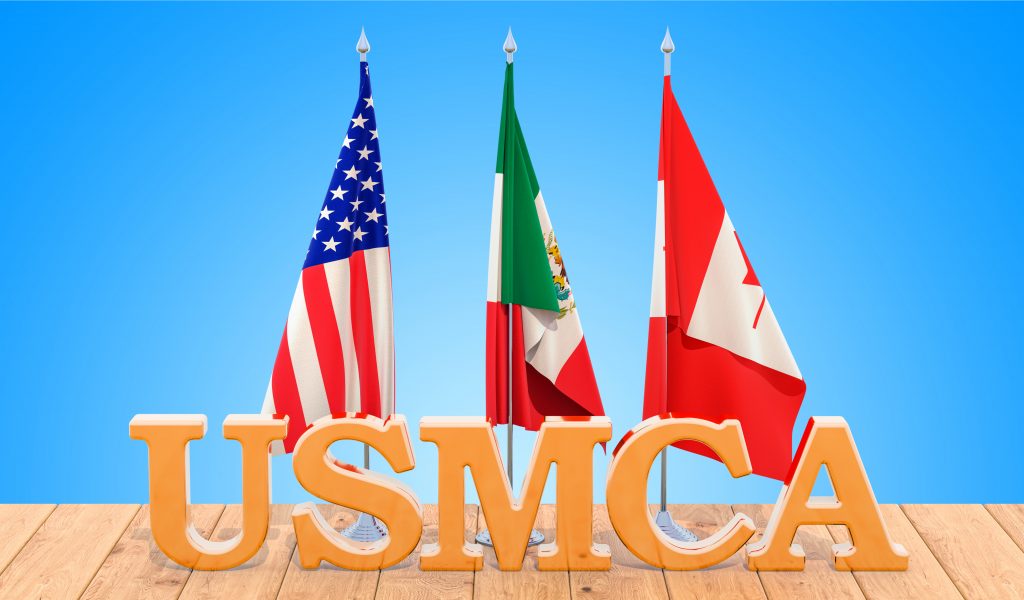
    Adam Rabinowitz, Associate Professor and Extension Economist at Auburn University, points to the lack of coverage for specialty crop growers in the U.S.-Mexico-Canada Agreement (USMCA) for his lack of confidence in the upcoming hearings.

    “It’s certainly important for the farmers to be able to voice their concerns about some of the trade issues that are at hand. It’s going to be interesting to see I guess, to what extent there is actual impact from that,” Rabinowitz said. “When you talk about some of the challenges with trade in the Southeast, Mexico is a big issue there. The fact that nothing was addressed for this region in the USMCA, I’m not sure what the opportunities will be to resolve some of those outstanding issues.”

    The hearings will take place virtually. They will provide the U.S. Department of Commerce and Trump Administration an opportunity to hear from seasonal produce growers on the urgent need for federal action on unfair foreign trade.

    Even more so this year, Mexican imports into the U.S. were troubling for growers who were struggling to sell produce during the coronavirus pandemic. Florida farmers Sam Accursio said Mexico imported 2 to 3 million pounds of squash per day while he struggled to find buyers, if any at all. Florida farmer Ryan Atwood said the influx of blueberry imports from Mexico contributed to a sharp decline in market prices this year.  

    “Certainly, the blueberries are a concern, cucumbers and bellpeppers as well. We’ve seen some data there, and of course, tomatoes, even with the tomato suspension agreement; certainly is highly competitive coming out of Mexico,” Rabinowitz said. “Those I’d say are the commodities we’ve seen evidence of that have been impacted pretty significantly. But some of my hesitation in being optimistic comes from the challenge of why nothing was addressed in USMCA.”

    Additional information on USTR field hearing dates, deadlines, and submission instructions can be found in the Federal Register notice.

  • Federal Agencies to Hold Virtual Hearings on Seasonal and Perishable Produce

    Washington, DC — The Office of the United States Trade Representative (USTR), the United States Department of Agriculture (USDA), and the United States Department of Commerce will convene virtual hearings next month to discuss foreign trade policies that may be harming American growers of seasonal and perishable produce. At the hearings, officials from the federal agencies will hear from interested persons on how the Trump Administration can support these producers and redress any unfair harm.  

    The hearings, which were originally scheduled to take place in Florida and Georgia in April, will take place virtually in light of the ongoing pandemic caused by COVID-19. USTR will continue to evaluate additional opportunities to engage directly with stakeholders in Florida, Georgia, and elsewhere on this important issue.

    The virtual hearings are scheduled for the following dates:

    (1)    August 13, 2020 at 9:00 a.m. EDT

    (2)    August 20, 2020 at 9:00 a.m. EDT

    The Federal Register notice with instructions on how to submit requests to participate in the hearings and written materials can be viewed here.

    NOTE: The hearings will be made public and viewable online, and further details about viewing the hearings will be provided ahead of the hearing dates.  Full transcripts of the hearings will also be posted online after the hearings. 

    Office of the United States Trade Representative

  • Mexican Imports Still a Concern for American Farmers

    By Clint Thompson

    Mexican imports of blueberries were a big problem for American blueberry farmers as prices dropped.

    Mexican imports of produce into the United States continues to be a problem for American farmers. They especially felt the sting this year amid the ongoing coronavirus pandemic.

    Southeast growers had to overcome a declining market when restaurants and schools closed in March for fears of COVID-19. They also were overshadowed by the constant influx of Mexican produce.

    “It’s insulting to the specialty crop growers who are suffering with COVID-19. It’s taken away markets. Then on top of that, we’ve got Mexican products coming in on top of us to drive the prices even further down,” said Charles Hall, executive director of the Georgia Fruit and Vegetable Association.

    Charles Hall comments on Mexican imports into the U.S.

    Further Evidence

    Florida blueberry farmer Ryan Atwood attributed blueberry’s declining prices to Mexico. In a previous VSCNews story that was published on April 30, Atwood said Mexico had just shipped in 5 million pounds of blueberries the prior week.

    Ironically, poor weather conditions in Mexico this year led to a low watermelon supply, which was confirmed by watermelon farmer Carr Hussey. This has led to a current watermelon shortage and higher prices for American watermelon farmers.

    Unfair Trade

    American farmers have voiced their concerns about unfair trade with Mexico. Blueberry farmer Russ Goodman said hourly pay in Mexico is around $1, much lower than the rate outlined in H-2A that American producers are on the hook for. Hopefully, that will soon be a thing of the past.

    USMCA

    senate
    The USMCA will be implemented July 1. Hopefully, unfair trade practices with Mexico will soon be a thing of the past.

    According to a prior AgNet West story, United States Trade Representative Robert Lighthizer announced that the U.S.-Mexico-Canada Agreement (USMCA) will be ready to be put into effect on July 1.

    “The crisis and recovery from the COVID-19 pandemic demonstrates that now, more than ever, the United States should strive to increase manufacturing capacity and investment in North America,” Lighthizer said in a press release. “The USMCA’s entry into force is a landmark achievement in that effort.”

    However, specialty crops groups have voiced their concern about the lack of support for the sector in the USMCA. Read more here.