According to The South Carolina Grower, the Asian longhorned beetle (ALB) has been found near Hollywood, South Carolina. The beetle is an invasive tree pest and mainly attacks maples, elms, willows and birches.
Donald Duerr, USDA Forest Service, Bugwood.org/Shows an Asian longhorned beetle.
Clemson Extension, Clemson Regulatory Services and USDA APHIS need help in detecting the beetle’s presence in the Lowcountry.
The are native beetles that look similar to ALB, so it’s important to know what they look like specifically. They are large black beetles with white spots, black and white striped antennae and bluish feet.
To report the beetle’s presence, please contact the Clemson Department of Plant Industry at invasives@clemson.edu or by calling 864-646-2140.
Red Node Disease, aka Tobacco Streak Virus, was discovered in beans in a Florida vegetable field this spring. It’s vectored by thrips and could potentially be a problem for farmers this fall, according to Prissy Fletcher, University of Florida/IFAS Agricultural Extension agent for St. Johns County, Florida.
“I have been here 14 months and since I have been here, we had never seen this disease. Speaking with some of my predecessors, this has not been an issue that we have seen before. It’s a new situation for us,” Fletcher said. “Even though the virus was first identified in Homestead, Florida in 2014, we weren’t aware of this issue in beans up here. But after doing a literature review and knowing it had been in South Florida, looking back, it was just a matter of time before we found it here. This is definitely a new situation for us locally that we’re going to attack as a team and get a good IPM plan.”
Thrips Need to be Contained
Thrips vector the disease and are the key in farmers managing it successfully. They are tiny insects that can feed on various hosts while spreading different diseases. Thrips in peanuts can lead to tomato spotted wilt virus. Onion thrips or western flower thrips are the pests that vector Red Node Disease in beans. But they can also feed on squash, cotton and different weed species.
“A lot of this is going to boil down to communication, communicating with your neighbors, other folks who are growing crops that can be affected by thrips, which is just about everything. A good IPM program for thrips is going to be pretty crucial,” Fletcher said. “Just the importance of communicating with your neighbors about disease spreading, pest management and working together as a system because if your neighbor has that problem, you’re likely to be impacted by that as well.”
Fletcher said the impact on beans can be devastating. Symptoms include reddening of the stem, nodes and leaf veins. Infected pods show patterns of necrotic red patches. The spread of the disease can make the pods fall off, shrivel up or not even produce the beans themselves.
“It could be pretty bad for that farmer if that disease spreads,” Fletcher said. “Prevention is going to be key.”
Fletcher said farmers will begin planting their fall crop in September and early October.
“The production of beans in this area is increasing, which is pretty exciting. Seeing more farmers diversifying and taking on more of these alternative crops. It’s pretty cool stuff. Then we find this disease and it’s like, ‘Oh my goodness. Okay, we’ve got to figure this out before next season.’ So prevention, prevention, prevention,” Fletcher said.
According to Alabama Extension, southern peas are commonly grown crop in the Southeast. Peas have many different pests such as aphids, thrips, leaf-footed bugs, stink bugs, and various caterpillar species. However, the one pest that causes growers the most trouble is the cowpea curculio. There are control remedies for most of these other pests, but the cowpea curculio has become resistant to many pyrethroids.
In this video, Neil Kelly, an Alabama Extension commercial horticulture regional agent, discusses the background and anatomy of this pest, as well as ways to stay on top of controlling them.
For more information about cowpea curculio, see click here.
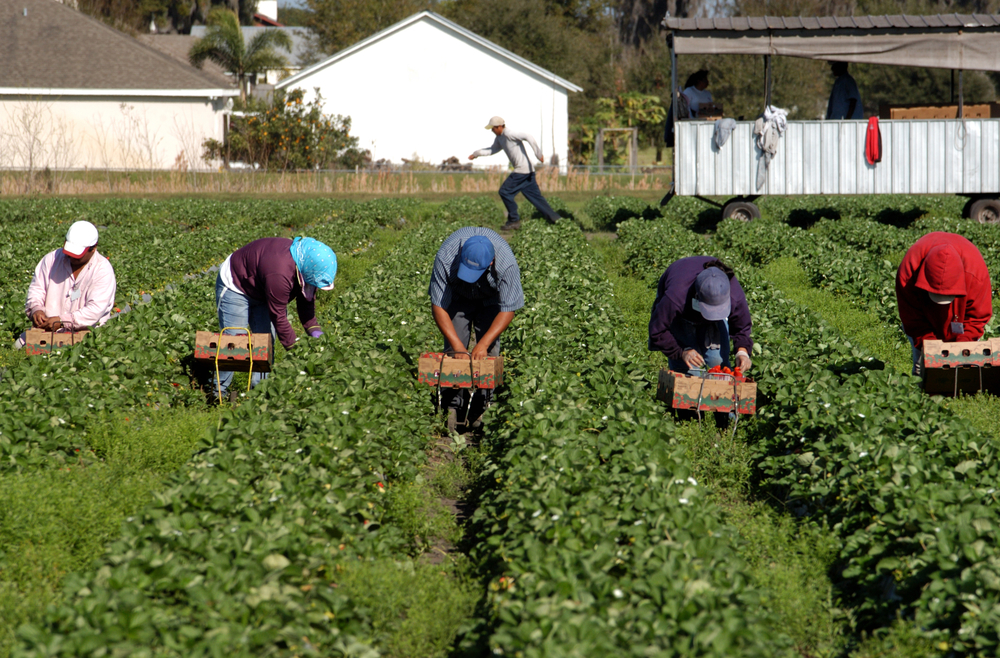
Worker safety is important for all farms to keep in mind.
Paul Allen, chairman of the Florida Fruit and Vegetable Association, encourages farmers to prepare now for next growing season with respect to worker safety.
FFVA strongly urges every grower and farm labor contractor to implement these measures to the utmost of your ability. Download the checklist, review it, print it out and begin working now to designate a workplace coordinator responsible for COVID-19 assessment and control. Growers who work with a farm labor contractor should require that these measures are followed. I plan to make this a priority for my operations and you should, too.
In addition, your county health departments and emergency management offices are prepared to help with testing, sanitizing supplies and PPE. We’ve included a list of each county’s health department contact information in the packet for your convenience.
FFVA also is discussing the development of training videos and materials with some industry partners to serve as additional tools and resources. The association continues to be in almost daily contact with state agriculture and public health officials and stands ready to help you in any way it can.
This is not optional. If we can’t reduce the spread of COVID-19, we may not have a workforce to harvest our crops next season. Our grower/shipper community must be united on the importance of worker safety during COVID-19. If even one employer or farm labor contractor fails to meet his or her responsibility, the entire industry feels the impact.
By Andre Luiz Biscaia Ribeiro da Silva for UGA CAES News
Watermelons being researched on the UGA Tifton Campus.
By Clint Thompson
6–6-17
As we approach the harvest season for watermelon, bell pepper, tomato, yellow squash, zucchini, cucumber, sweet corn and other crops, Georgia vegetable growers can move ahead and prepare seasonal workers to mitigate the spread of COVID-19 during harvest time.
According to the National Watermelon Association, there was an increase in the incidence of COVID-19 among seasonal workers in the watermelon industry of north Florida during harvest, and positive coronavirus tests were reported in 75% of seasonal workers. That means that 3 of every 4 workers tested were positive for COVID-19.
Florida is a few weeks ahead of the Georgia watermelon industry for harvesting, and similar numbers can be expected in our state if agricultural operations don’t take action. Prepare for the possible transmission of coronavirus on your farm, packinghouse or other agricultural operation by stocking proper personal protective gear, instituting social distancing measures, and protecting the health of your employees, workers and customers.
Regardless of the crop and how long or short the season may be, growers can do their part and University of Georgia Cooperative Extension is here to help. Below is a list of actions recommended by the National Watermelon Association:
Require all workers and employees to wear masks. There can be no exceptions outside of ADA restrictions.
Explain to workers that it’s in their best interest to take precautionary steps.
Put social distancing practices in place on the farm, in the sheds and in H-2A housing as much as possible.
Require workers and employees to regularly wash their hands and use hand sanitizers, if available.
Limit ridership on buses to allow for social distancing, and keep teams of workers together.
Sanitize buses and living spaces (H-2A housing) regularly.
Pre-screen workers with temperature checks daily before work begins.
Ask workers to help with reporting. Encourage them to speak up if they see that others have symptoms.
Provide separate housing to quarantine workers who test positive.
For more resources on COVID-19 from UGA Extension, visit extension.uga.edu/emergencies. Contact your local Extension office by calling 1-800-ASK-UGA1.
File photo shows downy mildew disease on watermelon.
According to the The South Carolina Grower, downy mildew disease was found Wednesday in one watermelon field in Bamberg County, South Carolina.
Justin Ballew, Clemson Extension commercial horticulture agent, said all growers should immediately spray watermelon with Ranman, Revus, or Gavel to protect their crops from the disease. In addition to direct yield loss, loss of vine cover can expose fruit to sunburn. Growers who find downy mildew in a field should apply Orondis Ultra or Orondis Opti in a weekly rotation with Ranman or Gavel.
According to a previous UGA news release, the downy mildew pathogen thrives in wet, humid conditions and needs moisture on the surface of the plant for successful spore germination and further infection.
Cucurbit crops — like cucumbers, melons, squashes and pumpkins — are susceptible to the disease.
UGA Extension photo/Shows leaf scorching on a pecan tree.
By Clint Thompson
Leaf scorching and dieback on some young pecan trees is common this year with high temperatures, according to Lenny Wells, University of Georgia Cooperative Extension pecan specialist. But Wells assures growers the problem can be corrected.
“We see that this time of year pretty much every year; young trees where they’re growing so fast that the root system can’t keep up with what the top is trying to produce. This time of year, it turns off hot and soil temperatures warm up some,” Wells said. “Water demand goes up and those young trees with the root system not fully developed yet have a hard time keeping up. They tend to grow out of it. It’s a scary thing for growers to see. But they do tend to grow out of it fine.
“Anytime you have a tree like that, that’s struggling and you start seeing some shoots dying back and stuff like that, it’s a sign that’s something’s going on in the root system. If you prune back some of that top and bring the top of that tree back more in line with what the root system can support, that usually is a big help to it.”
Wells cautions growers to maintain consistent soil moisture or apply water every other day. The longer irrigation is applied, the deeper the water runs. This allows the root system to develop deeper through the soil profile. This also prevents the soil from getting too hot. Soil temperatures that exceed 95 degrees F inhibit root growth.
In the UGA Extension pecan blog, Wells also said that growers will get more vigor and healthy first-year growth if they plant before March.
Georgia peach workers are staying safe and nobody has been stricken from the coronavirus pandemic yet, says Jeff Cook, University of Georgia Cooperative Extension Agriculture and Natural Resources agent for Peach and Taylor counties.
“Nobody’s having any real hiccups with this virus. I guess everybody’s staying far enough away from each other to be safe,” Cook said.
Workers are essential in harvesting Georgia peaches.
Cook said all the precautions and safety guidelines that are already in place jive with the safety practices that are necessary with the current coronavirus pandemic.
“In the packing sheds and in the close proximity, all of the ladies and gentlemen, they’re all wearing masks. They started wearing gloves in the past anyway packing, just for food safety sake. All of their food safety side of stuff, it just translates over to public safety, too.
“Every day, at the end of the day, they clean the packing shed and then they disinfect it. Then they come back in the morning and do the same thing in the morning. They’ve all got stores, and all have got retail space where they sell products. They’ve got all of the regular signage up.”
Cook said in April that farmers are trying to keep their peach crews a little more separated this year. Farmers limit the workers to the amount of time they’re exposed to other people that are not part of their specific crew.
It would be extremely challenging if a worker got sick from COVID-19.
“If they lost one guy on a crew or had one with it, they’d probably have to lose that crew for at least a two-week quarantine period,” Cook said.
LAKE ALFRED, Fla. — Water is essential to Florida farmers. They scrutinize the amount available, its quality and when and how they should use it to grow crops, feed animals and sustain their livelihood.
University of Florida soil and water sciences assistant professor Davie Kadyampakeni works tirelessly with Florida citrus growers to ensure that they have access to the most current research in water use and soil nutrient management to promote good environmental stewardship and crop production efficiency.
Kadyampakeni, working at the UF Institute of Food and Agricultural Sciences Citrus Research and Education Center in Lake Alfred, combines a research portfolio with a UF/IFAS Extension appointment to bring the latest information to growers. His work has been so effective that he is being recognized by his colleagues with the 2020 Outstanding Extension Specialist award.
Kadyampakeni’s Extension philosophy is to address the immediate and long-term needs of citrus growers (and growers of other horticultural crops such as peach and blueberries) in Florida by establishing himself as a “go-to” researcher with information provided as needed. The majority of Florida citrus is grown in sandy soil, and growers need thoughtful nutrient and water management strategies to be successful. Educational activities to achieve his goals in Extension include talks, publications, phone calls and demonstrations. His Extension program takes a three-pronged approach by focusing on:
Irrigation management of citrus for increased production efficiency, and nutrient management for citrus for environmental sustainability and nutrient use efficiency.
Best management practices; and
Capacity building and Extension talks. These activities include research publications, conference presentations, workshops, field days and individuals’ consultations.
“Dr. Kadyampakeni deserves this award because of his relentless drive to get information to growers,” said Juanita Popenoe, a UF/IFAS multi-county commercial fruit production agent and the person who nominated him. “He is focused on promoting optimal irrigation and nutrient application rates for citrus affected with huanglongbing (HLB), something that is absolutely needed.”
Over his time with UF/IFAS, Kadyampakeni has processed over 5,000 samples and analyzed for pH or nutrient content and reached out to more than 1,200 participants in workshops.
Nationally, he is the past chair for the American Society of Agronomy (ASA) Sensor-based Water Management Community and organized a symposium on “Optimizing efficiency with sensors for irrigation scheduling and water management” at the ASA Annual Meeting in November 2019. Davie was also the 2019 Leader for the W4128 Multistate Project: Microirrigation: A sustainable technology for crop intensification and improved water productivity, with participants from more than 20 Universities in the US and several USDA scientists. He was chair and moderator of a symposium at the 2019 ASA-CSSA-SSSA meetings. He is current Chair for the Citrus Working Group for the American Society of Horticultural Science (ASHS) and chairs the 2020 panel for selecting the International Horticulturalist of the year. He is also the organizer of the Citrus ASHS Workshop on “Novel Practices for Sustaining Citrus Production in the Era of Citrus Greening (Huanglongbing)” scheduled for August 2020 in Orlando, Florida with invited speakers from across the US at the ASHS annual conference. He is also the 2020 Citrus Section Vice President for the Florida State Horticultural Society.
Alabama lawmakers have never seen a legislative session like the one that took place this year. The coronavirus (COVID-19) pandemic forced lawmakers to end Alabama’s 2020 legislative session early, causing several issues to fall by the wayside.
Legislators took a nearly two-month break during the COVID-19 outbreak, returing to Montgomery on May 4to pass state budgets and a few other bills before the regular session concluded May 18. Wearing masks and sitting apart, lawmakers gathered without lobbyists in the hallways or members of the public filling the galleries.
“Once lawmakers came back, the building was not open to the public … which was pretty unusual, especially taking on something as important as the budgets,” says Leigha Cauthen, Alabama Agribusiness Council executive director.
FUNDING FOR AGRICULTURE Due to the shortened timeframe, Education Trust Fund and General Fund budgets and local legislation were lawmakers’ top priorities.
The General Fund budget, at almost $2.4 billion, will greatly benefit the state’s agriculture industry. Under the proposed plan, the Alabama Department of Agriculture and Industries (ADAI) will receive almost $15 million, including $100,000 in new appropriations for the North Alabama Agriplex, $130,000 for the industrial hemp program and $120,000 allocated to the Farm to School program. In addition, the new Sweet Grown Alabama state agricultural brand received $250,000.
Sweet Grown Alabama, which launched on March 13, is a non-profit organization that connects farmers in the state to retailers and consumers. Growers can market their produce anywhere in the state. The online database allows consumers to find farmers in their area. Farmers’ profiles include their location, products grown, social media links, website links and how consumers can buy their products.
In addition, the Soil and Water Conservation Committee will receive $2.9 million, including more than $81,000 in matching funds for the Regional Conservation Partnership Program to increase on-farm irrigation.
“I think the ADAI was pleased with this year’s funding. At the beginning of the session we were all optimistic about the budgets, but as COVID-19 unfolded, the budgets fell back to the same funding levels as last year,” Cauthen said. “But, some new money made its way to the ag department, so that’s great that those needs were met even as the budget was being scaled back.”
BILLS LEFT HANGING IN THE BALANCE Unfortunately, none of the bills that were of particular interest to Alabama agriculture were passed by the Legislature during the session.
“We lost a couple of good bills that were left hanging in the balance, but it also kept some bills from passing that could have been detrimental to the agriculture industry,” said Cauthen.
She expects special sessions later this summer or into the fall to take up additional important issues of the state. But, for the most part, she expects to see the bills she was tracking reintroduced during next year’s session.
For a complete list of the bills being tracked by the Alabama Agribusiness Council, visit www.alagribusiness.org.