Category: Top Posts

  • Supplemental Fumigation Strategies for Soilborne Pests, Diseases

    By Ashley Robinson

    The phaseout of methyl bromide continues to stimulate research into the use of other soil fumigants for controlling soilborne pathogens, nematodes and weeds to an acceptable level for production.

    Gary Vallad

    Researchers at the University of Florida Institute of Food and Agricultural Sciences (UF/IFAS) are looking at ways to modify the current fumigation system to better reflect the distribution growers once saw with methyl bromide.

    “The phaseout from the loss of methyl bromide from where we are now, was not a short one. It’s been going on for decades and I think we’re still in that process,” says Gary Vallad, professor of plant pathology at UF/IFAS. “And of course, this has been kind of a costly process, it’s been a hard process for a number of growers throughout the state and throughout the southeast United States.”

    Improving Current Fumigation Systems

    In the absence of methyl bromide, tomato diseases have been on the rise, specifically fusarium wilt, caused by Fusarium oxysporum. Since then, growers have been looking to find alternatives to control the disease.

    According to Vallad, methyl bromide alternatives are limited in the way they move in the soil.

    The biggest weakness that researchers have found with the alternative fumigants is that the fumigant doesn’t reach the soil zones along the edge of the bed and under the tuck of the plastic.

    Researchers have developed strategies to improve current fumigation systems using Pic-Clor 60. With the additional of supplemental Pic, researchers saw a 77% decrease in fusarium wilt incidence and yield increase of approximately 21%.

    In addition to looking at how to control soilborne pathogens, they also wanted to evaluate strategies to control nematodes.

    “In a lot of cases where we run into pest problems, it’s not just one pathogen or nematode. Typically, it’s a mixture of the two,” Vallad says. “So really what we wanted to do is investigate what happens when we put both of these systems together.”

    After collecting results from research trials, it was discovered that deep shank Telone applications reduced nematode counts and gall ratings. Also, Pic-Clor 60 or 80 with supplemental Pic and deep shank Telone application was the most effective strategy to reduce fusarium wilt, which actually shocked researchers.

    Through further research, they found that Telone is fungicidal to fusarium oxysporum, and by combining both strategies researchers saw yield increases of 25% or more.

  • Blueberry Growers Qualify for CFAP Category 1 Payments

    The USDA announced today that blueberry growers are now eligible for Category 1 Coronavirus Food Assistance Program (CFAP) payments. 

    Based on the USDA’s original assessment of the impact of coronavirus on the industry, blueberries were eligible only for Categories  2 and 3 for CFAP relief payments. USDA’s original market analysis had determined that blueberries did not demonstrate a 5% decline in price between January 15 and April 15. However, in response, the North American Blueberry Council (NABC) worked collaboratively with industry leadership to advocate for inclusion and provided the USDA with the data and analysis necessary to reverse the original eligibility assessment. 

    As a result, blueberry growers that qualify are now eligible for Category 1 CFAP payments.

    Take Action

    Growers that believe they qualify for Category 1 are encouraged to contact their local FSA office immediately to begin the application process. 

    The program is based on self-certification; growers should retain documentation for future claim substantiation.

    To learn more about the CFAP program and Category 1 eligibility requirements, visit farmers.gov/cfap/specialty.

  • Pierce’s Disease Training

    UGA photo/Jordan Burbage, of the UGA Soil, Plant and Water Analysis Laboratory in Athens, Georgia, harvests grapes at Trillium Vineyards, part of the collaborative research project being conducted by UGA Extension and Westover Vineyard Consulting.

    By Clint Thompson

    In his latest UGA Extension Viticulture blog, University of Georgia Extension Fruit Disease Specialist Phil Brannen says grape producers will soon be seeing symptoms of Pierce’s disease in susceptible varieties; typically Vitis vinifera and some hybrids.

    Mild winter temperatures have contributed to an increase in Pierce’s disease at higher elevations in Georgia and throughout the Southeast. Symptoms normally start to appear in late July or August. Since symptoms are similar to drought or nutrient stress, it’s essential not to remove plants if they’re not suffering from Pierce’s Disease.

    N.C. State hosted an effective workshop about Pierce’s Disease that will be helpful for all farmers.   

    Brannen stresses it is particularly important that you identify and destroy infected vines to prevent further spread of this disease.

    The disease is caused by a bacterium that is transmitted by numerous sharpshooter insects, such as the glassy-winged sharpshooter. It clogs the grape xylem, cutting off nutrient and water flow. Once infected with Pierce’s disease, vines die within one to two years.

  • GFVA Executive Director: It Was a Pretty Good Season

    By Clint Thompson

    Photo by Clint Thompson/Watermelons on sale at the farmers market in Cordele, Georgia. Watermelon producers in Georgia had a good year with strong prices.

    Georgia’s fruit and vegetable growers had their share of obstacles this growing season but emerged mostly unscathed with a productive season, according to Charles Hall, executive director of the Georgia Fruit and Vegetable Association (GFVA).

    He credits alternative marketing outlets for helping products get sold in a timely fashion.

    “Because of the Food Box program that the USDA had and the Georgia Grown to Go, there was a lot of product that was taken off the market,” Hall said. “Mexico had problems weather wise and production wise, so we did not have as heavier imports as we normally have. There was Mexican product on the market. They did not have the quantity of product coming in as they normally do.

    “Prices stayed good most of the season, and demand stayed strong most of the season. Overall, it was a pretty good season.”

    Pleasant Surprise

    A good season was not always a guarantee, especially after Florida growers struggled during the early part of harvest season to sell their produce amid the coronavirus pandemic. And they also struggled with Mexican imports.

    “Somebody told me that it’s very, very unusual when your prices in June are better than your prices in April. That’s the trend we would like to see to continue,” Hall said. “This has just been a strange year. If you had told me in March that I would have made the statement I just made, that growers had a pretty good year, I would have said you were crazy. Things coming out of Florida in March and early April, it looked bad. It really did.”

    Prices stayed up and supply stayed strong for Georgia farmers, who needed a year like this season.

    “We needed to have a decent year. Our guys for the last, two, three years, they’ve been devastated. Having a better year in 2020 has certainly been good for folks,” Hall said.

  • Watermelon Shortage? One Farmer Thinks So

    Watermelons on sale at the farmers market in Cordele, Georgia.

    By Clint Thompson

    Watermelon producers continue to enjoy high prices, though, there may soon be a shortage. Carr Hussey, a watermelon farmer in Florida and Alabama and chairman of the board of the Florida Watermelon Association, said there may soon be a shortage as producers in the Southeast region finish harvesting their crop, while the northern states are still not close to begin picking their crop.

    “Georgia is finishing up. I’m here in Alabama and we’re finishing up. North of us, North Carolina and Delaware and Indiana where we normally go, won’t be ready until the end of the month,” Hussey said. “There’s not going to be a lot of fruit available for the next two weeks.”

    It is a shame, too for farmers. Hussey estimates prices are averaging 22 cents per pound, a huge improvement from the 14 cents average growers normally get this time in previous years.

    Hussey believes the cool, wet spring impacted the crop’s production and why there is less watermelons than normal.

    “The crop never set the way it should have. What you should have harvested in four weeks took six weeks to harvest,” Hussey said. “The fruit movements in Georgia are usually around 700 to 800 trailers a day. They’ve been 400, 450, once in a while maybe at 500. There just hasn’t been the fruit.”

    While producers have benefited this year, the strong prices could encourage more farmers to grow watermelons next year. At least, that is what Hussey is expecting.

    “Everybody’s looking back to see how much everybody made last year so they want to cash in on it so they’ll plant, plus the fact, Georgia in particular, cotton and peanuts haven’t been worth much, isn’t worth much. So, they’re looking for something that is worth something. For those two reasons, they’ll really bunch up on watermelons next year,” Hussey said.

  • N.C. Mountain State Fair Canceled for 2020

    FLETCHER – As a result of the ongoing COVID-19 pandemic and the uncertainty of conditions come September, the N.C. Mountain State Fair will not be held in 2020. The fair was scheduled to take place Sept. 11 through 20.

    Troxler

    “I would like nothing better than to not be making this announcement today,” said Agriculture Commissioner Steve Troxler. “The Western N.C. Ag Center and the Mountain State Fair are important to the community. Both are cultural and economic forces and I am aware of the significant contributions they make. I am heartbroken for the small businesses, family farms, competitors and exhibitors impacted by this decision.”

    The decision to cancel this year’s fair was based on the following:

    • Safety and health of visitors and staff,
    • Current situation with the percentage of COVID-19 tests coming back positive,
    • the state only being in Phase II of reopening
    • social distancing measures limiting the size of gatherings remaining in place,
    • and the long-term financial health of the Western N.C. Ag Center

    Fair officials have determined that to socially distance the fair and follow CDC recommendations would result in a very scaled-back experience. “The fair is a magical place that is meant to offer an opportunity to temporarily escape the day-to-day,” Troxler said. “The lights, the smells, the food, the rides, the music and the fairgoers come together to make it a memorable experience. To offer anything less than a full experience and our very best efforts shortchanges everyone.”

    The decision to cancel is being made now to avoid incurring expenses for an event that may not be able to operate. The Mountain State Fair costs over $1 million annually to put on. The fair would have to commit over $500,0000 in contracts and expenses by the end of July to operate a fair this year. To date, 76 events scheduled to be held at the WNC Ag Center have cancelled, which has resulted in a significant loss of income.

    “Agriculture remains the heart of the fair and we remain committed to having a junior livestock show,” said Troxler. “We will be announcing details about these shows once they are worked out.

    “I have also asked staff to come up with ideas for events that we may be able to host at the Ag Center in place of a fair. I hope we can couple any events with a canned food drive because the issue of hunger never takes a break, and in fact the need is greater because of this pandemic.”

    The fair is already planning a comeback in 2021.

    “To say 2020 has been a year of disappointment is an understatement,” Troxler said. “My commitment to the people of Western North Carolina is that we will work even harder to put on the best Mountain State Fair ever when we return in 2021.”

  • Georgia Hemp Up and Growing

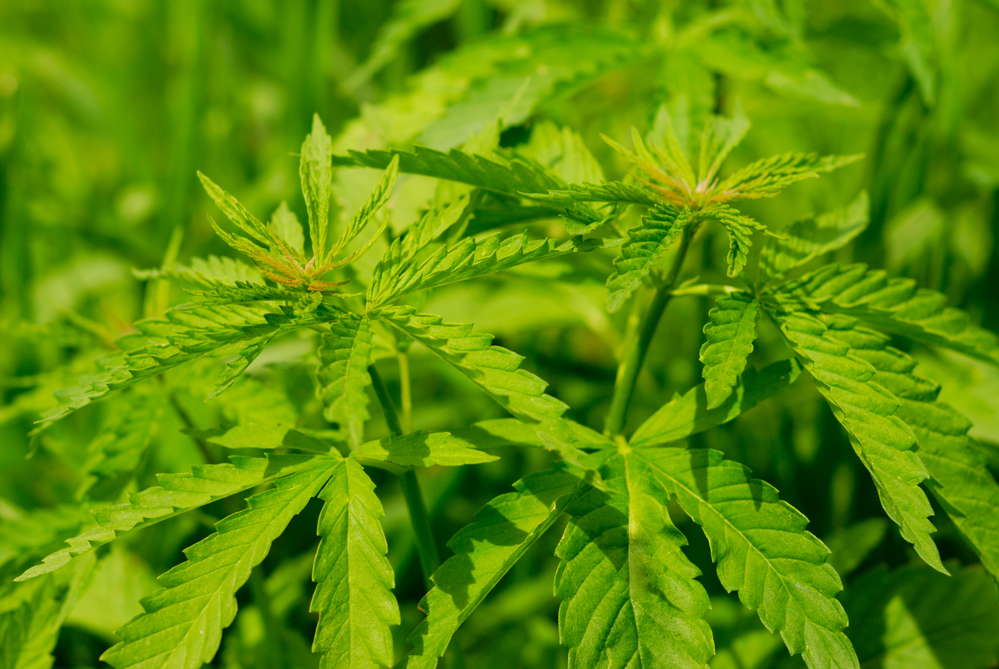
    florida industrial hemp
    File photo shows hemp.

    By Clint Thompson

    Georgia’s hemp crop is still being planted across the state. According to Tim Coolong, associate professor in the UGA College of Agricultural and Environmental Sciences, the recent rainfall could impact the crop both positively and negatively.

    “Hemp doesn’t like it overly wet. In parts of the state, if there’s standing water in fields or if it’s saturated, that could lead to some problems,” Coolong said. “But if it’s a grower that just happened to plant, a little bit of rain could help those plants acclimate to going in the ground versus being dry and 100 degrees.”

    Hemp is expected to be planted during the next several weeks, though Coolong said the Georgia Department Agriculture would issue permits throughout the summer.

    “With that said, if you plant much later than that, your chances of success decrease. If you were to plant in, let’s say September, your plants are going to flower immediately and you’re going to have problems. Even if a grower were able to get a license very late in the year, planting in the field in the traditional manner wouldn’t work very well for them,” Coolong said.

    Tim Coolong comments on importance of planting hemp during the summer.

    Early Assessment of Crop

    He added that fields he is visited so far this summer have looked pretty good and credits the cooler temperatures.

    “Up until recently, it’s been a little cooler than typical; at least it seems that way, particularly in the produce world, it was a little cooler this spring. It allowed the hemp plants that were put in to adapt to the transplant shock a little bit better,” Coolong said.

    Hemp interest in Georgia was expected to be high this year since it marked the first time growers could produce the crop commercially. But that interest waned some amid the current coronavirus pandemic.

    “During the winter we had a lot of people express interest. I think as we got closer to the production season, a lot of those individuals may have been holding off or cut back on the acreage they were going to put in. It certainly seemed throughout the winter, there’s a lot of interest. But as people started looking into it I think, especially with the pandemic and things being uncertain right now, I think a lot of them held off,” Coolong said. “With that said, there’s still a fair number of growers approved out there.”

  • Thinning Pecan Trees Better Equips Producers For Future

    By Clint Thompson

    University of Georgia Cooperative Extension is encouraging pecan growers to thin their bumper crop this summer to avoid having a down year next season.

    Southeast Georgia Area Pecan Agent Andrew Sawyer said this year’s pecan crop exceeds the 70% fruit-bearing terminals they recommend pecan trees to have at this stage in the growing season, along with having an excess cluster of nuts.

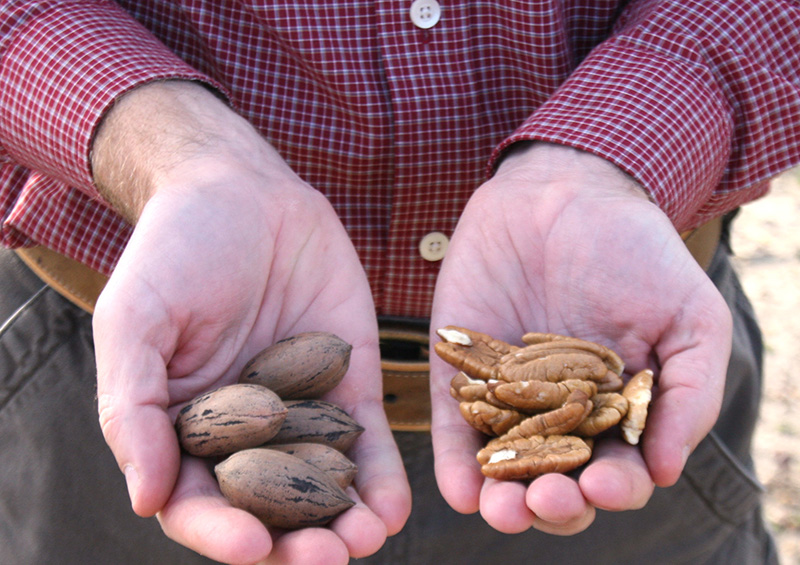
    Pecan trees need to be thinned to avoid having a really down year next season.

    “There’s 90% to 100% of terminals with nuts in pretty much every situation I’m seeing. Then you’re having three, four or even five nuts in a cluster on many cultivars. That’s high as well,” said Sawyer, who said Georgia was bound to have a surplus of pecans this year following Hurricane Michael in 2018.

    “In Georgia this year, we’re probably having the biggest crops in a long time. It was actually kind of thought of it was going to be that way. Generally, after a really bad hurricane or weather event, the following year is pretty low just from the loss of limbs and fruiting branches. But then the year after that, which is 2020 for us, it ends up being almost overload. We’re seeing that.”

    Sawyer said farmers thin their trees normally around the last week in July or first week in August. But this year’s crop is about two weeks early. He projects the third week in July to be when most producers need to act.

    “If there’s any time to do it, it may be 2020. The whole reason for fruit thinning is to minimize alternation,” Sawyer said. “Alternating happens at least a couple of different ways. One of them is carbohydrate storage. That means when you have a large crop and it’s putting everything into that fruit, it doesn’t have a lot of storage for this upcoming year. That can affect next year’s crop. It can actually put those trees into alternation.

    “We’ve got a large crop in 2020. All of these 90% terminals and large cluster of nuts, the tree really can’t even fill that much.”

    The most common way for farmers to thin their crop is to shake the tree, much like they do when the pecans are ready to be harvested. Sawyer said to shake the trees for 1 to 2 seconds.

    “Most people, they’ll never do it. It’s so hard if you’re a grower to let these nuts fall off the tree. You’re having to just let them go,” Sawyer said. “You’re doing it for the overall future, long-term production of the tree, not this year’s production.”

    He cautions producers to shake a few days after a rain or turn irrigation off a few days before shaking to avoid damaging the tree. If there is abundant rainfall or high soil moisture, the cambium layer under the bark will slip more readily, making it easier to damage the tree.

    Growers also need to grease between the rubber flap or pad. This will allow movement between the flap and the pad, reducing movement between the shaker head and tree bark. This further reduces the risk of damaging the tree.

  • Georgia Growers Renew Pecan Assessment

    Photo courtesy of UGA College of Agricultural & Environmental Sciences.

    Georgia Department of Agriculture

    ATLANTA- Georgia pecan growers voted to continue an assessment of one cent per pound of pecans by producers with more than 30 acres for an additional three years — 83.5% of eligible ballots returned were in favor of the assessment.

    The Georgia Agriculture Commodity Commission for Pecans, also known as, the Georgia Pecan Commission was established in 1995 by the State Legislature and supports research, education and promotion of Georgia pecans. Most of the assessment funds are committed to include research on disease control, insect management, plant breeding, fertility, production and nutritional benefits; as well as promotion of pecans, both domestic and abroad. Georgia remains one of the top pecan-producing states in the United States.

  • UF/IFAS Scientists Develop a Specialty Pepper With Better Resistance to Root-Knot Nematodes

    UF/IFAS photo: Shows a bunch of peppers.

    By: Brad Buck, bradbuck@ufl.edu

    Bell peppers make for a delicious snack. Among additional choices, you can add them to sandwiches and pizzas, as they’re tasty and full of vitamin C, making them a popular vegetable.

    As a $235 million-a-year business in Florida, bell peppers are also an important crop, especially in the southeast and southwest parts of the state. As of 2019, the amount of bell peppers harvested in the United States is equivalent to 38,300 acres, with Florida accounting for 31%, or 11,800 acres, according to the U.S. Department of Agriculture National Agricultural Statistics Service.

    Florida farmers grow far more sweet bell peppers than the hot ones, said Bala Rathinasabapathi, a UF/IFAS professor of horticultural sciences. But, as a rule, farmers are not going to grow as many bell peppers if root-knot nematodes are prevalent in the soil around them. Nematodes are microscopic worms that damage the roots, weaken the plants and reduce the yield. 

    And increasingly, farmers are looking for non-chemical ways to control root-knot nematodes. Scientists know they can help growers if they can find ways to make bell pepper varieties that are genetically resistant to root-knot nematodes.

    “The variety we developed, although a hot pepper, can be used as a rootstock for bell peppers by using grafting,” Rathinasabapathi said. “Root-knot nematodes do their damage in the plant’s root, and if one uses a rootstock that is resistant to the nematode, the plant will not be affected much by the nematode.” 

    Rathinasabapathi led a recently published study in the journal HortScience in which he and his colleagues found a type of UF/IFAS-bred chile, or specialty pepper, that shows resistance to the destructive root-knot nematode. Through greenhouse and laboratory tests at the main UF campus in Gainesville, Rathinasabapthi and his team screened a handful of bell pepper varieties.

    They found that one advanced bell pepper variety, named ‘RJ107(6)A3C,’ was the most resistant to three species of the most common root-knot nematodes – southern, peanut and peach. UF/IFAS scientists developed this pepper variety by cross breeding a hot pepper line and a sweet pepper. Fruit from ‘RJ107(6)A3C’ line is hot and makes for delicious pickles, Rathinasabapathi said.

    Florida vegetable production has three major soil production limitations. One is plant-parasitic nematodes, the others are weeds and soilborne fungi, he said. To manage these problems, farmers use soil fumigants (pesticides) to free the soil of these pests before they plant their crops. 

    “These fumigants, though effective against the root-knot nematodes and soil fungi, are much less so against weeds, are highly toxic and cumbersome to use,” Rathinasabapathi said. “Farmers need specialized equipment to apply them in soil. But if we use bell pepper varieties that are resistant to the root-knot nematodes, we can circumvent these parasitic worms, thereby improving pest management options for the farmer.”

    Now that scientists found the genetic resistance, what’s next in their research?

    “We would like to transfer the resistance gene into sweet bell pepper hybrids via conventional breeding,” Rathinasabapthi said.

    Using grant funding from the U.S. Department of Agriculture and the Florida Department of Agriculture and Consumer Services, Rathinasabapathi conducted this study with Donald Dickson, a professor emeritus of entomology and nematology and Mary Ann Maquilan, a post-doctoral research associate in entomology and nematology – all with UF/IFAS. Another co-author is Dominick Padilla, an undergraduate student in horticultural science at the UF/IFAS College of Agricultural and Life Sciences.