The Georgia Fruit and Vegetable Growers Association (GFGVA) is conducting a survey with growers to gather data on expenses incurred in response to COVID-19 from Jan. 1 through June 30. The anonymous survey is designed for GFVGA to gather information to share with officials who will propose legislation aimed at protecting the growers who produce the crops that feed our nation.
“Our aim is to ensure growers receive adequate financial support for COVID-19-related expenses. Your responses at this time need only be good faith estimates of costs related to COVID-19 and your information will only be used to gauge the financial impact of COVID-19 to southeastern fruit and vegetable growers in 2020,” executive director Charles Hall said.
The survey includes generic questions like what state the farmer operates in, how many workers they employ, financial expenses incurred for items like masks, gloves, handwash stations, employee screening, testing kits, disinfecting equipment and chemicals, etc.
Growers who have any questions are asked to contact the GFGVA staff at 706-845-8200.
Advanced formulation of the only Group 22 insecticide for agricultural use delivers improved control and performance consistency.
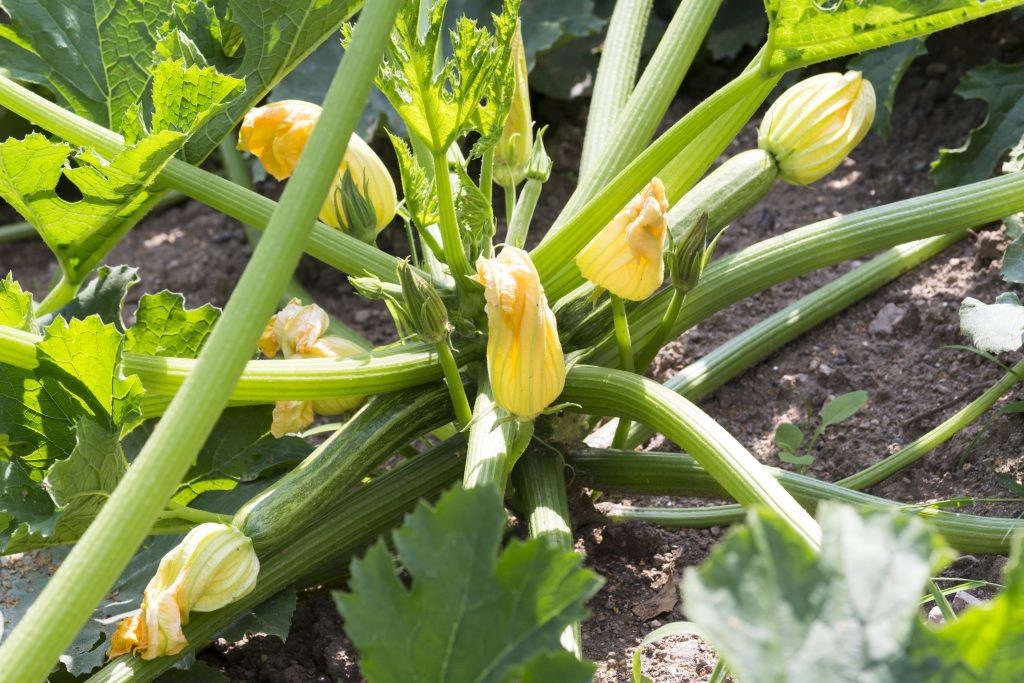
Squash is one of the crops that respond well to Avaunt eVo insect control.
PHILADELPHIA, July 14, 2020 – FMC has just released and made available for immediate use a new insecticide formulation, Avaunt eVo insect control, in a range of crops including brassicas, pome and stone fruits, cucurbits, leafy vegetables, low-growing berries and dried and succulent beans.
Avaunt eVo insect control is an advanced formulation of Avaunt insecticide that provides improved mixability and rainfastness, an expanded label and an updated package size for easier handling.
“This is the next evolution of our indoxacarb-based insecticides for specialty crop growers. Avaunt insecticide has been a proven tool, and now we’ve evolved the formulation to enhance its capabilities,” says John McCool, FMC insecticide product manager. “Strengthening existing technology is another way FMC is continuing to bring innovation to the market and advance agriculture.”
Avaunt eVo insect control delivers effective control of labeled Lepidopteran pests, including several species of weevils, beetles and other chewing and sucking pests. Its expanded label also allows for higher application rates in certain crops, as well as new crop additions including dried and succulent beans, low-growing berries and small fruit vine climbing subgroups.
The new formulation delivers significantly improved residual control, mixability and rainfastness. Avaunt eVo insect control is completely rainfast once it has dried on vegetation.
“Enhancing these three attributes directly translates to better overall performance in the field,” explains Hector Portillo, insecticide product development manager for FMC. “For example, when we look at Avaunt eVo insect control trials nine days after the initial application, we’re still getting 80-90% control; a 10-20% improvement in control over the original Avaunt insecticide during the same post-application window.”
In addition to better performance, the improved mixability of Avaunt eVo insect control equates to less downtime and greater flexibility for growers. The product dissolves faster in the tank than the original Avaunt insecticide and other wettable granular insecticides. It also has a reduced mixing process, which alleviates the requirement for a set mixing cadence.
Strong, Resilient Rotational Tool
Indoxacarb, the active ingredient in Avaunt eVo insect control, belongs to the unique and proven oxadiazine class of chemistry in IRAC Group 22. Indoxacarb is the only Group 22 insecticide labeled for this crop and pest spectrum, making Avaunt eVo insect control an ideal rotational partner for growers.
“Being this is the only mode of action registered for use in this segment, it’s a strong fit in crops where growers make multiple insecticide applications per season. It provides rotational flexibility to help growers manage resistance and protect existing chemistries from resistance development,” Portillo states.
Avaunt eVo insect control is a resilient option for growers operating under hot, intense environmental conditions since it is unaffected by pH, UV, high sunlight and temperature, which are the primary factors for insecticide breakdown and failure.
For more information about Avaunt eVo insect control, visit your FMC Star Retailer or ag.fmc.com to learn more.
Figure 1. Initial design of the low-cost robotic sprayer for precision weed control in vegetable production: main components of the smart sprayer (A) and self-reconfigured and self-adjustable design for easy field deployment in a variety of vegetable fields (B).
By Yiannis Ampatzidis
Vegetable growers face a variety of challenges, including pest and diseases, labor shortages and climate change. How can new advancements in technology help growers address these challenges? Can technology improve crops, reduce production costs and protect the environment? How can technological innovations be incorporated into traditional farming to improve production practices?
In the last few decades, several “smart” technologies have been developed for vegetable production and processing. However, growers are confronted with a variety of challenges when considering adopting new technology or adjusting existing technology. Growers are being offered solutions that might not work in their specific production system or might not be economically feasible. This article presents examples of state-of-the-art technologies that may be used in vegetable production today or in the near future!
SIMPLIFY SURVEYING
Field surveys for disease/pest scouting and to assess plant stress are expensive, labor intensive and time consuming. Since labor shortage is a major issue in vegetable production, small unmanned aerial vehicles (UAVs) equipped with various sensors (remote sensing) can simplify surveying procedures, reduce the labor cost, decrease data collection time and produce critical and practical information.
For example, recently UAVs and remote sensing have allowed growers to constantly monitor crop health status, estimate plant water needs and even detect diseases. The precision agriculture team (@PrecAgSWFREC) at the University of Florida Institute of Food and Agricultural Sciences (UF/IFAS) Southwest Florida Research and Education Center (SWFREC) developed a cloud-based application called Agroview (http://agroview.farm/login.php).
Agroview can process, analyze and visualize data collected from UAVs and other aerial platforms (e.g., small planes and satellites). This technology utilizes machine learning (an application of artificial intelligence) to detect single plants and assess plant size and stress. Agroview and UAVs were initially used to create plant inventories in citrus (see a video demonstration at https://twitter.com/i/status/1202671242647490560) and to detect specific diseases in vegetables with high accuracy. Early detection and eradication of infected plants is crucial to controlling disease and pest spread throughout the field.
SMART SPRAYERS
Most conventional sprayers apply agrochemicals uniformly, even though distribution of pests and diseases is typically patchy, resulting in waste of valuable compounds, increased costs, crop damage risk, pest resistance to chemicals, environmental pollution and contamination of products. Contamination can be related to run-off after application, discharge from drainage and off-target deposition of spray due to wind (spray drift). This contamination can be significantly reduced through optimization of spraying technology.
Spray drift of agrochemicals occurs during every application and accounts for a loss of up to 50 percent of the agrochemical used. Minimizing the negative impacts of agrochemicals (and spraying technologies) is a major global challenge.
More than 90 percent of the acreage of crops in the United States are being sprayed with herbicides. It is estimated that $26 billion is spent on herbicides (more than 3 billion pounds) each year. This overuse of chemicals creates herbicide-tolerant weeds and approximately 250 known species of resistant weeds.
In recent decades, several smart technologies have been developed for pest detection and for optimizing spraying applications. These new spraying technologies have shown an important improvement in efficiency and safety by adopting the latest advances in electronics, artificial intelligence (AI) and automation.
One example is the See & Spray machine developed by Blue River Technology (www.bluerivertechnology.com) for weed control in arable crops. See & Spray utilizes computer vision and AI to detect and identify individual plants (such as cotton) and weeds and then applies herbicide only to the weeds. See how this technology works at https://youtu.be/gszOT6NQbF8. This machine can reduce the required quantity of herbicide by more than 90 percent compared to traditional broadcast sprayers. However, this technology was designed for arable crops and might not be a cost-effective solution for specific vegetable production systems.
Another low-cost smart sprayer has been designed and developed by the UF/IFAS team for precision weed management in vegetables. In the initial evaluation experiments, smart technology was able to accurately detect and distinguish weeds from crops and apply chemicals only on specific weed(s), thus avoiding crops and areas without weeds. See a video demonstration of this technology at https://twitter.com/i/status/1045013127593644032.
Recently, the precision ag team, in collaboration with Abhisesh Silwal (Carnegie Mellon University) and Panos Pardalos (UF), received funding from the U.S. Department of Agriculture and the National Research Foundation (award #2020-67021-30761) to improve and fully automate this smart sprayer. This novel robotic sprayer (or fleet of sprayers) was designed to be self-reconfigured and self-adjustable for easy field deployment (Figure 1). With this design, the robot can reconfigure itself (Figure 1b) to manage weeds in a variety of vegetable fields (e.g., with different row spacing and raised bed sizes).
ROBOTIC HARVESTING
Figure 2. Harvest Croo Robotics harvester for strawberries
Fresh-market vegetables are quickly perishable and virtually 100 percent are hand-harvested. Vegetable growers face increasing shortages of laborers, which in turn, drive up harvest costs. Mechanical and robotic harvesting systems for vegetable growers could simultaneously decrease their dependence on manual labor, reduce harvesting costs and improve overall competitiveness in the market.
In one example, Harvest Croo Robotics, a Florida company, is developing a robotic harvester for strawberries that does not require growers to radically change the way they currently grow crops. This technology successfully harvested berries during the 2019–20 season. It could address the labor shortage problem and increase grower profit.
Alabama hemp producers need to plant their crop now to ensure it is in the ground and growing by the July 31 deadline. According to the Alabama Department of Agriculture and Industries (ADAI), if you are a first-time outdoor grower and do not have green plants up and growing by July 31, ADAI will need to know why and what immediate plans you have to grow as this delayed planting will affect your crop in 2020.
Katelyn Kesheimer, Auburn University Assistant Professor and Extension Specialist, estimates that if growers plant their seed by the second or third week in July, they should be okay with the plant emerging by the end of the month.
“If you’re planting from seed, which a lot of people are, then you have to have them up and emerged by July 31. My guess would be if it got held up further, they might make some exceptions for people who were approved really late,” Kesheimer said. “But if you were approved in May and you don’t have seed or green plants by the end of July, they’re probably not going to cut you any slack.”
All growers will also be required to respond to an emailed status report request as to growing activities by Aug. 1. At the time of the status report, if you determine that you will not be growing for 2020, you will receive a certified letter voiding your 2020 grower license.
This will nullify your grow status for the rest of the season but in no way will negatively impact your ability to apply for and obtain future grower licenses in Alabama.
Florida potato farmers are one commodity group that benefited from last week’s USDA’s revision to the Coronavirus Food Assistance Program (CFAP).
Potatoes were one of seven eligible commodities added to Category 1. The USDA found these commodities had a 5% or greater price decline between mid-January and mid-April because of the coronavirus pandemic. Originally, these commodities were only eligible for marketing adjustments.
Kam Quarles, National Potato Council
“We were cautiously optimistic that they were going to get to this point. Clearly (last week’s) announcement, they’re moving in the right direction. They made potatoes eligible for all of the categories under the relief program. Now, what we want to do is work with them to get the payment levels up across the board to a level that’s meaningful to any farmer who has suffered an injury due to the crisis,” said Kam Quarles, Chief Executive Officer of the National Potato Council. “Some of them are a little low. Others are where they need to be. We want to work with them going forward to see if we can’t get them all up to the right spot.
“We basically canvased the whole industry and the conclusion that everyone came to was if a producer can get four cents a pound for whatever type of injury they suffered; the three categories spell out the types of injures; price loss, did you lose your customers after you shipped your product, did you lose your customers and your potatoes stayed on your farm; each one of those has a payment associated with it. If we can get each one of those to a minimum of four cents a pound, that will keep producers able to be solvent until next year. Hopefully, we’ll be out of this in another year from now.”
Quarles expressed concern that funding may not be available to cover the expenses that accompany the additional commodities. “The money that they have is going to run out for this current CFAP. Congress is going to have to get involved, at a minimum to provide them with more money and then also extend the timeframes out at least through the end of this year. When they do that, we want to talk, both with USDA and with Congress about getting those payment levels up where they need to be,” Quarles said.
In his UGA Extension blog, Brett Blaauw, Assistant Professor in the University of Georgia Department of Entomology, alerted grape farmers that management for spotted wing drosophila (SWD) is approaching soon.
Brett Blaauw
SWD flies are active year-round but near veraison, as the brix levels in wine grapes reach 15 degrees Brix, the grapes become attractive and susceptible to SWD. SWD and other drosophila flies can spread and exacerbate sour rot.
Management is key. Proper sanitation of the vineyard can reduce populations. If farmers harvest grapes frequently and remove fallen or unmarketable fruit, it will prevent the buildup of ripe or rotting fruit. This reduces sour rot inoculum and potential breeding areas for the flies.
Insecticides are effective at killing adult flies and are recommended if you have a history of SWD in your vineyard or have prior issues with sour rot. Insecticide treatments should begin when grapes are near 15 degrees brix. Treatments should be applied at least every seven to 10 days. Rotating insecticides with different modes of action is very important.
Make sure to read the label and check the pre-harvest intervals before applying any chemical.
The first round of revisions made by the United States Department of Agriculture (USDA) to the commodities covered under the Coronavirus Food Assistance Program (CFAP) benefited Georgia’s vegetable producers.
Kale was one of the commodities added to CFAP.
Georgia Fruit and Vegetable Growers Association (GFVGA) Executive Director Charles Hall was appreciative of the consideration given to the crops his organization petitioned for.
“Some of our January to April crops, GFGVA petitioned for the mustard, kale, collards and turnip greens to be added to that. We provided the documentation,” Hall said. “We’re very grateful that along with several other states that were in the same situation as we were to be able to show that there was a 5% drop in the pricing during that time. We’re glad of that.”
In a press release, U.S. Secretary of Agriculture Sonny Perdue announced an initial list of additional commodities that were added to CFAP on Thursday, and that the USDA made other adjustments to the program based on comments received from agricultural producers and organizations and review of market data. Producers can submit applications that include these commodities today, July 13, 2020.
USDA’s Farm Service Agency (FSA) is accepting through Aug. 28, 2020, applications for CFAP, which helps offset price declines and additional marketing costs because of the coronavirus pandemic. USDA expects additional eligible commodities to be announced in the coming weeks.
“There’s still a problem with watermelons, primarily the Florida watermelons. Florida Fruit and Vegetable and the National Watermelon Association filed comments on the watermelon. Georgia Fruit and Vegetable didn’t because we did not have crop there at that time,” Hall said.
One crop that benefited from last week’s decision was blueberries. Based on the USDA’s original assessment of the impact of coronavirus on the industry, blueberries were eligible for Categories 2 and 3 for CFAP relief payments. The crop was one of seven currently eligible commodities to be added to Category 1 of CFAP.
Hall said since Georgia blueberry farmers did not start harvesting until April 12, the impact will be felt more with Florida growers.
“There was really only about three days that our blueberries were on the market before we got past the deadline of April 15. Florida had blueberries in that timeframe and did file the NOFA comments and definitely added to the benefit of blueberries,” Hall said.
Clemson Extension agents provided updates in The South Carolina Grower this week about the status of various crops being produced throughout the state.
Coastal
Zack Snipes reports, “Summer crops are all but about done. The afternoon thunderstorms, humidity, and heat have just about finished off the tomato and watermelon crops. Growers are getting fields ready for the fall season now. Consider putting up deer fencing now before crops are planted.”
Midlands
Justin Ballew reports, “We got some more rain early in the week, and the sky was overcast most of the week. Downy mildew finally showed up here in cucumbers. Even though it’s been found all over the coast, it took a while to make it this far inland this year. The dry weather we had most of June may have had something to do with that. Anyone growing cucurbits from now through the fall definitely needs to be applying preventative fungicides. Lots of fields are transitioning from spring crops to fall crops right now. We’re still picking sweet corn, tomatoes, peppers, eggplant, squash, zucchini, cucumbers, etc.”
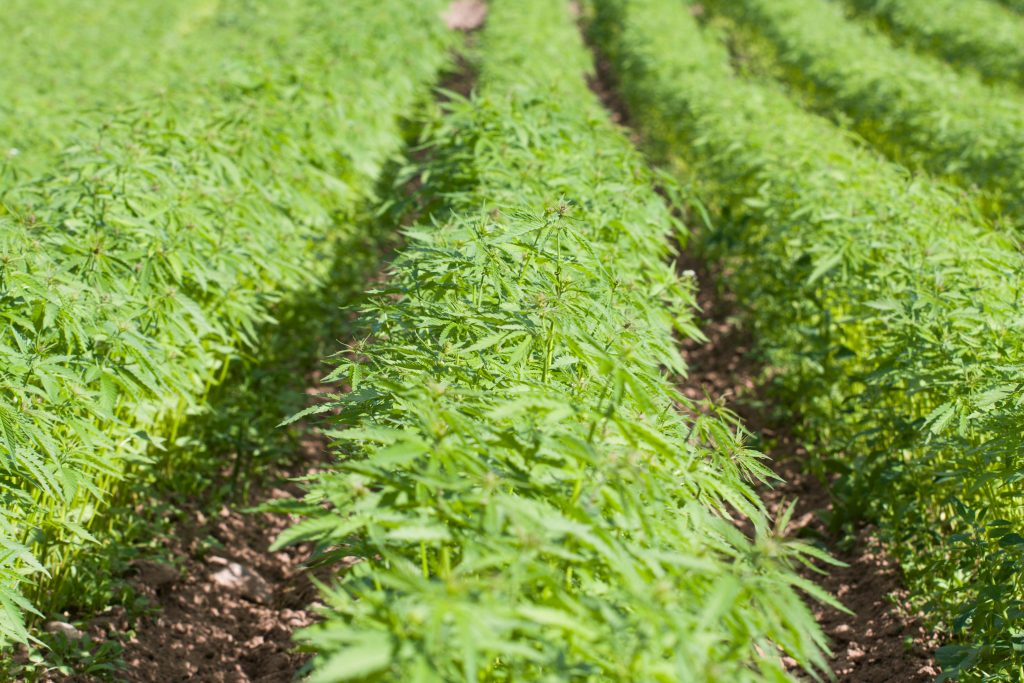
File photo of hemp.
Lalo Toledo reports, “Sweet potatoes are in the ground and thriving. Please be aware of any pest activity and disease activity. Weeds are becoming a problem, especially in organic operations. However, there are several options to suppress weeds. Please contact your extension agent for information on chemical and cultural practices. Hemp is having trouble taking off with so much heat, and weeds are gaining ground on it. Peppers are doing great with some minor bacterial lesions.”
Pee Dee
Tony Melton reports, “Poured rain every day last week – awful. Processing peas are ready to harvest but cannot get a dry period to burn down to harvest. Need to get second crop processing peas planted before August if fields will ever dry out – don’t forget to control thrips early and do your best to keep deer out of fields. Processing tomatoes & peppers are being harvested. Pickling cucumbers are continually being harvested and replanted. Sweet potatoes are planted, most have been laid-by, many have vines covering beds, and some are starting to size potatoes. We may have some insect damage on roots since it is difficult to get bifenthrin applied and plowed-in. Hopefully, the Lorsban will control insects, and since it is too wet to plow until the rain can wash the bifenthrin into the soil to keep the sun from degrading it. Don’t forget the boron on sweet potatoes.”
Upstate
File photo of peaches.
Kerrie Roach reports, “Peaches are the showstopper this week in the Upstate! Even with what appears to be late cold damage causing split pits and some varieties not to ripen, the peach crop is still booming. Apples are maturing on schedule and growers should begin harvesting early varieties over the next few weeks. With limited and spotty rain events over the last seven days, irrigation has been vital for vegetable producers…. but heat and humidity (despite the overall lack of rain) have increased the need for fungicide cover sprays, as we’ve seen various fungal activity picking up across the board.”
Washington, D.C., July 9, 2020 – U.S. Secretary of Agriculture Sonny Perdue announced an initial list of additional commodities that have been added to the Coronavirus Food Assistance Program (CFAP) on Thursday, and that the U.S. Department of Agriculture (USDA) made other adjustments to the program based on comments received from agricultural producers and organizations and review of market data. Producers will be able to submit applications that include these commodities on Monday, July 13, 2020.
USDA’s Farm Service Agency (FSA) is accepting through Aug. 28, 2020, applications for CFAP, which helps offset price declines and additional marketing costs because of the coronavirus pandemic. USDA expects additional eligible commodities to be announced in the coming weeks.
“During this time of national crisis, President Trump and USDA have stood with our farmers, ranchers, and all citizens to make sure they are taken care of,” said Secretary Perdue. “When we announced this program earlier this year, we asked for public input and received a good response. After reviewing the comments received and analyzing our USDA Market News data, we are adding new commodities, as well as making updates to the program for existing eligible commodities. This is an example of government working for the people – we asked for input and we updated the program based on the comments we received.”
Changes to CFAP include:
Adding the following commodities: alfalfa sprouts, anise, arugula, basil, bean sprouts, beets, blackberries, Brussels sprouts, celeriac (celery root), chives, cilantro, coconuts, collard greens, dandelion greens, greens (others not listed separately), guava, kale greens, lettuce – including Boston, green leaf, Lolla Rossa, oak leaf green, oak leaf red and red leaf – marjoram, mint, mustard, okra, oregano, parsnips, passion fruit, peas (green), pineapple, pistachios, radicchio, rosemary, sage, savory, sorrel, fresh sugarcane, Swiss chard, thyme and turnip top greens.
Kale is one of the commodities included in the CFAP revision.
Expanding for seven currently eligible commodities – apples, blueberries, garlic, potatoes, raspberries, tangerines and taro – CARES Act funding for sales losses because USDA found these commodities had a 5% or greater price decline between mid-January and mid-April as a result of the COVID-19 pandemic. Originally, these commodities were only eligible for marketing adjustments.
Determining that peaches and rhubarb no longer qualify for payment under the CARES Act sales loss category.
Thursday was a win for blueberry farmers, especially in Georgia. The crop was one of seven currently eligible commodities to be added to Category 1 of the Coronavirus Food Assistance Program by the United States Department of Agriculture.
According to the USDA press release, the USDA found these commodities had a 5% or greater price decline between mid-January and mid-April as a result of the COVID-19 pandemic. Originally, these commodities were only eligible for marketing adjustments, which Florida blueberry farmer Ryan Atwood believes would not have helped growers like himself at all.
“Not many individuals qualified for 2 or 3. But everyone in Florida is going to qualify, just about for Category 1. That’s why it is a big deal,” Atwood said.
Had crops that suffered a five percent-or-greater price decline between mid-January and mid-April as a result of the COVID-19 pandemic,
Had produce shipped but subsequently spoiled due to loss of marketing channel, and
Had shipments that did not leave the farm or mature crops that remained unharvested.
Atwood, who lives in Mount Dora, Florida is one of the state’s blueberry leaders. He farms 56 acres of blueberries, manages another 350 acres and is part-owner of the largest packing house in the Southeast United States.
Early Crop This Year
Atwood’s and other farmers’ blueberry crops were early this year due to a mild winter, and high temperatures in January and February accelerated growth. However, when he started picking high volumes of blueberries, which was around March 18, that is when the pandemic shut down the country.
Market prices reflected the pandemic’s impact. Atwood said in late April that the market was 50% of the historical average price, so half of the money of what you would typically get because of the coronavirus.
That is why the USDA’s revision to include blueberries in Category 1 was a major win for the industry.
“There’s a lot of people that are going to need that. It’s going to help them make it to next season. I know people that are getting loans and doing what they can and getting by, but every little bit helps get you there,” Atwood said.
USDA is accepting CFAP applications through August 28, 2020. Learn more at farmers.gov/cfap.