Category: Top Posts

  • Navigating Generational Differences in Ag

    With more than one generation working side by side on the farm, there are situations that can be tricky to navigate at times. However, it’s important to take the time to look at things through another person’s vantage point and consider how to cater to the strengths of each generation to better the farming operation.

    The most recent and concluding session of the six-part professional development webinar series by the University of Florida Institute of Food and Agricultural Sciences (UF/IFAS) discusses effective strategies to navigate generational differences in agriculture and natural resource industries. (Another webinar in the series addressed mental health in agriculture; see more here.)

    As of 2016, five generations — traditionalists, baby boomers, Generation X, millennials and Generation Z — were working side by side.

    Megan Stein

    “Research indicates that as people are becoming older, they are no longer retiring at the same age as they had in previous generations,” says Megan Stein, a lecturer in the Department of Agricultural Education and Communication for UF/IFAS and host of the webinar.

    Working with multiple generations can be difficult. Generations are influenced by key events that took place as they were developing as children into adulthood. Social, political and economic differences as well as education and values all play a significant role in generations.

    Generation Z, generally recognized as being born from 1997 to 2012, may play an interesting role as it relates to agriculture and the coronavirus (COVID-19) pandemic.

    As COVID-19 caused a shutdown across the state of Florida around mid-March and early April, this was the time that a lot of Florida’s spring crops were ready for harvest.

    “For the first time in recent memory, there was a real challenge with the supply chain. We had the supply, we had the demand from people who were purchasing extreme volume of these items. However, there wasn’t the ability to get the product from the agriculturalist to the consumer through normal supply chain channels,” Stein says.

    Because of this, many growers chose to sell directly to consumers or donate their produce. As mentioned in the webinar, Gen Z responds extremely well to socially conscious missions, meaning they tend to patronize and support companies that align with their values or that they perceive as socially responsible.

    As the older members of Gen Z are solidifying their buying habits, experts have seen that Gen Z has responded greatly to the ability to connect with producers and the agricultural industry and learn more about the industry during COVID-19 times.

    “As Generation Z takes up more of the buying power in our country, it will be interesting to see how that influence directly impacts them,” Stein says.

    To learn more about the differences in generations and how to effectively navigate those differences, click here to watch the webinar.

    Ashley Robinson, AgNet Media communications intern, wrote this article.

  • Sunbelt Ag Expo Cancelled

    Contact: Becca Turner; (229) 985-1968 x2228; Email: becca@sunbeltexpo.com

    The Sunbelt Agricultural Exposition Board of Directors voted to cancel the 43rd Annual show scheduled for October 20-22, 2020.

    North America’s Premier Farm Show, the Sunbelt Ag Expo, has provided a venue for the agricultural industry to conduct business for 42 years. For the first time, since it began in 1978, the gates at Spence Field will not open the third week in October to welcome farmers, their families and loyal exhibitors.

    While the Expo staff has worked diligently over the past several months to put together an action plan that would enable a safe and successful show, it has become abundantly clear that we must change course. Unfortunately, we simply cannot safely blend networking, commerce and education while representing the rich history of the Sunbelt Ag Expo. Additionally, the board’s decision to cancel the 2020 Sunbelt Ag Expo was greatly impacted by its concern for valued attendees’ and exhibitors’ expenses, and their need to plan.

    Plans for the selection of the 2020 Swisher Sweets/Sunbelt Ag Expo Southeastern Farmer of the Year Winner and the Southeastern Hay Contest Award Winners are still being finalized. As these plans are confirmed, information will be released on our web site and social media channels. In addition, the Holiday Arts and Crafts Show, hosted by the Sunbelt Ag Expo, is still scheduled at this time for November 14-15, 2020.

    The Sunbelt Ag Expo looks forward to greeting visitors again in 2021 as it showcases the latest in farming technology, October 19-21. The show will go on! Visit www.sunbeltexpo.com for more information.

  • Not Enough Funds for CFAP?

    The recent revisions to the Coronavirus Food Assistance Program (CFAP) was a step in the right direction in the United States Department of Agriculture expanding the scope of what commodities are covered. But it also may lead to a shortage in funds being in place for producers, according to Adam Rabinowitz,

    Adam Rabinowitz

    “I think it’s going to be challenging for there to be enough funds. I think there will be some additional allocation that’s there, as well as recognition that there’s other commodities that need to be included,” said Adam Rabinowitz, who recently joined Auburn University as Assistant Professor and Extension Economist. “We may not see, for instance, some of the row crops that’ll be harvested this fall, we may not see the true impact on some of those commodities until after harvest season. Until it’s harvested, we don’t really know what’s going to happen to the markets. Clearly things have not gotten better as of yet from a health perspective, where everything’s back to normal.”

    Next Stimulus Package

    Farmers and industry leaders are highly invested in what’s talked about on Capitol Hill. Additional monetary aid for agriculture is part of the discussion on the next stimulus package.

    “They’ve started discussing the next stimulus package, and part of that discussion may be, whether or not there needs to be some additional funds available for agriculture,” Rabinowitz said. “Everything’s kind of up in the air with that in terms where the Senate proposal might be and how the Senate and the House might ultimately compromise.”

    Additional Commodities

    In a USDA press release issued on July 9, U.S. Secretary of Agriculture Sonny Perdue announced an initial list of additional commodities that were added to CFAP. Also adjustments were made by the USDA to the program based on comments from producers and organizations and review of market data during the Notice of Funding Availability period.

    “I think it’s positive, certainly expanding the scope and it kind of goes a little bit with what we found in a survey that we did with Alabama producers. A good portion of those that responded to our survey just felt that CFAP didn’t even apply to them,” Rabinowitz said. “I think broadening the scope is certainly important.”

    Producers were able to submit applications that included these commodities on Monday, July 13. The USDA Farm Service Agency is accepting applications for CFAP through Aug. 28. The program helps offset price declines and additional marketing costs due to the coronavirus pandemic.

  • Sweet Grown Alabama Director Advocates Buying Local

    Photo submitted by Ellie Watson/Gov. Kay Ivey declared July 22, 2020 as Sweet Grown Alabama (SGA) Day. The proclamation recognizes the state’s new branding program and honors farmers who grow food across the state.

    Ellie Watson, Sweet Grown Alabama Director, believes when consumers support local farmers, it provides them with a source of high-quality produce that helps growers remain sustainable.

    “It’s so important for consumers to support local farmers because not only does that money help the local economy; we know that about 60 cents of every dollar stays in the local community when you support local, so not only do you support your local economy when you buy from local farmers but you are also receiving the highest quality, freshest product available,” Watson said.

    “It’s really important for consumers to continue to support our farmers so they will be sustainable into the future and will be able to provide these high quality, local products to us for years to come.”

    Sweet Grown Alabama Day

    Watson and other industry leaders used Wednesday’s celebration of Sweet Grown Alabama Day to stress the importance of Alabama agriculture and launch the Sweet Grown Alabama’s online searchable database. It connects consumers with sources of locally grown produce which has garnered much interest in the last few months amid the coronavirus pandemic.

    “We have seen an increase in interest for locally-grown products since COVID-19 has hit. We really find that consumers are so much more interested in knowing how their food has been grown and most importantly whose hands have been on their product,” Watson said.

    “When you buy local and shorten your supply chain, you are able to know that the hands that have touched your food are right there local. It really just shortens that supply chain and takes out a lot of risk for disease and other things that we’re all so worried about in these unusual times.”

  • Grape Root Borers Detected in North Georgia

    Grape root borer.

    According to the UGA Extension Viticulture Blog, the grape root borer adults have been detected in north Georgia. Brett Blaauw, University of Georgia assistant professor in the Department of Entomology, confirmed that on Monday, they collected some adults in their pheromone traps in Lumpkin County, Georgia.

    Adults have started to emerge from the soil, and for the next few weeks, the adults will mate, and the females will lay eggs at the base of vines. Producers with a history of grape root borer in their vineyards need to start monitoring for the pest and initiate management if necessary.

    As the name implies, the grape root borer larvae feed on the roots. Blaauw said they have a two-year life cycle and will feed underground on the roots for almost 22 months. Unfortunately, it is out of sight, out of mind for many grape producers. Being underground, the borers go unnoticed until the vine begins to deteriorate.

    In terms of management, since the adults are now emerging, it is too late in the season to apply dispensers for mating disruption. Chemical management is our key option. Currently, the only insecticide registered for control of grape root borer is Lorsban 4E (chlorpyrifos), which is applied as a coarse spray to the base of vines to kill adults as they exit the soil and newly hatched larvae before they attack the vine. However, Lorsban should not be made within 35 days of harvest.

    The first signs of infestation are yellowing and wilting of leaves with loss of plant vigor and reduced production. This will lead to reduced shoot growth over time, including smaller leaves and berries, loss of vigor and reduced yields.

  • North Carolina Announces Delivery of Personal Protection Equipment for Agricultural Workers

    The North Carolina Department of Health and Human Services (NCDHHS) is taking further action to prevent and respond to COVID-19 outbreaks among the agricultural workforce, delivering critical personal protection equipment for use by agricultural workers across the state.

    Roy Cooper

    “Agriculture is vital to our economy and food supply and it is critical that we protect farmworkers and their families from this virus,” said Governor Roy Cooper.

    Farmworkers are deemed an essential workforce and it is imperative that people who cultivate and harvest North Carolina’s wide variety of crops are protected. To support prevention efforts that are proven to help reduce the spread of COVID-19, NCDHHS is implementing its plan this week to deliver over 900,000 masks and other infection control supplies to North Carolina Cooperative Extension county centers across the state for distribution to farms and agricultural operations. In addition to masks, the deliveries included hand sanitizer and cloth face coverings for workers to take home.

    Thirty-one counties have been selected to receive the first delivery, including: Alamance, Alleghany, Ashe, Avery, Bladen, Columbus, Cumberland, Duplin, Durham, Edgecombe, Forsyth, Franklin, Granville, Greene, Guilford, Harnett, Henderson, Johnston, Lee, Lenoir, Lincoln, Martin, Mecklenburg, Nash, Pender, Pitt, Robeson, Sampson, Wake, Wayne, Wilson.

    “Many of our farmworkers live in group housing, putting them at higher risk of exposure to COVID-19. Providing masks is one way we are helping to protect workers,” said NCDHHS Secretary Mandy Cohen.

    NCDHHS is partnering with N.C. Cooperative Extension, the N.C. Department of Agriculture and Consumer Services (NCDA&CS), the N.C. Department of Labor (NCDOL) and the N.C. Agromedicine Institute to expedite a delivery plan and raise awareness about this resource among the farming community.

    “Some of these supplies have been difficult for farmers to source as demand has exceeded supply. I am grateful that farmworkers and farmers have been prioritized for these much-needed materials,” said Agriculture Commissioner Steve Troxler. “The health of our farmers and farmworkers is very important because we all rely on them every day.”

  • Sweet Grown Alabama Day Produces Sweet Results

    Picture submitted by Ellie Watson/Gov. Kay Ivey declared July 22, 2020 as Sweet Grown Alabama (SGA) Day. The proclaimation recognizes the state’s new branding program and honors farmers who grow food across the state. Gov. Ivey was joined by SWG Director Ellie Watson, Alabama Farmers Federation President Jimmy Parnell, Alabama Agriculture Commissioner Rick Pate, PowerSouth’s Horace Horn, and Montgomery Mayor Steven Reed.

    Sweet Grown Alabama Day will forever be July 22.

    Kay Ivey, Alabama Governor; Rick Pate, Commissioner of the Alabama Department of Agriculture and Industries; and other agriculture leaders and farmers joined forces at the Alabama State Capitol on Wednesday to celebrate the launch of a new online searchable database, which connects Alabama farmers and families.

    The celebration was highlighted by a special farmers market and Gov. Ivey issuing a proclamation that declared July 22, 2020, Sweet Grown Alabama Day.

    “Alabama’s farmers have a significant impact on our great state with over 580,000 Alabamians working in agriculture and related industries,” said Ivey in a press release. “Connecting with local farmers through Sweet Grown Alabama is a great opportunity to show your support for our neighbors and enjoy the wonderful products grown right here at home.”

    Picture submitted by Ellie Watson/Alabama Agriculture Commissioner Rick Pate speaks during Sweet Grown Alabama Day.

    Membership Database

    Originally launched in September 2019, Sweet Grown Alabama’s online membership database includes more than 150 farmers and businesses that sell Alabama-grown products directly to consumers.

    Nearly 30 vendors and Sweet Grown Alabama members joined the celebration on Wednesday with a farmers market on Bainbridge Street. They sold produce, meat, honey, pecans and other locally produced items.

    “We feel like we had a great morning. We just wanted to serve those farmers and do everything we can to make sure they had a good morning. That was the whole goal,” Sweet Grown Alabama Director Ellie Watson said. “We were glad to have them all in Montgomery today.”

    Industry leaders continue to preach the importance of buying locally grown produce and supporting Alabama farmers.

    “People are asking different kinds of questions about their food. They want more information about where it’s grown; who grew it; how it’s grown. We knew that’s what people wanted,” Pate said. “You don’t talk to anybody that doesn’t say, they want to know that the tomatoes that they’re buying at the grocery stores or the tomato they’re buying at the road-side stands are actually from Alabama.”

    Consumers can go to the Sweet Grown Alabama website and find local farms in their area. It also lists a harvest calendar so consumers can know when specific fruits and vegetables are ready to be picked. Anything from satsumas and watermelons on the fruit side to bell peppers and kale on the vegetable side are listed.

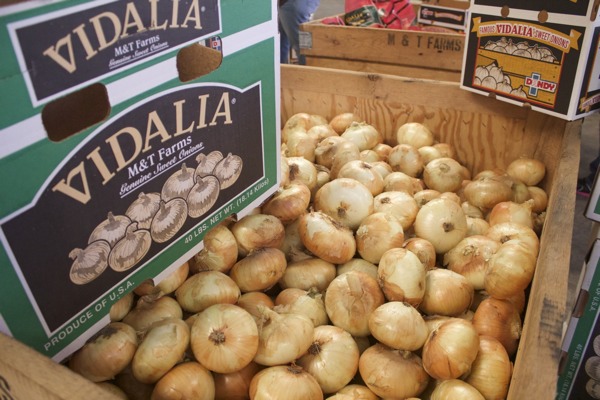
  • Vidalia Onion Farmers Ready to Plant 2021 Crop

    Vidalia onion farmers will soon be planting next year’s crop.

    Chris Tyson, University of Georgia Extension Area Onion Agent at the Vidalia Onion & Vegetable Research Center in Lyons, Georgia, said producers have already ordered seed and will prepare land with fumigation and treatments in August. Seedbeds will be planted in September through the first of October.

    Low Supply in 2020

    Growers are hoping for a better growing season in 2021. The onion supply was shorter this year, due in large part to different weather events. Storms came through Southeast Georgia in April and delivered hail damage to some of the onion crop.

    “What the growers put on the shelf was a quality product, there just wasn’t as much of it to go around. Then the COVID pandemic created some extra challenges. It actually created a higher demand for a lot of food staples, and onions are one of those items. Fortunately, the Vidalia onions, most of those items end up on the retail shelf for direct to the consumer; the majority of them do, whereas some of other types of onions may go to food service,” Tyson said. “With the COVID going on, I think it hurt the food service industry, but it was good for the retail industry. Consumers, they’ve still got to eat, and they were going to the grocery store and eating at home more. That worked into our favor. When you have less to go around, the crop was short to begin with and when you have that, it makes it even shorter.”

    The growing season also provided abnormally high temperatures in March. Tyson said a “heat wave” basically moved through the region that did not set well with the onion crop.

    “To an onion that’s not used to that or that’s trying to grow a bulb, it created some stress for the crop. That was one reason for the shorter supply this year,” Tyson said.

  • Scientists to Study Crippling Tomato Disease to Lay Groundwork for Prevention

    UF photo shows bacterial spot in tomatoes.

    By: Brad Buck, 813-757-2224 (office); 352-875-2641 (cell); bradbuck@ufl.edu

    A destructive disease known as bacterial spot can ruin tomatoes anywhere it strikes. That’s why University of Florida scientists want to understand how the pathogen that causes the disease spreads and evolves on farms.

    A couple of quick statistics illustrate the importance of tomatoes to Florida’s agricultural economic sector: Fresh market tomatoes bring in $400 million to $500 million annually in Florida, according to the U.S. Department of Agriculture. Further, UF/IFAS economists reported tomato losses due to bacterial spot of almost $900,000 in the 2007-08 growing season. Those are the most recent dollar figures for the cost of the disease to Florida tomatoes.

    Erica Goss

    Erica Goss, an associate professor of plant pathology at UF/IFAS, was awarded a $455,000 grant by the National Institute of Food and Agriculture, an arm of the U.S. Department of Agriculture, to study the epidemiology of bacterial spot in tomatoes.

    “Through this research, we hope to more quickly and effectively respond to changes in the bacterial spot pathogen that cause more disease problems in the field,” Goss said.

    “We’re studying epidemics. Plant disease epidemiology does not often include the possibility that the pathogen evolves within or between seasons,” said Goss, who works from the main UF campus in Gainesville, Florida. “We are going to look at the effect of pathogen evolution — including the gain and loss of genes that we have observed to have occurred in Florida — on the spread of the pathogen from plant to plant in a given field.”

    Bacterial spot of tomato is especially severe in the southeastern United States, where hot weather, high humidity and rain can induce disease development, according to a UF/IFAS Extension document.

    A pathogen called Xanthomonas perforans, which constantly changes, causes bacterial spot in Florida tomatoes.

    Goss and her team want to find out how quickly the pathogen changes — and how it changes — so they can keep track of bacterial spot in tomatoes.

    “We see lots of types of this pathogen in Florida tomato fields,” Goss said. “We are going to determine which types of changes happen in the pathogen’s genome over the course of a tomato-growing season in a field. We are also going to determine how specific changes in the genome affect how the pathogen moves from plant to plant during a season in a field.”

    To find the problematic pathogen strains, scientists will use high-throughput genetic testing.

    “We will send a genome-sequencing center the extracted DNA from hundreds of bacterial strains, and the technology will send us data we can use to study the genomes of these strains,” Goss said.

    Other UF/IFAS researchers will work closely with Goss as she investigates bacterial spot as an epidemic. They include Gary Vallad, professor at the UF/IFAS Gulf Coast Research and Education Center in Balm (Hillsborough County), Florida; Mathews Paret, associate professor at the UF/IFAS North Florida Research and Education Center in Quincy, Florida; Jeff Jones, distinguished professor at UF/IFAS in Gainesville and Sujan Timilsina, a post-doctoral researcher – all in the plant pathology department at UF/IFAS.

    Click here to learn more about bacterial spot and tomatoes.

  • Federal Agencies to Hold Virtual Hearings on Seasonal and Perishable Produce

    Washington, DC — The Office of the United States Trade Representative (USTR), the United States Department of Agriculture (USDA), and the United States Department of Commerce will convene virtual hearings next month to discuss foreign trade policies that may be harming American growers of seasonal and perishable produce. At the hearings, officials from the federal agencies will hear from interested persons on how the Trump Administration can support these producers and redress any unfair harm.  

    The hearings, which were originally scheduled to take place in Florida and Georgia in April, will take place virtually in light of the ongoing pandemic caused by COVID-19. USTR will continue to evaluate additional opportunities to engage directly with stakeholders in Florida, Georgia, and elsewhere on this important issue.

    The virtual hearings are scheduled for the following dates:

    (1)    August 13, 2020 at 9:00 a.m. EDT

    (2)    August 20, 2020 at 9:00 a.m. EDT

    The Federal Register notice with instructions on how to submit requests to participate in the hearings and written materials can be viewed here.

    NOTE: The hearings will be made public and viewable online, and further details about viewing the hearings will be provided ahead of the hearing dates.  Full transcripts of the hearings will also be posted online after the hearings. 

    Office of the United States Trade Representative