Category: Top Posts

  • Alabama Hemp Producers Need to Protect Against Caterpillar Damage

    cannabis
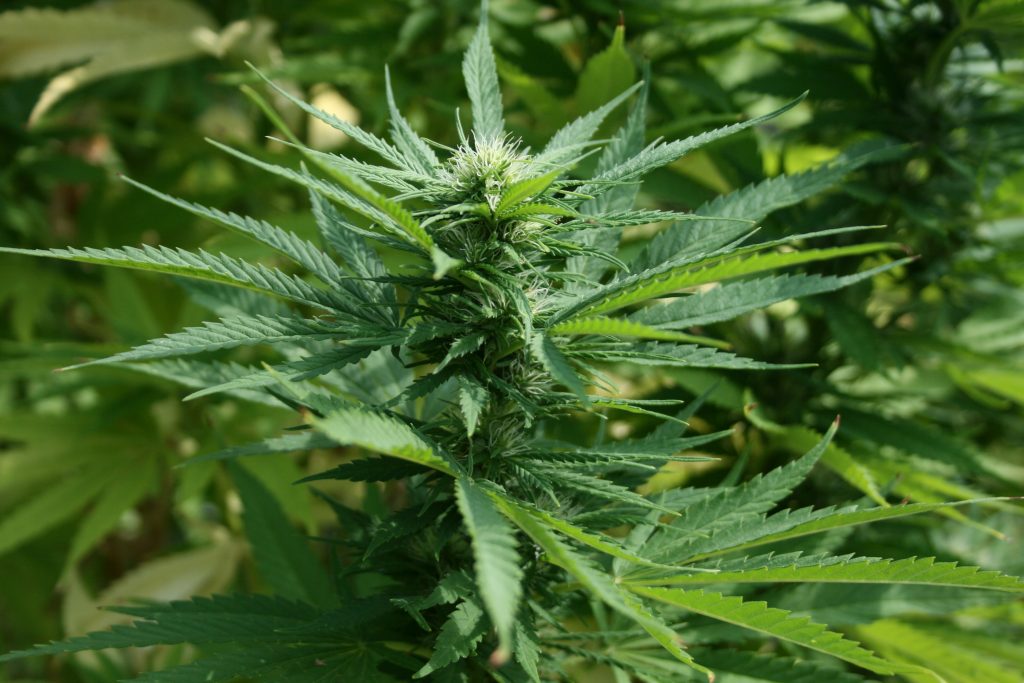
    File photo shows a hemp plant.

    Alabama hemp is at a stage in the growing season when it is vulnerable to caterpillar damage, says Katelyn Kesheimer, Auburn University Assistant Professor and Extension Specialist. She said a lot of the hemp in the state is starting to flower, which is when it is most susceptible.

    “We’re gearing up for corn earworm for caterpillars. A lot of the hemp int he state is starting to flower and that’s really when it’s vulnerable to caterpillar damage. We’re waiting on some boll worm flights and scouting the flowering of the hemp plants, especially pretty regularly to make sure there aren’t any small caterpillars so we can get rid of them before they get too big,” Kesheimer said.

    The caterpillars feed on the buds and can cause significant yield loss just because they eat a lot as they grow. As they are chewing on it, they are also opening up that plant and some pathogens can get in and you could end up with bud rot.

    “The other issue is because they’re caterpillars and just walking stomachs, they’re going to be eating and defecating on the plant. Then you have reduced quality if you’re growing raw flower and it’s covered in caterpillar poop,” Kesheimer said. “I’m telling growers to scout and check and make sure they don’t have any caterpillars especially as they go into flower.”

    The other concern right now for Alabama hemp producers is the dry weather. According to the U.S. Drought Monitor, various parts of the state are classified as abnormally dry, specifically along the Alabama-Georgia border in Barbour, Dale and Henry Counties. Kesheimer is confident that Alabama could receive significant showers soon.

    “It got real dry, real quick. It was a shock to the ground, the plants, everybody because it hadn’t been too hot all summer. Then (last) week it was pretty miserable,” Kesheimer said. “I think there is some (plants) stressed out there,” Kesheimer said. “They need water, depending on what stage they’re in. I think we’re headed for some storms. It’s cloudy where I am right now. That certainly should help.”

  • Dry Temperatures Not Bad Thing for Georgia Hemp Producers

    File photo shows hemp growing in a field.

    Hot and dry temperatures are not necessarily a bad thing for Georgia’s hemp producers, according to Tim Coolong, University of Georgia Cooperative Extension specialist. What the crop will not do well in is when the soil is wet.

    Tim Coolong

    “Every single grower that I’ve met with is irrigating their hemp anyway. Actually, a little bit drier is probably fine, because if they do need some water, they will irrigate,” Coolong said. “The only negative thing is some people are planting pretty late because they’re just getting their licenses. Some of the heat we’re having may make it a little bit harder to establish plants. Just like planting fall vegetables, if you’re planting and it’s 95 degrees out, sometimes it helps to have a little bit of a shower to cool things down.”

    According to the US Drought Monitor, various parts of the state include areas that are classified as abnormally dry. It is especially concerning for middle Georgia and east Georgia along the coast.

    It is a critical point for hemp producers since hemp is expected to begin flowering in early August. Coolong said the handful of growers that are still planting are in danger of producing a crop with reduced yields.

    “Hemp for the most part, when you get below 14 hours of day length will start to flower. That’s right about now when we start getting below that threshold. Most of the plants will start flowering around the first week of August,” Coolong said. “The idea is if you plant too late, you’ll have this relatively small plant that could start flowering. Your yield would be lower than if you planted in late May or June when you can build a larger frame on a plant.”

  • UGA Pecan Specialist: Fruit Thinning a Hard Sale

    Fruit thinning will likely be a hard practice for pecan producers to follow through on in the next couple of weeks. But University of Georgia Cooperative Extension pecan specialist Lenny Wells believes it is the right course of action to take, especially considering the quantity of this year’s pecan supply.

    Lenny Wells

    “This is going to be a hard sale because a lot of growers have gone without much of a crop for a couple of years. They’re wanting to make all they can. But in a situation like that with a crop that’s really loaded, especially if they’re calling for dry weather late in the season, it would not be a bad idea right now to fruit thin your trees,” Wells said. “That would take some of that pressure off the tree where it would be better able to manage and make those nuts with good quality that it has left.”

    Wells said growers only have another week or two to thin their trees, except for Pawnee variety, which should have already been done. There are various advantages to thinning your tree, though, you would be affecting this year’s crop.

    “It’s a tough call, it really is. It’s certainly hard to do,” Wells said. “It definitely does help. It helps with a lot of things; it helps with quality; it helps with return crop next year; it helps with the size of the nuts; it helps with that if we do get some kind of storm late in the season, if you lighten that crop load, then trees don’t take such a beating. There’s a lot of advantages to it, but it is hard to do.”

    According to the UGA Extension pecan blog, Wells said Georgia’s crop is projected at 87 million pounds.

  • Alabama Pecan Crop Projected at 2.5 Million Pounds

    File photo shows pecans.

    Alabama’s pecan trees are progressing with a strong crop this year. Alabama Extension Research Associate Bryan Wilkins believes the fungicide Miravis Top’s has worked well against scab disease and believes producers in his state should be in good shape come harvest time, barring a hurricane.

    “I think Alabama will be up there around 2.5 million pounds, maybe a little bit more. That’s more than what we’ve had the past few years,” Wilkins said. “That Miravis Top has done real well. I’ve got Desirables here in Fairhope that are clean right now. Normally, by now, it doesn’t matter how many times I spray them, they’re eat up (with scab disease).”

    The majority of Alabama’s pecan crop is produced in the southwest part of the state, in Mobile County, Baldwin County and Covington County. It has been an up-and-down growing season with regards to weather. In April and May, that region of Alabama got extremely dry. Now, it is experiencing seasonable rainfall.

    Wilkins estimates his growers will make two more fungicide sprays against scab this season.

    “We’ve had a fairly good growing season. Scab hasn’t been terrible. We haven’t had any major insect problems,” Wilkins said. “Last year, I think black aphids just ate everybody up across the Southeast. But we haven’t had any major insect problems. As long as we don’t get a hurricane, I think we’re going to be in real good shape.”

  • Clemson Extension Agents Provide Crop Updates

    Downy mildew looks a little different on zucchini and pumpkin. Photo from Zack Snipes.

    Clemson Extension agents provided updates in The South Carolina Grower this week about the status of various crops being produced throughout the state.

    Coastal

    Zack Snipes reports, “It has been a hot week in the Lowcountry. Most spring and summer crops have finished up. Ground is being prepared and planted for fall crops. I have received a few texts from growers that have yellow dots on their zucchini plants, which is downy mildew. Even in this heat downy can still be an issue. I have also had some reports of green-colored squash in fields which is an indication of a viral pathogen. The crop handbook has recommendations for cultivars that are resistant to these viruses that cause this discoloring. Fall is notoriously bad for cucurbit viruses, so plan accordingly.  I have also seen some flea beetle damage on crops as of late.”

    Midlands

    Justin Ballew reports, “It’s been hot in the midlands and we’ve gotten to the point where there isn’t much relief at night. We had some scattered rain throughout the week, but overall we’re still quite dry. Lots of land is still being prepped for fall crops. We’ve had some fall brassicas and cucurbits planted already and they’re looking good so far. Last week I got to watch a pecan grower in Lexington thin some pecan trees. Without thinning, he would have seen a massive yield this year, which would result in a significantly diminished yield next year. Pecan growers aim for nuts on just 70% of the terminal buds.”

    Pee Dee

    Tony Melton reports, “Pickles are still being harvested and planted. We still have hundreds of thousands of bushels in contract to be planted and harvested.  Peas for processing are being rapidly harvested and replanted; some seed is short.  Sweet potatoes are starting to swell and size.  Processing peppers are being harvested, but we have a shortage of labor and multi-millions of pounds left to harvest. Processing tomatoes will be finished harvesting this coming week. Spring planted fresh market butterbeans and peas are mostly harvested, but seed is short to plant the fall crop. Still have some flooded fields and drowned crop.”

    Upstate

    Kerrie Roach reports, “Spotty rain across the county again last week has led to continued issues for growers without irrigation. Fall planting for vegetables is in full force. Peaches are looking good, and apples are coming along. Most growers will be putting on a fungicide cover spray this week before significant rains are forecasted.”

    Andy Rollins reports, “Bacterial speck and bacterial spot of tomato are major problems in plum tomato varieties in the upstate right now.  They were not able to control this disease even with a vigorous spray program using mancozeb + copper on several farms. In nearby plantings of large fruit varieties, the disease is present but not a problem. Samples have been sent to researchers at Auburn University where they have confirmed the presence of copper resistant isolates from other farms. Call on your extension agent for assistance with identifying and controlling this problem.”

  • Caution Urged After Mystery Seed Mailings

    South Carolina Department of Agriculture

    COLUMBIA – State agriculture officials are warning South Carolinians to be wary of unsolicited packages of seeds mailed to them.

    The South Carolina Department of Agriculture and Clemson University’s Regulatory Services division are working together to investigate after residents reported receiving packages they did not order.

    Similar reports have been made to agriculture officials across the country. The U.S. Department of Agriculture’s Animal Plant Health Inspection Service (APHIS) is collecting reports and coordinating a national investigation.

    If you receive an unsolicited package containing seeds:

    • Do not open the seed packets or handle the seeds.
    • Do not plant unidentified seeds. They may be invasive species that could displace or destroy native plants and insects.
    • Retain the seeds and packaging and put them in a zip-top bag.
    • Contact the USDA APHIS Smuggling Interdiction and Trade Compliance (SITC) program.
    Derek Underwood

    APHIS SITC may be reached at its website, by phone at 800-877-3835 or by email at SITC.Mail@aphis.usda.gov. We anticipate more guidance from USDA on this subject soon.

    “Whatever the reason for these mailings, it’s important to use caution when it comes to unidentified seeds,” said South Carolina Department of Agriculture Assistant Commissioner Derek Underwood, who oversees the agency’s Consumer Protection Division. 

    “If these seeds should bear invasive species, they may be a threat to our environment and agriculture,” said Steve Cole, director of Clemson’s Regulatory Services unit. “We don’t want unknown species planted or thrown out where they may wind up sprouting in a landfill.”

    Answers to further questions may obtained from the South Carolina Department of Agriculture’s Seed Lab at 803-737-9717 or seedlab@scda.sc.gov, Clemson University’s Department of Plant Industry (invasives@clemson.edu😉 or a local Clemson Extension Office.

  • Sneak Peek: August 2020 VSCNews Magazine

    By Ashley Robinson

    The August issue of VSCNews magazine equips growers with the latest information and strategies to develop a sound fumigation system.

    With the loss of methyl bromide, many growers have struggled to maintain consistent soilborne pathogen and pest control with fumigants that are currently available. Gary Vallad, Johan Desaeger, Joe Noling and Nathan Boyd of the University of Florida Institute of Food and Agricultural Sciences (UF/IFAS) discuss supplemental fumigation strategies for tomato production.

    In 2018, a comprehensive survey identified root-knot nematodes as the top nematode pest among Georgia vegetable crops. Abolfazl Hajihassani, an assistant professor and Extension specialist and Chinaza Nnamdi, a plant pathology graduate student, both at the University of Georgia (UGA) in Tifton, share proper management practices to successfully control these pests.

    Anthracnose fruit rot disease is one of the most significant disease problems of commercial strawberry production in the Southeast. To control the disease, growers have typically relied on preventive fungicide applications, the most commonly used fungicide being quinone outside inhibitors (QoIs). However, growers have recently noticed a resistance to QoIs. Phil Brannen, Emran Ali, Jeff Cook, Sumyya Waliullah and Owen Hudson, all at UGA, present new recommendations and strategies for growers struggling with fungicide resistance.

    Desaeger, an assistant professor for UF/IFAS is back for another article in this month’s issue. This time, discussing Florida’s up and coming hemp crop. With an increased interest in hemp, researchers are investigating how nematodes may affect this new Florida crop.

    Additionally, Jenelle Patterson, a plant molecular biologist, shares how bioengineered sentinel plants could help protect future crops.

    Finally, it’s Expo time! Even though coronavirus has prevented growers from gathering in person for the Vegetable and Specialty Crop Expo, the virtual event will continue to provide growers with the great education they need. On Aug. 19–20, the seminar program will go online at VSCExpo.com, and growers can tune in and watch the seminar presentations from the comfort of their own home. Those who watch the seminars when they debut online will be eligible to win door prizes, including four $200 Bass Pro gift cards.

    There is no charge to attend the virtual Expo, but registration is required to view the seminar videos. Keep up to date on all the latest event information and register to attend at VSCExpo.com.

    If you would like to receive future issues of VSCNews magazine, click here.

  • N.C. Residents Warned Not to Plant Unsolicited Foreign Seed Sent to Them

    RALEIGH – North Carolina residents who have received seed shipments that they did not order from China or other foreign sources are advised not to plant these seeds because they could be a pathway for introduction of invasive species, insects and plant diseases.

    The North Carolina Department of Agriculture and Consumer Services has been contacted by numerous people who have received the seeds, which are likely the product of an international internet scam known as “brushing.”

    “According to the Better Business Bureau, foreign, third-party sellers use your address and Amazon information to generate a fake sale and positive review to boost their product ratings,” said Phil Wilson, director of the Plant Industry Division. 

    “Seeds are just one of the items used in this scam, however, you could receive other inexpensive items such as rubber bands, plastic toys, or empty bags.” This type of international shipment of plant material is unlawful and NCDA&CS asks anyone who received one of these unsolicited foreign shipments to save the contents along with all shipping labels and contact the Plant Industry Division toll free at 800-206-9333 or email at newpest@ncagr.gov.  Plant Industry staff will contact you to gather information and pick up the package.

    North Carolina residents are not in violation of any regulations if they received these shipments, but they are the key to identifying and stopping future shipments. 

  • USDA Announces Third Round of Farmers to Families Food Box Program Purchases

    (Washington, D.C., July 24, 2020) – U.S. Secretary of Agriculture Sonny Perdue announced on Friday the U.S. Department of Agriculture (USDA) will launch a third round of Farmers to Families Food Box Program purchases with distributions to occur beginning by September 1 with completion by October 31, 2020. The purchases will spend the balance of $3 billion authorized for the program. So far, over 46 million Farmers to Families Food Boxes have been invoiced and delivered.

    Secretary Perdue

    “This third round of Farmers to Families Food Box Program purchases is a testament to the great work done by vendors in support of American agriculture and the American people. It is also a testament that the program is accomplishing what we intended – supporting U.S. farmers and distributors and getting food to those who need it most. It’s a real trifecta, which is why we call it a win-win-win,” said Secretary Perdue. “The efforts of everyone involved form the backbone of the Farmers to Families Food Box Program and its goal to help fill the hunger gap in all of our communities.”

    “The Farmers to Families Food Box Program has created a tangible link between hungry families and struggling farmers impacted by the COVID-19 pandemic,” said Advisor to the President, Ivanka Trump. “Through this third round of Farmers to Families Food Box purchases announced today, the Trump Administration continues its steadfast commitment to supporting our farmers, bolstering our workforce and feeding families most in need during this critical time.” 

    Background:

    In this third round of purchases, USDA plans to purchase combination boxes to ensure all recipient organizations have access to fresh produce, dairy products, fluid milk, and meat products.

    Eligibility in the third round will be open to entities who can meet the government’s requirements and specifications. Proposals will be expected to illustrate how coverage will be provided to areas identified as opportunity zones, detail subcontracting agreements, and address the “last mile” delivery of product into the hands of the food insecure population.

    A notice explaining the solicitation process will be issued in the days to come with a webinar and other educational opportunities provided for those interested in participating. 

    In the ongoing second round of purchasing and distribution, which began July 1 and will conclude Aug. 31, 2020, USDA aims to purchase up to $1.47 billion of food for the program. For the second round, USDA extended contracts of select vendors from the first round of the program worth up to $1.27 billion. Some contracts were not extended at the vendors’ request or reduced based on information provided by the contractor. Additionally, in the second round, USDA approved up to $202 million in new contracts, via a new acquisition activity, with select vendors whose offers were not previously accepted due to various issues in their proposals. These distributors were selected to increase the focus on Opportunity Zones in order to direct food to reach under-served areas, places where either no boxes have yet been delivered, or where boxes are being delivered but where there is additional need.

    The first round of purchases totaling more than $947 million occurred from May 15 through June 30, 2020.

    More information about the third round of food box purchasing will be made available on the Farmers to Families Food Box Program website at www.usda.gov/farmers-to-families. Please monitor the website or subscribe for updates.

  • Farmer Feedback Essential for Adequate Analysis

    Feedback during the Notice of Funding Availability comment period for the Coronavirus Food Assistance Program yielded positive results for certain commodities added in coverage by the United States Department of Agriculture.

    It also pointed to the importance of farmers and industry leaders responding to surveys and requests for information. In this case, it allowed the USDA to make appropriate decisions regarding the allocation of funds.

    Adam Rabinowitz

    “I think there was some good feedback listened to and I think that open communication is important. I think it also stresses the need for producers to respond to requests for information where there’s these surveys or the USDA is collecting data. Because without that data, we can’t do adequate analysis that really tells their story,” said Adam Rabinowitz. He’s an Assistant Professor and Extension Economist at Auburn University.

    “From a research and Extension perspective, making sure the growers are answering these surveys that they’re providing the USDA with that data, that’s vitally important.”

    CFAP Coverage

    According to a USDA press release, commodities like blackberries, collard greens, kale greens and pineapple were added to coverage. Seven eligible commodities were provided expanded coverage under Category 1. These included apples, blueberries, garlic, potatoes, raspberries, tangerines and taro.

    “When we announced this program earlier this year, we asked for public input and received a good response. After reviewing the comments received and analyzing our USDA Market News data, we are adding new commodities, as well as making updates to the program for existing eligible commodities. This is an example of government working for the people – we asked for input and we updated the program based on the comments we received,” said Ag Secretary Sonny Perdue in the USDA press release.

    According to https://www.farmers.gov/cfap/specialty, eligible specialty crops in CFAP are broken down into three categories:

    1. Had crops that suffered a five percent-or-greater price decline between mid-January and mid-April as a result of the COVID-19 pandemic,
    2. Had produce shipped but subsequently spoiled due to loss of marketing channel, and
    3. Had shipments that did not leave the farm or mature crops that remained unharvested.

    USDA collected comments and supporting data for consideration of additional commodities through June 22, 2020.