Category: Top Posts

  • UF/IFAS scientist named fellow of American Phytopathological Society

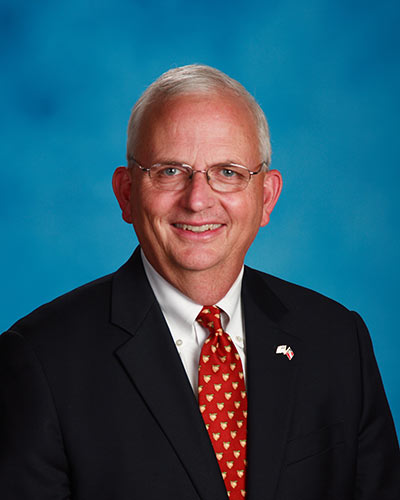
    Natalia Peres

    By: Brad Buck, 813-757-2224 (office); 352-875-2641 (cell); bradbuck@ufl.edu

    Working at her lab and fields at the UF/IFAS Gulf Coast Research and Education Center, Natalia Peres diagnoses and helps manage diseases that might otherwise ruin strawberries, a $300 million per year crop in Florida.

    In her efforts to beat back diseases, Peres helped develop the Strawberry Advisory System, which tells farmers when to spray fungicides on their crop to help them control botrytis and prevent anthracnose. Additionally, she’s participating in a collaborative effort with Cornell University – another land-grant institution — to use UV light to suppress strawberry pathogens.

    Now, Peres has been named a fellow of the American Phytopathological Society (APS).

    The APS grants the fellow honor in recognition of distinguished contributions to plant pathology or to the society. Fellow recognition is based on significant contributions in one or more of the following areas: original research, teaching, administration, professional and public service, and/or Extension and outreach.

    “It is a tremendous honor to be among a select group of peers whom I greatly admire within the American Phytopathological Society,” said Peres, a UF/IFAS plant pathology professor. “I could not be happier with the recognition, and I am very thankful for the support I have always had from GCREC, the department of plant pathology and the strawberry growers.”

    Peres always liked biology, but she wanted to apply her knowledge to food production. In fact, she didn’t gravitate toward plant pathology until she was in college in Brazil.

    “During my doctoral program, I was working on a research project with a disease (post-bloom fruit drop) in citrus that was relatively new in Brazil, and there was not a lot of local information,” she said.

    Pete Timmer, then a professor at the UF/IFAS Citrus Research and Education Center, was then the expert on post-bloom fruit drop, so Peres came to UF to do part of her Ph.D. research with Timmer.

    “Working with him as a mentor completely changed my career and life path,” said Peres. “I am forever thankful for his mentorship and try to be the same model for my students as he was for me.”

    David Gadoury, a senior research associate at Cornell University, nominated Peres for the honor. She’s worked with Gadoury for many years. In fact, he urged Peres to participate in the UV light research project.

    “Peres is a superbly gifted and dedicated mentor of undergraduate, graduate, and postgraduate researchers,” Gadoury said in his nomination letter. “She has produced a generation of skilled and broadly trained researchers and crop advisors. Her commitment to mentor international students and postgraduate researchers is particularly notable.”

    Peres has advised 27 undergraduate and 10 graduate and postgraduate researchers in her program since 2010. During the same period, her students received 24 awards from the APS Foundation, the University of Florida, and others, in recognition of their research and Extension achievements.

    She earned all three of her degrees at Sao Paulo State University in Sao Paulo, Brazil. Peres’ bachelor’s degree is in agronomy and crop sciences, her master’s in horticultural sciences and her Ph.D. in plant pathology.

    Peres came to GCREC as an assistant professor in 2004. She was promoted to associate professor in 2010 and made full professor in 2016. In that time, she has published 140 peer-reviewed journal articles.

    Jack Rechcigl, director of the Gulf Coast Research and Education Center, and Peres’ on-site supervisor, said the center is fortunate and proud to have Peres as a faculty member.

    “Her passion, energy and enthusiasm for her vocation has led her to become a world-renown pathologist who is recognized for her outstanding scientific contributions to the strawberry industry,” Rechcigl said. “Her productivity is boundless.”

    Rose Loria, chair of the UF/IFAS plant pathology department and Peres’ supervisor in Gainesville, also lauded Peres.

    “Natalia is dedicated to the strawberry growers she serves. Her ability to find innovative solutions to new disease problems or improve production practices to reduce inputs is outstanding – and she does this over and over,” Loria said. “I credit her collaborative style and her inherent creativity.”

  • CFAP Expansion Doesn’t Include Hemp; Growers Respond

    File photo shows field of hemp plants.

    U.S. Hemp growers are disappointed the recent Coronavirus Food Assistance Program commodity expansion does not include hemp. Last week, the Department of Agriculture expanded the commodities covered under the program that provides COVID-19 relief to producers. CFAP includes commodities that USDA can prove saw losses of 5% or more in the first quarter of 2020.

    The U.S. Hemp Growers Association (USHGA) says, “We believe our farmers did present evidence of losses to our growers that were 5% or more in the first quarter of 2020.”

    Hemp is such a newly legal crop that it does not have the advantage of data gathered by USDA agencies. Currently, the data available to understand the market is gathered privately by several data companies. USHGA believes two datasets showed a 5% pricing decrease and more in hemp and hemp products in the first quarter of 2020.

    The statement says, “All hemp farmers are now wondering what kind of treatment they will receive should there be future problems.”

    (From the National Association of Farm Broadcasters)

  • Uncertainty in the Pecan Market

    One thing is certain about this year’s pecan crop in Alabama and Georgia – it is loaded. One thing that is not certain is what kind of price those pecans command at the market once they’re harvested this fall.

    University of Georgia Cooperative Extension pecan specialist Lenny Wells said there are various factors that will impact prices for farmers this year, starting with China.

     “We don’t know what China is going to do, with COVID-19 and with the tariff situation and all the political issues we’ve got between our two countries. There’s a lot of uncertainty there about if they’re going to buy. You hear a lot of different things and don’t know how much of it is accurate,” Wells said. “I think some of the accumulators have told me that they’re starting to get a little interest from China but not like they normally do at this time.”

    Domestic Market Concerns

    Wells also added that the domestic market will once again be impacted by the influx of pecans from Mexico. Unfortunately, those imports should depress the market price.

    “I don’t see that changing anytime soon,” Wells said.

    Wells said harvest season should begin no later than mid-September with the Pawnee varieties. Other varieties like Oconee and Caddo will be picked at the end of September and early October.

    Wells hopes early pecans will attract a strong price.

    “The early good stuff this year is probably going to bring, hopefully, a decent price. It may not be what we want. But that may be some of the better prices we see. Who knows?” Wells said. “But early like this when it is early, it gives an opportunity for the gift packed market to get in there and buy what they need. The prices on the gift packed market are usually decent. But they want top quality stuff. That’s one thing we’re seeing when talking with buyers is you really need to have good quality if you want to even get a halfway decent price. Quality’s going to become more and more in demand.”

  • Second Virtual Hearing Scheduled for Thursday

    Gary Black

    Georgia producers and agricultural industry leaders will testify in a virtual hearing on Thursday with the U.S. Trade Representative’s Office (USTR). The hearings will provide the U.S. Department of Commerce (DOC) and United States Department of Agriculture an opportunity to hear from growers in Georgia about the urgent need for federal action regarding unfair trade, specifically with Mexican imports.

    This is the second of two virtual hearings to be held. The first involved Florida growers and industry leaders on Aug. 13.

    USTR, USDA, and DOC announced last month they would convene two virtual hearings at which officials from the federal agencies would hear from growers and industry leaders on how the Trump Administration can support these producers and redress any unfair harm.  

    Thursday’s virtual hearing is scheduled for 9 a.m. EDT.

    The hearing is open to the public, and a link to watch the hearing will be available on USTR’s website here on August 20.

    Bill Brim

    The list of scheduled speakers include Congressmen Austin Scott (GA-08) and Buddy Carter (GA-01); Georgia Ag Commissioner Gary Black; Gerald Long, Georgia Farm Bureau Federation President; Charles Hall, Executive Director of the Georgia Fruit and Vegetable Growers Association; as well as various farmers, including Russ Goodman (Cogdell Berry Farm), Sam Watson (Chill C Farms) and Bill Brim (Lewis Taylor Farms, Inc.)

    A full list of scheduled speakers can be found here.

    For the full USTR press release, click here.  

  • Research Center in Live Oak, Florida Enrolls in BMPs

    By: Kelly Aue, Suwannee River Partnership Outreach Coordinator, 386-219-4257, kaue@ufl.edu

    LIVE OAK, Fla. — As the main research center serving farmers in the Suwannee River Valley, the mission of the UF/IFAS North Florida Research and Education Center – Suwannee Valley (UF/IFAS NFREC-SV) is to protect the area’s natural resources while helping farms succeed. In support of this goal, the center researches agricultural best management practices (BMPs), primarily focusing on nutrient and water management.

    Bob Hochmuth

    “Over the past six years, the center has become much more modernized from a technology standpoint,” said Bob Hochmuth, assistant center director and UF/IFAS Extension regional specialized agent for vegetable crops. “We are in the middle of the implementation phase on adopting technology that we can test to be utilized on farms.”

    “Through the commitment of Jack Payne, the former UF/IFAS senior vice president, to rebuild our center, along with the deans of Extension and Research, we were able to equip this center to be able to handle a variety of research projects,” Hochmuth continued. “In addition, we’ve been supported by the Suwannee River Water Management District (SRWMD), Florida Department of Agricultural and Consumer Services (FDACS) Office of Agricultural Water Policy, and Florida Department of Environmental Protection (FDEP). They have funded many contracts and grants that are the driving force behind the research, funding and implementation of BMPs.”

    “Research is an important part of developing and making sure BMPs work,” said Glenn Horvath, environmental consultant for FDACS. “For example, the center did some important research on soil moisture sensors and shared with farmers how this tool could be important in their efforts to reduce their loss of nitrogen and improve irrigation of their crops. Today, farmers tell me they don’t want to farm without them. The center’s efforts in research were really important to the widespread adoption of that BMP.”

    Beginning in February 2015, the center enrolled in the FDACS BMP program using the guidance of the 2008 Vegetable and Agronomic Crops (VAC) BMP manual. In March 2020, Hochmuth met with Horvath to re-enroll under the updated 2015 VAC BMP manual which updated BMPs, including BMPs on hay and silage production.

    To enroll in the BMP program, a farmer meets with a FDACS representative to identify all applicable BMPs on the BMP checklist. The farmer then signs a “Notice of Intent to Implement BMPs” (NOI), which indicates the farmer’s commitment to properly implement and maintain the applicable BMPs, and submits it to FDACS along with the checklist.

    “To sign something called a ‘Notice of Intent’ is in line with my strategical thinking on what we are trying to do here,” Hochmuth said of his center. “Number one, I want to make this place important to the community; and number two, I want to be a good steward to the natural resources of the property I’m responsible for. Those two align with a Notice of Intent because that is our collective intent here at this farm.”

    The center is located within the proposed Suwannee River Basin Management Action Plan (BMAP). The Suwannee BMAP requires stakeholders in the watershed to reduce nitrogen inputs, and agriculture is a focus of the effort. BMP manuals, such as the VAC BMP manual, are adopted by rule by FDACS. The law requires farmers located in a BMAP to either implement FDACS-adopted BMPs or monitor their water quality as prescribed by FDEP.

    While going through BMP enrollment process, Hochmuth was able to look at the NFREC-SV farm holistically to assess the applicability of all BMP categories – nutrient management, irrigation management and water resource management.

    “Overall, we did super well, but there are things such as the importance vegetative buffers around our lake and drainage ditches that I’m more cognizant about from the NOI visit,” Hochmuth said. “It was an opportunity to learn about things that are not immediately on your mind. We did talk a lot about nitrogen management, but it gives an opportunity to identify areas where we can improve strategies.”

    Overall, Hochmuth’s goal is to share with the community the research that is happening at UF/IFAS NFREC-SV and the importance of implementing BMPs: “I want to get people on the back 40 to be able to show them the things that we are doing here.”

  • Florida Strawberry Industry Members Speak out About Unfair Trade with Mexico

    florida
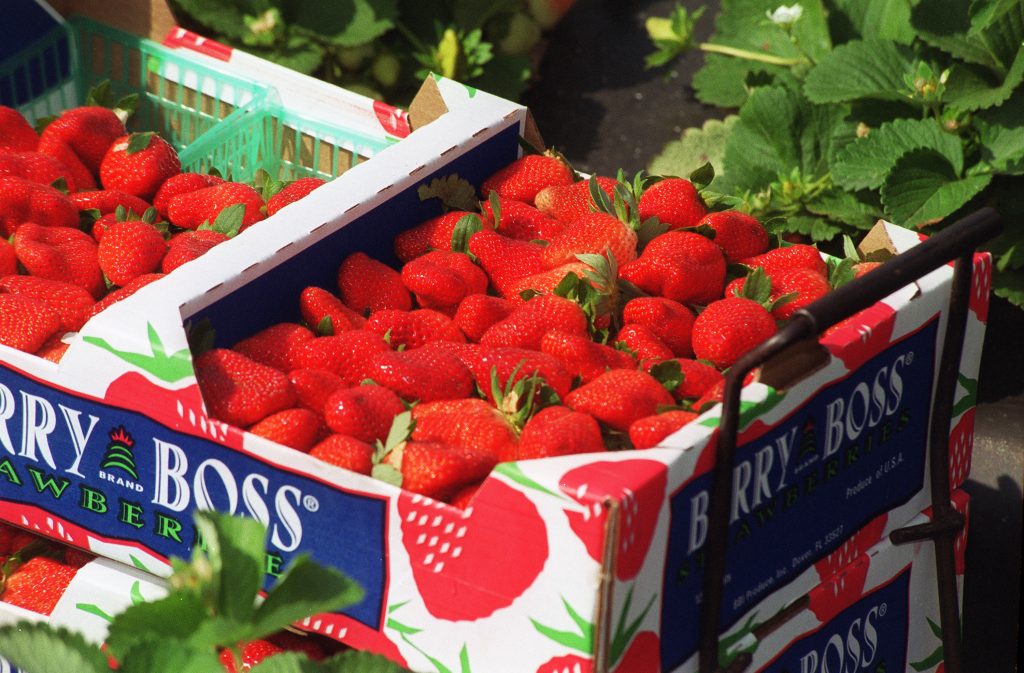
    File photo shows strawberries boxed up after harvest.

    Florida Strawberry Growers Association

    Dover, Fla. (August 18, 2020) – U.S. trade officials and federal agencies held the first of two virtual meetings on August 13 with the agriculture industry to hear testimonies on unfair trade practices with Mexico. More than 35 witnesses testified to a hearing committee consisting of representatives from the Office of the U.S. Trade Representative, U.S. Department of Agriculture, and the U.S. Department of Commerce.

    As Senator (Marco) Rubio, congressmen, Florida’s Commissioner of Agriculture and Consumer Services, economist Dr. Zengfei Guan, and producers from across the state and even the country testified, reoccurring concerns of unfair trade practices, government subsidies and loss of market share came up repeatedly.

    “We are not looking for a handout, just a fair chance in the fight,” said Executive Director of the Florida Strawberry Growers Association, Kenneth Parker.

    The concern of crisis is of the winter specialty crop market in Florida and now into Georgia and beyond.

    “In my 33 years of operating the farm, our greatest challenge has been increased Mexican competition…,” said John Sizemore of Sizemore Farms. Industry members pleaded for a Section 301 to be filed against Mexico to investigate the trade practices.

    The United States-Mexico-Canada Agreement (USMCA) that was passed and became effective on July 1, 2020, neglected to include seasonal and perishable crops. U.S. Trade Representative Robert Lighthizer made a commitment to the seasonal and perishable fruit and vegetable industry in Florida that he would address the issue of unfair trade practices with Mexico; therefore, these hearings are a result of that commitment. A second virtual hearing will take place on Thursday addressing the seasonal and perishable produce industry Georgia. The hearing will be streamed through the USTR website and transcripts will also be available from both hearings.

  • Hemp Scouting Important This Time of Year

    File photo shows a field of hemp.

    Heat and humidity in the Southeast means hemp producers face challenges this season with regards to pests and diseases.

    Matthew Brecht, cannabis grower, hemp expert and plant pathologist with Marrone Bio Innovations, said scouting is essential for growers especially since not much research has been done with this relatively new crop.

    “Right now (hemp) should be transitioning to flowers. You should be having some pre-flowers maybe or about to be there. This is a time when you could have anything come in the Southeast. The east coast, Southeast, specifically is hot and humid with lots of rain events or tropical depressions that come through. You have all kinds of bugs and diseases that show up because of the humidity and pressures you have,” Brecht said.

    Be on the Lookout for Worms

    He noted that the worst pests for hemp are worms, especially corn earworms.

    “The insects will get into the newly formed colas (cluster of buds) and basically start chewing on them. They kill the flower or parts of the flower. Once they start doing that, you could lose a good percentage of your crop. Farmers want to think about scouting for these little caterpillars and looking for either the moths or the eggs and try to time some of these applications, products that are for caterpillars during that time,” Brecht said. “Because of high humidity, you also get leaf spot. You could have hemp stem rot. You could have powdery mildew and (bud rot) towards the end.”

    Brect emphasized that there wasn’t great research done in hemp prior to 2019. Hemp farming is still in its early stages, especially in Alabama, Florida and Georgia. It’s still very new with not a lot of understanding of the different pests and diseases that can be of impact.

    Products are also sporadic from state to state in what growers can utilize, which could mean a challenging growing season for some farmers.

    “If you don’t have proper tools to control these pests and diseases, you could potentially lose a good portion of your crop,” Brecht said. “I would say growing hemp on the east coast or the Great Lakes, anywhere that has a more humid or rainy environment during the summer time is much more difficult than it is on the west coast, much more difficult.”

  • Citrus and VSC Expos Start Wednesday

    The 2020 Citrus Expo and Vegetable & Specialty Crop (VSC) Expo will be held Wednesday and Thursday, August 19-20. Due to COVID-19, this year’s event has transitioned to a virtual format, but growers can still get the same great Expo experience they are accustomed to.

    Both the citrus and VSC seminar programs will debut online at CitrusExpo.net at 9:30 a.m. Eastern both mornings. Attendees will be able to view videos of the research presentations from their computers or cell phones. Those who attend the seminars as they debut online will be eligible to win one of four $200 gift cards from Bass Pro Shops.

    One of the most anticipated features of the event will also be held virtually, as the trade show will take place. You can connect online with vendors to find every imaginable product or service your operation could ever need. Growers will be able to visit the online exhibitor corner to view videos from suppliers and obtain information about their latest products. There will be 15 premier exhibitors in the lineup with links to forms that growers can fill out. Growers who visit at least five premier booths and fill out the forms will be entered to win a $100 Bass Pro Shops gift card.

    The exhibitor corner will also debut online at 9:30 a.m. EDT at CitrusExpo.net on Aug. 19–20 along with both the citrus and VSC seminar programs. But while the seminar programs will be available throughout the end of the year, the exhibitor corner will only be offered Wednesday and Thursday, so don’t miss out. AgNet Media would like to extend a special thanks to the exhibiting vendors and sponsoring companies who are investing in the event and the Expo attendees.

    Learn more at vscexpo.net.

  • Fumigants for Nematode Management in Vegetables

    Bell pepper roots (left) show severe galling caused by the southern root-knot nematode compared with healthy roots (right) treated with Pic-Clor 60.

    By Abolfazl Hajihassani and Chinaza Nnamdi

    The majority of vegetable production in Georgia is located in multiple counties in the southern region of the state. Vegetables are grown year-round on both raised beds covered with polyethylene plastic mulch and on bare ground.

    Using a comprehensive survey conducted in 2018, we have documented that root-knot nematodes, Meloidogyne spp., are the No. 1 nematode pest in vegetable crops in Georgia, infecting 67 percent of the fields surveyed. Therefore, proper management practices need to be developed or optimized for successful control.

    CONTROL OPTIONS

    Chemical control is currently the best option for managing nematodes in vegetable-producing systems. Optimizing chemical control methods is a must for vegetable growers in the Southeast. Growers often fumigate the soil prior to planting the first crop in the spring or in the fall, but the issue with root-knot nematodes is particularly important in the second, third or fourth crop grown on the same plastic mulch. Reusing mulch favors nematode buildup in coarse-textured soils.

    In Georgia, 1,3-dichloropropene (Telone II), chloropicrin, mixtures of 1,3-dichloropropene and chloropicrin (e.g. Pic-Clor 60), metam sodium (Vapam) and dimethyl disulfide (Paladin) have been the common fumigants for the control of soilborne pathogens, weeds and nematodes in vegetable-production systems.

    In a field study conducted at the University of Georgia Tifton campus in 2019, we evaluated the effects of different soil fumigants on the southern root-knot nematode and yield of bell pepper. Treatments included Telone II (125 pounds per acre), Dominus (250 pounds per acre), Pic-Clor 60 (175 pounds per acre), Paladin (167 pounds per acre) and an M. incognita-resistant pepper cultivar (Carolina Wonder).

    RESEARCH RESULTS

    Results showed that all soil fumigants and the resistant cultivar reduced root galling compared to the untreated check at harvest. Pic-Clor 60 had numerically better control of root galling compared to the other fumigants. At the end of the season, second-stage juveniles of the nematode in the soil were only lower than the untreated check in the resistant pepper treatment. Among the fumigant treatments, Paladin had numerically lower nematode numbers in comparison with the other fumigants. We also found that Pic-Clor 60 and the resistant cultivar had the highest and lowest pepper fruit yield, respectively.

    Based on our data, treatments with Dominus and the resistant variety had the highest weed density. Plots treated with Pic-Clor 60 had the lowest weed density. There was no difference in weed density among Paladin, Telone II and the untreated check. The weed population in the Dominus treatment was higher than the check plot. Soil fumigation with Pic-Clor 60 reduced southern blight disease, caused by the fungus Athelia rolfsii, as compared to other treatments.

    Paladin, though effective in suppressing nematode juveniles in the soil, was withdrawn from the market in 2019, further restricting the already limited number of tools for managing nematodes. Pic-Clor 60 is likely an ideal fumigantfor control of root-knot nematodes and other soilborne pathogens in multi-cropping systems of vegetables. However, root-knot nematode population densities in plots treated with Pic-Clor 60 were increased by the end of the growing season. This may suggest that combined use of fumigants and post-plant nematicides through drip irrigation could provide enough root protection against high densities of root-knot nematodes in the first and subsequent crops grown on the same plastic mulch.

    In collaboration with county Extension agents, two on-farm trials are currently being conducted in Brooks and Lowndes counties in Georgia. The objective is to examine whether the combined application of both fumigant and non-fumigant nematicides in the first crop can result in a more effective control of root-knot nematodes and higher crop yield, compared to the use of only fumigants in the first crop and only non-fumigant nematicides in the second crop grown on the same plastic mulch.

  • Georgia Blueberry Producer: You Don’t Have to Have a Ph.D. in Economics to See What’s happening

    Russ Goodman Talks About Impact of Unfair Trade Ahead of Thursday’s Virtual Hearing

    United States of America and Mexico waving flag

    A prominent blueberry producer in Southeast Georgia believes the future of the American family farm could hinge on any action taken as a result of the virtual hearing scheduled for Thursday.

    Russ Goodman is one of several farmers and industry leaders in Georgia who will testify in a virtual hearing on Thursday with the U.S. Trade Representative’s Office. The hearings will provide the U.S. Department of Commerce and Trump Administration an opportunity to hear from growers in Georgia about the urgent need for federal action regarding unfair trade.

    “We started growing blueberries in 2000. In 2010, we hear rumblings about (Mexico) and people saying, ‘Mexico’s going to put you guys out of business.’ I heard that kind of stuff. I normally don’t pay a lot of attention to things like that because you hear a lot of generic statements,” said Goodman, a farmer in Cogdell, Georgia. “In 2010, they sent 1.8 million pounds. Last year they shipped in 63 million pounds. I’m fearful that if something isn’t addressed what it means.

    “It’s not only with Mexico, which is what these hearings are about, USMCA and Mexico and specifically how that affects us, but my friends in the north in Michigan have been farming blueberries for three and four generations. They’re being affected the same thing with Peru right now.”

    Labor Disadvantage

    The biggest concern with farmers in Georgia and Florida – where hearings were held last week – in competing with Mexican imports is the cost of labor. What American farmers have to pay per hour, Mexican farmers can charge per day. How can American growers compete?

    “A third of your costs is going to be labor. They’re down there paying one-tenth of what we’re paying in labor. You take any business on God’s green earth where your competition has a 90% advantage over something that’s a third of your overhead, they’ll eventually put all their competition out of business. The scary thing is, that competition comes in the form of the American family farm,” Goodman said.

    He estimates Mexican farmers only have to pay 81 cents per hour as a minimum wage.

    “You don’t have to have a Ph.D. in economics to see what’s happening and what it’s going to mean long term. We’ve got a blueprint of what’s happened in the past, the tomato industry in Florida. That’s just going to keep going into other things,” Goodman said. “They’re planting 20,000 acres of pecans a year in Mexico from my understanding. I just think we’ve got to, especially in light of this pandemic, we’ve got to re-evaluate where we’re at as far as food security. What keeps us food secure is the American family farm,” Goodman said.