Category: Top Posts

  • Improved Weather Data at Growers’ Fingertips

    Weather is one of the most important factors affecting crop growth and production.

    The Florida Automated Weather Network (FAWN), a University of Florida-operated service, was created to assist growers in making decisions related primarily to irrigation scheduling and cold protection.

    Migliaccio

    Currently, the FAWN network operates 42 stations located from Jay to Homestead that record and report every 15 minutes on information like air temperature, wind and rainfall. Some stations are even adding data from newer technologies like soil moisture sensors, with plans to expand these offerings to more locations.

    During the recent FAWN virtual showcase, growers, industry members, researchers and Extension gathered to learn about the improvements in FAWN data quality and how users can apply the data.

    Kati Migliaccio, a professor at the University of Florida Institute of Food and Agricultural Sciences (UF/IFAS), says FAWN is a great resource for general research applications. Using weather data to complement other observations and having the ability to compare historical averages are just a few ways FAWN is used in research.

    “Weather data is very core to what we do at IFAS; its core to natural resources, agriculture and urban systems,” Migliaccio said.

    Additionally, data from FAWN is used to make irrigation decisions with SmartIrrigation apps. Growers can use these apps to improve irrigation practices using real-time weather data.

    Ryan Atwood of Atwood Family Farms was present at the meeting to provide a personal testimony on how he uses FAWN every day to make decisions at his operation.

    “A big part of what I think FAWN’s value to growers is, is the fact that you know you have reliable weather data on a system that’s being maintained regularly,” Atwood said.

    Earlier this year, FAWN relaunched its website, making it more efficient for users. FAWN is now accessible through mobile platforms, making it even easier for users to access the same information.

    Ashley Robinson, AgNet Media communications intern, wrote this article.
  • Uncertainty Remains in Pecan Market

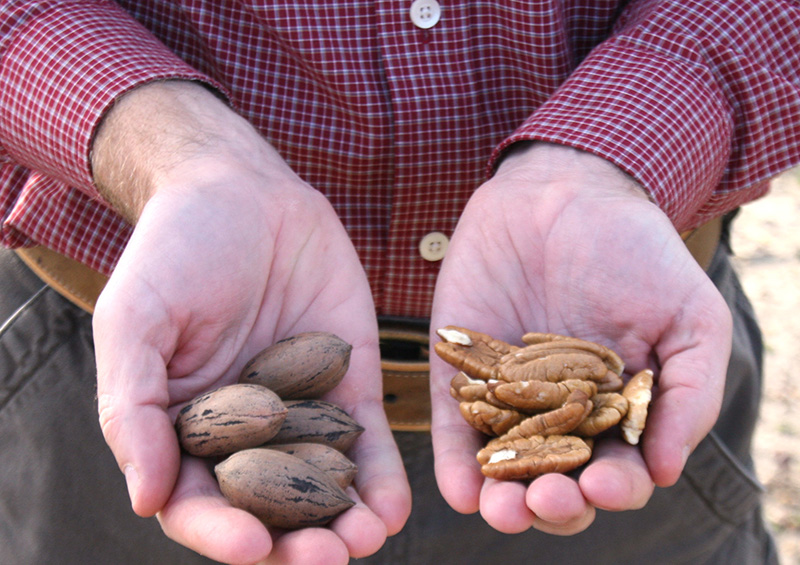
    Photo courtesy of UGA College of Agricultural & Environmental Sciences.

    With some certainty, Georgia pecan producers are expecting a bumper crop this year. What remains uncertain is the market price farmers will receive at harvest.

    As growers are currently harvesting Pawnees with other varieties expected to be harvested next month, there is still an unpredictability regarding the pecan market, according to Phil Croft, manager of the Hudson Pecan Company.

    “Right now, we don’t 100% know this market trend. The only thing we can base it off of is what South Africa on the in-shell market sold into China. Those numbers are somewhere between $4.80 and $4.50 a kilogram, which relates back to $2.05 to $2.25 a pound delivered into China. That’s working it back to the grower level on a premium nut, $1.80, $1.90 a pound for our premium Desirables and qualities of that nature,” Croft said. “If China will come back in this thing and buy strong, I think that may be the bottom of the market, in my opinion. Nobody wants to hear that but at least it’s a starting point, and hopefully, it’s the bottom of it that where we can go up from there.

    “I feel like we have an opportunity here for this market to increase pretty quickly if all the ducks line up.”

    China

    China is the biggest buyer of U.S. pecans. But the relationship between the two countries has been strained recently with the coronavirus pandemic and the trade war that involved tariffs being place on goods by both countries. They established a Phase One Agreement where China would increase its purchases of agricultural products, but it still lags in its pursuit of meeting those purchasing goals.

    China’s role as a pecan purchaser cannot be understated.

    “They have been some great customers for many years. We hope that will work out. We hope that they will buy Ag products,” Croft said. “We saw a report the other day that the almond market is booming in China and it’s because of lower prices. That’s maybe what it takes to get the market picked back up over there with some cheaper prices initially. Hopefully, it’ll turn around into a positive.”

  • Ampersand® Adjuvant Can Reduce Organic Herbicide Use Rates by Half Without Sacrificing Performance

    BOCA RATON, Fla. /PRNewswire/ — Attune Agriculture, the leader in combining agriculture and food science to create products using hydrocolloid technology, announced that its OMRI listed adjuvant, Ampersand®, can reduce the use rate of organic herbicides by 50%, while maintaining the same level of performance as high use rates.

    Ampersand is a unique adjuvant formulated with hydrocolloids that provides superior deposition, adhesion, evaporation control and wash off resistance.  The result is less drift, more spray to the plant, more product on the plant and more active ingredient in the plant.

    Trials with three leading organic herbicides demonstrated that the addition of Ampersand is able to significantly boost the performance of costly active ingredients. Comparison plots were sprayed with tank mixes containing Suppress® at 6% alone and again with a significantly reduced rate of Suppress at 3% plus Ampersand. Both plots showed comparable results in weed control. Trials performed with Homeplate® had remarkable results as well. Homeplate at a high use rate (@ 6%) compared to a low use rate (@ 3%) with the addition of Ampersand had the same level of control. In both trials, Ampersand was able to increase the level of performance of the 3% use rate to match the level of control at the 6% use rate.

    Though very different in composition than Suppress and Homeplate, Ampersand’s performance with Weed Slayer® was strong as well.  Ampersand with a low use rate of Weed Slayer (@ 1%) showed the same performance as Weed Slayer at a high use rate (@ 2%).

    Across the board, the addition of Ampersand allows an organic herbicide use rate reduction of 50%, and can reduce the overall treatment cost by 40% per acre.

    “Ampersand allows organic herbicide usage at the lowest labeled rate while achieving performance and cost savings,” says Ed Quattlebaum, Ph.D, Director of Product Development at Attune Agriculture. “Organic growers have limited options, all of which are costly. The addition of Ampersand to these herbicide spray programs just makes economical sense.”  

    Ampersand is registered for use in all 50 states. 

    About Attune Agriculture, Inc. Born from over 100 years of hydrocolloid expertise, Attune Agriculture combines deep roots in food science and agriculture to create products dedicated to providing the world with agricultural tools that are both performance-based and safe for the environment and the people who use them. For more information, please visit www.attuneag.com.

  • Hop Stunt Viroid Infecting Citrus Trees in Georgia

    File photo shows citrus tree.

    According to UGA Extension IPM blog, hop stunt viroid has been discovered in Georgia.

    Citrus production in Georgia is rapidly increasing each year. There are citrus plantings in backyards, production, and plant nurseries within at least 32 GA counties. The growth of citrus in Georgia is only expected to increase over time. However, there are some threats to expansion.

    Citrus has many viroids, a tiny virus-like pathogen, that harm the plants throughout the world, but few have been found on citrus within Georgia. Hop stunt viroid (HSVd) is one of several viroids known to infect citrus. This viroid has been reported within Arizona, California, Florida, Texas, Washington state, and throughout the world. HSVd is typically transferred from plant to plant on contaminated grafting and pruning tools. HSVd can infect many different plants, including hops, grapevines and citrus. A large host range helps the pathogen spread.

    In the United States, HSVd has been found on many different grapefruit, orange and tangelo varieties. Symptoms include discolored and gumming inner bark, pitting (small holes) in stems, bark splitting (coming apart) and stunted growth. There are typically not leaf or fruit symptoms. Some citrus varieties are resistant to HSVd, but others, including tangerines and their hybrids will show damage. There are also different types of HSVd, called cachexia and non-cachexia variants. “Cachexia” means severe chronic illness, so the cachexia variants are much more dangerous and the noncachexia variants typically do not cause damage.

    In May and June of 2020, leaf samples were collected and tested for HSVd. The samples were collected from 12 different citrus plants from two nurseries located in southern Georgia. The cultivars sampled included Citrus reticulata ‘Dekopon’ and ‘Owari’ as well as Citrus unshiu ‘Miho Wase’ and ‘Brown Select’. The sampled trees looked relatively healthy with little or no signs of damage, but were selected for routine screening. Three to five leaves were taken per plant from throughout the leaf canopy.

    Small pieces of leaves were cut and used for RNA extraction. Reverse transcription-polymerase chain reaction (RT-PCR) and sequencing was used to verify infection with HSVd. Recombinase-polymerase-amplification (RPA) technology was also used to further confirm positive samples as HSVd. Nine samples were negative for HSVd, but the other three were positive. The positive samples were all taken from Citrus reticulata ‘Dekopon’. The sequencing results revealed that the positive samples were non-cachexia HSVd variants.

    This is the first time HSVd has been found in Georgia. This and other viroids could pose a threat to the growing citrus industry within Georgia in susceptible varieties.

    Currently, only noncachexia variants have been found, but nursery stock infected with this viroid should still be destroyed to prevent spread. Georgia nursery producers and citrus growers should take appropriate precautions to prevent the spread of this viroid disease. Ensure that proper sanitization is used on citrus grafting and pruning tools. Further research is needed to determine the distribution of HSVd and its potential to impact commercial citrus production in Georgia.

  • Whiteflies Flaring Up in Florida Vegetables

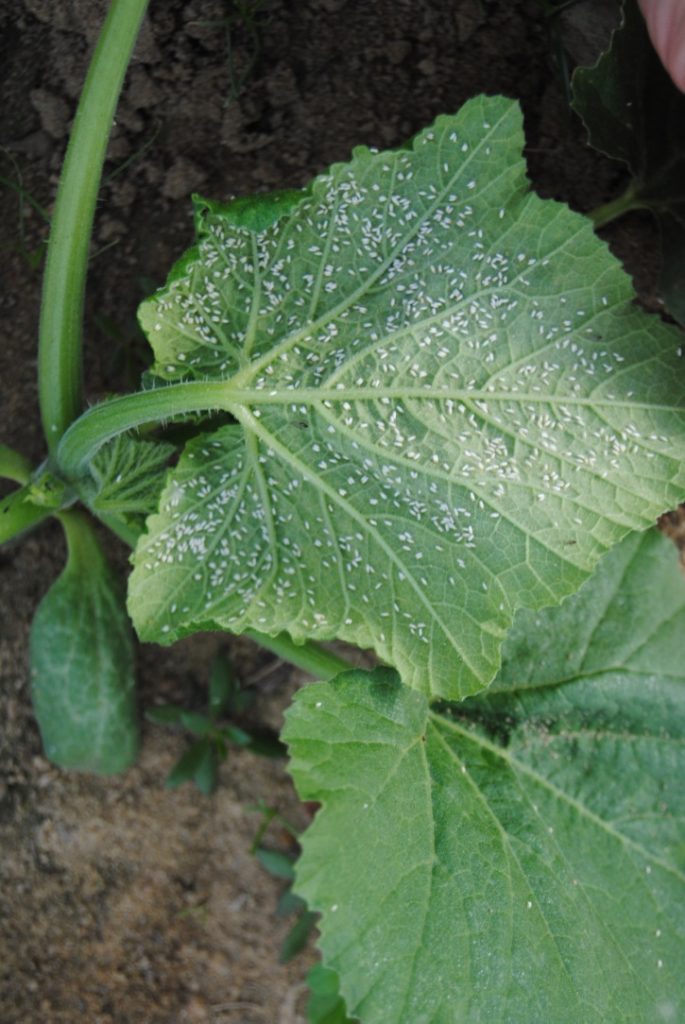
    File photo shows whitefly adults feeding on a yellow squash seedling.

    According to the South Florida Vegetable Pest and Disease Hotline, whiteflies are flaring up in tomatoes and watermelons in Southwest Florida. In the Central Florida area, growers indicate that whiteflies are present in tomatoes low numbers, although some of the early plantings were hit hard by whiteflies.

    Tomato Yellow Leaf Curl Virus pressure remains less than 1% but it is present in nearly every planting.

    Growers in Homestead, Florida indicate that whitefly numbers are present in oriental vegetables.

    Management of whiteflies later in the season depends on early suppression of whitefly populations. Growers need to be aggressive with systemic materials like Venom, Sivanto Prime and Verimark, early in the season.

    Proper scouting remains a viable management tactic for controlling silverleaf whitefly. University of Florida entomologists have established thresholds that have been successful for tomato producers.

    For more whitefly management tips, see click here.  

  • Fungicide Resistance a Growing Problem in Strawberries

    Fungicide resistance in strawberries is a major problem, says University of Georgia Cooperative Extension plant pathologist Phil Brannen. He encourages producers to help researchers understand which fungicides are still active and provide protection against diseases like anthracnose and botrytis.

    “(Fungicide resistance) has really come to the forefront in the last few years. In the last two or three years, we have seen a lot issues, particularly with anthracnose. Prior to that, we may have had some breakdown but not nearly as much,” Brannen said. “With those fungicides in general across a lot of commodities, (they) are now starting to lose their activity and it just finally happened for us in strawberries. They’ve had issues with that in Florida for now several years also; South Carolina, we all know this happens when you spray that fungicide class; over time, they eventually break down and quit working. We’ve got to get better resistance, and we’re probably seeing more of that in other areas, too; other fungicides, particularly on botrytis.

    “When trying to control botrytis, we have quite a few of fungicides that no longer work. I just encourage producers to make sure they test. If they have the opportunity, they can actually send off their pathogens on the strawberries and they can be tested for which fungicides are still active. That’s helpful.”

  • Cover Crops Helpful for Alabama Hemp Producers

    Cover crops are important tools and have various advantages for farmers transitioning from one season to the next. Eric Schavey, Alabama Regional Extension agent in Northeast Alabama, encourages hemp producers to plant their cover crops now before it’s too late in the season.

    Schavey

     “If you get into November, you’re a little late. Your cereal rye will do a little better than your clover. That clover likes temperatures between 65 degrees F and 75 degrees F. Your grains are a little more hardy to cold temperatures,” said Schavey, who encourages producers to plant in late September or October. “I’m a big a fan of a cover crop. It just holds in moisture. It’s going to add to your organic moisture. It slows down erosion. To me, a cover crop is there and with our hemp farmers especially, there’s not those weed control options that our row crop farmers have. That’s been some of the challenges that they have is controlling weeds in our in-row in hemp.”

    Cover crops planted in the row middles prevent sunlight from penetrating and allowing weed seeds to germinate.

    Schavey said such problematic weeds include pigweed and goose grass. He also has certain recommendations when talking about cover crop implementation.

    “I like using a cereal rye, not a rye grass but your cereal grains; also, your crimson clover is a good one. With those two, there’s the biomass that you get and their ease of growing there. They’ll grow in a lot of different soil types. That’s what I recommend,” Schavey said.

    According to a prior Alabama Extension news article, cover crops are crops grown to benefit the following crop as well as improve the soil. They can protect the soil, feed the soil eco-system, increase soil organic matter and supply nutrients to the following crops.

    The right cover crop can improve yields, soil and water conservation and quality and your bottom line.

  • Powdery Mildew Resistance Survey

    File photo shows muscadine vines in a vineyard.

    According to the UGA Extension Viticulture Blog, University of Georgia researchers are asking grape producers if powdery mildew has been spotted in their vineyards. UGA would love to sample it, and it could mean that the fungicide program is breaking down due to resistance development in the powdery mildew fungus.

    UGA graduate student Brooke Warres is working on QoI and DMI fungicide resistance in powdery mildew. She can take swab samples of the mildew from any part of the grapevine to test for mutations associated with resistance to these chemical classes. With this information, UGA can better understand resistance patterns in Georgia and determine how widespread these mutations are throughout the state.

    As producers are scouting their vineyard at the end of the season, UGA suggests looking inside the canopy to check for white to gray fungal growth of powdery mildew — predominantly on the upper leaf surfaces. Depending on how well it has been controlled, it may also be self-evident on the canopy exterior. If you are finding this disease, please call Brooke at 678-642-2183 or email at Brooke.Warres@uga.edu so she can visit to take a quick sample. With these samples, she will be able to let you know if you currently have QoI and/or DMI resistant populations in your vineyard. This should help you to plan your spray program for next season.

  • Shuck Decline in Pecans

    According to the UGA Extension Pecan Blog, shuck decline in pecans is starting to manifest itself in orchards across the state.

    Growers are starting to see symptoms of shuck decline in the orchard. Symptoms range from shucks turning all the way black to the tips, green shucks turning black and peeling back at the suture. In some cases, kernels are black and in other cases, there is no kernel. The degree of declining shucks varies from tree to tree.

    For growers to minimize the problem moving forward, they need to continue to irrigate. This will be critical if the weather turns dry later this month and in October.

    According to the UGA Extension Pecan Blog, the severity of shuck decline depends on when the decline started during development. If the shuck has already split open, likely, growers can still shake the nut from the tree and it will be fine. However, much of this dark color on the shucks beginning before they open may hurt yield and quality.

    Shuck decline is mainly a stress-related issue. It can be worse on trees with a heavy crop load.

  • New AI Technology ‘Agroview’ Named UF Invention of the Year

    Yiannis Ampatzidis with agricultural drones in the laboratory. Photo taken 09-23-19.

    September 23, 2020

    By: Brad Buck, 813-757-2224, bradbuck@ufl.edu

    Yiannis Ampatzidis and his research team combined their collective minds to find the artificial intelligence technology to best help farmers save money and better care for their crops.

    Out of that process, they invented a system known as Agroview.

    The system utilizes images from drones and satellites and from the ground – along with artificial intelligence — to assess plant stress, count and categorize plants based on their height and canopy area and estimate plant nutrient content. Agroview can reduce data collection and analysis time and cost by up to 90% compared to the manual data collection, Ampatzidis said.

    “Florida and U.S. growers can use this novel technology to count plants and predict yield, to detect stressed plant zones earlier and to develop maps for precision and variable-rate fertilizer applications,” said Ampatzidis, a UF/IFAS assistant professor of agricultural and biological engineering. “The maps can optimally apply fertilizers, reduce application cost and reduce environmental impact.”

    Agroview captured the eye of UF Innovate | Tech Licensing, which recently recognized the technology as a UF Invention of the Year.

    “I am extremely honored to receive this award,” said Ampatzidis, a young scientist who just entered his fourth year at UF/IFAS. “We truly believe that this AI-based technology could help Florida and U.S. producers improve crop productivity and management.” 

    He thanked his research team at the Southwest Florida Research and Education Center (SWFREC) in Immokalee for helping devise Agroview. He also expressed gratitude to his colleagues from the center and his academic department at the Gainesville campus for their input.

    “I would like to thank UF Innovate | Tech Licensing and especially Dr. John Byatt and Dr. Jackson Streeter for their great help to commercialize this invention,” Ampatzidis said.

    A spinoff company called “Agriculture Intelligence Inc.,” was created, which provides Agroview’s services to growers.

    His bosses are also impressed with the work of Ampatzidis and his team.

    “The Agroview product developed by Dr. Ampatzidis’ program provides the key for connecting UAV imagery to grower decisions. This product bridges a gap that existed between research and on-the-ground, everyday use,” said Kati Migliaccio, chair of the UF/IFAS agricultural and biological engineering department. “Dr. Ampatzidis uses AI in his programs to automate processes that have been traditionally been completed in more resource-expense ways. These efforts will allow for greater efficiency and optimization of the agricultural production process, which is necessary to meet future global food needs.”

    Ampatzidis’ center director, Kelly Morgan, said SWFREC has a long history of supporting vegetable and citrus production.

    “We have typically worked on standard inputs such as fertilizer, water and pesticides,” Morgan said. “Agroview is an example of the new emphasis on precision agriculture by the research center. This program will make growers in Florida much more efficient and result in far less environmental impact. This product of SWFREC should result in lower inputs of fertilizer, water and pesticides.”