Category: Top Posts

  • Florida Hops Show Potential

    By Shinsuke Agehara

    Hops are grown on various sized trellises at the Gulf Coast Research and Education Center in Wimauma, Florida.
    Photo by Shinsuke Agehara

    Craft beer brewed with Florida hops sounds very attractive. But can hops be grown in Florida? Will the crop produce high yields? The most important question is: Will it be profitable?

    There are lots of rumors, myths and hype about growing hops in the Sunshine State. That’s probably because hops have never been grown commercially in Florida and other subtropical regions — at least not on a large scale. There simply was not enough information. The profitability of Florida hops is still unknown, but a lot of information is now available from ongoing research conducted at the University of Florida Institute of Food and Agricultural Sciences (UF/IFAS) Gulf Coast Research and Education Center (GCREC).

    In 2016, a 1-acre hop yard with a trellis 19 feet high was built. In the first two years, yields were very low. The main reason was premature flowering that limited the vegetative growth. At that time, many plants grew only halfway up the trellis. This happened because the daylength in Florida is not long enough for hops. In general, the critical daylength for hops is 15 to 16 hours. Hops promote vegetative growth when daylength is above this threshold, and plants start flowering when daylength drops below this threshold. The optimal shift from vegetative to reproductive development is key to maximizing hop yields.

    UF/IFAS researchers experienced lots of trial and error. In 2018, LED lights were installed in the hop yard. The daylight extension with LED lights was effective in controlling the timing of flowering. In other words, it can trick hop plants into thinking they are in the Pacific Northwest.

    All trials were reestablished using tissue-cultured seedlings. Researchers have tested more than 20 varieties and various crop management practices, including fertilization, irrigation, plant spacing and pruning. The hop yard is also being monitored to identify pest issues, including diseases, insects and nematodes.

    TRELLIS TRIALS AND HIGH YIELDS

    Research continued in 2019, with another 1-acre hop yard built to test different trellis designs and heights. The straight trellis has only one cable per row, which is for installing both LED lights and twines. By contrast, the V-trellis has three cables per row: the middle cable is used to hang LED lights, and the other two are used to install twines. The most notable difference is that the straight trellis can have only two twines per hill, whereas the V-trellis can have four twines per hill.

    Supplemental lighting is used to extend daylength hours. Photo by Shinsuke Agehara

    In the spring of 2020, researchers started a new trial to evaluate the two trellis designs with three different heights: 12, 15 and 18 feet. A record high yield was achieved. Cascade hops grown on the 18-foot V-trellis produced 1,130 pounds of dry hops per acre, which is more than 60 percent of the commercial average yield of this variety. Alpha acid of these hops, which is an important quality attribute for bitterness of beer, was at the commercial level or even slightly higher.

    It’s important to note that 1,130 pounds per acre is just the first season yield. It normally takes a few years before hop plants can reach the full yield potential, so the yield is expected to go up over time. Furthermore, Florida can produce two crops a year because of the warm climate, whereas other production regions, including the Pacific Northwest, can harvest hops only once a year. Within the next few years, researchers will know if Florida can achieve above-average yields!

    In the meantime, the economics of this new crop need to be investigated. The total material cost for the GCREC hop yard establishment was $15,780 per acre for the straight trellis and $18,687 per acre for the V-trellis. Labor and crop management cost information is now being collected. Budget analysis is expected soon and will determine the breakeven price and yield for each trellis design.

    DEVELOPING A VIABLE INDUSTRY

    In 2019, Florida ranked fourth in the nation for craft beer production, with 329 breweries producing 42.6 million gallons of beer and generating an economic impact of more than $3 billion. The UF/IFAS hops research goal is to develop a viable industry for Florida growers and brewers.

    Florida’s hop industry is just forming. There are several growers producing and selling hops to local craft brewers, and the production is expanding. More than 15 craft breweries in Florida have brewed beer using Florida hops.

    The viability of this new crop in Florida is still unknown. The hope is that research information can support the development of the new industry and help local brewers make more beer with locally grown hops. The latest hops research updates are available at www.facebook.com/GCREC.Hops.

  • Jamie Ellis, Director of UF/IFAS Honey Bee Lab, Wins National Excellence in Extension Award

    Jamie Ellis tends to honey bees.

    By: Samantha Murray, grenrosa@ufl.edu, 949-735-1076

    Recognizing visionary leadership and diversity in educational programming, the U.S. Department of Agriculture’s (USDA) National Institute of Food and Agriculture (NIFA), Cooperative Extension, and the Association of Public and Land-grant Universities (APLU) announced that Jamie Ellis of the University of Florida will receive the 2020 Excellence in Extension Award.

    USDA-NIFA and Cooperative Extension have sponsored the awards since 1991. The awards will be presented virtually on Oct. 28.

    “Each year, these awards showcase the fundamental, transformative difference Cooperative Extension continues to make in our society,” said NIFA Acting Director Parag Chitnis. “Excellent programs like these are a testament to the true value of Cooperative Extension capacity funds more than a century after the Smith-Lever Act created this unparalleled system of outreach and education that enriches every community across the nation.”

    “This year’s National Cooperative Extension Award winners demonstrate educational excellence,” said Mark Latimore, Jr., associate dean and administrator for Extension, Fort Valley State University, and chair of the Extension Committee on Organization and Policy. “They stand as a powerful example of the impact of Cooperative Extension to address real-world problems in communities across the country.”

    The Excellence in Extension Award is given annually to one Cooperative Extension professional who excels at programming, provides visionary leadership and makes a positive impact on constituents served.

    Jamie Ellis is the director of the UF/IFAS Honey Bee Research and Extension Laboratory, as well as a professor and Extension specialist the UF/IFAS department of entomology and nematology.

    The laboratory’s mission is to advance the understanding of honey bees in Florida, the U.S. and globally, with the goal of improving the health and productivity of honey bee colonies everywhere. Ellis advances this mission through basic and applied research with managed and wild honey bees, communicating his findings to assorted clientele groups through diverse Extension programming, and training future generations of bee educators, researchers and conservationists. His work has contributed to a four-fold increase in the number of managed honey bee colonies and a five-fold increase in the number of beekeepers in Florida.

    “Dr. Ellis is a model for faculty, not just at our university, but within the land-grant system and across the world,” said Nick Place, dean of UF/IFAS Extension. “He is the go-to person for all things honey bees. Dr. Ellis has gained national and international recognition for his innovative Extension programming, which has allowed beekeepers and other stakeholders to adopt science-based practices that improve the health and productivity of honey bee colonies. Dr. Ellis’ program has also increased the public’s awareness about the importance of honey bees within the food system and how all of us can support pollinators.”

    Ellis said he was honored to receive the award.

    “Successful Extension programming is always the result of the investment of many people. I am grateful to my UF/IFAS colleagues, my collaborators, and the beekeepers we serve. I am excited that our efforts are making a lasting impact in the communities we support,” Ellis said.

  • Pecan Prices Better Than Originally Expected?

    Southeast pecan farmers should be encouraged by market prices as harvest season gets under way across the region. According to Lenny Wells, University of Georgia Cooperative Extension pecan specialist, prices for Pawnee varieties are up from what was originally projected, as are Stuarts.

    Plus, there is renewed buying interest from China, which has traditionally been the biggest buyer of U.S. pecans.

    “I’m hearing that there definitely is interest from China. They do definitely seem like they’re going to buy and possibly might buy quite a bit, which would help tremendously,” Wells said. “I don’t know that it’s going to help bring prices up all that much. I hope it does. At the very least it should stabilize prices some.

    “China wants to buy but they are definitely price sensitive at this point with everything going on. That’s why I say I don’t know that it’s going to make prices go up a lot, but it should stabilize it.”

    Pawnee Prices

    Wells said that Pawnees, which are typically the first variety to be harvested every year, are selling anywhere from $2.30 to $2.40 per pound, which is quite the improvement from the $2.10 mark that was discussed before the start of harvest season.

    “If (producers) have Pawnees, then yeah they probably need to go ahead and sell those. Once the other nuts start coming in, the price of Pawnees usually start to drop some,” Wells said. “So, I would go ahead and start to get rid of those.”

    They’re not the only variety selling better than expected, either.

    “I’m also hearing a little bit of encouragement on Stuarts. I was told a couple of weeks ago that we may see Stuarts up around $1.50, $1.60, which is a lot better than the $1.20 or $1.30 we were hearing a couple of months ago. So that’s good,” Wells added.

  • Clemson Extension Agents Provide Crop Updates

    Clemson Extension agents provided updates in The South Carolina Grower this week about the status of various crops being produced throughout the state.

    Weekly Field Update – 10/12/20

    Posted on by Justin Ballew

    Coastal

    Rob Last reports, “Crops are generally looking very well to press with some welcome rain benefiting fall crops. Whitefly and caterpillar numbers are increasing. With a few foggy mornings happening over the last week be on the lookout for foliar disease pressure to increase given the increase in leaf “wetness”. Plastic and, where applicable, fumigants are applied, ready to begin strawberry planting. Just a reminder to check plants carefully before planting for crown rots and early foliar pest and disease activity.”

    Zack Snipes reports, “We had another wet week in the Lowcountry with 2.5 inches of rain collected at the Coastal Research Station in Charleston.  Things are looking great for strawberry planting in the next few weeks. Be sure to check your plants and roots before you plant them. Many issues can be solved before plants go into the field. Fall brassicas, squash, lettuce mixes, and root crops are growing and looking great. We still have whiteflies on many farms. On most of these farms, spring fields were not terminated once the crop was done which could have led to the explosion of whiteflies we have been seeing this fall.”

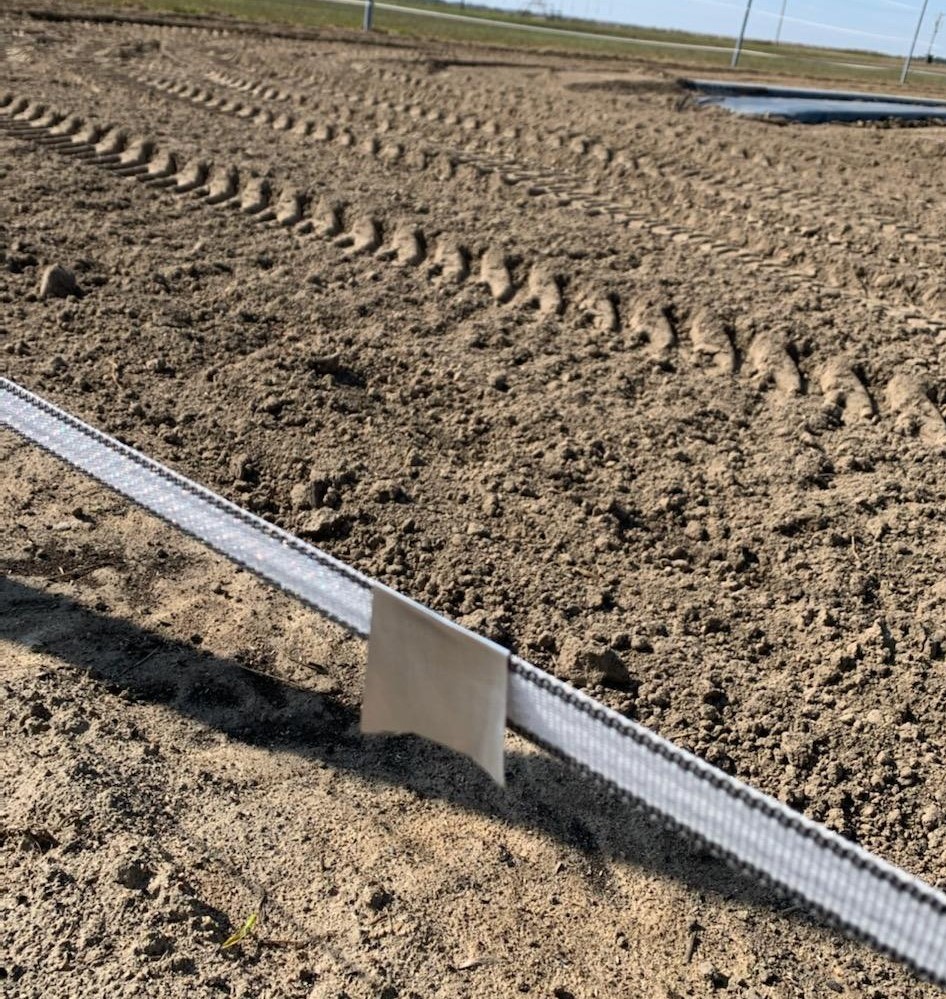
    Many strawberry growers are putting up fencing BEFORE they plant which drastically enhances the efficacy of the fencing. This fence is about to be baited with a metal tab and peanut butter. Photo from Zack Snipes.

    Midlands

    Justin Ballew reports, “Last week was warm and we saw a heavy dew most mornings. We also had some pretty decent rain come through over the weekend. This warm, moist weather has disease increasing fairly aggressively on some crops. Powdery mildew and downy mildew on cucurbits are pretty rough right now. Pecan shucks are opening, and nuts are falling from the earlier varieties like Pawnee and Excel. Strawberry planting should begin this week.”

    The shuck has opened on this Excel pecan . Photo from Justin Ballew.

    Pee Dee

    Tony Melton reports, “Still planting processing greens mostly kale and collards because they are a little more resistant to winter cold. Greens are rapidly growing. I have already seen some Reflex damage from carryover from last year. Personally I think it affects roots and keeps them from taking up nutrients and the damage is very similar to magnesium and boron deficiency – so I always recommend applying Epsom salts and boron to combat the problem and it usually works. Strawberries are going into the beds. Since many are using vapam or k-pam, make sure that enough time is allowed for the fumigate to escape before planting. Many do not fumigate anymore so don’t forget velum, nimitiz, and majestine are available for nematode control.”

  • Auburn Extension Economist Expects More Participation for CFAP 2

    Auburn University Assistant Professor and Extension economist Adam Rabinowitz expects more growers to participate during this current sign-up period for the Coronavirus Food Assistance Program 2.

    There’s no reason for growers to wait, go ahead and sign up for the program, which continues through Dec. 11, 2020.

    Rabinowitz

    “I do expect more participation. I would encourage producers to look at this as a program that’s certainly there to help them through this current period,” Rabinowitz said. “There’s a lot of coverage there in terms of the CFAP 2 program. Anything you can imagine that’s being produced in our region is covered.”

    Vegetable and Specialty Crops Impact

    It’s especially true for vegetables and specialty crops. More than 230 fruit, vegetable, horticulture and tree nut commodities are eligible for CFAP 2. Visit farmers.gov/cfap/specialty for a full list of eligible commodities and more information on CFAP 2 eligibility and payment details related to these commodities. 

    “Virtually every specialty crop is included and is based on 2019 sales. As a percentage of those sales depending on what those total gross sales are in 2019 will be what that payment is under the CFAP 2 program,” Rabinowitz said. “There’s very little from a specialty crop standpoint that was excluded; well over 230 fruits and vegetables, nuts, nursery products as well; cut flowers, plants. We’re talking agricultural products that have never received federal assistance in the past are included in this.”

    Financial Impact

    According to the USDA, an additional $14 billion is made available for agricultural producers. The USDA will use funds being made available from the Commodity Credit Corporation (CCC) Charter Act and CARES Act to support row crops, livestock, specialty crops, dairy, aquaculture and many additional commodities.

    “The USDA is confident in the numbers and there’s enough funds there to cover all that. I think historically we know that in some of the specialty crop grower cases, they don’t have these programs, so they often don’t know about them and don’t take advantage of it. I’m not sure if it’s an expectation that a little uptake will take care of it or if USDA has that much confidence in their calculations, but it is pretty substantial,” Rabinowitz said. “There are payment limits that do come into play.”

  • Oak Root Rot Biggest Threat to Peach Industry

    Vinson

    The most dangerous threat to the peach industry in the Southeast is Oak Root Rot, a soil-borne fungus that can wipe out peach trees, according to Edgar Vinson, Alabama Extension Professor of Horticulture.

    Oak Root Rot or Armillaria Root Rot, causes stunted leaves, yellow defoliation, chlorotic leaves, death of branches and, ultimately, death of the tree.

    Unfortunately for peach producers, there’s not many management options available to offset the death sentence for peach trees that are planted in a field with this disease.

    “As far as we know, once it’s in the soil it’s there probably for good,” Vinson said. “Once the tree starts to succumb to it, there’s no remedy for it. There’s some things to delay it, if you have a tree that’s planted in the soil that has Oak Root Rot. If you’re planting into soil that has Oak Root Rot, there’s really no remedy for it. It will eventually take over the tree and take the tree out.”

    One Option

    Farmers can implement a root collar excavation. This is a management tactic that producers utilize to remove soil from the crown of the tree to prevent the fungus from growing on the crown. This only delays the inevitable. Eventually the tree will succumb to the disease, but this practice extends the life of the tree so the grower can get more harvests out of it.

    The best option would be to plant a resistant root stock. However, one is not broadly available yet.

    “Most peaches don’t come from the nursery on their own roots. They’re budded onto a rootstock that’s tolerant to a particular soil condition or diseases. You have a desirable peach variety that’s grafted onto a resistant rootstock. That’s typically how we receive our peaches, apples and a number of other crops,” Vinson said.

    Oak Root Rot symptoms usually appear between 5 to 7 years after planting.

    “It’s a disease that’s recognized all over the Southeast. We’re currently working on ways to mitigate the damage,” Vinson said.

  • UGA researcher to study potential use of essential oils in organic blueberry production

    There is currently little to no science-based information on the efficacy and safety of most essential oils in pest management of fruit crops like blueberries, so a multistate team is working together to learn more.

    By Josh Paine for UGA CAES News

    Organic fruit and vegetable growers want to meet the recent uptick in national consumer demand, but they need additional tools to battle pests and diseases that often accompany organic crop growth.

    One such tool may be the use of essential oils. That’s why the U.S. Department of Agriculture National Institute of Food and Agriculture awarded a nearly $2 million grant to a team of scientists for an Organic Agriculture Research and Extension Initiative project to study the degree to which essential oils can help suppress certain pathogens and pests.

    Jonathan Oliver, assistant professor in the University of Georgia College of Agricultural and Environmental Sciences at the UGA Tifton campus, is part of the team of 15 scientists who will work on this project nationwide. Researchers from the University of Florida, Clemson University, the University of California, Riverside, the University of Hawai’i at Manoa and the USDA Agricultural Research Service will collaborate on the project.

    In his role as a small fruit pathologist in the Department of Plant Pathology, Oliver will investigate the use of essential oils in organic blueberry production, the state’s top fruit crop.

    “Blueberries are the highest value fruit crop in Georgia, and organic blueberry production represents a growing proportion of our total acreage,” said Oliver. “Nonetheless, organic production of blueberries in Georgia faces many challenges, because our hot, humid climate is ideal for many disease issues including fruit rots and leaf spots. Our growers need better tools to help them manage these disease problems.”

    Funding for the four-year research program will support scientists with expertise in fruit crop management and physiology, plant pathology, entomology, postharvest biology and organic production.

    To carry out the project, scientists will:

    • Evaluate the plant safety and horticultural impact of essential oils in managing diseases in fruits including blueberries, peaches, mangos and avocados.
    • Begin to test plant disease efficacy claims of essential oil products marketed for organic producers.
    • Evaluate organically certified plant essential oils on targeted pathogens such as algal stem blotch, brown rot, scabs, gray mold and powdery mildew.
    • Determine the efficiency of essential oils on fruit shelf life through postharvest testing.
    • Test the efficacy of essential oils against insects including scales, thrips and mites, although arthropod pests are not the primary focus of this research.

    After they gather their new data, participating scientists will communicate the results of their research to organic fruit farmers and those who grow conventional crops, so that those producers can rapidly adopt any new practices. Scientists will also evaluate the effectiveness of the project through continuous feedback from stakeholders.

    “Through this research project, we hope to provide Georgia growers with the information they need to make decisions regarding the use of essential oils as a part of their organic fruit disease management program,” said Oliver. “Since Georgia is the largest producer of blueberries in the Southeastern U.S. and one of the top producers in the nation, providing Georgia growers with information and tools for safe and effective organic disease management has the potential to have a broad impact in Georgia and on the Southeastern organic blueberry production industry as a whole.”

    Organic food sales topped $50 billion in the U.S. in 2018. Statistics from the Organic Trade Association tell part of the story of this growing market: fruits, vegetables and other specialty crops combined to make up 36.3% of total organic sales, up 5.6% from the previous year.

    For more information from UGA about blueberry production, see site.caes.uga.edu/blueberry.

    Part of this article was adapted from the University of Florida Institute of Food and Agricultural Sciences (UF/IFAS).

  • Building Better Soil

    A cover crop mix of sorghum and sunn hemp produces positive results for Honeyside Farms.

    By Tiffany Bailey and Ida Vandamme

    It was about 18 months ago when we began planning our first crop to be planted on our newly certified organic field at Honeyside Farms in Parrish, Florida. The field was previously used for pastureland. It was easy to see that we would be starting from a soil structure that is common in our area: very sandy with low amounts of existing organic matter. We quickly learned that building these soils would need to become a priority.

    It can be common for issues to surface during the first few months of converting from perennial pastureland to vegetable production, and that is exactly what we experienced. Our first major problem was due to the microbe populations living in the soil. We were tilling the land for the first time in possibly decades, and we believe that practice turned the existing microbial ecosystem on its head.

    Without the introduction of good bacteria and fungi suited for vegetable farming, our organic crops were especially vulnerable to disease pathogens coming from infected seeds, neighboring farms and even on our equipment and shoes. It was a huge challenge! But, over time, we began to build up the proper microbe population for our farm. Planting cover crops proved to be an important part of building healthy soil.

    COVER CROPS OFFER BIG BENEFITS

    Cover crops are a very helpful tool in aiding and maintaining this transition. Unlike perennial pastureland, cover crops for vegetable farming are annual, covering the ground for a few months at a time (very convenient for your off season when it’s not practical to grow your main crop). Cover crops grow very fast, covering and protecting the soil from erosion.

    Root mass grows down, infiltrating, breaking up compaction, improving structure and excreting exudates that condition the soil and attract good bacteria. Above ground, leaf matter adds literally tons of biomass that contributes to organic matter when broken down and attracts all kinds of beneficial insects and wildlife. There are so many more benefits to cover crops; these are just the main ones.

    COVER CROP OPTIONS

    Honeyside Farms has grown sorghum-sudangrass, sunn hemp, buckwheat and cowpeas for cover crops. As an organic farm, we preferably use organic seed. However, organic cover crop seed is not always widely available. Most certifying agencies will make exceptions when certified organic seed is not available.

    Sunn hemp is probably our favorite cover crop. According to a Sustainable Agriculture Research and Education publication, sunn hemp can produce 5,000 pounds of dry matter per acre and 120 pounds of nitrogen per acre. That’s enough slowly available nitrogen to feed some crops from start to finish without needing to add any extra nitrogen.

    Sorghum is also very beneficial. The sorghum-sundangrass hybrid is more productive in biomass and leaf matter, which is more beneficial as a cover crop than grain sorghum. Sorghum-sudangrass has been recorded to produce up to 18,000 pounds of dry matter per acre. The roots are perfect for scavenging any leached nutrients from the previous crop and putting them within reach of the next crop, thus minimizing pollution and making effective use of nutrition. Sorghum is also known to suppress diseases and nematodes by breaking up their life cycle and producing compounds toxic to them.

    Cowpea is a legume. As a climber, it can be a nice addition to any tall cover crop mix like sunn hemp and sorghum. We have seen that cowpeas and buckwheat can provide significant sources of nectar and food for beneficial insects that we want to attract to the farm. Buckwheat acts as a great short-term cover and easily breaks down. It’s perfect for the 40- to 50-day gap between crops when other covers would take too long.

    COVER CROP MANAGEMENT

    When planting, it’s important to broadcast the proper amount of seed per acre. If the seed is planted too thin, one can miss out on biomass production. But there is no need to waste seed and money planting too thick. Before applying any fertilizer to the cover crops, we take samples and follow what the soil report recommends at planting.

    The best time to knock down the cover crop is when the biomass is optimized, but before the carbon-to-nitrogen ratio gets too high and before seed set to prevent weeds. We allow a few weeks to let the cover crop break down enough so that it is not tying up nitrogen that should be available for our main crop. Sometimes before planting a cover crop, we can tell that this timing will not match when we need the field ready to grow a crop. But we find it better to still plant cover crops and gain some of the benefits rather than let the land sit bare and gain nothing or possibly even lose valuable soil due to erosion. Allow a few weeks to let the cover crop break down enough that it is not tying up nitrogen that should be for your main crop.

    Most challenges come from what is limited by resources, time and practicality. Nothing will be gained if no time is taken to plan for cover crop management. But with proper intention and planning, planting cover crops will provide long-term benefits for many seasons to come.

  • Pecan Crop Remains Ahead of Schedule

    georgia pecans
    File photo shows Georgia pecans.

    The pecan crop in the Southeast remains ahead of its normal production schedule, though cooler temperatures in recent weeks have slowed the crop’s progress, says Andrew Sawyer, University of Georgia Cooperative Extension area pecan agent for Southeast District.

    “I think the cool (weather) has actually slowed us down a little bit,” Sawyer said. “The crop was already 10 (days) to two weeks ahead anyway. We’ll still be ahead in the long run.”

    Farmers have already begun harvesting pawnee varieties. In normal production years, pawnees are usually the first varieties harvested, and then there is a gap before the rest of varieties are mature enough for harvest. However, others are already showing signs of being ready to be picked, Sawyer said.  

    “Desirables are cracking pretty strong which is probably on the early side for them, too. They’re looking good. Everything’s about to really get ramping up,” Sawyer said.

    All in all, this year’s pecan crop is projected to be one of the largest crops in recent memory, especially since Hurricane Michael impacted the region in 2018, disrupting production.

    “Definitely the biggest in a long time. It is going to be a big crop,” Sawyer said. “Expect some lower prices for sure.”

  • Fire Ant Control Important for Alabama Vegetable Producers

    Majumdar

    Fire ant control is essential for Alabama vegetable growers hoping to protect their crop this fall. Alabama Cooperative Extension warns producers that fire ants are known to be pests of numerous vegetable crops, including okra and potatoes.

    Ayanava Majumdar, Alabama Extension Professor, said fire ants can especially be harmful to vegetables because they’ll congregate on plants that have a heavy load of aphids. They will tend to protect aphids and other honeydew producers on vegetables. Fire ants can also damage the crops themselves and contaminate the produce.

    “I think the issue is they get on plants that get a heavy load of aphids. They follow aphids. If plants have aphids you often have the ants protecting the aphids,” Majumdar said.

    Few Management Options

    Alabama Cooperative Extension offers producers a few management options. Control fire ant mounds around or outside the vegetable production area to prevent them from moving into the garden or field. Also, manage excessive plant residue on the soil. This will help increase detection of foraging ants, provides ants fewer places to hide and make it easier to scatter bait insecticides on open ground.

    The best time to apply broadcast baits is now through Oct. 15. Mound treatments may be done year-round on warm, sunny days above 65 degrees F when the fire ants are active. Majumdar attests that the ants are active now.

    “They’re pretty active in my peanut fields. They’re pretty active in and around my vegetable fields and my garden. They’re very active,” Majumdar said.

    For more information on fire ant control, read Managing Fire Ants with Baits located on the Alabama Extension website. More information is available in Fire Ant Control: The Two-Step Method and Other Approaches on the eXtension Foundation website.