Category: Top Posts

  • Like it or not, Joro spiders are here to stay

    UGA CAES photo/Detial photo of Joro spider.

    By Beth Gavrilles for UGA CAES News

    Chances are, if you live in northeast Georgia you’ve come across an East Asian Joro spider this fall.  

    At almost 3 inches across when their legs are fully extended, they’re hard to miss. While they’re roughly the same size as banana spiders and yellow garden spiders, the distinctive yellow and blue-black stripes on their backs and bright red markings on their undersides are unique. Their enormous three-dimensional webs are a striking golden color and tend to be located higher off the ground than those of other spiders. 

    “We’ve been getting lots of calls and emails from people reporting sightings,” said Byron Freeman, director of the Georgia Museum of Natural History. “They seem to be really common in riparian areas and in urban areas around people’s houses, but they’re also in the deep woods.” 

    Joro spiders have spread widely since they were first spotted in Hoschton, Georgia, in 2013. They probably arrived by hitching a ride in a shipping container from China or Japan, according to Freeman. He and Richard Hoebeke, associate curator of the museum’s arthropod collection and a research professional in the University of Georgia College of Agricultural and Environmental Sciences Department of Entomology, confirmed the identity of those early arrivals based on genetic analysis in 2015. 

    Now, five years later, Joro spiders appear to have successfully established themselves in the area, with recent confirmed reports from as far afield as Blairsville, Georgia, and Greenville, South Carolina. But there is still much that remains unknown about them. 

    One important question is how they might affect the local ecosystem. Will they out compete other orb weaving spiders? Will they reduce insect populations through predation?  

    “We don’t know what the impact is going to be,” said Freeman, a faculty member in the University of Georgia Odum School of Ecology. “Right now, we’re trying to learn as much as we can about them.” 

    So far, early observations indicate that Joros are coexisting with the area’s other orb weaving spiders, with webs close to, and in some cases even attached to, one another.  

    And Joro spiders also appear to be able to capture and feed on at least one insect that other local spiders are not: adult brown marmorated stink bugs, an invasive pest that can infest houses and damage crops. In turn, Joro spiders are vulnerable to predators like mud dauber wasps and birds.   

    Freeman noted that dewdrop spiders, a kleptoparasite—as the name implies, they steal food from others—have been spotted in Joro webs. 

    “They may be switching from what we thought was their principal host, the banana spider, to this new kind of orb weaver,” he said. He pointed out that banana spiders, a relative of the Joro, are native to the Caribbean and Central America. They were first recorded in the U.S. in 1862 and have since naturalized.  

    “My guess is that this will be no different than the banana spider, and I don’t know that we can assess what the effect of the banana spider has been at this point,” he said. 

    Another question Freeman hopes to answer is how the males find their mates.  

    Joro spiders travel by ballooning, letting the wind carry them on a strand of gossamer.  

    “The male has to drift in and find the female,” Freeman said. “Sometimes there’ll be four or five males on a web, sometimes there’ll be one, so the males are moving between webs. When you have a large population it seems feasible that a male could just drift from one spot to the next, but when you don’t have a lot of webs around, how does the male show up?”    

    Freeman is also conducting further genetic analysis to determine what causes some Joro spiders to have a different color pattern. While most have distinctive black and yellow striped legs, some have legs that are solid black. These black morphs have other physical differences that are only apparent when viewed under a microscope, and Freeman has determined that they are genetically distinct members of the species.  

    Despite their size, Freeman said that Joro spiders don’t pose a threat to people. 

    “All spiders have venom that they use to subdue prey,” he said. “If you put your hand in front of one and try to make it bite you, it probably will. But they run if you disturb their web. They’re trying to get out of the way.”  

    Freeman said that Joros can be shooed away with a broom if they’re in a location that puts them too close for comfort. 

    But as for removing them permanently, he compared such efforts to shoveling sand at the beach. 

    “Should you try to get rid of them?” said Freeman. “You can, but at this point, they’re here to stay.” 

    If you spot a Joro spider — especially if you can provide a photo tagged with date and location — please contact Hoebeke at rhoebeke@uga.edu.  

  • Coming Soon: New University of Florida Strawberry Varieties

    A new University of Florida Institute of Food and Agricultural Sciences strawberry release has excellent shape and flavor.

    By Vance M. Whitaker

    Two new strawberry selections have been approved for release by the University of Florida Institute of Food and Agricultural Sciences (UF/IFAS) and are in the commercialization process. Trade names have not yet been finalized but should be chosen in the next six months. For both, larger-scale testing will be conducted this fall, and commercial quantities will be available to Florida growers for the 2021–22 season.

    The first release is an early short-day variety with excellent fruit shape and quality. It has slightly lower November and December yields than Florida Brilliance but has had high January yields. It has excellent flavor, with taste panels ranking it equal to or even better than Sweet Sensation® Florida127, depending on the harvest date. It also has high Brix through the season, similar to Sweet Sensation® Florida127. The push for better flavor is an important pursuit for the UF/IFAS strawberry breeding program, so the team is very excited about the sensory qualities of this new release.

    A new white-fruited release from the University of Florida Institute of Food and Agricultural Sciences has a unique appearance and flavor. Photo by Cristina Carrizosa, UF/IFAS Communications

    The second release is a white-fruited strawberry. White-fruited varieties have been popular in Japan for some time, but this is expected to be the first such variety on the market in the United States. It has white internal and external color, with a pink blush on the sun-side and red achenes. The appearance of the pink blush and the achenes turning from green to red are the visual cues signaling that the fruit is ripe and ready to eat. The fruit are a little bit smaller than the other current varieties and are more similar in size to the fruit of Festival. The yield of this variety is about 75 percent of the current varieties grown in Florida, which are primarily Florida Brilliance and Sweet Sensation® Florida127.

    It is important to mention that new strawberry variety releases from UF/IFAS are exclusive to Florida growers for the first three years, but trialing can be conducted during this period with permission from the Florida Strawberry Growers Association.

    Regarding current varieties, Sweet Sensation® Florida127 (released in 2013) is fully available throughout the United States, while Florida Brilliance (released in 2017) is still exclusive to Florida for one more season. However, with permission, Florida Brilliance can be trialed outside of Florida in 2020 and will be fully available in 2021.

  • Various Varieties to Choose from When Planting Pecan Trees

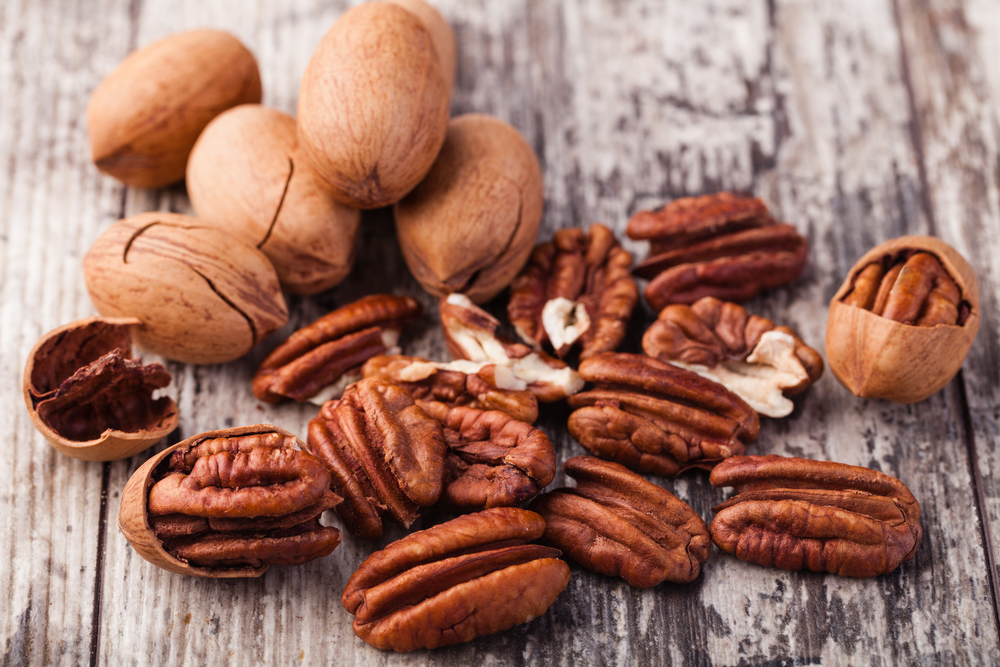
    georgia pecan
    File photo shows pecans.

    The time to plant pecan trees is nearing for Georgia producers. Shane Curry, University of Georgia Appling County Extension Agriculture and Natural Resources agent, offers a plethora of options for growers to choose from.

    According to Appling County Crop E News, there are multiple varieties that are very popular and viable options for any farmer in Georgia.

    Avalon is one of the newer varieties that was bred by University of Georgia scientist Patrick Conner and became available around 2017. It has excellent percent kernel, about 47 nuts per pound and is about the size of the Desirable variety. Maybe most importantly, it is highly resistant to scab disease.

    Curry

    Lakota is another popular option that requires very little input. However, Pawnee is one of its best pollinators and is one of the most scab susceptible cultivars available on the market. Pawnee can require as many as 15 sprays for scab during the growing season. Lakota and Pawnee are also the earliest varieties we plant in Georgia, which can bring the highest prices on the market at that time of year, which is in late September and into October.

    Curry said Cape Fear is one of his favorites, though, it is not a low input variety. It will require spraying but yields and quality make it a variety worth planting. It is susceptible to bacterial leaf scorch, and quality can be affected when the tree overloads as it matures. But fruit thinning can help with that problem.

    Excel is another variety that requires low inputs and has good scab resistance. Pecan planting is usually done during December and January when the trees are dormant.

  • More Than $7 Billion Paid in Second Round of CFAP

    (Washington, D.C., Oct. 26, 2020) – U.S. Secretary of Agriculture Sonny Perdue announced today that in the first month of the application period, the USDA Farm Service Agency (FSA) approved more than $7 billion in payments to producers in the second round of the Coronavirus Food Assistance Program.

    Perdue

    CFAP 2 provides agricultural producers with financial assistance to help absorb some of the increased marketing costs associated with the COVID-19 pandemic.

    “America’s agriculture communities are resilient, but still face many challenges due to the COVID-19 pandemic. These payments directed by President Trump will continue to help this critical industry recoup some of their losses from ongoing market disruptions and associated costs,” said Secretary Perdue. “This program builds upon the over $10 billion disbursed under the first round of CFAP. Agricultural producers who have been impacted by the pandemic since April 2020 are encouraged to apply for assistance.”

    Since CFAP 2 enrollment began on Sept. 21, FSA has approved more than 443,000 applications. The top five states for payments are Iowa, Nebraska, Minnesota, Illinois and Kansas. USDA has released a data dashboard on application progress and program payments and will release further updates each Monday at 2:00 p.m. ET. The report can be viewed at farmers.gov/cfap.

    Through CFAP 2, USDA is making available up to $14 billion for agricultural producers who continue to face market disruptions and associated costs because of COVID-19. CFAP 2 is a separate program from the first iteration of CFAP (CFAP 1). Farmers and ranchers who participated in CFAP 1 will not be automatically enrolled and must complete a new application for CFAP 2. FSA will accept CFAP 2 applications through Dec. 11, 2020.

    Eligible Commodities

    CFAP 2 supports eligible producers of row crops, livestock, specialty crops, dairy, aquaculture, and many other commodities, including many that were ineligible for CFAP 1. FSA’s CFAP 2 Eligible Commodities Finder makes finding eligible commodities and payment rates simple. Access this tool and other resources at farmers.gov/cfap.

    Getting Help from FSA


    New customers seeking one-on-one support with the CFAP 2 application process can call 877-508-8364 to speak directly with a USDA employee ready to offer general assistance. This is a recommended first step before a producer engages the team at the FSA county office at their local USDA Service Center.

    FSA offers multiple options for producers to apply for CFAP 2. Producers with an eAuthentication account can apply online through the CFAP 2 Application Portal. Also available is a payment calculator and application generator that is an Excel workbook that allows producers to input information specific to their operation to determine estimated payments and populate the application form, which can be printed, signed, and submitted to the local FSA office. Producers can also download the CFAP 2 application and other eligibility forms from farmers.gov/cfap.

    Producers of acreage-based commodities will use acreage and yield information provided by FSA through the annual acreage reporting process. Producers have the option to complete their application by working directly with their local FSA staff or online through the CFAP 2 Application Portal.
    CFAP 2 is not a loan program, and there is no cost to apply.

    More Information

    To find the latest information on CFAP 2, visit farmers.gov/CFAP or call 877-508-8364.

    All USDA Service Centers are open for business, including some that are open to visitors to conduct business in person by appointment only. All Service Center visitors wishing to conduct business with FSA, Natural Resources Conservation Service, or any other Service Center agency should call ahead and schedule an appointment. Service Centers that are open for appointments will pre-screen visitors based on health concerns or recent travel, and visitors must adhere to social distancing guidelines. Visitors are also required to wear a face covering during their appointment. Our program delivery staff will be in the office, and they will be working with our producers in the office, by phone, and using online tools. More information can be found at farmers.gov/coronavirus.

  • Sneak Peek: November 2020 VSCNews Magazine

    By Ashley Robinson

    The November issue of VSCNews magazine touches on a variety of topics, including an improved method to detect phytophthora in irrigation water, smart irrigation tools for blueberry growers and new findings on growing hemp in Florida.

    One of the most serious diseases in Georgia vegetable production is phytophthora blight, a water mold that attacks the roots, foliage and fruit, causing root rot, crown rot, leaf lesions, fruit rot and plant wilt.

    Due to a lack of an efficient diagnosis method, the production of vegetables is severely impacted by contaminated irrigation water. Emran Ali, the director of the Plant Molecular Diagnostic Lab; Owen Hudson, a master’s student; Justin Hand, Tift County Extension agent; and Sumyya Waliullah, a research professional at UGA in Tifton share a newly developed hand pump-based filter paper method to improve detection of the disease.

    Vasileios Liakos, an assistant research scientist at UGA-Tifton discusses two new smart irrigation tools for blueberries developed by UGA — the UGA Smart Sensor Array (SSA) and the Blueberry App. The UGA SSA is a system that records soil moisture within fields and the Blueberry App allows growers to use their smart-phones to schedule irrigation. Researchers at UGA are also working on a project, evaluating soil moisture sensors for blueberries.

    Lastly, Tory Moore, public relations specialist for the University of Florida Institute of Food and Agricultural Sciences (UF/IFAS) shares important considerations for Florida growers contemplating or currently growing hemp. Flowering requirements, pest management strategies, irrigation, fertilization and additional general advice are all offered in this article.

    If you would like to receive future issues of VSCNews magazine, click here.

  • Trump Administration Invests $2.3 Million in High-Speed Broadband in Rural North Carolin

    YADKINVILLE, N.C., Oct. 26, 2020 – The Trump Administration announced today that the United States Department of Agriculture (USDA) is investing $2.3 million to provide broadband service in unserved and underserved rural areas in North Carolina.

    This investment is part of the $550 million Congress allocated to the second round of the ReConnect Program.

    “Access to high-speed internet is a cornerstone of prosperity, and unfortunately many of America’s rural communities lack access to this critical infrastructure,” USDA Deputy Under Secretary for Rural Development Bette Brand said. “Under the leadership of President Trump and Agriculture Secretary Perdue, USDA is committed to leveraging all available resources and being a strong partner to rural communities in deploying high-speed broadband e-Connectivity to the people, businesses and community facilities that don’t have access yet. Connecting America’s rural communities to this essential infrastructure is one of USDA’s top priorities, because we know that when rural America thrives, all of America thrives.”

    Yadkin Valley Telephone Membership Corporation will use a $2.3 million ReConnect grant to deploy a fiber-to-the-premises network. This network will connect 5,686 people, 67 farms and 18 businesses to high-speed broadband internet in Davie, Yadkin and Iredell counties in North Carolina.

    Background

    In March 2018, Congress provided $600 million to USDA to expand broadband infrastructure and services in rural America. On Dec. 13, 2018, Secretary Perdue announced the rules of the program, called “ReConnect,” including how the loans and grants will be awarded to help build broadband infrastructure in rural America.

    On April 20, 2020, USDA announced the Department has received 172 applications for $1.57 billion in Round Two of the ReConnect Program. The second round will enable USDA to implement innovative new solutions to rural connectivity by leveraging financial options with our partners and continuing the success of the first round of funding. The application window for Round Two closed on April 15, 2020.

    In Round One of the ReConnect Program, USDA invested $698 million to bring high-speed broadband e-Connectivity to approximately 167,000 households, 17,000 rural small businesses and farms, and more than 500 health care centers, educational facilities and critical community facilities located in 33 states. To learn more about individual investments, read USDA’s Broadband ReConnect Program report (PDF, 4 MB).

    USDA received 11 Round Two ReConnect Program applications that are eligible for the $100 million Congress allocated to the program through the CARES Act.

    To learn more about ReConnect Program eligibility, technical assistance and recent announcements, visit www.usda.gov/reconnect.
    USDA Rural Development provides loans and grants to help expand economic opportunities and create jobs in rural areas. This assistance supports infrastructure improvements; business development; housing; community facilities such as schools, public safety and health care; and high-speed internet access in rural areas. For more information, visit www.rd.usda.gov.

  • Clemson Extension Agents Provide Crop Updates

    Clemson Extension agents provided updates in The South Carolina Grower this week about the status of various crops being produced throughout the state.

    Weekly Field Update-10/26/20

    Statewide

    Dr. Matt Cutulle reports, “A good stand of fall cover crops will typically suppress most weeds. However, you may want to pursue herbicide options for cleaning up the weeds that have pushed through the cover crop canopy. If these cover crops act as buffers in fall vegetable crops, one has to proceed with caution regarding herbicide application. The best selective herbicide option for controlling broadleaf weeds in cereal rye would be a low volatility 2,4D or dicamba product ( the low volatility dicamba products may not be available right now). Enlist One is a 2,4D choline formulation. Apply the herbicide with a hooded sprayer using nozzles that produce coarse droplets. We are approaching cooler temperatures, so the conditions do not favor volatility as much as they did in late spring/summer. If you have a clover cover crop and do not want to kill it, do not spray 2,4D. Using a labeled graminicide (clethodim or sethoxydim products) in clover will provide control of grass weeds that have escaped the clover cover. Remember to read the label and use appropriate surfactants with the graminicides for maximizing activity”

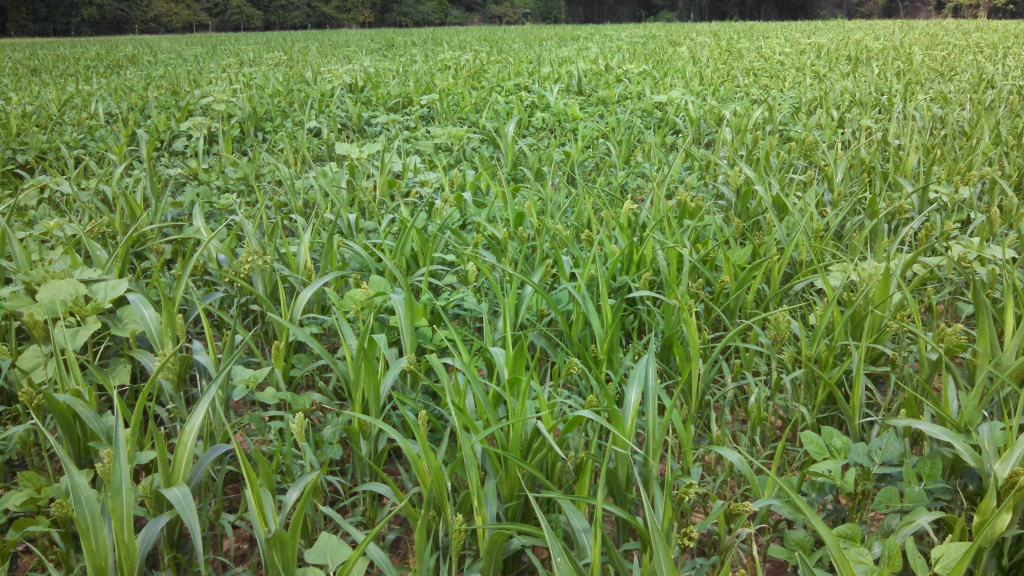
    A good fall cover crop can suppress late summer weeds and early winter weeds.

    Coastal

    Rob Last reports, “Strawberry plants and cut offs are going into the ground in the area. Remember to check roots and crowns before planting and also supervise planting crews to ensure correct depth of planting is achieved. Caterpillar and whitefly on a range of fall crops, pressure remains high in the area so vigilance and regular scouting will be required to spot potential problems.”

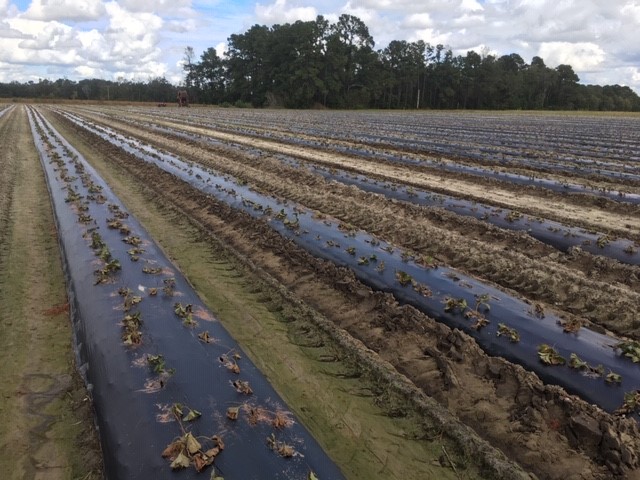
    Zack Snipes reports, “This past week was all about strawberries. I visited many farms and saw lots of plastic being laid. I checked many strawberry plants from a multitude of nurseries. Overall, the plants look ok this year. I haven’t found any glaringly obvious root or crown rots and very little foliar issues in our plugs and cutoffs. Overall, the plants are on the smaller side, and I hope for a good fall growing season so they can size up a bit before going into the winter. I saw, on a few farms, issues with calibration and equipment for fertilizer distribution. If you need help calibrating or calculating fertilizer rates, please give me a call. I would be more than happy to come give you a hand. I hate to even mention it but I am already seeing deer tracks in strawberry fields…if you need it…”

    Imagine that…deer tracks in a strawberry field…Get up your fences! Photo from Zack Snipes.

    Midlands

    Justin Ballew reports, “Strawberry planting has wrapped up in the midlands and the earliest transplanted fields are already pushing out new leaves. This cooler, damp weather is much better for getting strawberries established than the dry, 95 degree days we saw this time last year. Be sure to go back through the fields shortly after planting to ensure the plants are set at the proper depth. If any were planted too deep or settled too much after the first overheard watering, gently pull them up to the proper depth and refirm the soil around them. This should be done before new roots start to form. Also, get ready for deer! it doesn’t take them long to find newly planted strawberries.”

    Cutoff transplants pushing out new leaves less than a week after planting. Photo from Justin Ballew.

    Pee Dee

    Bruce McLean reports, “Strawberry planting is going full pace. Much of the acreage was planted in the last half of last week. The remainder will be planted this week. So far, the transplants look very good. Acreage is up compared to last year. Brassicas are (for the most part) looking good. Insects have not been much of an issue – minimal caterpillar occurrences, occasional aphids, and some grasshopper damage. Some fields have experienced some plant stunting and plant losses due to persistent wet soil conditions (root rot). Die-off really started to show on affected plants with last week’s heat. Some growers will begin harvest next week.”

    Strawberry field immediately after planting. Getting ready to turn on the overhead irrigation. Photo from Bruce McLean.

    Upstate

    Kerrie Roach reports, “Late season rot issues have sent some apple growers looking for more answers with fungicide resistance testing. Apple pathologist Sara Villani’s lab at the MHCREC in Mills River, NC is conducting tests to look at resistance to specific modes of action(MOA) and fungicides in Apple production. Harvest in apples is about 80% complete with only a few varieties left to pick.”

  • Agricultural Acres Down Significantly Over Last 100 Years

    File photo shows a farmer spraying his field.

    Agricultural acres have dropped dramatically over the last 100 years throughout the Southeast. According to stacker.com, Georgia and Alabama were two of the top four states to see their farm land decrease the most.

    Based on numbers from the United States Department of Agriculture National Agricultural Statistics Service, Alabama, ranked No. 4 in decreased acres, had 256,099 farms in 1920 with 19.6 million farming acres. In 2019, the number of farms dropped to 38,800 with 8.3 million acres total.

     In Georgia, ranked No. 3, the number of farms was 310,732 in 1920 with 25.4 million total acres. The number of farms dropped to 41,500 in 2019 with 10.2 million total farming acres.

    In Florida, acres actually increased over the past 100 years. It had 54,005 farms in 1920 with 6 million total acres. In 2019, the number of farms dropped to 47,400 with 9.7 million total acres.

    Extension Economist Not Surprised

    Adam Rabinowitz, Auburn University Assistant Professor and Extension economist, is not surprised about the significant drop in agricultural acres but believes yields have improved with increased productivity and efficiency.

    “A combination of things have happened. Certainly, land has been taken out of agriculture and moved into housing developments or built up in terms of other commercial uses,” Rabinowitz said. “The fact that we’ve become more productive in the land that we do use, though, yields have increased considerably over that period of time. So while we may be farming less acres, the output has increased substantially on those areas that we are farming.

    “It would not surprise me to say that considerable amount of acres have been lost.”

    Buy American Grown

    Additional acres could be lost soon if consumers don’t respond to the American Grown initiative.

    Farmers like Bill Brim in Georgia contend that if consumers don’t realize the importance of buying Georgia Grown and American Grown, the constant imports from Mexico, for example, are going to put a lot of farmers out of business. That’s why trade hearings were held so farmers and industry leaders could voice their concerns about the urgent need for federal action regarding unfair trade.

    Rising Average Farmer Age

    The lack of farming land available throughout the Southeast may only be amplified when more farmers retire and no successor in line to take their place. According to USDA NASS, the average age of a farmer in 2017 was 57.5 years old, up 1.2 years from 2012.

    “Farm age continues to increase, the average age of the farmer. Succession planning is an issue in terms of transitioning to younger generations who now have more options than just staying on the farm. As a result, you do have a lot of folks who are leaving the farm for college, for other careers, going other places,” Rabinowitz said. “You have that shift there and there is a big concern of what’s going to happen when this older generation right now gets ready to move on. Is that going to further contract the number of acres that are in agriculture?”

    Challenging for Beginning Farmers

    According to USDA NASS, producers also tend to be experienced, having been on their farm an average of 21.3 years. Beginning farmers is extremely rare, considering how expensive it is to acquire land to farm on and equipment to use throughout the growing season

    “There are a lot of barriers to new farmers coming into agriculture. Acquiring land, whether it be ownership of land, buying the land or even renting the land can be very challenging for a new or beginning farmer. Even beyond land, when we talk about machinery, especially in southern Alabama and southern Georgia with cotton and peanuts as being one of the primary crops in this area, the machinery equipment needs are unique to those crops,” Rabinowitz said. “You need some stuff for your corn that you’re going to put into rotation with your other crops and you need for your cotton and peanuts, you have special pickers and planters and such. It provides again a significant barrier to new entry.

    “That said there are programs that do exist to help beginning farmers and new farmers. There are loans through FSA. There are farm credit programs that exist to help provide special terms and assistance. Certainly through the land grant institutions and Extension, there a number of beginning farmer programs in every state to help provide those resources and assistance from a technical standpoint of getting started in agriculture.”

  • 2021 Alabama Hemp Grower Applications Now Available

    georgia
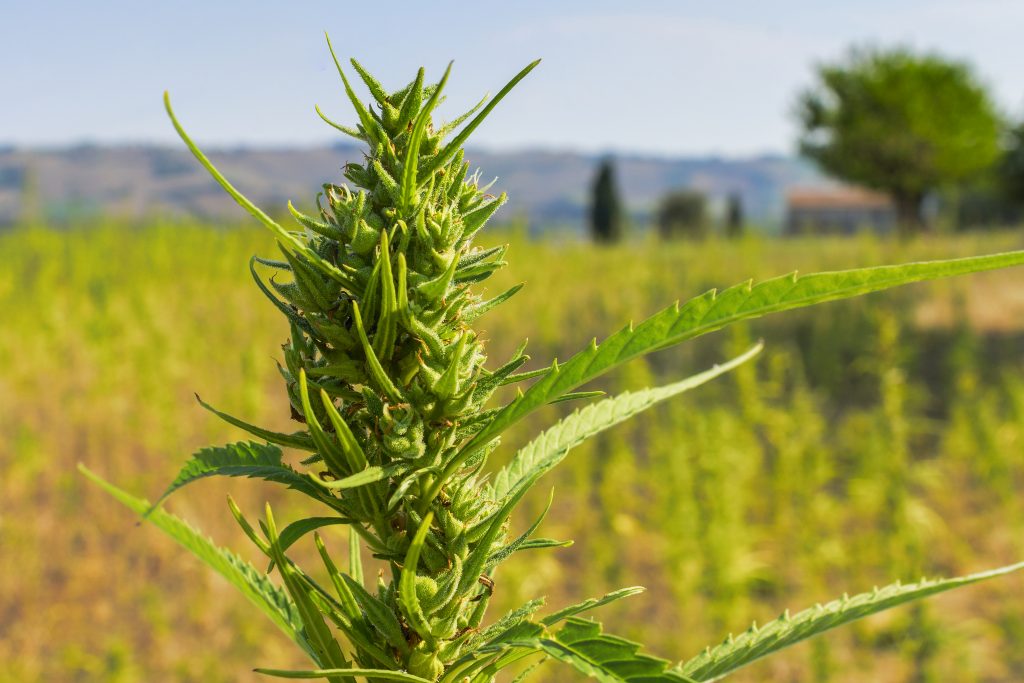
    File photo shows hemp plant.

    By Katie Nichols

    AUBURN UNIVERSITY, Ala.— Alabama hemp grower applications and processor/handler applications are available for the 2021 growing season through Nov. 30. Applications can be found on the Alabama Department of Agriculture and Industries (ADAI) website.

    Applications

    Full applications, including supporting documents, must be complete before the Nov. 30 deadline to receive approval consideration. Seasoned and new growers alike must complete annual applications.

    Katelyn Kesheimer, an Alabama Cooperative Extension System entomologist and member of the hemp action team, anticipates the number of growers in Alabama will hold steady.

    “In 2018-2019 there was a huge increase in the number of growers, both in Alabama and the U.S.,” Kesheimer said. “In 2019-2020 there was still an increase, but it wasn’t as drastic.”

    She anticipates approximately 500 applications, which is similar to the application numbers for the 2020 season.

    Find more information about the grower applications on the Alabama Cooperative Extension System website.

    Listening Sessions

    Kesheimer said Extension professionals are offering three in-person sessions for those who need assistance with application completion.

    “The sessions will be hybrid sessions with a limited number of people allowed to attend in person,” she said. “Others will be able to join on Zoom. Registration is free, but attendees must complete registration so attendees can choose to attend in-person or on Zoom.”

    A representative from ADAI will also be present to answer questions regarding grower applications.

    Thursday, Nov. 5
    North Alabama Hemp Roundtable – Register.
    9  – 11 a.m.
    Camp Meadowbrook
    2344 County Road 747
    Cullman, Alabama 35058
    Max attendees: 30

    Friday, Nov. 13
    Central Alabama Hemp Roundtable – Register.
    9 – 11 a.m.
    Richard Beard Building
    1445 Federal Drive
    Montgomery, Alabama 36107
    Max attendees: 30

    Friday Nov. 20
    South Alabama Hemp Roundtable – Register.
    9 – 11 a.m.
    Wiregrass Research and Extension Center
    167 AL-134
    Headland, Alabama 36345
    Max attendees: 33

    Background Check

    Applicants and any key participants of a partnership seeking a hemp license are still required to submit a current background check within 60 days of application. Checks are completed through the Alabama Law Enforcement Agency (334-353-4340). The background check application can be found online. Growers must submit these reports no later than 14 days after the Nov. 30 deadline.

    Requirement Changes

    Kesheimer said there are several changes for the 2021 growing season, including requiring a farm number for the farm growing hemp. Growers can obtain a farm number from the local FSA office. Other changes slated for implementation in 2021 can be found on the ADAI website.

    Hemp Grower Applications

    Prior to completing the application, growers should read all rules and regulations regarding hemp production and handling. ADAI does not offer assistance with completing hemp grower applications and cannot offer guidance to individuals on production aspects of hemp.

    County Extension offices can provide growers with the names of personnel who can assist with hemp production questions. Growers may also visit the Alabama Industrial Hemp Program webpage for the Alabama Cooperative Extension System. Growers will find resources, as well as personnel contacts.

  • Award-Winning Documentary Guides Conversation About Growing Plants, Community and Inclusion

    “Hearts of Glass” will be available to the UGA community for viewing through Oct. 30. A free and interactive discussion will be held at 4 p.m. Tuesday, Oct. 27, on Zoom.

    By Sean Montgomery for UGA CAES News

    The University of Georgia (UGA) Department of Horticulture, together with UGA’s Institute on Human Development and Disability, Master Gardener Extension Volunteer Program, Office of Sustainability, Sustainable Food Systems Initiative, and UGArden, are excited to stream the award-winning “Hearts of Glass” documentary for the university community beginning today, Oct. 23.

    “Hearts of Glass” gives an in-depth look inside Vertical Harvest, a Jackson, Wyoming, agribusiness that facilitates high-quality food production while providing employment opportunities for individuals with disabilities. As a high-tech urban farm, the organization’s goal is to supply valuable resources to communities and families that struggle with food insecurity by growing and distributing organic, affordable and nutritious options.

    “It is hard not to be engaged by the story told in “Hearts of Glass.” A business operation that uses the latest technology to grow plants and food in a greenhouse, at a location where it would be impossible to grow food outdoors for more than a few months a year, is per se a fascinating story,” said Leo Lombardini, head of the Department of Horticulture in the College of Agricultural and Environmental Sciences.

    “Vertical Harvest is a perfect example of how determination, social responsibility, horticulture and local food production can be all achieved successfully to make this world a better place. We have known for a long time that plants have the power to heal our souls, but it is examples like these that prove that plants can also become elements for inclusion and unprecedented opportunities.” 

    The university community is welcome to stream the film between today, Oct. 23, and Friday, Oct. 30, at showandtell.film/watch/uga. In addition to the film showing, a free and interactive discussion with the filmmaker, Vertical Harvest employees, and Clarke County School District and UGA faculty will be held virtually at 4 p.m. Tuesday, Oct. 27, to include:

    • Jennifer Tennican, director and producer of “Hearts of Glass”
    • Sean Stone, senior facilities associate, Vertical Harvest
    • Kai Hoffman, senior grower of vining crops, Vertical Harvest 
    • Jennifer Thomas, special education teacher at Clarke County School District

    The panel will be moderated by Jennifer Jo Thompson, associate research scientist and director of the UGA Sustainable Food Systems Initiative.

    “Bringing the film to the UGA community allows Vertical Harvest to see how others are reacting to their story, business model and social impact goals,” said Jennifer Tennican, director and producer of the documentary. “The enterprise is ambitious and has demanded intense commitment over many years, so I anticipate that the reactions from UGA viewers will be affirming and energizing.”

    Register for the discussion at zoom.us.

    About the moderator: Jennifer Jo Thompson, associate research scientist and director of UGA’s Sustainable Food Systems Initiative

    Thompson is an engaged anthropologist and leads the Social Sustainability of Agriculture and Food Systems Lab in the Department of Crop and Soil Sciences. Her research emphasizes transdisciplinary collaboration, human and environmental health, and social justice in agriculture and food systems.

    About the panelists:

    Jennifer Tennican, director and producer of “Hearts of Glass”

    Tennican began her documentary career in the late 1990s working on NOVA science programs for Boston’s PBS station with independent producers in the Boston area. Since moving to Wyoming in 2002, she has focused on local storytelling. Her films explore identity, inclusion and community and, although they are rooted in Jackson Hole, they resonate far beyond the mountain west. Tennican’s award-winning work including “Hearts of Glass” and “The Stagecoach Bar: An American Crossroads,” and “Far Afield: A Conservation Love Story,” which have been featured in numerous film festivals and aired on PBS.

    Sean Stone, senior facilities associate at Vertical Harvest

    Stone was born and raised in Pocatello, Idaho. After graduating from high school, he moved to Jackson, Wyoming, and held various jobs within the community before joining Vertical Harvest when it launched in 2016. As a senior associate, he helps run and maintain greenhouse operations.

    Kai Hoffman, senior grower of vining crops at Vertical Harvest

    Growing up in Flagstaff, Arizona, Hoffman is passionate about the outdoors and gardening. He studied hydroponics at the University of Arizona and quickly began to pursue a career in the plant industry, joining Vertical Harvest in November 2016 with a focus on tomatoes and sustainable food growth.

    Jennifer Thomas, special education teacher at Clarke County School District

    From Nashville, Tennessee, Thomas is an adapted curriculum instructor and green school coordinator at Clarke Middle School. In 2019, she was a garden champion awardee, celebrated as the Outstanding Middle School Teacher for helping to make farm-to-school and garden-based learning a success in Athens-Clarke County.

    For more information about the film and panel event, visit showandtell.film/watch/uga.