Category: Top Posts

  • CDC Guidelines, Precautions Should Guide Holiday Celebrations

    UGA CAES Photo/In the midst of a stressful year, people may crave the normalcy of a celebration with family or friends, but UGA Extension food safety specialist Elizabeth Andress points out that safety should still come first.

    By Maria M. Lameiras for CAES News

    As the holiday season arrives, the traditional images of loved ones crowded around a dinner table groaning under the weight of the holiday feast may look a little different this year: The recent surge in COVID-19 cases has prompted rising fears that holiday gatherings may accelerate the spread of the virus.

    The Centers for Disease Control and Prevention has released recommendations for safely celebrating Thanksgiving, suggesting smaller gatherings with only household members and offering tips for making the holiday both happy and healthy.

    In the midst of a stressful year, people may crave the normalcy of a celebration with family or friends, but safety should still come first, said University of Georgia Cooperative Extension food safety specialist Elizabeth Andress.

    While CDC guidelines suggest that guests bring their own food, drinks, plates, cups and utensils to holiday gatherings, that might not be feasible.

    “One person or the host of a small gathering can be in charge of preparing and serving the food. It is not a bad idea to have fewer people involved in bringing or preparing food,” Andress said. “If someone is concerned about not having their own family recipe, maybe they can ensure that the person preparing the food has that recipe. Often there are things that aren’t made from a recipe or Grandma doesn’t want to give someone a prized or secret recipe, but this is the time to share those things.”

    If bringing your own dishes and utensils sounds cumbersome, using disposable plates and utensils is an option, but more care should be given to items that are more likely to be used communally, like serving utensils.

    “I am more concerned about serving utensils, as they are more likely to be shared. That is why it is a good idea for one person to serve the food,” she said. “While we don’t have evidence that COVID-19 is foodborne, it still comes down to basic food safety advice, like using a clean plate if you go for seconds. People could be at higher risk this year, so it is a good year to emphasize being extra cautious.”

    Eating outside or keeping windows open if eating indoors are suggestions for hosting safely, and Andress also cautions against congregating in a small area for extended periods. When not eating or drinking, everyone should wear masks.

    “Another tradition may be everyone gathering in the kitchen while the food is prepared, but that may not be possible this year. And distancing should still be observed even if you are going to host a small group outside. Make sure you are distanced as people sit and eat,” she said. “This is not a year to spend a long time eating or visiting anyway. Our time needs to be shorter and not that obtrusive.”

    After the meal, thoroughly wash tablecloths or cloth napkins as soon as possible and take care if you are sending home leftovers, having one person packing items in disposable containers for others to take with them rather than having everyone help themselves.

    “If you are hosting, clean high-contact surfaces frequently and make sure you have plenty of hand sanitizer available or encourage people to bring their own,” Andress said.

    And while all of the warnings and precautions may seem overly cautious to some, being diligent now will ensure a quicker return to normalcy and preserve your loved ones’ health.

    “This is not a lifetime sacrifice. We may have to sacrifice more for a holiday or two, but that is just something friends and family members have to sacrifice this year to keep everyone heathy and safe,” Andress said.

    You can find the CDC recommendations for safer holiday gatherings at cdc.gov.

  • Pecan Research to Help Georgia Producers Meet Demand

    University of Georgia CAES photo/Shows pecans being cleaned.

    By Allison Fortner for CAES News

    The international popularity of pecans is trending upward, but more reliable measures for guaranteeing quality during storage are needed to meet demand in Georgia, the top state for pecan production.

    A review conducted by University of Georgia researchers identified scientific principles behind postharvest storage and handling techniques for pecans and revealed the need for a mathematical model to help producers predict quality under various conditions. This research will help U.S. pecan producers improve quality and increase shelf life.

    In a recently published article in the journal Food Reviews International, researchers explored the science behind three indicators for optimal pecan quality: color, texture and lipid profile. The study was led by associate professor Fanbin Kong, the principal investigator on the project, and doctoral candidates Himanshu Prabhakar and Shruti Sharma in the UGA College of Agricultural and Environmental Sciences’ Department of Food Science and Technology.

    “Georgia is the nation’s leading pecan-producing state. In recent years, Georgia-grown pecans have seen a rapid increase in sales in the international market, and a big portion of Georgia pecans are exported to other countries. The quality can deteriorate significantly during the long-term transportation and storage,” said Kong, who initially identified the need for in-depth research on postharvest pecan quality.

    This review of current handling and storage practices is part of a larger research project funded by the U.S. Department of Agriculture Specialty Crop Block Grant program. The ultimate goal of the three-year project is to identify how factors such as relative humidity, temperature, packaging and processing influence quality changes and shelf life of pecans. The end product will be a mathematical model for determining pecan quality based on a variety of storage conditions.

    Research Findings

    Both Prabhakar and Sharma contributed to the journal review to identify factors that could adversely affect pecan quality and specify areas where research is lacking in relation to color, texture and lipid profile.

    In the pecan industry, the quality and resulting price of pecans is most often assessed by color. However, texture and lipid profiles are important physical and chemical attributes that contribute to the consumer experience. The lipids give pecans their flavor profile and distinct aroma, while the texture indicates freshness and contributes to the consumer’s sensory experience.

    “Understanding how one aspect of pecan leads to and relates to the other is quite an invigorating process as a food scientist because the pecan has its own unique chemistry, given the fact that it’s a plant food,” said Sharma.

    Although pecan quality research has been conducted in the past, many of the findings are not useful in the Georgia pecan industry. For example, Prabhakar said that many existing storage studies kept pecans around 70 degrees Fahrenheit, but Georgia temperatures can range from below freezing to over 100 degrees Fahrenheit in storage facilities.

    “They gave out the best conditions to preserve most of the pecan quality attributes in storage, but what they lacked was the actual scenario that pecan growers and distributors face,” said Prabhakar.

    The review also found that other nuts have been more heavily researched in the past. Prakhabar said that although pecans are technically fruits, they compete in the same market as nuts.

    “Given the fact that the researchers have done a lot of work in nuts in terms of storage and developing complex models to predict their changes in storage, it’s time that we should do that for pecan as well,” Prabhakar said.

    Mathematical Model for the Industry

    Based on the review findings, Kong and Prabhakar are developing a mathematical model by studying pecans under a variety of storage and handling conditions.

    “We are developing a computational predictive model that can estimate the shelf life from different conditions (moisture, humidity, temperature, packaging methods, conditioning, etc.),” Kong said. “The model will be free for use by Georgia pecan growers and processors.”

    Prabhakar explained that producers will not need to work with the complex equations the researchers are developing. Instead, a website will be created for producers to input factors such as temperature, relative humidity and pecan variety to receive information about the changes in quality that will occur over time. This will help pecan growers prepare accordingly, whether investing in different storage technology or adjusting sales timelines.

    This model aims to help Georgia-grown pecans stay competitive and increase profitability in the growing global market. Consumers, both domestically and internationally, are recognizing pecans for their health benefits, which include vitamins, minerals and essential fatty acids. Millennials and Generation Z are also incorporating more nuts into their diets as they adopt plant-based food products.

    “Given the fact that the popularity of plant-based foods is on the rise, research should be focused on understanding the chemistry of pecans and ways to advertise their health benefits in the international market,” said Sharma. “The future of this study depends on how effectively it will be communicated to the right audience at the right time to seek their feedback to incorporate the improvements.”

    Kong, Prabhakar and Sharma hope their research will help Georgia’s pecan producers and help market pecans to new consumers.

    “Food scientists are also developing novel products from pecans such as pecan butter. The increasing demand for pecans presents a great opportunity for the Georgia pecan industry. An improved postharvest handling and storage method will further enhance the competitiveness of Georgia-grown pecans,” Kong said.

    For more information on the UGA Department of Food Science and Technology, visit foodscience.caes.uga.edu.

  • Plan Ahead Before Planting This Fall

    peach
    File photo shows peach trees in the spring.

    Planting fruit trees can be rewarding but only if you plan ahead. If growers don’t research their crops extensively and determine what varieties will grow best in their region, the potential rewarding experience can lead to a letdown.

    Edgar Vinson, assistant research professor and Extension specialist in the Department of Horticulture at Auburn University, reminds commercial growers and homeowners the importance of doing your homework before planting this winter.

    “It’s a lot of information if you want to do it right and be successful. If you’re a commercial grower or growing a few plants in your yard, you’ll want to do your homework so you can be successful and the whole process be as fulfilling as possible. If that’s done, it’s really a fulfilling venture,” Vinson said.

    Plant During Winter

    It’s important to remember that fruit trees need to be planted during the winter time when the trees are dormant. Vinson said you can plant an actively growing tree but it really adds a lot of stress to it.

    Alabama is a unique state. It has potential extremes with regards to climate and the surrounding environment that what’s grown in the southern portion of the state may not fare the same way in northern Alabama.

    “Some types of crops don’t do well. Even within a crop, you can have varieties, like peach for instance. You can grow peaches from the Gulf all the way to the northern counties of Alabama. Certain varieties do best in particular regions of the state, especially those varieties that have high chill hour requirements,” Vinson said.

    “You don’t want to plant a variety with a high chill hour requirement in south Alabama where temperatures are historically higher. There’s not a lot of accumulation of chill hours. It’s just a recipe for disaster if you plant. You may have a desirable variety of peach but it has a chill hour requirement that well exceeds what can be obtained in south Alabama. Then it’s all for naught.”

  • Sneak Peek: December 2020 VSCNews Magazine

    By Ashley Robinson

    Georgia growers may recognize the man on the cover of the December issue of VSCNews Magazine. Stanley Culpepper, University of Georgia (UGA) Cooperative Extension Weed Agronomist, has more than two decades of experience working with vegetable crops. Learn more about Culpepper’s expertise and his impact on the vegetable industry in the magazine.

    Also discussed in the magazine are current issues facing growers in the Southeast. This part of the country is paradise for root-knot nematodes, one of the most rapidly spreading pests. Johan Desaeger, an assistant professor at the University of Florida Institute of Food and Agricultural Sciences (UF/IFAS) Gulf Coast Research and Education Center, discusses management strategies for vegetable growers.

    Amid the COVID-19 pandemic, it’s crucial to educate farm owners, supervisors and workers on how to best do their jobs under pandemic conditions while preserving their health and livelihood. Kimberly Morgan, an associate professor and Extension economist at the UF/IFAS Southwest Florida Research and Education Center, shares how the UF/IFAS Farm Labor Supervisor COVID-19 Safety Training program has worked to protect Ag workers during the pandemic.

    Any fruit or vegetable grower knows that untimely freezes can cause tremendous problems for their crops. Pam Knox, agricultural climatologist, and Tim Coolong, both UGA professors, share freeze-protection methods for fruit and vegetable crops.

    Additionally, Taylor Langford, a UF/IFAS produce safety education and training specialist; Matt Krug, statewide UF/IFAS food science Extension agent; and Michelle Danyluk, a UF/IFAS professor, come together to discuss the Food Safety Modernization Act’s Produce Safety Rule (PSR) which highlights the need to reduce risks associated with agricultural water that will contact fresh produce.

    Finally, there are new BMP record-keeping requirements for Florida growers. Ajia Paolillo, a UF/IFAS Extension multi-county citrus agent based in Arcadia, has a Q-&-A style article featuring Matt Warren, environmental manager with the Florida Department of Agriculture and Consumer Services Office of Agricultural Water Policy in Hardee County to answer the most common questions growers have regarding the new requirement.

    If you would like to receive future issues of VSCNews magazine, click here.

  • UGA Vegetable Entomologist: Potential Explosion of Whiteflies This Fall Never Occurred

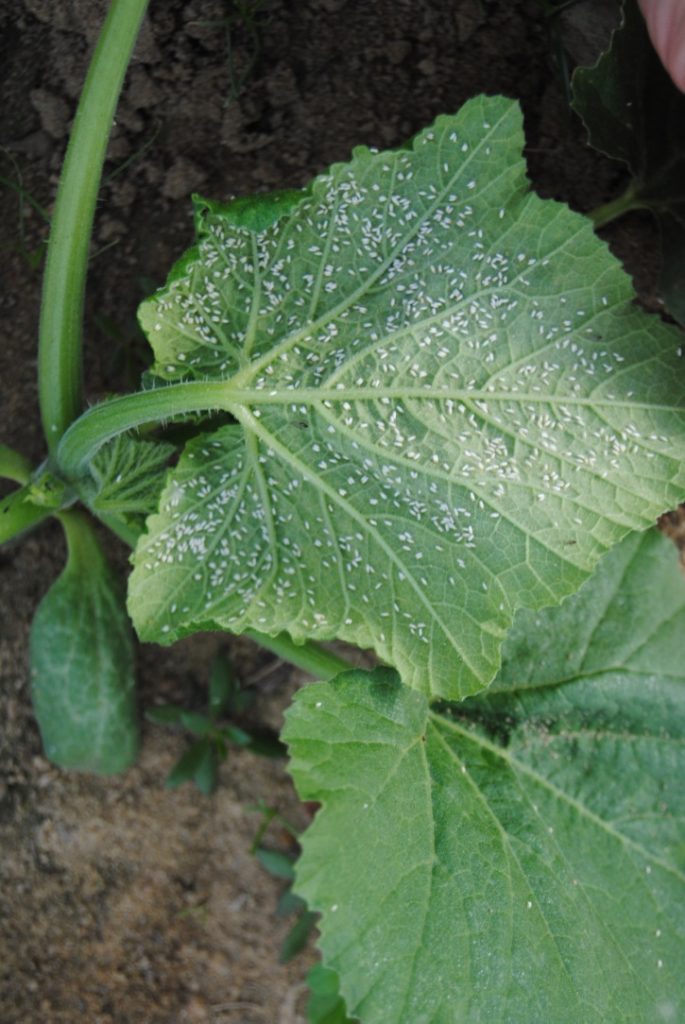
    Whitefly adults feed on a yellow squash seedling.

    Whiteflies were projected to have a widespread, devastating impact on fall vegetable crops in Georgia. But according to University of Georgia vegetable entomologist Stormy Sparks, that never happened.

    “We were setting up for an explosion of whiteflies in the fall and it never really occurred,” Sparks said. “I’m pleasantly surprised it wasn’t a lot worse than it was. In the summer, we were set up to be ugly, ugly.”

    Greater Problem This Year

    Whiteflies were a greater problem this year due in large part to a mild winter last year. They were widespread and posed a similar risk to the fall vegetable production that Georgia producers experienced in 2017. Thankfully, it never materialized.

    “It didn’t get nearly as bad as I thought it was going to get. I think cotton growers deserve a pat on the back. I think they did a much better job of managing it than they have in the past because they expected it,” Sparks said. “I was really expecting virus to wipe out some of the crops and it didn’t happen. I was really pleased with that. I think a lot of it is just the area wide management of whiteflies.”

    Impending La Nina

    Whitefly management continues to be a crucial component of vegetable production with the expectation of a La Nina weather pattern this winter. A La Nina is expected to bring warmer temperatures and drier conditions throughout the winter and into early spring. This could allow for more overwintering of whiteflies if the colder temperatures do not kill off their host plants.

    “We want cold weather to kill the host plants. We don’t ever get cold enough to kill whiteflies. It takes a lot of cold for a long period to kill a whitefly. But what we (want) is to kill the host plants, which all it really takes is a frost for a lot of them,” Sparks said.

    “When we get rid of cucurbits, that gets rid of a lot of our major host crops. Then it’s management of whiteflies in those cole crops that is very important during the winter. The generation time really lengthens so you don’t tend to have a lot of buildup, but you can carry them through, the warmer it is and the less we manage them.”

  • University of Florida Citrus Faculty Highly Sought After As Research Partners in Fight Against Greening

    Citrus fruit on trees in orange groves. Photo taken 06-22-18.

    (UF/IFAS) — University of Florida citrus researchers continue to be sought out as partners in ground-breaking research projects to fight Huanglongbing, also known as citrus greening disease.  

    The National Institute of Food and Agriculture (NIFA), part of the U.S. Department of Agriculture (USDA), recently awarded nearly $4.5 million in grants to UF Institute of Food and Agricultural Sciences faculty to find novel ways to fight the disease. 

    But UF/IFAS researchers are serving leadership roles in four other multi-million-dollar grants awarded to colleague institutions from across the nation. Collectively, these projects provide an aggressive, integrative strategy to finding sustainable solutions in the fight against citrus greening.

    Cultural and Genetic Approaches

    Ute Albrecht, amdas Kanissery and Sarah Strauss, assistant professors at the UF/IFAS Southwest Florida Research and Education Center (SWFREC) are working with University of California-Riverside on a $10 million grant to examine root decline associated with HLB-affected trees.  

    UF/IFAS will receive $2,240,000 over five years. Strauss, Albrecht and Kanissery will conduct large-scale field trials, working with Florida commercial citrus growers to explore the efficacy of using cover crops and soil amendments and the interaction with rootstock to improve soil and root health in  newly planted and established groves. The project will also examine the impact of cultural practices like herbicide application on soil health and tree productivity. 

    Evaluation, Validation of Novel, HLB-Resistant or Tolerant Citrus Hybrid Scion Cultivars

    Ute Albrecht and Zhengfei Guan, an associate professor at the UF/IFAS Gulf Coast Research and Education Center will work with University of California-Riverside, Texas A&M, and Washington State University, and USDA ARS on a $4.6 million project to test and deliver novel, HLB resistant/tolerant, non-transgenic, and commercially acceptable citrus scion cultivars to citrus industries. The scion cultivars will be tested in field trials, working with commercial citrus growers, to assess HLB resistance/tolerance and whether they produce fruit with acceptable fruit quality.  

    USDA Agricultural Research Service (ARS)  Coordinated Agricultural Projects (CAP) therapeutic molecule evaluation and field delivery pipeline for solutions to HLB 

    Lorenzo Rossi, an assistant professor at the UF/IFAS Indian River Research and Education Center (IRREC), and Jawwad Quershi, an assistant professor at UF/IFAS SWFREC, will collaborate with the USDA ARS on a $9,380,000, multi-state grant, examining different ways to deliver therapeutic growing methods to citrus growers. Rossi will manage greenhouse and field studies aimed to evaluate HLB-therapeutic molecules’ effects on root and plant physiology, with the final goal to identify the most cost-effective strategy to deliver these molecules to growers. Qureshi will lead UF’s outreach efforts with growers and the other institutions involved in the project. UF/IFAS will receive $1,334,252 over five years for this work.  

    The lead institution is the USDA ARS located in Fort Pierce, FL and the project involves several USDA ARS facilities (Ithaca NY, Wapato WA, Albany CA, and Dawson GA), as well as, public institutions: Indian River State College in Florida, the University of Florida and the University of California, and private companies in California and Florida.  

    This project has also been designated as a Center of Excellence. The designation means the technology used in the project has the potential to transform rural agriculture, advances technologies for therapeutic molecule production beyond control of citrus greening to diseases in other crops, humans and other animals, coordinates activities across several national citrus greening research programs and will include community participation in evaluation of HLB therapeutics. 

  • Georgia Congressmen Request Section 332 Investigation on Squash and Cucumbers

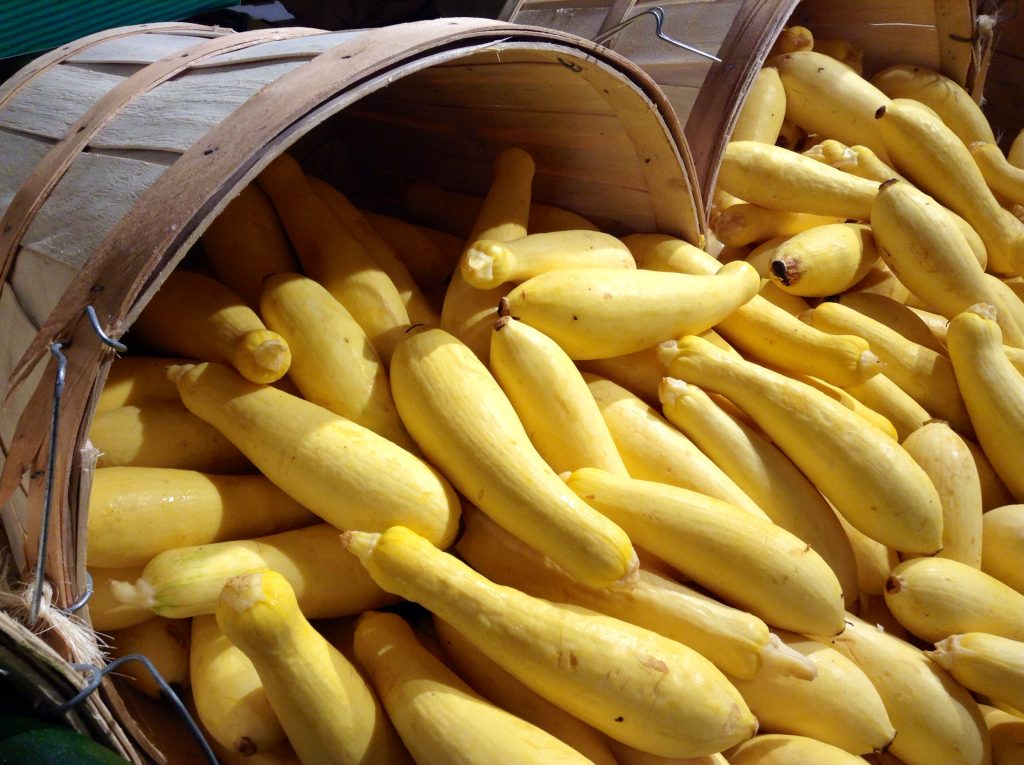
    File photo shows yellow squash

    Congressmen Austin Scott, Sanford Bishop, Rick Allen and Buddy Carter continue to fight for Georgia produce farmers and against unfair trade practices with Mexico. In a letter sent to U.S. Trade Representative Robert Lighthizer, the congressmen requested that the current Section 332 investigation for strawberries and bell pepper be broadened to include the impact seasonal cucumber and squash imports has on Southeastern markets.

    Scott

    “We were pleased to see that USTR has requested a Section 332 for strawberries and bell peppers. However, we believe the inclusion of other commodities, such as cucumbers and squash, in the Section 332 request, would provide some assistance to growers as they continue to struggle with seasonal imports for the upcoming harvest season,” said the congressmen.

    “Section 332 investigation request to the International Trade Commission for cucumbers and squash is needed in order to make a meaningful determination as to the impact of these seasonal imports on Southeastern markets,” the congressmen wrote in their letter.

    “We are pleased to have the continued support of members of the Georgia House delegation in our efforts to level the playing field for our industry, said Charles Hall, GFVGA Executive Director. “Market data developed by GFVGA clearly outlines the need for a broadened investigation and we applaud their efforts and support of Georgia farmers.”  

    The Georgia Fruit and Vegetable Growers Association is committed to continue to work with the Georgia congressional delegation and provide them with the data and support to provide relief for Southeastern growers.

  • Syngenta Crop Protection Announces Launch of Spiropidion: A New Insecticide Active Ingredient

    • Spiropidion is an innovative new technology that can be used to protect a wide array of crops from some of the most damaging, and difficult to control, sucking pests
    • Spiropidion is safe to pollinators and beneficial insects, providing farmers with an important new tool in Integrated Pest Management (IPM) programs, in line with Syngenta’s ongoing commitment to develop innovative and sustainable products

    Basel / Switzerland, November 24, 2020 – Syngenta is proud to unveil Spiropidion, an innovative new insect control technology that will help farmers protect their crops against damaging sucking pests in an effective and environmentally sustainable manner.

    Sucking pests, such as aphids, whiteflies, and scales, devastate high value fruit and vegetables like tomatoes, oranges and melons, as well as important arable crops like cotton and soybean. Spiropidion is safe to natural beneficial insects and pollinators, offering farmers a new tool for Integrated Pest Management (IPM) programs.

    Spiropidion is the result of chemistry-driven innovation within a rare class of insecticides that helps crops from the inside, protecting the whole plant body from attack of damaging sucking pests, thereby securing crop quality, yields and the livelihood of farmers.

    “We are excited to offer farmers a new active ingredient that provides more targeted protection against some of the most difficult and damaging sucking pests. The best way I can describe this new innovation is that it’s kind to nature but hard on pests!” said Jon Parr, President Global Crop Protection at Syngenta. “Spiropidion is another clear example of how we are accelerating investment to deliver plant health innovations that support farmers, across the world, to grow productively and sustainably.”

    The first global registration of a formulated product containing Spiropidion was obtained in Guatemala in September 2020, where the product will be marketed under the brand name ELESTAL® Neo in the coming months. Planned launches of Spiropidion containing formulations also include Paraguay and Pakistan in 2021, and Brazil in 2023 (pending registrations). In the European Union, regulatory submission is anticipated for 2022-2023. Future launches across a broad range of crops in more than 60 countries across all continents are expected in the next six years, with peak sales estimated above $400 million.

    About Syngenta

    Syngenta is one of the world’s leading agriculture companies, comprising of Syngenta Crop Protection and Syngenta Seeds. Our ambition is to help safely feed the world while taking care of the planet. We aim to improve the sustainability, quality and safety of agriculture with world class science and innovative crop solutions. Our technologies enable millions of farmers around the world to make better use of limited agricultural resources. Syngenta Crop Protection and Syngenta Seeds are part of Syngenta Group with 49,000 people in more than 100 countries and is working to transform how crops are grown. Through partnerships, collaboration and The Good Growth Plan we are committed to accelerating innovation for farmers and nature, striving for carbon neutral agriculture, helping people stay safe and healthy and partnering for impact. To learn more, visit www.syngenta.com and www.goodgrowthplan.com. Follow us on Twitter at www.twitter.com/Syngenta and www.twitter.com/SyngentaUS.

  • Poarch Band of Creek Indians Partner with Sweet Grown Alabama

    MONTGOMERY, Ala.— Sweet Grown Alabama, the state’s agricultural branding program, is pleased to welcome the Poarch Band of Creek Indians as a founding member of the non-profit organization.

     “I am excited to announce our support of Sweet Grown Alabama,” said Stephanie A. Bryan, Tribal Chair and CEO. “We are always looking for ways to support Alabama’s economy and this important initiative will educate Alabamians about products that are grown and bred in our own backyards.”

    The Tribe’s financial support will help Sweet Grown Alabama connect Alabama farmers and families. Funds will be utilized to encourage purchasing of locally grown products through traditional and digital marketing. Consumers can search for a variety of locally grown products at sweetgrownalabama.org.

    “This financial support from the Poarch Creek Indians will have a positive ripple effect on Alabama’s economy,” said Ellie Watson, Sweet Grown Alabama Director. “The Tribe has a strong reputation of community support and economic development, and we are incredibly grateful for their sponsorship of Sweet Grown Alabama at the highest level.”    

    The Poarch Creek Indians also have deep roots in agriculture.  The Tribe’s Perdido River Farms is one of the largest cattle operations in the state of Alabama. In addition to operating this commercial cattle herd, Perdido River Farms supports youth agricultural programming through 4-H and sells Sweet Grown Alabama beef direct from the farm in Atmore.

    The Poarch Creek Indians join eight other organizations as founding member supporters of Sweet Grown Alabama.

    For more information on Sweet Grown Alabama, visit www.SweetGrownAlabama.org. To learn more about the Poarch Creek Indians, visit http://pci-nsn.gov/wordpress/.

    About Sweet Grown Alabama:

    Sweet Grown Alabama is a non-profit foundation that enhances marketing opportunities for Alabama farmers by connecting retailers and consumers to Alabama-grown foods and other agricultural products. Farmers, product makers, restaurants, retailers and others are encouraged to join the branding program and use the Sweet Grown Alabama logo on their locally-grown products. To learn more visit www.SweetGrownAlabama.org.

    About the Poarch Creek Indians

    The Poarch Creek Indians are descendants of a segment of the original Creek Nation, which once covered almost all of Alabama and Georgia. With the growth and development of the Poarch Band of Creek Indians, the relationship between Alabama and its only federally recognized Tribe has deepened into a mutually beneficial partnership. From hospitality to aerospace, PCI operates in a variety of industries across the world. Read more about PCI at http://pci-nsn.gov/wordpress/

  • UF Still Calculating Damages Following Eta

    The University of Florida Food and Resource Economics Department estimates between $85 million and $320 million in agricultural losses and damages stemming from Tropical Storm Eta.

    Court

    Christa Court, assistant professor of regional economics, said the storm’s timing was significant since it impacted Florida’s vegetable crops two weeks before Thanksgiving.

    “I know that we grow a lot of the vegetables and things like sweet potatoes that do go into a Thanksgiving meal here in Florida. We grow those fresh market vegetables. The timing is not good, especially for those producers that do rely on that market this time of the year,” Court said.

    Additional Information Needed

    Court said her department will be able to narrow the scope of the damage as additional information comes in from farmers and county agents.

    Farmer’s Perspective

    Florida farmer Sam Accursio reported that Eta devastated his squash crop. He farms in Homestead, Florida. He estimated an extra 10 inches of rain from the storm, which followed an already wet couple of months. Squash melted on the plant.

    “The further north we went, the more likely it was that we were hearing everything is okay. But in that south Florida area we were hearing some significant losses from the sugar cane and vegetable fields,” Court said. “We spent some time on the team mapping things out a little bit. In one of our maps, we do what we typically do and overlaid the storm path with the agricultural lands to determine what was impacted. It was a large part of the peninsula impacted by tropical storm force winds. But we started to hear from a lot of those counties; all good, not too much more than what a Florida producer is used to dealing with from a strong rain storm.

    “But there were several parts of the state that already had saturated soil and took a much higher precipitation amount during the storm event. When we overlaid the precipitation with information we had on agricultural lands, it was clear that the areas that were experiencing higher wind speeds were not the same as the areas that were experiencing high precipitation amounts. The really high precipitation was in that South Florida, Palm Beach, Broward, Miami-Dade County (areas). There was some locally heavy precipitation around the Tampa Bay and Sarasota areas as well.”