Category: Top Posts

  • Freeze Warning Tonight for Parts of Florida

    Photo from National Weather Service shows northern Florida and southern Georgia expecting a frost tonight.

    University of Florida/IFAS is warning its vegetable and specialty crop growers of low temperatures expected tonight in some parts of the state.

    In an email sent by Gary England, UF/IFAS Extension Agent IV Emeritus, he reminds growers that the National Weather Service has issued free warnings for all north Florida locations west of the St. Johns River tonight. The warning area stretches south along the west coast to Hernando County and includes Sumter and most of Marion Counties in north central Florida. A Freeze Watch is posted for Pasco County.

    Temperatures are expected to dip as low as the upper 20s from south Georgia down to Gainesville, Florida and at or a few degrees below freezing further south in the warning areas.

  • Clemson Extension Agents Provide Crop Updates

    Clemson Extension agents provided updates in The South Carolina Grower this week about the status of various crops being produced throughout the state.

    Weekly Field Update 11/30/20

    Coastal

    Zack Snipes reports, “After a long Thanksgiving nap, I was able to waddle out in the fields and look at some strawberries. We have had some really good strawberry growing weather especially considering most folks got their plants out somewhat late this year. We need some cold weather to slow them down a bit in places. I am seeing a tiny bit of plant collapse and death in some spots within the fields. It is very important to send these plants into our lab to get a positive identification of the pathogen.  Phytophthora crown rot and anthracnose crown rot can cause similar symptoms but are managed completely different. For information on how to submit a sample during COVID times, click here. I am also keeping my eye on a good bit of leaf spotting in some fields to make sure its not the new disease, Neopestalotiopsis. I don’t think we have it yet, but being proactive is better than being reactive.  More information on that disease can be found here.”   

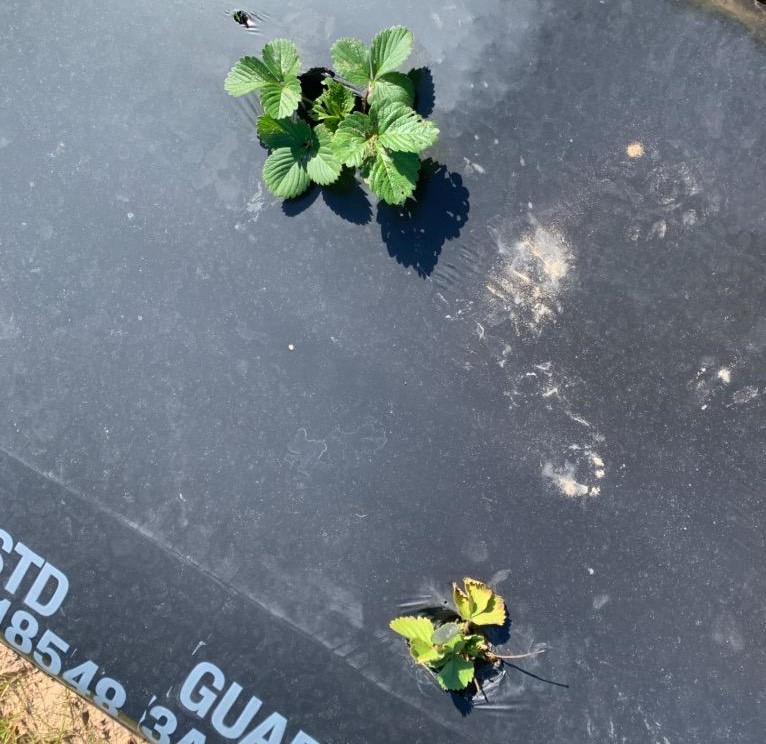
    A healthy and a diseased plant side-by-side.  Perhaps a positive identification of the pathogen can help with management to protect the healthy plant. Photo from Zack Snipes.
    Determining the pathogen responsible for plant collapse can be tricky in the field.  Send in a plant pathology sample to our lab.  Is this anthracnose, phytophthora, or another pathogen? Photo from Zack Snipes.

    Midlands

    Justin Ballew reports, “The mornings were nice and cool last week and we saw light frosts in a few more areas. We’ve been getting a fair amount of rain also. This has the brassica crops looking great. Caterpillar populations are still fairly high. Don’t give up on scouting as it gets cooler this week. Diamondback moth caterpillars and adults can survive for several hours at temperatures well below freezing, so a few nights in the upper 20’s is unlikely to affect them, other than slowing down their life cycle a bit. Don’t give up on scouting for mites in strawberries either. Even though we’ve had some wet weather lately, they’re still out there.”

    Lacinato kale is growing well and looking good. Cropping has already started in this field. Photo from Justin Ballew
    Keep up with scouting for caterpillars as the weather gets cooler. Winters in South Carolina don’t get cold enough to wipe out diamondback moth populations. Photo from Justin Ballew.

    Pee Dee

    Tony Melton reports, “We still have some sweet potatoes in the ground. Greens are growing well except for bacterial diseases. Some diamondback are hard to kill. We are trying everything.”

    Upstate

    Kerrie Roach reports, “With a low of 30 degrees Fahrenheit predicted (Monday night), and 26 degrees F predicted tomorrow night (Tuesday), growers in the Upstate should be making preparations for a hard freeze event. Wind speeds from 10-25 miles per hour have begun, and are expected to continue through Tuesday. So make sure any protective measures are held down tightly!”

  • Stanley Culpepper: A leading voice for growers

    By Clint Thompson

    When University of Georgia (UGA) Cooperative Extension weed agronomist Stanley Culpepper speaks, Tift County grower Bill Brim listens. After more than two decades of Culpepper providing expertise regarding more than 20 different vegetable crops, there’s no reason for Brim not to pay attention.

    “He’s a great young man. He’s a hard worker and tries to get things done. He’s the best one out at the (experiment) station, as far as I’m concerned,” says Brim, co-owner of Lewis Taylor Farmers in Tifton, Georgia.

    Culpepper’s accomplishments are a big part of why growers like Brim have confidence in what the scientist says. A professor in the UGA Crop and Soil Science Department, Culpepper is a world-renowned scientist at one of the leading agricultural colleges in the country and has had a lot to say over his 20-plus years at the Tifton campus.

    Culpepper’s team is improving tactics for vegetable growers to better manage weeds. In the last couple of years, he has been very active in fruiting vegetables, like tomato, pepper and eggplant; cucurbits, like watermelon, squash, cantaloupe and cucumber; cole crops, like broccoli and cabbage; and leafy greens, like collard and mustard; as well as carrots.

    Whether it’s researching alternatives to methyl bromide or developing management strategies for overcoming palmer amaranth weeds, Culpepper has had far-reaching impact in commodities across the world.

    “My team’s research efforts have always and will always follow the needs of our growers, which are of course, very diverse,” Culpepper says. “Developing alternative systems to methyl bromide that our farmers continue to rely on today was certainly among our more impactful work. I also think it was my favorite personal project. That effort was so large that I had an opportunity to work with growers for an extended period of time early in my career. Those growers really helped teach me how to grow vegetables on plasticulture. And of course, what good is research if the researcher can’t grow a crop like a grower?”

    UGA 3-WAY

    Culpepper’s work with methyl bromide alternatives is considered among his most impactful contributions as a scientist. For decades, Georgia vegetable producers relied on methyl bromide as a soil fumigant to control weeds, insects and nematodes. It was phased out in the mid-2000s, though, when the Environmental Protection Agency deemed it harmful to the ozone.

    Culpepper devoted almost 10 years of research to finding suitable alternatives. Brim said an effective alternative that Culpepper was responsible for was the UGA 3-way system that implements Telone II, metam sodium and chloropicrin.

    “What he did was just a tremendous help for us as far as developing a new product that we could use” for weed, fungus and nematode control, says Brim. “Without that, we’d probably be out of business. Methyl bromide was such a forgiving chemical as far as helping us develop nematicide programs and weed control and disease control. When we lost methyl bromide, we thought we were just done. Stanley did research here on the farm on the 3-way … two years before we actually started using it completely before methyl bromide was taken away from us. We really didn’t know until years later (how effective it was going to be), and now we’re still using the 3-way.”

    EXPANDING HERBICIDE LABELS

    Another area Culpepper has had a major impact on is the development of new herbicide tools for vegetable growers. His efforts have led to more than 34 new herbicide uses in various vegetable crops for Georgia farmers. He has also assisted growers in other states to obtain these labels.

    “I absolutely love finding new effective herbicides for a vegetable grower and getting them labeled in a way that is safe for the user, the crop and our environment. Of course, this accomplishment is the result of an amazing team of people working together from the University of Georgia, industry, IR-4, The Georgia Department of Agriculture and the U.S. EPA,” says Culpepper. 

    DESTINED FOR AGRICULTURE

    Culpepper was destined for a career in agriculture. He grew up on a bicentennial family farm in North Carolina where his family produced corn, cotton, peanuts, soybeans and wheat. So much of his childhood influenced every step of his career. Culpepper remembers those hot summer days of pulling weeds when he was very young. He even recalls chopping them down with a hatchet as some were twice as big as he was.

    “I thought I might be able to make a difference studying weed science,” Culpepper remembers. “Hopefully, I have.”

    He received a bachelor’s degree in agronomy and his master’s and doctorate degrees in weed science from North Carolina State University.

    Culpepper began his professional career at UGA as a cotton, vegetable and small grain weed scientist in 1999 and continues with those same responsibilities today.  

    ACCOMPLISHED CAREER

    Culpepper’s awards and accomplishments speak volumes about how his colleagues view his work. He has been a guest speaker at more than 300 events across the globe; 686 Extension county meeting presentations and 66 in-service Extension trainings. He has authored or co-authored 106 refereed journal articles, four book chapters, 406 abstracts for presentations, 223 Extension publications and 222 newsletters/blogs.

    Culpepper has received 31 professional awards. Some of the highlights include:

    • Donnie H. Morris Award of Excellence in Extensionfrom the Georgia Fruit and Vegetable Growers Association (2003)
    • Montreal Protocol Award from the EPA for assisting in the preservation of the ozone layer (2010)
    • Walter Barnard Hill Award for Distinguished Achievement in Public Service and Outreach from UGA (2014)
    • Southern Region Excellence in Extension Award from the Association of Public and Land-grant Universities (2016)
    • Walter Barnard Hill Distinguished Public Service Fellow Award from UGA (2019)

    In addition, Culpepper is currently serving a third term as a member of the Agricultural Science Committee of the U.S. EPA Science Advisory Board.

    Culpepper attributes his success to working with others. “Success is really driven by cooperation, whether that is with Extension agents, farmers, consultants, industry partners, regulators, or usually with all of these groups. As we continue to move forward in agriculture, this is a priority for our sustainability,” Culpepper concludes.

  • White Strawberry One of Two New UF/IFAS Varieties Ready for Harvest Season

    UF/IFAS photography.

    December 1, 2020

    By: Brad Buck, 813-757-2224, bradbuck@ufl.edu, 352-875-2641 (cell)

    BALM, Fla. — A white strawberry? Not red? Yes, you “read” that right. And it smells a little like a pineapple. It’s also novel in that it’s the first white strawberry to go to market in the United States.

    Just in time for the west-central Florida strawberry harvesting season, which runs from now until the end of March, UF/IFAS is releasing not one, but two new varieties – and the white strawberry is one of them. The other: another cultivar that UF/IFAS’ primary breeder says tastes oh-so-good.

    Neither variety has a name yet. They’re known by numbers, which is typical early in the cultivar-release process. So far, they’re known as ‘FL 16.78-109’ (the white strawberry) and ‘FL 16.30-128’ (the red strawberry), said Vance Whitaker, a UF/IFAS associate professor of horticultural sciences and a strawberry breeder.

    “Because the white strawberry is being test-marketed this year, there has been a lot of interest in it,” said Whitaker, a faculty member at the Gulf Coast Research and Education Center. In fact, a grower told Whitaker that some chefs like the new fruit.

    When it’s ripe and ready to eat, it is white inside and out, with a slight pink blush on the skin and red seeds, he said.

    “The flavor is very different from a typical strawberry, sweet but with a pineapple-like aroma,” Whitaker said. “White strawberries have been popular for some time in Japan, but this is expected to be the first white strawberry on the market in the United States.”

    You can find white strawberries in nature, he said. Breeders have harnessed this naturally occurring trait, crossing white strawberries from the wild with modern strawberries to create something different in both appearance and taste.

    Here’s how the white strawberry came about.

    In 2012 strawberry seeds from Japan were sown at the University of Florida, and a few small plants recovered. The pollen from these plants were crossed with a Florida variety. The seedlings from this cross-produced fruit that ranged from white to pink to red, Whitaker said.

    “Commercial trials have been promising so far,” he said. “Pickers can tell when the fruit is ripe when a slight pink blush develops on the side of the fruit that is most exposed to the sun, and when most of the seeds turn red. By 2022, these new white strawberries should be available in U.S. grocery stores. They will probably be marketed as “pineberries” because of the pineapple aroma.”

    Whitaker also touts the consistently even red color and conical shape of the new red variety, making the fruit more attractive.

    Here’s how the colors differ in the two strawberries: The red from a typical strawberry comes from pigments called anthocyanins. White strawberries produce much lower amounts of these compounds in their flesh than red strawberries, Whitaker said.

    As harvest arrives, farmers will welcome the new red and white strawberries from UF/IFAS, Whitaker said. UF/IFAS researchers and the Florida Strawberry Growers Association estimate strawberries generate about $300 million annually for those who farm them.

    Out of the 10,000 acres of strawberries in west-central Florida, the new red strawberry may occupy as much as 300 acres in Florida during the 2021-2022 season, and if it continues to perform well, that number could grow.

    The white strawberry, or “pineberry,” will be grown on fewer acres since it is a new specialty product. It will take time for farmers to become comfortable growing it, and it will also take time to educate consumers about this new fruit.   

    “The new red strawberry is notable for its outstanding flavor,” Whitaker said. “Because of its high sugar level, it tastes somewhat similar to (another UF/IFAS variety called) Sensation®, which is currently one of the leading varieties in Florida, yet with a more intense flavor due to the fruit’s higher acid content.”

  • Myths Debunked: Coronavirus Food Assistance Program 2 (CFAP 2)

    USDA picture/FSA Program Technician Jessica Clarke talks with Maryland producer Ethan Whiteside about the Coronavirus Food Assistance Program (CFAP). Signup for CFAP 2 ends December 11, 2020.

    Posted by J. Latrice Hill, National Director of Outreach, USDA Farm Service Agency in Farming

    USDA is now accepting applications for the Coronavirus Food Assistance Program 2 (CFAP 2) for farmers and ranchers whose operations have been impacted by the current pandemic. Signup closes on Dec. 11. Have you submitted your application? Let’s debunk some common myths that may be holding you back.

    Myth 1: I cannot apply for CFAP 2 because I didn’t apply for the first round of CFAP.

    CFAP 2 is a separate program from the first iteration of CFAP, now referred to as CFAP 1. There is no requirement to participate in CFAP 1 in order to participate in CFAP 2.

    Myth 2: I applied for CFAP 1, therefore I cannot apply for CFAP 2 as they’re the same program with one funding pool.

    Again, CFAP 2 is a separate program from CFAP 1 and has its own unique funding. The programs function separately and require separate applications and signups, but with very similar eligibility requirements.

    I enrolled in CFAP 1, so I’m automatically enrolled in CFAP 2.

    Producers who applied for CFAP 1 are not automatically signed up for CFAP 2 and must complete a new application in order to be eligible for assistance.

    Myth 3: CFAP 2 is only for farmers or ranchers who’ve had COVID-19.

    No. CFAP 2 is available to any individual or legal entity who shares in the risk of producing eligible CFAP 2 commodities. The program is intended to provide financial assistance to farmers and ranchers who have continued to face market disruptions and associated costs because of COVID-19. There are more than 300 commodities eligible for the program ranging from livestock to row crops, specialty crops to aquaculture. Virtually all farmers and ranchers are potentially eligible for this program.

    Myth 4: The commodities I raise or produce were not eligible for CFAP 1, so there’s no need for me to apply for CFAP 2.

    CFAP 2 included additional commodities that were not eligible under CFAP 1. It’s important to check out our Eligible Commodities Finder to see if the commodity you grow or raise is eligible for CFAP 2.

    Myth 5: My local Service Center is not open to the public because of the pandemic, so there’s no staff to help me with my application.

    All USDA Service Centers are open for business, including some that are open to visitors to conduct business in person by appointment only. You should first call your local Farm Service Agency office and schedule an appointment. If they can’t assist in person, they will be able to help you over the phone, or by mail or email.

    An easy first step is to contact our call center at 877-508-8364 and an FSA employee can help you take the first steps toward application.

    You can find the phone number and the location of your local USDA Service Center at farmers.gov/cfap and view the status of your local Service Center at farmers.gov/coronavirus/service-center-status.

    Myth 6: I need to work with a third-party entity to complete my CFAP 2 application.

    USDA helps farmers and ranchers complete program applications and other paperwork free of charge. Service Center staff can guide farmers through the process of preparing and submitting required paperwork on their own, with no need to hire a paid preparer. Language translation service is available in all USDA Service Centers, so one-on-one assistance with a Service Center employee can be translated in real time for farmers requiring it.

    Myth 7: CFAP 2 is a loan program that I will need to pay back.

    CFAP 2 is direct financial assistance and not a loan. There is no cost to apply for CFAP 2 and funds will not need to be paid back.

    Myth 8: This is a first-come, first-served program and those who applied earlier are more likely to receive funding.

    This is not a first-come, first-served program. CFAP 2 provides up to $14 billion. The program was designed to distribute assistance broadly across the industry and across the country. Current data on payments is available online and updated every Monday. USDA’s Farm Service Agency will accept CFAP 2 applications through December 11, 2020.

    Myth 9: I’ve never done business with USDA before so I’m not eligible for CFAP 2.

    Participation in other USDA programs is not a prerequisite for CFAP 2 eligibility. Our staff is standing by to help you get started and will work with you to fill out the program application. They will ask for this information:

    • Name and Address
    • Personal Information, including your Tax Identification Number
    • Farm Operating Structure
    • Adjusted Gross Income compliance certification to ensure eligibility
    • Direct deposit information to enable payment.

    You can learn more about the CFAP 2 application process at farmers.gov/cfap/apply.

    Myth 10: I don’t have a farm number, so I don’t qualify for CFAP 2.

    You do not need to have a farm number to apply for CFAP 2, except if you will be filing an application for commodities identified as acreage-based crops. The acreage and yield information must be provided by FSA through the annual acreage reporting process, either through an application initiated by USDA Service Center staff or by applying online. Contact the FSA staff at your local USDA Service Center if you have questions about acreage reporting and your CFAP 2 application.

    Learn more about CFAP 2 at farmers.gov/cfap.

  • South Carolina Growers Reminded About CFAP 2 Deadline

    According to the South Carolina Grower, eligible growers are reminded to sign up for the USDA’s Coronavirus Food Assistance Program 2. The deadline is Dec. 11.

    More than 230 fruit, vegetable, horticulture, and tree nut commodities are eligible for CFAP 2 along with honey, maple sap, floriculture and nursery crops. Check to see if the crops you grow are eligible through our Eligible Commodities Finder on farmers.gov/cfap.

    Growers can sign up for CFAP 2 through their local USDA Farm Service Agency.

    Learn more at farmers.gov/cfap or call 877-508-8364 to speak directly with a USDA employee ready to offer assistance. 

  • Neopestalotiopsis Disease Confirmed on Georgia Strawberry Plants

    Image of Neopestalotiopsis leaf spot from Georgia strawberries (provided by Mark Frye; Wayne County Cooperative Extension Service).

    Georgia strawberry producers need to be wary of Neopestalotiopsis; a disease that has already devastated Florida production and could have wide-ranging impact on Georgia’s crop if farmers are not proactive.

    Phil Brannen, University of Georgia Cooperative Extension Fruit Disease Specialist, cautions farmers that while the disease has been found in just one Georgia location and only as leaf spotting, there is a common link to suggest there could potentially be additional cases.

    “We know that particular pathogen, Neopestalotiopsis, that’s been causing devastating losses in Florida, we’ve got. Our environment may be different. We’re a little bit colder than they are down in South Florida and that may help us. We just don’t know,” Brannen said.

    “So far, we haven’t seen it on fruit, obviously. It’s the wrong time of year. But the fact that it’s on the leaves, that follows what they’ve seen this year. They got it a few weeks earlier than we did from some of the plants they’ve got down there.”

    Same Origin

    Many of the strawberry plants originate from the same nursery in North Carolina, where there have been widespread problems associated with this disease. That leads Brannen to believe this is just the beginning.

    “I think coming from that nursery we’re going to see more, because of the association with this one nursery in North Carolina. I suspect that anybody who got their plants from that nursery stands a good chance of having it,” Brannen said.

    Fungicides Available

    Brannen says the best fungicides available are Switch and thiram. They provide suppression of the disease, though it is less than 50% control. Still, any control is better than no control to avoid a major outbreak.

    “It hopefully will get (producers) through this year and allow them to produce strawberries. If it’s like it is in Florida, what would happen potentially in the spring, we’ll come through and those plants will die and the fruit. Any fruit that’s produced will be covered in spots and you can’t sell those. Ultimately, the plants actually die,” Brannen said.

    “It’s an aggressive pathogen. It does what three or four pathogens do. There are some other pathogens that can infect the crown and kill the plant and also infect the fruit, anthracnose being one. But that’s not often the case. Most of the time you’ll either see a fruit rot or maybe limited crown rot. This one is really aggressive.

    “Basically, it chews the plant up and spits it out.”

    Drastic Measures

    It is so severe in Florida that growers have had to rip up the whole planting and start over, which is not a possibility in Georgia if growers expect to get a crop in this year.

    “I hope it’s going to get cold enough to where it won’t be as aggressive. I’m not sure what’s going to happen in the spring but we’re going to find out,” he added.

  • Alabama Pecan Producer Following Hurricane Sally: That’s Just Life

    Hurricane Sally’s impact on Alabama pecan producers is still being felt more than two months later. Unfortunately, it will last much longer as growers like Gary Underwood ponder the future of the industry in the state.

    Underwood, who is based between Mobile, Ala. and Pensacola, Fla., was hammered by the Category 2 storm on Sept. 16. He lost a substantial amount of his pecan operation.

    “I’d say it was about like what (Hurricane) Michael did three years ago. Hurricane Ivan was a Cat 4. This did more damage than Ivan. I lost 440 trees in Ivan with the same acres, and this one I lost, probably 600,” said Underwood, who has two orchards in Summerdale, Alabama and one in Foley, Alabama.

    To Replant or Not To Replant

    Underwood has even questioned whether he will replant in certain orchards that were nearly devastated. Some of his land is too valuable to plant pecan trees, a crop that could take another 8 to 10 years before he sees a harvest again.

     “I’ll be 60-years-old in December. The only reason I’m going to replant one orchard is because that’s where I live. If my wife and I decide to sell out later on in life, someone would have a complete orchard,” Underwood said. “The other two places are really too valuable to farm. Right across the corner of my dad’s property here they sold a Dollar General. They paid $400,000 for like an acre and a half. This is on U.S. 98 which runs from one coast to another.”

    Low Pecan Prices

    It’s definitely not worth it considering pecan prices have dropped considerably this year and show no signs of rebounding anytime soon, according to Lenny Wells, University of Georgia Extension pecan specialist.  

    What is especially disappointing for Underwood and other farmers is the caliber of the pecan crop they were going to have this year.

    “It was the biggest crop we’ve had in years. I had the best crop I ever had,” Underwood said. “We got some of that new Miravis Top chemistry out, used it twice and even Desirables were as clean as they could be.”

    It was a quality crop reduced to almost nothing with one hurricane. Underwood tries to remain positive as he moves forward during this harvest season.

    “It was supposed to be a weak Category 1, if it remained a 1 and it was almost a 3 with 30 inches of rain which made it catastrophic. It blew up instead of falling apart,” Underwood said. “It doesn’t matter if they missed the prediction or what. The storm was what it was. That’s just life. You just live with it.”

  • New H-2A Wage Rule a Win for Farmers

    state department
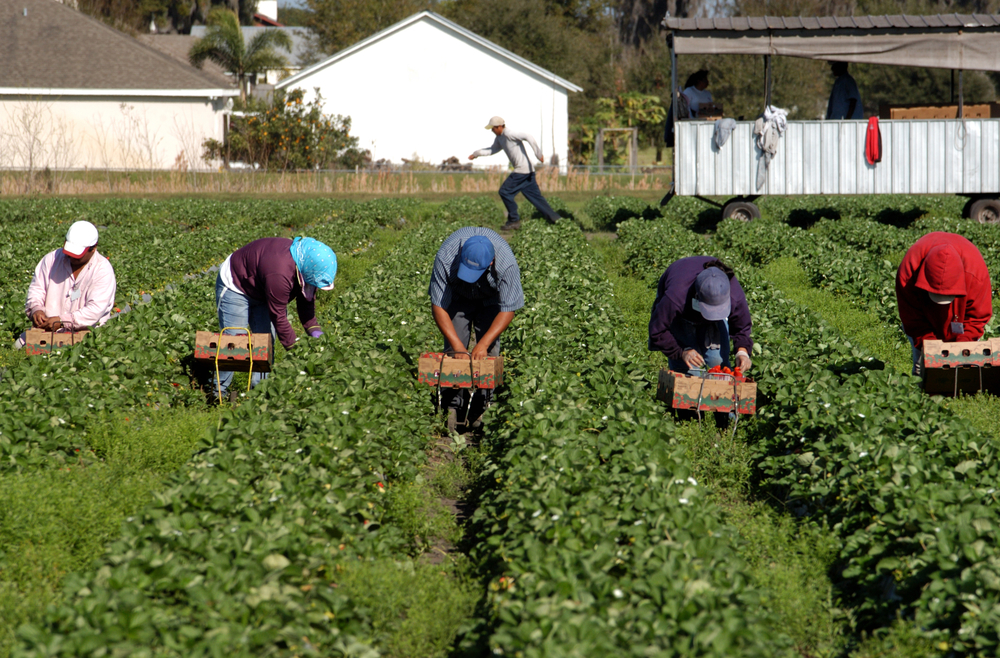
    File photo shows workers picking strawberries.

    Vegetable and specialty crop producers who utilize the H-2A program will not have to stress over wage increases for the 2021 and 2022 growing seasons. This is incredibly helpful for farmers in Georgia and Florida – avid users of the program – who will navigate a growing season amid rising expense costs, another potential COVID-19 shutdown and trade that is bringing down market prices.

    Labor Expenses

    Allison Crittendon, Director of Congressional Relations at the American Farm Bureau Federation, said labor expenses are a major portion of the expense budget farmers operate by every year.

    This final rule that was released by the Department of Labor on Nov. 2, amends the methodology used to set the Adverse Effect Wage Rate. It was much needed since there were concerns for some time over the quality of the data used and how the old method created variability from year to year.

    “Labor expenses vary by the kind of agriculture someone is involved in. In states where labor intensive agriculture is most prevalent, Florida or California, their labor expenditures make up somewhere between 20% to 30% of their operating expenses,” Crittendon said. “To know the increases there are predictable and stable instead of extreme and variable is incredibly helpful to agriculture and to those business owners, those farmers that are trying to figure out how they’re going to navigate another growing season.”

    Unpredictability in Previous Wage Rule

    The unpredictability of the previous wage rule was a major reason a change was made. Crittendon said in one region, between 2018 and 2019, farmers had a 23% increase in wages in just one year. It’s almost impossible for farmers to plan for an increase of that magnitude.

    After two years of frozen wages, the wage increase will be based on percentage change in employment cost index in 2023. It’s a different metric with a more predictable steady growth rate.

    Crittendon and her colleagues have looked at the employment cost index over the last decade and it’s ranged from a 1.7% to 2.9% increase in a given year with the 10-year average at 2.24%.

    “You’re going from, in some regions really drastic double digit increases in one year to move into a metric that’s starting in 2023; it’ll be a guaranteed increase but it’ll be a predictable steady increase which will allow farms to make other planning decisions and figure out how they want to structure their labor in the coming year,” Crittendon said.

    Who’s Covered?

    It is estimated that 97% of H-2A workers will be covered for 2021 and 2022. These include graders and sorters of Ag products, Ag equipment operators, farm workers, crop nursery greenhouse farm workers, farm workers of farm ranch and aquacultural animals, agriculture workers and packers and packagers.

  • Uncertainties for 2021 Growing Season

    While 2020 is nearly in the books, farmers are looking ahead to 2021 with the same outlook of uncertainty they had this year following the coronavirus outbreak in March.

    There’s uncertainty regarding COVID-19 and a risk of not knowing if there will be another nationwide shutdown that could lead to more market disruptions like the ones that impacted Florida farmer Sam Accursio this year.  

    There’s uncertainty regarding trade with China and the tariffs that are currently imposed on Chinese products that have prevented the country from purchasing U.S. pecans. This has led to extreme low prices this year for Southeast farmers.

    Various Risks

    There are various risks producers have to consider when planning for next year, says Adam Rabinowitz, Assistant Professor and Extension Economist at Auburn University.

    “There clearly are a lot of uncertainties as we move forward into 2021. 2020 was a very challenging year as everybody knows from a lot of different standpoints with things that we have experienced that we have not felt before in agriculture as well. That just adds to the uncertainty moving forward,” Rabinowitz said.

    “We still have a pandemic, as we see now cases rising and what impact that will have. We saw supply chain disruptions that occurred at the beginning of the year.

    “We’ve seen net farm income continue to drop with the exception of government payments that have helped really to sustain it. There have been two rounds of the Coronavirus Food Assistance Program (CFAP) that have helped really alleviate some of the market issues.”

    CFAP 2 Deadline

    Producers have until Dec. 11 to submit their CFAP 2 applications. The program is open to growers of specialty crops, including fruits, vegetables, tree nuts, honey, horticulture and maple sap.

    Administration Change

    The uncertainty is magnified in 2021 because the country will transition from the Trump Administration to the Biden administration. What is the future of trade negotiations and the tariffs that are currently on Chinese goods?

    “We do know that we have the trade negotiations that are still ongoing, regardless of who is in the White House. That’s still going to be an ongoing process,” Rabinowitz said.

    “There are still the tariffs that the U.S. has put on Chinese products and other products with other countries in retaliation that has occurred likewise for U.S. exports going overseas. What happens to that is still an unknown. We’ve certainly seen China increase their purchasing of U.S. agricultural products this year, including getting into markets they have not been in before. That’s certainly promising.

    “This Phase One agreement that we’re under right now with China where we essentially laid out a two-year plan, so what is the future beyond that and will they still be able to meet the first year goals plus an increase in second year goals? It’s still up in the air.”