Category: Top Posts

  • Four to Join Citrus Hall of Fame

    The Florida Citrus Hall of Fame will induct four new members in 2021. They are John L. Jackson of Sorrento, Florida; the late Lew J. Prosser of Plant City, Florida; Adam H. Putnam of Memphis, Tennessee; and Steven D. “Steve” Sorrells of Arcadia, Florida. They will be inducted during a luncheon tentatively scheduled for Nov. 5 at Florida Southern College in Lakeland. The luncheon is normally held in March but was postponed because of the COVID-19 pandemic.

    JOHN JACKSON
    Jackson was inducted into the Florida Agricultural Hall of Fame last year and was a county Extension agent (professor) for almost 40 years before heading up the Florida Citrus Industry Research Coordinating Council. The council determined citrus industry research priorities and projects.

    Jackson

    Jackson was responsible for such innovations as Florida’s Automated Weather Network and Water Conserv II, encouraging citrus producers to use reclaimed water for irrigation. He established the Mid-Florida Citrus Foundation (MFCF) as the research arm of the effort and served as the MFCF manager for more than 20 years. Jackson is the only Extension agent in Florida ever to have been recognized twice with the U.S. Department of Agriculture’s distinguished Award of Superior Service: one for his work with reclaimed water, the other for his work with FAWN.

    Some of Jackson’s other noteworthy accomplishments include the establishment of an annual equipment operator’s school, now known as Farm Safety Day; the Central Florida 4-H Citrus Project, which over a 20-year period engaged more than 2,000 middle and high school students in agriculture; and grower meetings for citrus producers.

    He was a member of the Florida Citrus Hall of Fame for more than 40 years, serving as chairman from 2006 to 2019. He led the organization from near-bankruptcy to a partnership with Florida Southern College that now has an endowment of more than $300,000. The endowment helps preserve and promote the heritage of the Florida citrus industry through an engaged learning program with fellowship students.

    LEW PROSSER
    Prosser, who lived from 1899 to 1996, began his career in citrus in 1921, working for R.W. Burch Inc. and eventually assuming ownership in 1928. Two years later, he had become the third largest independent citrus shipper in Florida. He created the first farm production credit association in the Plant City area, sponsored by a forerunner to the Federal Production Credit Association.

    He organized the first and only citrus canning plant in the area, Citrus Products Co., and created the Florida Mixed Car Company, which specialized in marketing mixed carlot shipments of citrus and produce on one rail car. He underwrote a case against the Interstate Commerce Commission in the mid-1930s that resulted in significant relief for produce growers and shippers by requiring express companies to provide full refrigerated car service for produce at reduced rates. The landmark ruling resulted in increased shipments of produce from Plant City, eventually paving the way for the state’s largest farmers’ market.

    Prosser traveled extensively with A.F. Camp to research citrus production practices in other countries, which resulted in the development of two patents that became widely used throughout the state. One patent was for the use of the trisodium phosphate bath, which retarded decay and eliminated the need for individually wrapping each piece of fruit. The other patent was for a color-added process to improve fruit appearance. Prosser was the author of “Early History of the Produce Industry in Plant City.”

    ADAM PUTNAM
    Putnam is a fifth-generation Floridian and third-generation farmer whose public service career began in the Florida House of Representatives from 1996 to 2000. He was then elected to the United States House of Representatives for five terms. He served as the Florida commissioner of agriculture from 2011 to 2019. During his tenure, he assisted and coordinated virtually every political aspect of the Florida citrus industry’s needs to preserve and protect the industry. He helped to obtain much needed funding to combat a variety of problems over the years, such as canker, hurricanes and citrus greening.

    citrus crop
    Putnam

    Putnam has provided leadership on food safety laws, water issues, government transparency and the preservation of the Florida Everglades. He created the Fresh from Florida campaign to raise awareness and access to fresh fruits and vegetables from Florida. His efforts in maintaining international market access for Florida citrus trade helped keep export markets viable. His leadership in recovery efforts after the hurricanes in 2004 helped farmers get back on their feet.

    Currently the CEO of Ducks Unlimited, headquartered in Memphis, Tennessee, Putnam owns Putnam Groves Inc., a family-owned and operated citrus farm and cattle ranch located in Central Florida.

    STEVE SORRELLS
    Sorrells grew a family citrus business from 400 acres in 1972 to its current production of 5,500 acres. One of his biggest contributions to the industry was being the first grower to utilize the U.S. Department of Labor’s H-2A visa program to obtain labor to harvest citrus more than 20 years ago. He helped promote the program to other growers and to make it a common practice that has modernized the industry’s labor force and state regulations.

    Sorrells has served on numerous industry boards and organizations and is the only two-time president of Florida Citrus Mutual, where he led the industry through the tariff and anti-dumping battles with Brazil. Sorrells chaired the Citrus Tariff Oversight Committee, which directed the industry strategy on how to preserve the tariff on imported orange juice while also making sure that exporters were playing by the rules. An innovator in production, Sorrells served as chairman of the original Florida Citrus Production Research Advisory Council and has embraced new technology and practices in rehabilitating groves. A 20-year member of the board for Orange Growers Marketing Association, he has helped maintain that group’s position as Florida’s Natural Growers’ largest fruit supplier.

    EVENT TICKETS
    Tickets to the Hall of Fame luncheon, which is co-sponsored by Florida Citrus Mutual and the Florida Department of Citrus, are $100 for patron seating or $1,500 for a sponsor table, which includes preferred seating for eight.  The event will be followed by the Florida Citrus Processors’ Association’s OJ Meet & Greet with the inductees.

    A portion of the proceeds from all ticket sales will go to fund an educational outreach program to help promote the history of the Florida citrus industry. More information is available from Florida Citrus Hall of Fame Executive Director Brenda Eubanks Burnette at 561-351-4314.

    Learn more about the Citrus Hall of Fame here.

    Source: Florida Citrus Hall of Fame

  • Low Pecan Prices Remain Stable for Georgia Growers

    Pecan prices have been depressingly low all harvest season. But they have not dropped much more in the last month or so, according to Lenny Wells, University of Georgia Cooperative Extension pecan specialist.

    “What I’ve been hearing, they’ve been fairly stable for the last two or three weeks. Good nuts have been selling in the range of a $1.15 to $1.35 (per pound), mostly, somewhere in that range. It doesn’t really matter what variety it is or anything. If it’s a decent nut, it’s selling in that range. Of course, the poor-quality stuff is well below $1,” Wells said.

    Low pecan prices were expected but not to the extreme levels that growers have experienced this year. While prices have not been good this year, pecan volume is the highest Georgia producers have seen in years.

    Wells estimates there will be between 120 million and 125 million pounds of pecans produced this year.

  • USTR Calls for Investigation of Imported Squash, Cucumbers

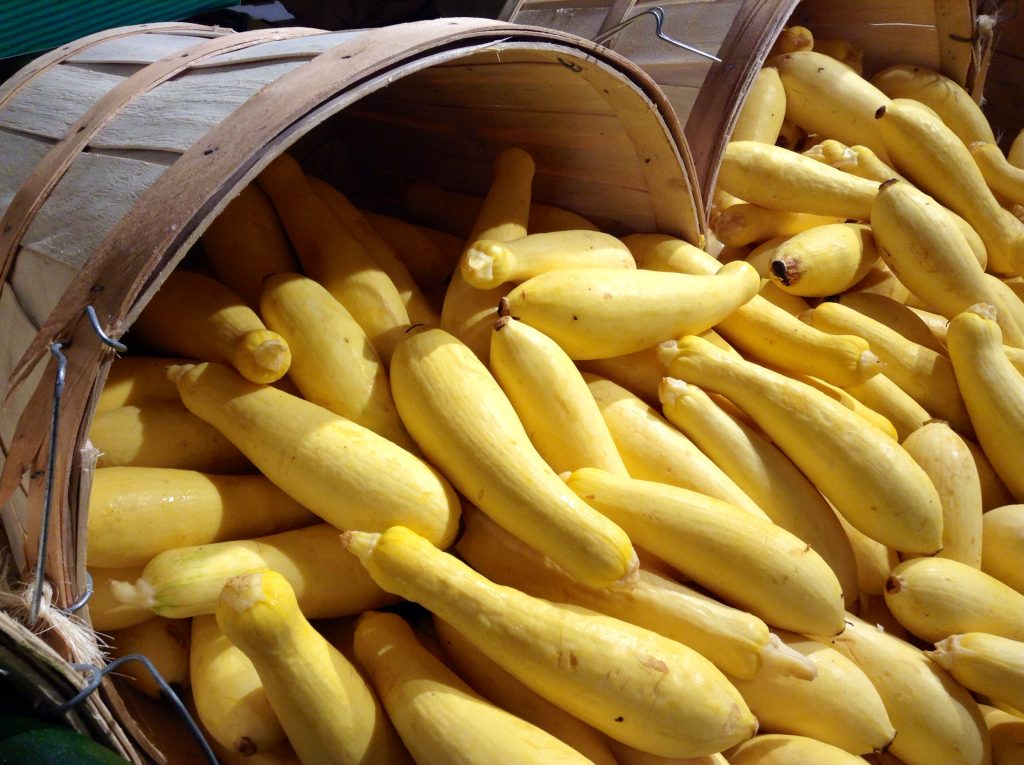
    File photo shows yellow squash.

    On Friday, December 4, 2020, U.S. Trade Representative Robert Lighthizer issued a letter to the Chairman of the U.S. International Trade Commission (ITC) requesting investigations into the import of cucumbers and squash and the effect on the domestic seasonal markets. 

    The request is to investigate the monthly price trends, including an analysis and comparison of the prices of domestically produced products and imported products.

    In September, a comprehensive plan to support American producers of seasonal and perishable fruits and vegetables was released from the Office of the United States Trade Representative (USTR), the U.S. Department of Agriculture (USDA) and the Department of Commerce (Commerce). The plan was developed after growers provided more than 300 written submissions, and more than 60 witnesses testifying during two days of hearings.  

    U.S. Senators David Perdue and Kelly Loeffler, along with Congressmen Austin Scott and Buddy Carter, have led the fight for Georgia produce farmers struggling against unfair trade practices with Mexico. In mid-November Perdue, Loeffler, Scott and Carter along with Representatives Rick Allen and Sanford Bishop, requested Lighthizer broaden the Section 332 investigation for strawberries and bell pepper to include the impact on seasonal cucumber and squash imports have on Southeastern markets.  

    “While our fight against unfair trade practices with Mexico is far from over, this is a great day for Georgia fruit and vegetable growers. We now have investigations underway for blueberries, strawberries and green pepper, and a request from USTR to also investigate squash and cucumbers,” said Charles Hall, Executive Director of the Georgia Fruit and Vegetable Growers Association. “Our growers express sincere appreciation to Senators Perdue and Loeffler and Congressmen Scott, Carter, Allen and Bishop for their efforts to fight for this additional investigation. In addition, we appreciate Ambassador Lighthizer following through on his commitments. He promised to have hearings so Southeastern grower concerns could be heard, with appropriate follow-up based on the testimony presented.”

    Hall is encouraged these official investigations will show unfair trade practices in Mexico, and hopefully, a solution determined as soon as possible.  

  • CFAP 2 Deadline is Dec. 11

    The U.S. Department of Agriculture reminds vegetable and specialty crop producers who wish to apply to the Coronavirus Food Assistance Program (CFAP) 2 that the deadline is Friday, Dec. 11.

    This program provides relief to farmers facing market disruptions and associated costs due to COVID-19.

    Rabinowitz

    It is a program that Adam Rabinowitz, Assistant Professor and Extension Economist at Auburn University, encourages all eligible farmers to take advantage of.

    “CFAP 2 covers a wide range of fruit and vegetables and specialty crops. It’s much broader coverage that’s typical from other government programs. For those that have experienced any type of marketing and production effects as a result of COVID-19, this is an excellent opportunity based on sales, just comparison sales. It’s a self-certification process, so there’s very little paperwork. It’s very easy access to be able to get these funds to assist with covering those losses,” Rabinowitz said.

    “It covers such a broad range of specialty crops, well over 200 different specialty crops. I think all fruit and vegetable producers really need to look at this and make sure they get to their FSA office and sign up for this program.”

    For More Information

    Producers can find eligible commodities, payment rates, calculations and options to apply on farmers.gov/cfap.

    CFAP 2 is a separate program from the first iteration of CFAP, now referred to as CFAP 1. Participating in CFAP 1 is not a prerequisite for participating in CFAP 2. Additionally, producers who applied for CFAP 1 will not be automatically enrolled in CFAP 2. They must complete a new application to be eligible for assistance.

  • FFVA Urges DeSantis to Prioritize Vaccines for Agricultural Workforce

    Florida Fruit and Vegetable Association (FFVA) Chair Aaron Troyer, on behalf of FFVA members, sent a letter to Gov. DeSantis this week urging for priority distribution of a COVID-19 vaccine for Florida’s agricultural workforce.

    While FFVA strongly supports that healthcare workers and long-term care facilities receive first priority, Troyer urged for prioritizing Florida agriculture after those groups to ensure a continued safe and abundant food supply.

    “The pandemic has shone a spotlight on the essential nature of agricultural workers, who are on the front lines putting healthy, nutritious food on consumers’ tables,” the letter stated. “As you well know, Florida is the ‘winter bread basket’ for the entire country and a key economic driver for the state. The health and well-being of the agriculture workforce is the top priority for Florida growers.”

    Florida growers have already taken extraordinary measures, completed extensive training and made substantial investments in workforce protection against COVID-19 since the start. However, there is still concern for COVID-19 impacts on the workforce without access to a vaccine in the coming months.

    See attached letter:

    December 2, 2020

    The Honorable Ron DeSantis

    Governor, State of Florida

    The Capitol400 S. Monroe St.Tallahassee, FL 32399-0001

    Dear Governor DeSantis:

    On behalf of the members of the Florida Fruit & Vegetable Association, I am writing to strongly urge that the state include agricultural workers among its top priorities for the COVID-19 vaccine allocation. We understand the state has begun preparations for the rollout of the initial vaccine and strongly support priority allocation to healthcare workers and long-term care facilities. Respectfully, prioritizing vaccinations for Florida’s agricultural workforce (after the aforementioned groups) is vital for a safe and abundant food supply.

    The pandemic has shone a spotlight on the essential nature of agricultural workers, who are on the front lines putting healthy, nutritious food on consumers’ tables. As you well know, Florida is the “winter bread basket” for the entire country and a key economic driver for the state. The health and well-being of the agriculture workforce is the top priority for Florida growers, who have taken extraordinary measures, completed extensive training and made substantial investments in workforce protection against COVID-19 since the start. However, our growing season has only just begun, generating concern of anticipated impacts on our workforce heading in to the winter months if there is still no vaccine available.

    Now more than ever, Florida agriculture plays an important role in our communities, and its workforce plays an even greater one in helping to feed the state and country. Despite best efforts, this virus has proven unstoppable, and no industry is immune to its impacts. But, this industry is resilient, and we will continue to do all we can to protect our workers. That said, priority distribution of a vaccine to agricultural workers ensures a healthy workforce and that food will continue to flow from the farm to consumers.

    Thank you for your leadership and consideration of this request. We stand ready to partner to ensure all of Florida’s essential workers have access to vaccines when available.

    Sincerely,

    Aaron Troyer

    Troyer Brothers FL, Inc.

    Chair, Florida Fruit & Vegetable Association:

  • More Farms Need Training as Produce Safety Inspections Expand in 2021

    COLUMBIA — South Carolina farmers should prepare for training and on-farm inspections as more small farms become subject to the Produce Safety Rule.

    The Produce Safety Rule is part of the FDA Food Safety Modernization Act (FSMA) passed in 2011. It sets federal regulatory standards for the production, harvest and handling of fruits and vegetables in an effort to prevent microbial contamination and reduce foodborne illnesses associated with fresh produce. 

    Produce Safety Rule compliance has been phased in over several years. In 2021, all farm size categories will be subject to routine Produce Safety Rule inspections and training requirements. This includes farms with covered produce sales in the following ranges: Large Farms ($500,000+), Small Farms ($250,000-$500,000) and, for the first time, Very Small Farms ($25,000-$250,000).

    The South Carolina Department of Agriculture (SCDA) has scheduled all six trainings it intends to hold in 2021, with the first two held online (Jan. 27-28 and Feb. 18-19) and subsequent trainings held in Columbia (April 28 and Nov. 16), Greenville (July 13) and Charleston (Sept. 29).

    Visit agriculture.sc.gov/produce-safety to view dates and a link to register. Sessions will be held in conjunction with Clemson Cooperative Extension, and cover such topics as worker health and hygiene; water safety; soil amendments; and postharvest handling.

    Some produce farms may be exempt from the Produce Safety Rule. Visit https://psrexemption.agriculture.sc.gov to view exemption requirements and apply. Farms must reapply for exemption every year.

    Contact Brooke Horton, SCDA’s Produce Safety Outreach Coordinator, at bhorton@scda.sc.gov with further questions.

  • North Carolina Farms Plan Bounty of Holiday Activities

    RALEIGH – From family photos with Big Foot to choose-and-cut Christmas trees, there is an abundance of fun holiday activities waiting for visitors at area farms this season.

    Troxler

    “There is no greater joy than spending time with loved ones during the holidays,” said Agriculture Commissioner Steve Troxler. “Farms that offer agritourism activities allow for families to come together with plenty of room for social distancing in an outdoor setting. This year, you’ll see additional measures in response to COVID-19 to ensure that everyone has a safe experience on the farm.”

    Following is a list of events and attractions planned this holiday season at local farms welcoming visitors:

    Western Region

    • Bear Valley Farm in Glenville offers a large selection of Christmas trees, holiday gifts and clothing items through Dec. 24. The farm offers curbside pickup.
    • Cherry Mountain Farm in Rutherfordton is open Wednesday-Saturday from 10 a.m. to 5 p.m. with extra hours the week before Christmas. The farm provides tours by appointment, operates a general store and is full of photo opportunities including horse selfies and family portraits with a 14-foot statue of Big Foot.
    • Mount Gilead Farm in Leicester has a farm store that is open daily and offers tours by appointment.
    • Sandy Mush Herb Nursery in Leicester is open Thursday-Saturday from 10 a.m. to 4 p.m., weather permitting. The nursery is ideal for walks through winter landscapes and greenhouses.

    Piedmont Region

    • Brookhaven Mill Farm in Greensboro will offer pet portraits with Santa Dec. 12 from 3-5 p.m. The farm also has a store, snack shack, petting zoo, bed-and-breakfast, and educational tours.
    • Catawba Farms in Newton will unveil its new ice-skating rink on Dec. 19. The farm is also home to a brewery, winery, vineyard, historic inn and farm animals.
    • CATHIS Farms in Lillington will have a Christmas light display Fridays and Saturdays through Dec. 19 with additional hours on Dec. 23, 24 and 26. The evenings also include holiday movies, bonfires, axe throwing and holiday activities.
    • Dover Vineyards in Concord will open for live music and outdoor service Fridays and Saturdays from 6 to 9 p.m., and Sundays from 5 to 8 p.m. in December.
      (MORE)
    • Foothills Farmers’ Market in Shelby is open for the winter season. A special holiday farmers market will be held Dec. 12 from 8 a.m. to noon. Other market days are planned for Jan. 9, Feb. 13 and March. 13.
    • Good Karma Ranch in Iron Station hosts private farm tours by appointment. Visitors will have the chance to interact with the ranch’s herd of alpacas and learn more about how they are raised.
    • Hickory Creek Farm in Greensboro offers choose-and-cut Christmas trees while supplies last.
    • Jordan Lake Christmas Trees in Apex offers choose-and-cut trees, Fraser firs, wreaths, a Christmas shop and more.
    • Millstone Creek Orchard in Ramseur has a full lineup of outdoor holiday activities including Christmas with the Kringles, outdoor Christmas movies, the Apple Barn Mobile Market and Christmas Tree Village. Pre-registration is required for most events.
    • Mitchell’s Nursery and Greenhouse in King is putting a new spin on its annual Poinsettia Open House. Through Dec. 10, visitors will have a chance to visit the nursery and vote on their favorite poinsettia out of 103 varieties. The votes will help the breeders determine which varieties will stay for the next poinsettia season.
    • Spillman’s Christmas Tree Farm in Sophia is open through Dec. 22 with choose-and-cut Christmas trees, Fraser firs, hayrides, wreaths and more.
    • Wyolina Farms in Harrisburg offers small private tours of its former dairy farm turned alpaca ranch. Call 704-455-7063 to make a reservation.

    Eastern Region

    • Humphrey Farms in Burgaw is open through Dec. 23 with fresh-cut Christmas trees from N.C. farmers and a chance to visit with Santa.
    • Stokes Family Farm in Greenville will host Christmas activities Dec. 13-20, including a live nativity, visits with Santa, a petting zoo and local vendors offering handmade items.
    • Twiddle Dee Farm in Clinton offers a unique experience for adults only. During the holiday season, the farm becomes a winter wonderland with music, lights, decadent desserts and more. Farm membership is required.

    The department encourages those wishing to visit local farms to continue to practice recommendations from public health officials. Wear a cloth mask over your nose and mouth. Wait six feet apart and avoid close contact. Wash your hands or use hand sanitizer. Visitors are encouraged to contact farms directly to learn about specific requirements or restrictions for each farm.

    Families can plan their next agritourism adventure through the Got To Be NC website at https://gottobenc.com/find-local/agritourism/ or the free Visit NC Farms app, available for Apple and Android devices. Users can search by activity or location. More information is available at www.visitncfarmstoday.com.

  • Marketing: The Next Challenge for the White Strawberry

    Producing a white strawberry was the first challenge for University of Florida/IFAS strawberry breeder Vance Whitaker. The next is figuring out how to market it so it could be a viable option for Florida producers in the future.

    Whitaker said there are 12 acres test marketed in different chain stores this year. They will have a better grasp on how the fruit’s outlook after this season.

    “There’s some interest certainly in the industry in trying to make it the fifth berry in the berry category. It has a unique look. It has a unique flavor. It doesn’t taste like a typical strawberry,” Whitaker said. “The key is just trying to get somebody to try it. They first look at it and say, ‘What is that?’ If they try it, they generally like it. I think it’s a product that the growers here are just going to have to figure out how do you introduce this. It’s just a very different type of situation.”

    Future in Food Service

    The fruit could potentially have a future, especially in the food service industry, particularly with high-end restaurants.

    “Growers tell me that the chefs that they’ve sent them to so far really like them. It’s definitely a unique element to use in food as far as just a visual decorating kind of standpoint as well as the different kinds of uses,” Whitaker added. “I think that’s going to be another important aspect with the leading edge being kind of the foodie crowd that looks for new things and maximize the advantages of things that are unusual.”

    White Strawberry’s Origin

    The idea of the white strawberry gained most notoriety in Japan where it was very popular. But those varieties were not conducive to Florida agriculture. According to Whitaker, in 2012, strawberry seeds from Japan were sown at the University of Florida, and a few small plants recovered. The plants’ pollen were crossed with a Florida variety. The seedlings from this fruit ranged from white to pink to red.

    “It has a sweet taste, similar to a strawberry but the aroma is different. The flavor is different,” Whitaker said. “It’s a little bit hard to describe but there is a little bit of pineapple aroma sometimes when you bite into it. For that reason, people are calling it a pineberry. Pineberry is a name that’s been used for some white-fruited strawberries that have existed in small amounts over the years.”

  • Expect a Drop in Pecan Production in 2021

    UGA CAES photo shows pecans being cleaned.

    This year’s pecan crop in Georgia exceeded expectations. Producers need to brace themselves for a drop in volume next year, which is expected with pecan trees being alternate bearing plants.

    University of Georgia Cooperative Extension pecan specialist Lenny Wells fully expects the 2021 crop season to be a down year for Georgia growers.

    “From a volume perspective yes, I don’t really see how we can come back with this kind of crop statewide,” Wells said. “Now with the young trees that are out there, they’ll probably still come back with a decent crop. Anybody that fruit thins or manages their crop load will probably have a decent crop. Overall, I would expect next year to be an off year.”

    Alternate Bearing Cycle

    Since pecan trees are alternate bearing, if the trees produce a good crop one year, they are less likely to produce a similar result the following year. However, with the right management system, producers can still get the most out of their trees.

    “We had kind of leveled off to where before the hurricane we had gotten to be pretty even in our production. We would be up and down a little, but we didn’t have those big swings like we used to have. But the hurricane (Michael) kind of reset everything,” Wells said.

    “When you had all those trees that got broken up and they had to regrow new fruiting wood and all that, it reset the clock and sent everything back into a big alternate bearing cycle. Any growers that did not manage their crop load, those trees are going to be back into a big swing. There’s things they can do to manage that. A lot of them didn’t want to this year because it’s really been a couple of years since they’ve had a crop, which is understandable.”

    Georgia Crop This Year

    Wells estimates that this year’s Georgia pecan crop will net between 120 million and 125 million pounds.

    According to UGA Extension, Georgia is the country’s largest supplier of pecans, accounting for about a third of the U.S. pecan production.  

  • Georgia Pecan Volume Exceeded Expectations

    The worst pecan prices in recent memory are being countered by one of the biggest crops in recent years.

    Lenny Wells, University of Georgia Cooperative Extension pecan specialist, said this year’s crop has been welcomed by all producers, especially those still recovering from Hurricane Michael in 2018.

    Photo by Clint Thompson/Shows pecans being cleaned after harvest.

    “I think it has (exceeded expectations) from a volume standpoint. It’s hard to say exactly how much it’s going to be but I’m still going to say around 120 million or 125 million pounds which is more than we expected in the middle of the summer,” Wells said. “It does look like a pretty big crop. That has been the saving grace in all this. With the price being down so much, the volume has certainly helped a lot of growers with that.”

    Improved Production Season

    Wells was hoping for between 80 million and 100 million pounds, back in early April. That would have been a substantial increase from 2019 crop that generated just 67 million pounds. But last year’s crop came on the heels of Hurricane Michael the prior year. A down year was expected.  

    Low Prices

    A larger than expected crop is needed to combat extremely low prices that have forced some growers to store their pecans. The farmers are hoping for a market turnaround in doing so.

    “Pretty much every big grower that I have talked to is storing a considerable amount. Most large growers I think seem to be storing maybe somewhere around a third of their crop, at least. It’s quite a bit,” Wells said.