Clemson Extension agents provide updates in the The South Carolina Grower this week about the status of various crops being produced throughout the state.
Weekly Field Update
This will be the final update of 2020. We will pick back up on Jan. 4, 2021. Be sure to keep an eye on the upcoming events tab give us a call if you need anything. Happy Holidays from the SC Grower team!
Coastal
Zack Snipes reports, “A chilly week in the Lowcountry took out or really slowed down some of our fruiting crops like pepper, tomato, and cukes. The brassicas and strawberries are loving this weather. One thing I have noticed lately is lots of worm damage on brassica. After talking to many growers, I hear that many are not using adjuvants in their spray tanks. Adjuvants can help your pesticides work better. A common one I would recommend on brassica crops is the use of a spreader-sticker. Brassica crops have a waxy leaf which repels water. The use of a spreader-sticker will help stick the pesticide droplet to your leaf and the spreader will help reduce surface tension so that the droplets spreads out on your leaf. You will be amazed at how much better coverage you will get with a spreader-sticker and how much better your pesticide will work (organic or conventional pesticide). Adjuvants are cheap, so consider adding some to your tank today. For more on adjuvants and spray tips, join us on Tuesday night from 6-8 pm for the Organic/Sustainable Farm Meeting via Zoom. The registration link can be found here.“
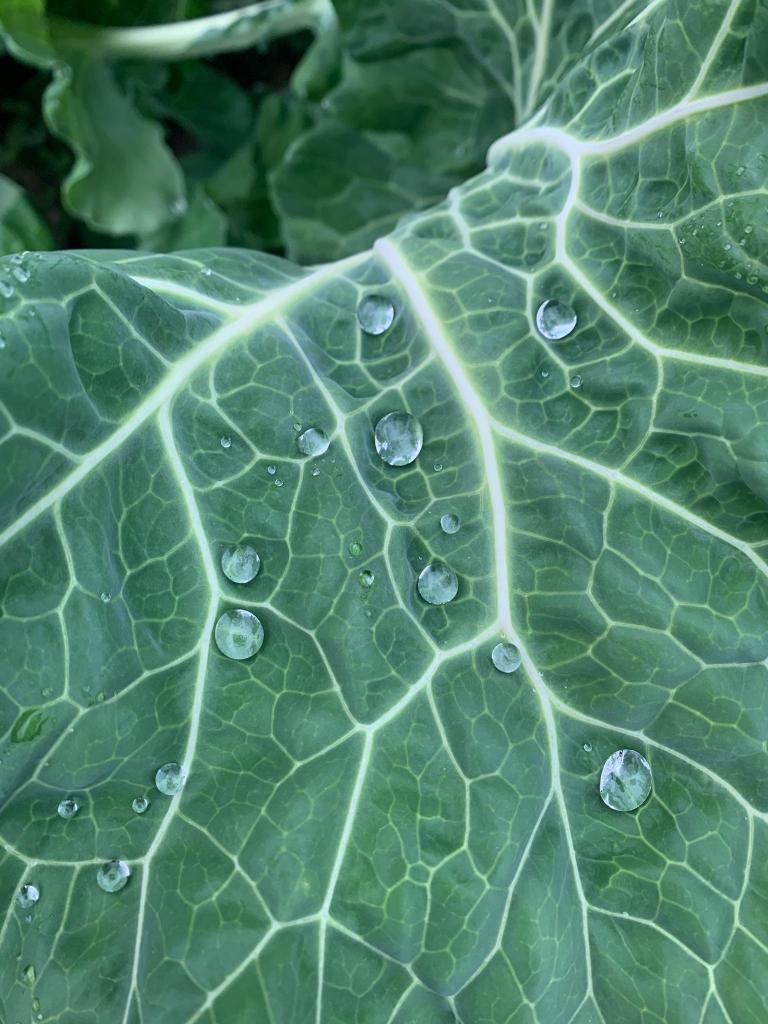
Many crops have a waxy surface that cause pesticide mixtures to bead up on the plant. The use of a spreader-sticker would have helped these pesticide droplets spread out and stick to the leaf which helps overall efficacy of your product. Photo from Zack Snipes.
Midlands
Justin Ballew reports, “We had two nights last week where temperatures dipped below freezing. After a long fall growing season, the tomatoes, peppers, eggplant and squash are done. Now, growers will be focusing on strawberries, greens and herbs. Strawberries in some fields had developed blooms as a result of the late warm weather. Now that the cold has killed them, it will be important to sanitize them before the spring, as dead blooms can become a significant source of grey mold inoculum. As always, don’t let up on scouting for caterpillars in greens.”
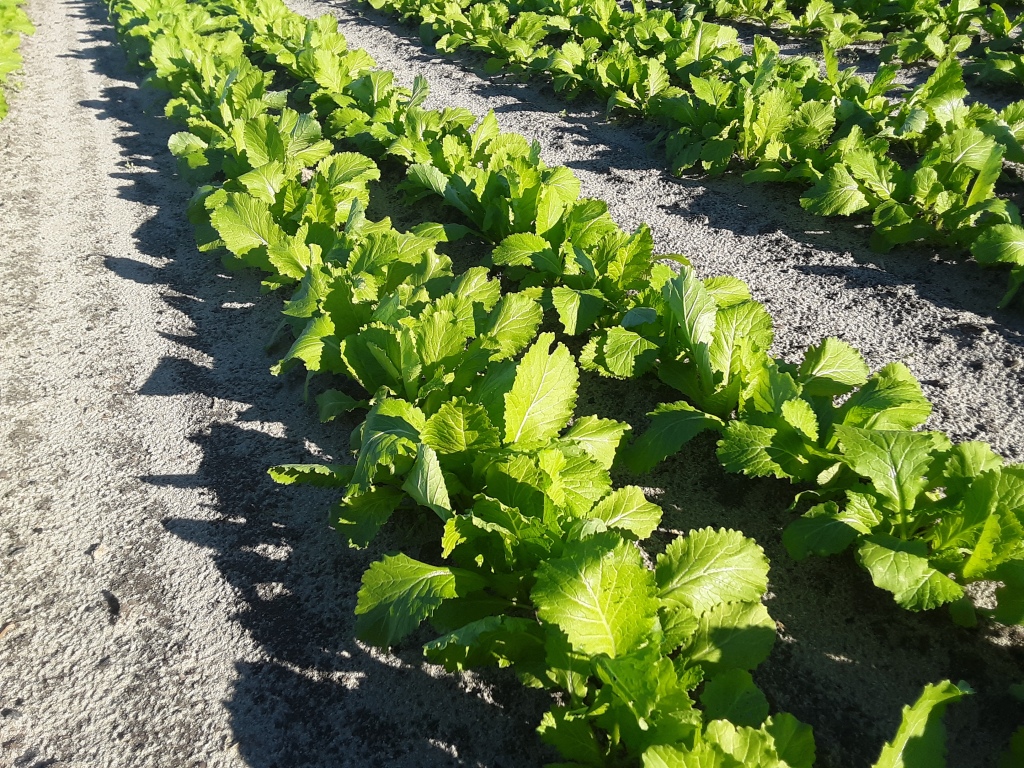
Due to a warm fall, several strawberry fields have developed some early blooms that have been/will be killed by the cold. Be sure to sanitize these blooms to keep grey mold from having dead tissue to develop on. Photo from Justin Ballew.As the cold weather has finished off other fall crops, growers will be focusing more on greens now. This mustard is off to a great start. Photo from Justin Ballew.
Sarah Scott reports, “Brassicas are being harvested. Pest pressure is relatively high this season, including aphids and diamondback months. Peach fields are being prepped for new plantings. In areas where armillaria root rot has been an issue in past crops, growers will use a plow to create burms to plant trees on. Rain has slowed plowing down but there is a dry forecast for the next 7 days.”
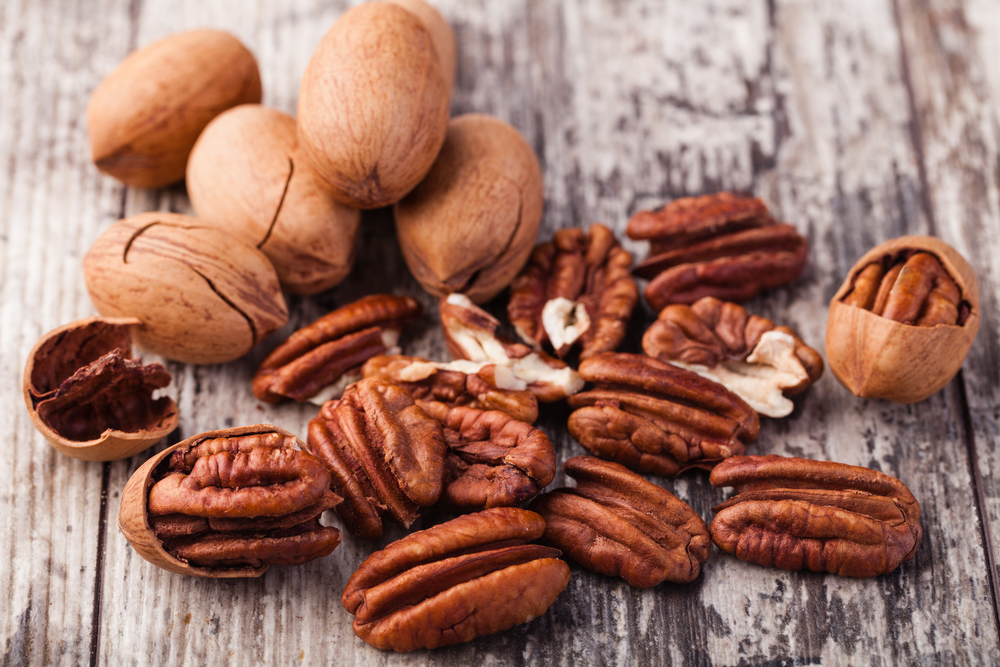
According to the USDA Pecan Report, growers are about 90% finished with harvesting their pecan crop this season. An estimated 50% have been sold, with the rest that are of good quality and size will be stored to sell later when prices have improved.
The Pecan Report states, “Prices are about steady, and interest has increased as the push for holiday retail and domestic sales has come into play.”
Not Much Change in Prices
The updated prices are consistent with what Lenny Wells, University of Georgia Cooperative Extension pecan specialist, said they were last week.
“What I’ve been hearing, they’ve been fairly stable for the last two or three weeks. Good nuts have been selling in the range of a $1.15 to $1.35 (per pound), mostly, somewhere in that range. It doesn’t really matter what variety it is or anything. If it’s a decent nut, it’s selling in that range. Of course, the poor-quality stuff is well below $1,” Wells said.
Prices paid to Georgia growers as of Tuesday, Dec. 8 at buyers delivery point or F.O.B. the orchard including direct sales to end users, cents per pound in-shell of generally good quality in lots of 20,000 pounds or less unless otherwise stated:
Georgia has experienced freezing temperatures throughout the state with wind chill factors in the teens. The rest of the week is forecasted for temperatures in the 30s-to-mid-40s with daytime temps in the low 50s-to-high 60s.
A new University of Florida app will help the state’s blueberry growers identify and manage disease and insect injuries commonly encountered in Florida before their crop is ruined.
Collectively, blueberries are a $60 million-per-year crop in Florida.
Patricio Munoz, the UF/IFAS blueberry breeder and an assistant professor of horticultural sciences, came up with the vision for, and supervised the development of, the UF/IFAS Blueberry Growers Guide phone app, released on Dec. 1.
“Dr. Munoz saw the need for a field scouting guide for southern highbush blueberries that growers could use on their phones,” said Doug Phillips, statewide blueberry Extension coordinator. “Previously, the only blueberry scouting guide available was a paper guide for northern highbush blueberries, covering diseases and insects typically seen in more northern states.”
The new UF/IFAS app (type in “UF/IFAS Blueberry Growers Guide”) is available for both iOS and Android operating systems at the Apple Store and the Google Play Store, and it should help farmers who grow blueberries in the Sunshine State.
Phillips, who works at the UF/IFAS Gulf Coast Research and Education Center in Balm, led this project. He prepared the content and layout for the guide in collaboration with other UF/IFAS scientists: plant pathology Professor Phil Harmon, entomology Professor Oscar Liburd, horticultural sciences Associate Professor Peter Dittmar, and horticultural sciences Professor Jeff Williamson.
Phillips got help from Jose Delgado, a UF undergraduate who conducted early software development on the app. Delgado earned his bachelor’s degree in engineering in 2019.
The guide, which will ultimately be divided into multiple modules, is designed to help blueberry growers with various production issues on southern highbush blueberries. Currently, the app serves as a blueberry scouting guide to help farmers scout for diseases, insect pests, nutrient deficiencies and other damage, Phillips said.
Guide Resources
Resources in the guide include a diagnostic key, descriptions of symptoms, disease/insect life cycles, recommended management practices, an image gallery and links to UF/IFAS blueberry Extension publications. Users can access this information by using the diagnostic key to help identify symptom or injury causes and the image gallery to compare pictures of symptoms to observed symptoms.
They also can use a reference listing of diseases, insect injuries, nutrient deficiencies and other symptoms or injuries.
More functions will be added in the near future, Phillips said. They include a module with detailed information on all UF southern highbush blueberry cultivars.
“The UF/IFAS Blueberry Growers Guide will help Florida’s growers more easily manage damage from disease, insects, and other causes, and in the future will be a valuable resource for other production issues, including choosing which UF varieties are likely to perform well on their farms,” Phillips said.
Growers take steps to protect farmworkers’ health so they can continue to ensure an abundant, safe food supply is available to U.S. consumers.
Image source: The Pajaronian
The early onset of the coronavirus pandemic spelled doom for certain sectors of the agricultural industry. Restaurants shut down, unemployment rose, and suddenly, fruit and vegetable producers across the Southeast faced a decreased demand for their produce.
There was also temporary concern among farmers about how suspended travel from foreign countries would impact H-2A workers trying to get in the country to help harvest the crops when they were needed the most.
Could the country experience a similar shutdown once President-Elect Joe Biden takes office on Jan. 20, especially since COVID-19 cases continue to surge?
No Shutdown Planned
According to media reports, Biden has said he wouldn’t put the country through another national shutdown to try to slow the virus’ spread.
This would be great news for those producers who will rely on H-2A workers to be in place to harvest their crops next spring, according to Allison Crittendon, Director of Congressional Relations at the American Farm Bureau Federation.
“I think when we had the shutdown back in March, we had no idea what this virus really was or how it spread. It’s crazy to think back in March masks weren’t known as what you had to do. Now we certainly have more information and more clarity about how to go about trying to achieve essential operations like food production as safe as possible,” Crittendon said.
“I hope that with all of the information we’ve now gathered over the last several months that we could avoid a shutdown. But I wouldn’t be surprised if there were further requirements for employers to adhere to when it comes to mitigating the spread once folks are on the farm and have traveled over here from their home country.
“Hopefully, since we now have more information about the virus, we won’t have to revert to those early practices of shutting everything off completely when it comes to travel of our essential workers.”
WASHINGTON, Dec. 8, 2020 – Today, the U.S. Department of Agriculture’s National Agricultural Statistics Service (NASS) released the 2019 Census of Horticultural Specialties report, the only source of detailed production and sales data for floriculture, nursery, and specialty crops for the entire United States.
The data show that horticulture operations sold a total of $13.8 billion in floriculture, nursery and specialty crops in 2019, down fractionally from the sales in 2014. The number of horticulture operations in the United States decreased 11% during this time to 20,655.
“First conducted in 1889, the horticulture census provides data on sectors for which there are no other comprehensive data sources,” said NASS Administrator Hubert Hamer. “It is a valuable tool to highlight the contribution horticulture growers bring to our local, state, and national economies as well as changes in the industry over the past five years.”
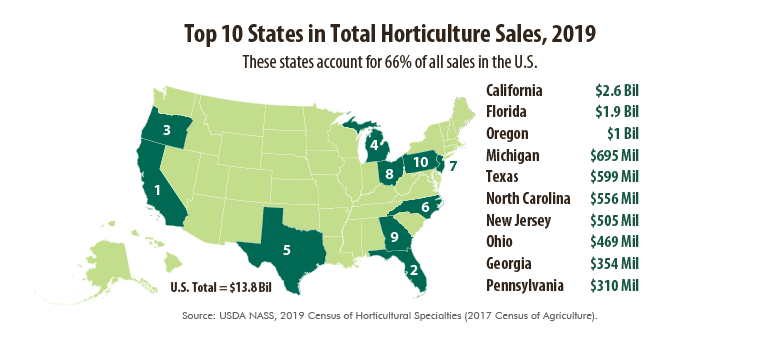
Horticulture production occurred primarily in 10 states, which accounted for 66% of all U.S. horticulture sales in 2019. California ($2.63 billion), Florida ($1.93 billion) and Oregon ($1.02 billion) led the nation in sales.
The top commodities in U.S. horticulture sales in 2019, and compared to 2014, were:
Nursery stock, $4.55 billion, up 7%
Annual bedding/garden plants, $2.24 billion, down 13%
Sod, sprigs and plugs, $1.27 billion, up 12%
Potted flowering plants, $1.2 billion, up 11%
Potted herbaceous perennials, $923 million, down 2%
Propagative horticultural materials, bareroot, and unfinished plant materials, $720 million, up 4%
Food crops under protection, $703 million, down 12%
Other key findings from the 2019 Census of Horticultural Specialties report include:
Family- or individually-owned operations made up the largest number of operations, accounting for 52%, but corporately-owned operations accounted for 75% of sales ($10.3 billion).
Total industry expenses were up 6% since 2014, with labor being the largest cost, accounting for 42% of total expenses in 2019.
The Census of Horticultural Specialties is part of the larger Census of Agriculture program. It provides information on the number and types of establishments engaged in horticultural production, value of sales, varieties of products, production expenses and more. All operations that reported producing and selling $10,000 or more of horticultural crops on the 2017 Census of Agriculture were included in this special study.
Root-knot nematodes (Meloidogyne spp.) are one of the most rapidly spreading of all pests and pathogens. The southeastern United States (Florida, in particular) is a paradise for these parasites. Nematodes cause damage to vegetables all over the world, and anyone who has had to deal with root-knot nematodes knows how difficult they are to control.
Root-knot nematode damage is often not recognized and is frequently confused with other biotic or abiotic problems, such as disease, nutritional and watering issues. When nematode populations are high and weather and soil conditions are favorable, root-knot nematode damage can become so bad that total crop loss occurs. This is especially the case when soils are already warm at planting or when a double crop is planted on the same bed.
Soil fumigants like Telone-chloropicrin mixtures and metam-based products like K-Pam are the most effective products when nematode pressure is high. Deep-shank (18-inch) injections of Telone can provide additional control in problematic fields by targeting nematodes that hide in the subsoil. Fumigants must be applied at least three weeks before planting to avoid phytotoxicity to the crop.
NEW NEMATICIDES
In the past, when beds were not fumigated, nematicide options for vegetable growers were limited to Vydate (oxamyl) and a few biological products. Over the past years, two new nematicides, Nimitz and Velum, have become available for vegetable growers in the Southeast. The new nematicides are less toxic and have a safer label (caution instead of danger) than previous products. They can easily be applied through drip irrigation systems. These nematicides should not be considered fumigant replacements, as they will target only nematodes. Additional measures need to be taken to manage soil diseases and weeds.
Nimitz should be applied seven days before planting to reduce the risk of phytotoxicity to the crop, while Velum can be applied before and after planting. Fluopyram, the active ingredient in Velum, is the same as in the fungicide Luna, although no clear evidence of soil disease control was observed for Velum in University of Florida Institute of Food and Agricultural Sciences (UF/IFAS) experiments. Care should be taken not to exceed the maximum annual use rate of fluopyram when using both Luna and Velum.
Both Nimitz and Velum have been extensively tested at the UF/IFAS Gulf Coast Research and Education (GCREC) farm and are currently being evaluated in commercial fields. Their performance against root-knot nematodes on a variety of vegetables such as tomato, cucumber, squash, cantaloupe and watermelon was generally good and comparable to Vydate. Unless nematode pressure is too high, these products are a good alternative for growers that cannot or do not fumigate, or they may provide additional nematode control after fumigation when nematode pressure is high or long-season control is required.
ORGANIC OPTIONS
For organic growers, several biological products are available. They can be toxins derived from plants, bacteria or fungi while others are biocontrol organisms such as several species of bacteria and fungi. Some product names are ProMax, Kyte Gold, Ecozin, Dazitol, Majestene, DiTera and MeloCon. Typically, organic nematicides require multiple applications. In conventional production, they can be used as part of a program with chemical nematicides. Research into organic nematicides’ potential is ongoing at the GCREC and will be reported in future updates.
Root-knot nematode damage on tomato
Cover crops can also be good options to include in a nematode management plan. Summer cover crops like sunn hemp and sorghum-sudan grass can help reduce populations of most species of root-knot nematodes. The most common species in the Southeast are the southern (M. incognita), Javanese (M. javanica) and peanut (M. arenaria) root-knot nematodes. Often, vegetable fields will harbor more than one of these species. However, many more species exist.
In Florida, more than 15 root-knot nematode species have been found, including seven in vegetables. One particularly virulent and aggressive species is the guava root-knot nematode (M. enterolobii). This nematode has become a serious concern for the sweet potato industry in the Southeast and can cause severe damage to almost all vegetables grown in the region.
RESISTANT CULTIVARS
Vegetable growers that fumigate may not care much what species of root-knot nematode they have in their field as fumigants probably kill all species equally. However, knowing your root-knot species does matter when cover crops or nematode-resistant tomatoes are part of the nematode management plan. Research at the GCREC has shown that while some cover crops, like cowpeas, may be poor hosts to certain species of root-knot nematodes, they may be good hosts to other species.
Also, when root-knot nematode-resistant tomato cultivars are used, it is important to realize that while these cultivars are resistant to the three most common species mentioned above, they are not resistant to other root-knot species (including guava root-knot). Nematode-resistant tomato cultivars performed very well in root-knot nematode infested fields in recent trials in Florida. Root gall damage was negligible, and yields were increased compared to a susceptible cultivar. Fears, based on earlier reports that the nematode resistance gene in these cultivars might break down in the warm soils of Florida, were unjustified in GCREC trials.
The resistant cultivars also greatly reduced nematode reproduction and root-knot soil numbers by the end of the crop. This is often not the case when only a fumigant is used, as the fumigant will protect the crop from early nematode damage and yield loss, but nematode populations often increase by the end of the crop. Nematode-resistant cultivars are the easiest and cheapest method to manage root-knot nematodes, but unfortunately nematode resistance is rarely a priority in tomato and vegetable breeding programs.
It’s harvest season for Florida’s $300 million-per-year strawberry season, so those who grow this fruit need help to control pests such as the tiny (up to 2-millimeters long), destructive chilli thrips.
Farmers often use pesticides to control thrips, but they would like to use minimal chemicals. University of Florida scientists may have found a good reason to use pesticides at lower volumes and less frequently.
Chilli thrips usually arrive in Florida strawberry fields after plants bear new leaves, a couple of weeks after they are planted. Adult thrips come to the strawberry field from nearby crop fields or from vegetation. They feed on new strawberry plants and cause bronzing and darkening of leaves, which stunts the plant’s growth and reduces yield.
When these bugs feed on strawberry plants, they don’t stay in one place.
In a new study, University of Florida research shows chilli thrips tend to stay in one basic area for about two weeks, then move and infect nearby plants. That can be a fortuitous two weeks for growers.
With this finding, farmers can use less pesticides to control the bugs. Farmers who use less pesticides save money on chemicals and help preserve the environment, UF/IFAS scientists say.
“Our findings will reduce the overall input costs of strawberry production and, therefore make Florida strawberry growers competitive in the market with strawberries from Southern California and Mexico,” said Babu Panthi, a former doctoral student in entomology and nematology at the UF/IFAS College of Agricultural and Life Sciences and now a postdoctoral researcher at Oregon State University.
Specifically, the study’s findings mean Florida strawberry growers can reduce the number of insecticide applications by spraying the areas infested with chilli thrips and delay insecticide application by at least a week after they discover the bugs, said Sriyanka Lahiri, a UF/IFAS assistant professor of entomology at the Gulf Coast Research and Education Center (GCREC).
Additionally, the findings should help strawberry growers with their overall approach to mitigate pest damage.
“With very few effective products available for insecticide rotation, this approach will assist with integrated pest management practices to control chilli thrips and create opportunity to include biological control agents more effectively,” Lahiri said.
Panthi cites these reasons to reduce insecticide use:
Excessive reliance on chemical insecticides is not sustainable to control thrips.
Strawberry growers must determine whether limited applications of highly effective insecticide products per season should be used against chilli thrips early in the season or reserved for flower thrips later.
Because chilli thrips confine their damage to Florida strawberries, these findings impact only the state’s growers. But because it’s an invasive species that’s rapidly expanding its geographic range, strawberry growers in other U.S. states can learn and prepare to manage this pest in the future, Lahiri said.
Panthi did his doctoral studies under the supervision of Lahiri, Justin Renkema, a former UF/IFAS assistant professor of entomology at GCREC and Oscar Liburd, an entomology Professor at UF/IFAS in Gainesville. His research wasn’t limited to a pesticide finding. Panthi looked at managing chilli thrips from a wider perspective.
“I established a threshold for chilli thrips and developed a sampling plan to make control decisions,” Panthi said. “Such a plan allows growers to make accurate control decisions with fewer samples compared to whole field scouting and avoid making unnecessary insecticide applications. This is more important for Florida strawberry growers since the early-season chilli thrips population is not widespread in the field and still low to cause any significant damage.”
File photo shows a cabbage field. The cabbage butterfly is a major nuissance for farmers.
The time is now to control insects in brassica crops like cabbage, broccoli, collard greens, kale and turnips. According to Ayanava Majumdar, Extension Professor in Entomology and Plant Pathology at Auburn University, they are still going to be a problem in the spring.
“The emphasis should be on preventing buildup of these insects on your farm because it only gets worse in the spring. It’s not going to go away,” Majumdar said.
One insect Alabama vegetable producers need to be wary of is the imported cabbage worm, also known as the cabbage butterfly.
“The cabbage butterfly, its caterpillar is like a sluggish, velvety caterpillar. It’s a very smooth looking caterpillar. It doesn’t move much, but it devastates a crop by direct feeding and also a lot of contamination happens from the feces of the caterpillar,” Majumdar said. “It may feed alongside with diamondback moth and loopers. But in my test plots the imported cabbage worm or cabbage butterfly is the predominant caterpillar that I see.
“That will be one insect to watch out for.”
Majumdar also cautions producers about the potential consequences of applying too much pesticides on your crops.
“Don’t overspray because then you are pushing insecticide resistance issues, especially if you have diamondback moth. It’s very notorious for resistance to pesticides,” Majumdar said.
In an email, Gary England, UF/IFAS Extension Agent IV Emeritus, cautions Floridians about potential frost that could linger in some areas throughout the week.
Lows in South Georgia and along the I-10 Corridor are expected to bottom out in the low-to-mid 30s tonight and mid-to-upper 30s in the Hastings area and further south.
“NWS/JAX is including patchy frost as Tuesday morning approaches for south Georgia on down to the Ocala area tonight. Tuesday night and Wednesday morning should be the coldest weather for the week, with potential for a light freeze from south Georgia down to Gainesville and low-to-mid 30s further south to central Florida,” England said. “Widespread frost is in the forecast for the middle of the Florida Peninsula down to the Marion/Lake County line for Wednesday morning; patchy frost in the Hastings area.
“Temperatures should remain slightly below normal for the week, with some improvement by Friday. Could be a little more frost for north Florida Wednesday night/Thursday morning and we’ll have a better idea in a day or so.”
Congressional support of Georgia’s vegetable and specialty crop sector has helped lead to potential investigative action regarding imports of cucumbers and squash.
Letters from both Georgia U.S. Senators; David Perdue and Kelly Loeffler; as well from four Georgia Congressmen; Sanford Bishop (D-GA-02), Austin Scott (R-GA-08), Buddy Carter (R-GA-01) and Rick Allen (R-GA-12), were sent to U.S. Trade Representative (USTR) Robert Lighthizer, asking that the current Section 332 investigation for strawberries and bell peppers be expanded to include cucumbers and squash.
USTR Responds
The USTR requested on Friday investigations from the US International Trade Commission (ITC) into the imports of both commodities and the effect on domestic seasonal markets.
It is much needed action for Georgia’s vegetable growers, says Charles Hall, executive director of the Georgia Fruit and Vegetable Growers Association.
“We prepared a ‘white paper’ based on what was happening this fall. This fall, we saw squash prices and particularly some cucumber prices just drop out the bottom. Mexico products hit and the market and prices went to almost nothing. We prepared a ‘white paper’ for the Congressmen and asked for any help they could provide. Both the House Congressional staff and the Senate staff, they both submitted the letter to Lighthizer asking for support,” Hall said.
“It’s very good from that standpoint that we’ve been able to get them to step in behind that. Those six offices have always been very supportive of our issues and concerned about USMCA as it was coming up for a vote.”