Chilli thrips, Scirtothrips dorsalis, was first detected in southern highbush blueberries in Florida in Orange, Sumter and Hernando counties during the summer of 2008. It is a major pest of many host plants, including vegetable, ornamental and fruit crops.
Figure 2. Deformed leaves are the result of chilli thrips feeding.
FEEDING DAMAGE
In blueberry, chilli thrips feed on young leaves, causing leaf bronzing (Figure 1) and shoot dieback in late spring to early summer shortly after the bushes are pruned. Some infestation symptoms include the edges around younger leaves and stems are eaten, and bushes become pale green with deformed leaves (Figure 2). During a heavy infestation, blueberry cupped leaves are quite noticeable, with larger leaves curving inward (Figure 3).
Overall, chilli thrips affect plant vigor and reduce the number of berries the following season.
IDENTIFICATION AND LIFE STAGES
Figure 3. Blueberry cupped leaves are a symptom of chilli thrips infestation.
Chilli thrips are smaller than flower thrips and are approximately 0.04 of an inch long. They have dark fringed wings and dark spots across the back of the abdomen (Figure 4).
Chilli thrips have four life stages: egg, larva, pupa and adult, including two actively feeding larval instars and two non-feeding pupal instars. Female thripsinsert their eggs into blueberry tissues, and the eggs hatch in about six to eight days. Females are capable of laying between 60 to 200 eggs.
Newly hatched larvae pass through two larval stages (first instar and second instar). These larval instars last for about six to eight days, during which time they feed on blueberry tissues. They then pass through a prepupal and a pupal stage, during which time they do not feed. Chilli thrips complete their life cycle in 17 to 21 days under ideal conditions.
In Florida, most of the chilli thrips outbreaks in blueberries were recorded from late May to September on new growth.
Figure 4. Adult chilli thrips have fringed wings.
Photo by Lyle J. Buss, University of Florida
MANAGEMENT METHODS
Chemical insecticides including the use of Delegate® (spinetoram), Apta® (tolfenpyrad), Rimon® (novaluron), Assail® (acetamiprid) and Sivanto® (flupyradifurone) are the primary means to manage chilli thrips populations in blueberries.
Delegate® is effective in controlling larvae and adult chilli thrips. Apta® inhibits feeding of larval and adult thrips. Rimon® affects egg and larval development due to its growth regulator characteristics. Assail® is a neonicotinoid insecticide that can control larvae and adults due to systemic qualities. Sivanto® also controls larval and adult thrips and behaves similarly to neonicotinoids.
In organic production, Entrust® (spinosad) is the primary insecticide tactic. However, Azera® (pyrethrins + azadirachtin) and PyGanic (pyrethrins) can also be used in organic production.
Management for chilli thrips includes eliminating host plants, including weeds, that support their growth and development. Beneficial insect predators such as Geocoris spp. and Oriusinsidiosus feed on thrips and need to be considered when using chemical pesticides.
In the age of COVID-19, sanitizer applications are essential for producers to keep their workforce healthy.
Laurel Dunn, Assistant Professor in the Department of Food Science and Technology at the University of Georgia, offers several guidelines for using sanitizers and other cleaning products in facilities where vegetable and specialty crops are cleaned and packaged.
Not All Sanitizers are Appropriate
Dunn
The first step is to realize not all sanitizers are appropriate for equipment or other areas where produce is being handled.
“Sanitizers in general are a bit trickier because it depends on where you’re using them. If you’re using them to clean your floors or your bathrooms or things like that, you can use whatever,” Dunn said.
“If you’re using anything that’ll contact your food contact surfaces; your conveyors, packing equipment and stuff like that, then you have to go through your EPA registrations and make sure you’re using something that’s appropriate and approved for use on the food and is also adequate to inactivate something like the coronavirus.
“You might be trying to deal with your microbial concerns by using that sanitizer, and in doing so, put a chemical hazard right in your food product.”
Other Tips
Another tip to remember is that sanitizers work better on surfaces that are free of dirt. Also, remember that sanitizers need time to work so don’t spray and then wipe off immediately.
“Another thing we see a lot too, and I’m guilty in my own house, is using a sanitizer and spraying it on dirt, which, that doesn’t do a lot of good. You need to have it pretty clean,” Dunn said.
“Then also spraying a sanitizer and wiping it off immediately. A lot of our sanitizers need like 30 seconds to a couple of minutes to work. You have to make sure you’re using the right thing, but also make sure you’re using it correctly.”
Dunn said COVID-19 is a “relatively puny virus” compared to others so it will react quickly to the various sanitizers available.
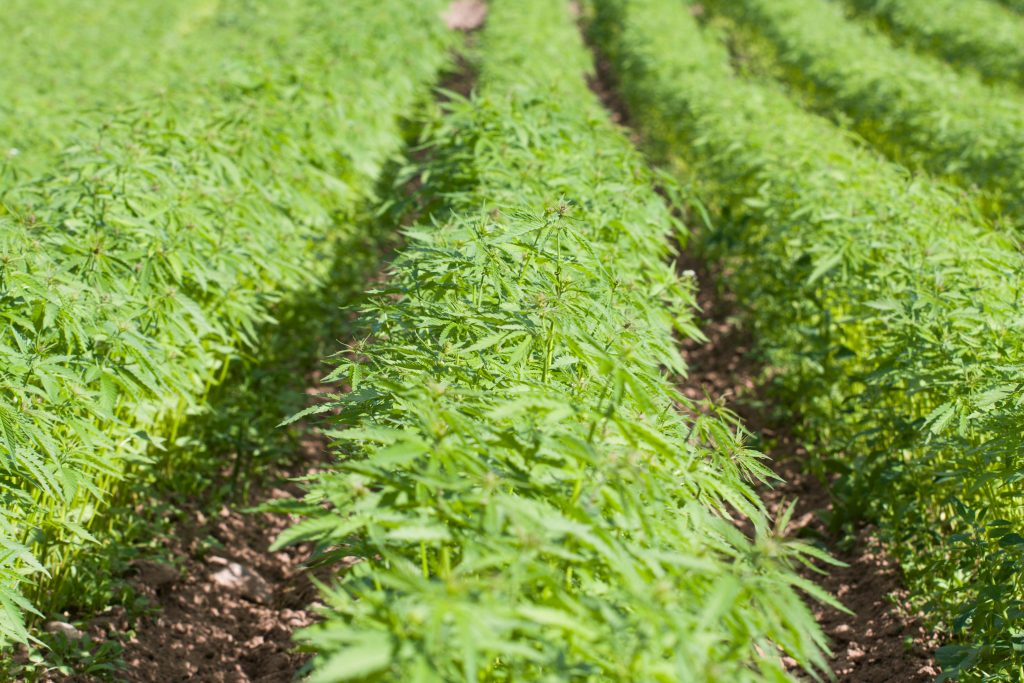
COLUMBIA — The South Carolina Department of Agriculture (SCDA) will accept applications for hemp farming permits for the 2021 growing season from Jan. 1 through Feb. 28, 2021.
The state’s Hemp Farming Program has grown from 20 farmers in 2018 to 265 farmers in 2020 – and each year, the program has changed as state and federal laws changed. When the federal government approved South Carolina’s State Hemp Plan in April 2020, the program entered a new period of regulatory stability, one that SCDA expects to continue in 2021. The agency now has six full-time staffers devoted to hemp regulation.
Requirements to receive a hemp farming permit include:
Proof of South Carolina residency
Criminal background check (A new check is required each permit year.)
FSA (Farm Service Agency) farm number
$100 nonrefundable application fee and $1,000 permit fee
GPS coordinates of all locations on which hemp will be grown
Submitting application and all required materials by the February 28, 2021 deadline
Attending an SCDA orientation and signing a Hemp Farming Agreement before possessing any hemp, including clones and seeds
Online Portal
All farmers must apply through SCDA’s online portal at agriculture.sc.gov/hemp. There are no paper or printable applications. Because it may take several weeks for farmers to obtain FSA farm numbers and background checks, applicants should review requirements and begin the process as soon as possible.
Permits are only good for the current year, so 2020 permit holders who wish to farm in 2021 must apply for a new permit. SCDA will not award a 2020 farmer a 2021 permit unless he or she has reported his or her 2020 hemp acreage to the FSA by the 2021 application deadline.
SCDA is tasked with regulating hemp farming. At present, our agency cannot provide training, information or grants for growing or processing hemp. Those with questions about hemp farming practices should contact their Clemson Cooperative Extension agent.
National Weather Service graphic shows Zeta’s path through Alabama.
The deadline is less than two weeks away for Alabama vegetable and specialty crop farmers seeking financial assistance from Hurricane Zeta.
Producers who suffered losses related to Hurricane Zeta have until Jan. 15 to submit an application to the Alabama Farmers Agriculture Foundation for assistance from a Hurricane Relief Fund.
According to the alfafarmers.org, the relief fund is designed to help offset farmer losses not covered by a farmowner policy, crop insurance or disaster relief programs. An independent committee will evaluate the applications based on need and award grants in February.
The application for Hurricane Zeta assistance and a link for contributions to the fund are available at AlabamaFarmersFoundation.org.
Hurricane Zeta made landfall in Louisiana as a strong Category 2 storm on Oct. 28 and maintained tropical storm winds as it raced across Alabama.
According to the southeastagnet.com, the USDA designated 13 Alabama counties as primary disaster areas, due to damage and losses caused by Zeta that occurred from Oct. 28 to Oct. 29.
A similar Hurricane Relief Fund was extended to victims of Hurricane Sally earlier this year, and applications are now being extended to victims of a second major storm.
Some Georgia hemp producers were victimized this year by having their crop’s THC level exceed 0.3 level. Subsequently, the hemp was destroyed, which was the case for 11 producers.
Tim Coolong, associate professor in the University of Georgia (UGA) College of Agricultural and Environmental Sciences and leader in hemp research at UGA, said he heard farmers in east Georgia who had a crop that tested hot. He believes next year that producers will test their hemp more frequently to avoid instances where the crop must be disposed of.
Testing Benefits
“I think certainly that anyone who tested hot this year that decides to grow again will certainly be doing it. I think for the most part, the growers that I did visit with last year understood the value of testing and how important it was,” Coolong said. “I think going into it next year, depending on how many growers we have, I think they will be a little more targeted perhaps or maybe just have a little bit better plan because they’ll have more time.”
Coolong added that he is still waiting to see how farmers fared financially after the state’s first commercial growing season.
“That’s obviously where, it doesn’t matter how good your yields are or quality, the bottom line is how much profit did growers make. People are still processing their product and all those sort of things right now. I’m not sure the profit levels on some of the growers I worked with,” Coolong said.
According to the Georgia Department of Agriculture, applications for new Georgia hemp grower licenses and hemp processor permits will be accepted, beginning in January, 2021.
Photo submitted by Patricio Munoz/Shows Sentinel variety.
The University of Florida’s (UF) newest blueberry variety possesses the quality all growers want in the Sunshine State.
“It can make you money,” said Patricio Munoz, UF blueberry breeder.
Munoz emphasized the attributes that make the Sentinel variety highly sought after from Florida farmers.
“We can go around to yield, quality and everything but, yes, this one can make you money. I think we have consistent data since 2017 when the plant was already two years old and we started looking at it,” Munoz said.
“It’s a consistent variety in terms of high yields and a consistent variety in terms of different locations. We have good supporting data for releasing this variety for consistent yields across locations and across years and in the best time of the season, which is early.”
Years of Research
Sentinel, released in October, was the culmination of 12 years of research by three different plant breeders, including Munoz. His relationship with Florida growers is vital to producing a variety that exceeds expectations. Communication is key to know what their needs are.
“If you ask the growers what do they want, they say we want yield, high fruit quality and in the right time of the season, which is early for us in Florida,” Munoz said. “Their wish is long and very complex.”
Munoz insists there is no perfect variety and doubts there will ever be.
“In some cases you compromise fruit quality to produce the yield, and in other cases you compromise yield to produce quality. The more fruit you produce, usually the quality decreases,” Munoz said. “We use an index of selection where we combine all of these traits. We give them different weights and based on that, we try to compromise.”
Sweet Flavor
One characteristic of Sentinel that does not disappoint, though, is flavor.
“Flavor is very subjective. One of us, if we tried the same blueberries, we might have different perceptions of how that blueberry tastes. It’s a difficult job for the breeder because he needs to breed for what he believes the people will like,” Munoz said. “We are trying to take subjectivity out of the equation here by doing tasting panels. We provide the fruit to a bunch of people at a tasting panel and they give us scores. What do think about it? In this case, this (Sentinel) cultivar was tasted by over 200 people and they put it in a very good place regarding the commercial cultivars that we have.
“We need to breed for the growers, but we also need to breed for the consumers, because if the consumers are not happy with the fruit that they are consuming, they’re not going to go back. If they don’t go back to buy more fruit, the growers are not going to have a place to sell the fruit. We need to please the whole chain.”
Munoz said Sentinel is a good cultivar for central and north Florida. It is not recommended for growers in south Florida where conditions are different.
The University of Georgia Cooperative Extension will hold pecan production meetings virtually in January, February and March.
UGA Pecan Team members include Lenny Wells (Extension pecan specialist), Angel Acebes (entomologist), Andrew Sawyer (Area Pecan Agent-Southeast District) and Jason Brock (plant disease diagnostician). All will give presentations and be available for questions over Zoom. Tentative dates for the meetings are as follows:
Jan. 21-6 p.m.
Feb. 9-9 a.m.
March 9-6 p.m.
According to UGA Extension, the various times are provided so people have the options of the best times that may work for them.
“We are still working out the details of setting things up for this with regard to registration, pesticide credits, etc., but I will be posting more information here as the plan comes together,” Wells said.
The January issue of VSCNews magazine will be the blueberry grower’s handbook heading into the 2021 season.
Chilli thrips are a growing threat for blueberry growers. Without proper management of the pest, overall plant vigor and yields can be affected. Oscar Liburd, a professor at the University of Florida Institute of Food and Agricultural Sciences (UF/IFAS) in Gainesville, Fla., shares conventional and organic management tactics that growers can implement to help control these pesky pests.
UF/IFAS has unveiled its newest blueberry variety, Sentinel, named in honor of UF alumna, Alto Straughn. It is a low-chill southern highbush variety and offers increased yields for growers. Brad Buck, UF/IFAS public relations specialist, mentions that Sentinel was ranked “high” in flavor among flavor panels.
America was built on its rich agricultural history. Ryan Atwood, co-owner of H&AFarms in Mt. Dora, Florida, shares the struggles blueberry growers faced in 2020 and growers’ optimism for the year to come. Atwood also discusses the increasing Mexican blueberry volume during the Florida harvest window and its impact on the U.S.
In 2020, mild winter conditions followed by a wet spring contributed to the development of significant disease issues on Georgia blueberries. Jonathan Oliver, an assistant professor at the University of Georgia in Tifton, Georgia, updates Georgia growers on disease management strategies.
Outside of the blueberry spotlight, Kimberly Morgan, an associate professor and Extension economist, and Tara Wade, an assistant professor, both at the UF/IFAS Southwest Florida Research and Education, share how growers could benefit from enterprise budgets.
Morgan is also joined by Jessica Ryals, a sustainable food systems agent for UF/IFAS, for another article in this month’s issue. These two discuss how an imperfect market system can yield profitable market opportunities for growers.
To receive future issues of VSCNews magazine, click here.
Rows of watermelon in North Florida, trees, leaves. UF/IFAS Photo: Thomas Wright.
On July 1, 2020, new record-keeping requirements went into effect for nitrogen and phosphorus amounts applied by growers enrolled in the Florida Department of Agriculture and Consumer Services (FDACS) Best Management Practices (BMP) program. These records are required due to the passage of Senate Bill 712, the Clean Waterways Act.
Growers have been asking many questions about this new requirement and what they must do to be in compliance with the law. This article is comprised of questions and answers designed to help growers understand their requirements as a FDACS BMP program participant, and the records submission process moving forward.
Matt Warren, environmental manager with the FDACS Office of Agricultural Water Policy in Hardee County answers some of the common questions from growers:
Q: Who does this new law apply to?
A: Any grower enrolled in the FDACS BMP program, regardless of whether or not they are located in an area with a Basin Management Action Plan (BMAP).
Q: The new requirement states that growers must submit their application records for nitrogen and phosphorus to FDACS. When do I submit my records?
A: You will submit your records of nitrogen and phosphorus applications only when requested by a FDACS representative during an implementation verification visit. These visits are done by FDACS to verify that a grower is in compliance with the program, by properly implementing the BMPs they committed to in their Notice of Intent to Implement BMPs.
Q: When will these implementation verification visits take place?
A: The visits will be done once every two years. Initially, priority will be focused on visits to growers located in BMAP areas, but every grower enrolled in the BMP program will be visited.
Q: Who will be conducting the implementation verification visits, and how will I be notified when I am receiving a visit?
A: A FDACS field representative will contact the grower to schedule a visit. The visits are not unannounced.
Q: I received a letter in the mail with record-keeping examples and instructions. Do I need to submit my records online?
A: The letter was to inform you of the new requirements and offer a form that you may use to record your nitrogen and phosphorus application information. Do not submit any records at this time. You will only be required to submit your records to the FDACS field representative during your implementation verification visit.
Q: What information am I required to record for submission?
A: Growers are required to keep a record of the total pounds of nitrogen and phosphorus (in the form of P2O5) that are applied to their fields on a monthly basis. Total pounds of nitrogen and phosphorus must be accounted for from all sources applied, including biosolids. Growers do not need to submit records of other nutrient applications, such as minor elements or soil amendments such as lime.
Important note: Growers must continue to keep records for their own files on all nutrient and soil amendment applications, in order to be in compliance as stated in their Notice of Intent to Implement BMPs and BMP checklist requirements.
Q: What form do I use to record my nitrogen and phosphorus application information?
A: FDACS has provided a suggested form for you to use. You are not required to use this form, but it is easy to follow and clearly shows what information is needed and where to input it. FDACS has this form available as a hard copy, printable PDF or in electronic form as an Excel spreadsheet. The Excel spreadsheet is recommended, as the information can be uploaded automatically.
Q: Do I have to give them my only copies of my records?
A: No, you must keep your original copies of your records. Give the FDACS representative a copy of the form mentioned above, or something similar, as your records submission.
Q: How far back do my records need to go for this new requirement?
A: You must submit nitrogen and phosphorus monthly totals for the past two years from the date of your scheduled implementation verification visit. For example, if you have an implementation verification visit scheduled for Dec. 20, 2020, you must submit nitrogen and phosphorus application records dating back to Dec. 20, 2018.
Q: How does FDACS determine if I am in compliance? Is it based on University of Florida Institute of Food and Agricultural Sciences (UF/IFAS) recommendations for crop production? What about soil and leaf samples?
A: UF/IFAS recommendations are used to determine if a grower is in compliance. For more information, please refer to these FDACS publications at fdacs.gov/Agriculture-Industry/Water/Agricultural-Best-Management-Practices:
Water Quality/Quantity Best Management Practices for Florida Vegetable and Agronomic Crops
Water Quality/Quantity Best Management Practices for Florida Specialty Fruit and Nut Crops
Soil and leaf samples are a requirement under the FDACS BMP program, and the results will also be used to determine if a grower is in compliance with the BMP program. Be sure to keep up with soil and leaf samples, as they may also be needed for justification.
Q: What if I do not have this information available for my FDACS field representative at the time of the implementation verification visit?
A: You will have to work with your FDACS representative. You may be placed in remedial action and given a certain time period to submit your records. If you choose not to submit your records, you may be referred to the Florida Department of Environmental Protection for regulatory action.
Q: Are my nitrogen and phosphorus application totals considered public records once they are submitted?
No, they are not considered public record. But, FDACS must provide them to the Florida Department of Environmental Protection, if requested, as long as the confidentiality specified for the records is maintained.
See blogs.ifas.ufl.edu/clue/2020/08/31/from-senate-bill-712-to-the-clean-waterways-act-and-agricultural-best-management-practices for more details and information about the Clean Waterways Act.
If you have more questions or would like a copy of the suggested record-keeping form, contact your FDACS Office of Agricultural Water Policy field representative or your UF/IFAS Extension agent.
A chilly December should have alleviated some concerns of Southeast fruit farmers worried about chill hours in a La Nina winter, according to Pam Knox, University of Georgia Extension Agricultural Climatologist.
“If you look at the plot of chill hours over this year, November was quite warm. I think they were running way below normal in the number of chill hours. That was a real concern for the fruit farmers,” Knox said. “But with the cold outbreaks we’ve had in December and the one we saw (over Christmas), that’s really going to bring up the chill hours. I’m sure the fruit farmers are going to be happy. You always wonder about that in a La Nina year.”
Previous Concerns
It was a concern for Edgar Vinson, assistant research professor and Extension specialist in the Department of Horticulture at Auburn University. He was worried about peach producers lagging in chill hours as he projected they only had about 172 in mid-December. But with cold outbreaks, the most recent of which came last week over the Christmas holidays, it should have increased those chill hours needed to produce a crop.
Knox said that while a La Nina weather pattern is characterized by warmer temperatures and drier conditions, cold outbreaks are not uncommon.
“The thing about La Nina is, even though the winter as a whole may be warmer than normal, we’re still going to get these cold outbreaks. This definitely is not the kind of weather we expect in a La Nina, but it goes up and down a lot in the winter,” Knox said.
“Every La Nina is different, too. Even though statistically we expect it to be warmer and drier than usual, there still are outliers. It’s possible we could have a colder winter than usual, even in a La Nina, although it would be unlikely.
“It’s winter, we expect some cold weather. It’s not surprising that we should have this cold outbreak. The weather depends on what’s going on in other parts of the world. It’s not just La Nina, it’s what is going on in the Arctic and what’s going on in the oceans. It’s part of a big puzzle and we have to try to put that together. A La Nina is certainly one factor but it’s not the only factor.”