Category: Top Posts

  • Clay Models Track the Activity of Beneficial Insects in Turfgrass

    UGA CAES photo/Entomology researchers can study predator activity in turfgrass by the markings predators leave in clay models.

    By Allison Fortner for CAES News

    Modeling clay isn’t limited to art classrooms and sculpting studios. University of Georgia researchers developed a tool to track beneficial insects in turfgrass systems using clay models. Tracking these good predators can help develop eco-friendly pest management techniques for both home lawns and commercial sod growers.

    In a recently published article in Entomologia Experimentalis et Applicata, UGA scientists determined that beneficial predator insects will interact with and leave distinct markings on clay models that resemble their prey, in this case the larvae of turfgrass pests. This study was led by entomology doctoral candidate Fawad Khan under the guidance of Assistant Professor Shimat Joseph in the College of Agricultural and Environmental Sciences on the UGA Griffin campus.

    “We want to know who the predators are and what kind of impressions these predators will create on these clay models. Before we do anything in the field, we need to have a sense of what that looks like,” said Joseph, a turfgrass entomologist.

    Though the clay model approach has been used in other disciplines to observe predator activity, Joseph and Khan found no previous use of the method in turfgrass research. This study developed clay models as a tool to aid in future research.

    “It’s kind of brain hack of the predator. We want to see how much the real predator interacts with the model based only on the visual cues,” said Khan, a Fulbright scholar who came to UGA to study eco-friendly pest management options, specifically beneficial insects.

    The Need for Research

    The turfgrass industry contributes $9 billion to Georgia’s economy each year, but one of the high costs is pest management. Joseph said that the use of insecticides not only cuts into grower profits but requires valuable time, labor and equipment. The use of biological controls, such as natural predator insects, could mean only using chemical management when pest numbers rise beyond a certain threshold.

    Harmful pests such as fall armyworms cause problems for turf growers and homeowners alike. Though there are natural predators that attack pests in their larval stage, it’s difficult to study the activity since they leave little evidence. The goal of Khan and Joseph’s research was to identify predator interactions and use that knowledge in commercial and residential turf. But before they could do so, they needed a method to measure how predators interacted with their prey.

    In this study, researchers created two sizes of simulated larvae from modeling clay. Then they collected natural predators from turf lawns at UGA-Griffin. Each collected arthropod spent 48 hours in a petri dish with two sizes of clay larvae models. This was enough time for them to make their marks. Because the clay stays soft at room temperature, any markings left by the predators were preserved.

    Researchers used video equipment to observe how the predators would first interact with models in the field. Outside of the petri dish controlled environment, they also placed the clay models near a fire ant mound in turfgrass. The study found different types of predators left behind distinct markings.

    The researchers characterized and named the impressions left by each type of arthropod and used the knowledge of the specific markings as a tool to study the activities of these insects in the field.

    “(The clay method) is good and it’s also cost-effective because it does not use a lot of expenditures like cameras or heavy equipment. You just have to put the clay models on the trees and near the turfgrass. After one or two days you see there are different markings and some activity there,” Khan said.

    Fueling Pest Management Research

    Because this study used a new method for measuring predator activity in turf, it created a baseline tool for further research as part of Khan’s dissertation work. The next step in the research is to compare predator activity between different systems.

    “For that research, we need to identify the marks in the real field conditions of the sod farms and the residential lawns. If we did not have the baseline research on the turfgrass system, we couldn’t do that,” Khan said.

    The goal in tracking predator activity between the systems is to create integrated pest management (IPM) methods against harmful insects such as fall armyworms. The clay model system will allow researchers to know which predators are present in commercial and residential situations. With that knowledge, Joseph said that they hope to manipulate existing predator insects to serve as a control method for the pests.

    “In IPM, we tend to use multiple tactics. Pesticide is an important tactic, but there are others, like biological control,” Joseph said. “My viewpoint is more conservation. Here we are looking at biological control so we can … develop a population of predators and beneficial insects. When the fall armyworm attacks, (predators) can provide the first layer of control. If the population is overwhelming, we have to come up with a remedy. Chemical management comes into play if the numbers go beyond a certain threshold.”

    Khan said the ecosystem-based approach of IPM considers beneficial insects including predators, parasites and pollinators, the environment, costs, economic loss and other factors surrounding any crop. However, this approach is not just important for those in the commercial agricultural sector. One of Khan’s ultimate research goals is to help homeowners know more about what is happening in their lawns.

    “We have to appreciate the natural enemies and biological control that is happening around us in our residential lawns. My research will be giving an estimation technique to see what good insects are active,” Khan said.

    For more information on the UGA Department of Entomology, visit ent.uga.edu.
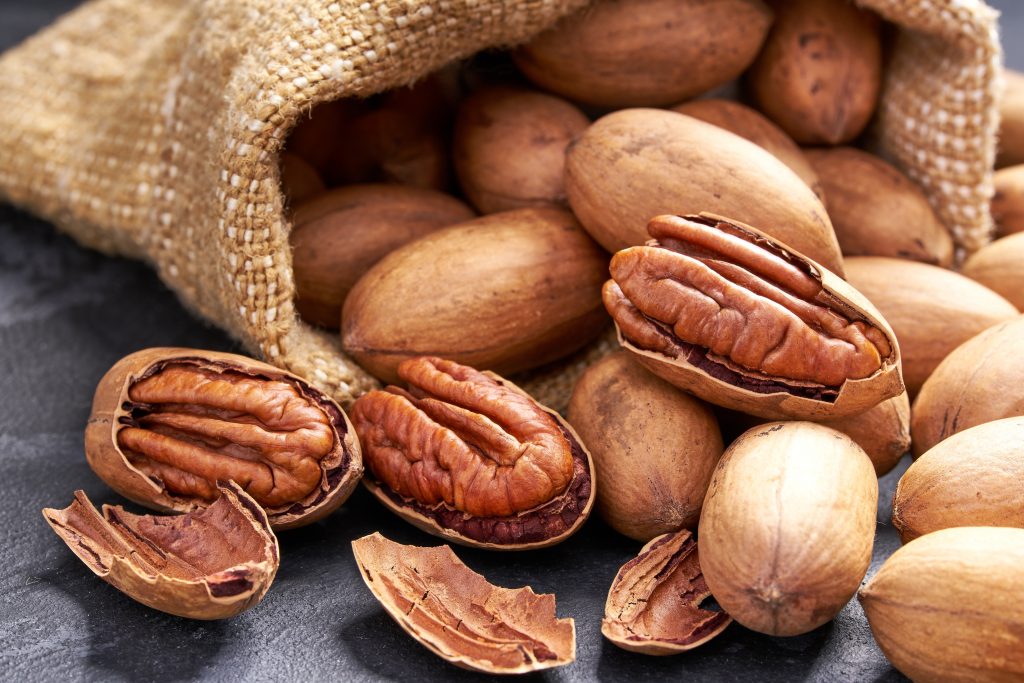
  • UGA Pecan Specialist: Morale is Really Low Right Now

    georgia pecans

    The pecan harvest season is in the books. When farmers and industry experts reflect on the 2020 season, what will be the story?

    Will it be an overwhelming crop that produced record yields for some farmers? Or will it be the low market prices that discouraged producers and forced many to store this year’s crop?

    University of Georgia Cooperative Extension pecan specialist Lenny Wells offers insight into a season unlike any other.

    “I think it’ll be the prices. Even though it was a huge crop, just the morale out there is really low right now. They didn’t get a lot for the crop,” Wells said.

    “The volume was there enough to where I think most of them are going to be okay. My concern is, if we’re seeing low prices again like this next year and we don’t have that volume, that’s when we’ll really start to feel the pain. But we’ve got a long time to go between now and then. Who knows what will happen with China and all that in the meantime?

    “There are a lot of nuts that are stored out there. That’s certainly going to play into whatever the price turns out to be next year.”

    Low Prices All Season

    Pecan prices were shockingly low all season. South Georgia farmer Randy Hudson said prices were anywhere from 30% to 50% less than what they’ve experienced the previous three years. All while fixed and variable costs continue to be extremely high.

    During the middle of harvest season in early November, Stuart varieties sold for 75 cents per pound. Sumners were selling for $1.30 to $1.41 per pound. Even with minimal scab disease pressure, Desirable varieties sold for just $1.35 to $1.40 per pound.

    Massive Yields

    Wells said the latest USDA numbers estimate that Georgia pecan farmers produced about 135 million pounds. It’s an astounding number considering the state is recovering from Hurricane Michael in 2018. Trees and acres of production were lost during the October storm. Who knows how high this year’s production would have been if not for the storm?

    “If we still had the acreage before we had the hurricane, this would have been a record crop, no doubt. A lot of growers had a record crop for their farm. But just because there was so much acreage lost, I think that brought it down some,” Wells said.

    Alabama farmers were hurt by hurricanes that destroyed acreage and greatly reduced their crop this year.

  • Syngenta Showcases Multiple Vegetable Products

    Syngenta had a chance on Tuesday during the Southeast Regional Fruit and Vegetable Conference to showcase several new vegetable products that are sure to benefit vegetable and specialty crop growers in the Southeast.

    Prevail

    Prevail is a popular new beans variety that’s adaptable to a wide range of growing conditions. It produces slim, very dark green pods. In trial data, it reached maturity in 54 days and has an average pod length of 5.5 inches.

    Payout

    Payout is a spineless squash that matures in 45 days. The open plant produces cylindrical fruit that reaches 6.7 inches in length.

    Grandprize

    Grandprize is a straightneck squash that produces high quality fruit with a glossy deep yellow appearance. It boasts an enhanced disease package. The vigorous plant delivers solid yield performance over other yellow straightneck varieties.

    Powerhouse

    It won’t be long before watermelons are planted for the upcoming season. Powerhouse is a variety that should be considered for planting. It reaches maturity in 86 days and weighs between 13 and 16 pounds. It can develop sugars early, allowing for potential early harvest. It has a thick rind for improved shipping. It has high yield potential and full flavor.

    Will Gay

    “In our watermelon portfolio, we’re really excited about adding Powerhouse,” said Will Gay, a PDS in Georgia with Syngenta. “This variety is three days earlier in maturity than Captivation. With it being 86 days, it’s right between Fascination and Captivation in maturity. It is a main 45-count watermelon and it is improved on size than some other varieties that we’re competing with that may have more 60 counts. This is a good 45-count melon.”

    The 2021 Southeast Regional Fruit and Vegetable Conference is normally held in January in Savannah, is being held virtually this year due to COVID-19 concerns. The three-day event will be held through Thursday, Jan. 7.

    For more information, or to register for the event, click here.

  • Blueberry Meeting with ITC Set for Jan. 12

    Blueberry growers will soon have a chance to make their case against unfair trade practices from Mexico and other countries.

    Jerome Crosby, Georgia blueberry grower and chairman of the American Blueberry Growers Alliance, confirmed on Tuesday during the Southeast Regional Fruit and Vegetable Conference that the group will present their case to the International Trade Commission (ITC) on Tuesday, Jan. 12.

    “On Jan. 12, we will be providing physical testimony to the ITC Committee. All parties of leadership will be at the table. We will be speaking directly to the commissioners. We will be presenting our cases and our comments. Those of us who are making comments, we will be putting those comments in under a signed affidavit. This is where the rubber meets the road,” Crosby said.

    Crosby said the blueberry group will have 60 minutes to make its case on Jan. 12, which will include testimony from legislative delegation from all states and featured speakers, including Crosby and Brittany Lee, Executive Director of the Florida Blueberry Growers Association.

    However, Crosby also cautions that groups who oppose the 201 investigation will have the same amount of time to present their cases. So, it is not a slam dunk that the ITC will issue a remedy.

    “It’s going to be one hour of us versus maybe five, six or seven hours of opposition. I still feel good about our case because the data and the facts are on our side. We’ve got good numbers. We’ve got a good team working with us. We’re doing all the right things,” Crosby said. “But to say it’s not a little bit intimidating would be misleading you. We’ve got a big mountain to climb.”

    Crosby added that after the Jan. 12 meeting, the ITC will have 30 days to file a report.

    Virtual Hearings

    The meeting with the ITC stems from virtual hearings held last August. The two hearings provided the U.S. Department of Commerce and Trump Administration an opportunity to hear from seasonal produce growers in Georgia and Florida about the urgent need for federal action regarding unfair trade.

    Southeast Regional Fruit and Vegetable Conference

    The conference, which is normally held in January in Savannah, is being held virtually this year due to COVID-19 concerns. The three-day event will be held through Thursday, Jan. 7.

    For more information, or to register for the event, click here.

  • Making Sense of Biologicals: Biologicals Meet Grower Needs

    Sponsored Content

    The use of biological crop protection products or “biologicals” in vegetable and specialty crops is not a new idea, just one that is increasing in popularity.

    The name sells itself. Biologicals represent a group of products derived from living organisms. Growers utilize environmentally friendly biologicals in combination with appropriate chemical applications to provide added protection against pests, diseases and weeds.

    THE OLD WITH THE NEW
    “These products have been around for a long time, before the chemical age, if you will. This is how farmers farmed,” says Dean Craine, ag market business development manager with Douglas Plant Health. “This is how growers grew crops and learned how to do it well, whether with manures or compost or whatever resource they had that they turned into something useful. We call it our grandfathers’ way of farming.”

    Craine says teaming today’s technology — including precision agriculture, NDVI photography and satellite imagery — with these old and very safe biologicals makes for a successful combination. “It’s where we need to head,” he says.

    GROWER CHALLENGES
    The agricultural biological market has increased in importance due to various reasons. The world’s population continues to skyrocket. There are approximately 7.8 billion people in the world, up from 6.1 billion in 2000. A growing world population means more mouths to feed and increased dependence on farmers to be more innovative in trying to meet demand.

    Sustainability is always an issue of importance as growers in the Southeast contend with pests, diseases, decreased market prices and imports from Mexico.

    GETTING IT RIGHT
    Biologicals help meet those needs, but they need to be the right situation for the right farmer in the right region. Due to an overabundance of supplies being offered, growers need to be aware of what product is right for their farming operation.

    “There have been many solutions that don’t stand up over time. They all probably worked somewhere once, but when you run across products said to work everywhere, obviously, you need to be skeptical,” Craine advises. “Look for products with a track record, some history, some data and sound science. This must be the way the grower comes at it. As a grower, it can be very frustrating to sort through all the noise.”

    PAIRING PRODUCTS
    Industry experts classify biologicals into three categories: Biostimulants (liquid manure compost and seaweed extracts, for example), biopesticides (including Bacillus thuringiensis and mineral oil) and biofertility products (such as Rhizobium and Azotobacter bacteria).

    When biofertility products get established in the soil, they can increase nutrient availability. Some of these products are synergistic, which allows for greater success when used in combination with each other.

    “Those biofertilizers require the right biostimulants with them,” Craine says. “We generally define biostimulants as carbon products that feed biofertilizers and biopesticides. Biopesticides are products that have been studied carefully and can specifically target pests, whether they are diseases, insects or weeds. A lot of new work is pairing the right biostimulant with the right biofertilizer or biopesticide. This increases the biofertilizer or biopesticide’s adaptability and gives it a better shot at establishing in the soil or on a plant to do what it’s good at.

    “If we’re going to replace some of the harsher chemistries, that’s how it’s going to be done, by pairing the right products to maximize their effectiveness.”

  • Virtual Southeast Regional Fruit and Vegetable Conference Underway

    This week’s conference is being held virtually.

    The 2021 Southeast Regional Fruit and Vegetable Conference is underway. The conference, which is normally held in January in Savannah, is being held virtually this year due to COVID-19 concerns. The three-day event will be held through Thursday, Jan. 7.

    For more information, or to register for the event, click here.

  • Clemson Extension Agents Provide Crop Updates

    Clemson Extension agents provide updates in the The South Carolina Grower this week about the status of various crops being produced throughout the state.

    Weekly Field Update-1/4/21

    Posted on by Justin Ballew

    Happy New Year! We hope everyone had a great holiday season and is off to a good start in 2021. We have several virtual grower meetings coming up over the next two months, so keep an eye on the “Upcoming Events” page for info. Also, don’t forget the Southeastern Regional Fruit and Vegetable conference kicks off virtually this week and it’s not too late to register.

    Coastal

    Rob Last reports, “Firstly, I would like to wish everyone a happy ,and successful 2021. Crops in the area have slowed down with the cooler weather, and we are seeing a reduction in caterpillar activity. Strawberries look good, however, it would be advisable in advanced crops to remove any flowers to reduce the botrytis pressure later in the season. Winter vegetables are looking very good with low levels of Alternaria leaf spot in some crops. If in doubt scout.

    Zack Snipes reports, “One of my New Year’s Resolutions this year is to be more proactive rather than reactive. I would like to extend that mentality to my field work as well. This year I really want to help growers nip problems in the bud before they become problems. Weekly calls, texts, check-ups, and regular visits can help both of us achieve our goals. Give me a shout in 2021.”

    Let’s work together before this happens. Photo from Zack Snipes.

    Midlands

    Justin Ballew reports, “We’ve had a lot of rain to start off the new year. A day or so after Christmas we saw temperatures down in the low 20’s and ended up with some cold damage on greens. They should grow out of it just fine. Strawberries are coming along. We are seeing spider mites build up in places, requiring treatment. Keep scouting regularly, even though it’s cool outside. Let me know if you need a second pair of eyes. On another note, I noticed daffodils starting to come up in my yard a few days before Christmas. Can’t ever remember seeing them emerge that early.”

    Cold damage on mustard greens from the recent dip into the low 20s. Photo from Justin Ballew.
    The view of spider mites on the underside of strawberry leaf through a 10X hand lens. Photo from Justin Ballew.

    Sarah Scott reports, “Field preparation for new peach tree plantings is underway along the Ridge. Some growers are using a plow to make berms to plant trees on to aid in disease management issues such as armillaria root rot. Lots of rain in the past week has made for muddy conditions.”

    Freshly plowed peach field with berms for planting. Photo from Sarah Scott.

    Pee Dee

    Tony Melton reports, “Very few greens undamaged after the cold if they weren’t either covered or protected in some way. Strawberries are doing well. I hope there is not, and I have not seen any cold damage of the crowns in the Pee Dee. I had one account where coyotes were biting through the row-covers to eat ripe strawberries.”

  • UGA Researching Organic Onion Fertilizers

    Organic onion production in Georgia is nothing new. But the data is lacking for farmers who are trying to expand and be more efficient in their operations.

    That is why Tim Coolong, associate professor in the UGA College of Agricultural and Environmental Sciences, is studying organic onion production.

    “Onions have been grown conventionally for decades. That system, I feel like we’ve got it down pretty well, although, we still have issues,” Coolong said.

    “Organic onions have also been grown for a little while, but the body of knowledge is so much less. Growers are constantly trying new things. As researchers, we’re trying new things. Sometimes they work, sometimes they don’t. But it’s just trying to build that body of knowledge to draw upon.”

    Fertilizer Applications

    That knowledge consists of fertilizer applications, which are essential in the development of onions throughout the growing season. Growers who utilize organic fertilizer sources, typically use poultry-litter based. But farmers must apply high levels of organic fertilizer prior to planting to ensure onions have adequate fertilizer levels when they start putting on growth in mid-winter.

    Unlike conventional soluble fertilizers, many organic sources continue a slow and steady release of nitrogen throughout the growing season, even later in the year when growers often try to reduce available nitrogen prior to harvest. 

    “We’re looking at standard poultry litter, which is used a lot less now than it used to be. Then we’re going to be looking at other organic fertilizers that, based on information from folks up here, they found that they have very different release rates,” Coolong said. “With the conventional fertilizer, if you put it out, it’s there. It’s readily available. But with some of these organics, they may take several weeks to release, they may take longer. What we’re hoping to do is evaluate some of these so that our onion growers can be able to time their fertilizer applications better.”

    Unfortunately, higher nitrogen levels near harvest may predispose some onions to bacterial diseases if the weather is warm, which is not uncommon in southeast Georgia.

    “We’ve done some preliminary work, so we’ve got a little bit of data. We’re hoping to really dial it in this year,” Coolong said.

  • Beware of Fungicide Resistance When Managing Downy Mildew Disease

    File photo shows downy mildew disease on a cucurbit plant.

    Fungicide resistance remains a concern for Florida vegetable farmers trying to manage downy mildew disease.

    Scientists like Gary Vallad, a Professor of Plant Pathology at the University of Florida/IFAS Gulf Coast Research and Education Center, implore producers not to be too reliant on one specific fungicide. It can lead to resistance issues.

    “Orondis is one that is kind of the industry standard. It’s probably the most effective product available. But it also is in that category of being high risk for resistance,” Vallad said.

    “What we’re trying to do here is show growers there are a number of other products that are very effective and would be very good to rotate them in with your Orondis program. What we want to do is make sure the industry is not just relying on Orondis that they are utilizing these other tools they have in the toolbox as well.”

    Consequences of Misdiagnosis

    Vallad also cautions growers about the consequences of misdiagnosing downy mildew.

    “The symptoms can vary based on the cucurbit host itself. Symptoms on cucumber are very classic, but if you get some of the other cucurbit species, the symptoms can vary. A great example is there were some watermelon samples that came in the lab where folks thought it was gummy stem blight and it actually was downy mildew,” Vallad added.

    “If you’re not careful, you can misdiagnose. The bad thing is, a lot of things we use for gummy stem blight, fungicides for that management, are not going to work very well on downy mildew, and vice versa. Like all diseases, getting a proper diagnosis is very critical to properly managing it.”

    Downy Mildew Background

    Downy mildew disease can destroy plant foliage and cause the leaves to curl and die. Without healthy leaves and vines, a plant is vulnerable to blisters and sunscald during hot days. The pathogen thrives in wet, humid conditions and needs moisture on the surface of the plant for successful spore germination and further infection.

    “It is an extremely aggressive pathogen, especially under the growing conditions in Florida. A big reason why we have so many big issues here in Florida is because of our environmental conditions. Most of our varieties don’t have any type of resistance to it, which means we’re highly reliant on fungicides for management,” Vallad said.

    “We’re sub-tropical so we always have warm weather. Our relative humidity is really high. Of course, it’s Florida so we get lots of rainfall as well. These are very ideal conditions for this fungus.”

    The disease is favored by a temperature range of between 41 degrees F and 86 degrees F; relative humidity greater than 90%; period of near-saturated relative humidity for sporangia formation, which includes heavy morning dew, foggy mornings and rain. Spores are easily dispersed by wind and rain.

  • Natural Habitat for Birds, Safe Produce Co-exist?

    File photo shows a vegetable field.

    With an interest in wildlife while possessing an expertise in food safety, Kristin Woods is concerned about risks bird populations have on fruit and vegetable production in the Southeast.

    “It is possible to do both, have safe produce and maintain habitat for birds and other wildlife. But it really is an area we need more research in to know how to do that safely,” said Woods, Alabama Regional Extension agent, who specializes in food safety.

    Does clearing habitat around produce fields put vegetable and specialty crops more at risks of birds potentially carrying deadly pathogens? On the other hand, if the natural habitat is left alone, are crops less at risk to be impacted? Those are questions Woods hopes to answer and will talk about further during the Southeast Regional Fruit and Vegetable Conference on Thursday at 4 p.m.

    “I’m interested in ways that our commercial produce growers can maintain habitat for wildlife, as well as pollinators that they need for their produce without increasing food safety risks. There has been some line of thinking that clearing habitat is safer. Some of the emerging research is indicating that is not the case. When you clear habitat … you shift the species of birds into species that are more likely to carry pathogens,” Woods said.

    “If we can maintain woody areas and habitats around our growing areas, then we attract native species of birds that have lower pathogen prevalence. They’re also species that are less likely to be visiting areas that have livestock. They’re less likely to be carrying things like E. coli and salmonella.”

    IPM Strategy

    Organic producers can also potentially incorporate birds into their integrated pest management (IPM) strategy if a natural habitat is maintained. It’s similar to how insects are used in an IPM system.