Category: Top Posts

  • USITC to Investigate Effect of Imports on the U.S. Cucumber and Squash Industries

    File photo shows cucumbers.

    The U.S. International Trade Commission (USITC) is seeking input for two new general factfinding investigations on the effects of imported cucumbers and imported squashes on the U.S. seasonal cucumber and squash markets.

    The investigations, Cucumbers: Effect of Imports on U.S. Seasonal Markets, with a Focus on the U.S. Southeast, and Squash: Effect of Imports on U.S. Seasonal Markets, with a Focus on the U.S. Southeast, were requested by the U.S. Trade Representative (USTR) in a letter received on December 7, 2020.

    As requested, the USITC, an independent, nonpartisan, factfinding federal agency, will examine the effect of imports on the domestic seasonal markets of cucumbers and squash in separate but concurrent investigations and produce two separate reports. The reports will provide, to the extent practical:

    • descriptions of the effects of imports on the domestic seasonal markets of the products in question, with particular focus on production and the competitiveness of cucumbers and squash grown in the Southeastern United States;
    • information on recent trends in trade in these products between the United States and its trading partners, including information on seasonal patterns of trade; and
    • descriptions of monthly price trends for these products in the United States, including an analysis and comparison of the prices of domestically produced and imported products in the U.S. market, with a focus on the 2015-2020 time period. 

    The USITC expects to transmit both of its reports to the USTR no later than December 7, 2021.

    The USITC will hold a public hearing in connection with the investigations at 9:30a.m. on April 8, 2021.  Because COVID-19 mitigation measures are in effect, the public hearing will be held via the WebEx videoconference platform.

    Information about how to participate in the hearing will be posted on the Commission’s website no later than March 11, 2021, at https://usitc.gov/research_and_analysis/what_we_are_working_on.htm.

    Requests to appear at the hearing should be filed no later than 5:15 p.m. on March 25, 2021, with the Secretary, U.S. International Trade Commission, 500 E Street SW, Washington, DC 20436.  See below for important information regarding filing a request to appear at a USITC hearing.

    The USITC also welcomes written submissions for the record.  Written submissions should be addressed to the Secretary of the Commission and should be submitted no later than 5:15 p.m. on April 27, 2021. All written submissions, except for confidential business information, will be available for public inspection.  See below for important information regarding the filing of written submissions for USITC investigations.

  • Friday Deadline for Alabama Farmers Following Zeta

    Photo shows Hurricane Zeta.

    The deadline is Friday for Alabama vegetable and specialty crop farmers seeking financial assistance from Hurricane Zeta.

    Producers who suffered losses related to Hurricane Zeta need to submit an application to the Alabama Farmers Agriculture Foundation for assistance from a Hurricane Relief Fund by this week.

    According to the alfafarmers.org, the relief fund is designed to help offset farmer losses not covered by a farmowner policy, crop insurance or disaster relief programs. An independent committee will evaluate the applications based on need and award grants in February.

    The application for Hurricane Zeta assistance and a link for contributions to the fund are available at AlabamaFarmersFoundation.org.

    Hurricane Zeta made landfall in Louisiana as a strong Category 2 storm on Oct. 28 and maintained tropical storm winds as it raced across Alabama. 

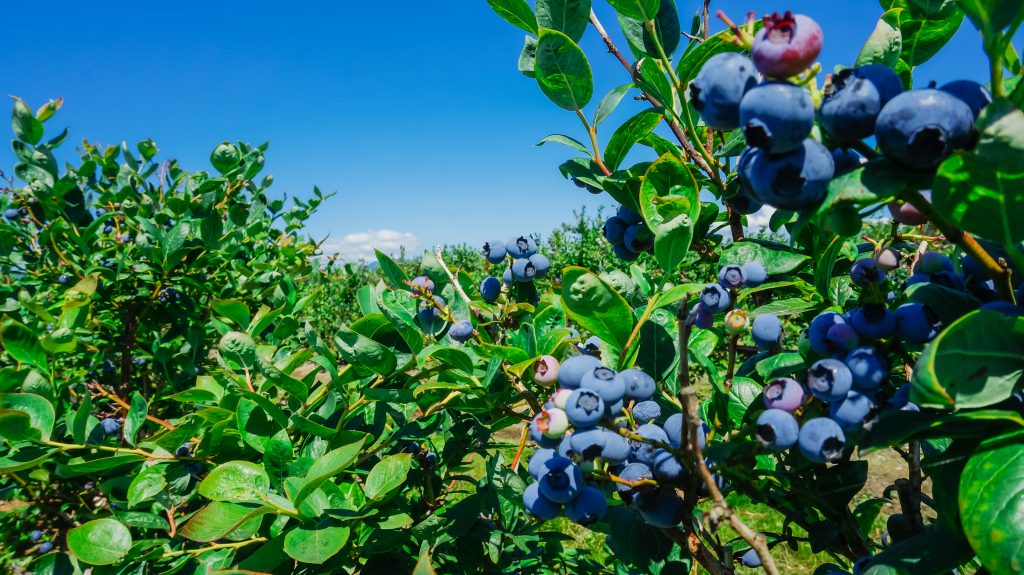
  • Georgia Blueberry Commission to Receive Nominations

    blueberry
    File photo of blueberry production.

    The Georgia Blueberry Commission is taking nominations for a person to fill the unexpired term of Russ Goodman. The deadline for applications is Jan. 31, 2021. If interested, a person must be a grower of blueberries in Georgia and must be willing to commit to meetings and activities of the Blueberry Commission. The term will end the Summer of 2023.

    Goodman is stepping down from duties as a member of the Blueberry Commission to allow more time to devote to his responsibilities of representing District 8 in the Georgia State Senate. 

    Those interested can find an nominee form at agr.georgia.gov/cpf, under blueberry in the nomination forms column.  Please complete, scan and email to andy.harrison@agr.georgia.gov

    If you have further questions, please contact Andy Harrison:

    Andy Harrison

    Manager, Commodity Commissions

    Georgia Department of Agriculture

    Andy.harrison@agr.georgia.gov

    (404) 710-1196

  • Georgia Blueberry Disease Management Update

    Orange-colored blueberry leaf rust pustules can be seen on leaf undersides. Photo by Jonathan Oliver.

    By Jonathan Oliver

    In 2020, mild winter conditions followed by a wet spring contributed to the development of significant disease issues on Georgia blueberries. Among other issues, growers faced difficulties with preharvest and postharvest fruit rots and continuing problems with spring blueberry leaf rust epidemics.

    The fruit pathology program at the University of Georgia (UGA) in Tifton conducts trials to determine fungicide efficacy and optimal application timings. Disease management information is provided to blueberry growers through the UGA Cooperative Extension Service, the Southeast Regional Blueberry Integrated Management Guide (smallfruits.org/ipm-production-guides/) and the free MyIPM smartphone app.

    FUNGICIDE-RESISTANT RIPE ROT

    During the 2020 growing season, Georgia blueberry growers faced challenges from fruit rots including ripe rot caused by the fungi Colletotrichum gloeosporioides and C. acutatum. Development of ripe rot (also called anthracnose fruit rot) is favored by warm, wet conditions. Fungal infection can occur from bloom up until harvest, though symptoms do not typically appear until fruit begin to ripen.

    The spores of the fungus that cause ripe rot can easily spread from berry to berry via rain splash, in packing lines or in clamshells. Typically, field applications of QoI (strobilurin) fungicides such as Abound (azoxystrobin), Pristine (pryaclostrobin + boscalid) and Quilt Xcel (azoxystrobin + propiconazole) provide excellent ripe rot control. However, in recent years, C. gloeosporioides isolates from blueberry with resistance to QoI fungicides have been identified in Georgia and elsewhere in the southeastern United States.

    Blueberry leaf rust damage is visible on the top of the fruit. Photo by Jonathan Oliver.

    To provide growers with needed information regarding alternative fungicides for ripe rot management, the UGA-Tifton Fruit Pathology Laboratory and UGA Cooperative Extension personnel conducted trials during 2020 to evaluate fungicidal spray programs for control of ripe rot and other fruit rot disease issues. In these trials, spray programs which incorporated applications of Switch (cyprodinil + fludioxonil), Captan (captan), Miravis Prime (pydiflumetofen + fludioxonil), Omega (fluazinam) and Ziram (ziram) were the most effective at reducing fruit rots in general and ripe rot in particular.

    To manage ripe rot, applications of effective fungicides beginning at early bloom and continuing every seven to 14 days through preharvest are recommended. Growers are reminded that rotations of the available modes of action (and/or tank mixes with multi-site products such as captan) are encouraged to reduce the chances of continued fungicide resistance development in the pathogen population.

    Ripe rot is also known as anthracnose fruit rot. Photo by Jonathan Oliver.

    In addition, when developing a spray program for fruit rots, growers should be aware of the preharvest interval (PHI) of these products, including Ziram (which should not be used more than three weeks after full bloom), Omega (which should not be used within 30 days of harvest) and Quilt Xcel (also a 30-day PHI). Consult the various labels for rates, recommendations and precautions.

    BLUEBERRY LEAF RUST

    Blueberry leaf rust (caused by the fungus Pucciniastrum vaccinii) is most frequently associated with causing leaf spots and premature defoliation after harvest. However, Georgia blueberry growers have also experienced significant spring epidemics of leaf rust in recent years that can directly impact developing fruit. These spring epidemics are likely the result of increasingly mild winters that allow blueberry leaves infected during the previous season to persist through the winter and serve as sources for disease spread early in the subsequent season.

    Recent trial work carried out by the UGA-Tifton Fruit Pathology Laboratory reinforces the importance of spring fungicide applications for leaf rust management. Applications of effective demethylation inhibitor (DMI) fungicides during the spring were found to significantly decrease the development of leaf rust throughout the growing season. Two spring applications of Proline (prothioconazole) were capable of controlling leaf rust and measurably reduced disease throughout the full season, regardless of whether effective fungicides were used after harvest.

    While postharvest applications are still recommended to prevent premature defoliation due to blueberry leaf rust, this trial work highlighted the particular importance of spring fungicide applications for leaf rust management in conditions of high disease pressure. Growers should be aware that leaf rust epidemics can start early following mild winter conditions and consider early-season applications with DMI fungicides for rust management. DMI fungicides with very good to excellent efficacy against rust include Proline, Quash (metconazole) and Quilt Xcel. Consult the various labels for rates, recommendations and precautions.

  • Winter Rains Mean Reduced Chance of Summer Drought

    The most recent U.S. Drought Monitor map shows sporadic parts of Florida, Georgia and Alabama that are classified as abnormally dry.

    Rainfall this winter should mean less potential for dry conditions in the summer for vegetable and specialty crop producers in the Southeast. That could mean less need for irrigation usage for farmers during the hot summer months of June through August.

    Rain has not been lacking across the Southeast, especially during the latter part of December and so far in the first couple of weeks of January. It was especially persistent during the New Year’s Holiday weekend.

    “Having more rain in the winter reduces our chance to have drought in the summer, so that’s good,” said Pam Knox, University of Georgia Extension Agricultural Climatologist. “The cooler temperatures do help to keep the moisture in the soil as well. When it’s really dry, you get more evaporation, even in the winter. All of these things we’re seeing, cooler conditions and wetter conditions, mean that we’re less likely to see dry spells in the spring that would impact farmers.”

    Georgia Rains

    According to the Georgia Automated Weather Network, from Jan. 1 to Jan. 9, Tifton, Georgia received 4.41 inches, compared to 0.76 in 2020 and 1.32 in 2019. In Vidalia, Georgia, where onions are being produced, there was 3.65 inches recorded during that same timeframe, compared to 1.58 in 2020 and 0.77 in 2019.

    “On the short term, it looks like we’re probably going to see a whole series of storm systems move through. That’s pretty not typical for a La Nina year for the Southeast. But the way the weather patterns have set up this year with that dip in the jetstream over the eastern half of the country, we’re probably going to see more storms,” Knox said. “They’re talking about potentially, although snow in the Southeast is pretty hard to get, we might see some. But it would most likely be in the mountains rather than in any other part of the state.

    “But we still have the whole month of February and March to go too. We’ll just have to wait and see exactly what happens.”

  • Southeast Agriculture Well Represented on House Ag Committee

    Bob Redding, who works for the Redding Firm and serves as a lobbyist for agricultural groups in Washington, D.C., believes the 117th Congress yields a positive outlook for vegetable and specialty crop producers in the Southeast.

    Scott

    Prominent Georgians are represented on the House Ag Committee. The committee is empowered with legislative oversight relating to the U.S. agriculture industry, forestry, nutrition and rural development, according to the press release announcing Congressman David Scott (GA-13) as the committee’s new chairman.

    Scott has served in the House Ag Committee since 2003. Scott replaces Collin Peterson, who lost his seat in Minnesota’s 7th Congressional District to Michelle Fischbach.

    Redding added that Georgia Congressmen Austin Scott (GA-08) and Rick Allen (GA-12) will remain on the House Committee.

    Bishop

    Congressman Sanford Bishop (GA-02) remains the Chairman of the House Appropriations Subcommittee on Agriculture.

    “It’s historical in that one state controls both, in the House, the authorization committee, House Ag, as well as the funding committee or bank for USDA for Food and Drug Administration with House Ag and Appropriations. That’s a very good thing for us, particular Southeasterners and Georgians,” Redding said. “This is highly unusual, historical as far as our lifetime in the House. That should work well for Southeast specialty crop on a lot of the policy issues, dealing with the USDA and FDA.”

  • Peach Varieties Susceptible to Bacterial Spot Disease

    Photo submitted by Phil Brannen/Shows bacterial spot disease on a peach.

    Susceptible peach varieties make bacterial spot disease a problem that continues to linger for growers in the Southeast.

    That was a message that Phil Brannen, University of Georgia Cooperative Extension plant pathologist, presented during last week’s Southeast Regional Fruit and Vegetable Conference.

    “A lot of the varieties that people really want the fruit from are susceptible. Unfortunately, that’s the reality. We do have some resistant varieties or at least some that are much more tolerant of this disease, but those are the ones that don’t have the color that you might want because they’re going to the market and stuff like that. That’s where we run into issues,” Brannen said.

    Why are Varieties so Vulnerable?

    He added that most of the varieties that producers in Florida, Georgia and Alabama are using originate out of the breeding program in California. But those varieties are grown and developed under much different environmental conditions than in the Southeast.

    “They’ll have beautiful peaches. They’ll be very colorful and all the things that the market would demand. That’s great, but they breed these in a dry environment in California. They don’t have bacterial spot because they’re basically growing these things in the desert. They use irrigation under the trees in order to keep them alive,” Brannen said.

    “For California, this is not an issue or not a major issue. But you take those same varieties from those breeding programs and say we want those because they produce a beautiful fruit and that’s what we want and you bring them here, they have never been developed in the presence of these diseases as far as their breeding program. Then all of a sudden you realize, ‘Wow, these are really susceptible to bacterial spot.’”

    What is Bacterial Spot?

    Bacterial spot is a sporadic leaf-spot disease that can cause defoliation in certain cultivars. Spots can also appear on the fruit, causing damage and leaving fruit unmarketable.

    Producing peaches in the Southeast can be tricky for growers. They understand that consumers are used to buying certain peaches that exhibit certain traits. That’s why producers are content with growing varieties that are vulnerable to bacterial spot disease.

    “There’s two things that sell peaches and neither one of them really have to deal with taste. Taste is variable based on the acidity and sweetness you have in the peach. People like taste based on what they like. The color is strictly a visual type of thing. A lot of people really love a red color or a lot of blush on a peach. You can take a peach that’s very yellow and it would taste maybe better than that red peach. But people are still going to seek that color,” Brannen added.

    “The second thing is size. People want a large peach. A smaller peach will taste just as good, maybe better. But people want a large, red luscious peach. That’s what the market demands. That’s what we’re trying to provide.”

  • USDA Establishes Weekly Report to Highlight Seasonable, Perishable Product Trends

    WASHINGTON, Jan. 8, 2021 – The U.S. Department of Agriculture today announced a new data report, the U.S. Mexico Canada Agreement Seasonal Perishable Products Weekly Update, prepared in close partnership with the Office of the U.S. Trade Representative (USTR) and the U.S. Department of Commerce (Commerce). The weekly report is based on data provided by USDA’s Agricultural Marketing Service (AMS) and its Specialty Crops Market News Division.

    “With the impact of COVID-19 on the produce industry, it is critical that we keep an eye on marketplace trends for seasonal and perishable products,” said USDA Undersecretary for Marketing and Regulatory Programs Greg Ibach. “This report will help the federal agencies involved in overseeing the supply chain understand import trends as we work to address industry concerns.” 

    This new report was first issued in December 2020 and combines information published by AMS Market News into an easy to read description of the current market trends on key imported specialty crops. The commodities highlighted each week will vary seasonally and will change to follow importing seasons and crop cycles. On Sept. 1, 2020, USTR, Commerce and USDA issued a joint report on Seasonal and Perishable Products in U.S. Commerce which highlighted the need for a near-real time market report to provide USTR, Commerce and the public with the volume and prices for selected seasonal and perishable commodities.

  • 2021 Southeastern Vegetable Crop Handbook Now Available!

    According to N.C. State Extension, the new Southeastern Vegetable Crop Handbook is now available online. Extension vegetable specialists across the Southeast come together annually to update this handbook.

    In addition to vegetables, garlic, some culinary herbs and hops are also included. There will be a limited number of hard copies available. Due to the lack of in-person vegetable grower meetings this season, they will probably be distributed through your local North Carolina Cooperative Extension offices. More information will be posted on that when it is available. And a big thank you to Vegetable Growers News for partnering with us on this project!

  • UGA Climatologist: This Year’s La Nina Weather Pattern is Rare

    The latest U.S. Drought Monitor show few abnormally dry conditions in the Southeast.

    A La Nina weather pattern is usually characterized by warmer temperatures and drier conditions. So far this winter, however, it has been a lot cooler with more rain than originally predicted in the Southeast.

    Pam Knox, University of Georgia Extension Agricultural Climatologist, explains why this year’s La Nina is acting abnormally.

    Pam Knox

    “It’s not unprecedented to have a La Nina like this, but it’s rare. The atmosphere acts like a bowl of jelly. There’s a lot of different things that are jiggling around. The one that’s most predictable is the La Nina vs. El Nino. But this year it turns out there’s a lot of other things that are going on that are changing that usual statistical pattern,” Knox said.

    “There’s all this other stuff going on. What we’ve seen is a move south in the track of the storms. Usually in a La Nina year, they’re pretty far up to the north and we stay under high pressure. This year because of other things going on in the Arctic and other places, that storm track has been pushed to the south. We’ve seen a lot more rain. We’ve seen cooler temperatures. It’s a little deceptive. We really haven’t been that cold, it’s just that we’re used to warm temperatures now. So, it feels cold.”

    The rainfall is good news for vegetable and specialty crop producers in the Southeast. Winter is a time when the soil moisture gets recharged due to rainfall.

    Cooler temperatures are also needed for fruit farmers banking on chill hours to grow a productive crop.