Category: Top Posts

  • Export Markets Remain Key for Southeast Pecan Producers

    With the 2020 pecan season in the books, growers in the Southeast are looking to write a new chapter in 2021, one they hope will have a better ending.

    The story of this past season’s crop centered on devastatingly low prices and low morale among farmers still trying to recover from Hurricane Michael in 2018. The biggest question remains, what can be done to improve market prices? It starts with the potential export markets that need to be explored, especially since China currently remains a non-buyer.

    UGA Extension Pecan Specialist

    “Southeastern growers should be able to see now what their markets look like if we don’t have a large in-shell export market in play. It’s not a pretty sight,” University of Georgia Cooperative Extension pecan specialist Lenny Wells said. “I hope that we will see more efforts from some of the grower organizations in the state to take on and actively get involved in some of this export marketing work for in-shell nuts.

    “I think whether we’re talking about China or South Korea or India, Turkey, even Egypt’s being talked about now; there’s a lot of places we need to be working on for in-shell export markets. That’s really where southeastern growers are going to benefit.”

    Domestic Market Competition

    Additional export options are needed considering the domestic market has increased competition from Mexico.

    “I just really don’t see anything on the horizon that’s going to affect the volume of nuts coming in from Mexico. That competition for the domestic market is here to stay. There’s no question that Southeastern growers are at a disadvantage in that market,” Wells said.

    According to the final Georgia Pecan Price Report released last week, growers are cleaning up orchards and preparing for the 2021 season. Growers are still bringing pecans onto the market. But the volume has dropped, and there is a wide range of quality.

  • Neopestalotiopsis Fruit Rot Survives in Florida Strawberry Fields

    Photo submitted by Natalia Peres/University of Florida: Shows the impact of Neopestalotiopsis Fruit Rot on Florida strawberries.

    Neopestalotiopsis Fruit Rot has impacted Florida strawberry production the last three seasons. The disease has taken a discouraging development for Florida producers this year, however, says Natalia Peres, Professor of Plant Pathology at the University of Florida/IFAS Gulf Coast Research and Education Center.

    “What we’ve seen this season is different than what we’ve seen the past two seasons. We can’t really see that link with the nursery source as much anymore. What we see is that fields that mostly had the disease last season have it again this season, which indicates that, unfortunately, the pathogen survived in our fields between seasons,” Peres said.

    Samples Taken

    During the 2018-19 crop year, 12 samples of the disease were detected from five farms. They were attributed to the same nursery source in North Carolina. In 2019-20, 48 samples were detected from 20 farms with two nursery sources, though the disease quickly spread to other fields after severe weather.

    Photo submitted by Natalia Peres/University of Florida: Shows the impact of Neopestalotiopsis Fruit Rot on Florida strawberries.

    There have been over 60 samples from 20 farms detected thus far this growing season, mostly from fields that had the disease the prior year.

    “What is really new is the aggressiveness of the disease we’re seeing in Florida. In general, this group of fungi is considered a weak pathogen. It’s more likely to be secondary and attack plants that are under some stress. But that’s definitely not the case of what we’ve seen in Florida,” Peres said.

    The disease is spread by water and can explode during prolonged periods of wetness. This is especially evident early in the season when farmers apply irrigation to get the plants established. It was also true this season when Tropical Storm Eta impacted Florida in early November.

    Disease Symptoms

    Neopestalotiopsis causes leaf spots on strawberry plants. It develops quickly and produces spores on the leaves. It can cause severe leaf spotting and fruit rot under favorable weather conditions.

    Unfortunately, it can be hard to detect because of other similar leaf spot diseases that growers must contend with like leaf scorch, leaf blotch and Cercospora leaf spot.

    “There are other leaf spots that may be confused with this one. We were getting a lot of samples in the clinic at the time and right now this season. Every leaf spot, growers are worried it could be this one. Usually, our growers are not really concerned about common leaf spots they see in the spring just because they’re much more easily controlled and not as aggressive,” Peres said.

  • Secretary Perdue Statement on H-2A Modernization

    (Washington, D.C., January 15, 2021) U.S. Secretary of Agriculture Sonny Perdue issued a statement today applauding the Department of Labor’s final rule modernizing the H-2A visa program:

    Perdue

    “This final rule streamlining and modernizing the H-2A visa process will go a long way in ensuring American farmers have access to a stable and skilled workforce, all while removing unnecessary bureaucratic processes. USDA’s goal is to help farmers navigate the complex H-2A program that is administered by Department of Labor, Department of Homeland Security, and the State Department so hiring a farm worker is an easier process,” said Secretary Perdue. “These modernizations make the Federal government more responsive to our customers, ensuring American agriculture continues to lead the world for years to come.”

    Background: The final rule will streamline the H-2A application process by mandating electronic filing of job orders and applications. These elements are designed to bring the H-2A application process into the digital era, by harnessing the power of the FLAG electronic filing system to share information with other federal agencies like the Department of Homeland Security while also sharing information with the State Workforce systems and domestic farmworkers.

    Additionally, the final rule will provide additional flexibilities to cut down on unnecessary burdens on the agricultural employers that use the program. These flexibilities include the ability to stagger the entry of workers into the country over a 120-day period and allowing agricultural employers the flexibility to file a single application for different dates of need instead of multiple applications. 

  • USDA Publishes Final Rule for Domestic Production of Hemp

    WASHINGTON, Jan. 15, 2021—The U.S. Department of Agriculture (USDA) announced today the final rule regulating the production of hemp in the United States. The final rule incorporates modifications to regulations established under the interim final rule (IFR) published in October 2019. The modifications are based on public comments following the publication of the IFR and lessons learned during the 2020 growing season. The final rule is available for viewing in the Federal Register and will be effective on March 22, 2021.

    “With the publication of this final rule, USDA brings to a close a full and transparent rule-making process that started with a hemp listening session in March 2019,” said USDA Marketing and Regulatory Programs Under Secretary Greg Ibach. “USDA staff have taken the information you have provided through three comment periods and from your experiences over a growing season to develop regulations that meet Congressional intent while providing a fair, consistent, science-based process for states, tribes and individual producers. USDA staff will continue to conduct education and outreach to help industry achieve compliance with the requirements.”

    Key provisions of the final rule include licensing requirements; record-keeping requirements for maintaining information about the land where hemp is produced; procedures for testing the THC concentration levels for hemp; procedures for disposing of non-compliant plants; compliance provisions; and procedures for handling violations.

    Background: 

    On Oct. 31, 2019, USDA published the IFR that provided specific details on the process and criteria for review of plans USDA receives from states and Indian tribes regarding the production of hemp and established a plan to monitor and regulate the production of hemp in those states or Indian tribes that do not have an approved state or Tribal plan.

    The IFR was effective immediately after publication in the Federal Register and provided a 60-day public comment period. On Dec. 17, 2019, USDA extended the comment period until Jan. 29, 2020, to allow stakeholders additional time to provide feedback. USDA re-opened the comment period for 30 days, from Sept. 8 to Oct. 8, 2020 seeking additional comments from all stakeholders, especially those who were subject to the regulatory requirements of the IFR during the 2020 production cycle. In all, USDA received about 5,900 comments.

    On Feb. 27, 2020, USDA announced the delay of enforcement of the requirement for labs to be registered by the Drug Enforcement Administration (DEA) and the requirement that producers use a DEA-registered reverse distributor or law enforcement to dispose of non-compliant plants under certain circumstances until Oct. 31, 2021, or the final rule is published, whichever comes first. This delay has been further extended in the final rule to December 2022.

    The Agriculture Improvement Act of 2018 (2018 Farm Bill) directed USDA to issue regulations and guidance to implement a program for the commercial production of hemp in the United States. The authority for hemp production provided in the 2014 Farm Bill was extended until January 1, 2022, by the Continuing Appropriations Act, 2021, and Other Extensions Act (Pub. L. 116-260) (2021 Continuing Appropriations Act) allowing states and institutions of higher education to continue to grow or cultivate industrial hemp at certified and registered locations within the state for research and education purposes under the authorities of the 2014 Farm Bill.

    More information about the provisions of the final rule is available on the Hemp Production web page on the Agricultural Marketing Service (AMS) website.

  • Blueberry Imports Devastating to Florida Industry

    Florida’s agricultural and political leaders had their say Tuesday in describing the negative impact blueberry imports have had on the state’s farmers.

    “Agriculture is essential to Florida’s economy. Our No. 1 economy is tourism, obviously, but our No. 2, and it’s very close behind tourism is in fact agriculture. It means so much to Florida that it’s a $131 billion economic impact, providing nearly 1.4 million jobs,” said John Rutherford (FL-04), who testified during a virtual hearing with the U.S. International Trade Commission that blueberry imports are devastating to the state’s economy.

    “For years Florida has been impacted by countries taking advantage of our domestic market for produce. Growers in my district and around the state have voiced their concerns by providing data which details the harm caused by these imports. Unfortunately, as a result of these issues, many producers have had to shut down their farms through no fault of their own.”

    Statistically Speaking

    Nikki Fried, Florida Ag Commissioner, said that the state’s blueberry industry is valued at $62.3 million, but its market share has declined by 38% since 2015. Mexico’s market share has increased by 2,100% since 2009.

    Brittany Lee, Executive Director of the Florida Blueberry Growers Association and Vice President and Farm Manager of Florida Blue Farms in northeast Florida, spoke personally of how imports have impacted her family’s farm.

    “In 2010, the year we planted blueberries on my farm here, there was only 1.8 million pounds of Mexican blueberries in the Florida window which we consider March, April and May. Last year there was 51.68 million pounds in that window,” said Lee.

    “Mexico has concentrated their production in the mid-March to early April season which is directly on top of Florida. I can tell you that the impact has been absolutely devastating to the Florida industry.”

  • COVID Forces Farmers to Consider Alternate Marketing Opportunities

    Photo by Clint Thompson/Shows boxed produce being sold direct to consumers.

    COVID-19 altered the marketing plans of Southeast vegetable and specialty crop producers in 2020. Restaurants closed, which crippled certain sectors of the fruit and vegetable industry.  

    Farmers must continue to adjust as a new season approaches while the pandemic continues. Jessie Boswell, Alabama Regional Extension agent, who specializes in commercial horticulture and farm and agribusiness management, believes the pandemic’s impact has forced farmers to realize their marketing options needed to expand and could expand in 2021.

    “I think it made a lot of farmers realize how flexible they have to be and actually noticing these other marketing channels that they have, they may not have even noticed it before,” Boswell said.

    “A lot of them may not even have realized how to do those different channels. Maybe they’ve been meaning to look into it later, and this just kind of made them realize they’d have to be more flexible in kind of looking ahead more so than they were in the past.”

    Boxed Produce/CSA

    Farmers like Bill Brim in Georgia boxed their produce and sold direct to consumers to offset decreased demand. Community Supported Agriculture (CSA) was another option that paid off for some producers.

    “I know of a farm and they were planning on transitioning to a CSA last spring, spring of 2020, and they were already planning that before the pandemic even happened. They had a way better year than they even could have imagined,” Boswell added. “They had already started setting up for direct to consumer or a CSA box. They sold an astronomical amount. They sold out, actually.

    “That’s probably what I have seen most people do is switch to more of an online (option) or CSA. Even some of the ones that aren’t technology savvy started selling stuff on Facebook, trying to sell their greens or whatever they had because their other marketing channels were not open.”

    Of course, encouraging some farmers to consider alternate marketing strategies is easier said than done.

    “I know a lot of farmers that like to do things the way they’ve been doing it for the past decade. They’re not always the biggest fans of change,” Boswell said.

  • Georgia Vegetable Growers to Vote to Continue Assessment

    Georgia vegetable growers will vote Feb. 1 through March 2, 2021 to determine the continuation of the Georgia Vegetable Commission marketing order which allows assessment of one cent per marketing unit of vegetables as described in the current marketing order.

    Photo submitted by UGA’s Stormy Sparks/Shows whiteflies on a vegetable plant.

    The marketing order applies to growers with 50 acres or more of total annual production of the following crops – beans, bell pepper, specialty pepper, broccoli, beets, cabbage, cantaloupe, carrots, cucumbers, eggplant, greens (including collards, turnip greens, mustard and kale), squash (including yellow, zucchini and winter squash), sweet potato and tomato. 

    Funds collected by the Georgia Vegetable Commission are used for research, education and promotion of the crops mentioned above. It is the policy that the commission allocates at least 75% of money collected toward research projects by the University of Georgia and other research institutions that best serve Georgia growers. Some of the areas previously funded have focused on whiteflies, fungal disease diagnoses and control, viral diseases, variety development, fumigation, and weed control. 

    The Georgia Vegetable Commission was established by the Georgia General Assembly in 2006 at the request of the Georgia vegetable growers. The marketing order must be reapproved by vote of the eligible vegetable growers every three years by a two-thirds affirmative vote. 

    If you are a qualified grower and have not received a ballot in the mail by Feb. 10, please contact Andy Harrison:

    Andy Harrison

    Manager, Commodity Commissions

    Georgia Department of Agriculture

    Andy.harrison@agr.georgia.gov

    (404) 710-1196

  • PPP an Option Again for Business Owners Amid Ongoing Pandemic

    The second round of the Paycheck Protection Program (PPP) offers financial relief to business owners continuing to struggle amid the ongoing coronavirus pandemic.

    Bob Redding, who works for the Redding Firm and serves as a lobbyist for agricultural groups in Washington, D.C., encourages vegetable and specialty crop producers to consider enrolling in the program.

    Redding

    “We also have a second round of the Paycheck Protection Program. If you participated the first round, you ought to consider it again. If you didn’t participate in the first round of PPP, you can still participate in the second round. There are no prohibitions there. It’s a little broader than before, a little more restrictive in some areas. But the criteria used for the forgiveness portion of the loan include more items,” Redding said.

    Paycheck Protection Program Information

    According to the U.S. Department of Treasury, the U.S. Small Business Administration (SBA), along with the Treasury Department will re-open the PPP loan portal to PPP-eligible lenders with $1 billion or less in assets for First and Second Draw applications on Friday, Jan. 15 at 9 a.m. The portal will open to all participating PPP lenders on Tuesday, Jan. 19 to submit First and Second Draw loan applications to the SBA.

    According to the U.S. Department of Treasury press release, First Draw PPP Loans are for borrowers who have not received a PPP loan before August 8, 2020. The first round of PPP ran from March to August 2020. Second Draw PPP Loans are for eligible small businesses with 300 employees or less, that previously received a First Draw PPP Loan, will use or have used the full amount only for authorized uses, and that can demonstrate at least a 25% reduction in gross receipts between comparable quarters in 2019 and 2020. The maximum amount of a Second Draw PPP loan is $2 million.

  • Georgia Blueberry Producer: In the World I Live in, It’s a Problem

    blueberry

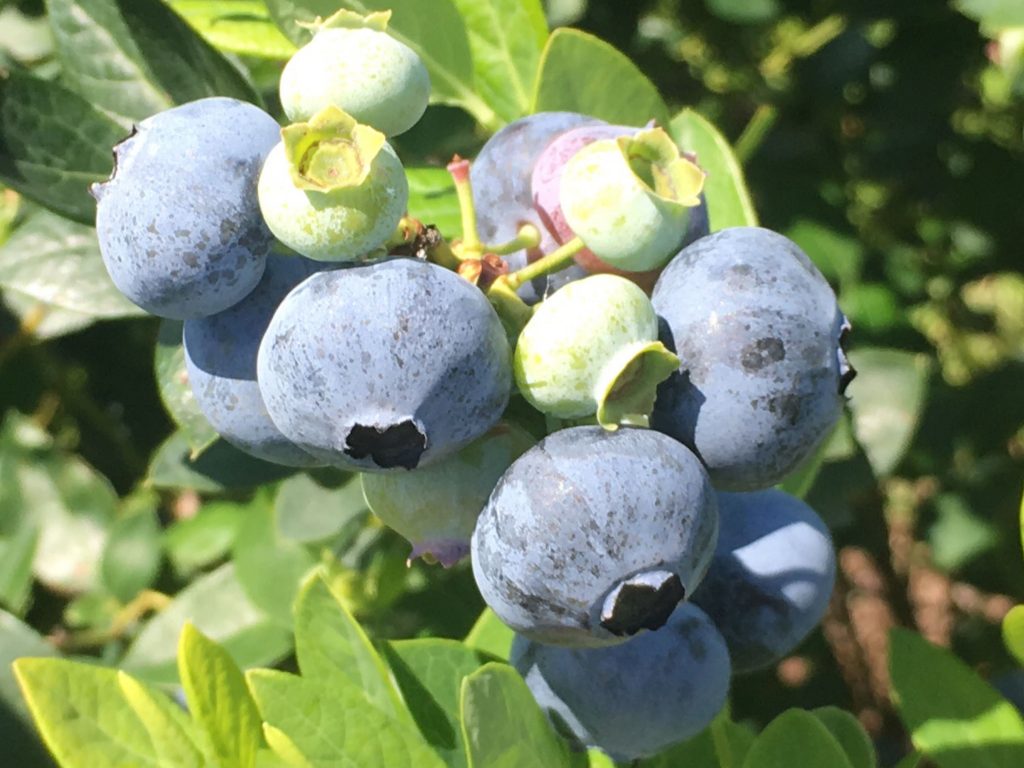
    Foreign imports of blueberries do not complement the U.S. domestic crop. Farmers and industry leaders in the Southeast sounded insulted about the notion that imports do not actually compete with their crop. They were asked about it during Tuesday’s virtual hearing with the U.S. International Trade Commission (ITC).

    “I find the comment that imports don’t affect us, it’s confusing to me, and I wonder if they’re trying to be comical,” said Jerome Crosby, Georgia blueberry grower and chairman of the American Blueberry Growers Alliance. “My farm operates both in the frozen world as well as the fresh world.

    “On the frozen side, I have watched my sales, net margin drop from about 80 to 90 cents per pound for grade A. To this year, I received 38 to 40 cents per pound to pay off my farm expenses with. In the world I live in, it’s a problem.”

  • Auburn Extension Specialist Encouraged by Chill Hours Accumulation

    Cooler temperatures so far in 2021 should be an encouraging sign for Alabama fruit producers who need chilling hours to make a crop this year.

    “I’m a little more encouraged,” said Edgar Vinson, assistant research professor and Extension specialist in the Department of Horticulture at Auburn University. “We did accumulate more and more than we originally thought by the end of December. It was still a little bit short. It could be made up in January or later this month and into February. It’s not the problem it was shaping up to be.”

    Vinson said in mid-December that chill hour accumulation was a concern. He added that peach producers needed to have between 450 and 500 chill hours by the end of 2020. Vinson said last week that chill hours in Central Alabama were around 400. While he is encouraged, Vinson believes there is still more to catch up before producers don’t have to worry about chill hour accumulation.

    “We’re still a little concerned. We’d like to see a little more towards the end,” Vinson said. “What we’re looking for are warming trends. We didn’t see very many of those, so that’s good. Especially those warming trends of short duration, those tend to be a little more costly when it comes to chill accumulation, like those 24-hour warming cycles.”

    Peaches need chill hours to mature. The required chill hours depend on the peach variety, but most growers hope to get around 1,000 chill hours before spring.

    Temperatures do not need to reach below freezing for chill accumulation to occur. Optimal chilling is at 42 degrees Fahrenheit.