Resende said scientists can use this information to improve the breeding methods.
“This is expected to translate into better varieties for farmers and consumers,” said Resende, a UF/IFAS assistant professor of horticultural sciences.
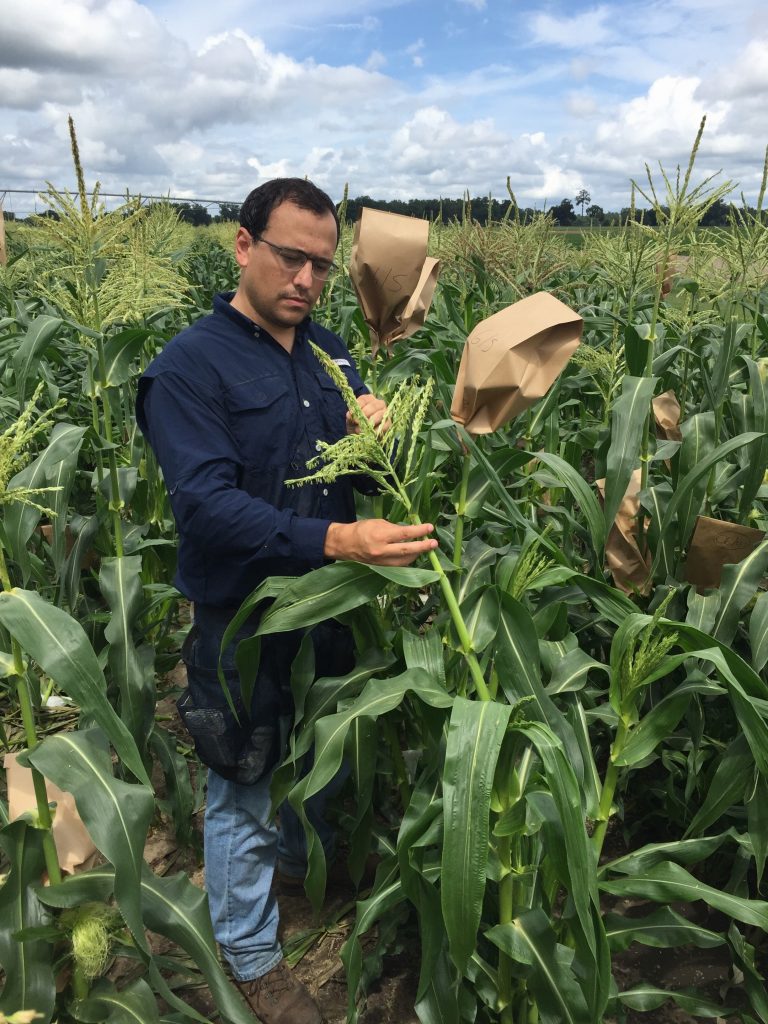
For the study, published in Nature Communications, Resende chose a variety that represents the foundation of supersweet corn in the United States.
He and his colleagues used several technologies to reconstruct the sweet corn genome. By using these techniques, the scientists learned the exact structure of the natural mutation of the gene that creates supersweet corn, and therefore higher sugar content.
“We were now able to sequence the genome of a supersweet corn, which will help us to accelerate the development process of novel varieties,” Resende said. “Moving forward, we will analyze the DNA of our current breeding lines and compare them against this genome to select which ones to move forward in the breeding process.”
For the second straight year, the Using Pesticides Wisely program will be offered in a virtual format amid the ongoing coronavirus pandemic. The training, which is offered by the University of Georgia (UGA) Cooperative Extension and Georgia Department of Agriculture (GDA), will be offered on 11 different dates in March and April.
Culpepper
University of Georgia Extension weed specialist Stanley Culpepper provides insight on what farmers and their applicators can expect when attending this year’s training.
“Like every year, part of our Using Pesticides Wisely Training platform is to bring all of our applicators up to date on our challenges and share information to help them overcome those challenges. This year’s training will focus on a lot of different topics,” Culpepper said. “We’re going to make sure everybody’s really comfortable with the new Dicamba labels. That’s had some significant changes, so we’re going to make everybody comfortable with those new changes. We’re going to focus on topics to help every grower achieve their objective of keeping every pesticides on target.”
He added that additional topics will include the Paraquat training that is now required by the Environmental Protection Agency, herbicide resistance and farmer health.
“Everything that we’re focusing on this year is important to anyone if they think pesticides are a critical tool to their sustainability as they search to feed, produce feed, food and fiber for the world,” Culpepper said.
UGA Extension and the Georgia Department of Agriculture created the UPW trainings in 2015.
Trainings Schedule
The trainings schedule is as follows:
March 8 5:30 p.m.
March 11 9 a.m.
March 15 5:30 p.m.
March 18 9 a.m.
March 22 5:30 p.m.
March 25 9 a.m.
March 29 5:30 p.m.
April 1 9 a.m.
April 5 5:30 p.m.
April 8 9 a.m.
April 12 5:30 p.m.
Each individual applicator must pre-register to attend the training. Registration is permitted up to two hours prior to the training. No trainings will be offered after April 15 for the 2021 season.
Preparations need to be done well in advance for producers interested in producing blueberry plants, said Elina Coneva, an Extension specialist in the Horticulture Department at Auburn University, during a webinar on the Alabama Extension Commercial Horticulture Facebook page.
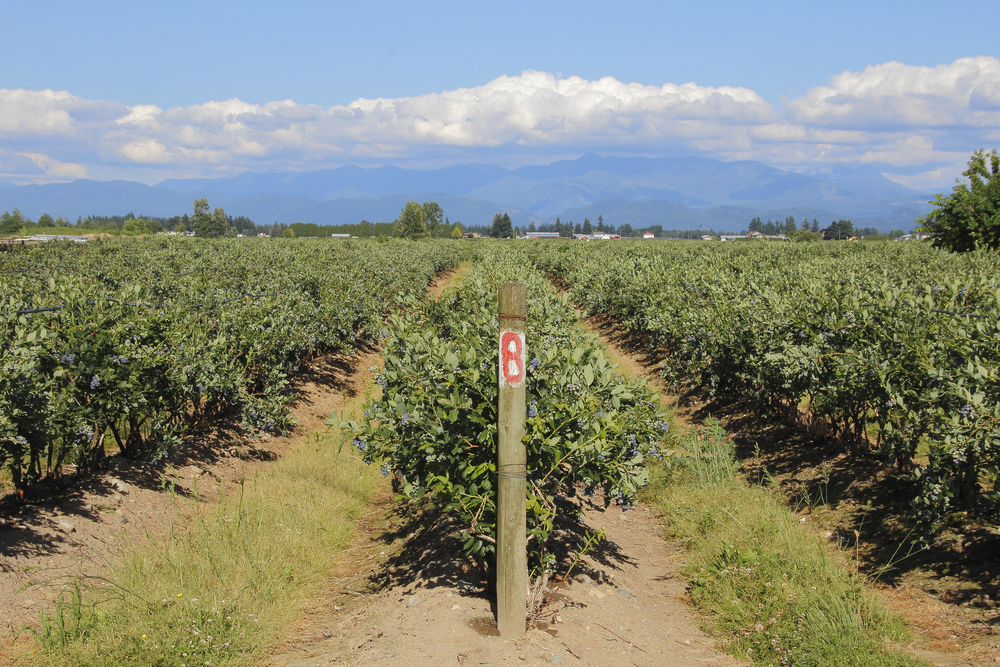
“For those who are considering becoming blueberry growers, I would let you know that you need start preparation for your blueberry field at least one year in advance,” Coneva said. “The good soil types for growing blueberries are characterized by light, sandy and well-drained soils. In addition to all the nutrients that you need to check in your soil, you need to be aware of the pH in your soil. Unlike almost all other fruit crops, the optimal soil pH for blueberry production is between 4.2 and 5.5.”
She also added that it is important that farmers add organic matter to their soil. This can be achieved through cover crops or through peat moss, though it is a more expensive option. The most popular option is the use of pine bark.
“This (organic matter) adjustment will improve the chemical, physical and mechanical properties of the soil in which the blueberries are going to be grown,” Coneva said.
She added that each 1% of soil organic matter releases about 15 pounds of nitrogen each year.
Fresh produce continues its steady growth at retail, with increased sales for fruits and vegetables during the fourth quarter of 2020. That’s according to a new report from United Fresh, detailing the fourth quarter of last year and the 2020 year-end report.
Among the fourth quarter highlights, both fruits and vegetables continued to grow as sales surged across categories driven by consumers making more shopping trips and spending more during those trips. Total fruit sales generated $7.3 billion in the last quarter of 2020, representing 7.7% growth over the previous year. Vegetable sales grew 14% during the quarter, reaching $8.8 billion.
Some of the key numbers from the Year-End report show produce departments generating $7.1 billion in 2020, accounting for 33% of total fresh sales, second only to the meat department.
Total fruit sales in the U.S. reached $33.7 billion and were 14.4% higher than the previous year. Apples, grapes and bananas ranked as the top three categories in sales.
Vegetable sales reached a new high of $35.8 billion and were 14% higher than in 2019. Pre-packed salads, tomatoes and potatoes were the top three categories in sales.
(From the National Association of Farm Broadcasters)
Bacterial streak and bulb rot caused by Pseudomonas viridiflava. A: Foliar symptoms include water-soaked lesions and collapsed leaf tissues. The corrugated appearance is due to protruding veins in leaves. B: A blue-green appearance is occasionally observed in post-harvest rots caused by this pathogen.
By Bhabesh Dutta
The climate prevalent in the Vidalia onion zone (southeastern Georgia) is conducive to many diseases. Among the diseases, those that are caused by bacteria and fungi are the prominent ones. Some of the diseases caused by water molds or oomycetes (Pythium damping-off and downy mildew) can also be seen periodically. Based on my experience as a vegetable Extension pathologist and onion disease specialist in Georgia, I generally see a seasonality to some of the important diseases. This article covers points that relate to disease seasonality and management.
SEPTEMBER/OCTOBER PROBLEMS
Onion seeds are sown around mid-September to early October on seedbeds. Some of the diseases that are normally seen during this period are Pythium damping-off and foliar blight caused by Xanthomonas leaf blight and Pantoea sp.
Bulb rot symptoms of sour skin on onion. Photo credit: David B. Langston, University of Georgia, Bugwood.org
Fungicides labeled for onion are effective against Pythium and can be used as a soil application according to the label. Use of optimum watering and avoiding seedbeds in low-lying areas of the field can also help in managing this disease.
In terms of bacterial blights in seedlings on seedbeds, some growers use copper-based bactericides that are effective. Normally, nature takes its own course. When these seedlings are transplanted in the field, carry-over bacterial disease issues from seedbeds are seldom seen. This is in part due to the cooler conditions that are prevalent during December and January, which these bacterial pathogens do not prefer.
Onion seedlings are transplanted after Thanksgiving or in late November and continue until mid-December. Diseases are not so common during these months; however, Vidalia onion growers use a preventive spray of broad-spectrum fungicides that provides a general level of protection against foliar fungal pathogens.
Foliar symptoms of yellow bud disease on onion include intense chlorosis on emerging leaves and severe blight on the older leaves. Photo credit: Ronald D. Gitaitis, University of Georgia, Bugwood.org
JANUARY/FEBRUARY DISEASES
Fungal diseases are rare during December and January, but some bacterial diseases like bacterial streak and bulb rot (causal organism: Pseudomonas viridiflava) and yellow bud (causal organism: Pseudomonas coronafaciens) can be observed in late January to late February. Use of copper-based bactericide spray, optimum nitrogen fertilization and optimum irrigation generally help in managing these diseases.
WHAT TO WATCH FOR IN MARCH
As the temperature becomes moderate in March, along with frequent rainfall, Botrytis leaf blight (causal organism: Botrytis squamosa) and purple blotch (causal organism: Alternaria porri) can be observed. Stemphylium stem blight (causal organism: Stemphylium vesicarium) can also be seen in fields that are infected with either of these fungal pathogens. In general, Stemphylium sp. appears to be a weak pathogen under Georgia conditions, and it generally follows after Botrytis leaf blight, purple blotch or other diseases. A comprehensive fungicide program [as recommended by University of Georgia Cooperative (UGA) Extension] beginning in early March until harvest maturity (mid-April) effectively manages these three fungal diseases.
During the same time, the dreadful downy mildew disease (causal organism: Peronospora destructor) can also occur. Downy mildew is sporadic but aggressive. This disease is favored by prolonged leaf moisture and cooler night temperatures.
The fungicides that are labeled for use on onion against downy mildew are either moderately effective or less effective. Rotation of some of the moderately effective fungicides from different modes of action can help. Management practices that reduce prolonged leaf moisture and promote aeration can also help. The Vidalia Onion & Vegetable Research Center and UGA Extension specialists provide weekly forecasts of conditions that are conducive for downy mildew. These weekly alerts help onion growers to preventively spray against this pathogen.
Symptoms of slippery skin include white and bleached leaves (A) and soft-rot symptoms in bulbs (B). Photo credit: Howard F. Schwartz, Colorado State University, Bugwood.org
Bacterial diseases appear to be prevalent and problematic during the third week of March to harvest (late April) and can carry-over to storage (cause post-harvest losses). Some of the important bacterial diseases that Vidalia onion growers encounter are center rot (causal organism/organisms: Pantoea species complex), sour skin (causal organism: Burkholderia cepacia) and slippery skin (causal organism: Burkholderia gladioli pv. allicola). Sour skin and slippery skin are generally observed around harvest maturity.
Some of the minor bacterial diseases that can also be seen around harvest maturity are Enterobacter bulb rot/decay (causal organism: Enterobacter sp.), Rahnella bulb rot (causal organism: Rahnella sp.) and Pectobacterium soft rot (causal organism: Pectobacterium sp.).
Center rot outbreaks in Georgia generally coincide with the prevalence of thrips, which usually appear in late March and continue to increase in population throughout the rest of the crop growth period. Pantoea sp. can be acquired and effectively transmitted by thrips and hence, it is postulated that center rot appears in the Vidalia onion region when both thrips and Pantoea sp. are present together. Pantoea sp. can also be seed-borne, but its importance in disease outbreak may not be significant.
The bacterium is also present on asymptomatic weeds as an epiphyte, and in most of the cases, the bacterium in non-pathogenic. However, some of the Pantoea sp. on weeds can be pathogenic on onion seedlings/plants. As far as management of this disease is concerned, an effective weed and thrips management program along with a bactericide spray (program during susceptible onion growth stages) can effectively reduce the incidence and severity of disease in foliage and bulbs.
Onion bulbs reveal damage by infection with Enterobacter cloacae. Photo credit: Howard F. Schwartz, Colorado State University, Bugwood.org
Sour skin and slippery skin management are quite challenging; in most cases, use of a bactericide program does not seem to effectively manage these diseases. Crop rotation may provide a limited benefit, but due to the pathogen’s natural widespread prevalence in soil, real benefits of this cultural practice are hard to achieve.
Soil amendments with solarization, biofumigants and biocontrol also provided limited benefit, especially for sour skin. The UGA Extension Bulletin on bacterial disease management recommends avoiding overhead irrigation near harvest time. Another critical recommendation is harvesting onion at the optimum level of maturity followed by field curing for a minimum of 48 hours. Infected bulbs should be graded and discarded prior to storage with other healthy appearing onions. Evaluation of cultural practices, nitrogen fertilization, irrigation regimes (type, frequency) and post-harvest treatments are underway with support from the U.S. Department of Agriculture National Institute of Food and Agriculture Specialty Crop Research Initiative (2019-51181-30013) and the Vidalia Onion Committee grants. Production practices that generally reduce weeds, thrips and/or other insect pests, preventing injury to the foliage/bulb, avoiding over-irrigation, along with diligent use of a fungicide and bactericide spray program will help manage these diseases.
In a time when prices are low and expenses are high, pecan producers need to cut costs, not corners. Lenny Wells, University of Georgia Cooperative Extension pecan specialist, believes farmers can hold back in applying certain nutrients this year, if there is an abundant supply already in the orchard.
UGA photo/Shows young, immature pecan trees at the Ponder Farm on the UGA Tifton Campus in 2016.
Take phosphorus for example.
“Most of our orchards are high in phosphorus. Once you get phosphorus levels up in an orchard, they tend to stay there a long, long time,” said Wells during one of his winter production meetings. “For pecans, basically if your soil phosphorus is less than 30 pounds per acre, then you need to broadcast phosphorus in the orchard. If it’s more than that, a broadcast application is just not going to do you any good.
“We have situations where we have orchard soils that are that are higher than 30 pounds per acre and your leaf phosphorus is low. What’s happening there is, there’s something going on in that soil that’s tying up that phosphorus and it’s not available to the tree. The only way to get around that is to do a narrow band application of phosphorus over the drip emitters in the wet zone where the irrigation is. A broadcast application is not going to help. This narrow band application overwhelms that spot with phosphorus. The tree can then take it up in that zone where you’ve concentrated it.”
If farmers can avoid applying phosphorus, it will save them about $18 per acre.
Pruning of southern highbush blueberries is required to open the middles of the plants for machine harvesting from the top.
The time is now for some blueberry producers to prune their crop. Pruning is the process by which farmers selectively cut parts of their plant. This will sustain the overall health of the plant while enhancing its fruit quality.
In a webinar on the Alabama Extension Commercial Horticulture Facebook page on Monday, Eric Schavey, Regional Extension agent in Northeast Alabama, said pruning limits the height of the plants. Shorter plants are easier to harvest. New vigorous shoots also produce larger fruit.
“We want to develop a good plant structure. This is going to help you in production,” Schavey said. “We’re going to help you control that plant size. We don’t want to pick anything off of a ladder. If you’re a home-owner, small, U-pick, you don’t want all of your production eight or nine foot off the ground. We’re going to control the fruit number and size by pruning.”
Schavey said pruning now will aid in disease and insect control. An open canopy will allow more air to move through. If growers need to apply pesticides, they can also get good coverage.
Growers can also prune during the summer right after harvest to achieve height control. Schavey emphasizes that research indicates producers only do this every other year, however.
For producers who refuse to prune, they are likely to meet significant challenges come harvest season. The blueberries are a lot smaller and out of reach. There is more interior shedding, increased pest issues and water needs go up because of the increased size of the plant.
Clemson Extension agents provide updates in the The South Carolina Grower this week about the status of various crops being produced throughout the state.
Weekly Field Update
Coastal
Zack Snipes reports, “Another rainy, wet and cold week last week. Some sunshine and warmer temperatures coming this week. All of our fruit crops have received their chill hours and are just waiting to burst out for spring. I expect to really see fruit crops take off this week. Make sure that you have a fertility plan for the spring crop. Don’t let your crop be without fertility at the critical moments. For more information on fruit fertility, visit https://smallfruits.org/ipm-production-guides/. For smaller farms, Clemson’s Home Garden and Information Center is a wonderful resource as well.”
Early varieties of highbush blueberries are in bloom right now. Photo from Zack Snipes.
Midlands
Justin Ballew reports, “To say last week was wet would be an understatement. We received about 4 inches of rain at my house last week, and the ground was already saturated before it started. I’ve seen water standing even in sandy fields. On the bright side, irrigation ponds are looking full. Most strawberry growers have covered their fields to protect the blooms now. This means we should start seeing our first ripe fruit around mid-March. Don’t forget to start tissue sampling so we can make sure the plants are getting everything they need as they are beginning to produce fruit.”
Row covers on a strawberry field protect the blooms from late winter/early spring cold. Photo from Justin Ballew.
Pee Dee
Bruce McLean reports, “Wet, wet, wet… Last week’s rain has caused some significant ponding and flooding throughout the Pee Dee. Last week, I had a number of conversations with growers concerning application of fumigants for early crops – timing, too wet, how effective? Not a lot of good options with soil moisture being so high, right now. We really need some sunshine and a steady breeze to help dry fields out. Wet fields are preventing spraying, hindering application of row covers and hindering pruning of perennial crops (blueberries, muscadines, and blackberries). Some crops are starting to “back up” due to the wet soils. An application of mefenoxam (Ridomil) or phosphorous acid (K-phite), in locations where root rot is suspected, would be beneficial.”
Upstate
Kerrie Roach reports, “A beautiful weekend of weather was much needed for fruit tree growers getting in orchards and finishing up dormant pruning for the year. Pruning out dead, diseased, and damaged limbs, opening the canopy, and reducing overall vegetative growth is extremely important for tree fruit integrated pest management (IPM). Pruning increases light penetration and air movement, reducing disease potential, and also allows for better spray coverage during application. More rain today and even more projected toward the end of the week will continue to delay any kind of field work, as the ground is oversaturated. Don’t forget, this Thursday is the SC Apple Grower Meeting via Zoom from 2 p.m.- 4 p.m.! Check it out on the upcoming events page!
Andy Rollins reports, “Found major scale problem on large scale muscadine producer’s farm. Scale was identified on the main scaffolds and also on last year’s wood. Mineral oil (Damoil) is labeled but is recommended at much lower rate than other fruits. Only 1% by volume or 1 gallon per 100 gallons of water, but needs 200 gallons of total solution applied per acre to get sufficient coverage. This is because the oil needs to get into very tight areas where the scale can reside. We also recommended the use of a labeled insecticide with the oil to increase efficacy. Once the plants come out of dormancy, other products are available but determination will be made at that time if necessary. Peach and strawberry production had no major issues to address. One strawberry farm began picking the last week of January this year in high tunnel production and picked 30 flats of fruit and is still producing.
Scale on the main scaffolds of muscadines. Photo from Andy Rollins.
Photo by Bayer/Shows the new fruit and vegetable seed distribution center in Valdosta, Georgia.
A new fruit and vegetable seed distribution center will provide seed to Southeast produce farmers in a timely and efficient fashion.
Bayer Vegetable Seeds announced the opening of its new distribution center in Valdosta, Georgia, located about 10 minutes from the Georgia-Florida state line. It will provide access to its Seminis branded large seed portfolio.
Currently, the distribution center is offering large seed varieties for sweet corn and beans, says Logan Burkhart, U.S. and Canada Customer Operations and Distribution Manager.
“I think for our customers down in the Southeast, it’s a direct to grower market. Having this physical location in the region just shows our commitment to those customers, and having that local supply available to them really helps put their mind at ease,” Burkhart said. “I would say in our Southeast region, it’s interesting because with the large seed portfolio difficult to move around, but having that delivery available locally is something that our customers really need. They’re not able to store it themselves so we’re able to have that distribution center to really be able to get it to them when they need it.”
Facility Size and Location
The facility has a physical cooler space of 3,000 square feet where the seed is stored. It is situated in the heart of the Southeast region. Valdosta is also not far from Alabama.
“This is actually our second distribution center in the region. We do have one in South Florida. We noticed that we really wanted to get a physical location to service the more local Georgia area,” Burkhart said.
He added that seed can continued to be ordered through the company’s sales representatives, who work closely with the growers.
The facility is located at 615 James P Rodgers Drive, Valdosta, Georgia 31601.
To learn more about the new distribution center or place an order, growers can call Oxnard Customer Service at 1-866-334-1056. The distribution center is open for appointment only Monday – Friday.
If you’d like to learn more about Seminis, visit the website at Seminis-us.com.
Seminis is the Vegetable Seeds business of Bayer’s Crop Science division.
Photo by Chris Tyson/UGA: Here is a large botrytis leaf blight lesion that has sporulated and the “cloudy halo” appears around the initial spot on the leaf. The development of these symptoms increases during periods when leaves stay wet for several hours at a time.
University of Georgia research trials show that two fungicides may be losing their efficacy in the control of Botrytis Leaf Blight of Vidalia onions.
Chris Tyson, University of Georgia Extension Area Onion Agent at the Vidalia Onion & Vegetable Research Center in Lyons, Georgia, informed onion producers and industry leaders during a webinar last week that Scala and Luna Tranquility have shown reduced efficacy in controlling Botrytis, a disease onion producers contend with every year.
“Most of this information has not changed but (Bhabesh Dutta) did stress and wanted me to mention to you about Scala and Luna. Within the last year or so, he says they have started to slip a little bit in how well they worked for Botrytis,” Tyson said. “Don’t misunderstand us. He’s not saying not to use these products. But we just want to make you aware we may take them off this list. We may rearrange them in the future to reflect that. They’re still good products. We still want you to use them.”
Disease Symptoms
Botrytis Leaf Blight infects onion foliage. Initial symptoms include white, necrotic spots surrounded by pale halos. Leaves with severe symptoms may lead to reduced bulb size.
The most updated list of effective fungicides includes Omega 500 and Miravis Prime, both of which provide high-to-moderate control. Scala provides high-to-moderate control as well, and Luna provides moderate control. But if the trend continues, UGA may adjust their recommendations to reflect the diminished efficacy of those two options.
“Keep in mind the only change in Botrytis control from last year is that those (two treatments) haven’t looked quite as good. They’re still providing control, just not at the level we thought they might be,” Tyson said.
Omega 500 is a valuable option since it controls Downy Mildew as well.