Category: Top Posts

  • Sneak Peek: March 2021 VSCNews Magazine

    The March issue of VSCNews Magazine targets the best pest management practices for growers.

    Asian vegetable production is blooming in Florida. As the industry flourishes, so are nematodes. Since most Asian vegetable crops do not have a pesticide label, researchers from the University of Florida Institute of Food and Agricultural Sciences (UF/IFAS) investigate non-chemical nematode management methods to control the pest.

    Mites can cause significant damage on blueberry plants if not properly managed. The southern red mite and false spider mite can wreak havoc on southern highbush blueberries throughout the Southeast. A team of UF/IFAS researchers address these pests and proper management tactics.

    Corn silk flies are the most damaging insects of sweet corn in southern Florida. Julien Beuzelin, an assistant professor at the UF/IFAS Everglades Research and Education Center, reports on his latest research.

    Lastly, pollinators play an important role in the production of crops around the nation. Florida’s hot, humid climate is ideal for crop production year-round. Unfortunately, this favorable environment paves the way for various pests. When using chemical controls, it’s important to consider the potential impacts on pollinators. Researchers at UF/IFAS address how to effectively manage pests while protecting pollinators.

    Find all these articles and more, coming soon in the next issue of VSCNews magazine.

    To receive future issues of the magazine, subscribe here.

  • $15 Minimum Wage? Potential Increase Would Impact Southeast Producers

    Image source: The Pajaronian

    The Biden Administration’s push for a $15 minimum wage would have significant ramifications for farmers who utilize the H-2A program.

    Veronica Nigh, economist with American Farm Bureau, discusses the financial impact a higher minimum wage would have on Southeast vegetable and specialty crop producers.

    “The H-2A program stipulates you have to pay the highest wage of (either) the state minimum wage, the federal minimum wage, the AEWR (Adverse Effect Wage Rate) or the prevailing wage, which is something that we see more often in the northwest corner of the U.S. If we were to see a federal minimum wage go to $15 per hour, currently the H-2A (rate) in the southeast is $11.81 and in Florida it’s $12.08; if you had to pay the higher of AEWR or the federal minimum wage, it’s going to go up,” Nigh said.

    Trickle-Down Effect

    An increased minimum wage would have a trickle-down effect on a farmer’s workforce.

    “If you’re paying your minimum wage employees a higher rate then all other wages for anyone more skilled than that are also going to go up. There is a concern that increasing minimum wage would be an inflation rate for all wages,” Nigh said. “It’s not unconnected to other wages.”

    Other Requirements

    This does not even consider producers’ other requirements. These include housing, transportation and meals that they must account for when utilizing the program.

    Florida has already approved legislation that would increase its minimum wage to $15. But that threshold won’t be met until 2026.

    What remains in question is whether the legislation regarding a $15 federal minimum wage will be passed at all? And in how quick of a timeframe?

    “Look back 10 years ago. The AEWR in 2012 was $9.39 in Alabama. Today, it’s $11.81. Over that 10-year period, it went up $2.42, which would be less than what it would go up if the minimum wage would go up to $15,” Nigh said. “If an increase in the minimum wage would be put forward, how quickly it would go into effect and reach its full level is really important. Currently, federal minimum wage is $7.25. If that were to go up to $15, it’s obviously more than twice as much what it is now. How many years it takes to phase that in would be important.”

    H-2A workers just received a bump in pay for the upcoming production season.

  • Rapid Response: New UGA Test for Fusarium Wilt a Major Help for Watermelon Producers

    UGA CAES photo: UGA plant pathology graduate student Owen Hudson (left) and research scientist Emran Ali (right) helped develop a faster protocol for detecting Fusarium wilt disease through a PCR assay.

    University of Georgia scientists have developed a rapid test to determine the presence of fusarium wilt in watermelons.

    This test produces much faster and more efficient results and will facilitate research for breeders who are researching new varieties. They can produce options that have resistance to the disease.

    Emran Ali, head of the Plant Molecular Diagnostic Laboratory at the University of Georgia Tifton campus, said in the UGA CAES Newswire that the process takes about three hours to diagnose races, which is a major upgrade since traditional bioassays can take more than a month.

    “At the microscopic level, you can diagnose Fusarium, but you can’t differentiate the races,” said Ali in the UGA CAES Newswire. “Traditional bioassay methods have been used for this, but it takes weeks to grow watermelon plants and evaluate the disease, and watermelon cultivars used for the bioassay can be difficult to source. This method is not only inefficient, it is also sometimes inaccurate.”

    Huge Help for Farmers

    Fusarium wilt symptoms can appear at any growth stage.

    Georgia is a consistent national leader in watermelon production. The crop’s farm gate value was $180 million in 2019. If farmers know the specific race of fusarium wilt that’s in their field, they can make the right management decisions. So far, four races of Fusarium oxysporum f. sp. niveum (FON) have been identified. Some commercial watermelon varieties are resistant to races zero and one, but not races two and three.

    “Resistant watermelon varieties are effective against some races but not others,” said Ali in the UGA CAES Newswire. “If you quickly diagnose, growers can have more time in advance to know what’s going on in their fields. It’s good to know what’s going on. Watermelon varieties resistant to races zero and one are available, so you may grow resistant varieties to control disease caused by these races. Other races are more destructive and more difficult to control.”

    The new molecular detection method allows differentiation of the different races of the pathogen.

    Disease Symptoms

    Fusarium wilt symptoms can appear at any growth stage. If they appear at the seedling stage, the plants will not make it to vines. Plants infected with the fusarium wilt pathogen will eventually die if the infection is severe. The plant can produce fruit if the infection is weak, but when it begins using the energy necessary to produce fruit, the plant will likely decline and slowly die.

    Click here for more information from the UGA CAES Newswire story.

  • Asian Bean Thrips: Insect Infestations Increasing in South Florida

    South Florida continues to be a hot spot for Asian bean thrips (ABT). According to UF/IFAS, the insect that feeds on wild cowpea is increasing across the region. Charlotte County is the latest county in which the ABT has been identified.

    UF/IFAS photo.

    Populations have also been observed in West Palm Beach.

    Other species of thrips have increased as well. Multiple farms have thrips of other species. However, it’s ABT that seems to be the prevailing problem for many producers.

    “One scout noted that after a swarm of thrips moved into blooming plants, the grower sprayed and only ABT was left. This highlights the potential difficulty of managing ABT after the budding stage,” according to this week’s UF/IFAS scouting report.

    Click here for management recommendations.

    Prevention is an important foundation of an Integrated Pest Management program. These measures include cultural control, such as sanitation, utilizing resistant varieties and establishing crop free periods. One aspect of preventative measures that must be taken by growers to sufficiently reduce populations of an insect pest is eliminating its alternate hosts.

  • Looming Deadline: GFVGA Survey Due Friday

    The Georgia Fruit and Vegetable Growers Association (GFVGA) wants Ag workers protected during the ongoing coronavirus pandemic. As vaccinations continue to be administered across the country, the GFVGA is emphasizing the importance of essential Ag workers.

    This includes family, full-time employees and seasonal employees comprised of domestic, migrant and H-2A employees.

    GFVGA is administering a survey that will help inform local Georgia health districts about the essential Ag worker presence they will have during the upcoming spring season.

    The deadline to complete the survey is Friday.

    The GFVGA wants vaccines available at the earliest possible date and needs help from producers and industry leaders.

    Most of the decisions about how the vaccinations will be distributed will be made at the local level by the Georgia health department staff and district director as well as local hospitals and pharmacies.

    Participation in this brief survey is critical. For more information, contact the GFVGA office at (706) 845-8200.

  • Georgia Watermelon Producer: We’re Not Panicking Yet

    Watermelons being researched on the UGA Tifton Campus. 6–6-17

    Georgia watermelon producers are not concerned about how excessive rains in February will impact their plantings in March – not yet anyway.

    Dick Minor, with Minor Produce Inc. in Andersonville, Georgia, says Georgia watermelon farmers are still weeks away from needing to get in the field to plant this year’s crop.

    “We’re still a couple of weeks at the earliest and really three weeks from impacting us. If it keeps like this for three or four more weeks, then it’s an issue,” Minor said. “Normally, watermelons in South Georgia are not planted, maybe a few before March 10, but most of them are started around the 15th or 20th of March. I don’t think it’s an impact yet.”

    According to the University of Georgia Weather Network, Moultrie, Georgia received 15.99 inches of rain from Jan. 1 to Feb. 23, compared to just 6.96 in 2020 and 6.61 in 2019. It is similar in Tifton, Georgia where it recorded 15.77 inches during that same timeframe, compared to 7.57 in 2020 and 5.85 in 2019.

     “We would be doing stuff to get fields ready, but it’s not to the point it’s really critical right this minute. Now, if it stays like this for a couple of weeks, it will be. But we’ve got a lot of equipment, we can get things ready in a hurry,” Minor said. “We’re not behind planting. All the plants are in the greenhouse so they’re doing fine. We’re not panicking yet. But if it stays like this a couple more weeks we will be.”

    What Does 2021 Look Like?

    According to Samantha Kilgore, executive director of the Georgia Watermelon Association, acreage was projected to decrease to about 19,000 acres last year. But most of those who produced a crop enjoyed a bountiful harvest and strong prices throughout the season. Farmers are hoping for a repeat in 2021.  

    “We think it’s going to be like normal acres. It’s all going to depend on what else is going on in the world, especially COVID,” Minor said. “If all these restaurants and food service start opening back up, it’ll be good. If a lot of the places up north stay shut down, it probably won’t be as good. We didn’t expect it to be a great market year last year and it was. There’s just no telling. There’s really no way to predict.”

  • Pecan Promotions: USDA Seeks Nominees for Board

    georgia pecan

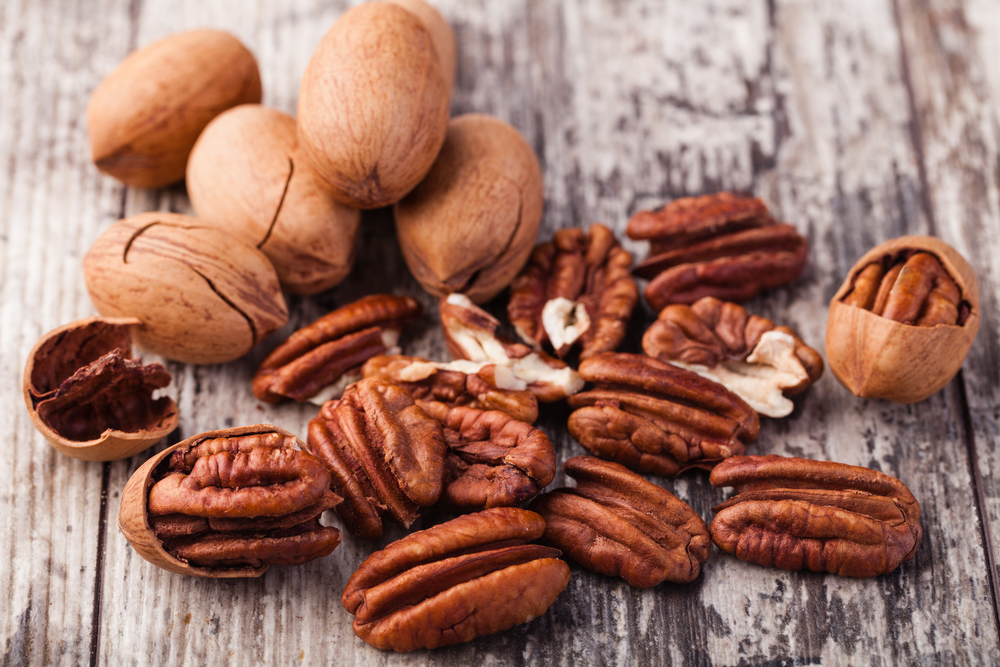
    Southeast pecan producers interested in serving on the American Pecan Promotion Board can submit a nomination no later than March 26.

    The U.S. Department of Agriculture (USDA) Agricultural Marketing Service (AMS) is seeking nominations for the board under the Pecan Promotion, Research, and Information Order.

    The board will be comprised of 17 members; 10 producers and seven importers. The producers will be divided between three regions: three from the Eastern Region; three from the Central Region; and four from the Western Region. 

    Each member’s term will begin when USDA approves the nominations.

    A producer or importer who has produced or imported more than 50,000 pounds of in-shell pecans (25,000 pounds of shelled pecans) on average for four fiscal periods is eligible to serve. Producers who produce pecans in more than one region may seek nomination only in the region in which they produce the majority of their crop.

    Nominations for producer member seats will be submitted to the Secretary of Agriculture by the American Pecan Council, the 17-member federal marketing order governing body. If you are interested in serving as a producer member, please submit your nominations to info@americanpecan.com. You may also contact Jeff Smutny at (817) 916-0020.   

    For more information about the program, visit the AMS American Pecan Promotion Board webpage or contact USDA Promotion and Economics Division Deputy Director, Patricia Petrella, at (301) 337-5295 or Patricia.Petrella@usda.gov.

  • ‘Protect Your Peach’: GDA Launches New Campaign

    Georgia Department of Agriculture

    ATLANTA – The Georgia Department of Agriculture wants Georgians to ‘Protect the Peach.’

    The new campaign is implemented to help inform rural Georgians about the best ways to protect their communities amid the ongoing coronavirus pandemic.

    GDA’s Georgia Grown program has partnered with Georgia Farm Bureau, the University of Georgia Cooperative Extension Service and state commodity groups to promote the campaign.

    “This is a great example of partners coming together with one message all working towards a unified goal,” said Georgia Agriculture Commissioner Gary W. Black in a press release. “Agriculture is critical infrastructure in Georgia, and we want to make sure that our essential workers are well informed, especially once we move into phase 1B of the vaccination plan.”

    The campaign ties agriculture commodities together with information to learn more about the vaccine that is supported by a targeted social media campaign using the hashtag #ProtectYourPeach.

    The commodities that are highlighted throughout the campaign include dairy, beef, peach, peanut, poultry, vegetable and forestry.

  • Wage Increase: H-2A Workers Receiving Bump in Hourly Rate

    usmca
    Workers pick potatoes in this 2019 photo.

    Southeast producers who utilize the H-2A program finally know what the minimum wage is they must pay in 2021. The USDA Farm Labor Survey revealed that wage rates for H-2A labor are increasing at an average rate of 4.5% or $0.63 per hour across the country. For the Southeast, though, those levels are much lower.

    Florida’s wages will increase by 3.2% from 2020 to 2021. Georgia and Alabama will go up by just 0.9%.

    “I think growers, no matter what part of the country you’re from, when you say on a day-to-day basis, what’s one of your biggest concerns, it’s finding labor,” said Veronica Nigh, economist with American Farm Bureau. “That’s been the case for several years. I think the fact that we keep seeing the wage rate go up is indicative of that strong demand for farm labor.”

    The average H-2A wage rate for Florida is $12.08 per hour. The rate is $11.81 for Georgia and Alabama. The rates are much lower than states like California ($16.05), Oregon ($16.34), Washington ($16.34) and Texas ($13.03). According to American Farm Bureau, the average wage rate for field and livestock workers was $14.62 in 2020, an increase of 4.5% from $13.99 in 2019.

    “When you need hands, you need hands. If you can squeeze out the money from the budget then that’s what folks seem to be doing. Overall, nationally, we’re up about 4.5% this year compared to last,” Nigh said. “In the Southeast, that wasn’t as big of an increase; only a 10 cents per hour increase, which is a little less than 1%. That’s good from a grower’s perspective for sure. Still, getting at around $12 per hour is still quite a hefty wage rate to be paying.”

    Expensive Five-Year Increase

    While the wage increase is relatively small for states in the Southeast, a look at the past five years paints a different picture. From 2016 to 2021, Georgia and Alabama have experienced an 11% hike in the wage rate, while Florida has increased 9%, according to the USDA Farm Labor Survey.

    Nigh said in August that Florida was the largest user of the program during the year’s first three quarters with 28,005 certified positions. Georgia had listed more than 23,000 certified positions.

    “Lets say conservatively 1.5 million workers are needed per year and we’re looking at 275,000 positions were certified in 2020. That’s only 18% of the workforce,” Nigh said. “You look at long-term trends and the number of workers that are employed in agriculture, it’s been somewhere between 1.5 and 2 million workers, despite the fact that we’ve seen quite a bit of mechanization over the last couple of decades. If H-2A is only less than 20% of the workforce right now, one would assume we’re just going to keep seeing that (rate) go up and up.”

  • Gray Mold Alert: Hemp Disease Discovered in Alabama Seedlings

    According to the Alabama Extension Commercial Horticulture Facebook page, recent samples of hemp seedlings sent to the Auburn University Plant Diagnostic Lab yielded discouraging results.

    Photo from Alabama Extension Commercial Horticulture Facebook page/Shows gray mold on hemp.

    The seedlings and clones were infected with gray mold or Botrytis cinerea. The fungus favors a cloudy and cool environment. Hemp that is produced in greenhouses in conditions that are high in humidity are at risk to be infected by the fungus.

    Gray mold develops primarily in flower buds and plant parts that are tightly-packed. The fungus is commonly found in and between buds where microclimates are humid and air flow is restricted. Bud blight is the most common symptom of gray mold observed.

    Botrytis cinerea is dependent on a wound or opening in the plant tissue for infection to occur.

    Proper sanitation is essential in controlling gray mold. It is especially important to start with clean plant materials.

    Scouting on a regular basis will help identify potential problem areas in the greenhouse early before the disease is firmly established. If symptoms of gray mold are observed, producers need to prune and discard any tissue that is dead, dying or diseased.

    Use adequate plant spacing to ensure air is properly circulated. Maintain humidity levels near 50%. Avoid irrigating the leaves and canopy, and do not over-fertilize, especially with  nitrogen. Monitor and manage insects that can create wounds for the fungus to enter the plant.

    A list of fungicides registered in Alabama for use on hemp can be found at: https://www.aces.edu/…/hemp-pest-management-in-alabama/.

    If you need to submit a sample for disease diagnosis, please refer to: https://offices.aces.edu/plantlabauburn/.