Category: Top Posts

  • Georgia Vegetable Growers Should Plan Ahead to Prepare for Harvest in Light of COVID-19 Pandemic

    By Andre Luiz Biscaia Ribeiro da Silva/UGA CAES News

    Eggplant is a vegetable grown in Georgia.

    Most vegetable crops in Georgia — such as bell pepper, specialty peppers, tomato, eggplant, cucumber, yellow squash, and zucchini — are currently being planted and will continue to be into early April. These crops should be harvested in May and June. However, in light of the current coronavirus (COVID-19) situation, Georgia growers, who rely on seasonal workers, need to plan ahead to be prepared for the harvest.

    The indefinite closure of U.S. consulates and borders may cause a delay in the processing of agricultural workers’ visas (H-2A) or prevent them from entering the U.S.

    According to the Bureau of Consular Affairs, the number of agricultural workers entering the country on H-2A visas has increased dramatically since 2000. In 2019, 204,801 of all U.S. agricultural workers were workers on H-2A visas, and a significant portion of those workers help to keep the Georgia vegetable industry viable. In 2018, Georgia’s vegetable industry generated $1.13 billion in farm gate value and 13,900 jobs (Wolfe and Stubbs, 2018).

    As of March 26, there is an authorization to grant interview waivers for H-2 applicants whose visa expired within the last 48 hours, who have not previously received an H-2 visa or whose visa expired more than 48 months ago. This will speed the process for growers to get labor, however, planning ahead is still vital for timely harvest of spring crops.

    Estimating the number of workers required to harvest the planted acreage is the first step to ensure vegetables and fruits are out of the field in a timely manner. Furthermore, it is important to highlight that harvested products must be packed before reaching the consumer. Labor in the packing line is also a key point in this process.

    Overall, farms have different activities and crop management practices and, consequently, labor requirements vary widely. Producers should identify activities and periods of intense labor demand in their operations and try to stagger these periods, rather than coinciding labor peak needs.

    For more information, see UGA CAES Newswire.
  • Florida’s Tomato Industry Crippled by Pandemic

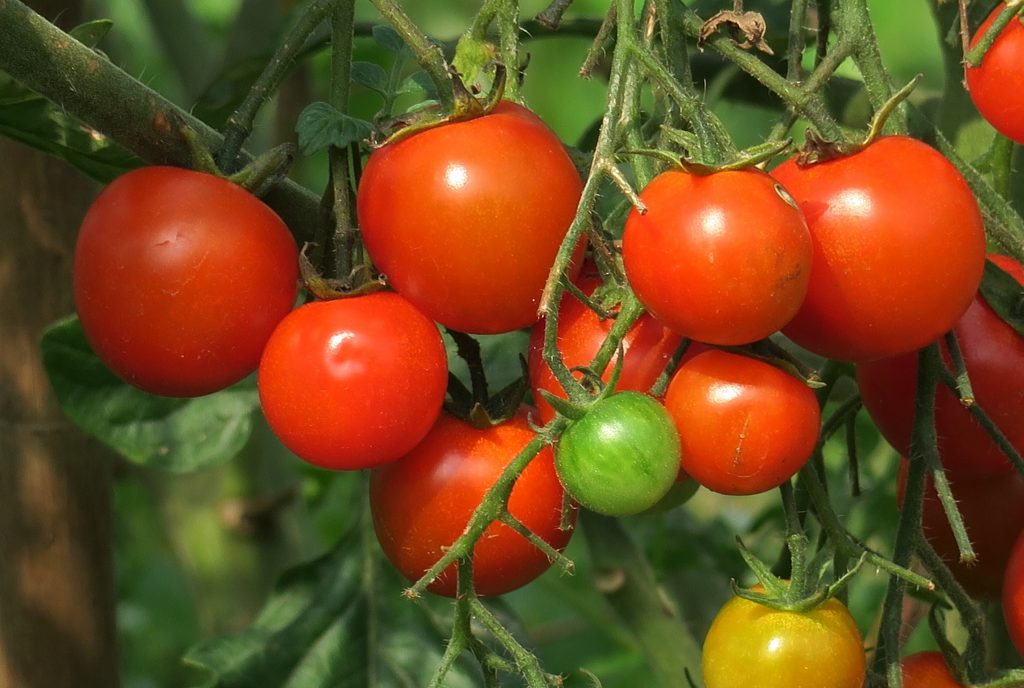
    tomato
    Florida’s tomato industry is being crippled right now because of the coronavirus pandemic.

    By Clint Thompson

    With restaurants closed across the country due to coronavirus pandemic, little, if any, of Florida’s tomato crop is being harvested right now.

    Bob Spencer, President of West Coast Tomato in Palmetto, Florida, said his company farms between 3,500 and 4,000 acres every year but estimates that he’s losing 90% of his business right now. Since about 70% to 75% of the state’s tomato crop is designated for the food service market, many of his farming colleagues are dealing with the same grim outlook.

    “All of us are having to cut back and leave tomatoes in the field right now that we normally would have picked just because we’ve got to get through these stay-at-home orders across the country that have shut down the restaurants,” Spencer said. “We’ll make it through, and hopefully in the next two or three weeks, everybody will get through this situation safely. The safety of the public is our primary concern. When that gets taken care of, we’ll get back to harvesting, restaurants will get back open and business will get a lot better.”

    West Coast Tomato staggers its plantings from the end of October through June every year to be able to harvest tomatoes every week. Unfortunately, Spencer’s business has dried up the last two weeks and he forecasts that’ll be the case for the next two to four weeks.

    However, Spencer remains optimistic about the future of the industry.

    “Eventually that will turn around. We’ve had a good year so far. This is a little bump in the road, but we’ll get through it,” Spencer said. “Successful businesses, you don’t get yourself in debt so when bad times come you can survive, you don’t have to worry about debt. No. 2, you always realize that anything can crop up and farming that’s the case. You’re prudent in what you do, and you try to manage it as best as you can.

    “Once it re-opens, there’s not going to be a lot of the product in the supply chain. They’re going to be looking for product.”

    This is not uncharted territory for Spencer and the tomato industry, who went through something similar not too long ago.

     “We went through something similar 15 years ago at the end of the season. There was an outbreak of salmonella that was from Mexican tomatoes that was being imported into the U.S. When that happened, everybody in the country just stopped eating all tomatoes,” Spencer said. “We had a little bit of a similar situation back then. This is probably going to go on for a little bit longer, it’s in the middle of the harvest season.”

  • Hoop Houses Benefit Organic Vegetable Production

    Hoop houses help organic vegetable farmers.

    By Clint Thompson

    Hoop houses help protect vegetables from rain-induced diseases while providing organic growers the opportunity to produce a crop throughout the year, according to Elizabeth Little, University of Georgia associate professor and Extension plant pathologist.

    BETTER QUALITY, LESS SPACE
    Hoop houses, also known as high tunnels, are types of greenhouses that help organic growers produce high-quality crops if managed appropriately.

    “These growers are producing all winter in tunnels and selling direct to customers and restaurants,” Little said. “The houses are also useful in the summer to avoid foliar diseases, which are very difficult to control in the field when conditions are wet. Hoop houses give you a controlled environment so you can grow a better-quality crop.”

    Hoop houses are used extensively in the Georgia Piedmont and further north. A variety of vegetables and flowers are produced, including lettuce and other greens during the winter months, and tomatoes and peppers in the warm season. Hoop houses are a valuable production tool, but the growing space is often the limiting factor.

    Hoop houses vary in size but typically average 40 feet wide and 100 feet in length. They are unheated plastic-covered houses with roll-up sides that allow for ventilation to control temperature and humidity.

    “There’s more demand for local organic produce than there is supply. The local organic produce is high quality … The problem is we have a challenging hot and humid climate which leads to more disease and pests,” Little said.

    BEWARE OF ROOT-KNOT NEMATODES
    Little stresses that root-knot nematodes are a potential problem for both home and organic vegetable growers across the state. Root-knot nematodes are tiny parasitic worms that feed on roots of many plants and cause a loss in productivity. Most vegetables are highly susceptible to nematode damage.

    A University of Georgia Cooperative Extension Survey of 431 vegetable fields found that more than 60 percent contained root-knot nematodes. These pests enter plant roots and feed on nutrients. They quickly produce eggs and eventually, as more nematodes infect, the roots swell into characteristic galls. The damaged roots result in reduced plant growth and lower yield potential.

    Root-knot nematodes can increase to high numbers in hoop houses due to warm temperatures, loose soils and intensive production of susceptible crops year-round. Cover crops are usually grown in fields part of each year, which can keep root-knot nematode numbers low, but hoop houses are often kept in production longer due to economics.  

    “Root-knot nematode damage in organic high tunnels is becoming more of a problem in Georgia,” Little said. “We’re approaching the problem with the mindset that you’ve got to balance the use of organic best management practices to keep numbers low with the economics. After a highly susceptible summer crop, such as tomato, you try to grow a fall crop like carrots and end up with damage on the root crop from the nematodes.

    “We’re looking at ways to break that cycle. I have been working with growers on optimizing the length of time for summer cover cropping and solarization, as well as incorporating different rotations and organic amendments to lower nematode numbers. The goal is to get root-knot nematode numbers low enough so you can successfully produce the next crop, which is the same goal in both conventional and organic soils when managing nematodes. The nematodes never disappear entirely.”

    (For an outlook of organic farming, see Future of Organics.)