Category: Top Posts

  • Citrus Farmer: Crop not a Cure-All but Definitely Money-Making Opportunity

    By Clint Thompson

    Pictured is Georgia citrus.

    A farmer in north Florida is excited about the potential of citrus in the South Georgia-North Florida region.

    Kim Jones, who owns a citrus packing facility in Monticello, Florida and is part-owner of a similar facility that will soon open in Tifton, Georgia, believes citrus will be the alternative crop producers are looking for to stabilize their farming operations.

    “Right now, the row crops are in terrible situation, (with) prices of course. Citrus has been on the radar for several years. We’ve had several friends doing it for several years in the panhandle,” said Jones, who also produces 30 acres of citrus. “We studied their program pretty close and sort of followed suit. It looks good. It’s definitely not a cure-all, but it’s definitely an opportunity for us to make additional money for our farms.”

    According to Danielle Sprague, University of Florida/Institute of Food and Agricultural Sciences (IFAS) FAS Extension agent in Jefferson County, Florida, there is approximately 1,000 citrus acres across north Florida. There is also an estimated 1,000 acres in South Georgia, though that number is expected to double by the end of 2020.

    While production has skyrocketed recently, there is a concern of how all of the fruit will be sold once it’s ready to be harvested. Savelle estimates by the end of 2023, there will be 50 million pounds of citrus coming out of Georgia. Jones, who is one of eight part-owners of the Tifton facility, believes the packing houses will be key in getting fruit sent out to consumers.

    “The key is marketing. Our facility, we’ve been fortunate enough to have a lot go into schools out of Monticello. We’ve just this past year developed a retail business through Genuine Georgia out of Fort Valley (Georgia), and they’re helping us get into the retail side; mostly with small packages, two and three-pound packages of satsumas. That will be expanded greatly this year,” Jones said.

    He added that the facility in Monticello is designed to try to pull the fruit from North Florida and extreme South Georgia areas and can accommodate a couple million pounds of production in a year. The Tifton facility will be much bigger and can handle a million pounds per day of certain citrus. Jones estimates Tifton will open this upcoming season with an open house later this summer.

    “It started out with a small, small farmer with a few acres; here, I’ve got five acres I’m not utilizing, what can I do? Look at blueberries, look at blackberries, look at other produce, and all of a sudden it’s zeroed in on the citrus,” Jones said. “Now we’re seeing large-acreage farmers take corners of a pivot or a field here that’s isolated from their normal row cropping operation…acreage numbers are increasing quickly.”
  • FFBF and FDACS Host Town Hall on COVID-19 & Florida Agriculture

    florida

    Florida Agriculture Commissioner Nikki Fried and Florida Farm Bureau President John L. Hoblick held a town hall meeting on Thursday with the state’s agriculture community on pressing issues. Some of the topics of discussion included:

    • Ensuring agriculture and all related industries are essential at the federal, state and local levels.
    • Promoting the continued and efficient processing of H-2A worker visas.
    • Inter- and intra-state weight waivers for farm commodities.
    • Buybacks for Florida commodities (federal, school districts and grocery chains).
    • Risk Management Agency waivers and flexibility for producers.
    • Florida Department of Agriculture and Consumer Services (FDACS) emergency rules and marketing efforts.
    • Food-supply chain worker-safety protocols.

    Hoblick’s opening comments:

    Fried’s opening comments:

    Hoblick has participation questions for Fried:

    Closing comments from Hoblick and Fried:

    FDACS is working closely with the Florida Farm Bureau to provide crucial information to producers and coordinate with the U.S. Department of Agriculture (USDA) to ensure Florida’s agricultural industry is supported in keeping the state’s food supply strong.

    Commissioner Fried recently sent a letter to U.S. Secretary of Agriculture Sonny Perdue requesting flexibility to help move Florida’s perishable crops quickly to food banks, school meal programs and other federal food purchase programs. Commissioner Fried also sent a letter to congressional leadership requesting that additional federal stimulus packages include support for ag, including direct USDA assistance for farmers.

  • UGA Extension Food Safety Specialist Addresses Issues Surrounding COVID-19

    As COVID-19 continues to impact and alter the southeastern produce industry and world, there is an increase in questions from growers, packers, and shippers of fresh produce. Some issues that have surfaced this week include:

    • How can the 6-foot rule apply to harvest and packing crews?
    • What do I do when employee housing meets US DOL guidelines but employees are less than 6 feet apart?
    • What do I do when an employee tests positive for COVID-19?

    University of Georgia Extension food safety specialist Laurel Dunn offers her take on the current pandemic.

    https://www.youtube.com/watch?v=GJeNVZbcwo4&feature=youtu.be

    Visit the GFVGA Covid-19 Webpage for more information.

  • Georgia Pecan Crop Offering Hope for 2020 season

    By Clint Thompson

    It’s early in the pecan production season but University of Georgia Cooperative Extension pecan specialist Lenny Wells is encouraged by what he’s seen in South Georgia orchards.

    “There seems to be a lot of male flowers or catkins on the trees. Usually, that doesn’t guarantee you’re going to have a good crop but if you don’t see a lot of catkins like that, you aren’t going to have a good crop,” Wells said. “So far it looks promising.

    “There are a few varieties that I have seen a good crop of female flowers on already, which is great. It’s what we want to see. I really think we’ll come back with a pretty decent crop this year; I believe.”

    Hurricane Michael devastated Georgia’s pecan crop when it moved through the state in 2018 and left lingering effects on Georgia trees in 2019, which led to a down year of approximately 67 million pounds. The dry weather conditions late also had a negative impact. Wells is hoping to see between 80 and 100 million pounds this year.

    “There’s probably some who would say I’m being a little too optimistic,” Wells said. “I think that’s possible.”

    The warm weather in March has led to early bud break on trees this year.

    “I’d say it’s at least two weeks early, if not more. Everything’s really pushed out pretty far already. With that growers are starting to spray fungicides. A few people started this week. I would say we’re going to see a lot starting next week,” Wells said. “Certainly, by that time, everything will be pushed out pretty far. There will be a lot of foliage growth out there, certainly enough to get fungicide on to protect the leaves from scab.”

    Once foliage starts to appear, it leaves the trees vulnerable to scab disease pressure, especially if additional rains come in April and May.

    “I think from this point forward, the rains are going to be more critical than they were before. (The trees) are at a vulnerable stage where there’s tender foliage growth and scab likes to grow on that young tender growth,” Wells said.

    For additional pecan news, see Southeast AgNet.

  • Florida Farmer: It’s a Very Tough Situation

    By Clint Thompson

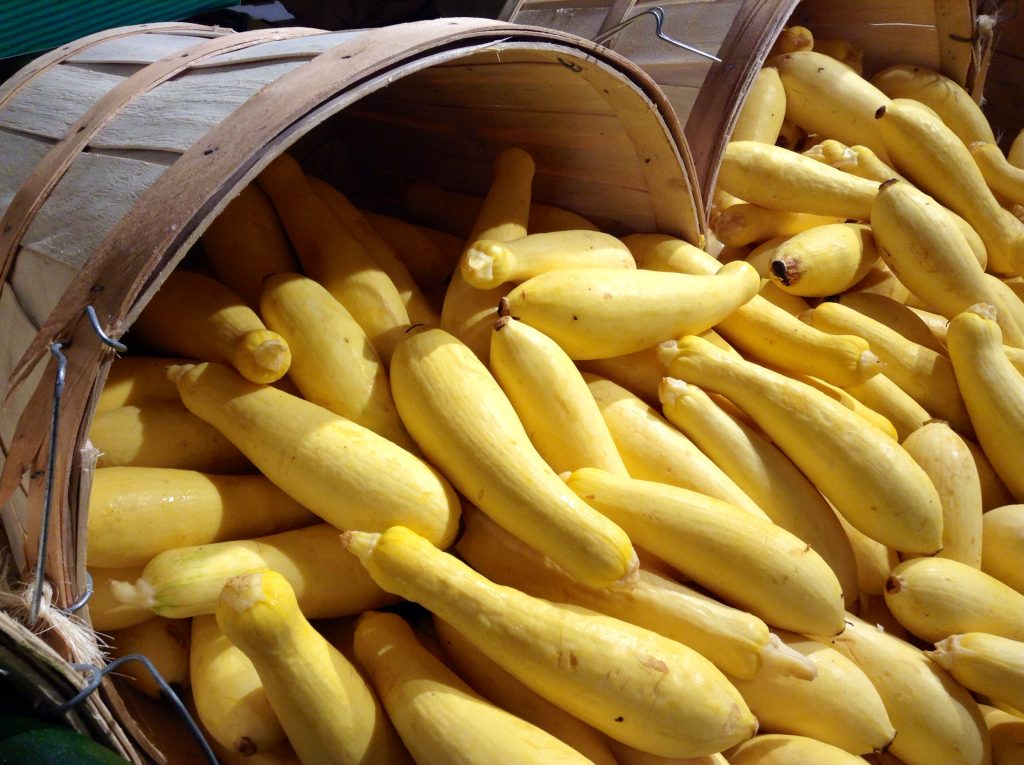
    Yellow squash

    Every day the coronavirus lingers in the United States means more business that is not coming the way of Florida farmers, including Sam Accursio.

    Restaurants remain closed. So many citizens are unemployed. Fruit and vegetables are not being consumed as much like they were.

    Accursio produces pickle and cucumber, green beans and yellow and green squash on 4,400 acres in the Homestead, Florida area. Up until approximately 11 or 12 days ago, business was peaking. That’s not the case anymore, however.

    “They just stopped buying. Monday, Tuesday and Wednesday of last week, we had orders on the books from the previous week, and we came into work Monday and they gave them all back to us. They didn’t take what they had ordered,” Accursio said. “It’s a very tough situation, and to top it all off, the cherry on top of the whipped cream, you look at the USDA Market Report; while I’m dumping squash down here in the field and stopping harvest, Mexico shipped 3 million pounds of squash per day across the border into Texas to ship into the United States. Why does our federal government allow this?”

    It’s similar frustration to what Florida farmer Kim Jamerson voiced to VSC News as she recalled how she reached out to the office of U.S. Senator Marco Rubio (Fla.) and spoke to one of his aides about the government helping out its farmers by purchasing their crops and distributing the food to its citizens since many are unemployed. It would help the American farmer stay in business, while keeping its citizens fed.

    To make matters worse for Accursio, he said this season has been a bumper crop due to the warm, summertime conditions Florida has experienced this year. Crops that are normally ready for harvest around April 15 are currently being picked. Accursio estimates that he has already picked 50% of April’s crop but is losing about 75%. It’s been like this for almost two weeks.

    Cucumbers

    “I think what happened, everybody who was out of work ran out of money and the chain stores never lowered their price to help the situation out. Right here in Homestead, beans are selling for $3 per pound in Publix and the growers are only getting 30 cents,” Accursio said. “It’s pathetic that the chain stores won’t help the situation with the consumer, help the growers and things will get back to normal again. We’re in a real funk right now.”

    Accursio said he likes to pick, pack and load his crops on trucks. He noted that consumers can buy squash and store in their refrigerator, and it’s still edible for 21 days. But he sees it from a different vantage point, in that if his crops have to be stored in coolers before being sold, he starts getting “nervous” at the four-day mark.

    “When you take a squash that’s been in the cooler for a week, you take it out, load it on a tractor trailer, bounce it around to New Hampshire for two and a half days, take it out of the truck and put it on a grocery shelf. Being handled and bounced around, it just doesn’t last as long.”

  • Managing Mite Populations in Blueberries

    blueberry
    Mite management in blueberries is essential.
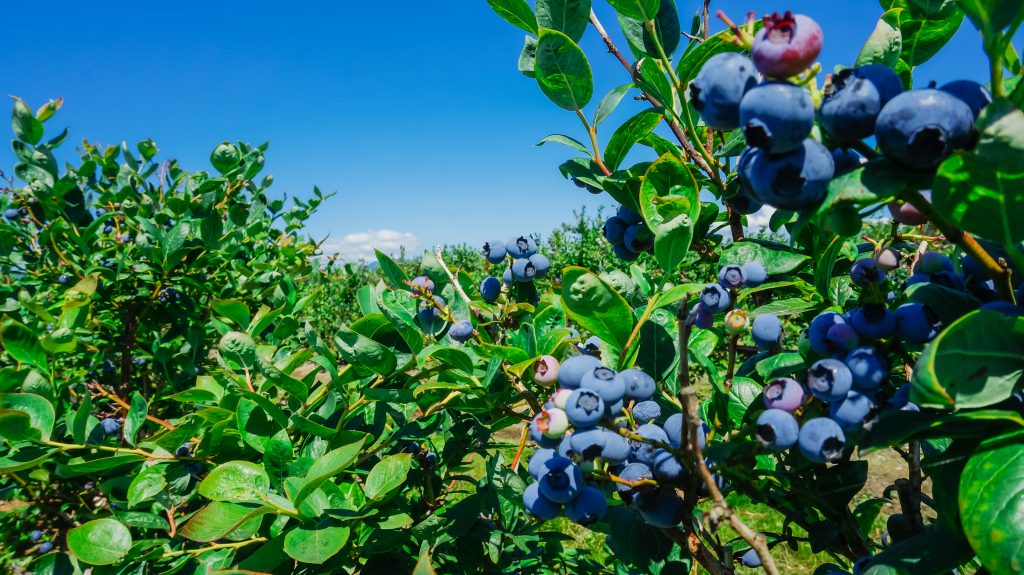
    File photo of blueberry production.

    By Ashley Robinson

    Several mite species have been reported as pests of Florida blueberries. According to Oscar Liburd, professor of entomology at the University of Florida (UF), southern red mites and false spider mites are especially high on growers’ radars this year.  

    SOUTHERN RED MITES

    Currently, there is little known about the management of southern red mites in southern highbush blueberries.

    “Five years ago, mites weren’t a pest seen in blueberries. However, within the last few years, they’ve shown up quite regularly,” Liburd says.

    Southern red mites have caused 80% to 100% losses in some blueberry plantings and have caused some growers to abandon their plantings due to major losses. The mites insert their chelicerae into the plant, preventing the plant from developing normally and impacting crop yields.

    According to Liburd, the first step growers should take to manage mites is to monitor their fields and properly identify the pest. Southern red mites are easy to identify due to their larger size and reddish-brown coloring.

    FALSE SPIDER MITES

    The False spider mite, or flat mite, is known to be an economically important plant-feeding mite in citrus. However, recently this mite was found to feed on southern highbush blueberries.

    False spider mites are much smaller in size compared to southern red mites and can’t be clearly seen without a microscope. These mites harbor underneath the leaf along the mid-vein and are brick-red to yellow in color.

    MANAGEMENT OPTIONS

    Two miticides have recently been labeled for use in southern highbush blueberries – Magister and Portal.

    Liburd has several recommendations for organic producers.

    “Organic growers have the option to use sulfur or they can remove weeds from nearby host plants to reduce the number of mites. Also, water management to reduce plant stress is highly recommended as well as periodically releasing predatory mites can reduce populations,” Liburd said.

    According to Liburd, farmers can also expect to see some new miticides soon, as well as some new and promising products for organic growers. In addition, Liburd expects to see new blueberry cultivars being developed that are resistant to these mite populations.

  • Heroes in our Food System COVID-19 Pandemic

    By Kristin Woods, Alabama Extension

    Food Safety Word Cloud Concept with great terms such as hazards, e coli, cooking and more.

    With Alabama’s production season getting into full swing, it is important to know that our growers and industry leaders are making sure that safety is not affected by the COVID-19 pandemic. Because COVID-19 is a respiratory disease, there is no indication that it is infectious through food or food packaging.

    The highly trained food system workers (harvesters, packers, processing line workers, retailers, grocers, and even trainers like me) are critical to ensuring a safe and consistent food supply in the U.S. In fact, the Department of Homeland Security has issued guidance that states agricultural production, food processing, distribution, retail and food service and allied industries workers are essential critical infrastructure workers.

    The health of these workers is extremely important to all of us. Our farms already have food safety protocols in place to preserve the safety of freshly harvested products, but now they have enhanced procedures in place to help protect employees from the spread of the virus during harvest or in a packinghouse so that we can keep food flowing from farm to fork.

    Some things we should all know about the produce industry:

    • Food system workers are highly skilled and trained to prevent the hazards that cause foodborne illness.  They know how to assess risks on the farm, during processing, at retail, and in the kitchen; and they know how to prevent hazards from causing foodborne illness when they see them. Food system workers truly are our heroes daily, but especially now. However, there is no evidence that COVID-19 can spread in food.
    • If a worker tests positive for COVID-19, they go home to rest and recover fully. If they have been in contact with others at work, then those individuals are advised to self-quarantine. The diagnosed person must test negative before returning to work or be symptom free for several days.
    • Processing facilities have enhanced procedures in place to frequently clean and sanitize surfaces that workers touch. Like all viruses, they need a host (human or animal) to survive and multiply.  This virus, as well as others, can survive on surfaces for limited amounts of time, so cleaning and sanitizing is always important.
    • Overall, there is no food shortage in the U.S., however, you may see some empty grocery store shelves in the short term. Many packinghouses are in the middle of shifting gears from serving food service accounts to retail accounts.
    • Of course, we want you to support our local farmers here in Alabama, but you should know that because this virus does not appear to be foodborne, produce imported from abroad remains as safe as ever. This is especially good news for those of us that are fond of tropical fruits like pineapples, bananas, and papayas that are not grown in Alabama.

    The next time you venture away from home for supplies, notice all the hard-working people out there who keep the food supply going: farmers tending row crops; ranchers tending cattle; poultry producers tending their chickens; fruit and vegetable growers prepping, planting, and harvesting crops; farm store workers keeping their stores open to support our farmers; truck drivers hauling livestock, commodities, and finished food products; grocery store workers, farmers market vendors; and restaurants staying open for takeout service. It truly is amazing to think about all that is necessary to keep food on our tables these days. We might be able to do without a new pair of earbuds, but we must have these critical industries, these heroes, for our daily existence.

    For more information on food safety, contact any member of the Alabama Extension Food Safety and Quality Team.

  • Florida Governor Issues Stay-At-Home order

    Florida Gov. Ron DeSantis issued a statewide “Safer at Home” Executive Order (EO), which will begin at 12:01 a.m. on April 3 and, unless extended, will expire on April 30.

    DeSantis

    This “Safer at Home” declaration orders all people in Florida to limit their movements and personal interactions to only those necessary to obtain or provide essential services or conduct essential activities.

    Gov. DeSantis’ order states “Essential Services” includes the list detailed by the US Department of Homeland Security in its Guidance on the Essential Critical Infrastructure Workforce, which includes a FOOD AND AGRICULTURE section. This includes farmers, farm workers, support service workers, and their supplier employees to include those engaged in producing and harvesting field crops.

    For more information, see the State of Florida release.

  • COVID-19 Response: One Person Plants Food Gardens; Floridians Get Useful data From UF/IFAS, FAMU Extension

    University of Florida’s Ed Jennings talks with homeowners.

    By: Brad Buck, 813-757-2224 (office); 352-875-2641 (cell); bradbuck@ufl.edu

    COVID-19 may take jobs away from people, but it can’t take away Tanya Murillo’s resilient spirit and her desire to grow vegetables in her yard.

    Murillo’s employer closed March 13 because of the coronavirus. She went home where eight people live. No self-pity for Murillo. Everyone in her household needed something to fill vacant time.

    “I’m going to do something positive and productive,” said Murillo. “My husband is really good at planting. I don’t know much about growing. So, I was trying to get some ideas on how to grow some food.”

    The week after she lost her job, Murillo called University of Florida/IFAS Extension Levy County and talked to program assistant Barbara Edmonds about what to try to grow in sandy soils. Murillo wants to start planting vegetables at her home in Bronson. She’s got multiple allergies and can’t tolerate gluten, so fresh food is the order of the day.

    Her project stems partly from trying to find activities to get her through the days, from needing to grow fresh food and to keep the four children in her home busy.

    “This is a challenging point in my life,” Murillo said. “I figure it’s better to get my children involved.”

    Edmonds, the UF/IFAS Extension Levy County horticulture program assistant, said she’s seen an increase in gardening and landscape calls since the coronavirus started.

    “She (Murillo) has time to grow plants now,” Edmonds said.

    Edmonds sent Murillo the UF/IFAS vegetable gardening guide, which provides an overview of site selection, preparing the soil, growing season, plant spacing, row spacing and much more.

    UF/IFAS Extension works with its statewide partner, Florida A&M University, to deliver science-based information to residents and businesses across Florida.

    “As we get used to our ‘new normal’ with the coronavirus and its ramifications, UF/IFAS Extension faculty and staff work tirelessly to continue providing the best science-based information and other services to the people of Florida,” said Nick Place, dean of UF/IFAS Extension and director of the Florida Cooperative Extension Service. “Whether we get questions about gardening, farming, nutrition, natural resources, family or consumer issues, UF/IFAS Extension will continue to collaborate with FAMU Cooperative Extension to answer questions and educate Floridians, using all means available.”

    FAMU Cooperative Extension is maintaining connections with Florida residents, utilizing non-face-to-face venues, said Vonda Richardson, director of Extension programs at FAMU. Agents and educators are connecting via email, phone and social media. Educational programming will be delivered via Zoom and Facebook Live.

    “We are encouraging the public to connect to us on Facebook, Twitter and Instagram @FAMUEXT for information and resources,” Richardson said.

  • Late Blight Disease Discovered at UF Research Farm

    potato
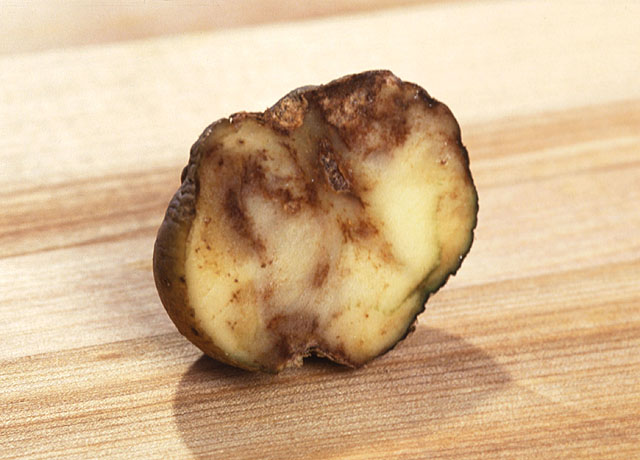
    Potato infected with late blight.
    Photo by Scott Bauer

    By Clint Thompson

    Potato and tomato producers in Florida need to be wary of the discovery of Phytophthroa infestans, the causual agent for potato and tomato late blight. Gary England, RSA/Director for the Hastings Ag Extension Center in Hastings, Florida, confirmed that samples collected from the Extension Center site tested positive.

    He scouted the rest of the affected portion of the farm on Saturday but did not see further spread of the disease. Still, England wants to make other farmers aware to be on the lookout.

    “It’s nothing bad right now, but anytime it gets in the area, we always let everybody know. With the weather we had with rain and cooler temperatures (this week) it is more capable for late blight. Hot and dry (temperatures), it’s not all that favorable for development,” England said. “The growers definitely need to be looking for late blight.”

    He said farmers in the Live Oak, Florida area need to be made aware since a bulk of potatoes are produced there. Producers need to be proactive in preparing for and managing this disease, considering the destruction it can have on a potato field.

    “It’ll totally destroy the potato vines before potatoes mature. That disease, you’ve heard of the Great Irish Potato Famine, it’s the same disease,” England said. “Back in those days, they didn’t have any fungicides to put on them.

    “Hopefully, it doesn’t show up on any of the local farms but if we see it in the area, we definitely get the word out so everybody can step up their scouting.”

    According to University of Florida, symptoms of late blight may begin as dark green water soaking that may be associated with chlorosis or necrosis, depending upon the age of the lesion and the weather conditions. Under relative humidity in excess of 80%, lesions may appear purple to black with white sporangial growth. Under hotter and drier conditions, the lesions turn brown, dry out, and appear papery.

    To learn more about the disease, see Late Blight’s Impact on Potatoes and Tomatoes.