Category: Top Posts

  • USDA Applauded: Commissioner Fried Speaks on USDA’s Pandemic Assistance

    commissioner
    Nikki Fried
    Florida Agriculture Commissioner

    Tallahassee, FL — Florida Agriculture Commissioner Nikki Fried applauded the U.S. Department of Agriculture’s (USDA) $6 billion in expanded pandemic assistance on Wednesday. This will aid specialty crop and seasonal produce growers who did not benefit sufficiently from last year’s USDA assistance.

    “Florida’s proud farmers, ranchers, and growers have had a tough year, working to overcome half a billion dollars in pandemic-related losses while keeping their workers safe and producing the domestic food supply on which 150 million American families rely. With USDA support last year slow in coming and inconsistent across agricultural sectors, Florida agriculture deeply appreciates this expanded, inclusive approach to federal support,” Fried said. “Our seasonal produce growers have been particularly hard-hit by COVID-19 and will benefit from additional specialty crop grant funding. PPE will help keep our farmworkers safe in fields and packing houses. Financial support for new, veteran and socially disadvantaged farmers will make our entire $147 billion agriculture industry stronger.”

    This funding includes an additional:

    • $100 million for the Specialty Crop Block Grant Program
    • $100 million for local and regional agricultural marketing and expansion of direct-to-consumer agriculture
    • $75 million to support new/beginning, socially disadvantaged, and military veteran farmers and ranchers
    • $75 million for efforts to increase fresh fruit and vegetables purchases by low-income consumers
    • $28 million to state departments of agriculture for farm stress/mental health assistance
    • $20 million for improving animal disease prevention and response

    The Florida Department of Agriculture and Consumer Services works to support Florida’s $147 billion agriculture industry, including seasonal produce growers who faced $522 million in pandemic-related losses, and oversees plant and animal disease detection and prevention in Florida.

    Source: Florida Department of Agriculture and Consumer Services

  • Blueberry Decline: Imports, USITC Contribute to Florida’s Dwindling Industry

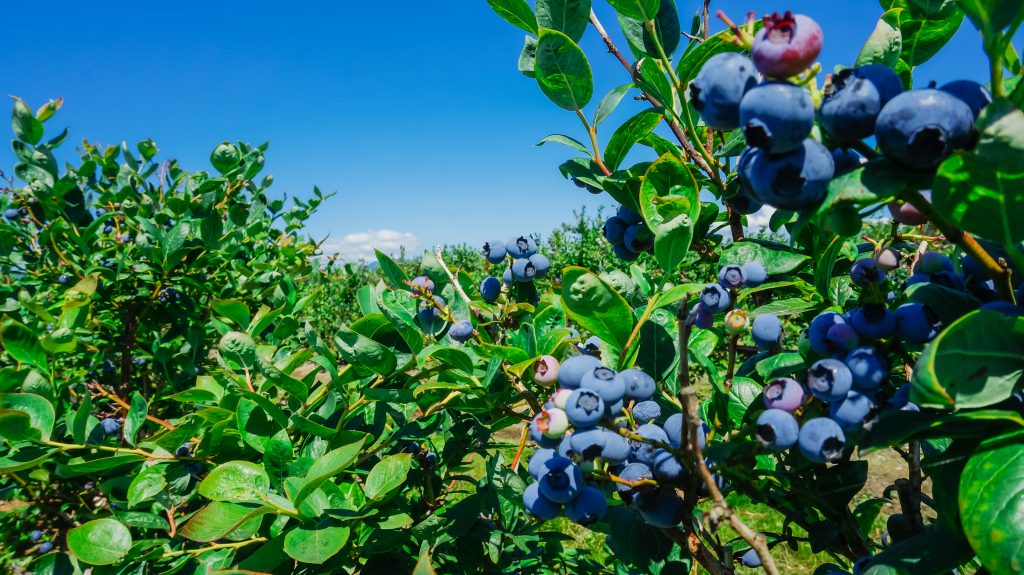
    What was once a booming industry in Florida is now running on fumes. Mexican imports and the U.S. International Trade Commission (USITC) have made it almost impossible for Florida blueberry producers to compete like they used to.

    “Florida went through an increase from 2000 to 2015 or so. Now, I don’t know of anybody that’s putting blueberry acreage in because they see the writing on the wall,” said David Hill, owner of Southern Hill Farms in Clermont, Florida and vice chairman of the Florida Fruit and Vegetable Association. “What’s happening now is the smaller guys, they can’t hang. The margins aren’t there. They’re selling out. They’re either selling to developers trying to find somebody to buy their farm for cheap. Now you can get a blueberry farm cheaper than you can put one in. But I don’t see a lot of people wanting to get in the blueberry business.”

    Why would any farmer want to try their hand in blueberries? Especially when the USITC decided in early February that blueberry imports were not a serious injury to the domestic market. The USITC voted 5-0. It was a devastating blow to Florida blueberry producers longing for relief.   

    Statistically Speaking

    According to University of Florida Associate Professor Zhengfei Guan, Mexican imports of blueberries were non-existent before 2009. But in 2019 they totaled a little more than 90 million pounds, compared to Florida’s approximate 24 million pounds of production.

    Hill compares the state of the blueberry industry to Florida’s tomato industry which was also decimated in recent years.

    “It’s the same kind of thing. You’ve got to be big, and there’s only so many people that can be big, but the smaller guys, you just can’t afford to keep losing money. Things are looking worse,” Hill said. “Mexico is ramping up. The government is subsidizing the industry. The obvious is look at the labor costs. It makes it very difficult to compete.

    “You’ve got all of this infrastructure you put in and you can’t get the returns. If you sell it as a blueberry farm, you’re selling it at a huge discount. That’s the only way you’re going to entice somebody to buy it as a blueberry farm.”

  • Pecan Producers Be Wary of Phylloxera

    UGA CAES Photo/Phylloxera inside gall from a dissecting microscope.

    There’s beginning to be budbreak in pecan orchards throughout the Southeast. As trees start to break dormancy, producers need to begin protecting their crop from one pest who impacts trees this time of year, says Lenny Wells, University of Georgia Cooperative Extension pecan specialist.

    “We’re just starting to see it now. This is the time they need to (spray), if they’ve had problems with phylloxera, which is a little small insect that’ll cause those little warty bumps on the leaves and they can also deform the stems. Another species of them can deform the stems and really cause some serious problems there, because it’ll also deform the nuts and cause them to fall off really early,” Wells said. “The time to spray for them is right at budbreak. It’s getting about time to spray those. That’s the main thing they probably need to be looking for right now.”

    According to UGA Extension, pecan leaf phylloxera is an insect comparable to aphids. Their feedings can lead to abnormal growths of leaf tissues, and the tissue forms a gall that surrounds the insects. Once it forms, no insecticide can penetrate to the insect.

  • Site Selection Key for Blueberry Plants

    blueberry
    File photo of blueberry production.

    Site selection remains a pivotal decision for all potential blueberry producers. Alabama Regional Extension agent David Koon discussed various site-selection factors that will impact whether a grower experiences success.

    “When we think about site selection of where you’re going to plant your blueberries, just like every other vegetable or fruit producing plant, full sun is a must. Partial shade, you can still grow them and get some fruit, just not near as much,” said Koon during a webinar on the Alabama Extension Commercial Horticulture Facebook page. “Full sun should be the No. 1 factor for any kind of production for a vegetable or fruit crop.”

    It is also important to remember that freeze damage may occur in low areas.

    “Think of low areas, just like water. Water flows downhill. If there’s a dam at the bottom of the hill, it’s going to pool. That cool air does the same thing,” Koon said. “If it’s in a low spot that’s got high ground all around, that cool air tends to settle in that hole. When you’re thinking two to three degrees difference between 32 and 29 degrees when you get damage, that low place can give you some problems.”

    Producers may need to consider planting on the south side of a slope.

    Water is Essential

    Water accessibility is also an important factor. Blueberries need moisture but won’t tolerate standing water. Raised beds may be required.

    “Blueberries do need water. They like to be watered, but they do not tolerate wet feet. If you’ve got some drainage problems or some areas that don’t drain well, you may want to look at some raised beds,” Koon said. “Anytime we talk vegetable production or fruit production, how are you going to get the water to it? Is there a water source readily available? Will it supply enough water for the number of plants that you’re considering?”

  • War of Deception: Consumer Awareness Key in Support of American Farmers

    In the ongoing war between supporting local farmers against the influx of imports, American farmers need consumers to fight back.

    The significance of where food originates may never be more important than it is right now. With imports continuing to flood markets for various commodities, the end result is farmers contemplating selling their land. Others are wondering what else can be done to slow the decline of the American farmer.

    “As long as the decision of what’s in the grocery store is based on the consumer, I think we’ll be okay,” said Wade Purvis, who farms in Immokalee, Florida and is part of the Farmers Alliance. “But the problem is the decision that’s being made is, there’s an intermediate group of marketers that stand between the growers and the chain stores. They may have ‘family farms’ in their name or ‘something farms’ in their name, and the chain stores either don’t bother exploring it and figuring it out or are just too lazy to even worry about it.”

    The deception continues to have a negative impact on local producers.

    “The country-of-origin labeling is so adulterated in the grocery stores. It’s basically piled up in there with domestic stuff and there’s a little bitty captioning at the bottom back of the bag that says product of Mexico. It’s placed on a shelf under ‘Jimmy John and his family farms’ in Cairo, Georgia, and it’s clearly giving the perception that’s his stuff there when it absolutely isn’t,” Purvis said.

    Year-Round Service

    Chain stores need produce year-round, so the problem is exacerbated. Purvis said most farmers can’t invest millions of dollars into producing a crop 12 months out of the year. These deceivers are able to take advantage.

    “Most farmers are regional. They have crops in Immokalee (Fla.), they have crops in South Georgia, they have crops in Central Florida. There’s just a small handful that have the wherewithal to have product 12 months out of the year,” Purvis said. “That being said, these marketers that I’m describing, they’ve got ‘x-y’ farms in their name and they have solved a problem for the chain stores. They’ve got a number they can call 12 months out of the year. They’ve got the product. They source it from anywhere and everywhere. That’s how that evolved.”

    Consumers Asking Questions

    Purvis believes that one positive from the ongoing pandemic is the consumer awareness of where their food originates. Now more than ever, they are asking about where their vegetables and specialty crops are coming from.

    “I think you would find unanimous feedback from the chain stores that the consumer is becoming very much aware. They’re asking questions and putting pressure on them. ‘Why have I got Honduran watermelons in my supermarket in Naples when there’s watermelons in Immokalee that they can’t get rid of,’” Purvis said. “If we keep the heat on and the awareness out there, I think the consumer will put enough pressure on the retailer that it’ll make the difference.”

  • Extending Enzymes: UF Hopes to Get More Mileage out of Essential Component

    Andrew Hanson

    Enzymes are an essential element in the cells of all living plants. University of Florida research is tailored towards getting more mileage out of this essential component. Longer lasting enzymes could lead to increased yields in plants that are produced for food, fuel and fiber.

    That’s the thought process of Andrew Hanson, and eminent scholar and professor in the UF/IFAS horticultural sciences department.

    “Replacing enzymes is a huge energy cost to organisms, but no one had ever really asked, ‘How long do enzymes last and what determines that?’ If you want to improve enzymes’ lifespans, you need to know which enzymes to target,” said Hanson to UF/IFAS. He is the lead author of a new study in which researchers present a new benchmark for evaluating the durability of any enzyme.

    CCR

    Catalytic Cycles until Replacement, or CCR, is the first step toward improving enzyme longevity and maybe one day, producing more food, fuel and fiber for the world. The study is published in the journal “Proceedings of the National Academy of Sciences” and supported by a grant from the National Science Foundation.

    Hanson compares the parts in a car and the enzymes in a cell to better explain CCR.

    “If you’re bringing your car into the shop all the time to replace parts, that’s a big investment and it’s not very efficient. But plants we grow as crops, they spend a lot of energy on enzyme maintenance, which leaves less energy for growing the grain or other parts we harvest,” Hanson said. “Many enzymes in plants could be improved, and with the CCR, we know where to start.”

    Click here for full story from UF/IFAS.

  • Warmer and Drier Winter? Not So Much

    Photo by UGA’s Chris Tyson: Shows a saturated onion field.

    What was expected to be warm and dry turned out to be cold and wet for most of the Southeast. Don’t blame La Nina, says Pam Knox, University of Georgia Extension Agricultural Climatologist.

    “It’s unusual, but it’s not unprecedented. I think the last time it happened was early in the 21st Century, close to 20 years now. We did have a similar kind of winter that was cold and wet even though it was a La Nina. It has happened before, but statistically, it’s pretty rare,” Knox said. “That’s why when we know when a La Nina’s coming, we usually go with the statistically most likely prediction which is more warmer and drier. It just didn’t work this year, and it wasn’t the fault of La Nina, it was because we had a Sudden Stratospheric Warming that just threw things off.”

    Sudden Stratospheric Warming

    According to blog by Knox, the SSW shoved the cold polar vortex that is usually around the North Pole off center, pushing the storm track back down south towards us and bringing the unexpected cooler, cloudier and wetter conditions that we experienced this winter, especially in southern Georgia.

    For the most part, farmers aren’t complaining. The cooler temperatures helped peach trees accumulate enough chilling hours that could produce a bountiful crop in Georgia and Alabama.

    Excessive rainfall in January and February also provides hope for producers that there won’t be a summer drought this year. Again, it’s not something farmers would normally experience in a La Nina. But it’s definitely been an atypical weather season so far.

    “What we often see in a La Nina in early summers, we don’t recharge the soil over the winter, and then as soon as the plants come out of dormancy and the temperatures rise, we get really dry conditions,” Knox said. “We can have a pretty quick onset drought in late spring or early summer in a La Nina summer, after we’ve had the La Nina all winter.

    “This year that’s not going to be a problem. There’s been so much moisture that I think the soils are really. In some places they’re saturated, although in other places, not so much.”  

  • Micro-Grants: USDA Announces Funding Available for Food Security Program

    The U.S. Department of Agriculture (USDA) Agricultural Marketing Service (AMS) announced on Tuesday there will be $5.3 million in funding for the Micro-Grants for Food Security Program (MGFSP). The MGFSP was authorized in the 2018 Farm Bill and is designed support communities that have significant levels of food insecurity and import significant quantities of food.

    Grants are awarded non-competitively to eligible states and territories including agricultural agencies or departments in Alaska, American Samoa, the Commonwealth of the Northern Mariana Islands, the Commonwealth of Puerto Rico, the Federated States of Micronesia, Guam, Hawaii, the Republic of the Marshall Islands, the Republic of Palau, and the United States Virgin Islands. Eligible applicants competitively distribute sub-awards to those entities that are eligible to increase the quantity and quality of locally grown food through small-scale gardening, herding and livestock operations.

    AMS encourages applications that serve smaller farms and ranches, new and beginning farmers and ranchers, socially disadvantaged producers, veteran producers, and/or underserved communities. For grants intending to serve these audiences, applicants should engage and involve those beneficiaries when developing projects and applications.

    Applications must be submitted electronically through www.grants.gov by 11:59 p.m. Eastern Time on Monday, May 24, 2021.

    For more information about grant eligibility, visit the MGFSP webpage or contact IPPGrants@usda.gov.

  • Warmer Temps Mean Increased Pest Pressure in South Florida

    Temperatures are starting to warm considerably in South Florida. Vegetable farmers need to be mindful of various insects that thrive in hot conditions.

    “It’s been warming up so you kind of expect to see a flush of pests in the near future. It’s kind of hit and miss in some places with whiteflies and things,” said Craig Frey, University of Florida/IFAS Hendry County Extension Director.

    Conditions are certainly favorable for insect pressure to increase. According to the US Drought Monitor, Hendry County and most of South Florida are listed as abnormally dry.

    “The life cycles of the insects tend to shorten some. It’s been a couple of weeks since we’ve had cold weather. Instead of it being moderate for a little while, it’s been pretty hot,” Frey said. “They’re just reproducing quickly and starting to become more of an issue in different areas.”

    “Pepper weevils, definitely, if you’re growing peppers; whiteflies for a lot of different things. They can be an issue on beans, even. Thrips are an issue on beans and tomatoes. Really, thrips and whiteflies on most crops. They’re two of the big ones.”

  • Georgia Vegetable Farmer: Blueberry Verdict Took Wind out of my Sails

    Farmers of squash and cucumbers will have their say with the U.S. International Trade Commission (USITC) in two weeks. But don’t count Georgia farmer Jason Tyrone as one who is optimistic about farmers’ chances of convincing the USITC that imports are inflicting serious injury on the domestic crop.

    He just points to the USITC verdict regarding blueberries.

    “I hope I’m wrong, but the way the blueberry thing went, it took all the wind out of my sails,” Tyrone said. “Honestly, I think blueberry guys in South Georgia have as big of a gripe as anybody. I think they’re hurting them worse than anybody, from what I hear. If they didn’t stand a chance, I don’t see where we do. Even though we are being greatly impacted, it’s not any worse than what’s happening to the blueberry guys.”

    Tycor Farms

    Tyrone farms with Brian Corbett at Tycor Farms in Lake Park, Georgia. They produce squash, cucumbers, bell peppers, hot peppers, cabbage, egg plant and green beans.

    USITC Investigations

    The USITC is investigating both cucumbers and squash with a focus on the U.S. Southeast. According to the USITC, it is examining the effect of imports on the domestic seasonal markets of both commodities in separate but concurrent investigations and will produce two separate reports. The reports will provide, to the extent practical:

    • descriptions of the effects of imports on the domestic seasonal markets of the products in question, with particular focus on production and the competitiveness of cucumbers and squash grown in the Southeastern United States;
    • information on recent trends in trade in these products between the United States and its trading partners, including information on seasonal patterns of trade; and
    • descriptions of monthly price trends for these products in the United States, including an analysis and comparison of the prices of domestically produced and imported products in the U.S. market, with a focus on the 2015-2020 time period. 

    The USITC will host a public hearing in connection with the investigations on April 8, beginning at 9:30 a.m.

    “(Imports) does impact us. I won’t say that it impact us as heavy; obviously, the south Florida window that’s in right now, they’re in more direct competition,” Tyrone said. “Mexico definitely impacts us on squash and cucumbers. That’s what hits me the hardest; pepper as well, which is probably our main commodity is bell pepper. They do impact us on that, but I would say they are capable of crushing the squash and cucumber markets pretty easily.”

    Increasingly More Problematic

    What’s especially problematic is how imports have skyrocketed in recent years. According to Zhengfei Guan, University of Florida Associate Professor, Florida production of bell peppers doubled what was imported from Mexico in 2000. But in 2019, Mexican imports totaled more than a billion pounds, compared to Florida which totaled a little more than 300 million.

    “It’s escalating. As long as I’ve been in the industry, it’s been affecting south Florida. They just would catch us on the tail end of a season because we don’t overlap quite as much. I haven’t been to Mexico and haven’t, with my own eyes, seen what’s going on but what I hear, I think they’re adapting to grow outside the windows they used to be in by changes in elevation; by using shade cloths during the hot times,” Tyrone said. “I think they’re overlapping with us more and more and with more commodities.

    “Pepper used to never be a problem for us with Mexico, and now it is.”