Category: Top Posts

  • Asian Vegetable Crop Interest Increasing in Florida

    By Mary Dixon, Yanlin Wang and Guodong Liu

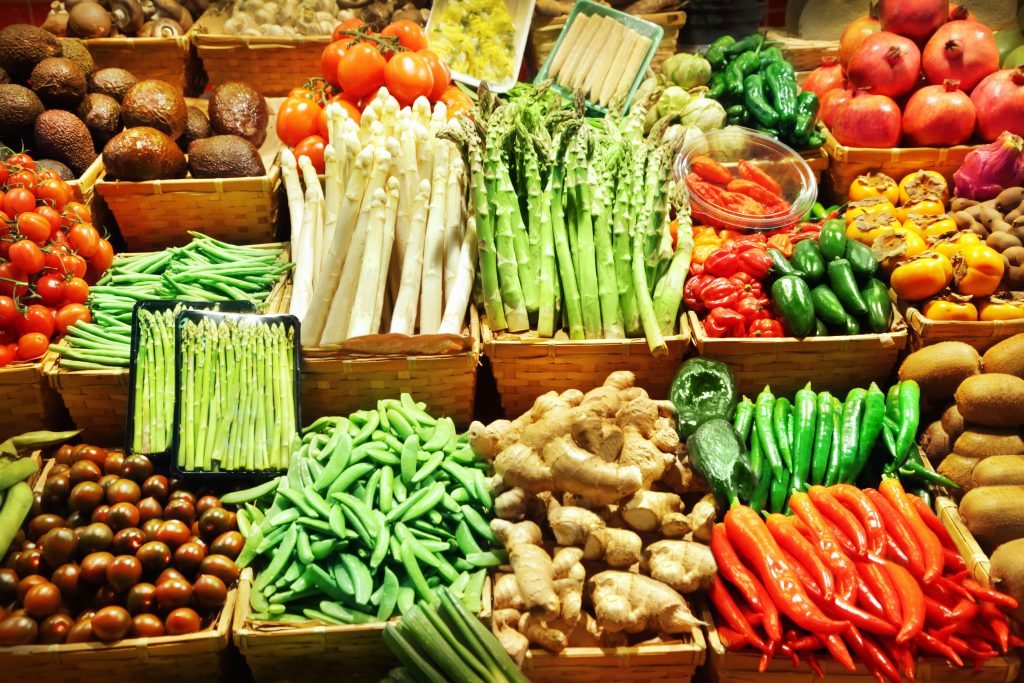
    At the 2019 Florida Ag Expo, visitors gathered at the Gulf Coast Research and Education Center (GCREC) for a trade show and field tour. Students and faculty from the University of Florida (UF) set up an Asian vegetable display that was visited by approximately 75 growers, educators, students and Extensions agents. Visitors conversed with students, read a flyer, took an identification quiz and watched a cooking video featuring Asian vegetables. They also had the opportunity to speak with UF associate professor Guodong Liu, who has dedicated much of his time toward exploring how to grow Asian vegetables.

    Yanlin Wang, a UF graduate student, presented research on nutrition of Asian vegetables. She determined optimal fertilization of conventional luffa and long bean to be 150 and 200 pounds per acre of ammonium nitrate, respectively. Luffa was on display as well as nine other vegetables.

    Luffa grows well in Florida because of the heat and moisture (Herklot, 1972; Purseglove, 1968). The two typically grown species are smooth (Luffa aegyptiaca) and ridged (Luffa acutangular). Mature fruit can be made into a fibrous sponge, and immature fruit are rich in minerals (phosphorus and potassium) and vitamins A and C (U.S. Department of Agriculture-Agricultural Research Service). The young leaves, flowers and buds can be eaten (Xie et al., 2016). Luffa has been used medicinally to treat diabetes and reduce risk of heart disease (Schilling et al., 1981).

    Tong hao is an annual that grows highly branched foliage. It is slightly aromatic and has high quantities of beta carotene and antioxidants. It can be used culinarily, ornamentally or as green manure.

    Nappa cabbage is a mild elongated Chinese cabbage also known as wong bok (meaning yellow white) because of its typical yellow heart. It is an incredibly healthy vegetable that is an excellent source of folic acid, vitamins (A and B) and calcium (Mendes de Lira et al., 2015).

    Daikon radish is a mild Japanese radish with diuretic properties. Daikon radish forms a large taproot and dense foliage which may help reduce weed pressure. It decomposes quickly, releases nutrients and opens channels in the soil from decomposing roots, indicating cover crop potential (Gruver et al., 2016; Weil et al., 2009).

    Yu choy is a cool-season leafy annual with slender, pale green stems. It is typically harvested after one month, but harvest time may vary. Yu choy has high concentrations of antioxidants and mineral nutrients (Kamarudin, 2012). The leaves, stems and flowers are all edible and taste peppery and sweet.

    Shanghai bok choy has a light-green stem with smooth, spoon-shaped leaves. This crop can be grown in most parts of Florida year-round (Stephens, 1994). Harvest typically occurs after 30 to 45 days, and bitterness may develop if left in the soil too long (Tay and Toxopeus, 2016).

    Bitter melon is a vine from south Asia that has spread through the tropics and subtropics (Hossain et al., 2006). It grows rapidly, so trellis-support is recommended. Immature fruit tastes pleasantly bitter and is an excellent source of vitamins (A, B and C) and minerals (calcium, phosphorus, potassium and iron). Chinese bitter melon tends to be smoother and less bitter than Indian bitter melon. Bitter melon also has medicinal benefits like lowering blood sugar (Zhang et al., 2018).

    Kabocha is a winter squash that grows best in well-drained soil with organic matter (Liu et al., 2017; Purdue Extension, 2014). The yellow-orange flesh is sweet, starchy and firmer than common pumpkin. The seeds can be roasted and taste like pumpkin seeds.

    Long squash is an herbaceous vine that needs trellis support. Long squash is a good source of vitamin C and potassium and has anti-inflammatory and cardioprotective effects. While not edible, the mature fruit can be used as containers, musical instruments or fishing floats.

    Chinese eggplant is a perennial typically grown as an annual. It is long and has thin skin and few seeds. Chinese eggplant has been used medicinally for its antioxidant properties and for symptom reduction of toothaches, sores and intestinal disorders (Moore, 2007).

    Asian vegetables grow well in Florida and have high market potential. John Sykes, a potato farmer with more than 1,000 acres of land, now grows Asian vegetables. He sees a market for them throughout the United States and in Canada.

    Asian vegetable cultivation may be a novel and profitable experience. To learn more, search the UF Institute of Food and Agricultural Sciences Electronic Data Information Source website (https://edis.ifas.ufl.edu/) or visit https://hos.ifas.ufl.edu/people/on-campus-faculty/guodong-david-liu/how-to-grow-asian-vegetables/.

  • United Fresh Start Foundation Starts COVID-19 Donation Program to Help Kids and Familes

    Lancaster Foods’ President John Gates joined United Fresh’s President & CEO Tom Stenzel delivering 1,000 3-pound bags of apples to the ALIVE community feeding program in Alexandria, Virginia on Saturday, April 4.

    Contact: Mary Coppola mcoppola@unitedfresh.org 202-303-3425

    WASHINGTON, DC (April 6, 2020) – In response to the COVID-19 pandemic, the United Fresh Start Foundation is offering a new grant program — COVID-19 Rapid Response FRESH Grants — to increase access to fresh fruits and vegetables for children and families in need, while also creating opportunities for foodservice distributors who face the loss of markets due to the restaurant and hospitality industry shutdown. 

    “These are two pressing needs facing our country today that are interconnected,” said United Fresh Start Foundation Chair Lisa McNeece, Vice President, Foodservice and Industrial Sales, Grimmway Enterprises, Inc. “Kids are out of school and families are out of work. We need to make sure they have access to fresh produce through remote feeding sites or community programs. And at the same time, our foodservice distributors have been devasted by the immediate shutdown of their markets. This is an attempt to inspire our greater industry to recognize both needs and do what we can to help.”

    The United Fresh Start Foundation will fund (25) $1,000 grants to produce companies and foodservice distributors who can provide fresh fruits and vegetables to schools, community groups, and other emergency feeding sites for those in need. If a distributor can donate at least $1,000 worth of produce, or more, the Foundation will reimburse them $1,000. The goal is to break down the barriers that impact access to fresh produce, and bring community members and the supply chain together during this extraordinary time.

    The first grant was used to support a donation of 1,000 3-pound bags of apples by Lancaster Foods to the ALIVE community feeding program in Alexandria, Virginia on Saturday, April 4. Lancaster Foods’ President John Gates joined United Fresh’s President & CEO Tom Stenzel in delivering the fresh produce to ALIVE for distribution to needy residents in the community. “I thank John and the Lancaster team for going above and beyond to help our community,” Stenzel said. “And, for me personally, this feeds my own neighbors in need.”

    This program is funded through the generosity of those individuals who have agreed to donate their prepaid registration fees for the United Fresh 2020 Convention in San Diego to the United Fresh Start Foundation. “I want to thank each of those individuals for inspiring us with their generosity and making this program possible,” McNeece said.

    “In addition, we encourage individuals to consider making a tax-deductible donation directly to the United Fresh Start Foundation so we can continue to serve kids everywhere as best we can. And, of course, company contributions are welcome! Make your donation here to ensure kids are growing up fresh!”

    Interested produce distributors should complete this simple form to request a grant from the United Fresh Start Foundation. We ask that you immediately implement community feeding programs and we will get back to you on a first-come, first-served basis as long as funds are available.

    Visit www.unitedfreshstart.org for complete details on the COVID-19 Rapid Response FRESH Grants program.


    For more information, contact Mollie Van Lieu, Senior Director of Nutrition Policy at 202-303-3403 or mvanlieu@unitedfresh.org.

  • U.S. Congressman: Additional Funds Will be Ready if Needed for Paycheck Protection Program

    By Clint Thompson

    Buddy Carter

    The Paycheck Protection Program (PPP), an integral part of the $2 trillion Coronavirus Aid, Relief and Economic Security (CARES) Act, that will aid small businesses recover amid the ongoing coronavirus pandemic, may not have sufficient funds to support the $350 billion allocated for the program.

    One United States Congressman insists, though, that additional funds will be ready if needed.

    “There’s going to be a Phase 4 (coronavirus aid package). I am more certain now that there is going to be a phase 4,” said Buddy Carter (R-Ga.), who represents Georgia’s 1st District in the House of Representatives. “The short answer is, if we need more money, we’re going to allocate more money.”

    The program was designed to prevent workers from being laid off and small businesses from going out of business during a global pandemic that has halted the world’s economy. Those farmers or businesses, who qualify for the program, need to apply as soon as possible.

    “We intentionally made it somewhat ‘loose’ if you will, somewhat loose in that we wanted the agencies to be able to get this money out as quickly as possible. Therefore, we left a lot of the rules and regulations up to the agencies. There’s been some bumps in the road and that’s to be expected. But we intentionally did that because the message we sent to the agencies was, you need to get this money out as soon as possible,” Carter said. “We’re not going to burden you with rules and regulations and then ask you to get out as quickly as possible.”

    Carter said small businesses make up 99% of the businesses in America.

    “What we wanted to do was make sure we maintained the employee-employer relationship. That’s very important, particularly for our farmers, particularly for our small businesses. You’ll be able to get up to two and a half times your average monthly payroll,” Carter said. “That is very important because, again, we want you to maintain that relationship with your employee.

    “We don’t want to hear about people being separated from their businesses. That’s vitally important.”

    He emphasized that the applicant can be forgiven, if 75% is used for payroll,

    “Therefore, this PPP loan actually turns into a grant. That is very important because we wanted to make sure we get the relief out there,” Carter said.

  • Farmers Need to Beef up Security During Desperate Times

    A tractor and trailer harvesting potatoes in Hastings, Florida. Photo taken 06/03/15.

    By Clint Thompson

    Farmers need to beef up their security amid the coronavirus pandemic, according to Gene McAvoy, Associate Director for Stakeholder Relations for the University of Florida IFAS Southwest Florida Research and Education Center.

    As unemployment continues to skyrocket across the country, this often leads to an increase in theft instances. McAvoy said farmers are vulnerable right now since fewer people and eyes are on the farm.

    “When we were back in the recession era in the middle part of 2008, 2009, we saw a big up-take in unemployment. People are hungry. If you grab a box of chemicals on a farm or grab a couple of boxes of chemicals … that stuff is worth $400, $500 a jug sometimes,” McAvoy said. “You can grab three or four boxes and run. You’ve got some money to earn. Then they’ll turn around and sell it to unscrupulous buyers looking for a deal.”

    He’s already received reports of a couple of animals being slaughtered, 16 head of cows stolen and equipment taken in two other instances.

    McAvoy stresses to producers to take extra precautions during these desperate times.

    “Mark equipment in a place that’s not readily visible. If you lose a tractor or a disc or whatever, you have markings on it. So if the sheriff gets it or you see it, you can identify it,” McAvoy said. “Up your security. Make sure you’re checking your gates. Don’t keep a lot of inventory on hand. As I said, especially chemicals, you grab four gallons of certain products, you’re looking at close to a thousand bucks or more in one box. Just get it on an add-needed basis is a big help.

    “Camera systems are really cheap these days. You can get, for a few hundred dollars, wireless cameras that you can put around your strategic areas, your entrance gates, your spray shed, your office, your equipment barn. Oftentimes, they can be programmed to send alerts to your cell phone.”

  • Here’s Some Tips on Handling COVID-19 on Produce Farms and in Packinghouses

    By Laurel Dunn (UGA CAES News)

    Wash hands with soap and water for at least 20 seconds.

    While there is no evidence that the COVID-19 virus is a food safety concern, it is a worker health concern as it spreads via close person-to-person contact or by contact with contaminated surfaces.

    Food does not appear to be a likely cause of COVID-19 transmission, but many of the same practices used to prevent foodborne illness on foods should be used to reduce the likelihood of COVID-19 contamination on fresh produce and the risk of COVID-19 spreading among workers.

    Producers should educate workers on COVID-19 symptoms, how it spreads and how to reduce the spread of the disease.

    Following are some guidelines from University of Georgia Cooperative Extension to share with employees:

    • Instruct workers to stay home if they are sick (coughing, sore throat, fever, diarrhea, vomiting, etc.).
    • Reassure employees that they will not be punished for missing work due to illness.
    • Have a plan in place and communicate in advance how you will address workers who do not want to miss a paycheck (paid sick leave, etc.).
    • All employees must wash their hands frequently throughout the day with soap and water for at least 20 seconds. This includes when employees arrive to work, before they handle food, after breaks or after using the restroom, etc.

    For more information, see: UGA CAES Newswire.

  • Fruits and Vegetables Next Stop on AFF’s Virtual Field Trip

    By Clint Thompson

    Children quarantined at home because of the coronavirus pandemic have a unique opportunity to learn about fruits and vegetables via social media. Alabama farmers, including Allie Logan and sister Cassie Young, will teach about fruits and vegetables as part of an ongoing virtual field trip offered through the Alabama Farmers Federation Facebook page, on Friday, April 10.

    The sisters are part of Backyard Orchards, an Agritourism attraction in Barbour County, Alabama. They’ll be discussing strawberries, which is part of their U-pick business.

    The Alabama Farmers Federation wants to take children on virtual field trips to help them learn about the different agricultural sectors that comprise the state. It will be offered every Friday morning at 10 (CT) through May 22.

    Last Friday, Jonathan Sanders, a farmer in Coffee County, talked about peanuts and other row crops that are produced in the Wiregrass. The show attracted more than 5.2 thousand views.

    Mary Wilson Johns, Alabama Farmers Federation Director of News Services, said the program offers parents and caretakers a chance to allow farmers to educate children about all things agriculture.

    “I know that this is just uncharted territory for a lot of parents, a lot of students. By Fridays at 10 in the morning, you might be at the end of your rope trying to figure out what you are going to do today to keep the kids engaged,” Wilson said. “Hopefully, these farm tours will fill that need and these links to those other resources will continue that education so that students will learn a whole lot more about where their food, fiber and timber products come from.”

  • Produce Market Sours on Florida, Georgia Farmers

    covid
    Vegetables on sale at a market.

    By Clint Thompson

    One of the largest produce farmers in Georgia is nervous about the impact the coronavirus impact is having on produce farmers in the Southeast.

    Bill Brim, part owner of Lewis Taylor Farms in Tifton, Georgia, is in the middle of harvesting some of his fruits and vegetables and has already seen a decrease in demand, amid the virus leading to closures of restaurants nationwide.

    “Our greens and broccoli season, it’s way down. We’ve lost thousands of boxes of orders because of this coronavirus,” Brim said. “We’re not harvesting right now unless we have an order on greens, (otherwise) we’d just have to dump it. We’re just not able to sell it. Food service has just dropped down where, we were doing two or three loads per week for food service, just on kale, and it’s gone to nothing.

    “It’s way down from what it normally is.”

    Brim said his produce is divided 60% food service to 40% retail. Like his brethren in Florida, Brim has been impacted by the orders of self-quarantine.

    “When it first started with the coronavirus down in Florida, prices were real high. Cucumbers went from $42 per box to $10 per box and then to no sales at all down in Florida,” Brim said. “They’re harrowing up cucumber fields and squash fields. Anything that’s on bare ground they’re harrowing it up and getting rid of snap beans and sweet corn. It’s not good.”

    Lewis Taylor Farms grows more than 6,500 acres of produce each year. Brim produces strawberries, turnips, mustard, kale, collards and broccoli as part of his farming operation. A once hopeful outlook for the 2020 season has soured quickly.

    “Crop’s coming on, looks good, I just hope we’ll have a market to send it,” Brim said.

    Brim established himself as an industry leader when he, along with Ed Walker, purchased Lewis Taylor Farms in 1985. Over the next five years, Brim helped transform Lewis Taylor Farms into a diversified transplant and vegetable production farm operation.

    When Brim became a co-owner of Lewis Taylor Farms, it had only 87,000 square feet of greenhouse production space. The farm now boasts 81 greenhouses with more than 649,000 square feet of production space.

  • Fried, Ag Associations Urge USDA to Act Quickly on COVID-19 aid

    commissioner
    Nikki Fried
    Florida Agriculture Commissioner


    The CARES Act, a $2 trillion federal stimulus bill, was signed into law March 27 to aid American businesses and citizens who have been severely affected by COVID-19. A $9.5 billion allocation was set aside for American farmers, and Florida Commissioner of Agriculture Nikki Fried is asking the USDA to act immediately in getting them their distribution.

    Fried sent a letter this week to U.S. Secretary of Agriculture Sonny Perdue urging the USDA to act as quickly as possible, especially on a Section 32 purchase, which gives USDA the authority to buy surplus crops and distribute them to child nutrition programs and food banks.

    “I applaud our farmers and producers who have shown unbelievable resilience as they continue to work day in and day out to feed our communities during this trying time,” Fried said in the letter. “Now, we must make sure our farmers, who are also struggling in the current market even as they continue to provide for others, are not left behind and food is not left to waste.”

    FFVA is working closely with FDACS and other organizations to press USDA to aid growers in three areas:
    •        An expedited Section 32 purchase
    •        Direct payment to growers based on losses  
    •        A request for USDA to cover losses when PACA claims are filed and the buyer is no longer in business

  • Congressman Scott: Apply Today for Paycheck Protection Program

    By Clint Thompson

    The Paycheck Protection Program might be an option for farmers to consider, but Congressman Austin Scott implores those interested to apply today.

    Austin Scott

    The recently passed $2 trillion Coronavirus Aid, Relief, and Economic Security (CARES) Act, which is intended to provide financial relief amid the coronavirus pandemic, includes $350 billion for the Paycheck Protection Program. It is designed to aid small businesses.

    “There are significant questions that remain out there about whether or not farmers can actually apply for and get relief from the Paycheck Protection Act. Here’s the best advice I can give you. You need to be talking with your lender and you need to look at the application. If you can answer those questions honestly, then you need to put an application in,” Scott said. “When I say put it in, I don’t mean you need to put it in tomorrow. I mean you need to put it in today.”

    Scott said that according to the Small Business Administration there is an estimated 30 million small businesses that are eligible for paycheck protection relief, which will provide eight weeks of financial assistance. Scott expects funds to run out quick.

    “My concern has been based on the $350 billion number that if you just divide that by the number of small businesses, my fear is that we’ve over-promised on what we’re going to be able to do on the paycheck protection, simply based on the $350 billion being divided by 30 million businesses. You come up with $11,600 per business. If only half of the people apply that’s $23,000 per business,” Scott said. “You’re talking about two months payroll plus rent and utilities. I think the money goes and I think it goes very quick. In fact, I do not believe there will be money left at the end of the day today.

    “The question comes, when does it get replenished? And not just if, but if it gets replenished and when would it get replenished? I think you’re talking about well over a month before any additional legislative action is taken.”

  • Alabama Extension Specialist Cautiously Optimistic About Peach Crop

    peaches
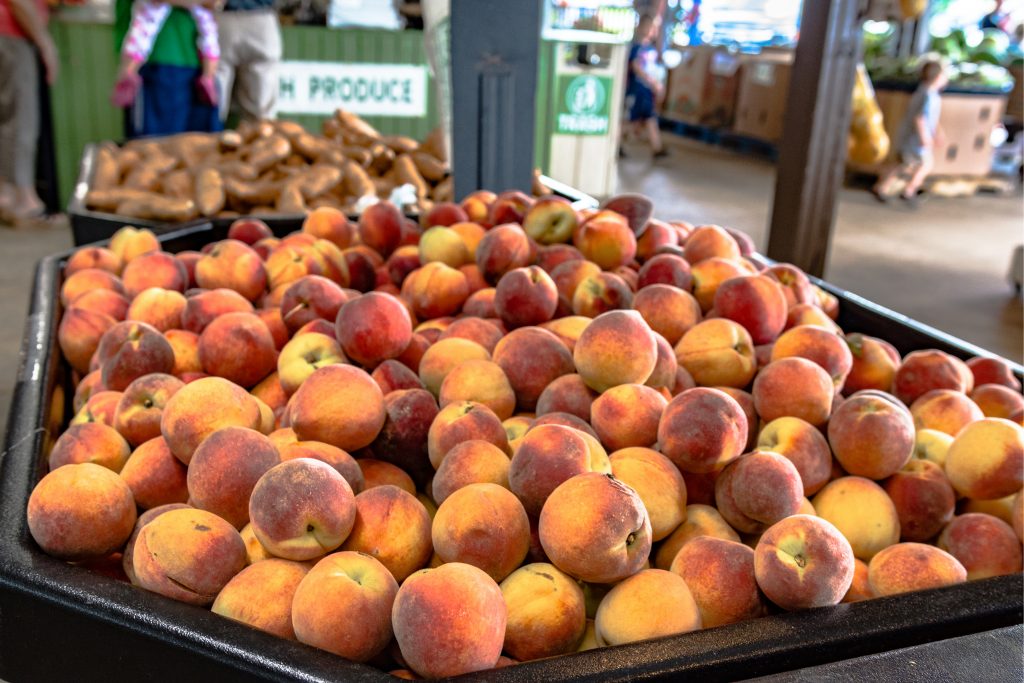
    Peach season in Alabama and Georgia begins in late May.

    By Clint Thompson

    Peach season is less than two months away for Alabama and Georgia growers and Edgar Vinson, assistant research professor and Extension specialist in the Department of Horticulture at Auburn University, is encouraged by this year’s crop despite a very mild winter.

    “I’m cautiously optimistic. I do think we got more chilling than the chill hour models tell us. But my concern now and concern of the growers is potential for frost damage,” Vinson said. “Hopefully, it’s warm for the rest of the season.”

    Vinson said Alabama’s peach season begins in late May and extends to September, which is very comparable to Georgia, and unlike Florida farmers, who are already harvesting their crop amid warm temperatures. Vinson does believe growers are a little concerned with chill hours with respect to the varieties that require a lot.

    “And that’s not to say we’re not going to have any issues with chilling, we’ll probably see some issues with chill accumulation, especially with our high chillers. A number of our growers still have quite a number of peach varieties that require higher chilling; 900 (hours) or above,” Vinson said. “In terms of the early-season to mid-season (varieties), they’re probably not as concerned. They’re more concerned with the varieties that require a high chill. That’s probably where we’ll see any signs or symptoms of a lack of chilling.”

    Lack of chilling hours can affect the overall quality and appearance of the fruit, according to Vinson.

    “There’s an over-pronounced suturing that runs the length of the fruit. Ideally, we want that to be minimal. But when there’s a lack of a chilling, that suturing is very pronounced,” Vinson said. “Also, the tip of the fruit, you don’t want a point there; you want that to be smooth. With fruit that shows lack of chilling, there’s an over-pronounced suture with a very sharp tip at the end of the fruit.”

    Vinson also said there can also be smaller harvests over a longer period.

    “That means your growers are having their crews go out to the orchards for longer periods. That cost more money and each harvest is yielding less. It can affect the growers’ operation that way,” Vinson said.