Category: Top Posts

  • Promoting Health Benefits of Blueberries Could Boost Sales

    Pictured is a file photo of blueberries.

    By Clint Thompson

    Produce industry experts believe consumers are, and will continue to be more health conscious, which is good news for blueberry producers.

    “It’s very apparent to me that consumers are getting the message because when you look at things like the blueberry category, the strawberry category, the citrus category, we’re seeing great movement in those types of items,” said Melissa Byland, senior buyer in produce at Walmart. “I think consumers are definitely connecting fresh produce and specific items within fresh produce in the aspect that they contribute to better health. We’re definitely seeing the impacts of that in our business.”

    Health Benefits

    According to UGA Extension’s blueberry site, blueberries are a good source of vitamin C, iron and fiber. They’re cholesterol-free, sodium-free and possess an important source of potassium.

    Research concludes that the antioxidants in blueberries help protect the body against chronic diseases associated with aging.

    “We talked to one scientist who said there are seven things you should be eating to boost your immune system to protect you from any virus. Blueberries were on the list. We need to take advantage of that in this current situation to educate consumers,” said Cathy Burns, CEO of the Produce Marketing Association. “I don’t think it’s going away anytime soon. People are going to continue to be concerned about health. Obviously, what Melissa is seeing in her sales is very consistent with what we’re hearing with retailers across the board. It’s our time to shine and really focus on eating fresh fruits and vegetables, and blueberries fits squarely in that.”

    According to the U.S. Highbush Blueberry Council, Georgia and Florida, along with eight other states, help produce more than 98% of the country’s blueberry crop.

    Blueberry producers should really profit in the upcoming months. Byland said the latter part of spring and into summer, berries are under the spotlight at Wal-Mart. And it’s not changing.

    “For us, we look at May, June and July as the Super Bowl of berries. We’re really planning to execute business the same way we have in the past. I know that quality and availability is at its best during this time. We’re able to offer customers larger pack sizes,” Byland said. “We’re really gearing down and looking toward running our summer business the same way we always have. It’s a great opportunity also for us to feature locally grown products, which we try to do as often as we possibly can. We know that it definitely resonates with customers. It gives them a great feeling about being able to support their local farmers.”

  • Deadline Nearing for Specialty Crop Block Grant Applications in Alabama

    The Alabama Department of Agriculture and Industries (ADAI) is accepting grant applications for projects that enhance the competitiveness of U.S. specialty crops in foreign and domestic markets. The application deadline for these specialty crop block grants through the U.S. Department of Agriculture (USDA) is Monday, April 27, 5 p.m. CST. Specialty crops are defined by the USDA as fruits and vegetables, dried fruit, tree nuts, horticulture (including maple syrup and honey) and nursery crops (including floriculture).

    Commodity groups, agricultural organizations, colleges and universities, municipalities, state agencies and agricultural nonprofits are all eligible for this grant program. However, their proposals must meet all of the program specifications. ADAI and a review committee of industry representatives will make application evaluation reviews and award recommendations to the USDA. USDA has final approval for projects submitted.

    The specialty crop block grant is a competitive grant process, with the minimum amount awarded being $5,000. The maximum award to commodity groups, agriculture organizations, municipalities and agriculture nonprofits applicants is $25,000. The maximum amount for colleges and universities is $40,000.

    Projects cannot begin until official agreements are signed, which is expected in October, 2020. For more information, visit http://www.agi.alabama.gov/scbgp or contact Johnny Blackmon at 334/240-7257.

  • Irrigation and Nitrogen Fertility Rate Strategies to Reduce Leaching

    By Ashley Robinson

    Irrigation in a corn field.

    Excessive nutrients in waterbodies, such as nitrate-nitrogen (N), have been one of the major issues in unconfined regions underneath the Upper Florida aquifer. This can be attributed to farmers applying excessive N fertilizer with the hope of obtaining higher yields. Therefore, the implementation of Best Management Practices (BMPs) such as proper irrigation and N management is required to avoid N leaching from soil profiles.

    RESEARCH RECOMMENDATIONS

    A field experiment was conducted in Live Oak, Florida to evaluate different irrigation strategies and N fertilizers in corn production. The goal was to improve strategies that could reduce N leaching from fields.

    Scheduling can increase irrigation efficiency by decreasing runoff, deep percolation and soil evaporation losses. It also manages soil water content to reduce evapotranspiration during crop stages that require less water. According to Maria I. Zamora-Re, a Post-Doctoral Associate at the University of Florida, soil moisture sensors and soil water balance sheets are recommended methods of irrigation scheduling.

    “The soil water balance sheet is a very easy spreadsheet that growers can put their inputs into, and the spreadsheet will allow them to know when irrigation is required in their fields,” says Zamora-Re.

    In addition to reducing the amount of nutrients leaving the fields, irrigation scheduling tools can save growers input costs by applying less irrigation and fertilizer while potentially increasing crop yields.

    “The data may be seen as overwhelming by some growers, and just one added to-do thing to their list. So we’re hoping to provide the tools and teach them that these technologies can be a very simple and cost-effective adaption. Another concern some growers share is the cost of soil moisture sensors. However, cost-share programs are now available through the grower’s water management district, which would provide them with a great opportunity to try this technology,” Zamora-Re says.

  • UF/IFAS Hemp Program On-Farm Trial Partner Application Due Today

    Zack Brym/University of Florida

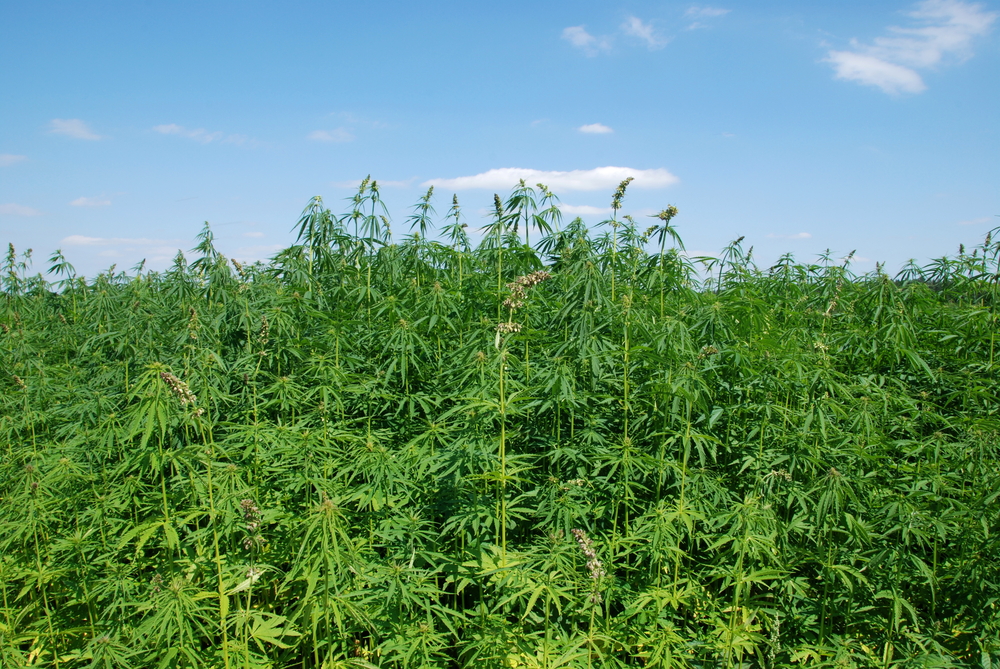
    File picture of rows of hemp production.

    The University of Florida/IFAS Hemp Program is seeking qualified partners across the state to permit 20 farms for on-farm trials. The application link has been extended with late submissions due tonight by 11:59 p.m.

    Partner farms will conduct a coordinated field planting on two acres with variations in land preparation. Partners will also have the opportunity to submit a plan industry development research on an additional three acres.

    Application Details

    Applications will only be accepted through the online form up to the late submission deadline. Only submissions through this online application form will be considered by the review panel. Past submission attempts via email using draft application or permit forms will not be considered. Applications for nurseries or indoor production facilities will not be accepted for this application period.

    You must complete the application in one session. You can advance through the form without answering the questions (after answering question 1) to review the application questions before completing submission.

    Recommended preparation for application

    • You will need a Google account to upload images required for the application.
    • Draft and/or log your answers in a separate file on your computer as a backup in case of technical difficulties. 
    • Select a contiguous 2-to-5 acre field. Obtain GPS coordinates for the center of the field and annotated satellite image (.JPG, .PDF).
    • You may also permit an on-site propagation facility (e.g., greenhouse, shadehouse, high tunnel). Obtain separate GPS coordinates and annotated satellite image (.JPG, .PDF).
    • Identify farm supervisor and contact information.
    • Identify additional personnel by name and positions.
    • Consider limited access control points, storage capacity, and environmental containment procedures. You will have 500 characters to describe each of these points.
    • Determine your farm soil and source of water.
    • Consider the availability of irrigation and cultivation equipment.
    • Reflect on your farming experience, research experience, and industry engagement. You will have 1000 characters to describe each of these points.
    • Design an industry development plan for up to three acres. This is optional. You have 5000 characters to detail the goals and methods of the plan.


    Frequently Asked Questions

    When will selected farms hear back about selection? What will the permitting process be like? When is the expected planting date?
    About two weeks for initial response. The first round of applications are currently with the review panel. Late submissions will follow shortly. It is my goal to make selection recommendations late next week to UF/IFAS Research for approval the following week. Selection announcements and permitting procedures will be handled through UF/IFAS Research. My goal is to have permits in place and farms ready to plant mid to late May.

    Why are you asking partners to pay?
    The main objective of this on-farm trial is to establish a network of knowledgeable farmers and industry professionals associated with rigorous research trials. The UF/IFAS Industrial Hemp Pilot Project needs the support of the industry and generous donors to complete that work. We will be asking partner farms and others in the community to contribute to the program through a volunteer donation.

    Will partners be able to sell hemp produced during the trial?
    I do not know yet but am getting closer to a situation that would make that possible. If the crop was to be sold it will likely be done so through a commercial cultivation permit from the Florida Department of Agriculture and Consumer Services linked to the research permit. So, given that situation, we expect partner farms to also obtain a commercial permit for the trial field.

    Where will we get seed or hemp material to plant?
    This is another area of uncertainty. I am working many angles for exactly where seed or plants come from and how or if it will be paid for. I ask a question of applicants to describe relationships with hemp genetics companies and possible acquisition scenarios through those relationships. Regardless, seed and plant material acquisition will have to be routed through UF/IFAS Research.

  • N.C. State Economist: Second Quarter Should Be Horrible Amid Coronavirus Pandemic

    Pictured is a farmer in his field.

    By Clint Thompson

    The ongoing coronavirus pandemic has dealt a devastating blow to the U.S. economy and especially the American farmer. North Carolina State Extension Economist Mike Walden believes the country needs to do what it can to help those farmers rebound from the current recession.

    “We do need to worry about keeping our farmers afloat. Fortunately, in the stimulus plan, there was about $50 billion that was allocated for various programs that would help farmers,” Walden said. “We certainly need to watch our farmers.”

    Fruit and vegetable producers are struggling because of the lack of the food service market. Restaurants have either closed or reduced their business traffic to try to limit the spread of COVID-19. However, that has caused a problem for producers, especially in Florida.

    “If you look at where people get their food, we’re almost split 50-50 between people eating their food in their homes in home-prepared meals versus eating them in restaurants,” Walden said. “The restaurant industry is essentially shut down. There is some pick-up and take-home but that’s a small fraction of what they do. The problem for the farmer is that their supply chain is geared towards that 50-50 split. People don’t understand that farmers just can’t take the produce that they were sending to restaurants and just ship them over the grocery stores. There are different regulations and different packaging.

    “That’s creating a real headache for farmers.”

    On Friday night, the United States Department of Agriculture announced the Coronavirus Food Assistance Program (CFAP). According to the USDA press release, President Trump directed USDA to craft this $19 billion immediate relief program to provide critical support to farmers and ranchers, maintain the integrity of our food supply chain and ensure every American continues to receive and have access to the food they need.

    Walden still warns that the economy will likely get worse before it gets better.

    “The second quarter, which is how most economic data are calibrated, is going to be horrible. It’s going to probably be a record in terms of drop of GDP (Gross Domestic Product). But we should start to see growth come back in the third quarter and fourth quarter,” Walden said. “But it’s likely not going to be until, I would say, at the earliest, mid-2021 before we’re back to where we were before this started.”

    Walden said he’s been an economist for more than 40 years. This is his sixth recession but admits this one is much different than the others.

    “Most recessions are caused by imbalances in the economy, particularly over-indulgence in debt. Businesses and consumers taking too much risk,” Walden said. “This is a recession that has actually been mandated by the government. The government has said we have a problem with the coronavirus. It is easily spread. In order to contain it, in order to limit deaths, in order to not overwhelm our hospital system, we have to essentially shut down a large part of the economy.

    “All of the bad numbers we’re getting now should not be surprising because we have to do this in order to control the virus. Apparently we are getting good numbers on that. We will likely see the economy contract by somewhere between 25% and 30% in the second quarter, that is April, May and June. The unemployment rate may very well get over 15%. But the good news is this should be short-lived. We should probably see some return to growth in the third quarter and then forward.”

  • Using Pesticides Wisely Program Offered Online This Year

    By Clint Thompson

    Stanley Culpepper

    The Using Pesticides Wisely (UPW) program will be offered in an online format this year, due to the ongoing coronavirus pandemic. The program has helped Georgia reduce pesticide drift complaints to the University of Georgia Cooperative Extension Service. It will be held this week April 21-23 at various locations.

    “Our Using Pesticides Wisely programs started in 2015. We are proud to say that every person in our state has been trained face to face. We appreciate the opportunity to communicate with our growers in that type of platform,” said University of Georgia Extension weed specialist Stanley Culpepper. He will provide a voiceover from UGA. “Obviously, everybody on planet Earth is influenced by this virus. So we had to adjust. We felt like the best way to adjust was for the Cooperative Extension Service, kudos to our county agents, to take the lead. We made the powerpoint presentations with voiceovers. That’s what will be presented during the trainings that’ll occur (this) week.”

    UGA Extension and the Georgia Department of Agriculture created the UPW trainings in 2015. The Georgia Department of Agriculture will also have a representative as part of the presentations.

    The state program is aimed at teaching farmers and other pesticide applicators how to properly apply pesticides. The number of pesticide drift complaints in Georgia to the Cooperative Extension Service have been reduced by 76% over the past five years, since the UPW trainings were implemented.

    “If you’re going to apply the Dicamba products that are labeled for use in Dicamba in cotton or soybeans or you’re going to apply 2,4-D in their respective tolerant crops, you must have taken this training in 2019 or this year. You have to do that,” Culpepper said.”

    Growers should choose one of the four webinar sessions and register for the date and time that works best for their schedule.

    Session dates, times and registration links are:

    • April 21, 10 a.m. – Host: Bulloch County Extension Coordinator Bill Tyson, 912-871-6130.  Register here.
    • April 22, 10 a.m. – Host:  Laurens County Agriculture and Natural Resources Agent Raymond Joyce, 478-272-2277. Register here.
    • April 23, 10 a.m. – Host: Early County Agriculture and Natural Resources Extension Coordinator Brian Cresswell, 229-723-3072. Register here.  
    • April 23, 6 p.m. – Host: Tift County Agriculture and Natural Resources Agent Justin Hand, 229-646-1413. Register here.
  • USDA Announces Coronavirus Food Assistance Program

    (Washington, D.C.) – U.S. Secretary of Agriculture Sonny Perdue announced the Coronavirus Food Assistance Program (CFAP). This new U.S. Department of Agriculture (USDA) program will take several actions to assist farmers, ranchers and consumers in response to the COVID-19 national emergency.

    Sonny Perdue

    President Trump directed USDA to craft this $19 billion immediate relief program to provide critical support to our farmers and ranchers, maintain the integrity of our food supply chain and ensure every American continues to receive and have access to the food they need.

    “During this time of national crisis, President Trump and USDA are standing with our farmers, ranchers and all citizens to make sure they are taken care of,” Secretary Perdue said. “The American food supply chain had to adapt and it remains safe, secure, and strong, and we all know that starts with America’s farmers and ranchers. This program will not only provide immediate relief for our farmers and ranchers, but it will also allow for the purchase and distribution of our agricultural abundance to help our fellow Americans in need.”

    CFAP will use the funding and authorities provided in the Coronavirus Aid, Relief and Economic Security Act (CARES), the Families First Coronavirus Response Act (FFCRA) and other USDA existing authorities. The program includes two major elements to achieve these goals.

    Direct Support to Farmers and Ranchers: The program will provide $16 billion in direct support based on actual losses for agricultural producers where prices and market supply chains have been impacted and will assist producers with additional adjustment and marketing costs resulting from lost demand and short-term oversupply for the 2020 marketing year caused by COVID-19.

    USDA Purchase and Distribution: USDA will partner with regional and local distributors, whose workforce has been significantly impacted by the closure of many restaurants, hotels and other food service entities, to purchase $3 billion in fresh produce, dairy and meat. We will begin with the procurement of an estimated $100 million per month in fresh fruits and vegetables, $100 million per month in a variety of dairy products and $100 million per month in meat products. The distributors and wholesalers will then provide a pre-approved box of fresh produce, dairy and meat products to food banks, community and faith-based organizations and other non-profits serving Americans in need.

    On top of these targeted programs, USDA will utilize other available funding sources to purchase and distribute food to those in need. USDA has up to an additional $873.3 million in available in Section 32 f unding to purchase a variety of agricultural products for distribution to food banks. The use of these funds will be determined by industry requests, USDA agricultural market analysis and food bank needs.

    The FFCRA and CARES Act provided at least $850 million for food bank administrative costs and USDA food purchases, of which a minimum of $600 million will be designated for food purchases. The use of these funds will be determined by food bank need and product availability.

    Further details regarding eligibility, rates and other implementation will be released at a later date.

    For more information, see USDA website.

    Read John Hoeven’s response.

    United States Department of Agriculture

  • UGA, Georgia Department of Agriculture Offer Critical Training for Pest Control Application Online

    By Maria M. Lameiras for UGA CAES News

    University of Georgia: Critical pesticide application training for pest control professionals and producers will go online for 2020.

    The University of Georgia and Georgia Department of Agriculture dicamba training program, Using Pesticides Wisely 2020, will move to online delivery for the remaining sessions.

    Using Pesticides Wisely (UPW) is a state program aimed at teaching farmers and other pesticide applicators how to properly apply pesticides to limit pesticide drift in Georgia. Only farmers and other pesticide applicators who were not trained in 2019 need to complete the 2020 training, according to a decision by the U.S. Environmental Protection Agency.

    Growers should choose one of the four webinar sessions and register for the date and time that works best for their schedule.

    Please note that each online session has its own registration link. It is important to use the link that matches your preferred time. Required registration information includes address, phone number, email and pesticide license number for each registrant. A license is not required for 2,4D application, so those registrants can enter N/A in that field.

    Meeting links will be emailed to registrants prior to the 1.5-hour sessions. Participants will be able to submit questions using a chat box or over the phone. Attendees’ names will be placed on a list posted to the Georgia Department of Agriculture’s Auxin website. Please allow up to 21 days after the training date for names to be posted. This list will serve as the official training record and attendance verification.

    Session dates, times and registration links are:

    • April 21, 10 a.m. – Host: Bulloch County Extension Coordinator Bill Tyson, 912-871-6130.  Register here.
    • April 22, 10 a.m. – Host:  Laurens County Agriculture and Natural Resources Agent Raymond Joyce, 478-272-2277. Register here.
    • April 23, 10 a.m. – Host: Early County Agriculture and Natural Resources Extension Coordinator Brian Cresswell, 229-723-3072. Register here.  
    • April 23, 6 p.m. – Host: Tift County Agriculture and Natural Resources Agent Justin Hand, 229-646-1413. Register here.

  • South Carolina Hemp Production Ready for Year Three

    agriculture
    Pictured is a field of industrial hemp.

    By Clint Thompson

    South Carolina producers interested in growing hemp this season will be issued permits by May 1, according to Eva Moore, communications director for the South Carolina Department of Agriculture.

    South Carolina farmers will be able to produce hemp for the third straight year. Moore said interest has grown each year.

    “We got a lot of support very early on from the South Carolina Legislature to help launch this hemp industry in South Carolina. It was 20 farmers that grew hemp that first year of the program. Last year we ended up with 114, and we’ll have more than that this year. We’ve definitely seen it expand from year to year. Folks get more and more interested,” Moore said. “Obviously, the market for CBD has been what most farmers are growing for so far. We hope to see that diversify a little bit. As the industry grows, maybe some folks will start growing for fiber or potentially like culinary uses, once that all gets worked out.”

    Moore said there are 350 interested applicants this year. Permits are $1,000 each. Farmers also had to pay $100 to apply.

    The state’s focus in increasing its number of processors helped the industry to grow last year.

    “Early on, I don’t think we had enough processors. That was a concern the first year of the program, in particular. Last year we really focused on licensing processors as well so farmers would have a market to sell the hemp to,” Moore said. “We ended last year with 43 licensed processors in the state which was up from one at the beginning of the year. That was a help, I think, to farmers.”

    To learn more, see how the USDA approved South Carolina’s Hemp Farming State Plan.

    “It’s a new industry. It’s a risky one. I think this year we are hoping that the farmers that have some experience can really hit their stride and see it work,” Moore said.

  • Fried: Florida Farm to You Initiative a Tremendous Hit

    commissioner
    Nikki Fried
    Florida Agriculture Commissioner

    By Clint Thompson

    The Florida Department of Agriculture and Consumer Services (FDACS) is connecting the state’s farmers with local consumers. The results so far have been tremendous, according to Nikki Fried, Florida Ag Commissioner.

    Fried highlighted the Florida Farm to You initiative that is designed to aid farmers, who are struggling to sell produce and other commodities during the ongoing coronavirus pandemic, while on a conference call Friday morning. FDACS established a website where producers can post information regarding available commodities that are accessed by the public. Commodities like citrus, strawberries, dairy, blueberries, tomatoes, sweet corn and squash are advertised along with the different counties throughout the state.

    “It has been a tremendous hit. We’re seeing a lot of positive response and a lot of people going online and are very grateful for the connection we’re making with the consumers to the farmers directly. We have seen some very positive responses from the website. Of course, we’re only on week one,” Fried said. “Hopefully, this will not only continue through the pandemic, but I think some of the silver lining that we are seeing is some of this is going to continue after the pandemic.”

    Nikki Fried

    Florida’s produce farmers need local consumers more than ever since COVID-19 has shut down schools and restaurants. These are a huge market sources for the state’s fruit and vegetable growers.

    According to Daren Hanshaw, a produce farmer in Immokalee, Florida, he has a fresh cut contract with two major companies. But just Monday did he receive the first three POs (purchase orders). Normally he should have had 15 loads per week. The demand for watermelons has dropped significantly and it shows in the market price. Hanshaw said the prices are 45% off what they have been the past three years.

    Paul Allen, president of R.C. Hatton Farms in Belle Glade, Florida, said he’s left 2 million pounds of green beans and 5 million pounds of cabbage in the field. The reason is he just can’t sell them.