Category: Top Posts

  • FDACS Launches Hemp Permit Application Portal

    Tallahassee, Fla. Today, the Florida Department of Agriculture and Consumer Services (FDACS) launched the state’s online Hemp Cultivation Licensing Portal, allowing interested growers to apply for licenses. The portal’s user-friendly interface provides applicants with a checklist of recommended steps to allow for a quick and easy application process.
    state hemp plan

    “As we continue building our state hemp program into a national leader, our new online application portal will help growers quickly and easily apply for hemp cultivation licenses, as well as manage, renew, and view any current hemp applications,” shared Commissioner Nikki Fried. “We’re working to ensure that applying for a license is streamlined and simple, so Floridians interested in growing hemp can quickly get started.”

    The online Hemp Cultivation Licensing Portal can be accessed at Hemp.FDACS.gov, or on the FDACS hemp webpage. The page also contains a link to an application checklist, so interested growers have the necessary information for a quick, easy application process.

    As part of the hemp cultivation permitting process, applicants are required to complete a background check which includes fingerprint submission along with the ORI number (Originating Agency Identifier) that the Florida Department of Law Enforcement has assigned to FDACS: FL925080Z. The ORI number is currently active and may be used at locations that complete the fingerprinting and submission process (Livescan service providers).

    For a list of Livescan service providers, click here. To locate a Livescan service provider in your area, click here. Some Livescan service provers’ operations may be impacted due to the COVID-19 pandemic. We recommend applicants contact Livescan service provers prior to visiting a location.

    Today’s Hemp Cultivation Licensing Portal launch follows the U.S. Department of Agriculture’s formal approval of Florida’s state hemp program on April 16, 2020. Commissioner Fried and FDACS have been hard at work building the framework for Florida’s state hemp program, announcing new food safety and animal feed rules in January, forming a Hemp Advisory Committee to help guide rulemaking and industry development, and ensuring public input was heard during workshops held around the state to provide information on the draft rules.

    For updates and more information on the state hemp program, visit the FDACS hemp webpage or sign up for the FDACS hemp mailing list.

    Florida Department of Agriculture and Consumer Services

  • Sneak Peek: May 2020 VSCNews Magazine

    Next month’s issue of VSCNews magazine.

    By Ashley Robinson

    The May issue of VSCNews Magazine targets the best pest management practices for growers.

    Researchers from the University of Florida Institute of Food and Agricultural Sciences (UF/IFAS) are already looking ahead and making plans to see what more can be learned about growing hemp in Florida, as they reach the midpoint of their pilot project. Lourdes Rodriguez, a public relations specialist for UF/IFAS Communications, provides a progress update of the UF/IFAS Industrial Hemp Pilot Project and future plans.

    In the Southeast, chemical control is the most predominant approach for managing root-knot nematodes in vegetable production systems. However, multiple cover crops are excellent candidates for managing nematodes. Abolfazl Hajihassani, an assistant professor and Extension specialist at the University of Georgia (UGA), and Josiah Marquez, a UGA plant pathology graduate student, address considerations of selecting the cover crop cultivar best suited to your production.

    Since its first detection in 2008, spotted-wing drosophila (SWD) has emerged as a devastating pest of berry and cherry crops throughout the U.S. Ashfaq Sial, an associate professor in the Department of Entomology at UGA, gives 10 of his best tips to effectively control SWD while protecting your fruit.

    In addition, Hugh Smith, a vegetable entomologist at the UF/IFAS Gulf Coast Research and Education Center in Wimauma, Florida, provides readers with strategies to effectively manage diamondback moth larvae. Diamondback moths, which feed on plants in the crucifer family, develop resistance to insecticides very easily.

    Finally, in the From the Back Forty column, growers can find information on relief efforts in the agriculture industry in light of COVID-19. Organizations such as American Farm Bureau and Florida Department of Agriculture and Consumer Services are working diligently to bring some relief to US farmers.

    To receive future issues of VSCNews magazine, subscribe here.

  • Long Drought Leads to Water Restrictions in One Florida County

    By Clint Thompson

    A water restriction has been placed on one Florida county because of the long drought. Gene McAvoy would not be surprised if more restrictions will follow.

    On Friday, the South Florida Water Management District (SFWMD) and Lee County announced mandatory irrigation restrictions. According to the press release, the restrictions were to address low aquifer levels. They went into place on Saturday.

     “On the coast, they rely a lot more on wells, well fields. Water levels in the aquifer has dropped to extreme levels. That’s why they started with Lee County,” said McAvoy, UF/IFAS Extension agent emeritus. “I haven’t seen anything like this (drought) since 2008.”

    Long Period of Dry Weather

    The most recent map of the U.S. Drought Monitor shows Florida either in abnormally dry, moderately dry or severely dry conditions. Lee County, whose county seat is Fort Myers, is experiencing a moderate drought and severe drought in different parts of its county.

    “We did have a little bit of rain in Southwest Florida (Sunday) night, but it was really (just) enough to settle the dust in most places,” McAvoy said.

    According to the press release, Florida’s southwest coast received only 14.72 inches of rain from September 2019 to March 2020. That’s a deficit of minus-7.64 inches. In March, the southwest coast recorded only 0.27 inches of rain, only 12% of average.

    Due to the extended drought and record heat, Florida agriculture has been negatively impacted.

    “I’m actually in a (citrus) grove right now. Because of drought stress and the record heat we’ve been enduring the past few months, the trees are shedding fruit,” McAvoy said. “Farmers are not able to harvest them quite as fast as the fruit is falling off the tree. (We) probably got two boxes per tree on the ground right now in the grove I’m in right now.”

    The current rainfall deficit, extreme heat and decreasing surface and groundwater levels are expected to continue throughout the remainder of the dry season. It typically ends around the end of May.

    In a previous VSCNews story, climatologists fear that the drought will get worse before it gets better.

  • Florida Department of Agriculture Awarded $850,000 in USDA Research Funding

    Tallahassee, Fla. – On Friday, the U.S. Department of Agriculture (USDA) announced $9.5 million in funding to 11 collaborative, multi-state projects that seek to boost the competitiveness of U.S. specialty crops. The Florida Department of Agriculture and Consumer Services (FDACS) was awarded $850,816 to support research related to improvements in lettuce resistance to Bacterial Leaf Spot (BLS), funded through the Specialty Crop Multi-State Program (SCMP).

    commissioner
    Nikki Fried
    Florida Agriculture Commissioner

    “As the nation’s second-largest producer of specialty crops with a year-round growing season, Florida is an ideal environment for agricultural research and innovation,” said Commissioner Nikki Fried. “This funding is particularly important with Florida-grown lettuce facing losses up to 75 percent due to COVID-19. We look forward to working with state and federal partners to eradicate pathogens and diseases that threaten our valued agriculture commodities.”

    The full list of grant recipients and projects may be viewed here.

    U.S. lettuce production is estimated at nearly $1.9 billion, making lettuce one of the leading vegetable crops in the nation. The funding awarded to FDACS is in partnership with the University of Florida, the Pennsylvania State University, and the USDA Agricultural Research Service. The research will study disease resistance and diversity to improve lettuce cultivars against BLS through breeding, genetics, and study of the BLS-lettuce interaction.

    The USDA Specialty Crop Multi-State Program (SCMP) offers grants to enhance the competitiveness of specialty crops by funding collaborative, multi-state projects that address the following regional or national level specialty crop issues: food safety, plant pests and disease, research, crop-specific projects addressing common issues, and marketing and promotion.

  • Specialty-Type Melons Under the Microscope in Alabama

    A honeydew growing in a field in this file photo.

    By Clint Thompson

    Alabama produce farmers may soon have more options to choose from. This is due to ongoing research from Alabama Extension vegetable specialist Joe Kemble.

    Kemble is researching a melon trial this year that encompasses everything but watermelons and cantaloupes. It’s an expansion upon last year’s trial. He hopes to present relevant date at the annual Fruit and Vegetable Conference in November.

    “I’m doing a larger scale this year just to provide a lot more detailed information and provide growers with an option. Cantaloupes are good but we can also do honeydews and crenshaws and some of these other types of melons as well,” Kemble said. “The seed companies over the last dozen years have come up with a lot of improved varieties. In Alabama or in the Southeast in general, they tend to be challenging crops to grow because most of them don’t have a lot of disease resistance. But companies are spending a lot more effort developing varieties that perform better in the Southeast. I’m looking at adaptability and all things associated with fruit quality.”

    Local Markets

    These type of specialty melons should sell well in Alabama as well. The state’s produce farmers market their crops mainly to farmers markets and roadside produce stands.

    “It’s not the type of things you’re going to be growing lots of. Some of them, frankly, their shelf life is not good enough to take them and ship them. It’s going to be for local consumption,” Kemble said. “We’ve got a lot of farmers’ markets in Alabama, roadside markets and (Community Supported Agriculture) CSAs. I think some of these specialty type melons could fit in pretty well with those types of production.”

    Kemble’s second year of research features 20-plus varieties at two locations and will be replicated.

    “I’ll be collecting a lot of very detailed data to use for growers meetings,” Kemble said.

  • UGA Extension, Georgia Department of Agriculture seek to help farmers get produce to public

    University of Georgia/Georgia producers eager to sell fresh produce are being connected with buyers who need their products through UGA Extension partnership with Georgia Grown.

    By Maria M. Lameiras for CAES News

    Georgia farmers and agricultural producers eager to sell fresh produce and other products are being connected with consumers and other buyers who need their products through a new partnership between University of Georgia Cooperative Extension and the Georgia Department of Agriculture’s Georgia Grown program.

    Because of disruptions to the industry triggered by the COVID-19 crisis, many agricultural producers in Georgia — particularly smaller growers and producers — are experiencing difficulties getting their products out to those who can use them.

    Through its Georgia Grown Ag-products Industry Promotion and E-commerce Promotion programs, Georgia Grown — a state membership program designed to help agribusinesses thrive by bringing producers, processors, suppliers, distributors, retailers, agritourism and consumers together — will waive all membership fees for the service until July to help producers affected by the crisis.

    “The first step is facilitating connections between consumers and growers. There are many people who are looking for fresh produce and cannot find it, and we have producers who have produce and cannot sell it,” said Laura Perry Johnson, associate dean for Extension at UGA’s College of Agricultural and Environmental Sciences.

    Types of Products

    Types of agricultural products that qualify for the program include everything from vegetables, fruits and other produce. Also included are seafood, meats, dairy, poultry products and any other agriculture-related products, such as honey and prepared foods.

    “We are getting a lot of interest from many types of buyers, including consumer, wholesale, food banks and some restaurants,” said Matthew Kulinski, deputy marketing director for Georgia Grown. “This is a good way for producers who normally sell to restaurants to have a new outlet for their produce.”

    Georgia farmers who are keeping regular hours, providing curbside pickup, home delivery or e-commerce sales during the COVID-19 crisis can join the programs. They can visit the Georgia Grown Ag-Products Industry Promotion or Georgia Grown E-Commerce Promotion pages and fill out forms that will add their information to a statewide database of producers. It will be shared with consumers and buyers.  

    UGA Extension will support the program through its network of county agents and specialists throughout the state.

    “This is a grassroots effort that starts with all of our Extension agents, specialists and coordinators who have the relationships with these growers, producers and farmers,” said Johnson. “We are working on several different ways to get this information out to producers and consumers, including our Extension website emergency resources page and through traditional and social media. Together we can make this into something that will not only help agriculture in Georgia but the people who need access to fresh food as well.”

    Georgia Grown also provides a Pick your Own list of all producers who offer that option on their farms. This is for consumers who are interested in picking their own produce.

    View the list of farms and markets by county at extension.uga.edu/ag-products-connection

  • This Week in VSCNews

    Multimedia Journalist Clint Thompson recaps a few stories from this past week in VSCNews.

  • South Carolina Blueberries Impacted by Recent Cold Temps

    house
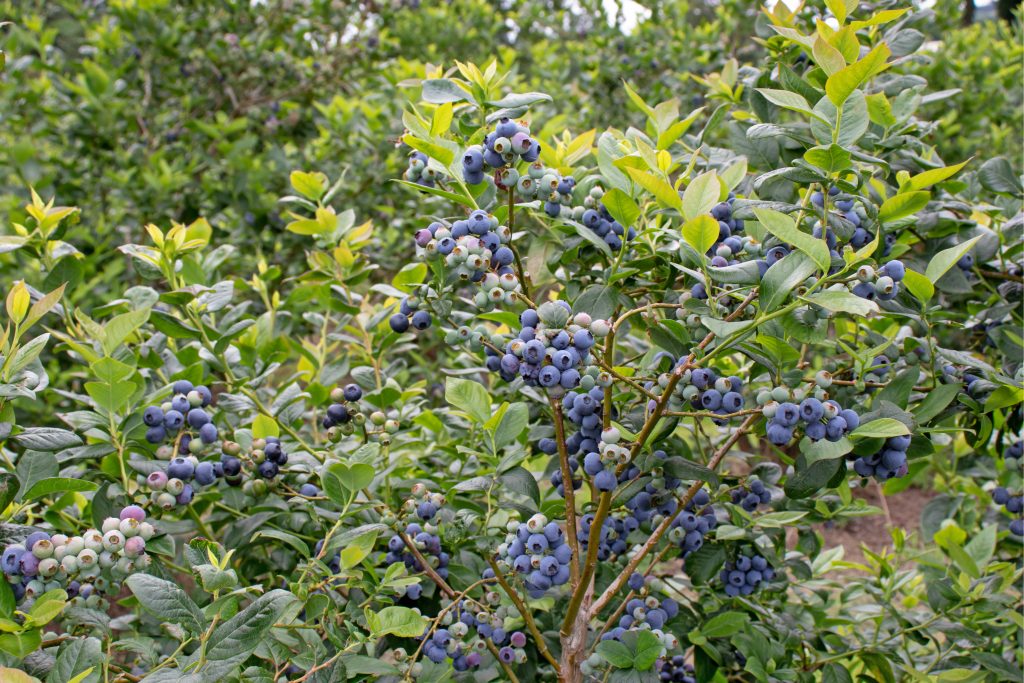
    Highbush blueberries.

    By Clint Thompson

    Recent cold temperatures impacted South Carolina’s blueberry crop, just not to the extent farmers are used to.

    Bruce McLean, Clemson (S.C.) Extension area commercial horticulture agent for Dillon County, Horry County, Marion County and Malboro County, said rabbiteye varieties appear to be the ones most affected.

    “As far as the crop itself, some varieties really look phenomenal. They’re really loaded up, full crop on them. Then there’s some varieties, definitely, the cold has affected,” McLean said. “Surprisingly, seems like what has been affected has really been more rabbiteye blueberries more so than highbush. It’s kind of a weird thing because our normal years tend to be just the opposite. We see a lot of damage to the highbush because they are earlier. Rabbiteyes tend to escape most of any problems. This year it’s been kind of a flip-flop year.”

    McLean thinks where there was an onset of warm weather early in the growing season, it brought a lot of plants into bloom a lot quicker than what it should have.

    “Funny thing is, normally in those years where we come into bloom much earlier, we’ll get a freeze event. It’ll be so severe, it’ll really do some damage to the early blueberries, like highbush. Then rabbiteyes, it’ll do some damage,” McLean said.

    “This year, the onset of warm weather really brought those rabbiteyes, those later varieties, on a little quicker than normal. When it did, they just happen to be at the right stage of bloom when we had a little bit of cold weather.”

    Despite the concerns with the recent cold temperatures, McLean is optimistic about this year’s crop.

    “I’ve been out walking some fields and the crop, for the most part, does look really good overall,” he said.

  • North Carolina Extension Seeks Help With Survey

    town hall

    North Carolina Cooperative Extension seeks help from farmers with a short survey. As producers fill out the survey, it will help Extension assess the impact of the coronavirus pandemic on the specialty crop (fruit and vegetable) and agritourism industry in North Carolina. The survey will help shape Extension’s response.

    N.C. State IRB approved the survey. Also, Extension specialists in the Department of Horticultural Science at N.C. State University conducted the survey. It is done in collaboration with the Center for Environmental Farming Systems and the N.C. State Local Foods Initiative.

    Extension asks that all farmers fill out this voluntary and anonymous survey. It will be open from April 23 through May 7.

    In a previous story ran in VSCNews, Chris Gunter, an N.C. State Extension specialist, reported that the vegetable crop in North Carolina looks “fabulous” so far.

    Mark Hoffmann, North Carolina State small fruits Extension specialist, also reported that he expects a bumper crop this year. Hoffmann is optimistic that his state’s strawberry producers will not have problems selling their crop.

    “With the whole COVID-19 situation, it’s very different right now. It looks like operations that can sell directly to customers, the direct-to-customer sales is something that’s picking up right now,” Hoffmann said. “Right now, I don’t think there’s a problem getting strawberries a home.”

  • Georgia Farmer Thinking Inside the Box

    Workers at Lewis Taylor Farms pack boxes with fresh produce.

    By Clint Thompson

    One South Georgia farmer is thinking inside the box when it comes to moving this year’s fruit and vegetable crop.

    Like his brethren in Florida, Bill Brim’s farming operation has been impacted by the orders of self-quarantine amid the current coronavirus pandemic. The lack of a foodservice market led to a sharp decline in demand for fresh produce including those grown at Lewis Taylor Farms in Tifton, Georgia, where Brim is a co-owner.

    With excess fruit and vegetables, Brim decided to offer boxed fruit to consumers in the South Georgia area. Brim was overwhelmed by the response last week.

    “We just started last week. We did like 350, I think. Next week we’ve already got over 700,” Brim said. “It’s crazy. We could wind up with 1,000 before it’s over with. We’re looking forward to it because we need to move some produce. We’re so far down on greens and stuff like this. Our revenue stream has come to nothing because of the coronavirus.”

    What’s offered?

    Last week, Brim offered collard, kale, zucchini, onion, strawberries and broccoli. People drove to Lewis Taylor Farms on Wednesday and received their produce without getting out of their car.

    Fresh produce in a box ready to be sold in Tifton, Georgia.

    “They lined up out here. We had masks on and gloves on and toted it to the car. They dropped a $20 bill into a box and kept going,” Brim said. “It makes you feel good to know that people in this country are like that. But everybody wants fresh produce, too, and this is a good way for them to get it.

    “We’re just trying to generate some income because we’re so way down.”

    Brim said this marketing outlet is not set up for all farming operations. It is hard to capitalize on unless you are big enough and have got enough product and different kinds of products. This week’s box will feature turnips, broccoli, yellow squash, onion, blueberries and cabbage.

    Brim is not a blueberry farmer, but he is a staunch supporter of other growers like himself. He buys blueberries from another producer in Lakeland, Georgia.

    “We like to use all of our product, but you’ve got to change it up a little bit,” Brim said.

    Watermelon, cantaloupe, eggplant, cucumber and bell pepper could be included as well, once they’re ready for harvest..

    To place an order for this week’s box, fill out an order form. All orders must be placed by Sunday night.

    Lewis Taylor Farms grows more than 6,500 acres of produce each year.