Category: Top Posts

  • ABT Infestations Continue in South Florida

    South Florida bean producers continue to contend with Asian bean thrips (ABT) populations. According to the University of Florida/IFAS, populations vary from farm to farm and planting to planting.

    In southeastern Hendry County, populations averaged 0.1 ABT per bud and 0.2 to 0.5 ABT per bloom. Even the older plantings had reached counts totaling 2.2 ABT per bloom. Because of record numbers in one field, the crop was disced due to low pod set and damage to pods.

    In northeastern Hendry County, ABT populations totaled as high as 2.0 ABT per bloom and early pod development stages, while in the central part of the county, populations have declined and are now at 0.1 to 0.3 ABT per bud or bloom.

    In eastern Palm Beach County, populations were 0.7 ABT per bloom or 0.5 ABT per plant, while in western Palm Beach County, hot spots remain with 1.0 to 2.0 ABT per plant bloom.

    Sneap bean plantings are still young in southern Martin County. ABT has not been reported.

    Beans were harvested and young peas were not scouted in northern Collier County.

    Damage from high populations can happen at budding. Therefore, populations must be monitored earlier in the growth cycle. There is currently no research to support thresholds for management. Some scouts are using 1.0 to 3.0 ABT per bloom for reference.

    Preventative Measures

    Prevention is one of the main components of any Integrated Pest Management program. These measures include cultural control, like sanitation, utilizing resistant varieties, and establishing crop free periods. It is also important to eliminate alternate hosts.

    In Homestead, this is a huge problem for snap bean growers, as there are many specialty legumes that are grown for ethnic markets scattered around the area providing year-round hosts for the Asian bean thrips.

    In other snap bean producing areas such as Palm Beach and Hendry Counties, there are few cultivated hosts. Weeds become the source of inoculum from one season to the next. The fecundity (ability to produce an abundance of offspring) of the thrips on these weed hosts, combined with the amount of these weed hosts in a given region, determines the base population level of the pest. Reducing weed hosts is critical in reducing the base population of Asian bean thrips.

    Source: UF/IFAS

  • Chilly Forecast: Georgia Peach Producers Brace for Upcoming Temperature Drop

    UGA CAES file photo/ Shows peach trees blooming in middle Georgia.

    Georgia peach producers are eyeing the weather, as temperatures are expected to dip into the 30s later this week. It could impact this year’s crop.

    Jeff Cook, University of Georgia Cooperative Extension Agriculture and Natural Resources agent for Peach and Taylor counties, said Georgia’s peach crop is post bloom on most everything with fruit forming on most of the varieties. They are susceptible to cold damage if temperatures drop considerably.

    “When you get post bloom and the shucks gone, your flower’s gone and you’ve got exposed fruit, if frost forms on that fruit, then you’ll get damage,” Cook said. “It’s not always on every fruit, not every fruit’s exposed. I’ve never seen frost destroy a crop. We are more worried about getting down below 30 (degrees) for a few hours. That would be more of a killing type cold. Right now, I think forecasts are 32 to 34 depending on which one you look at. And then it’s going to vary, depending on the orchards.

    “I tell everybody, most of the planning goes in way before the cold comes. You put the orchard in a place where that cold air’s going to (go) away and you’ve got warm air left behind. That’s what we always hope.”

    Copper Applications

    Cook also said there has been research done with copper applications and their impact in keeping frost from forming.

    “There’s bacteria that will help take cold water and form ice. If you can spray copper, it’s been proven that it can help reduce ice formation,” Cook said.

    Temperatures are expected to drop to 33 degrees Thursday night and Friday night, according to weather.com.

    With the cold winter temperatures, peach trees across the Southeast received sufficient chilling hours. But now producers are hoping to avoid cold temperatures that could impact this year’s harvest.

  • How Sweet it is: Refractometers Help Melon Producers Determine Maturity

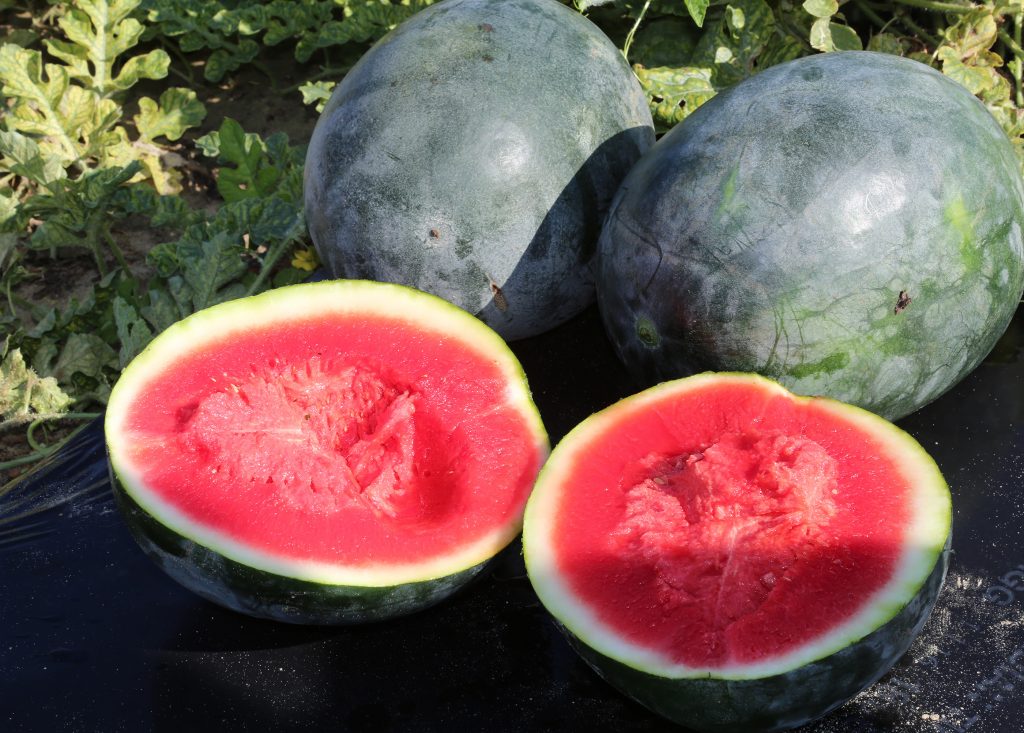
    Watermelons on display at a farm on the UGA Tifton campus. Clint Thompson 6-14-19

    Watermelon plantings are under way across the Southeast, but it’s never too early to start thinking about harvest. While maturity levels in seeded melons can be determined by thumping the melon or observing its appearance, seedless melons are not as simple.

    Joe Kemble, Alabama Extension vegetable specialist, recommends producers to utilize a refractometer to determine the brix or sweetness levels of watermelons. The sweeter the watermelons, the closer they are to reaching full maturity or being fully ripe.

    “If I’m a commercial watermelon grower, I want to have a brix meter in my back pocket. These brix meters are used to measure sweetness. If you happen to raise honeybees, there’s brix meters associated for measuring the sweetness of honey, the sugar content. They also sell them for wines and other beverages. You want one that can be used for agricultural purposes for fruit,” Kemble said.

    Sweeter the Better

    The sweeter the watermelons when they’re harvested, the better off the producer will be. Kemble said large grocery store chains desire watermelons at 10% brix or higher. A refractometer will help growers accurately determine if a watermelon is fully ripe instead of them just guessing.

    “What this requires is to sacrifice a melon or two. You go out there and do your best guessing in terms of figuring out, how close are we to harvest? You harvest one or two that look likely candidates, cut them open, take some of the tissue from the center of the fruit and squeeze it on that plate on the refractometer. You’ll close the plate and hold it out towards the sun and look through it. There’s a gauge in it, and it will show the percent brix,” Kemble said.

    Kemble recommends these seedless watermelons: Affirmed, Bottle Rocket, Crunchy Red, Fascination, Orange Crisp (orange), Superseedless series, Sweet Gem, Tri-X 313 and Troubadour.

  • South Carolina Crops: Clemson Extension Agents Provide Updates Across State

    Clemson Extension agents provide updates in the The South Carolina Grower this week about the status of various crops being produced throughout the state.

    Weekly Field Update

    Coastal

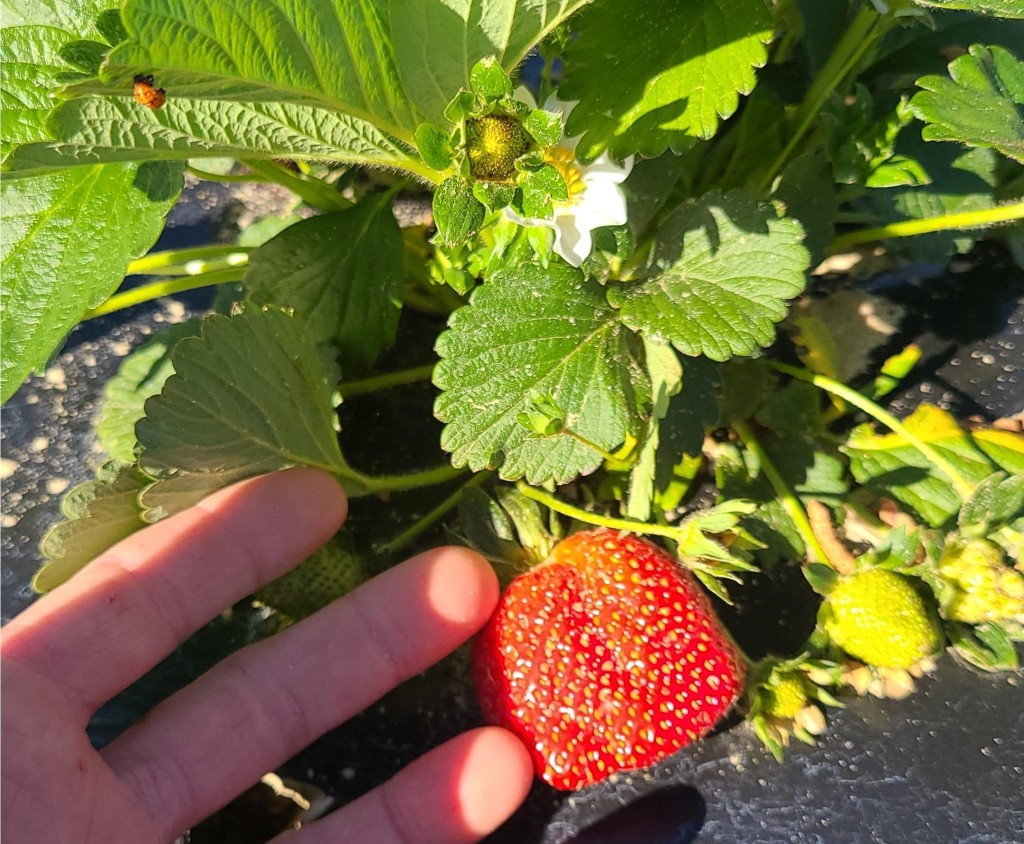
    Rob Last reports, “Strawberry crops continue to develop well with sustained flowering and fruit set. Early crops are ripening well with crops coming to market. Just a note of caution, the weather last week can be conducive to gray mold development, so fungicide programs are going to be key. Thrips are active in some crops too, so keep scouting. Melon transplants are going in the ground over the last week with development looking very promising. Peaches in the area are all but finished flowering with great fruit set. Finally, as we are looking at a cooler week for flowering fruit crops, keep an eye on the forecast temperatures to determine if protection is going to be required. Fruit and closed buds can tolerate cooler temperatures than flowers, but damaged flowers can increase gray mold development.”

    Strawberries continue to develop well in the Coastal region. Photo from Rob Last.

    Zack Snipes reports, “We have had pretty good weather as of late and it has really made things jump here. Spring greens, onions, radishes, carrots and strawberries are really pushing out hard. I counted 57 green berries+flowers on one strawberry plant. If someone can beat that number, I will give you a Free Crop Handbook. The blueberry crop is looking great with a good fruit set on highbush varieties and tons of flowers right now on the rabbiteye types. We planted around 30 citrus trees on Friday as part of a Specialty Crop Block Grant. We have around 75 more to plant next year. All in all we will plant somewhere around 40 varieties with varying scion and rootstock combinations. We are looking at cold tolerance in both the lab and a field setting and monitoring for citrus greening. We will plant everything from kumquat to grapefruit to finger limes.

    Newly planted citrus trees at the Coastal REC this past week. Photo from Zack Snipes.

    Midlands

    Justin Ballew reports, “Last week was pretty cloudy, but we had a couple of beautiful days that reached the 80s. Though we’ve had a little bit of rain, the air has been thick with pine pollen. We’re seeing a few strawberries ripen, but we’re still not at the point where we can open the U-Picks. We’re running a little behind where we’ve been in the past few years, and I suspect all the cloudy weather we’ve had over the last month is partially to blame. I’m seeing a good bit of misshapen fruit, which is normal for the very first fruit that develop. This is usually related to pollination, but make sure you tissue sample to make sure boron levels are where they need to be. Watch out for the cool nights in the forecast later this week. We may need to cover. Spring planted brassica crops are looking good. Diamondback moths are showing up in places, especially near fields where a fall crop was grown through the winter, so be sure to destroy those fields once harvest is finished.”

    Misshapen fruit are pretty common early in the season. Its usually related to pollination, but can be a sign of low boron. Tissue sample to make sure boron levels are adequate. Photo from Justin Ballew.
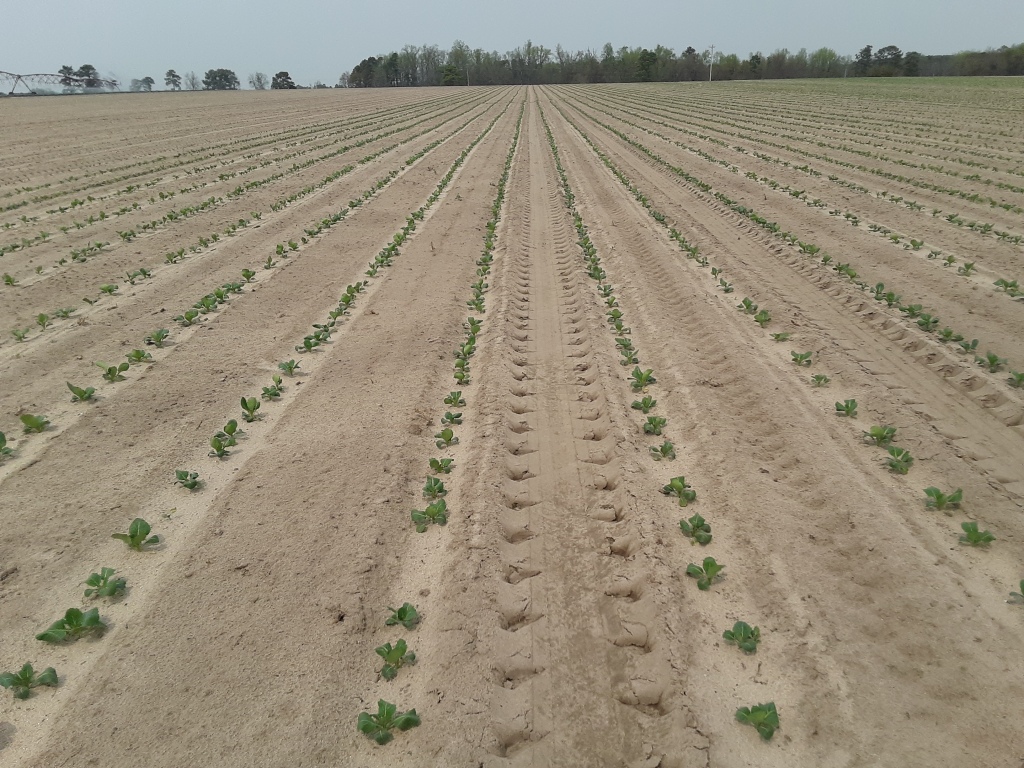
    Spring planted brassicas are growing well and looking good. Photo from Justin Ballew.

    Sarah Scott reports, “Peaches are progressing quickly with small fruit forming on early varieties. Georgia has reported plum curculio activity in the middle part of the state, so orchards in the Ridge of SC can expect to see activity in about 2 weeks. Check the 2021 management guide for control options which include Imidan, Actara, Belay, and Avaunt. Strawberries farms are on track to begin picking regularly April 1. Spring greens are being transplanted as well.”

    Pee Dee

    Tony Melton reports, “Strawberries are ready to burst forth, and there are already some fruit on Ruby June. Working to protect strawberries and peaches later on this week. A lot of summer crops will be going into the ground after Easter. Pickle growers are biting at the bit.  Most greens are just emerging. Cabbage is enjoying the weather and getting to what I call the whirl stage so hope we have no damaging winds to wring them off. Sweet potatoes slips are just emerging on the beds.”

  • Overwhelming: Challenges Mounting for Producers to Stay Afloat

    Challenges continue to mount for Southeast produce farmers. There is a fear among producers in Florida and Georgia that one day obstacles like Mexican imports and rising costs will be too much for growers to overcome. It will lead to producers going out of business and this country becoming reliant on foreign countries for food.

    “An older guy told me this, whether you’re the biggest produce outfit on the block or the smallest, because of the way this industry goes, the big guys aren’t but about two seasons behind the little guys as far as going out,” said Georgia vegetable farmer Jason Tyrone. “The amount of money you could lose at one time, one season or one year is very serious.”

    While last year was profitable for Tyrone and Tycor Farms in Lake Park, Georgia – even then he is still not sure how that happened amid the coronavirus pandemic – domestic producers are always going to be vulnerable to going out of business when compared to rising imports from Mexico.

    “If something doesn’t change, it could happen sooner rather than later,” Tyrone said. “I know it can happen and I try to prepare for it, financially and mentally, of what would I do?”

    Lack of Support

    What is really frustrating for farmers like Tyrone is the lack of support being shown their way. Back in February, the U.S. International Trade Commission voted 5-0 against farmers claiming that imports were having serious injury to the domestic market.

    And, according to Tyrone, local grocery store chains are not backing their local producers, either.

    “I’ve seen in my own grocery store in Lake Park in Winn-Dixie, a big old bin full of, I don’t even remember what commodity it was; they have to put the country of origin up there on the bin; it says, grown in the U.S. Then you look at the actual stickers on the fruit, like on the pepper, and it’s from Mexico,” Tyrone said. “They’re just dumping boxes of Mexican pepper in there in the bin that says, grown in the U.S. The grocery stores are definitely not doing their part.”

    The lack of support is reflective in the financial margins of today’s vegetable and specialty crop producer.

    “My in-laws started the operation we’re in now in the late 80s. They’ve got books with numbers all the way back. Most of our input costs, labor, seed are up anywhere from 200% to 500% over that timeframe. If you look across the board at the average box price, it’s the same,” Tyrone said. “They had great margins back then. That’s how they built what they built. There was only two packing houses in Lake Park, now there’s six. And they weren’t battling Mexico.”

  • FFVA President: Good Year, Not a Great Year for Producers

    Joyner

    It’s been a “good year, not a great year,” for Florida’s vegetable and specialty crop producers.

    Florida Fruit and Vegetable Association (FFVA) President Mike Joyner uttered those words last week. He believes the main reason for the season not being a total success has been market prices.

    “I spoke to a blueberry grower (last week). They’re coming in about a week later than they’d hoped. You know those (market) windows matter. He’s a little bit concerned because he’s a week behind, and Mexico’s bringing in about a million pounds a day right now. He’s a little concerned, but that remains to be seen,” Joiner said. “Unfortunately, for strawberry growers, Mexico came in a big way. The feedback that I’ve gotten from that industry is, it was an okay year, not a great year.

    “I’m not seeing any product being left in the field. Yields are good. I think the issue is just the prices. (Producers are) just not getting a premium price right now for it.”

    Florida’s vegetable and specialty crop sector could have used a profitable year following last season that was upended by the coronavirus pandemic. Growers couldn’t sell a lot of produce because of the closures to restaurants and schools.

    But the hard times felt last year didn’t impact the amount of acreage devoted to both vegetables and specialty crops this year, however.

    “I think when they were ordering seed and inputs in August, they ordered the same that they had ordered the year before. Obviously, restaurants are opening back up. So much of what we do in Florida goes to the food service industry. I think (farmers) will tell you, they’re not back where they were pre-pandemic, but they’ll tell you that products are moving,” Joiner said.

  • Alabama Extension to Host Weed Management Webinar for Fruit Growers

    Li

    Alabama Extension will hold a virtual webinar on weed management in strawberry, peach and blueberry production systems on Tuesday, May 4 at 11 a.m. (EST). Alabama Extension specialist Steve Li will discuss weed management on blueberry, peach and strawberry farms.

    This meeting will be held via zoom. It is free but those interested must pre-register. Click here to pre-register: https://www.aces.edu/go/regionalfruitmeetings.

  • Still a Shock: Alabama Pecan Producers Moving Forward Following ’20 Storms

    Alabama Farmers Federation photo/Hurricane Sally damaged crops and structures along Alabama’s Gulf Coast when it hit Sept. 16. Cassebaum Farms in Lillian in Baldwin County sustained damage to its pecan crop.

    Not a day goes by that Alabama Extension Research Associate Bryan Wilkins doesn’t think about the impact two hurricanes had on his area’s pecan crop in 2020.

    “I think about it every day. Personally, cleaning up around my house, I’m still cleaning up dang mess around my house. I only had a few oak trees down around me. But then I go out to these farms where I’ve been doing research, the plots that I had research on, there ain’t nothing there now,” said Wilkins. “It’s a big wide-open spot in some of them. That’s going to alter how I’m doing things this year.”

    Huge Loss for Pecan Industry

    What was projected to be 3.5 million pounds in Baldwin and Mobile Counties was reduced to nothing following Hurricane Sally in September and Hurricane Zeta in October.

    Still, five months later, Alabama pecan producers continue to sift through the storms’ aftermath.

    “When you’re sitting there and you’ve got a block of 300 or 400 90-year-old trees gone down, and everybody and their brother’s trying to rent equipment, it just takes time to get to it,” Wilkins added. “It’s still a shock. You look here where I work on Auburn’s Gulf Coast Research and Extension Center, I’ve got one whole block of tree that’s just a big empty space right in the middle of it.

    “We’re learning new ways to do things. We’re adapting, these guys here, they’re resilient. They’ve been dealing with this, most of them their whole lives; Camille, Frederick, Danny, George, Ivan, Katrina, Opal and now this. These guys are resilient. It’s disheartening when it happens. Some of them are still a little bit disheartened.”

    Replanting Underway

    While some producers were adamant they were not going to replant, it appears that is not the case for all growers.

    “I’ve talked with some of them. At one time, a lot of them were like, ‘No, I’m done. I’m not doing this anymore.’ But now that, I’m not going to say the shock’s worn off, but they’ve kind of had time to sit back and regroup, I know there’s a lot of them that are replanting, at least going back and filling in the skips where they had blocks taken out or whatever,” Wilkins said.

    “I don’t know that they’re planting any new orchards or leased orchards. I know a lot of them are replanting land that they own or at least filling in the skips, planting trees that got downed. Some of them are still trying to decide what they’re going to do. Part of the problem is it took on into the winter to get cleaned up. Some of them aren’t even finished. Some of them are just now finishing.”

  • Fingers Crossed: Farmers Hoping No Frost with Week’s Cold Temperatures

    UGA CAES photo shows a frost on a bloom.

    Easter is Sunday, which means it’s time for at least one more cold snap for vegetable and specialty crop producers to contend with. On cue, temperatures are expected to drop as low as 39 degrees on Thursday and 36 degrees on Friday in Lake Park, Georgia, according to weather.com.

    Echols County is where Justin Corbett and his brother, Jared, farm bell pepper, chili pepper, eggplant, yellow squash, zucchini, cucumbers, cabbage and satsumas. Justin is holding out hope that they can avoid a frost, which could be devastating.

    “We’re hoping that we don’t wind up with a frost out of it. It’s looking like it’s going to be very close this weekend,” Corbett said. “It could be yield-altering at least. If we get a severe frost out of it, it could be catastrophic.

    “You’re going to have different vegetables that are a lot more susceptible. A cucumber’s probably the most susceptible that we grow.”

    Corbett Brothers Farms are back on schedule after winter rains delayed most South Georgia producers from applying plastic and fumigation on a timely basis. However, warmer temperatures in recent weeks allowed fields to dry out and farmers to get plants in the ground.

    “We’re on schedule right now. It put us behind early on. We’ve done some catching up in the past couple of weeks,” Justin added.

  • Winter Showers Bring Spring Heartache?

    Lack of Fumigation a Concern for Growers This Production Season?

    Photo by Josh Freeman/Shows plastic being laid.

    Excessive winter rains threw a monkey wrench into the plans of some Southeast vegetable producers. Farmers were sidelined at a time when they needed to be in the fields applying fumigation and laying plastic.

    Now, in a race against time to get their plants in the ground and meet their market window, some growers are bypassing the fumigation option altogether. Will they regret it later in the fight against such pests as nematodes and sedge weeds?

    Knowing Their Fields

    Josh Freeman, an associate professor in Horticultural Sciences at the University of Florida/IFAS, believes those farmers’ success may come down to how well they know their fields and make the necessary adjustments throughout the season.

    “If you eliminate fumigation, that’s just one less tool in the toolbox to work with. It’s like, well I’m growing tomatoes and I’ve got these herbicides at my disposal so maybe I can manage my sedge. I’m not going to double crop this plastic. That’s where growers have got to start,” Freeman said. “They may, if they’re in a pinch, and especially in South Georgia where it’s a double or triple crop situation and they’ve got some marginal nutsedge density, it could be a problem, depending on what their first crop is, especially if their first crop’s pepper.”

    Freeman said there is not a good post-emergence herbicide to control sedges in pepper.

    “That population is going to build over 110, 120 days. Then their second crop of whatever they put in, cucurbit wise, it’s going to be subjected to that pressure,” Freeman said. “If they know what their primary yield-limiting factor is in that field, there may not be an issue. If it’s a single crop of tomato and they’ve got some nematodes in the field… we’ve got some post-plant drip applied nematicides.

    “It’s just what they know they’re facing. The beauty of fumigants is they cover all those bases and give those plants a really good head start on a lot of pests.”

    What is Fumigation?

    Fumigation is a necessary component of vegetable production in how it controls nematodes, diseases and weeds.

    It is usually applied under plastic about 21 days before planting starts. However, with excessive rainfall, growers were late in applying plastic this year.

    “It is impressive. That’s their value. They’re broad spectrum. They cover a lot of their bases with a single application prior to the season starting,” Freeman said.

    In order for growers to not be delayed by applying fumigation – the gas needs to exit the soil before a plant is produced – many producers are foregoing the option and taking their chances with alternative management strategies.