Category: Sugar

  • Florida Legislator: House Bill 1601 a Dangerous Piece of Legislation

    Sugarcane burning

    One Florida state legislator deems House Bill 1601 a “dangerous piece of legislation.” Another accuses “Big Sugar” of attempting to “change the rules” in the middle of the game.

    The bill that is likely to see the House in the next couple of weeks has drawn the ire of Florida State Representatives Anna Eskamani and Omari Hardy. Also known as Senate Bill 88, the House bill modifies Florida’s Right to Farm Act to broadly protect farmers from lawsuits if they’ve followed regulatory requirements.

    Pending Lawsuit

    Big Sugar, which includes Florida Crystals Corporation, U.S. Sugar and Sugar Care Growers Cooperative of Florida, is already involved in a lawsuit which cites sugarcane burning as having harmful effects on their health and pollutes the environment. Both legislators believe the bill’s timing wreaks of Big Sugar’s influence and will have dangerous ramifications if it passes.

    “To be so embedded when it comes to their political and community influence, that even the idea of changing a practice so that children and generations to come can have clean air when they walk outside and go to school; because they stand against that, not only have they denied us the opportunity to pursue green harvesting but they are pushing forward a priority bill that would potentially undercut pending litigation filed by local members of the community trying to end the practice of sugarcane burning,” Eskamani said.

    Hardy added, “In this case, we have people trying to make a claim in court. Rather than let that play out, Big Sugar has come to the legislature to get the legislature to change the law in the middle of the lawsuit. It’s changing the rules in the middle of the game, and it’s not fair. That’s why this bill should not be heard, but if it’s heard, it should not be advanced, but if it’s advanced, it should not be advanced in its current form. There needs to be significant changes made to this bill.”

    Current Litigation Not Impacted?

    However, Adam Basford, Director of State Legislative Affairs at Florida Farm Bureau, insists the bill will not impact any current litigation.

    Sugarcane burning

    “Any current litigation that is going on is unaffected,” Basford said. “For a law to be retroactive, it’s got to be explicitly retroactive, and the language, there is explicitly not retroactive. That’s really the response to the thought that this is in an effort to impact the litigation that’s going on right now.”

    But Hardy insists that if that was the case, why wasn’t his amendment that the bill not apply retroactively included?

    “While the (bill’s) sponsor says that the bill does not apply retroactively, the fact of the matter is my amendment was not adopted. There’s a reason why you would not adopt a harmless amendment to clarify that the bill does not apply retroactively, because I believe the folks that are pushing this bill want it to stop the lawsuit that is currently in place, to close the doors of the courthouse to people who are seeking justice right now,” Hardy said.

    Sugarcane Burning

    Sugarcane burning was the focus of Tuesday’s press conference with both legislators as well as citizens impacted by the practice.

    Proponents of the agricultural practice say that pre-harvest burns are necessary for Florida farmers and does not endanger surrounding communities. Pre-harvest burns promote healthy plant regrowth for future crops and improves the quality and efficiency of the harvest.

    Ryan Duffy, director of corporate communications for U.S. Sugar, and Judy Sanchez, senior director for corporate communications and public affairs at U.S. Sugar, said that all controlled pre-harvest burns are regulated by the Florida Forest Service. Every controlled pre-harvest burn requires an individual burn permit for each field, which will only be issued for that day. The Florida Forest Service grants or denies the permit based upon that day’s weather conditions.

    Certain criteria must be met for a sugarcane grower to be approved for a burn permit. These include wind direction and speed, atmospheric conditions and location relative to sensitive areas like hospitals, schools and highways.

    What Opponents Want

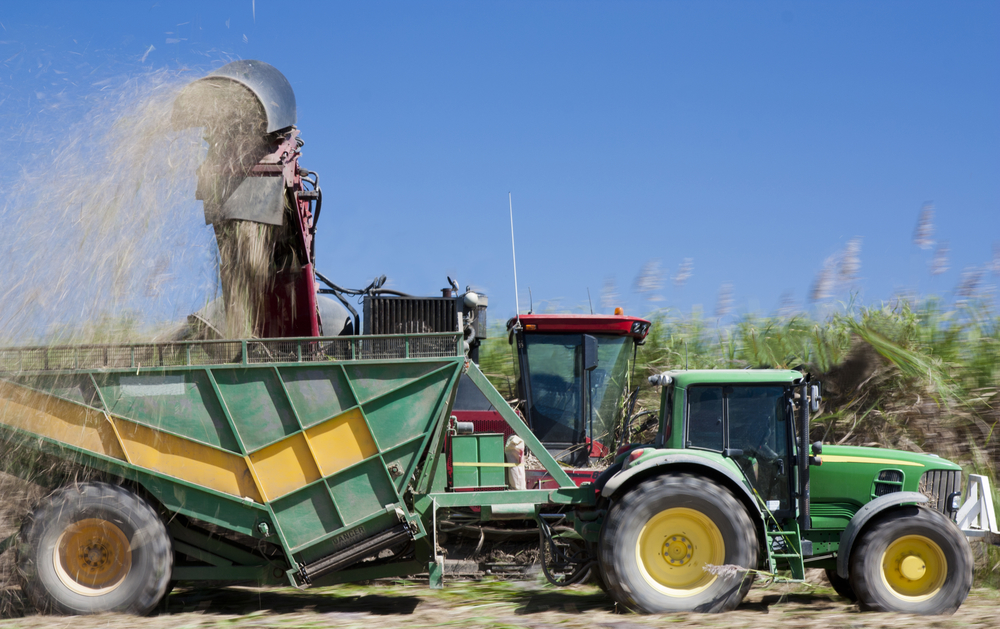
    Opponents of the burning practice want sugarcane producers to switch to green harvesting. This practice uses mechanical harvesters to separate the sugarcane leaves and tops from the stalks. It would eliminate burning altogether.

    “I want to be clear, no one is trying to end the industry. People are just trying to end this practice that has damaged far too many lives and far too many communities,” Eskamani said. “House Bill 1601 is a dangerous piece of legislation, also known as Senate Bill 88. It completely would negate efforts to seek some sort of judicial process when faced with a nuisance that is outside of a farm. The way they have defined this nuisance is in such narrow terms that particles from sugarcane burning, which by the way, can float upwards of 20 and 25 miles, you will not be able to seek any type of litigation or any type of recourse if this bill were to become law.”

    What Mechanical Harvesting Won’t Do

    In September, Duffy said that specialty interest groups have selectively chosen a piece of the research and said you can get the same yield if you don’t burn the cane versus cane that’s burnt.

    “What that misses is that if you leave all of that leaf trash on the field, it will impact the next year’s crop, and there may not be the same yield next year,” Duffy said.

    Basford said the bill is part of the agenda for next week’s Judiciary Committee Hearing. It would then move to the House the following week.

    “I think that no one on this call would accept ash falling from the sky onto their home, into their yards, onto their playgrounds where their children play. I also believe that if that were happening that you would want to have the doors of the courthouse open to you. So that if you have a claim, that you can have that claim heard and have it adjudicated fairly,” Hardy said. “What this bill does, it not only allows this practice of sugarcane burning to continue, but it closes the doors of the courthouse to people seeking justice.”

  • Expanding Production: U.S. Sugar to Better Serve Customers

    U.S. Sugar sign at the mill

    Acquisition of Imperial Sugar provides U.S. Sugar’s and Imperial Sugar’s customers with increased production and distribution, a full suite of sugar products, and a more secure sugar supply

    CLEWISTON, FLORIDA — An acquisition on Wednesday by U.S. Sugar returns Imperial Sugar to All-American owernship.

    U.S. Sugar announced on Wednesday it has reached an agreement with Louis Dreyfus Company to acquire the business and assets of Imperial Sugar Company, which is a port refiner with operations in Georgia and Kentucky.

    “We are excited to combine our operations with Imperial Sugar’s port refinery, consumer brands, and sugar processing capabilities,” said Robert H. Buker, Jr., President and CEO of U.S. Sugar. “Together, U.S. Sugar and Imperial Sugar will provide our customers with a more dependable, secure supply of sugar.”

    “Imperial Sugar has a strong heritage as a family-owned business and could not be more proud to become part of the U.S. Sugar family,” said Mike Gorrell, CEO of Imperial Sugar. “This move will increase production and reduce costs at Imperial Sugar’s refinery, generating significant efficiencies that ultimately will benefit our customers.”

    Imperial Sugar currently operates a refinery at Port Wentworth in Savannah, Georgia and a sugar transfer and liquification facility in Ludlow, Kentucky. The company primarily sources its raw sugar from Central and South America, and the Caribbean. Imperial Sugar’s various facilities, consumer brands and raw/refined sugar inventories will be included in the purchase.

    “U.S. Sugar has a world-class sugar business focused solely in America, including a historic relationship with the Savannah refinery,” said Adrian Isman, Head of the North American Region at Louis Dreyfus Company. “Imperial Sugar’s port refining capabilities will be an excellent addition for the company, while enabling LDC to concentrate more fully on its global sugar merchandizing business.”

    Prior to building its Clewiston refinery in 1998, U.S. Sugar sold and shipped its raw sugar to the Savannah refinery it is now acquiring for decades. The company sustainably farms more than 200,000 acres of sugarcane in South Florida and also owns and operates a short-line railroad, the South Central Florida Express, which facilitates shipping sugar products.

    Acquisition to Expand Sugar Production, Increase Sugar Supply Security, Create Logistics and Shipping Synergies, and Improve Competition—All Which Will Ultimately Benefit American Customers and Farmers

    • Expand Sugar Production and Reduce Costs: U.S. Sugar will invest in Imperial’s refinery to expand production and reduce manufacturing costs. Adding Imperial’s facility will provide U.S. Sugar and its local Florida farmers with enough refining capacity to utilize all the sugarcane they farm.
    • Increase Domestic Sugar Supply Security: Increased production capacity and access to Imperial’s Savannah port refinery will supplement U.S. Sugar’s marketing cooperative’s sugar supply if supplies of domestic beet and cane crops are limited from freezes or hurricanes.
    • Create Logistics and Shipping Synergies: Adding Imperial Sugar’s operations to U.S. Sugar’s marketing cooperative will create substantial distribution synergies and cost savings that will benefit customers.
    • Improve Competition: The new combined company will be a better competitor, offering customers a full suite of sugar products (which U.S. Sugar does not supply today) and expanding distribution capabilities throughout the country. U.S. Sugar will continue to compete across the U.S. with both domestic and imported sugar refiners, along with independent resellers and distributors.

    The transaction, expected to close in 2021, is subject to review under the Hart-Scott-Rodino Antitrust Improvements Act and other customary conditions. Wells Fargo Securities, LLC is serving as the exclusive financial advisor to U.S. Sugar. The transaction will be financed through committed debt financing provided by Wells Fargo Bank, N.A. and PGIM Agricultural Finance.

  • Sugarcane Production Up

    File photo shows a sugarcane field.

    Sugarcane production forecasts are up 1% from last month and 13% from last year, according to the USDA National Agricultural Statistics Service. Production is projected at 36.0 million tons. Producers intend to harvest 948,800 acres for sugar and seed during the 2020 crop year, which is a 1% increase from the previous forecast and a 4% jump from last year. Yields for sugar and seed are expected to average 37.9 tons per acre, up 0.2 ton from last month and up 2.9 tons from 2019.

    In Florida, expected production of sugarcane for sugar and seed is forecasted at 18.8 million tons, an increase of 3% from last month and a 6% jump from last year.

  • Eta Impacts Florida’s Sugar Industry

    essential
    File photo shows the harvest of sugarcane.

    The sugarcane industry in Florida was impacted by Hurricane-turned-Tropical Storm Eta last week. Farmers like Keith Wedgworth in Belle Glade, Florida continue to feel the effects of the rain-driven storm.

    As of earlier this week, Wedgworth still couldn’t get into fields to harvest his crop following Eta, which made landfall on the heels of an already wet fall.

    “We were already saturated to begin with. We probably got, in those couple of days, anywhere from 5 to 8 inches. The further south you went, down to say Homestead, they were getting over a foot in that short amount of time,” Wedgworth said.

    “I’m the president of our county Farm Bureau and I was talking to some growers and they’re trying to get some of their produce out now. They think they can save most of it but there’s a lot of damage done; mold, all the other disease that you get when it gets real wet, saturating rain like we received.

    “It was a rain event. I wouldn’t say it was a wind event. It was a tropical storm when it came and it went a lot further south. We got a lot of rain over those 24 to 48 hours.”

    Quiet Sugar Mill

    With the way the sugarcane operation operates, the sugar mill is normally running every day for 24 hours per day, 7 days a week this time of year. All of the harvested sugar needs to be processed. But with producers unable to get tractors in the field because of wet, muddy conditions, it’s delayed what is sent for processing.

    “Before this storm came across, we had only been back in the field for maybe 5 or 6 days. Before that we had other rain events that kept us out of the field for a week or two. When you have something like the sugar mill where we have a crop that you have to get in at a certain time, it just really delays everything,” Wedgworth said.

    “When you try to start up a month ago and right now they might have only run less than two weeks out of that month timeframe, you’re losing a lot of time to get that crop in the desired time you want to get it in.”

    Additional Comments from Wedgworth

    “When you have all this acreage and you delay it a few weeks already this early in the season, all it’s going to do is push it back further into the springtime. The later you go into the springtime and that heat starts returning, and it’s starting to want to grow again, your sugar content goes drastically down. You want to make sure you harvest it during these cooler months.”

    When sugar is not harvested in a timely fashion, it also delays the planting that producers can do with other crops they use to rotate with sugar, like corn, radishes and green beans. Not only are farmers being hurt now but also in the future.

  • U.S. Sugar Announces 90th Sugarcane Harvest Season

    Clewiston, Fla. – U.S. Sugar announced on Wednesday it will celebrate its 90th sugarcane harvest season, scheduled to start Thursday. In addition, the company released its “State of Our Air” Report to the community describing the safe and successful 2019/2020 sugarcane harvest season. This inaugural report compiles air quality data from the region and confirms the Glades communities’ air is safe, healthy, and clean.

    Buker

    “The Glades communities have some of the best air quality in the state,” said Robert Buker, U.S. Sugar President and CEO. “The health, safety, and well being of our community continues to be a foundational commitment in everything we do. We hope this report will be a helpful resource for the families in our community.”

    The full report, available here, compiles and analyzes publicly available data from two Florida Department of Environmental Protection (FDEP) air monitoring stations in Palm Beach County (one located in Royal Palm Beach and one in Belle Glade) that collect fine particulate matter (otherwise known as PM2.5). The report shows the air quality in the Glades communities was consistently better than suburban and urban neighboring areas.

    • This year, the Florida Department of Environmental Protection (FDEP) announced the “cleanest air on record” and that Florida meets “all ambient air quality standards.”
    • The data show the air quality in the Glades community is categorized as “good,” which is the best air quality classification; the Glades communities’ averages fell well within the required air quality range set by the U.S. Environmental Protection Agency (EPA) and the National Ambient Air Quality Standards (NAAQS).
    • The air in the Glades community is safer, cleaner, and of better quality compared to the West Palm Beach area; average levels of PM2.5 are consistently higher in the West Palm Beach area compared to the Glades communities (Figure 1); the EPA defines particles in the air as particulate matter (PM) and PM2.5 describes fine, inhalable particles, with diameters that are generally 2.5 micrometers and smaller.
    • The Robert Wood Johnson Foundation’s 2020 report continues to show that air quality in the Glades community is better than other areas of the state; particularly more densely populated, Northern communities.
    • Since the start of 2019-2020 Harvest Season, the Florida Department of Agriculture and Consumer Services has introduced two rounds of improvements to pre-harvest sugarcane burns; the most recent round included updated local zones based on community population growth and certification of all burn managers to ensure that sugarcane burning remains a safe, controlled procedure for our workers and our community.

    “At U.S. Sugar, we go above and beyond what is required of us to protect our environment because we live here,” said Michael Ellis, U.S. Sugar’s Vice President of Strategic Environmental Affairs. “Our land, water, air, and natural resources are part of our legacy and promise for the future—something that we are all proud to be part of today.”

    With the 2020/2021 harvest season set to begin – the 90th harvest season for U.S. Sugar – our commitment to sound environmental stewardship remains strong and our commitment to the community remains even stronger.

    U.S. Sugar was founded in 1931 by Charles Stewart Mott, a visionary businessman, entrepreneur and philanthropist.  He combined his interest in agriculture with sound investments in people, science and technology—a strategy that continues to guide the business today.  The heart of the company has always been its family of farmers and its commitment to community. 

  • Pre-Harvest Sugarcane Burns Necessary and Safe

    Photo via U.S. Sugar, shows pre-harvest cane burn.

    The use of pre-harvest burns is necessary for Florida sugarcane farmers and does not endanger the surrounding communities. That is the message members of the U.S. Sugar company are conveying to alleviate any concerns people or special interest groups may have.

    Pre-harvest burns promote healthy plant regrowth for future crops and improves the quality and efficiency of the harvest. Sugarcane stalks have high moisture content but contain dry leaves on the outside, like corn stalks. The burn removes those leaves from the sugarcane stalk, making it safe for the workers as they can see where they are going in the field.

    Sugarcane is harvested, taken to a railhead, and then transported to the mill by train. Without the burn, much of the leaves and dry material would stay on the sugarcane, which means that the transports carry more leaf-trash. This results in transport inefficiency.

    Also, much of the leaf and dry material is left in the field, creating a “leaf-trash blanket.” In a dry year, this could spark a wildfire. It could also increase rodent and insect pressure, which could damage the subsequent regrowth of the next sugarcane crop.

    Ryan Duffy, director of corporate communications for U.S. Sugar, says specialty interest groups who argue against pre-harvest burns do not present all the facts when making their argument.

    “They have selectively chosen a piece of the research and said you can get the same yield if you don’t burn the cane versus cane that’s burnt. What that misses is that if you leave all of that leaf trash on the field, it will impact the next year’s crop, and there may not be the same yield next year,” Duffy said.

    Burn Permits

    Duffy and Judy Sanchez, senior director for corporate communications and public affairs at U.S. Sugar, reassure Florida residents that all controlled pre-harvest burns are regulated by the Florida Forest Service. Every controlled pre-harvest burn requires an individual burn permit for each field, which will only be issued for that day. The Florida Forest Service grants or denies the permit based upon that day’s weather conditions.

    Certain criteria must be met for a sugarcane grower to be approved for a burn permit. These include wind direction and speed, atmospheric conditions and location relative to sensitive areas like hospitals, schools and highways.

    “For (special interest groups) to say that some communities are protected and some are not, that permit protects everyone every day. Based on wind speed and wind direction and location, that permit will not be given if any of those sensitive areas would be impacted by issuing that permit on that day,” Sanchez said.

    She added that farmers do not apply for permits near schools during the school week.

    University of Florida Study

    According to a research study by the University of Florida in 2013, harvesting without burning can have negative consequences to subsequent sugarcane crops. It found that due to excess vegetation left on the fields with sugarcane that was not burned, young shoots that emerged from green cane harvest fields may suffer frost damage and delayed growth when temperatures are near or below freezing.

    Leftover plant matter can also reduce available soil nitrogen to the crop.

    “When we burn it in the field, our nutrients, like potassium and phosphorus are going to remain in the ash and stay in the field. That’s what we want to put it back in for anyway for the nutritional value of it,” University of Florida Extension agent Stewart Swanson. “We (also) cultivate our fields to keep the weeds out in the row middles. You get that trash layer in there and the equipment just balls it up and bundles it up, so it makes it really hard to cultivate, which is an important weed control practice.”

  • U.S. Sugar Statement on Motion to Dismiss Baseless Lawsuit Against Florida Farmers

    Clewiston, FL— Judy Sanchez, Senior Director of Corporate Communications and Public Affairs at U.S. Sugar, issued the following statement on the company’s motion to dismiss filed in response to a baseless lawsuit brought against sugarcane farmers:

    Sanchez

    “Publicly available air quality monitoring data maintained by the state of Florida has shown, and continues to show, that the Glades communities have some of the best air quality in the state. This is a science-based fact, supported by actual data. The hypothetical, preliminary model included in the Plaintiffs’ second amended complaint is a nonsensical misrepresentation of reality and is a disservice to our community. This is unfortunate, but not entirely unexpected, given the historical playbook of those who willingly ignore data and use baseless claims to attack our communities.

    “As farmers, we rely on proven science and data to inform our daily growing and harvesting decisions. Just as important, we live in this community and take very serious our responsibility to be good neighbors and stewards of our environment. That is a commitment we will never waver on or compromise.”

  • The Day South Florida Agriculture Changed

    florida

    Submitted by Gene McAvoy, Regional Vegetable Extension Agent IV Emeritus with UF/IFAS

    “Up to the end of Feb our growers were having a banner year and it looked like this season would be one of those homeruns that come around every 5-6 years.”

    Here is a report that I prepared on the state of S Florida ag and shared with officials. (Long read but may shed some light on how COVID-19 is impacting agriculture in our area.)

    Markets

    On Tuesday, March 24, a local broker says, everything changed. From brokers, orders stopped and everything got quiet. On Wednesday, March 25, it got super quiet.

    Since then tomato volumes are down 85%, green beans are like 50% and cabbage is like 50%.

    R.C. Hatton has plowed under 100 acres of green beans, around 2 million pounds, and 60 acres of cabbage, or 5 million pounds.

    Florida’s tomato growers target 80% of their production to restaurants and other food service companies, rather than to supermarkets. In this sector, growers are walking away from big portions of their crop.

    Tony DiMare estimates that by the end of the growing season, about 10 million pounds of his tomatoes will go unpicked.

    Some crops like potatoes and oranges are faring well, whileother produce isn’t selling like it used to.

    With a lot of people staying home and buying mostly comfort foods, products like peppers, tomatoes and cucumbers have actually slowed down incrementally,” said Chuck Weisinger, president of Weis-Buy Farms, Inc.

    “The biggest challenge we have right now is getting the stores to start buying,” said John Stanford, farm manager at Frey Farms.

    As you know. produce is highly perishable and three weeks into this, many companies around Immokalee, Florida have already had to empty their coolers and dump produce. One dumped 20,000 pounds a day last week, let that sink in… 20,000 pounds of tomatoes a day. They dumped a total of 100,000 pounds so far. This is from one farm.

    Three weeks in, most farms have exercised triage dumping and emptying coolers and are terminating fields for which they have no foreseeable markets. They are concentrating on maintaining fields that they still have demand for, unfortunately, depending on the crop – this is only 20-50% of the total planted.

    Impacts on Ranchers

    The cash market and futures prices are lower than anyone can remember. One local rancher sold calves this week and averaged $250 per head at the Arcadia auction barn. A few weeks ago he would have received $450 per head average, and that constitutes below breakeven.

    In normal times, strategy would be to hold calves until the crisis is over, and hope prices will take an upswing. But there is huge uncertainty about how long this will last. A major compounding problem is the dry conditions, and lack of reserve forage. These weather patterns would normally dictate early weaning of calves. Hay costs, when available, and low market prices are a formula for hardship.

    The extended impact on ranchers will be the cows not breeding back on schedule. Holding calves longer in hot and dry conditions puts a strain on a cow’s reproductive system. This has been well-documented by University of Florida researchers.

    Many growers are exploring alternative methods of moving product.

    Sam S. Accursio and Sons Farms’ in Homestead packing house opened direct sales to consumers, selling boxes at $10 in each of the past two weekends. They had cars stretched for half a mile in front of the packing house and were able to move 120,000 pounds of Redland-raised squash, tomatoes, beans and cukes. They also partnered with a farmer out of Mount Dora, Florida who had 30,000 flats of unsold blueberries and sold these at 12 pints for $20. Similar efforts were conducted by Alderman Farms in Bonita Beach, Florida, Farmers Alliance in Immokalee and others.

    Martin County, Florida opened a pop-up drive-thru market that saw 500 cars in one day. Traditional commercial farms in South Florida have been overwhelmed by the support for the sales at their packinghouses – all fruit that would have otherwise gone unsold if waiting on traditional markets to purchase.

    Growers are still concerned that a large amount of produce seen in the supermarket comes from Mexico.

    According to Bill Braswell, since March 1, the start of the Florida blueberry season, Florida has produced 6.1 million pounds through last Thursday April 2. In that same time period, Mexico has imported 17.4 million pounds into the U.S., according to a USDA report. Mexico market price is $12 for a 6-ounce flat delivered to Chicago which translates to $2.60 per pound.

    Labor

    Growers are taking aggressive steps to protect workers from COVID-19, including keeping truckers separate from on-farm labor.

    They have been taking advantage of training resources and posters supplied by IFAS Extension and others.

    Agents have also shared information on essential services exemption and supplying growers with template essential services exemption letters to facilitate movement of their essential staff and labor.

    Labor shortages – reports indicate that COVID-19 has delayed the U.S. government’s processing of H-2A work visas. This will impact growers in central and north Florida and up the coast.

    Food banks

    Last week, growers in Immokalee alone donated more than 3 million pounds of vegetables to Harry Chapin food bank, overwhelming their ability to store, transport and distribute the produce – they had to call a halt.

    Farm Share, which partners with more than 2,000 food pantries, churches, schools and other nonprofits throughout Florida, is running at maximum capacity, despite having 25 refrigerated trucks, six warehouses of between 10,000 to 35,000 square feet and 40 to 50 drop sites from Jacksonville, Florida to Florida City, Florida. They usually help more than seven million pounds of food reach the hungry and now are faced with moving a lot more.

    Over the past two weeks, Wish Farms has donated 220,000 pounds of fresh strawberries — equivalent to 241 pallets or nine semi-trailer loads — to feeding Tampa Bay.

    Growers are having a tough time adapting because everything is happening so quick. Faced with a highly perishable product, growers are struggling to survive right now, with picking, packing and shipping everything that they can. Because of the coronavirus, things have changed. Buyers are demanding tight security, heavier sanitation, distancing and more.

    We have heard many ideas and suggestions from the public and even local officials – what many people fail to realize is that picking, packing, cooling, storing and transporting vegetables costs money, and growers who have already lost millions of dollars are understandably reluctant to throw good money after bad. It also costs money to maintain fields with no hope of sales in sight. Growers are disking up fields and maintaining just what they feel they have markets for. Unfortunately, this is only about 20% to 30% of the total acreage. Each acre of tomatoes costs $10,000 to $12,000 to grow and $5,000 to $6,000 to pick and pack. Unmaintained fields rapidly succumb to pests and diseases and soon become a breeding ground threatening the health of nearby fields that growers are trying to save for their remaining markets.

    It is not only veggies, as of yesterday about 7.7 pounds of milk has been dumped by one Central Florida co-op (there are a few in Florida). Milk is sold by the pound so that is 900,000 gallons.

    While I don’t have the exact amount from the other co-op I would expect their numbers to match ours in north Central Florida and South Georgia. Unfortunately, we can easily say that 10 million pounds of milk has been dumped throughout Florida.

    There are efforts to help farmers all over our state. In the dairy industry, there is a grassroots group of passionate producers, processors, promotion people, school representatives and Extension agents trying to get more milk moving. This group includes people from Florida and Georgia, that in normal times might view each other as the competition (different co-ops and different promotion boards). These efforts range from delivering school lunches, buying and delivering milk to food banks and those in need; contacting schools to increase their milk in each meal, contacting legislators to allow whole milk in school lunches (we need help with this), and asking stores to stop limiting the purchase of milk.

    People really have no concept of the amount of food we are taking about – Immokalee alone ships approximately 400 to 500 semis of vegetables a day from March through mid-May. This is 15,750,000 pounds of vegetables headed to market every day. Add to this Belle Glade, Palm Beach Co, Homestead and the amounts are staggering. I know of one grower in Belle Glade who is disking up 1 million pounds of green beans every three days.

    South Florida vegetable growers supply more than 150 million people in the eastern U.S., from Miami to Chicago, from late October to mid-May.


    Here is a resource a producer may be interested in sharing – this is a clearing house for finding food – donating food etc.

    Find Food Now – Florida’s Food Bank Network – http://www.feedingflorida.org/taking-action/find-food-now/

    Support local growers and food systems and eat fresh!

    About the Author:

    Gene McAvoy

    Associate Director for Stakeholder Relations
    University of Florida IFAS Southwest Florida Research and Education Center

    Regional Vegetable Extension Agent IV Emeritus

    President – National Association of County Agricultural Agents

  • Farmers and Other Essential Food Production Workers will Carry Permission Letters during COVID-19 Shutdown

    essential

    (U.S. Sugar) — All U.S. Sugar employees and suppliers who have been deemed essential to the nation’s food supply and national security will begin carrying authorization letters to inform authorities that they are approved to be out of their homes and working.

    “Our farmers, workers and other essential food production vendors will continue working around the clock to keep safe, locally grown food on America’s grocery store shelves and American families’ tables,” said Judy Sanchez, Senior Director, Corporate Communications and Public Affairs.

    U.S. Sugar’s farms in South Florida provide a significant amount of the sugar, citrus, sweet corn, green bean and other fresh fruits and vegetables that keep grocery stores and food markets supplied around the state and the country.

    According to the U.S. Department of Homeland Security, farming and processing is considered “critical infrastructure” to continue the American food supply chain. As more and more shutdowns of entire counties continue, our family of farmers has not stopped working in the fields and factories to produce food for families.

    In addition, residents of South Florida, including Palm Beach County where many of our people reside, have been ordered to stay at home unless they work for an essential business like ours.

    U.S. Sugar employees, our farmers, contractors, suppliers, drivers and business partners which are essential to the American food supply chain all will carry letters stating this information so they can show it to local and State law enforcement if they are questioned or stopped while traveling in areas that have implemented a stay at home order from the Governor.

    The Company also owns and operates an independent short-line railroad, the South Central Florida Express, which serves essential food and other agricultural producers that must remain in operation as part of the nation’s critical transportation infrastructure.

    These essential services also follow all directives by Florida Governor Ron DeSantis, the Centers for Disease Control and the federal government to keep our workers and our food supply as safe as possible during this pandemic.  What’s even more important is that these measures enable all of our people to continue working and earning a paycheck at a time when many other workers have been furloughed or laid off as a result of COVID-19.

    Authorization Letters:

    Source: U.S. Sugar

  • Farmers, Other Essential Food Production Workers Will Carry Permission Letters During COVID-19 Shutdown

    Contact: Judy Clayton Sanchez

    863-902-2210

    Clewiston, FL – Today, all U.S. Sugar employees and suppliers who have been deemed essential to the nation’s food supply and national security will begin carrying authorization letters to inform authorities that they are approved to be out of their homes and working.

    Aerial picture of sugarcane/beet fields in Florida.

    “Our farmers, workers and other essential food production vendors will continue working around the clock to keep safe, locally grown food on America’s grocery store shelves and American families’ tables,” said Judy Sanchez, Senior Director, Corporate Communications and Public Affairs.

    U.S. Sugar’s farms in South Florida provide a significant amount of the sugar, citrus, sweet corn, green bean and other fresh fruits and vegetables that keep grocery stores and food markets supplied around the state and the country.

    According to the U.S. Department of Homeland Security, farming and processing is considered “critical infrastructure” to continue the American food supply chain. As more and more shutdowns of entire counties continue, our family of farmers has not stopped working in the fields and factories to produce food for families.

    In addition, residents of South Florida, including Palm Beach County where many of our people reside, have been ordered to stay at home unless they work for an essential business like ours.

    U.S. Sugar employees, our farmers, contractors, suppliers, drivers and business partners which are essential to the American food supply chain all will carry letters stating this information so they can show it to local and State law enforcement if they are questioned or stopped while traveling in areas that have implemented a stay at home order from the Governor.

    The Company also owns and operates an independent short-line railroad, the South Central Florida Express, which serves essential food and other agricultural producers that must remain in operation as part of the nation’s critical transportation infrastructure.

    These essential services also follow all directives by Florida Governor Ron DeSantis, the Centers for Disease Control and the federal government to keep our workers and our food supply as safe as possible during this pandemic.  What’s even more important is that these measures enable all of our people to continue working and earning a paycheck at a time when many other workers have been furloughed or laid off as a result of COVID-19.

    About U.S. Sugar

    U.S. Sugar is a farming company that grows and processes sugarcane, citrus, green beans, sweet corn and other vegetables. The company was founded in 1931 by Charles Stewart Mott, a visionary leader who hailed from a long line of farmers. Since the beginning, our company’s success has been rooted in traditional farming values and respect for the land.