Category: Strawberry

  • Row Covers Protect Strawberries and Increase Yields?

    Photo submitted by Edgar Vinson/Alabama Extension: Shows row cover in place on strawberries.

    Row Covers in strawberry fields can protect the crop from cold temperatures, fierce winds, devastating frost and persistent wildlife. But it can also potentially increase yields, according Edgar Vinson, assistant research professor and Extension specialist in the Department of Horticulture at Auburn University.

    In research conducted this past year at the Wiregrass Research and Extension Center in Headland, Alabama, Vinson tested the effects of row cover applications on late plantings of three strawberry varieties: Albion, Camarosa and Sweet Charlie. Treatments were set for fall applied (Nov. 20-Dec. 20), fall and winter applied (Nov. 20-Dec. 20 and Feb. 11-March. 11) and control (applied for frost protection only).

    Research Results

    Comparisons were made in marketable yields, total yields and leaf surface areas. In marketable yields, the treatments for fall applied and fall and winter applied row covers were higher than the control treatment for all three varieties. In Sweet Charlie, the control treatment led to a little more than 6,000 pounds per acre. But in the fall treatment for Sweet Charlie, it was nearly 9,000 pounds.

    There was nearly 10,000 pounds per acre for Camarosa in the control treatment, but approximately 11,000 in the fall and winter treatment.

    “Each time it appeared that the more times that the row cover was applied, the more yield we actually had with the exception of Sweet Charlie,” Vinson said. “Sweet Charlie increased with the fall cover but seemed to fall off with the fall/winter application. I think that’s probably because Sweet Charlie is an early variety. It begins to really sputter around three weeks. It’s a really a great tasting berry, early berry. A lot of people have it in their operations because it’s so early and get on the market early. But you really can’t expect much out of that after three weeks.”

    The first weeks of harvest is where growers could potentially see the most benefit. In week one, there was less than 100 pounds per acre for the control treatment of Camarosa but more than 350 in the fall/winter treatment. In the Sweet Charlie variety, there were more than 100 pounds per acre in the control treatment but approximately 225 pounds in the fall/winter treatment.

    The yields continued to increase in weeks two and three of harvest for Camarosa and Albion but Sweet Charlie dropped off during the third week.

    Cost Effective?

    The use of row covers may increase yield but is it cost effective? Vinson compared each cost of the traditional row cover, fall row cover and fall/winter row cover. He estimated expenses based upon how many applications and the man-hours each treatment accounted for. With each treatment, Camarosa was profitable; $14,885.82 in the fall/winter compared to $10,455.41 for traditional. Sweet Charlie was much more profitable in the fall treatment ($9,611.98) compared to the traditional treatment ($2,375.82). Albion was only profitable in the fall-winter treatment ($2,127.12).

    Summary Points:

    Row covers can effectively improve the growth of strawberries and improve yield.

    The effectiveness in row covers on the different varieties depends on the location.

    Strawberries receiving row covers in the fall and again in the winter had increased yields over the fall only and non-treated control treatments.

    Profits increased when row cover was applied during the fall and in the fall-winter periods.

    Row Covers Essential in Winter

    While strawberries are a winter crop, they are vulnerable to freezing temperatures, which is the main row covers are applied. Vinson said if temperatures drop to 20 degrees F, this could result in plant injury. However, if the plant is flowering or producing fruit, it can only withstand temperatures as low as 28 degrees F.

    “Buds are dormant and as long as that tissue is not quite as susceptible as a plant that’s developing and about to bloom,” Vinson said. “The more the flowers progress, the more they are susceptible to cold damage.”

    Strawberries Growing in Popularity

    Alabama’s strawberry production is growing in popularity throughout the state. Vinson said in 2012, there were 74 farming operations on 150 acres. While acreage has not increased, the number of operations has increased to 126.

    Use of Row Covers on Strawberries

    Row covers should be applied ahead of a predicted frost and should be removed after threat of damage has passed, though this does require a lot of workers/bags of weight to keep row covers down. They need to be replaced when the frost threat returns.

  • FSGA Applauds USTR Plan for ‘Seasonal and Perishable’ Farmers

    UF photo shows Brilliance variety of strawberries.

    Dover, Fla.- The Florida Strawberry Growers Association (FSGA) is grateful to USTR Ambassador (Robert) Lighthizer, USDA Secretary Sonny Perdue, and Secretary Wilbur Ross at the Commerce Department for keeping their word to find a way to bring meaningful trade relief to Florida strawberry growers who have suffered legitimate injury from subsidized imports from Mexico.

    “This administration has embraced an issue that has historically been ignored. It is abundantly clear that this administration has a desire to find solutions to help level the playing field for the Florida strawberry industry and other seasonal fruits and vegetables,” said FSGA Executive Director, Kenneth Parker.

    FSGA will continue to work with the administration to ensure that timely, effective and durable solutions are in place that will keep Florida strawberry growers viable and competitive. The significant actions outlined in the USTR plan specifically for strawberries include:

    •USTR will pursue senior-level government-to-government discussions with Mexico over the next 90 days to address U.S. industry concerns regarding U.S. imports of Mexican strawberries, bell peppers, and other seasonal and perishable products.

    •USTR will work with domestic producers to commence an investigation by the International Trade Commission to monitor and investigate imports of strawberries and bell peppers, which could enable an expedited Section 201 global safeguard investigation later this year.

    •USDA and the Commerce Department have committed substantial support as well. FSGA appreciates the grower members and the entire Florida congressional delegation for standing shoulder to shoulder in defense of Florida’s agricultural families, and recognizing the importance of the economic impact our growers have on Florida’s economy.

  • Brilliance Variety Popular Choice as Strawberry Planting Season Nears

    Photo submitted by Vance Whitaker/UF: Shows basket of Brilliance variety strawberries.

    Florida producers will soon be planting strawberries in a few weeks. The popular variety choice this year is expected to be Brilliance, says Vance Whitaker, strawberry breeder at the University of Florida Gulf Coast Research and Education Center, .

    Released in 2017, Brilliance provides growers fruit early in the season. It’s a desirable trait not all varieties are able to offer.

    “It produces fruit very rapidly and very high yields in November and December. That’s the most important thing for the industry in central Florida,” Whitaker said. “This variety quickly became a leader. It also doesn’t suffer from the problem Radiance has of having elongated fruit early in the season.

    “If you’ve grown Radiance, you’re definitely recommended to switch over to the Brilliance variety.”

    Brilliance’s Impact This Year

    Word has quickly spread about the effectiveness of Brilliance. Whitaker expects more than half of the estimated 10,000 acres in Florida to be comprised of the Brilliance variety. The main reason is its ability to produce fruit early in the growing season which is when the market is most profitable for Florida farmers.

    “As far as just a big picture of the breeding program, fruit quality always has to be right up there at the top. You can have high yields and poor fruit, and it won’t do anybody any good. That’s always right there at the top, but I would say early yield is right up there at the top; probably the second or first most important trait as well,” Whitaker said. “Again, you have can have good quality fruit but if you don’t have fruit at the right time in Florida, then you’re not making any money either.

    “In recent years with the market the way it is, getting good volume in late November or early December is just super important just because of how much fruit can be on the market. It feels like in recent years that the money has to be made by the end of January or at least before Valentine’s Day; that’s just the nature of the Florida strawberry deal. Early varieties are absolutely the key.”

    Whitaker said growers are bedding right now with planting estimated to begin around Sept. 25 and will continue through the middle of October.

  • Clemson Extension to Hold Virtual Strawberry Meeting

    Clemson Extension will host a virtual strawberry production meeting on Wednesday, Sept. 2 at 6 p.m. The Strawberry Grower 101 meeting will be geared towards new or beginning growers.

    Topics to be covered included cost and economics, timeline, plant selection and varieties available and fertility.

    Those interested can click here to register.

    All Clemson University sponsored in-person events have been postponed in accordance with CDC recommendations and concerns over COVID-19.

  • World Outreach Helps UF Strawberry Breeding Program

    Vance Whitaker in a strawberry grove at the Gulf Coast Research and Education Center. Photo taken on 01-17-17.

    By: Brad Buck, 813-757-2224, bradbuck@ufl.edu, 352-875-2641 (cell)

    BALM, Florida — UF/IFAS-bred strawberries are grown in over 70 countries across six continents. One of those countries, Egypt, ranks among the top strawberry-producing nations in the world.

    So, it seems fitting that an Egyptian-American scientist is leading an effort to facilitate the expansion of production of UF/IFAS-bred strawberries internationally.

    Behind the United States, which grew 1.6 billion pounds of strawberries in 2017, are Mexico, Egypt and Turkey. It’s a $300 million per year crop in Florida, primarily in the west-central part of the state.

    UF/IFAS strawberries are adapted to the unique conditions of central Florida. As a result, they include low chilling, high early yield, excellent shelf life and outstanding flavor, UF’s Vance Whitaker said. Those traits make these varieties useful outside of Florida, particularly in regions of the world where strawberries are grown in the winter and early spring.

    That’s where Fahiem Elsayeed Elborai comes into play. Elborai, an assistant research scientist of entomology and nematology at the Gulf Coast Research and Education Center, has been hired as director of international outreach for the UF/IFAS strawberry breeding program. He helps expand overseas markets for UF/IFAS-developed varieties.

    “My main focus starts in the Middle East region, because, as an Egyptian, I know the culture and can facilitate all UF/IFAS activities in the region,” Elborai said. “I urge all who utilize UF/IFAS strawberries to comply with intellectual property rights, among other activities.”

    Elborai led a Zoom webinar last week, during which researchers and growers from Africa and other continents learned the latest strawberry findings from UF/IFAS faculty. Those findings included the latest strawberry cultivars that have been released commercially – ‘Florida Brilliance’ and ‘Florida Beauty’ – as well as primers on diseases and pests that can plague the fruit.

    Vance Whitaker, associate professor of horticultural sciences and a strawberry breeder at GCREC, recently hired Elborai to his new position.

    “As an accomplished agricultural researcher from the region, Fahiem is unique in his ability to work with emerging markets in the Middle East,” Whitaker said. “He has made significant progress in increasing compliance with UF intellectual property rights.”

    For example, Elborai tries to make sure farmers are not growing UF/IFAS varieties without permission.

    “Fahiem has also done considerable work for people in developing countries,” Whitaker said. “Last year, we visited Egypt together, and it was great to see the jobs that have been created from the growth of the industry there.”

    Among many duties, Elborai communicates with officials, growers, exporters and other stakeholders who use UF/IFAS strawberry varieties.

    Elborai also connects researchers worldwide to introduce the UF/IFAS program to help open new markets and extend knowledge to strawberry growers in developing countries. “Lately we have supported emerging markets and even developed new markets around the world in places such as Costa Rica, Ethiopia, India and Malaysia,” he said. “Also, we are working to offer our cultivars this season to the growers in West African countries such as Gambia, Benin, Mali and Mauritania.”

  • Florida Strawberry Industry Members Speak out About Unfair Trade with Mexico

    florida
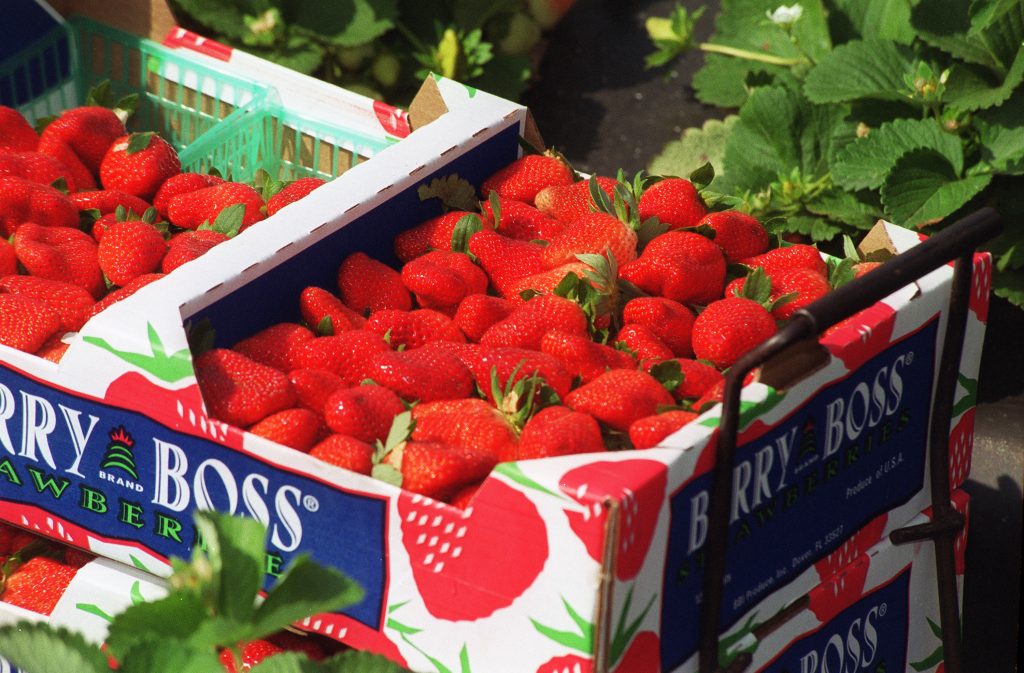
    File photo shows strawberries boxed up after harvest.

    Florida Strawberry Growers Association

    Dover, Fla. (August 18, 2020) – U.S. trade officials and federal agencies held the first of two virtual meetings on August 13 with the agriculture industry to hear testimonies on unfair trade practices with Mexico. More than 35 witnesses testified to a hearing committee consisting of representatives from the Office of the U.S. Trade Representative, U.S. Department of Agriculture, and the U.S. Department of Commerce.

    As Senator (Marco) Rubio, congressmen, Florida’s Commissioner of Agriculture and Consumer Services, economist Dr. Zengfei Guan, and producers from across the state and even the country testified, reoccurring concerns of unfair trade practices, government subsidies and loss of market share came up repeatedly.

    “We are not looking for a handout, just a fair chance in the fight,” said Executive Director of the Florida Strawberry Growers Association, Kenneth Parker.

    The concern of crisis is of the winter specialty crop market in Florida and now into Georgia and beyond.

    “In my 33 years of operating the farm, our greatest challenge has been increased Mexican competition…,” said John Sizemore of Sizemore Farms. Industry members pleaded for a Section 301 to be filed against Mexico to investigate the trade practices.

    The United States-Mexico-Canada Agreement (USMCA) that was passed and became effective on July 1, 2020, neglected to include seasonal and perishable crops. U.S. Trade Representative Robert Lighthizer made a commitment to the seasonal and perishable fruit and vegetable industry in Florida that he would address the issue of unfair trade practices with Mexico; therefore, these hearings are a result of that commitment. A second virtual hearing will take place on Thursday addressing the seasonal and perishable produce industry Georgia. The hearing will be streamed through the USTR website and transcripts will also be available from both hearings.

  • Fungicide Resistance in Georgia Strawberry Fields

    Figure 1. Anthracnose fruit rot of strawberry © Catherine Eckert / shutterstock.com

    By Phil Brannen, Md Emran Ali, Jeff Cook, Sumyya Waliullah and Owen Hudson

    Anthracnose fruit rot disease, caused by fungal Colletotrichum species, is one of the most significant disease problems of commercial strawberry production in the Southeast.

    Dark, sunken lesions on fruit are the main disease symptoms (Figure 1). Hot, humid weather and significant rainfall make Colletotrichum-induced fruit rot a widespread problem in strawberry production.

    For disease control, growers mainly rely on preventive fungicide applications from flower bud emergence to harvest. The most used single-site fungicides are quinone outside inhibitors (QoIs). The QoI active ingredients azoxystrobin (e.g., Abound) and pyraclostrobin (e.g., Pristine) are often utilized to manage anthracnose fruit rot. If appropriate resistance-management strategies are not implemented, QoIs are at increased risk of resistance development and subsequent control failure.

    The QoIs have been marketed since 1996, and resistance development is expected with long-term use, but limited surveys and in vitro efficacy tests conducted in 2004 and 2008 did not confirm QoI resistance in Georgia. However, more recently, producers have complained of control failure when using QoI fungicides, and resistance has been confirmed.

    RESISTANCE CONFIRMATION

    In 2019, county agents submitted numerous samples to the Plant Molecular Diagnostic Lab in Tifton, GA. Md Emran Ali, the lab director, collected 108 strawberry fruits with visible rot symptoms to test for fungicide resistance. These samples were from seven different strawberry farms scattered throughout Georgia. The farms had received multiple applications of QoI fungicides during the 2019 growing season, as well as in previous seasons.

    Ali identified all isolates as Colletotrichum acutatum. For further confirmation of QoI resistance, he tested all 108 isolates for the presence of the G143A mutation using the PCR-Restriction Fragment Length Polymorphism assay. His results showed the presence of the G143A mutation in all QoI-resistant C. acutatum isolates, 87 percent of isolates with moderate resistance, but none with reduced sensitivity or sensitive isolates (Table 1). These findings suggest that there is a high risk that resistance has developed in C. acutatum populations wherever QoIs have been utilized over time for control of anthracnose fruit rot in Georgia – and likely elsewhere.

    GROWER RECOMMENDATIONS

    For effective control of this disease, growers need to focus on using multi-site fungicides, such as Captan products, and alternation with classes other than QoIs. The Southeast Regional Strawberry Integrated Pest Management Guide for Plasticulture Production (www.smallfruits.org), edited by Rebecca Melanson of Mississippi State University, provides excellent information on fungicide selection under various conditions of resistance to anthracnose and/or botrytis fruit rots. 

    Moving forward, growers should have their anthracnose populations tested for QoI resistance. Use of QoIs may be limited in future management strategies as a result of widespread resistance development. The Plant Molecular Diagnostic Laboratory, a lab service of the University of Georgia Department of Plant Pathology, is now providing fungicide resistance testing support for several plant pathogens like anthracnose of strawberry. The clinic can accept symptomatic fruit samples (generally 10 per site) to test for resistance.

    In 2019, funds were provided by the Southern Region Small Fruit Consortium for resistance testing of both anthracnose and botrytis — free of charge to producers from member states until the funds ran out. Check with your local county agent on the status of resistance testing funds. If funds are not available, you are still encouraged to have both anthracnose and/or botrytis profiled for your location. The tests currently available, their pricing, a submission form and submission information are available at the Plant Molecular Diagnostic Lab web page at https://site.caes.uga.edu/alimdl/fungicide-resistance-testing/. See the form at https://site.caes.uga.edu/alimdl/files/2019/02/resistant-profile-form-003.pdf.

    Samples can be shipped to:Plant Molecular Diagnostic Lab

    Department of Plant Pathology

    Tifton, CAES Campus

    Plant Science Building

    115 Coastal Way

    Tifton, GA 31794

    For more information of questions, contact Ali at emran.ali@uga.edu, 229-386-7230 or 229-386-7285.

    Growers are highly encouraged to take advantage of this service. It is very important to know the resistance profile for anthracnose at your location — fungicides that should work and those that will not. If you have questions or need help, contact your local county agent for additional information. It is recommended to overnight samples to the Plant Molecular Diagnostic Lab and to communicate with the lab so it can expect the samples on the day of arrival.

    Fungicide resistance can be devastating, so use these services to ensure that the fungicides you are utilizing are active. Spraying inactive fungicides is the equivalent of spraying water on your strawberry plants. If a fungicide is not active, you waste money on the fungicide, and you can lose your entire crop to disease as well — adding insult to injury.

    This story was from the August edition of VSCNews Magazine. To subscribe, see http://vscnews.com/subscribe/.

  • N.C. State Specialist: Best Strawberry Season Ever

    florida
    File photo shows strawberries harvested and packaged.

    By Clint Thompson

    Mark Hoffmann, North Carolina State small fruits Extension specialist, had high praise for this year’s strawberry crop.

    Mark Hoffmann

    “This is the best strawberry season ever in North Carolina. I’ve only been here for three years but that’s what all people are telling me; they’ve never had such a good strawberry season,” Hoffmann said.

    It appears a relatively mild spring, absent of major frost events, helped growers prolong this year’s growing season. Hoffmann estimated that last week should have wound up the state’s harvest.

    “We got lucky. With the exception of late April and the one frost event in May, we didn’t have a lot of really cold events. We had one time where we had a lot of snow but that was there just for one day. I think that was in late February, early March,” Hoffmann said. “After that, we went through three frost events, which is very unusual. We usually have much more than that.”

    Hoffmann Sensed Bumper Crop

    Hoffmann sensed a couple of months ago that North Carolina farmers were ready to experience a bumper crop, if the weather held up.

    “Some people had a very mild winter. If you put some row covers on your berries, you had like pretty early bloom. We actually had bloom on the berries in January. If you kept those blooms and kept row covers over the berries and plants, you would start picking in February,” Hoffmann said.

    Prices also remained strong. Growers benefited from consumers wanting to buy local.

    “If you sell in a farm stand or sell on a farmer’s market, consumers tend to pay more than they would in the grocery store because it’s local and we grow different cultivars here; the flavor is different,” Hoffmann said.

    Hoffmann estimates that strawberries in North Carolina generates $26 million per year, which makes it the third largest in the country behind California and Florida.

    For more information about strawberry production in North Carolina, see N.C. State strawberry website.

  • Are Tiny Bugs Hiding Inside Your Strawberries?

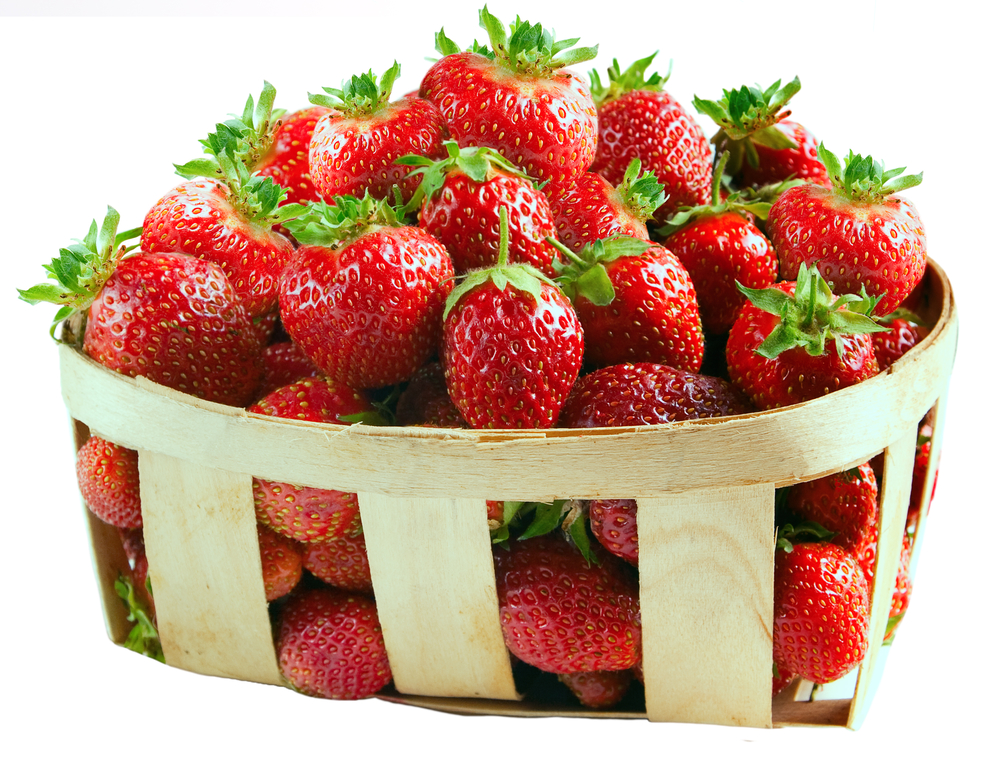
    Basket with fresh strawberries isolated on white background.

    By Ashley Robinson

    A few weeks ago, a viral TikTok video took the internet by storm, showing what appeared to be little worm-like bugs crawling out of fresh strawberries soaked in salt water. Since that video surfaced, many consumers have recreated the video showing similar results. Now, some consumers are panicking. Is this safe? Have we unknowingly been enjoying bugs in our strawberries? Should we stop eating strawberries all together?

    Should You Be Concerned?

    The short answer is no. To put it simply, this can happen. However, it is very unlikely.

    But here’s the million dollar question, what is really happening in the viral TikTok phenomenon?

    According to Hannah Burrack, an entomologist at North Carolina State University, the consumer was actually performing a technique that growers use to test for spotted wing drosophila (SWD), an invasive small fruit fly.

    “A consumer posted a video of what is actually a recommended test for growers to determine whether or not they have possible concern with SWD infestation. This consumer did this with fruit she bought from the grocery store and she observed small larvae coming out of the fruit,” Burrack says. 

    Burrack assures consumers that their fruit are safe to eat.

    “It’s possible that consumers find small larvae emerging from their fruit when soaked in salt water. But it’s pretty unlikely given that all of our farmers are aware of the potential issues associated with SWD, they are actively managing them and they are sampling their fruit before they sell to consumers or wholesalers,” Burrack said.

    If growers are monitoring for SWD, then why are consumers seeing larvae emerging from their fruit after being soaked in salt water?

    Drosophila larvae look alike. But since growers and wholesalers inspect for SWD regularly and do their best to keep SWD out of our food supply, the larvae that consumers are seeing are most likely fruit flies that could have been buzzing around the grocery store or inside the consumer’s home.

    “It’s very likely that the larvae they are seeing originated post-harvest, after the fruit left the farm, especially if they are tiny larvae.” Burrack says. “There are a whole bunch of drosophila flies that are naturally occurring in the US that can attack the fruit once it’s been harvested, unlike SWD which is invasive.” 

    Is it Harmful To Eat These Bugs?

    No. The idea of eating bugs may be unappealing, but if you’ve ever eaten fruit before you’ve more than likely eaten a bug at some point.

    In addition, experts don’t recommend soaking your fruit in salt water. A regular rinse will do just fine.

    Burrack also mentions that you should keep your berries in the fridge. Refrigerating your berries will allow them to last longer and will keep the berries protected from the fruit flies that are buzzing around your counter.

  • Clemson Extension Agent: South Carolina Produce Farmers Enjoying Good Spring

    By Clint Thompson

    South Carolina’s produce season is producing sweet results with its farmers. Clemson Extension Commercial Horticulture agent Justin Ballew said fruit and vegetable farmers in the Palmetto State are enjoying a strong spring season so far.

    Strawberry season has been really strong in South Carolina this year.

    “For the most part, we’re having a good spring. We’re in the last month of strawberry season and we’ve had a decent strawberry season for the most part. Demand has been really good this year. Folks are selling everything they pick with no problems at all,” Ballew said. “Other crops, we’ve got stuff growing pretty quickly, growing pretty well. Disease pressure has been low for the most part this year. Insect pressure hasn’t been terrible. We’re doing pretty well as far as growth.”

    And with one exception, growers have experienced little problem with Mother Nature.

    “The only weather-related issues we’ve had recently was from hail damage in … Chesterfield County, that area. They had some pretty tremendous damage to their peach crop up there, some strawberries and other stuff.  There was one large grower up there that was affected pretty badly,” Ballew said. “There were some thunderstorms that came through and dumped a bunch of hail up there.”

    According to the Agricultural Marketing Resource Center, South Carolina is the country’s No. 2 producer of peaches behind California.