Category: Strawberry

  • Neopestalotiopsis Disease Confirmed on Georgia Strawberry Plants

    Image of Neopestalotiopsis leaf spot from Georgia strawberries (provided by Mark Frye; Wayne County Cooperative Extension Service).

    Georgia strawberry producers need to be wary of Neopestalotiopsis; a disease that has already devastated Florida production and could have wide-ranging impact on Georgia’s crop if farmers are not proactive.

    Phil Brannen, University of Georgia Cooperative Extension Fruit Disease Specialist, cautions farmers that while the disease has been found in just one Georgia location and only as leaf spotting, there is a common link to suggest there could potentially be additional cases.

    “We know that particular pathogen, Neopestalotiopsis, that’s been causing devastating losses in Florida, we’ve got. Our environment may be different. We’re a little bit colder than they are down in South Florida and that may help us. We just don’t know,” Brannen said.

    “So far, we haven’t seen it on fruit, obviously. It’s the wrong time of year. But the fact that it’s on the leaves, that follows what they’ve seen this year. They got it a few weeks earlier than we did from some of the plants they’ve got down there.”

    Same Origin

    Many of the strawberry plants originate from the same nursery in North Carolina, where there have been widespread problems associated with this disease. That leads Brannen to believe this is just the beginning.

    “I think coming from that nursery we’re going to see more, because of the association with this one nursery in North Carolina. I suspect that anybody who got their plants from that nursery stands a good chance of having it,” Brannen said.

    Fungicides Available

    Brannen says the best fungicides available are Switch and thiram. They provide suppression of the disease, though it is less than 50% control. Still, any control is better than no control to avoid a major outbreak.

    “It hopefully will get (producers) through this year and allow them to produce strawberries. If it’s like it is in Florida, what would happen potentially in the spring, we’ll come through and those plants will die and the fruit. Any fruit that’s produced will be covered in spots and you can’t sell those. Ultimately, the plants actually die,” Brannen said.

    “It’s an aggressive pathogen. It does what three or four pathogens do. There are some other pathogens that can infect the crown and kill the plant and also infect the fruit, anthracnose being one. But that’s not often the case. Most of the time you’ll either see a fruit rot or maybe limited crown rot. This one is really aggressive.

    “Basically, it chews the plant up and spits it out.”

    Drastic Measures

    It is so severe in Florida that growers have had to rip up the whole planting and start over, which is not a possibility in Georgia if growers expect to get a crop in this year.

    “I hope it’s going to get cold enough to where it won’t be as aggressive. I’m not sure what’s going to happen in the spring but we’re going to find out,” he added.
  • Neopestalotiopsis Fruit Rot Warning for Strawberry Producers

    florida
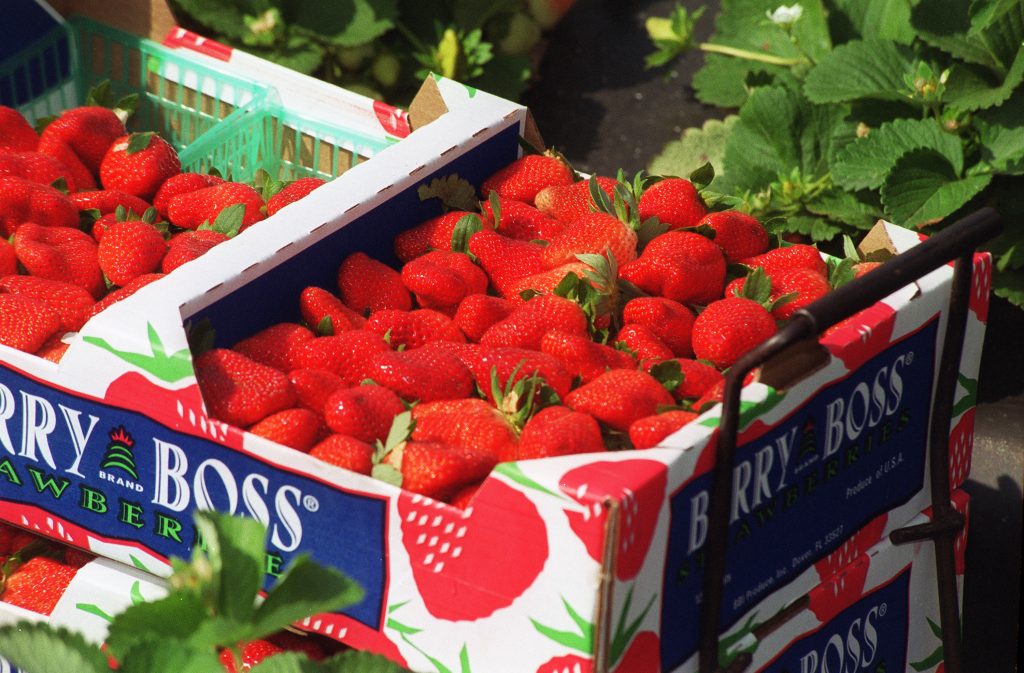
    File photo shows strawberries just harvested and packaged.

    Georgia strawberry producers need to monitor their plants for Neopestalotiopsis Fruit Rot. It has already caused problems for Florida farmers and nurseries in North Carolina where many Georgia farmers get their plugs from.

    “(Georgia producers) should be aware of it. We had a meeting on it again,” said University of Georgia plant pathologist Phil Brannen.

    “It has been found in Florida again. Some of the growers down there are ripping up a lot of strawberries and trying to replant with fresh plugs, because they got it in and don’t want to take a chance. It’s causing issues there. Even in the northeast, some people have gotten in plugs up there that have it and the same thing, they’re just destroying those plugs. They don’t want to take a chance.”

    Symptoms

    According to Strawberry News, Brannen referred strawberry farmers to research done by University of Florida scientist Natalia Peres. Symptoms below ground were darkening of the roots and orange-brown necrosis in the crowns, which leads to stunting or poor establishment after transplanting. There will be stunting, wilting and necrosis of older leaves above ground, which results in collapse and death of the plant.

    The common link of the outbreaks so far was the nursery source for the plants.

    Not Yet Found in Georgia

    “So far, we have not identified it in Georgia. We’re having other issues in our initial starting plants but it’s not that. Thankfully, everything where we have been looking for it we have not seen it or identified it yet in Georgia,” Brannen said. “I don’t know what that means. I don’t know if that means we’ve gotten lucky so far or what. But people that have been getting their plugs from certain sites in North Carolina are seeing problems.

    “We know we are getting plants that could have it. But these (nurseries) are huge. We may get a block that doesn’t have it at all.”

    Be Vigilant

    Brannen said growers should be vigilant when receiving and inspecting strawberry plants this year. They need to work with county agents to confirm diseases that show up on young and maturing plants throughout the season.

    “It’s costing the industry, even if it’s just a cleanup where it maybe an abundance of caution, people are not waiting to see what happens,” Brannen said.

    Switch and thiram products are the only fungicides that provide some suppression of the disease.

  • U.S. Looking for Trade Action Against Fresh Produce Imports

    File photo shows strawberries ready to be picked.

    Fresh produce coming into the United States is receiving increased scrutiny from the Trump Administration. Imported strawberries are now on the list of imported items that the administration wants investigated for possibly harming U.S. fruit and vegetable growers. Strawberry imports, mainly from Mexico, represent about 16% of the U.S. market, valued at approximately $2.5 billion every year.

    Gro-Intelligence Dot Com says if the investigation proceeds, any potential trade action could result in higher strawberry prices in the U.S. market. Officials are also requesting a probe into the imports of fresh peppers, which is the second-largest vegetable import into America.

    U.S. imports of strawberries totaled 184 million tons last year, a four-fold jump since 2005. About 99% of the imports come from Mexico, where a weak peso has made exports much more competitive with domestic production. U.S. farmers, especially in the Southeastern states, say the low-priced imports are putting domestic growers at a significant disadvantage.

    A similar Section 201 investigation by the U.S. International Trade Commission was recently requested for blueberry imports into the U.S.  

    (From the National Association of Farm Broadcasters)

  • New Disease Threatens Florida Strawberries

    By Natalia A. Peres

    Pestalotia fruit rot lesions on ripe fruit; symptoms are very similar to those of anthracnose fruit rot caused by Colletotrichum accutatum.
    Photo by UF/IFAS GCREC

    Pestalotiopsis is not necessarily new to strawberry. A strawberry fruit rot caused by Pestalotia longisetula (or Pestalotiopsis) was reported for the first timein Florida in 1972. However, the fungus has always been considered a secondary pathogen. But this was not the case during the past two strawberry seasons (2018–19 and 2019–20), when severe outbreaks were reported in Florida commercial fields. Root, crown, petiole, fruit and leaf symptoms were observed. Yield was severely affected, and several acres of strawberry fields were destroyed before the end of the season.

    University of Florida Institute of Food and Agricultural Sciences (UF/IFAS) studies indicate that isolates from the recent outbreaks are more aggressive and may belong to a new species of the genus Neopestalotiopsis.

    Many growers consider the disease a new threat to strawberry production. Several questions are being asked: Where did this come from? Why is it so aggressive? How does it spread? What are the conditions for the spread? Will it survive in Florida fields? How can it be controlled? UF/IFAS researchers are working hard on trials to understand the new disease and develop best management practices to control it.

    SUSCEPTIBILITY AND SPREAD

    UF/IFAS studies found the disease apparently originated from other hosts around strawberry nursery fields. Thus, strawberry cultivars do not seem to have any immunity to it, and all cultivars that are currently grown commercially in Florida (Florida Beauty, Florida Brilliance, Florida Radiance and FL127 SensationTM) are susceptible.

    The fungus is favored by high temperatures (77 to 86º F) and produces spores on the surface of infected tissues that are spread by water. Extended rainy periods or overcast conditions with prolonged leaf wetness during the strawberry season, such as those that occurred last December, are problematic. To minimize dispersal from field to field, growers are advised to limit their operations (such as harvesting or moving equipment through fields) when plants are wet. Current studies are focusing on sampling other hosts and weeds around Florida strawberry fields during the off-season to determine whether the fungus could become endemic in Florida. 

    MANAGEMENT METHODS

    Growers want to know how to manage the disease, and many different fungicide products have been screened in the laboratory and evaluated in field trials at the UF/IFAS Gulf Coast Research and Education Center (GCREC). In the field trials, the fungicide pre-mix of fludioxonil + cyprodinil (Switch® 62.5 WG) and thiram (Thiram® SC) significantly reduced disease incidence.

    Only a few other fungicides that are not currently labeled for strawberry use were somewhat effective. Since the overuse of fungicide products can lead to increased selection for fungicide resistance, applications need to be limited to the maximum the label recommends, and research needs to continue to seek alternatives.

    For the upcoming season, growers should closely scout plants arriving from nurseries for leaf spot symptoms. Unfortunately, there are many leaf spot diseases that look alike, so it is important to get the correct diagnosis. If caught early and at low levels, removing the symptomatic plants from the fields is advisable.

    The current seasonal forecast is for La Niña, which is known to bring a warmer than normal and dry climate pattern to Florida and the Southeast. The dry weather during La Niña years is usually not conducive to fungal diseases such as pestalotia leaf spot as well as anthracnose and botrytis.

  • Coming Soon: New University of Florida Strawberry Varieties

    A new University of Florida Institute of Food and Agricultural Sciences strawberry release has excellent shape and flavor.

    By Vance M. Whitaker

    Two new strawberry selections have been approved for release by the University of Florida Institute of Food and Agricultural Sciences (UF/IFAS) and are in the commercialization process. Trade names have not yet been finalized but should be chosen in the next six months. For both, larger-scale testing will be conducted this fall, and commercial quantities will be available to Florida growers for the 2021–22 season.

    The first release is an early short-day variety with excellent fruit shape and quality. It has slightly lower November and December yields than Florida Brilliance but has had high January yields. It has excellent flavor, with taste panels ranking it equal to or even better than Sweet Sensation® Florida127, depending on the harvest date. It also has high Brix through the season, similar to Sweet Sensation® Florida127. The push for better flavor is an important pursuit for the UF/IFAS strawberry breeding program, so the team is very excited about the sensory qualities of this new release.

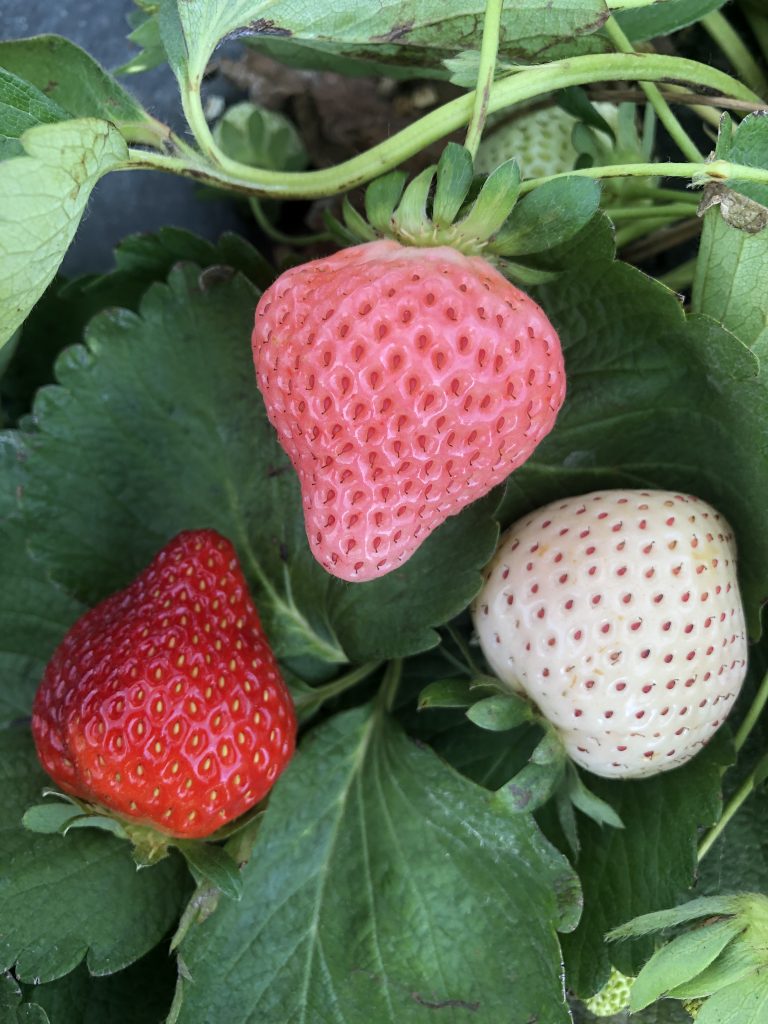
    A new white-fruited release from the University of Florida Institute of Food and Agricultural Sciences has a unique appearance and flavor. Photo by Cristina Carrizosa, UF/IFAS Communications

    The second release is a white-fruited strawberry. White-fruited varieties have been popular in Japan for some time, but this is expected to be the first such variety on the market in the United States. It has white internal and external color, with a pink blush on the sun-side and red achenes. The appearance of the pink blush and the achenes turning from green to red are the visual cues signaling that the fruit is ripe and ready to eat. The fruit are a little bit smaller than the other current varieties and are more similar in size to the fruit of Festival. The yield of this variety is about 75 percent of the current varieties grown in Florida, which are primarily Florida Brilliance and Sweet Sensation® Florida127.

    It is important to mention that new strawberry variety releases from UF/IFAS are exclusive to Florida growers for the first three years, but trialing can be conducted during this period with permission from the Florida Strawberry Growers Association.

    Regarding current varieties, Sweet Sensation® Florida127 (released in 2013) is fully available throughout the United States, while Florida Brilliance (released in 2017) is still exclusive to Florida for one more season. However, with permission, Florida Brilliance can be trialed outside of Florida in 2020 and will be fully available in 2021.

  • Problematic Pests of Florida Strawberries

    Stunted young trifoliates in the plant center (compact leaf mass). (Photos by Sriyanka Lahiri, UF/IFAS)

    By Sriyanka Lahiri

    Several arthropod pests occur in strawberries in Florida during the various stages of the crop cycle.

    Cyclamen mites (Phytonemus pallidus), if present, originate from strawberry nurseries as hitchhikers on transplants. Thankfully, a very small percentage of growers reported a cyclamen mite infestation during the strawberry season of 2019–2020.

    Soon after planting, armyworms (Spodoptera spp.), twospotted spider mites (TSSM, Tetranychus urticae) and the invasive polyphagous chilli thrips (Scirtothrips dorsalis) are typically found infesting plants.

    TSSM can also arrive as hitchhikers on transplants, occasionally. The presence of armyworms on young foliage becomes immediately evident due to feeding holes left by their biting-chewing mouthparts. Both TSSM and chilli thrips feed on foliage using their piercing-sucking mouthparts. TSSM produce webbing on the surface of the foliage and lay eggs on these webs. However, chilli thrips differ in their oviposition practices.

    The more devastating chilli thrips prefer feeding on the youngest open leaflets. Eggs are laid by the chilli thrips female into the leaf tissue using a saw-like ovipositor. This protects eggs from insecticides and predators. Both chilli thrips adults and larvae find refuge in concealed areas of the foliage, which makes them a very effective cryptic pest.

    As plants progress toward flowering and fruiting, more thrips species appear, such as western flower thrips (WFT, Frankliniella occidentalis), common blossom thrips (F. schultzei) and Florida flower thrips (F. bispinosa) in addition to chilli thrips. Of these thrips species, both chilli thrips and WFT cause significant economic damage and develop resistance to insecticides easily.  

    DAMAGE

    A cyclamen mite infestation can lead to severely stunted and crinkled leaves, aborted flowers, and bronzed and cracked fruits.

    Chilli thrips larvae and adult. (Photo by Joseph D. Montemayor, UF/IFAS)

    Chilli thrips cause necrosis at the site of feeding, which leads to darkening along the leaf mid-rib, followed by the spread of the dark coloration to lateral veins and petioles. Leaf bronzing, crinkling and deformation occurs during severe chilli thrips infestation.

    Severe thrips and cyclamen mite infestations lead to bronzed and cracked fruits that are unmarketable.

    An infestation of TSSM will lead to stippling of leaves initially. Uncontrolled TSSM populations become evident by the appearance of webbing.

    MANAGEMENT

    Management of cyclamen mites is best done with a preventive approach. Therefore, obtaining clean transplants is of utmost importance. Since all life stages of cyclamen mites show high mortality when exposed to hot water, a dip of frozen transplants into hot water at 111 °F for 10 minutes before planting may help. Alternatively, infested plants should be removed from the field.

    The most significant early-season strawberry pest that is currently posing a management challenge in Florida is the invasive chilli thrips. Conventional insecticides are being used to manage thrips pests, but there are several naturally occurring beneficial insects that could be used. These include predators such as the big-eyed bug (Geocoris spp.) and the minute pirate bug (Orius insidiosus). Additionally, University of Florida Institute of Food and Agricultural Sciences (UF/IFAS) greenhouse experiments using potted strawberry plants have confirmed the efficacy of the WFT predator Amblyseius swirskii as effective for suppression of chilli thrips larvae.

    An infestation of TSSM in open-field strawberries is best controlled by releasing the specialized predatory mite Phytoseiulus persimilis.

    Armyworms are effectively managed by early-season application of biological insecticide formulations of Bacillus thuringiensis, subsp. kurstaki.

    Pesticides registered for various strawberry pests are listed in the UF/IFAS Vegetable Production Handbook of Florida (https://edis.ifas.ufl.edu/pdffiles/CV/CV13400.pdf). It is important to select pesticides that are least harmful to beneficial arthropods, rotate modes of action and follow the label.

  • Strawberry Planting Season Draws Near

    File photo shows strawberries being grown.

    Alabama strawberry producers enjoyed sweet success in 2020. Farmers are hoping for a repeat performance this year as planting season nears. Edgar Vinson, assistant research professor and Extension specialist in the Department of Horticulture at Auburn University, said growers target Oct. 15 date as the latest timeframe they want to have this year’s crop in the ground.

    “They can certainly be planted after that date but you’re sacrificing plant size when you do that, and that’s going to affect yield,” Vinson said. “The later you plant, the less time you have to grow them to get them to that optimal size.”

    Increased Interest

    While strawberry production in Alabama is small compared to high-production states like Florida, it is growing with interest when you consider the number of farming operations there are in the state. In 2012, there was 74 farms on 158 acres. But that number increased 123 farms on 111 acres in 2017.

    “It certainly speaks to the growing interest, the growing consumer demand for fresh Alabama grown strawberry,” Vinson said. “Agritourism is a growing industry and strawberry production is certainly a destination for a lot of people who want to be able to harvest strawberries themselves.”

    It will certainly continue to grow in popularity if growers find similar success with production and marketing like they did in 2020. Against the backdrop of a global pandemic, strawberry producers capitalized on selling their crop to families who wanted to get their children out of the house.

    Alabama grower Bobby Ray Holmes said demand was overwhelming. U-pick strawberry operations provided families an outlet to escape the new norm of social isolation.

    “We had a really great year last year. Northern parts of the state, a lot of growers had more yield than they’ve ever had,” Vinson said. “I really think the (’21) outlook is good. You do have to consider the pandemic and where we’ll be.”

    Strawberries will normally be ready for small harvest in late March and continue through mid-June.

  • Fungicide Resistance a Growing Problem in Strawberries

    Fungicide resistance in strawberries is a major problem, says University of Georgia Cooperative Extension plant pathologist Phil Brannen. He encourages producers to help researchers understand which fungicides are still active and provide protection against diseases like anthracnose and botrytis.

    “(Fungicide resistance) has really come to the forefront in the last few years. In the last two or three years, we have seen a lot issues, particularly with anthracnose. Prior to that, we may have had some breakdown but not nearly as much,” Brannen said. “With those fungicides in general across a lot of commodities, (they) are now starting to lose their activity and it just finally happened for us in strawberries. They’ve had issues with that in Florida for now several years also; South Carolina, we all know this happens when you spray that fungicide class; over time, they eventually break down and quit working. We’ve got to get better resistance, and we’re probably seeing more of that in other areas, too; other fungicides, particularly on botrytis.

    “When trying to control botrytis, we have quite a few of fungicides that no longer work. I just encourage producers to make sure they test. If they have the opportunity, they can actually send off their pathogens on the strawberries and they can be tested for which fungicides are still active. That’s helpful.”

  • Using Reflective Mulch Films to Optimize Strawberry Production

    File photo shows strawberries growing.

    By Ashley Robinson

    Although a winter crop, strawberry production in Florida still falls victim to heat stress. With extreme heat during establishment, cool temperatures during the early and mid-harvests, and high temperatures during the late harvest, the crop is subject to dramatic seasonal temperature variations.

    Traditionally, the state’s strawberry growers have used black plastic mulch to achieve adequate wintertime soil warming and optimal fruit production. However, black mulch can intensify the negative impacts of high temperatures, leading to greater heat stress, especially when growers advance planting dates (e.g., late September) to improve earliness. Some of the negative effects of heat stress on the plant include greater susceptibility to pests and diseases, nonuniform growth and soft fruit.

    On the other hand, reflective mulch films don’t provide enough soil warming during the winter for the plant, so researchers have had to look for a happy medium.

    To resolve this issue, researchers at the University of Florida Institute of Food and Agricultural Sciences (UF/IFAS) are looking at the effects of using reflective mulch films; essentially, adding a black center stripe to reflective silver mulch.

    Shinsuke Agehara, assistant professor of horticulture at the UF/IFAS Gulf Coast Research and Education Center (GCREC), gave an overview of his research on reflective mulch for strawberry production at the recent Vegetable & Specialty Crop (VSC) Expo.

    “The idea is to have the dual benefits of black mulch and reflective mulch,” Agehara says.

    According to Agehara, metalized mulch films have the potential to improve early-season fruit development by alleviating heat stress conditions during the establishment period.

    Field trials at the UF/IFAS GCREC showed significant early-season yield increases of up to 59% and total season yield increases by up to 30% with reflective mulch films. Other beneficial effects of reflective mulch films include reduced damage from rot, total season yield increases and fruit size increases. 

    Although there are many benefits to the reflective film, one drawback that Agehara warns growers about is what can happen if your water from your sprinkler irrigation has a high pH.

    “Sprinkler irrigation with high pH water, when the pH is greater than 7.5, it can fade aluminum coatings on metalized films,” he says.

    If fading of aluminum coatings are an issue, Agehara recommends trying white-on-black mulch, which should perform better than black mulch and nearly as well as metalized mulch.

    To view Agehara’s full presentation from VSC Expo, click here.

  • Coming Soon: White Strawberries From the Wild

    By Seonghee Lee and Vance M. Whitaker

    Figure 1. A new University of Florida strawberry variety is white with a slight pink blush and red seeds when fully ripe. Photo credit: Cristina Carrizosa, UF/IFAS Communications

    The University of Florida will soon commercialize a new strawberry variety. It doesn’t have a name yet, but it is already drawing attention for a very unusual characteristic. When it is ripe and ready to eat, it is white inside and out, with a slight pink blush on the exterior and red seeds. The flavor is very different from a typical strawberry, sweet but with a pineapple-like aroma. White strawberries have been popular for some time in Japan, but this is expected to be the first white strawberry on the market in the United States.

    These unusual strawberries were not made in a lab. White strawberries are actually found in nature. Breeders have harnessed this naturally occurring trait, crossing white strawberries from the wild with modern strawberries to create something different in both appearance and taste.

    WHY IT’S WHITE

    The red color of the typical strawberry comes from pigments called anthocyanins. White strawberries produce much lower amounts of these compounds in their flesh than red strawberries. Recent research has shown that white strawberries of various types all have DNA sequence changes in a single gene called MYB10, which is involved in the synthesis of anthocyanins. These changes keep the gene from carrying out its normal function, essentially halting the chemical process in the fruit that produces red pigments.

    HOW IT WAS DEVELOPED

    In 2012, some strawberry seeds from fruit purchased in Japan were brought to the University of Florida. The seeds were sown, and a few small plants were recovered. The pollen from these plants were crossed with a Florida variety. The seedlings from this cross produced fruit that ranged from white to pink to red.

    Further crosses with Florida varieties were made, ultimately resulting in a strawberry with similar hardiness and fruit characteristics to modern varieties but with white color. Commercial trials have been promising so far. Pickers can tell when the fruit is ripe when a slight pink blush develops on the sun-side of the fruit, and when most of the seeds turn red. By 2022, these new white strawberries should be available in U.S. grocery stores.

    Figure 2. Florida strawberry varieties can be red, pink or white.
    Photo credit: Seonghee Lee
    STRAWBERRY SPECIES

    There are many different species of strawberry throughout the world, and white strawberries are naturally found within several of them.  

    Alpine Strawberry (Fragaria vesca)
    Alpine strawberries are in the species F. vesca, which is an ancient ancestor of the modern strawberry. In Europe, this strawberry is referred to as “fraises des bois” and is prized among food connoisseurs for its aroma. While most members of the species have red fruits about the size of a fingernail, the fruits of some Alpine strawberries are yellow to white in color. More information is available from the University of Florida at edis.ifas.ufl.edu/hs1326 on how to grow Alpine strawberries.

    Beach Strawberry (F. chiloensis)
    The beach strawberry is found in the wild along the Pacific coasts of North and South America. F. chiloensis is one of the most recent ancestors of the modern strawberry. Some of the beach strawberries found in South America are naturally white or pink. The fruit only grow about as large as a thumbnail and are very soft compared to modern strawberries. Some varieties of this species that are crossed between F. chiloensis and the modern strawberry (F. × ananassa) have been called “pineberries.” Some varieties of pineberries are available for home gardeners, but they are not large enough or firm enough to be produced and sold on a large scale.  

    Cultivated Strawberry (F. × ananassa)
    A white beach strawberry from Chile and another wild species from North America called F. virginiana with bright red fruits were collected by explorers and brought to Europe about 300 years ago. There they accidentally hybridized to produce the cultivated strawberry or “modern” strawberry, F. × ananassa, that we know today. Almost all the strawberries currently grown and produced in the United States are F. × ananassa. White cultivated strawberries have been bred for some time in Japan and sold at high prices as novelty items. However, white strawberries have not yet caught on as much in other areas of the world.

    See programs.ifas.ufl.edu/plant-breeding/strawberry for more information on University of Florida strawberry breeding and genetics.