Category: South Carolina

  • Shriveled blueberries could signal “mummy berry” disease

    “Mummy berry” disease is easily recognized when the fruit begins to ripen, as infected berries become dry, shrivel and drop prematurely. (UGA Plant Pathology/Bugwood.org)

    By Paul Pugliese for CAES News

    Blueberries are one of the most popular backyard fruits for Georgia because they are relatively low maintenance compared to other fruit species. However, there is one particular disease issue known as “mummy berry” that can be problematic for blueberry growers.

    The disease is easily recognized when the fruit begins to ripen, as infected berries become dry, shrivel and drop prematurely. These infected berries are a pinkish color rather than the normal blue. This is caused by a fungus that can survive over the winter inside the fruit mummies that lay on the ground. Spores within infected berries can remain viable for several years.

    Mummy berry can cause crop yield losses as high as 25% to 50% are not unusual if left untreated. Blueberry varieties differ in their susceptibility to the disease. Unfortunately, some of the most popular varieties for Georgia are known to be highly susceptible.  

    This year has been a terrible year for mummy berry disease due to the unusually cool, wet spring weather. Late freezes also predisposed leaves and flower buds to infection.

    Mummy berry actually infects blueberry plants in two stages. The first stage occurs when spores (ascospores) are released from the fruit mummies on the ground. Wind spreads the spores to nearby plants, infecting emerging shoots and leaves. Newly infected leaves, buds, stems and flower clusters suddenly wilt, turn brown and eventually become covered in a powdery mass of spores. Secondary spores (conidia) from these blighted shoots are then carried to open flowers along with pollen. In fact, bees and other pollinators inadvertently spread the spores during pollination. During the second stage, the spores infect developing berries by growing into and colonizing the ovaries of the fruit.

    Unfortunately, by the time most people notice the problem — normally close to harvest — it’s too late to do anything to salvage your blueberries for the current season. This is true of most plant disease issues. Once you’ve seen this disease in your blueberry planting, you can anticipate it will return the following year. The good news is that there are effective fungicide options that can be sprayed to prevent this disease early in the growing season. A few properly timed fungicide applications can effectively control this disease.   

    Sanitation is an important tactic for managing mummy berry disease with backyard blueberry growers, since fungicide options for home gardeners are limited. Burying or mulching the mummies during the winter can help prevent future infections. Rake or use a leaf blower to move mummies into row centers and bury 2” deep by disking the soil between rows or adding 2” of mulch. A bagging mower could be used to collect and remove the mummies. Shallow cultivation between rows before bud break can also kill any exposed fungal fruiting bodies. It is difficult to ensure that all mummies will be buried or removed, so chemical control is also necessary.  

    Fungicides should be applied soon after bud break when green tip occurs on leaf buds or less than 5% open bloom occurs on the flowers, whichever comes first. Continue sprays until all blooms have fallen. Once the flowers have been pollinated, no further infection can take place.

    One control option that provides fair control is a product containing the natural bacterium Bacillus subtilis, sold under the brand name Serenade. This has been shown to reduce mummy berry infection if applied at the shortest labeled intervals during bloom.  

    Another good fungicide option is Captan 50WP applied every 7 to 10 days through bloom. Be sure to get a standalone fungicide that is not combined with any insecticides. Insecticides should never be applied during bloom as they will harm bees that are necessary for pollination.

    For more information about growing blueberries, check out University of Georgia Cooperative Extension Circular 946, “Home Garden Blueberries,” at extension.uga.edu/publications.


  • Clemson Extension Reports Downy Mildew on Cucurbits

    Pictured is downy mildew on a watermelon plant.

    According to The South Carolina Grower, Clemson Extension agents provided updates on the status of fruits and vegetables throughout the state.

    Coastal

    Rob Last reports, “In our area, crops are generally looking good with watermelons and cantaloupes coming to harvest.  From a pest perspective, we are finding some early pickleworm and melon worm damage occurring. In addition, cucumber beetles and squash bugs remain active. Cucurbit downy mildew is being found in the area, and as such protectant fungicide applications remain viable options. If in doubt scout.”

    Zack Snipes reports, “Last week was full of heavy rain and heat. It finally feels like June.  Crops are either going one of two ways right now:  they either look great or they are succumbing to disease. Tomatoes are picking great and I’ve seen some really nice watermelons finish up this week. Peppers are loving this heat but I have seen an uptick in bacterial leaf spot (BLS) in the crop. Keep up with spray programs (copper and Manzate) for BLS in pepper. Tomatoes are also starting to look rough with all the heat and rain.

    Midlands

    Justin Ballew reports, “We finally got some widespread rain mid-week and it has rained in places most days since. Some areas received enough rain to cause temporary flooding in lower-lying fields. Remember, according to produce safety guidelines, any produce that was flooded may not be harvested. We should expect diseases to worsen in the coming weeks. Powdery mildew in cucurbits and bacterial spot in tomatoes has certainly increased in the past week.

    Pee Dee

    Tony Melton reports, “Raining almost every day some storms causing downed trees.   Root rot bad applying a lot of potassium phosphide. A few strawberry growers still picking around rains.  Pickle cucumbers continue being harvested and replanted in the same land. Many get three and sometimes 4 crops on the same land. Downy mildew bad but Ranman and Orondis are doing a good job of control.

  • Food Safety in Light of COVID-19

    With millions of American workers staying home to aid public health efforts to stop the spread of coronavirus (COVID-19), the security of America’s food supply is more important than ever before. It’s crucial that growers are taking the appropriate measures to ensure food safety during the COVID-19 pandemic.

    town hall

    The Centers for Disease Control and Prevention (CDC), the U.S. Department of Agriculture and the U.S. Food and Drug Administration do not consider COVID-19 to be a foodborne illness. In addition, there is no evidence of food or food packaging being associated with the transmission of the disease.

    GOOD HYGIENE
    Experts at the University of Florida Institute of Food and Agricultural Sciences (UF/IFAS) advise produce growers, harvesters, packers and coolers to continue to follow the good hygiene practices they already have in place as part of their food safety programs when handling produce. This includes hand washing and cleaning and sanitizing surfaces often that may contact food or hands.

    Many growers are already participating in voluntary audits to verify that their fruits and vegetables are produced, packed, handled and stored as safely as possible to minimize risks of microbial food safety hazards.

    FARMWORKER SAFETY

    Mark Lander, administrator of the Florida Department of Health in Marion County, says that agricultural workers are essential to a stable and steady food supply.

    UF/IFAS held a food safety webinar last week, where Lander shared some information about farmworker safety.

    “The conversation starts locally,” Lander says. “We want to educate our growers, educate the community and our workforce as they come into Marion County, or in any county, on how to take care of yourself and your surrounding workforce.” Identifying local healthcare resources and providing labor with those resources before their arrival can also be helpful, he says.

    If a COVID-19 case is identified at your facility, Lander suggests calling your local Health Department. At that point, the Health Department will conduct interviews and identify close contacts to the infected person. The Health Department will also make testing and monitoring recommendations to reduce possible spread at the site, as well work with the labor force to identify if the group is leaving the area. If so, they will discuss precautions for their next destination.

    To ensure farmworker safety and minimize the spread of the virus, growers should implement the following precautions:

    • Promote healthy hygiene practices
    • Implement worksite health screenings
    • Post signs on how to stop the spread of COVID-19 in appropriate languages for all staff to comprehend
    • Avoid use of sharing items that are not easily cleaned, sanitized or disinfected
    • Ensure that ventilation systems operate properly and increase circulation of outdoor air
    • Discourage on-site communal gathering
    • Modify commuting practices

    For more information regarding food safety and COVID-19, here are some resources:

    Ashley Robinson, a communications intern for AgNet Media, wrote this article.

  • Watermelon Prices High, Supply Low

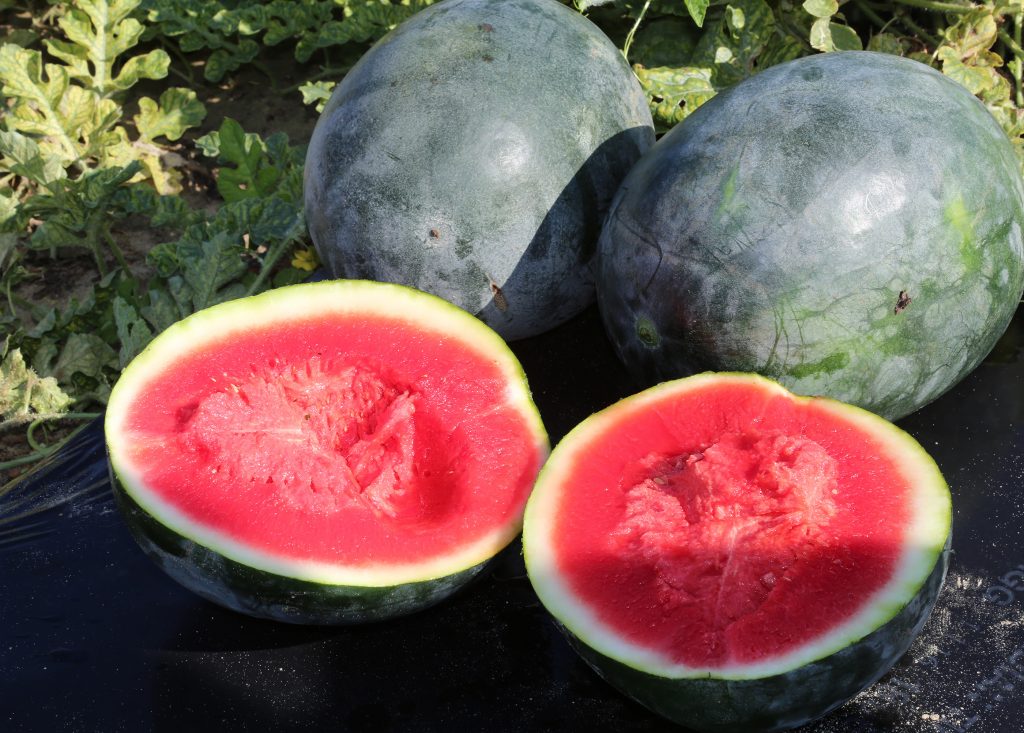
    University of Georgia pic/Watermelons on display at a farm on the UGA Tifton campus. 6-14-19

    By Clint Thompson

    Watermelon prices remain high for farmers in the Southeast. Unfortunately, there’s not enough crop ready for producers to take advantage, according to Bill Brim, co-owner of Lewis Taylor Farms in Tifton, Georgia.

    “Prices are still good. They’re around $155 to $160 a bin. There’s not many melons out there that’s ready right now. It’s unfortunate,” said Brim, who estimates individual watermelons are selling for an average of 24 cents per pound.

    He also believes the rainy weather has played a role in watermelons not maturing as quickly as they would in previous years.

    “Maybe too much water right now and they’re just not ripening as fast. We’ve got all of these showers in the afternoon, probably part due to that,” said Brim, who had to pause harvesting his own watermelon crop over the weekend.  “We had some stuff that was planted later, too than what we would normally plant; because the plants weren’t ready or the fields weren’t ready. It could be anything. Fumigants hadn’t been out of the soil long enough.

    “It’s quite a bit of difference from last year. Last year we were probably through by the (July) 4th.  We won’t be through for three weeks after the 4th (this year),” Brim said.

    This is typically a busy week for producers leading up to the July 4th Holiday on Saturday. Demand is normally very high this week.

    Drop in Georgia Acreage

    According to Samantha Kilgore, executive director of the Georgia Watermelon Association, acreage is projected to decrease this year to 19,000 acres. It would mark a significant drop from previous years’ harvests.  According to the National Agricultural Statistics Service, from 2016-2018, Georgia averaged a harvest of just more than 23,000 acres.

    Wet Planting Weather

    According to Andre da Silva, University of Georgia Cooperative Extension vegetable specialist, wet weather in February and early March could have delayed farmers’ planting window. If growers had to wait to plant their crop, it could have also impacted when their crop would be ready for harvest.

    He said that watermelon planting season in Georgia starts as early as March 1, but the bulk of farmers start March 15 and continue to the end of April. The watermelon market in Georgia begins in early June and usually concludes a week after July 4.

  • Bacterial Spot Leaving Mark in Tomato Crops

    File photo shows bacterial spot disease in tomatoes.

    By Clint Thompson

    Bacterial spot in tomatoes has been observed in various locations in Alabama, according to Ed Sikora, professor and Extension plant pathologist in the Department of Entomology and Plant Pathology at Auburn University.

    He believes the excess rainfall and abnormal temperatures contributed to the disease being more problematic this year.

     “I think this year with the moisture we’ve had this spring and slightly cooler temperatures, I think it’s more of a problem than normal. In talking with the growers, it appears to be a yearly problem,” Sikora said. “We were in these fields four weeks ago and we had a fairly hard time finding the disease, it would just be in small pockets. Then (last week) when I was out sampling in Mobile (Ala.), it was throughout the field to the top of the upper canopy of the plant. It can move pretty swiftly.”

    What is bacterial spot?

    According to University of Georgia Cooperative Extension, bacterial spot attacks the stems, petioles, leaves and fruit. Spots are circular and brown and become water-soaked during periods of heavy rains. Symptoms on the fruit itself are tiny raised blisters.  

    “You can get some defoliation, some blight of the leaves, which I think can have an effect on yield. How much? I do not know. It can get to the fruit, you can get some fruit lesions,” Sikora said. “That can make them unmarketable.”

    The disease is spread by rain, workers and tools. The best method for control is to rotate crops and field sites and remove any plant debris and eliminate potential hosts.

    “Typically, the disease will often come in on transplants, so it’s very hard to control in the transplant house. Sometimes it can survive on debris in the field,” Sikora said. “Some of these growers are not rotating, they just don’t have the room.”

    Resistance Problem

    Sikora estimates that between 75% and 80% of populations of the disease pathogen are resistant to copper, which has been the chemical product of choice for growers. It will keep the populations down but does not clean it up entirely. Tomato growers are tolerating the disease instead of controlling it completely.

    “They’re seeing the same problems in Florida and I’m sure Georgia and other places. This resistance is not a new phenomenon, but it’s been developing over time. Growers will still be spraying copper and hopefully they can knock down populations a bit,” Sikora said. “Probably our best bet will be developing resistant varieties. The same disease also goes to peppers. But when you start searching peppers, you’ll see that peppers, certain varieties have resistance to this pathogen. If you have a resistant variety, you don’t have to worry about spraying copper. At this point, I don’t recall any bacterial spot resistant tomatoes on the market.”

  • South Carolina Agriculture Entrepreneurs Awarded $125K in Project Funding

    South Carolina Department of Agriculture

    COLUMBIA – Seven agricultural innovators will receive money for their businesses from the South Carolina Department of Agriculture’s Agribusiness Center for Research and Entrepreneurship (ACRE).

    Entrepreneurs pitched their businesses to a panel of judges who selected seven to share $125,000 in funding based on their business plans, presentations and demonstrated history of business success.

    Hugh Weathers
    1. Kara and Matthew Rutter of Project Victory Gardens in Aiken County will expand their agritherapy and agricultural education program for military veterans, including building a teaching kitchen.
    2. Ben Crawford and Rebecca Goldberg of Woodland Valley Mushrooms in Aiken County plan to expand their Aiken-area gourmet mushroom operation.
    3. The brother-sister team behind Twin Creeks Lavender in Anderson County will build a drying and production barn to ensure expanded crop production at their Williamston lavender farm.
    4. York County’s Nance Farm Creamery, operated by a 12th generation farm family, was awarded funding to help market its dairy products locally.
    5. Alicia Holbrook intends to expand remote educational offerings at her alpaca farm Carolina Pride Pastures in Newberry County.
    6. Orangeburg County’s Lowcountry Creamery, a value-added dairy operation located in Bowman, was awarded funding to provide their milk and yogurt direct to consumers.
    7. Kristen Beigay, of Pickens County, has a worm farm Earthen Organics and intends to purchase new equipment to expand her family’s organic worm castings business.

    SCDA founded ACRE in 2018 to help identify and nurture new ideas and businesses in the Palmetto State’s agribusiness sector. In addition to the Advanced Entrepreneurship track whose 2020 awardees are announced here, ACRE offers a curriculum program each fall to train and mentor beginning agricultural entrepreneurs.

    “The future of South Carolina agriculture depends on innovation – we must grow and develop to survive,” said Commissioner of Agriculture Hugh Weathers. “I hope these seven entrepreneurs inspire continued development and innovation across South Carolina agribusiness.”

  • Florida Blueberry Farmer: USMCA Not a Good Deal For Vegetable, Specialty Crop Producers

    By Clint Thompson

    One of the most vocal critics of Mexican imports into the U.S. is adamant that the United States-Mexico-Canada Agreement will not help or protect vegetable or specialty crop producers.

    Blueberries are a popular commodity in the U.S. but also as an import from Mexico.

    “No, that’s not a good deal for specialty crops. They didn’t really address our issues at all. That was not a good deal for us,” said Ryan Atwood, blueberry farmer, who lives in Mount Dora, Florida, and is one of the state’s blueberry leaders. He farms 56 acres of blueberries, manages another 350 acres and is part-owner of the largest packing house in the Southeast United States.

    USMCA Background

    According to the USMCA, the agreement, once it enters into force on July 1, will support mutually beneficial trade leading to freer markets, fairer trade and robust economic growth in North America. But critics of the agreement will point to lack of protection for specialty crop farmers who already have to compete against imports of Mexican produce. U.S. Secretary of Agriculture Sonny Perdue even acknowledged concerns by specialty crop growers.

    The idea of fair trade seems more like a fantasy than reality for growers in the Southeast who, not only had to overcome the coronavirus pandemic this year but had to compete against the constant influx of Mexican imports.  

    “They don’t have the regulations we have. They don’t have to abide by the same rules. Their labor is definitely cheaper. They pay somebody $12 per day. I’ve got to pay them $12 an hour to get labor. It’s hard to compete with that. It’s real hard to compete with that,” Atwood said.

    Domestic Supply of Food

    Atwood commented in late April that he was “a fan of having our own domestic supply of food.” Agricultural imports from Mexico may be cheaper, but they’re not American grown. Atwood and Florida vegetable farmer Sam Accursio continue to preach the importance of supporting the American farmer.

    “I think it’s a security issue for our country,” Atwood said in late April. “We’ve got to grow our own food. You saw what happened 10 or 12 years ago when we used to import all that oil and then we got our own domestic supply going again. Other countries are going to be able to control you if they control your food supply.”

    Accursio added, “If you take Florida and California away in the winter, what do you have? You have third-world countries feeding this great nation, and I’m not going to eat it. I’m not going to do it.”

  • Clemson Extension Agents Provide Crop Updates

    According to The South Carolina Grower, Clemson Extension agents provided updates on the status of fruits and vegetables throughout the state.

    In the Coastal area, Zack Snipes reports: “A week of unseasonably mild temperatures and damp conditions slowed things down a bit. The warmer weather this past weekend and this week should put things in gear again. Tomato spotted wilt virus has been showing up on tomato fruit in the Lowcountry. The disease is vectored by thrips. Early and mid-season symptoms include stunted plants that will never make fruit and brown/purple mottling on the leaves. I have been finding plants that are asymptomatic until they fruit and then symptoms appear on the fruit. Using tomato varieties that are resistant to the disease is the best management technique.”

    File photo shows powdery mildew disease in cucurbit.

    In the Midland area, Justin Ballew reports: “Last week was very cool and cloudy. Though there was a decent chance of rain most days, we got very little and it remains dry in the midlands. The cool, cloudy weather really slowed things down and growers weren’t able to harvest crops as often as usual. Since there was little sunlight to dry up the dew each morning, powdery mildew really started showing up in cucurbits. Downy mildew still has not shown up here. Keep scouting and applying protective fungicides.”

    Lalo Toledo reports: “Squash bugs are active and laying eggs. Please scout for eggs on the underside of leaves and spray as soon as signs are visible. Squash bug nymphs are gray and have black eggs.”

    In the Pee Dee area, Tony Melton reports: “Cool temperatures making everything late especially peas and okra. Most sweet potatoes are planted. Things are drying out quickly with the heat.”

  • NOFA Deadline for CFAP is Today

    By Clint Thompson

    Today, June 22, is the last day for growers and industry leaders to submit information and data to the USDA Farm Service Agency (FSA) about crops to be considered for inclusion in the Coronavirus Food Assistance Program (CFAP).

    There is a Notice of Funding Availability (NOFA) where stakeholders and producers of other commodities can submit information and data for consideration to be included in the program. These must be submitted by today. This is specifically for data on any commodity not currently eligible for CFAP.

    Not all commodities were covered under CFAP, which provides financial assistance to producers who have suffered a 5%-or-greater price decline or who had losses due to market supply chain disruptions due to COVID-19 and face additional significant market costs.

    CFAP applications will be accepted through Aug. 28. Producers should apply through the FSA at their local USDA Service Center.

    According to Charles Hall, executive director of the Georgia Fruit and Vegetable Association, Georgia farmers are looking to add several commodities to the list covered under CFAP. These include kale, mustard, collards, turnips and specialty lettuce.

  • Asian Longhorned Beetle Found in South Carolina

    According to The South Carolina Grower, the Asian longhorned beetle (ALB) has been found near Hollywood, South Carolina. The beetle is an invasive tree pest and mainly attacks maples, elms, willows and birches.

    Donald Duerr, USDA Forest Service, Bugwood.org/Shows an Asian longhorned beetle.

    Clemson Extension, Clemson Regulatory Services and USDA APHIS need help in detecting the beetle’s presence in the Lowcountry.

    The are native beetles that look similar to ALB, so it’s important to know what they look like specifically. They are large black beetles with white spots, black and white striped antennae and bluish feet.

    To report the beetle’s presence, please contact the Clemson Department of Plant Industry at invasives@clemson.edu or by calling 864-646-2140.