Category: South Carolina

  • High Tech Farming Coming to Hampton County, S.C.

    $314 Million Agriculture Technology Campus a Big Win for Local Food

    COLUMBIA – A 1,000-acre agribusiness cluster in Hampton County, South Carolina will employ 1,547 people in growing, packing and shipping tomatoes, leafy greens, blueberries and other fresh produce – using a cutting-edge approach called Controlled Environment Agriculture.

    The $314 million Agriculture Technology Campus is a joint venture encompassing multiple greenhouses and hoop-houses, a 150,000-square-foot distribution center, and a large co-packer centrally located within the cluster, which is situated near I-95.

    The project brings together several powerhouse agribusinesses – Mastronardi, a Canadian company that sells tomatoes under the Sunset label; LiDestri Food and Drink, which will provide processing, packing, shipping and logistical services; and Clear Water Farms, an experienced indoor grower of leafy greens – along with GEM Opportunity Zone Fund.

    Controlled Environment Agriculture is a technology-based approach to indoor farming that allows growers to minimize space and conserve water while controlling for factors like weather.

    Weathers

    For the past three years, the South Carolina Department of Agriculture has been exploring the potential for Controlled Environment Agriculture to boost the state’s agricultural economy, not only providing new jobs but offering opportunities for existing South Carolina farmers as agribusiness operations build a local supply chain. Growing and sourcing locally grown foods helps ensure food supply chain security, a need amplified during the COVID-19 pandemic, and minimizes operating expenses through co-location.

    The Agriculture Technology Campus cluster is projected to increase total economic output in Hampton County by $551.7 million a year, or $7.4 billion over 15 years, according to an economic impact study commissioned by the Department. The campus is expected to be operational in 2022.

    “The Agriculture Technology Campus investment in South Carolina agriculture is transformative, creating jobs in the Hampton County region and future opportunities for South Carolina farmers,” said Commissioner of Agriculture Hugh Weathers. “A Controlled Environment Agriculture project of this scale will conserve land and water and offer South Carolinians more chances to buy local produce.”

    “This is a historic day for a region steeped in agricultural history,” said GEM Opportunity Zone Fund CEO Zeb Portanova. “I am thrilled to be part of this innovative group looking to grow high quality agriculture across the region. We will deploy sustainable practices such as using recycled rainwater to irrigate our greenhouses while also providing all Carolina farmers access to our state-of-the-art co-packing facility. This will help pave the way for citizens to visit their local grocery stores, where they will be able to purchase pesticide-free, locally grown produce.”

  • Clemson Extension to Hold Virtual Strawberry Meeting

    Clemson Extension will host a virtual strawberry production meeting on Wednesday, Sept. 2 at 6 p.m. The Strawberry Grower 101 meeting will be geared towards new or beginning growers.

    Topics to be covered included cost and economics, timeline, plant selection and varieties available and fertility.

    Those interested can click here to register.

    All Clemson University sponsored in-person events have been postponed in accordance with CDC recommendations and concerns over COVID-19.

  • Clemson Extension Agents Provide Crop Updates

    Clemson Extension agents provided updates in The South Carolina Grower this week about the status of various crops being produced throughout the state.

    Coastal

    Zack Snipes reports, “We had between 4-6 inches of rain last week with daily thunderstorms. Growers are working the fields, getting ready for the fall crops to go in. If it happens to rain on Wednesday night, then you should tune in to our Strawberry 101 class from 6 p.m. to 8 p.m. We will be discussing economics, seasonal timeline, varieties and common mistakes, and fertility. This is an excellent opportunity to learn about growing strawberries.  You must register ahead of time to participate.

    Midlands

    Justin Ballew reports, “After some rain early in the week, the weather turned dry and the temperatures and humidity reminded us that summer isn’t over yet. Fall crops are continuing to progress well, though we are continuing to see a fair amount of disease like anthracnose, downy mildew, and bacterial spot due to the recent wet conditions. Caterpillar populations are climbing on fall brassicas as well. In scouting a field trial, I observed diamondback moths, cabbage loopers, and armyworms. Keep a close eye out and be sure to rotate chemistries when you start spraying.”

    Anthracnose spots on a cantaloupe leaf. Photo from Justin Ballew.
    Cabbage looper on a collard leaf. Photo from Justin Ballew.

    Sarah Scott reports, “Peach season has wrapped up in the Ridge and post- harvest fertilizer applications are being applied. Fall vegetable crops are looking good as we received some decent rain fall over the past week. Hot temperatures have had some effect on lower seed germination of some brassicas.”

    Pee Dee

    Bruce McLean reports, “Harvest time is finally upon us. Sunshine and warm temperatures are doing the trick for giving growers that final push for ripening the muscadine crop. Crop is looking good, but some bitter rot and ripe rot is starting to show. Brix for Carlos and Noble is averaging around 13.5%. Doreen is still a little ways from being ready to harvest, but it won’t be long.”

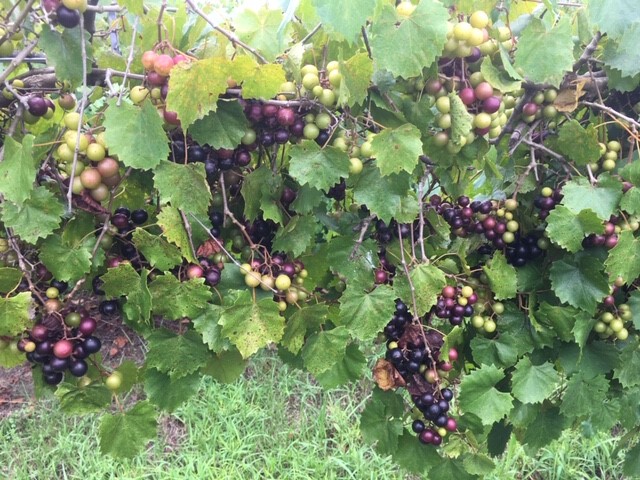
    Grape harvester picking muscadines. Photo from Bruce McLean.

    Tony Melton reports, “So wet in areas it is hard to spray peas for curculio. Some are having to use airplanes. Harvesting sweet potatoes for processing and yield is good. Planting greens for processing. Harvesting pickles but stopped planting this week. Still harvesting processing peppers but harvesters are getting real tired.”

    Upstate

    Kerrie Roach reports, “Heavy rains, humidity and continued high temperatures over the last week have continued an increased trend in disease incidence across the board in both vegetables and fruits. Growers need to be proactive to stay ahead of diseases (and insects) by scouting often and well. We are finishing out the peach season with late varieties like ‘Big Red’. Apples are gaining steam and early varieties are looking and tasting great. Overall the production seems to be on target for a significant increase over last season.”

  • COVID-19 Ag Impact Survey

    town hall

    According to The South Carolina Grower, Clemson Cooperative Extension is inviting farmers to participate in a research study. The purpose of this research is to collect information on the impacts of COVID-19 on the agricultural industry and understand the effects (positive and negative) on specialty crop and direct marketing farms in South Carolina. The South Carolina Department of Agriculture (SCDA) is a collaborator on the survey.

    Efforts like this allow Clemson Extension to improve the quality of life of all South Carolinians by providing unbiased, research-based information. Extension works to help support South Carolina’s $42 billion agriculture and forestry industries. Any collected data will be used in aggregate form. Survey results may be shared with Extension faculty, staff and /or outside organizations in an effort to further understand the impact COVID-19 has had on South Carolina agriculture.

    The survey is voluntary and anonymous. It will take you about 7 minutes to complete the survey.Click here to access the survey.

  • Clemson Extension Agents Provide Crop Updates

    Clemson Extension agents provided updates in The South Carolina Grower this week about the status of various crops being produced throughout the state.

    Statewide

    Dr. Tony Keinath reports, “For the past few years, Orondis Opti on cucumber and cantaloupe and Orondis Ultra on pumpkin and watermelon have been the best fungicides to manage downy mildew. Based on results from a spring 2020 cucumber experiment at Coastal REC, Orondis is no longer the “silver bullet” it was 2 years ago. In my experiment, Orondis Opti rotated with Bravo controlled downy mildew in the early part of the season, but disease increased significantly during the latter part of the season and ended up higher than expected. Part of the shortcoming of the Orondis Opti/Bravo spray program was the Bravo rotation. Bravo sprayed by itself every other week did not control downy mildew at all. So spraying Orondis Opti/Bravo acted like Orondis Opti sprayed every other week, which was not enough. The labels for Orondis Opti and Orondis Ultra say they must be rotated with another fungicide. For the rest of the 2020 season, use Orondis Opti/Ranman + chlorothalonil on cucumber and cantaloupe, and Orondis Ultra rotated with Gavel or Ranman + chlorothalonil on pumpkin and watermelon. Always use the high rate (2.5 pints/acre) of Orondis products. Note that the mancozeb in Gavel or adding chlorothalonil helps to manage other foliar diseases like gummy stem blight and anthracnose. Yield data and input costs from my experiment are being analyzed to see if spraying Orondis leads to a higher net return despite the higher cost of this fungicide. Results will be presented at the virtual Cucurbit meeting in February 2021 to help growers plan downy mildew fungicide programs for the 2021 season.”

    Cucurbit downy mildew continues to spread across the state.

    Coastal

    Rob Last reports, “Fall crops continue to grow well in the area.  Given the current weather patterns, pests and disease are active in some crops particularly where there are volunteers remaining from previous crops.  Vigilance will be required in scouting and pesticide management programs.  If in doubt scout.”

    Midlands

    Justin Ballew reports, “It’s been cool, cloudy, and kind of pleasant outside this past week, though, that has the vegetable crops growing a little slower. We’ve gotten some decent rains in most areas around the midlands as well. Bacterial spot is really showing up on fall tomatoes as a result of all the recent rain. It could be a bad fall for bacterial spot if the weather stays like this. Caterpillars are already out there on fall brassicas. It doesn’t take long once they’re planted. Start scouting, scout often and rotate insecticides. Remember to contact one of us about screening your farm for insecticide resistance in diamondback moths once you start seeing populations build up.”

    Bacterial spot and speck start on the bottom of the plant and can be splashed onto higher leaves and fruit by rain drops. Photo from Justin Ballew.
    Start scouting for caterpillars as soon as your fall brassicas are planted. Photo from Justin Ballew

    Pee Dee

    Bruce McLean reports, “Both fruit and vegetable development have slowed a bit due to cloudy conditions. Sunny conditions needed. Sweetpotatoes are sizing well and will be ready for harvest soon. Fall cucumbers and squash should soon be ready to start harvesting. Fall brassicas are being planted now. Muscadine crop is getting close to harvest. Noble is around 90% ripe; Carlos is around 60%; Doreen is still around 25%. Brix (sugar content) is off due to rain and cloudy conditions. Noble and Carlos brix are averaging around 11% with a low of 9.2% and a high of 15.0%. Doreen is averaging less than 10%. Did find a few Doreen that brix was over 19%… candy. Sunny conditions definitely needed.”

    Noble muscadines around 90% ripe. Photo from Bruce McLean.

    Tony Melton reports, “Beginning to harvest processing sweet potatoes but some have been stunted and delayed by excessive rain. Spraying processing peas for cowpea curculio.  Starting to plant processing greens by seed. Even though lots of rain and having to mud through fields, cucumbers for pickles are being harvested and still being planted.”

    Upstate

    Andy Rollins reports, “Blueberry pruning is best served for the dormant time of year, late January-late February.  I met with a commercial grower who was anxious about getting started early partly because he has many plants completely unproductive for the second year in a row. I like to call this revenge pruning as that is the primary motivation. Be careful, you could end up hurting yourself more in the long run. In his case, it was all about light and proper pruning to encourage light down through the canopy. The original spacing of Rabbiteye type varieties was very close so we also considered killing every other plant to get more light into the bushes but this would not replace the need for removing a few of the oldest canes each year, spacing them out so there is better light penetration. For a detailed explanation, please see NCSU Blueberry specialist Bill Cline’s presentation.”

  • Clemson Extension Agents Provide Crop Updates

    Clemson Extension agents provided updates in The South Carolina Grower this week about the status of various crops being produced throughout the state.

    Statewide

    Dr. Tony Keinath with a word on crop rotation. “To keep the soil on your farm productive over the long term, do not replant the same vegetable, or a related crop, in the same field “too often.” How often is “too” often depends on the crop and the pathogens present in the soil. Almost always, “too often” is less than 12 months between disking the old crop and planting the new crop.

    The main risk in replanting “too often” is building up root pathogens that survive in the soil for years. Even in the heat, diseased roots and stems take several months to decay enough so they are not a source of pathogens.

    Another risk is foliar diseases that start on volunteers from the previous crop. The pathogens may be in or on some of the seed that sprouts; for example, black rot on leafy brassica greens or gummy stem blight on cantaloupe and watermelon. A small number of infected volunteers means the disease has a head start right at the beginning of the crop.

    Controls for soilborne pathogens (fungi, water molds, and nematodes) are limited.

    • Many vegetable crops have no resistance to these pathogens.
    • Fungicides do not penetrate soil well, or they are quickly inactivated.
    • Fumigants have many restrictions that require time-consuming record keeping and air monitoring.

    Root-knot nematodes are a special problem, because they form galls on many vegetables and some field crops (cotton, for example) grown in rotation with vegetables. Summer cover crops of sunn hemp can lower nematode numbers.

    Without crop rotation, more fungicide sprays will be needed, which raises the risk of fungicide resistance. Fungicides and fumigants are not a substitute for good crop rotation.”

    Midlands

    Justin Ballew reports, “Many areas got a little more rain last week, and we had a break from the heat over the weekend. We have a lot of the fall crop planted now, including squash, zucchini, tomatoes and brassicas. So far everything is mostly growing well. We are seeing bacterial wilt develop in some of the fall-planted tomato fields. Bacterial wilt loves hot soil temperatures, which is typical this time of year. Be sure to follow a proper crop rotation plan (at least 3 years) to help manage bacterial wilt buildup in fields. Since the heavy rain we got a few weeks ago, we’ve also seen plenty of bacterial spot in what’s left of the spring tomatoes.”

    To test for bacterial wilt in tomatoes, place the cut stem in a jar of clean water. If the plant is infected, within about 30 seconds you will see milky, white bacterial ooze begin to stream from the stem. Photo from Justin Ballew.
    Bacterial wilt commonly causes discoloration of the vascular tissue within the stem. Photo from Justin Ballew.

    Pee Dee

    Bruce McLean reports, “Most summer vegetable crops are starting to wind down. Peas, okra, watermelon and cantaloupe are still being harvested at some volume. Late summer/fall squash, cucumbers and tomato harvest are a couple of weeks away. Fresh market muscadines are being harvested now. Juice and wine muscadines are getting close – maybe 7 to 14 days away, depending upon location. In most juice and wine muscadine vineyards, Carlos is around 40% colored (ripe); Noble is around 60%; and Doreen is around 25%. Grape root borer (GRB) flight is still occurring, with moderately high moth counts in traps.”

    Eumorpha pandorus, a.k.a Pandorus Sphinx Moth caterpillar, found in the muscadine vineyard at Pee Dee REC. Photo from Bruce McLean.
    ‘Noble’ muscadines getting close to harvest. Photo from Bruce McLean.

    Tony Melton reports, “‘Another Crop Bites the Dust’ from spreader/stickers. I have seen too many farmers sing this sad song. Be careful and know what you are doing when adding a sticker/spreader when spraying vegetables. Short season, tender vegetable crops will burn very easy in our heat and do not have time to come back like long season row-crops. Our state’s second major watermelon/cantaloupe season is in full season in Chesterfield County. Harvest is in full swing and will continue until frost. Curculio sprays are beginning to be applied to the fall pea crop. Looks like pickle harvest will continue until frost.”

  • USDA Announces More Eligible Commodities for CFAP

    Application Deadline Extended to Sept. 11

    (Washington, D.C., Aug. 11, 2020) – U.S. Secretary of Agriculture Sonny Perdue announced today that additional commodities are covered by the Coronavirus Food Assistance Program (CFAP) in response to public comments and data. Additionally, the U.S. Department of Agriculture (USDA) is extending the deadline to apply for the program to Sept. 11, and producers with approved applications will receive their final payment. After reviewing over 1,700 responses, even more farmers and ranchers will have the opportunity for assistance to help keep operations afloat during these tough times.  

    Perdue

    “President Trump is standing with America’s farmers and ranchers to ensure they get through this pandemic and continue to produce enough food and fiber to feed America and the world. That is why he authorized this $16 billion of direct support in the CFAP program, and today we are pleased to add additional commodities eligible to receive much needed assistance,” said Secretary Perdue. “CFAP is just one of the many ways USDA is helping producers weather the impacts of the pandemic. From deferring payments on loans to adding flexibilities to crop insurance and reporting deadlines, USDA has been leveraging many tools to help producers.”  

    Background

    Background: USDA collected comments and supporting data for consideration of additional commodities through June 22, 2020. The following additional commodities are now eligible for CFAP:

    Specialty Crops – aloe leaves, bananas, batatas, bok choy, carambola (star fruit), cherimoya, chervil (french parsley), citron, curry leaves, daikon, dates, dill, donqua (winter melon), dragon fruit (red pitaya), endive, escarole, filberts, frisee, horseradish, kohlrabi, kumquats, leeks, mamey sapote, maple sap (for maple syrup), mesculin mix, microgreens, nectarines, parsley, persimmons, plantains, pomegranates, pummelos, pumpkins, rutabagas, shallots, tangelos, turnips/celeriac, turmeric, upland/winter cress, water cress, yautia/malanga, and yuca/cassava.

    Non-Specialty Crops and Livestock – liquid eggs, frozen eggs and all sheep. Only lambs and yearlings (sheep less than two years old) were previously eligible.

    Aquaculture – catfish, crawfish, largemouth bass and carp sold live as foodfish, hybrid striped bass, red drum, salmon, sturgeon, tilapia, trout, ornamental/tropical fish, and recreational sportfish.

    Nursery Crops and Flowers – nursery crops and cut flowers.   Other changes to CFAP include: Seven commodities – onions (green), pistachios, peppermint, spearmint, walnuts and watermelons – are now eligible for Coronavirus Aid, Relief, and Economic Stability (CARES) Act funding for sales losses. Originally, these commodities were only eligible for payments on marketing adjustments.

    Correcting payment rates for onions (green), pistachios, peppermint, spearmint, walnuts, and watermelons.  

    Additional details can be found in the Federal Register in the Notice of Funding Availability and Final Rule Correction and at www.farmers.gov/cfap.  

    Producers Who Have Applied: To ensure availability of funding, producers with approved applications initially received 80% of their payments. The Farm Service Agency (FSA) will automatically issue the remaining 20 percent of the calculated payment to eligible producers. Going forward, producers who apply for CFAP will receive 100% of their total payment, not to exceed the payment limit, when their applications are approved.  

    Applying for CFAP: Producers, especially those who have not worked with FSA previously, are recommended to call 877-508-8364 to begin the application process. An FSA staff member can help producers start their application during the phone call.  

    On farmers.gov/cfap, producers can: Download the AD-3114 application form and manually complete the form to submit to their local USDA Service Center by mail, electronically or by hand delivery to their local office or office drop box. Complete the application form using the CFAP Application Generator and Payment Calculator. This Excel workbook allows customers to input information specific to their operation to determine estimated payments and populate the application form, which can be printed, then signed and submitted to their local USDA Service Center.  If producers have login credentials known as eAuthentication, they can use the online CFAP Application Portal to certify eligible commodities online, digitally sign applications and submit directly to the local USDA Service Center.  
    All other eligibility forms, such as those related to adjusted gross income and payment information, can be downloaded from farmers.gov/cfap. For existing FSA customers, these documents are likely already on file.  

    All USDA Service Centers are open for business, including some that are open to visitors to conduct business in person by appointment only. All Service Center visitors wishing to conduct business with FSA, Natural Resources Conservation Service or any other Service Center agency should call ahead and schedule an appointment. Service Centers that are open for appointments will pre-screen visitors based on health concerns or recent travel, and visitors must adhere to social distancing guidelines. Visitors are also required to wear a face covering during their appointment. Our program delivery staff will be in the office, and they will be working with our producers in the office, by phone and using online tools. More information can be found at farmers.gov/coronavirus.  

  • Clemson Extension Agents Provide Crop Updates

    Clemson Extension agents provided updates in The South Carolina Grower this week about the status of various crops being produced throughout the state.

    Coastal

    Rob Last reports, “Across the area fall plantings are growing on and developing well. Scouting for pests and diseases will remain critical to ensure timely applications are made where necessary. For those without fall planted crops thoughts are turning to next year with soil sampling. One key thing to consider at this point in the year is the use of cover crops. Not only will cover crops help to prevent erosion or loss of soil they also capture nutrients. In addition, as these crops are incorporated, they act as a source of organic material to aid in nutrient cycling in the soil as well as moisture retention.”

    Zack Snipes reports, “We were spared from the worst of Hurricane Isaias.  We clocked 21 MPH wind gusts and 1.66 inches of rain at the Coastal Research Station in Charleston. Most growers are working their fields after the much needed rain and are laying plastic for the fall crops. This is the time of year when insects, diseases and weeds usually have parties in fields if they are left unattended. Remember to clean fields, remove crop residue, turn under weeds, and, if possible, plant a cover crop. I would recommend buckwheat, sorghum-sudan or cowpeas this time of the year to build soil, suppress weeds, improve nutrient capacity and increase beneficial insect habitat.”

    Midlands

    Justin Ballew reports, “Most areas received at least a little rain last week, and we had a temporary break from the heat. The increased moisture in some areas has led to an increase in powdery mildew and downy mildew in cucurbits. Folks are still busy preparing fields and planting fall cucurbits and brassicas. What’s been planted is growing well. Some of the earliest planted fall crop tomatoes are already being staked.”

    Sarah Scott reports, “Peach season is winding down along the Ridge. Late varieties like Big Red are being harvested, and end of season tasks are starting like summer pruning. Usually this is done to open up tree centers and remove any damaged or dying wood. Cuts at this time should be made no larger than a quarter. Late season peppers, eggplant and squash are being planted. Greens like collards and kale are being seeded as well. Afternoon storms have provided some much needed rain in some areas while others remain dry still.”

    Upstate

    Kerrie Roach reports, “Things in the ‘Golden Corner’ are in full force when it comes to tree fruit. Peaches are still coming off and we about 60%-70% of the way through the season. Asian pears and nectarines are coming off now, and apples are beginning to gain steam with early varieties starting to ripen. Late season rot issues are showing up in orchards where afternoon rains have prevented cover sprays. Merivon has been a consistent player for disease control, but a timely Pristine application has been shown to have much more efficacy on these late season rots.

  • Bringing Technology to Specialty Crops

    United States Department of Agriculture

    Posted by Greg Astill, Markets and Trade Economics Division, Economic Research Service and Suzanne Thornsbury, Senior Advisor for Agricultural Economics and Rural Communities, Office of the Chief Scientist in Research and Science

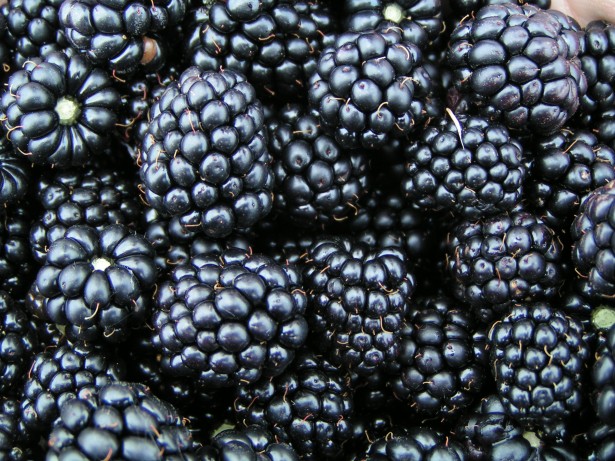
    File photo shows blackberries.

    Advances in technology, automation, and remote sensing is a cross-cutting, macro movement in science impacting agriculture outlined in the USDA Science Blueprint (PDF, 2.6 MB). The Science Blueprint guides USDA’s science priorities for the next 5 years, building from past success. Relative to other crops, many specialty crops are more dependent on agricultural labor for production, harvesting, and processing. This is part of a blog series that highlights research investments to advance automation and mechanization for specialty crops.

    Each day we use technologies to solve problems and accomplish tasks that once would have taken much longer. Whether facial recognition software, a smart thermostat, or a robotic vacuum, technology has changed the way we live and work. Farmers are also using technology to make production of specialty crops, such as fruits, vegetables, and tree nuts, more efficient. These crops make up one third of U.S. crop production sales and one sixth of U.S. agricultural sales.

    Between 2008 and 2018, USDA funded $287.7 million towards diverse research projects to develop and enhance the use of automation or mechanization in specialty crop production and processing. Most of these projects focused on precision agriculture, which includes a set of complex or “smart” technologies that tailor the needs of the plants to its specific environment or growing conditions, such as precise water, fertilizer, or pest or weed control. For example, a smart sprayer identifies individual trees in an orchard, their size, shape, and leaf density to adjust spray and reduce herbicide use. A smart irrigation system provides water only to the plants that need it, when they need it, continually adapting to crop conditions as the weather changes.

    Some USDA projects focus on development of specific components that will eventually be combined into more complex technologies. Sensors generate high-quality data on crops, weather and soil. Remote sensing data, gathered by satellites, includes information like crop growth, soil moisture, or weather conditions while drones gather more localized data on weed, pest, or disease prevalence. Machine learning algorithms convert the data into useful forms of information to help manage the farm.

    Other projects include development of job aids or automated machinery to help farm workers work more efficiently, such as an adjustable trellis system to make harvesting blackberries easier or mechanical thinners and pruners for vineyards and orchards. And some automation or mechanization technology helps with harvesting and processing, such as a flash freezing system or a mobile, in-field computerized apple sorter.

    USDA funded $287.7 million toward a diversity of research projects to develop or enhance the use of automation or mechanization in specialty crops between 2008 and 2018

    USDA funding for research into mechanization or automation for specialty crops, 2008-2018 chart
    Source: USDA, Economic Research Service, based on data provided by USDA’s Agricultural Marketing Service, Agricultural Research Service, and National Institute of Food and Agriculture.

    For more information, see the recent ERS report Developing Automation and Mechanization for Specialty Crops: A Review of U.S. Department of Agriculture Programs.

    This research supports the “value-added innovation” theme outlined in the USDA Science Blueprint and moves us closer to meeting the goals outlined in USDA’s Agriculture Innovation Agenda.

  • Flavorful Fruit Yields Sweet Results for Melon Farmers

    Southeast watermelon growers delivered a flavorful crop this year that yielded a sweet price at the market, said Mark Arney, executive director of the National Watermelon Promotion Board.

    Photo taken by Clint Thompson/Shows watermelons for sale at the Farmers Market in Cordele, Georgia.

     “We’re happy, we’re happy for the guys. Obviously, the guys that didn’t have a crop, it doesn’t matter how hot the market is, they’re not going to make money. We feel terrible for those guys,” Arney said. “The crop has been excellent quality, that’s helped.”

    High Prices

    Carr Hussey, a watermelon farmer in Florida and Alabama and chairman of the board of the Florida Watermelon Association, said in early July that prices were averaging 22 cents per pound. It was a huge increase from the 14 cents growers had grown accustomed to in previous seasons.

    Watermelons were in high demand due in large part to the short supply. Georgia acreage decreased almost 4,000 acres this year. Imports from Mexico were down 10% overall for the season, according to Arney. Because of weather-related issues, Georgia’s crop did not start until 7 to 10 days later than normal.

    Typically, Georgia and North Florida harvest watermelons at about the same time, which could lead to a surplus on Memorial Day weekend. That did not happen this year, however.

    There were even fears of a shortage at various times during the growing season.

    “You had a combination of the lateness of Georgia, of the Mexican crop being down around 10% overall for the season and the flavor being exceptional. All of those things brought a situation where you did have a shortage,” said Arney, who’s concerned about the current impact that Hurricane Isaias will have on watermelon production along the Atlantic Coast. “Who knows, there may even be more of a shortage (now) with the weather. Watermelons like rain, but too much rain means the guys can’t get into the fields if they’re using these school buses to harvest. They have to wait until things dry out. That could delay as well.”

    Little Impact From COVID-19

    While COVID-19 impacted the food service industry, as restaurants closed in response to the pandemic, watermelons were not one of commodities that felt the brunt of the impact.

    “The first couple of weeks it was panic time. We saw some pretty big slumps. Then all of a sudden, things started taking off. It was like, wow, what’s going on. Well, No. 1, flavor has been really good. I had one grower describe it as a vintage year. He’s been in the watermelon business forever and said, ‘I can’t remember a crop with this good of a flavor.’ That certainly helped,” Arney said. “I think produce in general is up because so many people are sheltered and can’t go to restaurants even though there’s been a little bit of openings. But because so many people are not eating in restaurants; they’ve got to eat, so they’re going to either order online or go to the grocery store. Watermelon’s a great bargain. It’s healthy.

    “Watermelon’s an excellent source of Vitamin C and it’s also probably one of the better bargains, if not the best bargain for fruits at costs per serving, which is around 17 cents.”