Clemson Extension agents provided updates in The South Carolina Grower this week about the status of various crops being produced throughout the state.
Rob Last reports, “As we approach the time where strawberry plants will be delivered, I would urge all growers to inspect plants before planting. Whiteflies continue to be numerous along with caterpillars in fall brassica crops. Scouting, as always, will remain very important.”
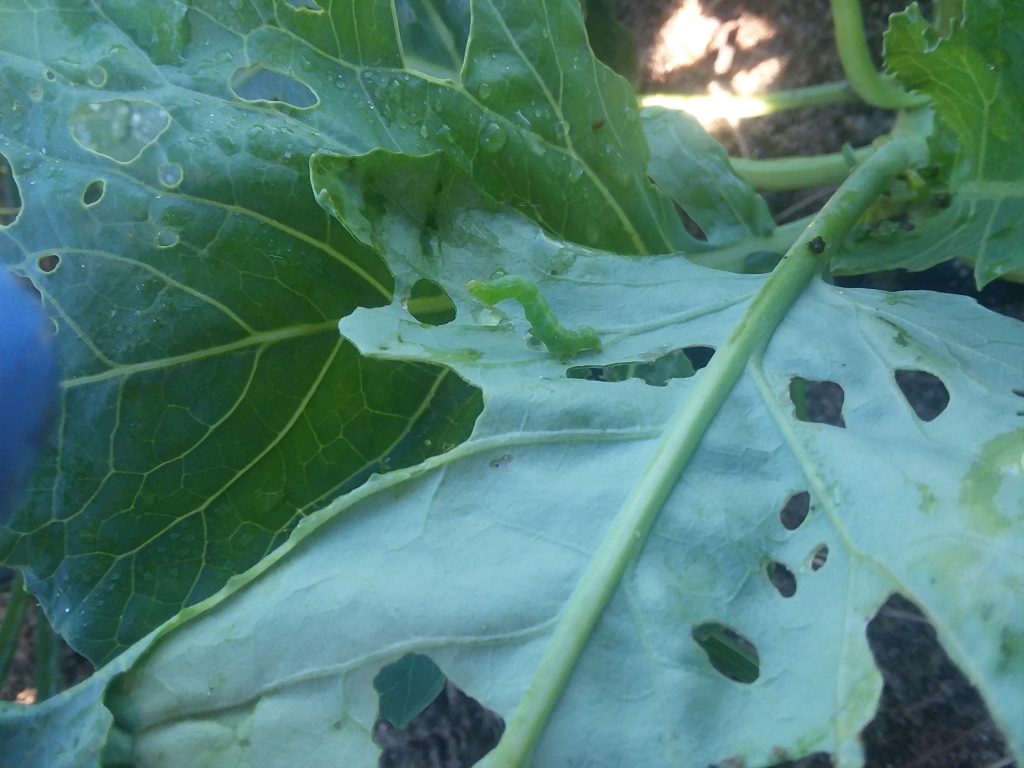
Zack Snipes reports, “Hide ya collards, hide ya tomatoes, they eatin’ everything! The Southern Armyworm is wreaking havoc on crops in the Lowcountry. The Southern Armyworm is a heavy feeder on a wide range of crops. They are dark in color, with yellow to cream colored horizontal lines and a reddish/orange head. If inspected closely, one will find a yellow “Y” shape on their head. I see this pest in fields with a variety of crops as well as weedy field borders. We have a full offering of insecticides to battle this pest but remember to rotate insecticides each time you spray. We are also finding some Tomato Yellow Leaf Curl Virus (TYLC) in tomato. This virus is transmitted via the whitefly. Strawberry cut-offs and plugs are going in. Be sure to inspect roots and crown before planting. Give me a shout if you need an extra pair of eyes to check them out.”
Two Southern Armyworm larvae that are just about large enough to pupate. Photo from Zack Snipes.
Midlands
Justin Ballew reports, “We had a welcome light rain towards the end of last week and the temperatures cooled off nicely. Strawberry planting has begun and is progressing well. Remember to supervise planting crews closely to make sure plants are being set at the proper depth. Now is also the time to get deer fences up. Once the plants develop new leaves, it won’t take the deer long to find them. We’re still seeing a fair amount of powdery mildew and downy mildew in cucurbits and anthracnose in pepper. Caterpillar populations remain high in brassicas as well.
We’re seeing a fair amount of anthracnose fruit rot on pepper in the midlands. Photo from Justin Ballew.
Pee Dee
Tony Melton reports, “Greens are loving cool weather and growing well. Very little disease or insect problems. Large numbers of armyworm moths in some green fields but they are not feeding on greens but on the purslane, pigweed, and other weeds – control the weeds. Sweet potatoes are being harvested as quickly as possible. Many strawberries are planted – already seen some deer damage. I have seen large fields of peas without a pea left on top of the plants – from deer damage. Pickle harvest is finished for the year. Cool weather is slowing bean and pea growth and production. Agri-tourism is flourishing because people want to get out of the house.”
According to Pam Knox, University of Georgia agricultural climatologist, in her UGA Extension blog, the forecasts are starting to show a strong cold front passing through the Southeast at the end of October.
This will usher in a period of much colder air which could include frost across northern Alabama and Georgia as well as western parts of the Carolinas and Virginia.
Some of the mountainous areas have already experienced frost conditions, but this looks like it could be a much more widespread event. The latest models put the front through the region on Wednesday, Oct. 28, with lingering cold conditions in the mornings for the next few days after the front passes.
It is important to be mindful that this is still 10 days out. Changes in the timing and strength of the cold air are likely, but it is something to watch out for, especially if you have plants that are sensitive to freezing conditions.
Clemson Extension agents provided updates in The South Carolina Grower this week about the status of various crops being produced throughout the state.
Rob Last reports, “Crops are generally looking very well to press with some welcome rain benefiting fall crops. Whitefly and caterpillar numbers are increasing. With a few foggy mornings happening over the last week be on the lookout for foliar disease pressure to increase given the increase in leaf “wetness”. Plastic and, where applicable, fumigants are applied, ready to begin strawberry planting. Just a reminder to check plants carefully before planting for crown rots and early foliar pest and disease activity.”
Zack Snipes reports, “We had another wet week in the Lowcountry with 2.5 inches of rain collected at the Coastal Research Station in Charleston. Things are looking great for strawberry planting in the next few weeks. Be sure to check your plants and roots before you plant them. Many issues can be solved before plants go into the field. Fall brassicas, squash, lettuce mixes, and root crops are growing and looking great. We still have whiteflies on many farms. On most of these farms, spring fields were not terminated once the crop was done which could have led to the explosion of whiteflies we have been seeing this fall.”
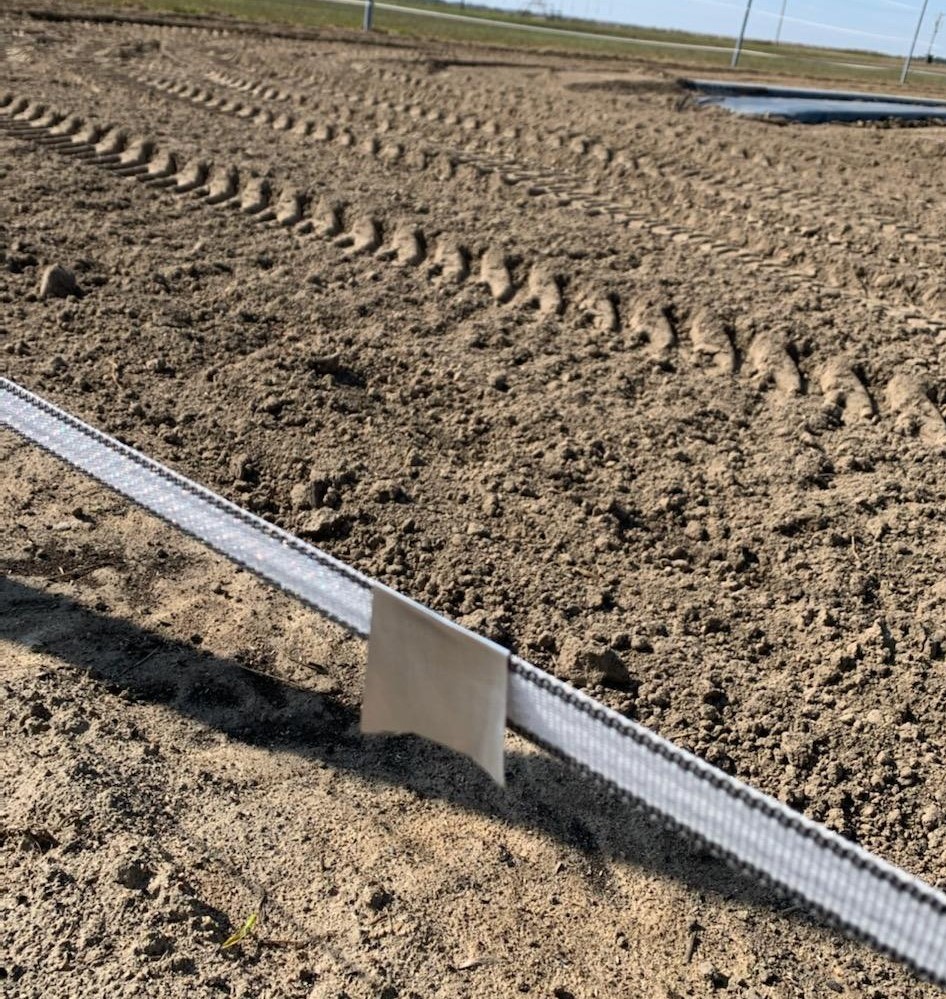
Many strawberry growers are putting up fencing BEFORE they plant which drastically enhances the efficacy of the fencing. This fence is about to be baited with a metal tab and peanut butter. Photo from Zack Snipes.
Midlands
Justin Ballew reports, “Last week was warm and we saw a heavy dew most mornings. We also had some pretty decent rain come through over the weekend. This warm, moist weather has disease increasing fairly aggressively on some crops. Powdery mildew and downy mildew on cucurbits are pretty rough right now. Pecan shucks are opening, and nuts are falling from the earlier varieties like Pawnee and Excel. Strawberry planting should begin this week.”
The shuck has opened on this Excel pecan . Photo from Justin Ballew.
Pee Dee
Tony Melton reports, “Still planting processing greens mostly kale and collards because they are a little more resistant to winter cold. Greens are rapidly growing. I have already seen some Reflex damage from carryover from last year. Personally I think it affects roots and keeps them from taking up nutrients and the damage is very similar to magnesium and boron deficiency – so I always recommend applying Epsom salts and boron to combat the problem and it usually works. Strawberries are going into the beds. Since many are using vapam or k-pam, make sure that enough time is allowed for the fumigate to escape before planting. Many do not fumigate anymore so don’t forget velum, nimitiz, and majestine are available for nematode control.”
Clemson Extension agents provided updates in The South Carolina Grower this week about the status of various crops being produced throughout the state.
Weekly Field Update 10-5-20
Coastal
Zack Snipes reports, “The cooler weather and lots of rain have brought out the diseases. I saw some watermelon diseases last week including gummy stem blight. We need to protect our foliage just a few more weeks to finish off those melons so keep at the spray programs if you can. Whiteflies continue to hammer us in all crops this fall. Strawberry planting is just about upon us. Rains and wet ground have slowed some farms from laying plastic. Remember that pre-plant fertility and herbicides are critical to spring success. Spartan and Devrinol are the only two pre-plant herbicide options this late in the season. Other products require a 30-day wait period. Let me know if you want me to come check your strawberry plugs before you plant them.”
Gummy stem blight on watermelon foliage. Photo from Zack Snipes.
Rob Last reports, “Fall crops are looking good in this area with good development in brassicas and beets. Insect and disease activity remain moderate, however, with cooler weathers and rainfall, scouting will be critical to success for these crops. Adult moths are very active at present, so be on the lookout for eggs and caterpillars. Plastic is down and awaiting strawberry planting in the next week.”
Growers are ready for strawberry planting. Photo from Rob Last.
Midlands
Justin Ballew reports, “The weather has been pretty fall-like and enjoyable over the last week. The cooler temperatures and high amounts of recent moisture have diseases like powdery mildew, downy mildew and anthracnose increasing. Caterpillar activity has increased in the last week as well. Be sure to rotate modes of action when spraying for caterpillars. Strawberry growers are ready to plant and will probably start within the next week.”
Powdery mildew has been picking up on fall cucurbit crops. Photo from Justin Ballew.
Sarah Scott reports, “Daytime temperatures have been mild with cooler night temps. Early last week, areas saw anywhere from trace amounts to 2 inches of rain. Low spots in fields may remain wet and this could lead to potential problems. Peppers are looking good as well as eggplant and late squash. Brassica crops are having some issues with aphids causing leaf curling. Pecans are beginning to fall as well. Scab seems to be particularly bad this year, most likely because of wet weather during critical spray times for fungal management in late June and July.
Pecan scab has been rough this season. Photo from Sarah Scott.
Pee Dee
Tony Melton reports, “Greens are growing fast with cool temperatures; however, beans, peas, pickles and sweet potatoes have slowed down with these temperatures. Most sweet potatoes need to find a home. We are using a lot of potassium phosphide to keep down root rot especially on greens. Most growers also use it as a dip for strawberries transplants or put through drip system as soon as they plant. Getting ready to plant strawberries as soon as the transplants get here.”
Upstate
Kerrie Roach reports, “Clear skies since Tuesday with cool fall temperatures at night and warm days has consumers looking for all things fall. Growers with pumpkins, gourds, mums, corns stalks, and/or anything fall-related have been busy keeping up with demand. Agritourism demand/opportunities have picked up significantly in the last few weeks. Apples are in peak season with Stayman being one of the current varieties available.”
Andy Rollins reports, “Upstate peaches are finished up for the year, but muscadines are still being harvested, although slowing some and strawberry planting is in full swing. I was called to examine poorly growing peach trees at an upstate farm. The majority of trees were dying from the most devastating disease of peach ‘Oak Root Rot.’ There was gumming at the base and I was fully expecting a greater peach tree borer problem but closer examination and cutting of the below ground bark revealed the Oak Root Rot fungus growing at the base of the trees. When pushing your older peach trees up be sure to examine the main roots for the sign of this disease which is the white to yellowish fungal growth deep inside of the bark below the soil level. There are a few other fungi that can have a similar symptom but they tend to grow just on dead tissue and don’t grow as deep into the wood of the tree. There are some things you can do about it, but proper identification comes first.”
Gumming and yellowish white fungal growth at the base of a peach tree from oak root rot. Photo from Andy Rollins.Poor tree growth as the result of oak root rot. Photo from Andy Rollins.
COLUMBIA – South Carolina farmers and food processors who want to pursue organic certification may qualify for reimbursement through a grant administered by the South Carolina Department of Agriculture.
Weathers
“Organic certification can help agribusinesses find new customers and expand to new markets, and we’re happy to be able to help,” said Commissioner of Agriculture Hugh Weathers.
The Organic Certification Cost Share Program will reimburse producers and handlers of agricultural products up to 50% of the operation’s total allowable certification costs, up to a maximum of $500 per certification scope: crops, livestock, wild crops, and handling (i.e., processing). The deadline to apply for reimbursement for the current fiscal year is Dec. 18, 2020.
“This program is a big help in offsetting the expenses of becoming a USDA certified organic producer and the yearly inspections required to maintain the organic certification,” said organic beef farmer Leland Gibson of Gibson Organic Farms. “I try to encourage many farmers to get their farms transitioned into organic production, and one common response is that farmers hesitate to get organic certification because of the cost. My response is to mention the Organic Cost Share program.”
SCDA also has three other cost share reimbursement programs available as projects of the USDA Specialty Crop Block Grant Program, including one that offsets the cost of installing an affordable Cool Bot cold storage unit; and two that support businesses through the Good Agricultural Practices (GAP) Audit process.
Clemson Extension agents provided updates in The South Carolina Grower this week about the status of various crops being produced throughout the state.
Weekly Field Update – 9/28/20
Coastal
Zack Snipes reports, “Cooler temperatures have really helped out the direct seeded fall crops. Carrots, beets, and arugula are looking great around the Lowcountry. We had about two inches of rain so many fields are soggy. I am still seeing high numbers of whiteflies on just about every crop. Whitefly feeding will lower yields so make sure to scout the underside of leaves. I expect to see an increase of disease, particularly downy mildew on cucurbits and black rot on brassicas with the cooler temperatures and abundance of moisture.”
Arugula is looking great in this cooler weather. Photo from Zack Snipes.
Midlands
Justin Ballew reports, “It’s been cooler this week and we got a little rain from the remnants of Beta. Its been several days since we’ve seen the sun, also. Lots of brassicas are being harvested now, and more are being planted. There is a little black rot out there and plenty of caterpillars still. Strawberry plastic has been laid in a number of places and planting is just right around the corner.”
Strawberry plastic being laid in the Midlands. Photo from Justin Ballew.
Pee Dee
Tony Melton reports, “Too wet to plant greens or harvest sweet potatoes & peas. Peas are falling down reducing yield due to the inability to combine harvest. Sweet potatoes are beginning to rot due to the wet soils reducing yields and quality. Farmers are having to mud through fields to harvest pickles. Downy Mildew, Pythium leak, and belly rot are bad!”
Upstate
Kerrie Roach reports, “With the end of September, most all the local farmers markets are finishing up for the season. Online markets and specialty/holiday markets will continue, but many produce growers have finished production until spring. Apples are continuing to be about 2 weeks ahead of schedule with decent crops across the board. Some growers have experienced high rates of fungal pathogens just because of the high rain incidence.”
Clemson Extension agents provided updates in The South Carolina Grower this week about the status of various crops being produced throughout the state.
Weekly Field Update-9/21/20
Coastal
Zack Snipes reports, “Cooler temperatures have finally arrived in the Lowcountry! We had a good bit of rain in certain areas last week, and some fields are soggy. I saw lots and lots of silverleaf disorder in squash this past week. Silverleaf disorder is caused by whiteflies. The nymphs of the whitefly feed on the newly developing tissue which causes the upper epidermis of the leaf to separate, thus giving the plant a silver appearance. I am still seeing heavy whitefly pressure in most crops throughout the Lowcountry so keep up with spray programs and remember to rotate chemistries. For more information on the whitefly, click here.
Silverleaf of squash is a symptom of whitefly feeding. Photo from Zack Snipes.
Midlands
Justin Ballew reports, “These cooler temperatures that have arrived following the rain feel great, but they are going to slow crop development some. Folks are already picking fall brassicas, though some may be a little small. Just trying to keep up with demand. There are plenty of caterpillars out there. I’m seeing diamondback moths (of course) as well as cabbage loopers and a few corn earworms. Be sure to rotate your insecticides when spraying for caterpillars. Folks are continuing to prep fields for the rapidly approaching strawberry season.”
Cabbage loopers are showing up. Loopers frequently rear up like a cobra when disturbed. Photo from Justin Ballew
Pee Dee
Tony Melton reports, “Rain, rain, rain. It came quickly, so most drained off quickly, if drainage was adequate. Need to dig sweet potatoes as quickly as possible to keep down the amount of rot. Greens, pickles, and peas are struggling to survive the rain – some are drowned. Ponds are back in the fields. Some strawberry plastic is already down, but the rest of the folks are just beginning this week. Transplants are scarce and most likely will be late getting here this year.
Upstate
Kerrie Roach reports, “There has been a significant rise in wine grape production interest over the last month or two in the Upstate. Each week seems to bring another caller asking for recommendations. While climates here are relatively good for grape production overall, high humidity and heat make disease control difficult. Pierce’s Disease is one of the deadliest to deal with; prevention requires intense insect vector control and control means the complete removal of the affected plant. Recent studies have brought new cultivars to the forefront which are helping southern growers become more successful in this niche industry.
‘Traminette’ with leaf scorch symptom of Pierce’s Disease. Photo from Kerrie Roach.
COLUMBIA — There are about 2,700 produce farms in South Carolina – and many are potentially exempt from the Produce Safety Rule, meaning they would not have to undergo routine inspections by the South Carolina Department of Agriculture’s Produce Safety team. But unless a farm has applied for an exemption and received a certificate from South Carolina Department of Agriculture (SCDA), they are not exempt. Exemption certificates are only good for one year, so farms must re-apply every year for exemption.
Fortunately, SCDA has made the process easier with a new digital application tool for Produce Safety Exemptions.
The Produce Safety Rule is part of the FDA Food Safety Modernization Act (FSMA) passed in 2011. This regulation focuses on setting federal regulatory standards for the production, harvest, and handling of fruits and vegetables, in an effort to prevent microbial contamination and reduce foodborne illnesses associated with fresh produce.
Questions? Contact Brooke Horton, SCDA’s Produce Safety Outreach Coordinator, at bhorton@scda.sc.gov.
Clemson Extension agents provided updates in The South Carolina Grower this week about the status of various crops being produced throughout the state.
Coastal
Zack Snipes reports, “The talk of the Lowcountry this week is transplant die off. We see lots and lots of transplant die off and the culprits are usually mole crickets, ants, or cutworms. Tunneling near the base of the plant is very common when mole crickets are present. Dr. Ayanava Majumdar from Auburn University has done some trials with parasitic nematodes and has seen very good results. For more information on the parasitic nematode, visit https://www.arbico-organics.com/category/mole-cricket-controls?gclid=CjwKCAjw19z6BRAYEiwAmo64LSCtnQy6Dd1mx7TLTiNwB0-o7BBZ-XZd54LdBCtYuf2Jm6abINhyKRoChFIQAvD_BwE. Ants are very common culprits of plant die off as well. Timely applied baits are the best method for control. Drench treatments make growers feel better but are not as effective as the baits. Baits should be applied a few times a year between April and October. A few options to check out are Seduce Bait, Monterey Ant Control Pellets, Come and Get It and PayBack.”
Transplant die-off can occur from cutworms, mole crickets, ants or disease pathogens. Be sure to correctly identify before treatments are made.
Pee Dee
Tony Melton reports, “Harvesting sweet potatoes as fast as processing plant can handle them. Getting good yields. Army worms are bad!!! Collards, turnips, and mustard are up and hauling butt. Dry in some areas and wet in others. Fall peas and butterbeans are doing well except where damaged by too much rain. Cucumber for pickles are yielding well except where they were not sprayed for downy mildew. Watermelons are yielding well where farmers where able to control the gummy stem and drowning during all the rain even then some plants were lost.”
Upstate
Andy Rollins reports, “Fall pepper crop is looking very strong. Cool milder weather conditions have set us up for a very high yielding and high quality pepper crop. I found some plants on this farm that died from being waterlogged in the lowest spot of one field. I also found some fruit with side wall issues. It was worse in the larger fruited varieties as is normal. Many times this is mis-diagnosed as sunscald but if you examine fully by doing leaf tissue tests you may find out as I did that this is a slight calcium deficiency or imbalance in the plant. Yes, it is also called blossom end rot in tomato. In pepper it shows up on the sidewall not just the bottom or blossom end. Supplying the right amount of calcium is only part of the treatment as normally the problem is more often caused by the plant not being able to move the calcium not that it is missing. Calcium is a large molecule and requires energy on the plants part to be taken up and distributed. Careful frequent and regular watering has helped this farm keep this problem to a minimum.”
Pepper fruit with sidewall issues.Pepper field with waterlogged area causing dieback.
Clemson Extension agents provided updates in The South Carolina Grower this week about the status of various crops being produced throughout the state.
Statewide
Dr. Matt Cutulle reports, “With all the rain we had in August the weed seed bank is starting to pop. Nutsedge pressure can be really tough in September. For fall cole crop plantings, it is important to initiate the stale seed bed technique (allow weeds to come up and burn them down multiple times before planting). In some cole crops, such as broccoli, Dual Magnum may be used, which provides some pre-emergent suppression of yellow nutsedge (max 60% probably). Following with an in-row cultivation several weeks after planting will strain the photosynthate reserves of nutsedge, which could be lethal to the nutsedge if we get a cold snap in late October.”
Coastal
Zack Snipes reports, “I saw whiteflies everywhere last week. I saw them on just about every crop in the field: squash, zucchini, tomato, peas, eggplant, okra. We have very good options to manage whiteflies so consult with your local agent or look up the specific products for the crop you are growing in the Southeast Crop Handbook. Be careful not to use pyrethroids for whiteflies, as resistance will develop very quickly. Longer lasting, more specific options are available that are better options. I also saw a good many worms last week such as the melonworm in cucurbits and the beet armyworm in other crops. If you have whiteflies and worms in a crop then the group 28 insecticides (Coragen, Verimark/Exirel, Harvanta) are excellent options to take care of both pests at the same time with good residual.”
Whitefly infestations are severe in some places on the Coast. Photo from Zack Snipes.Whiteflies on tomato leaves. Photo from Zack Snipes.
Midlands
Justin Ballew reports, “Last week was extremely hot and dry, though we finally got some relief from the heat over the weekend. Crops are progressing well, though we are seeing caterpillar activity increase. We’re seeing diamondback moth and cabbage loopers in brassica crops and armyworms in tomatoes. Be sure to rotate insecticide MOA’s when treating for caterpillars. I’m also seeing a few whiteflies around but nothing severe yet. Black rot is starting to show up on some brassicas. Strawberry growers are starting to apply their pre-plant fertilizers in preparation for shaping the beds.”
Black rot getting started on a young collard plant. Photo from Justin Ballew
Pee Dee
Bruce McLean reports, “Muscadine harvest is starting to wind down. Harvest looked good and had very good yields. Brix averaged out at 13.5% to 14.5%, depending upon the cultivar and the vineyard. Now is a good time to evaluate successes and problems from this season and write them down while they’re fresh on your mind. Also, look at the overall amount of foliage on the vines. Is it too much? Not quite enough? Start planning how you need to adjust fertility for next year. A post-harvest potassium fertilizer application has proven to be beneficial to the crop (in on-farm settings), especially in wet years. Overall plant health, spring emergence and vigor, and next year’s yields should be well improved.”
A bin of Carlos muscadines ready to be loaded and delivered for processing. Photo from Bruce McLean.
Tony Melton reports, “Getting dry and need some rain. Busy planting turnips, mustard and collards. Harvesting processing sweet potatoes as quickly as they can process them (problems in the plant). Picking pickles and yielding much better with dryer conditions. Also, pickling plants having trouble with getting enough labor so very few peppers harvested. Still spraying processing peas for cowpea curculio. Watch out for southern stem blight. It is still raging havoc.”
Upstate
Kerrie Roach reports, “The last few peaches are making their way to stands and markets. Things are continuing to look good as the apple crop progresses in the upstate. Growers to the north in Hendersonville, North Carolina suffered multiple hail events, causing a large amount of damage, but South Carolina growers seem to have escaped the worst of it. Vegetable production has slowed significantly with many small growers finishing for the season over the next few weeks. Muscadines are coming into their prime and look to be highly productive this year.”
Golden Delicious apples that still have a little ways to ripen for optimum sugar content, but work great for baking. Notice the green tint. As they continue to ripen, a yellow cast & even a blush may appear. Photo from Kerrie Roach.
Andy Rollins reports, “These plants were found positive for Phytopthora root rot last week in an early upstate strawberry planting. Inspection of plants when they arrive can accurately diagnose this problem. Brown to blackish colored roots are characteristic. A small portion of this material is taken from 5 to 10 plants then placed into a pouch that accurately identifies the presence of Phytopthora within a few minutes. As in picture, one line tells you the test worked properly and two lines indicates presence of the fungus. Early treatment with Ridomil and or any of the phosphite (Rampart/Prophyt) is very helpful but must begin quickly if plants are widely infected for the best results.”
Dark colored roots are a characteristic symptom of Phytophthora root rot. Photo from Any Rollins.An immunostrip test can be used to diagnose phytophthora. Two horizontal red lines on the strip (right side of the bag) means the sample is positive for phytophthora. Photo from Andy Rollins.