Clemson Extension agents provide updates in the The South Carolina Grower this week about the status of various crops being produced throughout the state.
Weekly Field Update-2/15/21
Coastal
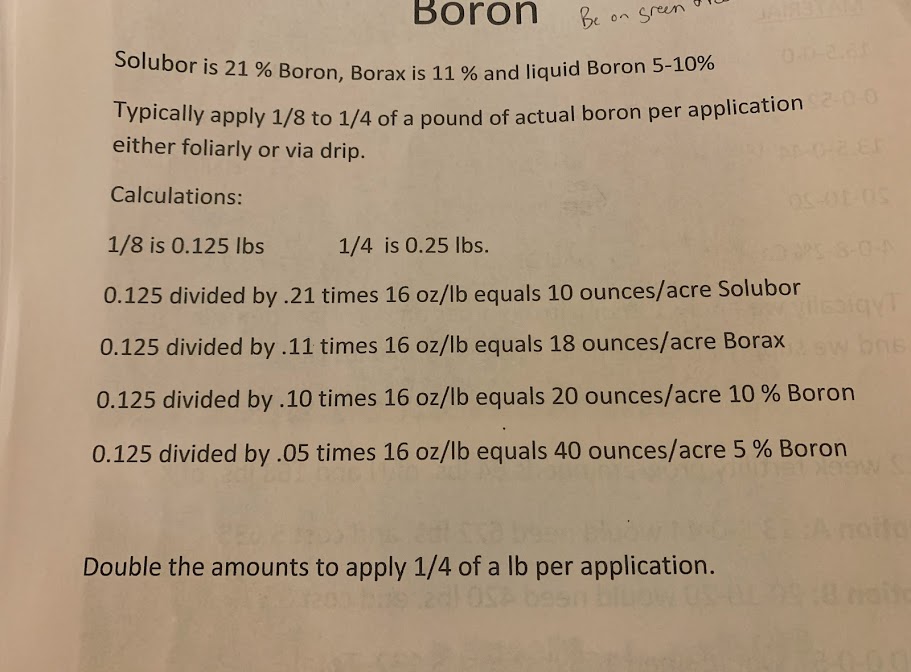
Zack Snipes reports, “I haven’t been out in the fields lately due to all of the rain. Hopefully, it will dry out some this week as we really need some bluebird sky days. If and when you are able to get out in the strawberry fields, it is time to put out boron. Boron helps with flower and fruit development. If you miss this application you will have lots of “bull nose” fruit in a few weeks. We recommend 1/8 lb of actual boron. Please see the picture for calculations of different products. Be extremely careful with mixing, calibrating, and applying boron, as boron is a great herbicide if overapplied. Boron can be sprayed or run through the drip system.”
Be sure to put out the correct amount of boron. Photo from Zack Snipes.
Midlands
Justin Ballew reports, “It’s been raining a lot since Thursday (2/11) here in the midlands. The soil is saturated in some of the less sandy areas and it will be a while before fields are dry enough to work. Sandier areas likely won’t be delayed much. Before the rain came, folks were harvesting some nice looking greens, though I am seeing some diseases pop up in places. Strawberries are still coming along. I know of one fairly large grower that has already started protecting blooms. More will probably start soon.”
Good looking mustard ready for picking. Photo from Justin Ballew.
Sarah Scott reports, “It has been extremely wet throughout Aiken and Edgefield Counties the past week, making field work challenging. In peach orchards, we are continuing to prune and trying to get out dormant oil applications and copper. It appears there is a shortage of Captan this year. There are alternatives for use during bloom as well as at petal fall, just something to look into if you usually use this product. You can read about some alternatives here https://site.extension.uga.edu/peaches/2021/02/captan-shortage/. Again, it looks like we will have plenty of chill hours for the crop this year with Musser Farm sitting at over 1000 and around 950 hours in Johnston.”
Clemson Extension agents provide updates in the The South Carolina Grower this week about the status of various crops being produced throughout the state.
Weekly Field Update-2/8/21
Statewide
Dr. Matt Cutulle reports, “With the cold temperatures we have been consistently having, it might be good to use Prefar or Dacthal for PRE herbicides instead of Treflan in new collard plantings to avoid injury.”
Midlands
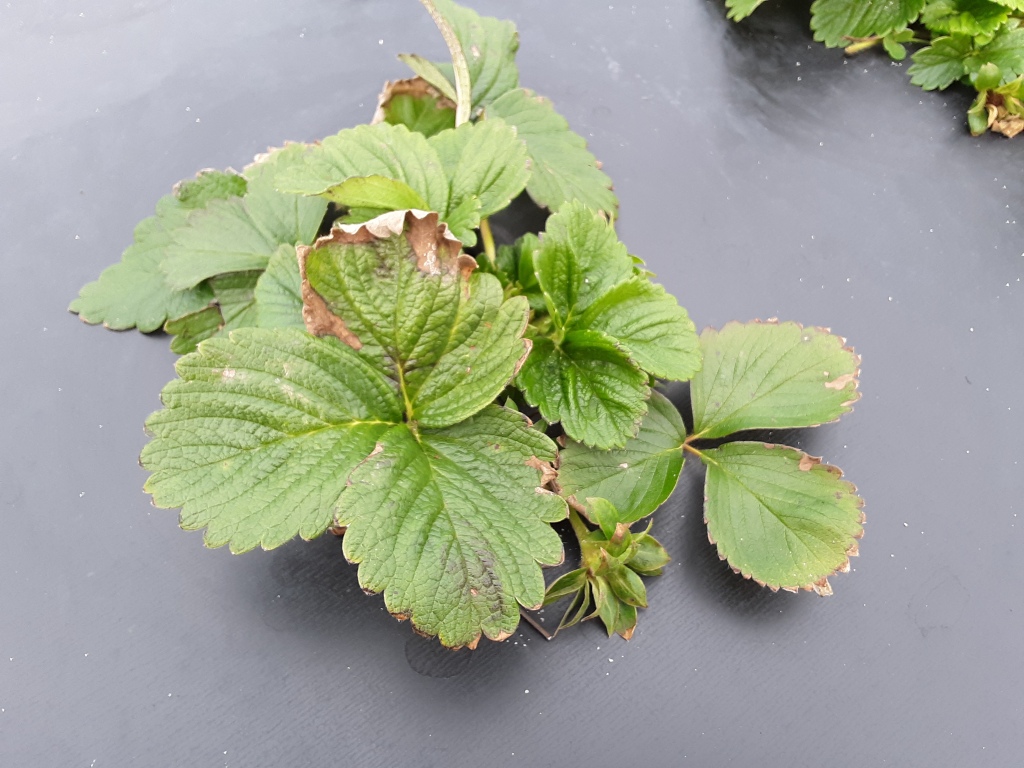
Justin Ballew reports, “Last week was pretty cool and it looks like this week will be about the same. Things are a little slow in the fields, but folks are preparing land for spring plantings and harvesting a little mustard, collards, and herbs. Strawberry growers are still working on sanitizing. Now is also a good time to make sure drip systems are hooked up and ready to go when it’s time to start fertigating. Deer are still wearing out the plants in some fields. Temporary deer fences aren’t that expensive and they can pay for themselves by preventing the degree of damage seen in the photo below.”
This picture was taken last Thursday (2/4). After 3 and a half months in the ground, these plants should be significantly larger, but the deer are wearing them out. A fence should have been used here. Photo from Justin Ballew.Busted feeding on strawberry leaves. Photo from Justin Ballew.
Upstate
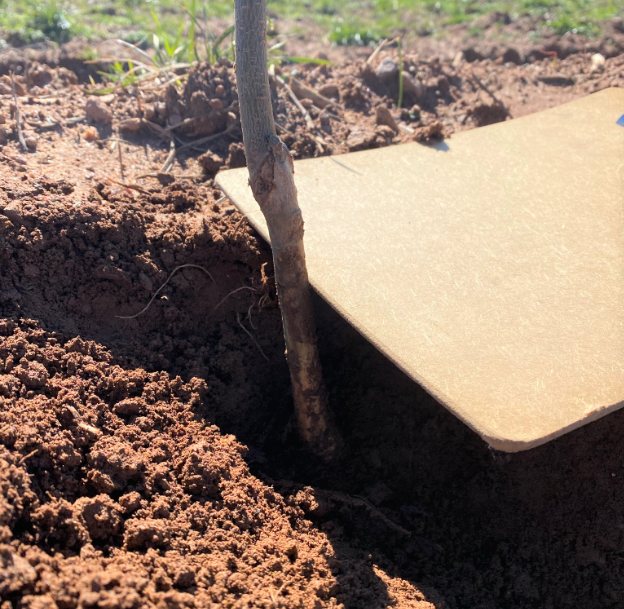
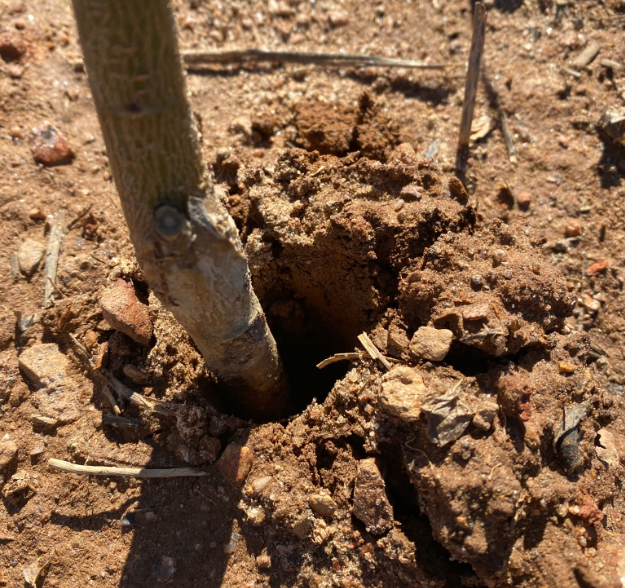
Andy Rollins reports, “We are still in the middle of establishing new peach orchards and inspecting strawberry plantings. I met with new and experienced growers and want to point out most common mistake made. Strawberry wise, I found mites on only one farm growing chandler plugs. Some of the mites were still in diapause (hibernation) and will be orangeish in color, but there were plenty of active adults and eggs out as well on that farm. Expensive miticides are not effective if mites are not present. The most common mistake made in planting peaches is planting them too deep. To look at the picture below, you wouldn’t think anything was wrong, but the first main root is actually about 4 inches too deep. Please make sure when you are finished planting that the first main root is within the top inch of the soil. An easy way to tell they are too deep is if they have created a hole around the stem from wind movement. Anywhere you are growing in heavier clay soil this becomes even more important. We are still spraying oil and copper on peaches and probably will continue till bloom.”
This peach tree was planted about 4 inches too deep. Photo from Andy Rollins.If trees are planted too deep they will create a hole in the soil around them as they move in the wind. Photo from Andy Rollins.
Clemson Extension agents provide updates in the The South Carolina Grower this week about the status of various crops being produced throughout the state.
Weekly Field Update-2/01/21
Coastal
Rob Last reports, “Strawberry crops are developing well, however, we are seeing gray mold phomopsis blight in forward crops. Sanitation can really help prevent botrytis spread as we move forward when allied to fungicide applications. Keep scouting for spider mites, as there are active populations in some crops. Now is a great time of year to think about maintenance of equipment, be that for bed formation, cultivation for spring crops, and most important application equipment.”
Zachary Boone Snipes reports, “I feel like Forrest Gump describing the weather as of late. “One day it started raining, and it didn’t stop for four months.” We are extremely wet in the Lowcountry which is delaying a lot of ground prep for the upcoming season. Stay out of the fields if they are wet, as equipment will compact soil and make matters worse than they already are. This is the perfect time of year to order and stock up on pesticides, fertilizers, seeds, calibrate sprayers, clean ditches, sharpen tools, clean packing sheds, etc. Preventative maintenance and getting prepared for the upcoming season will lead to less stress and better management decisions down the road. This would also be a great time to explore all the links that lead to resources on SCGrower.com as well as to curl up with your Southeast Vegetable Crop Handbook.”
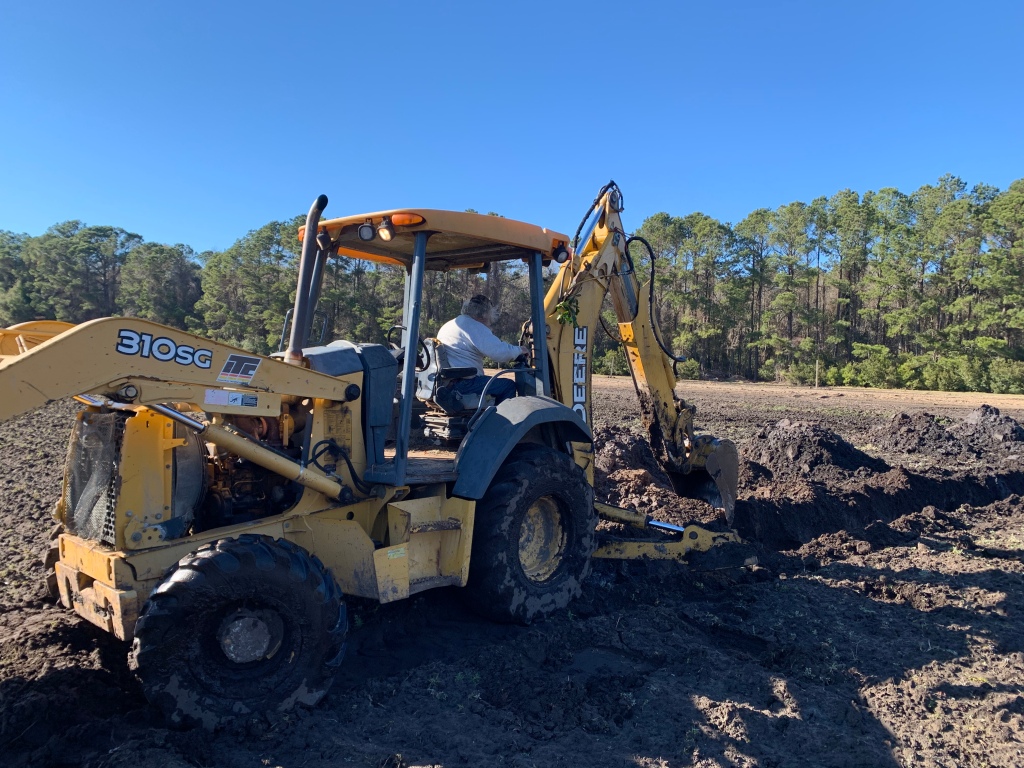
French drains are being installed in lower lying areas of some fields. Photo from Zachary Boone Snipes.
Midlands
Justin Ballew reports, “The weather was a little warmer for most of the past week, and we received a little more rain. The strawberry fields I’ve looked at in the past week averaged 3 to 4 crowns. Growers have been working on sanitizing dead leaves and flower buds from their fields to keep botrytis inoculum down. I’ve gotten a couple calls recently about whether it’s time to start protecting blooms. It’s still a little early in my opinion. Remember, there is about a 4-week time span from bloom to ripe berry, so saving blooms now would have people picking around the first of March. I’m not seeing enough blooms out there right now to make saving them worthwhile. I would rather let the plants grow for a few more weeks.”
These plants were recently sanitized and are looking good. It would be best give them a few more weeks to grow before protecting blooms. Photo from Justin Ballew.
Sarah Scott reports, “As of this morning at Musser Farm, we are reporting 850 chilling hours and 50 chill portions. In Johnston, we are sitting at 788 chilling hours and 46 chill portions. Chilling hours are measured between temperatures of 32-45 for this calculation.”
Upstate
Kerrie Roach reports, “Heavy rains over the last week have put a significant damper on any field prep and planting for early season vegetables in the upstate. Pruning tree fruits is in full swing, and chilling hours are on track.”
Clemson Extension agents provide updates in the The South Carolina Grower this week about the status of various crops being produced throughout the state.
Rob Last reports, “Strawberry crops in the area are looking good with good crown development. We are seeing open flowers and some fruit set based on warmer conditions. These crops are cause for some concern as we are likely to see damage from forecast cold snaps. There is evidence of botrytis (gray mold) in crops on cold damaged flowers and fruit. Sanitation can really help to mitigate the spread of the disease. Spider mites remain active and in places are requiring treatment. Remember to avoid pyrethroids for mite control as these can flare mite populations.”
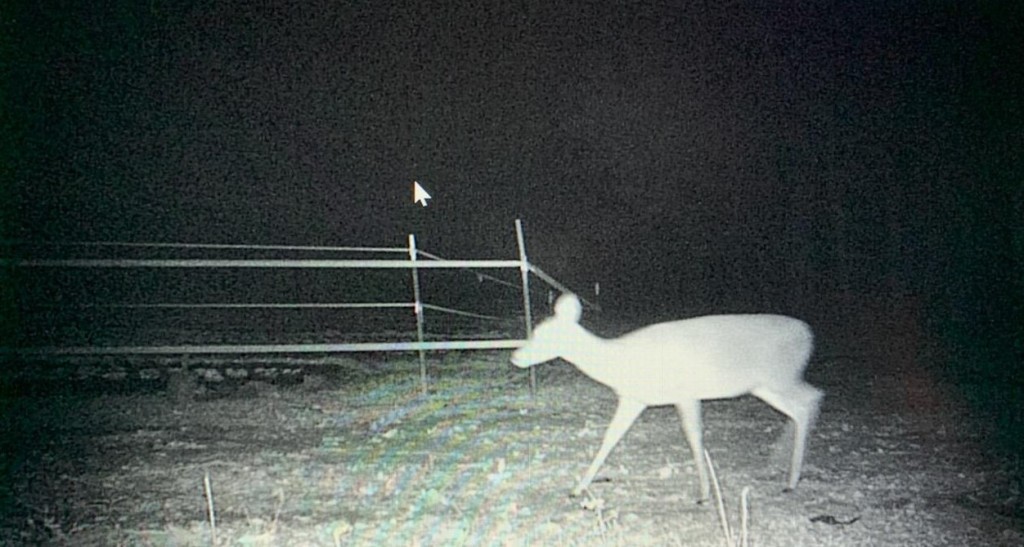
Zack Snipes reports, “The three components of the disease triangle are a conducive environment, the host plant present and a virulent pathogen. With that being said; it has been pretty wet as of late. We have warmer weather coming this week, and I have seen pathogens in our fields. I fully expect some diseases to really take hold and start to spread this week. For strawberries, make sure to clean dead tissue (leaves, blooms, fruit, etc) and for other crops removal of dead tissue and a preventative fungicide application (conventional or organic) can really help you get ahead of the fight against diseases. Also, my pet peeve…get your deer fences up!!!! This is the time of year that deer run out of food (and corn piles) and will meander into your strawberries and eat thousands of dollars’ worth of profits.”
The two-tiered fencing system, like the one shown in this trail cam photo, will keep curious deer out of your fields. Deer Fencing. Photo from Zack Snipes.
Midlands
Justin Ballew reports, “This past week was a little warmer and more sunny, but not by much. Crops are still growing slowly as a result. I’m seeing a lot of deer damage in strawberry fields that border the woods. Nothing reduces yield potential in strawberries faster than deer. Once they start nibbling leaves off, those plants will always be behind and they’ll never yield the same as a healthy, undamaged plant. Keep in mind that wildlife in the field is also a significant food safety risk. Once we get into bloom, this will become a major concern. Fencing is the most effective means of keeping deer out of the field. Fencing doesn’t have to be expensive or permanent. Check out this publication.”
Look at all those stems where leaves used to be. The deer have set these plants way back and they will never catch up. Photo from Justin Ballew.
Sarah Scott reports, “New plantings of peach trees are going in along the Ridge. A weather station went up in Johnston at one of our variety trials this past fall, and we are watching to see chilling hours accumulated. Currently, we are at 714 chill hours and 43 chill portions, looking at temperatures between 32 and 45 degrees. The upstate at the Musser location is sitting at 773 chill hours and 46 chill portions. It’s looking like we will have no problem meeting all of our chilling requirements for the season.”
Pee Dee
Tony Melton reports, “I keep finding more strawberry fields with spidermites. Some fields are damaged or devastated by deer. If you ever let deer get a taste of strawberry plants it is very difficult or almost impossible to stop them.”
Upstate
Andy Rollins reports, “Strawberry plants are doing well in the upstate of SC. Some plants are smaller than others mainly due to planting time. Growers need to look for uneven growth within a field which can be an indication of root rot. Also, some growers are spraying Rovral because of early dead blooms producing excessively high amounts of grey mold. Some are using it with Captan; others with Thiram. Thiram would give some deer deterrence. Growers need to be very careful with covers this time of year. They can force even more unwanted early blooms. Remember 18 degrees hurts crown; 30 degrees kill blooms. So, we are still in the protect plant time, not the protect bloom time. There are several farms planting peach trees now and still others finishing ground preparations. We also have a new pecan farm whose trees I was able to inspect and help with last minute details before planting this week. I hope and pray all of you stay safe amid the COVID-19 pressure around us. The loss of a farming friend and leader of men, Mr. Ervin Lineberger, will be greatly missed.”
Strawberries are looking good in the Upstate. Photo from Andy Rollins.Strawberries are looking good in the upstate. Photo from Andy Rollins.
Clemson Extension agents provide updates in the The South Carolina Grower this week about the status of various crops being produced throughout the state.
Weekly Field Update
Statewide
Dr. Matt Cutulle reports, “Burndown herbicide efficacy can be reduced in colder weather, especially systemic products such as glyphosate (Reduced translocation in the cold means herbicide does not move through the plant as much). A contact herbicide like Gamoxone is not significantly impacted by cold weather, thus it might be a good option to use on medium to small weeds. If you have to use glyphosate make sure that the formulation is loaded with a non-ionic surfactant (NIS) and then add 2.5% Ammonium Sulfate (AMS). If the glyphosate formulation is not loaded with NIS, added an NIS product (should contain at last 90% active ingredient) such as Induce at 0.25% (quarter of 1%) in the tank mix.”
Coastal
Zack Snipes reports, “Now is the perfect time to gear up for the upcoming season with preventative maintenance on sprayers and tractors. Proper spray coverage is absolutely essential when spraying expensive pesticides and nutrients. Why would you buy a jug of pesticide for $800 and not have it properly applied? I was at a farm last week working on a spray trial and we took a few hours to clean out screens, filters, and orifices in the sprayer. The sprayer I was working on had 5 out of 10 nozzles completely clogged and corroded. We would only get half or less coverage since the nozzles were so clogged. Once we cleaned everything, we needed to recalibrate our sprayer since we were actually putting out product through all of the nozzles. Take the time and get things ready for the year.”
Proper spray coverage on a nice looking crop of strawberries. Photo from Zack Snipes.
Midlands
Justin Ballew reports, “Last week stayed pretty cool (high temps in the 50s), wet and cloudy. Crops aren’t growing very fast right now. We still have a few greens being harvested, but we’ve slowed down from the New Years rush. Most of the strawberries I’ve looked at are still around the 2-to-3 crown stage. We’re seeing some aphids here and there, but those are rarely anything to be concerned about. Instead, keep checking for mites. Spider mites are active when daytime temperatures are over 50 degrees, so even though it’s chilly to us, they’re active for most of the winter. Fields planted adjacent to tomatoes back in the fall need to be scouted especially well.”
Great stand of rye between the rows of this strawberry field. This will help tremendously with weed suppression. Photo from Justin Ballew.
Pee Dee
Bruce McLean reports, “Be sure to get out and scout your strawberries. Starting to see a fair amount of Phomopsis in the fields. Captan will give some control, but Rally is a better option. Also, starting to see some Botrytis showing up on ripening fruit… that fruit that has been able to escape frost events and develop. Removal of infected fruit and dead leaves will help reduce pathogen when it comes time to flower and fruit. Across the northern portion of the Pee Dee the strawberry crop is pretty varied in development and appearance. Some plantings are well behind others. This is primarily due to the frequent and heavy rains since planting. Any plants that may have been set (even the least bit) low, experienced loose soil to be washed down around the crown, burying the crown too deep. With the crown being buried, the plants were either stunted or killed. Stunted plants can recover, but likely will not develop and yield properly come spring. Now is the time to begin winter pruning of blueberries, blackberries and muscadines… as well as many fruit trees. Proper winter pruning will go a long way towards improving yield, plant health, overall plant architecture and size management. Ideally, winter pruning for perennial fruiting plants should be performed between early January through early March.”
Botrytis already showing up on strawberries. Photo from Bruce McLean.
Tony Melton reports, “Wet, wet, wet. Badly need to start bedding for stale-bed-culture. Putting off bedding sweet potatoes until March. I have seen a lot of spider mites on strawberries and started to spray to get them under control. However, too wet to get tractor in fields, so many farmers are using backpack mist sprayers to get job done.”
Clemson Extension agents provide updates in the The South Carolina Grower this week about the status of various crops being produced throughout the state.
Weekly Field Update
Coastal
Rob Last reports, “Vegetable crops are growing out of the impacts of frost well. There is active Alternaria in places on brassica crops. Insect activity in vegetable crops in the area remains low. Strawberry crops are moving well with a few spider mites and aphids being observed. Remember if mite treatment is needed, use a specific miticide to target the pest to avoid flaring populations. If you need a second pair of eyes to help scout then please give me a shout.”
Zack Snipes reports, “I’ve been getting a good many calls about strawberries in recent weeks. The warm weather has really pushed our berries, perhaps too far along for this time of year. I know of a couple of farms that are already harvesting which I’m not sure is a great thing this early in the season. Most fields look good with great growth but we only have a few crowns for each plant. Hopefully some cool weather will come in and slow them down. Make sure to sanitize the plants by removing all dead tissue and put out a preventative spray once you are done sanitizing. Good preventative sanitation right now can do wonders for disease management later in the season. Now is a good time to manage weeds before they get too large. And while I am at it…now is the perfect time to get ready for the season by checking sprayers, getting fertigation systems set up and calibrated, and purchasing pesticides you know you will need for the season.”
A sanitized plant and the dead and diseased tissue that came off of it. This needs to be taken out of the field and disposed of. Photo from Zack Snipes.Corn spurry is a weed that needs to be managed now before it is too late. Photo from Zack Snipes.
Midlands
Justin Ballew reports, “The weather has remained cool, so everything is growing pretty slowly. We had another very rainy day last week, and we got a little over 2 inches at my house. That’s over 6 inches for me so far in 2021, and I’ve had some folks tell me they’ve gotten over 8. We are seeing some cold damage to strawberry foliage, but nothing to worry about long term. Just make sure to sanitize any dead leaves and flowers as the temperatures warm in the spring. I’ve already seen some Botrytis develop on dead flowers, so we definitely need to remove these sources of disease inoculum. I’m counting 2 to 3 crowns per plant right now. If you’re behind that, it may be helpful to put row covers on for a couple weeks. Just scout for spider mites carefully first.”
Cold damage around the margins of strawberry leaves from the hard freeze right after Christmas. It didn’t get cold enough to damage the crowns. Photo from Justin BallewThis bloom was killed by cold weather. It’s difficult to see here, but there are already a few botrytis spores developing on the flower. If not sanitized, this could become a significant source of inoculum. Photo from Justin Ballew.
Pee Dee
Tony Melton reports, “Cold hurt green winter strawberries more than ripe ones due to increased sugar in ripe ones. Still got some squash producing in high tunnels if covered inside tunnel with row covers. We’re bedding green fields to allow weeds to germinate so they can be killed using stale-bed culture.”
Photo by Clint Thompson/Shows Madeline Dowling, a Clemson student, makes a presentation about the MyIPM App.
This year’s virtual Southeast Regional Fruit and Vegetable Conference ends today with hopes of returning to an in-person format in 2022.
Charles Hall, Executive Director of the Georgia Fruit and Vegetable Growers Association, believes the educational sessions that were offered over the course of the three-day event are invaluable for producers this year and moving forward in upcoming growing seasons. More importantly, those educational sessions will be available for viewing even after the conference concludes.
“One of the keys of the Southeast Regional Conference is education. We still had over 100 hours of education that is being offered. The good thing about it is that education continues until April 30. If people missed a class, they want to go back and listen to that instruction again, it’s going to be there on the (virtual) platform,” Hall said.
“People can go back if they’ve registered for the conference, or if they wanted to register after the conference. Somebody that didn’t get to be on the conference this week, they can still register and go back and have the livestreaming of those sessions.”
This week’s conference was changed to a virtual format amid COVID-19 concerns.
According to The South Carolina Grower, the USDA is accepting applications for Value Added Producer Grants. The applications are due by March 22, 2021. Click below for the application templates:
According to the application, “The purpose of the Value-Added Producer Grant (VAPG) Program is to help U.S. agricultural producers enter into value-added activities. Awards may be made for either economic planning or working capital activities related to the processing and/or marketing of valued-added agricultural products. The maximum grant amount for a planning grant is $75,000 and the maximum grant amount for a working capital grant is $250,000.”
Kyle Player of the SCDA ACRE program has planned a Value Added Producer Grant Webinar for Jan. 7, 2021 from 3-4 pm. This will be a great webinar for learning about eligibility and applying for the grant. Click on the flier below for more information.
Clemson Extension agents provide updates in the The South Carolina Grower this week about the status of various crops being produced throughout the state.
Happy New Year! We hope everyone had a great holiday season and is off to a good start in 2021. We have several virtual grower meetings coming up over the next two months, so keep an eye on the “Upcoming Events” page for info. Also, don’t forget the Southeastern Regional Fruit and Vegetable conference kicks off virtually this week and it’s not too late to register.
Coastal
Rob Last reports, “Firstly, I would like to wish everyone a happy ,and successful 2021. Crops in the area have slowed down with the cooler weather, and we are seeing a reduction in caterpillar activity. Strawberries look good, however, it would be advisable in advanced crops to remove any flowers to reduce the botrytis pressure later in the season. Winter vegetables are looking very good with low levels of Alternaria leaf spot in some crops. If in doubt scout.
Zack Snipes reports, “One of my New Year’s Resolutions this year is to be more proactive rather than reactive. I would like to extend that mentality to my field work as well. This year I really want to help growers nip problems in the bud before they become problems. Weekly calls, texts, check-ups, and regular visits can help both of us achieve our goals. Give me a shout in 2021.”
Let’s work together before this happens. Photo from Zack Snipes.
Midlands
Justin Ballew reports, “We’ve had a lot of rain to start off the new year. A day or so after Christmas we saw temperatures down in the low 20’s and ended up with some cold damage on greens. They should grow out of it just fine. Strawberries are coming along. We are seeing spider mites build up in places, requiring treatment. Keep scouting regularly, even though it’s cool outside. Let me know if you need a second pair of eyes. On another note, I noticed daffodils starting to come up in my yard a few days before Christmas. Can’t ever remember seeing them emerge that early.”
Cold damage on mustard greens from the recent dip into the low 20s. Photo from Justin Ballew.The view of spider mites on the underside of strawberry leaf through a 10X hand lens. Photo from Justin Ballew.
Sarah Scott reports, “Field preparation for new peach tree plantings is underway along the Ridge. Some growers are using a plow to make berms to plant trees on to aid in disease management issues such as armillaria root rot. Lots of rain in the past week has made for muddy conditions.”
Freshly plowed peach field with berms for planting. Photo from Sarah Scott.
Pee Dee
Tony Melton reports, “Very few greens undamaged after the cold if they weren’t either covered or protected in some way. Strawberries are doing well. I hope there is not, and I have not seen any cold damage of the crowns in the Pee Dee. I had one account where coyotes were biting through the row-covers to eat ripe strawberries.”
COLUMBIA — The South Carolina Department of Agriculture (SCDA) will accept applications for hemp farming permits for the 2021 growing season from Jan. 1 through Feb. 28, 2021.
The state’s Hemp Farming Program has grown from 20 farmers in 2018 to 265 farmers in 2020 – and each year, the program has changed as state and federal laws changed. When the federal government approved South Carolina’s State Hemp Plan in April 2020, the program entered a new period of regulatory stability, one that SCDA expects to continue in 2021. The agency now has six full-time staffers devoted to hemp regulation.
Requirements to receive a hemp farming permit include:
Proof of South Carolina residency
Criminal background check (A new check is required each permit year.)
FSA (Farm Service Agency) farm number
$100 nonrefundable application fee and $1,000 permit fee
GPS coordinates of all locations on which hemp will be grown
Submitting application and all required materials by the February 28, 2021 deadline
Attending an SCDA orientation and signing a Hemp Farming Agreement before possessing any hemp, including clones and seeds
Online Portal
All farmers must apply through SCDA’s online portal at agriculture.sc.gov/hemp. There are no paper or printable applications. Because it may take several weeks for farmers to obtain FSA farm numbers and background checks, applicants should review requirements and begin the process as soon as possible.
Permits are only good for the current year, so 2020 permit holders who wish to farm in 2021 must apply for a new permit. SCDA will not award a 2020 farmer a 2021 permit unless he or she has reported his or her 2020 hemp acreage to the FSA by the 2021 application deadline.
SCDA is tasked with regulating hemp farming. At present, our agency cannot provide training, information or grants for growing or processing hemp. Those with questions about hemp farming practices should contact their Clemson Cooperative Extension agent.