Category: South Carolina

  • Weekly Update: Clemson Extension Agents Provide Crop Updates

    Clemson Extension agents provide updates in the The South Carolina Grower this week about the status of various crops being produced throughout the state.

    Weekly Field Update-4/12/21

    Statewide

    Dr. Matt Cutulle reports, “I am starting to see some goosegrass popping due to soil temperatures being 65 degrees Fahrenheit. Goosegrass will typically be problematic in more compacted areas of the field. In most broadleaf crops, a Select or Poast post-emergent application will control emerged goosegrass. PRE-herbicide options include Curbit and Dual Magnum (If crop is labeled). In rice, it is important to remember that Quinclorac products will kill crabgrass but not goosegrass. The best rice product that will control goosegrass effectively in SC is Clincher.”

    Coastal

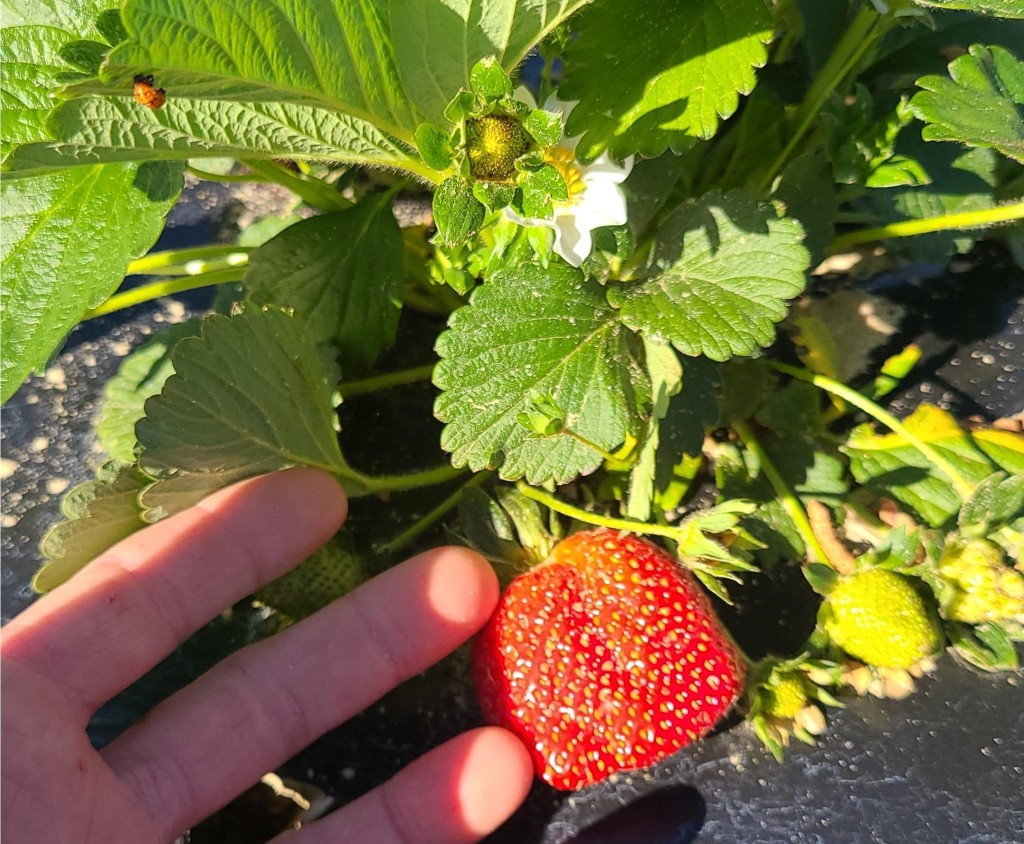
    Rob Last reports, “Crops are generally doing well in the area, with strawberries coming off with good volumes. On the whole, row covers or icing protected 97% of the susceptible flowers leading to 1% to 2% losses of flowers. The damaged flowers can increase grey mold pressure in the crops so maintaining both sanitation and fungicide applications to strawberries will be crucial. As berries ripen, sanitation also becomes essential for reducing pest pressure from sap beetles. In some crops, where row covers were utilized, we see spider mite populations increasing and a few active thrips feeding on both flowers and berries. Other fruit crops in the area, such as blackberries and blueberries, look very good with low levels of damage from the freeze event last weekend. Peaches in the area are being thinned, with scouting being maintained for scale and plum curculio. Early planted watermelons did suffer from the frost in places, leading to 10% to 15% plant loss and hence the need to replant in a few areas. Other crops are moving slowly away from the injuries. Luckily, a lot of crops were not beginning to vine and survived the worst of the damage. These plants are stressed, so care will be needed with any applications as well as scouting for pest and disease issues. Conversely, cantaloupes in the area were direct seeded and have survived unscathed.”

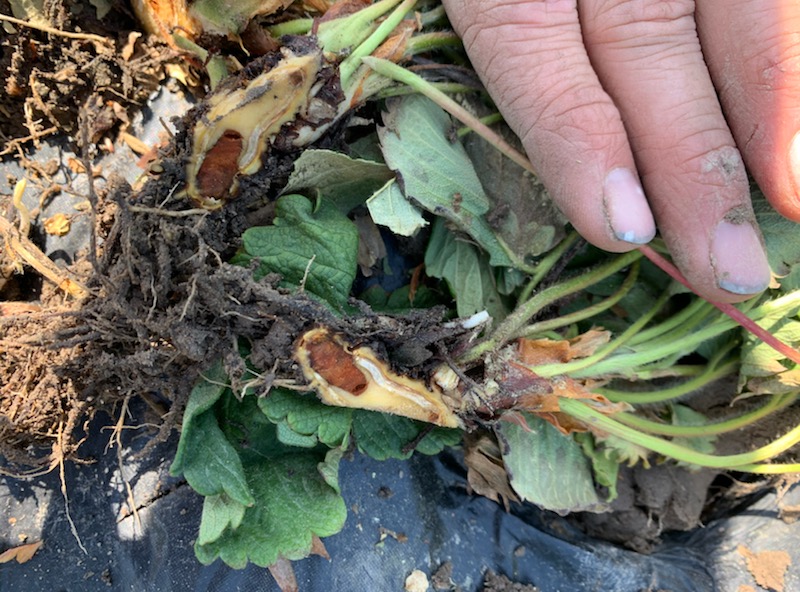
    Zack Snipes reports, “I was out and about last week as things are moving rather quickly in the fields. Spider mites are alive and active in every strawberry patch that I was in last week. You will see the translucent mite with two distinct spots as well as a reddish colored mite. The reddish colored mite is actually a two-spotted spider mite. We see this red form early in the season. Get out and scout, as the weather is perfect for them. I am also seeing strawberry plants wilting down and dying. If you cut the crown you will see a brown/red rot in the center of the crown. Send these plants off for diagnosis. Most of what I have seen has been Phytophthora. We lost some cucurbit crops to the frost last weekend, but some areas had no damage at all or slight damage. For some positive news, we are cutting some beautiful broccoli right now.”
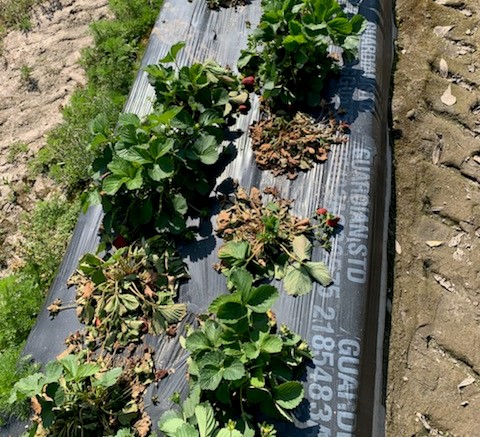
    Lower lying areas of fields or areas where the drip tape was nicked is where I am seeing some root rot issues. Photo from Zack Snipes.
    Cutting the crown of wilting strawberry plants can help detect the pathogen responsible.  Sending off to the lab is the only way to get a 100% diagnosis of the problem. Photo from Zack Snipes.

    Midlands

    Justin Ballew reports, “Strawberry picking started on a wider scale this past week. This conveniently coincided with spring break for a lot of the public schools in our area, so U-pick operations have been busy. The weather was very mild last week, so everything is looking great. Spider mite and grey mold activity seems to be very low. There are a few thrips in certain places, so that’s something we need to keep an eye on. Brassicas are growing well. Caterpillar populations are still pretty low in most spring planted crops. There was a little injury to sweet corn from the recent frosts, but we expect the plants to grow out of it. Sweet corn’s growing point is underground until the 6 leaf stage. Since pretty much all the sweet corn was at the 3 leaf stage or younger, the growing points were protected and the damage is just superficial.”
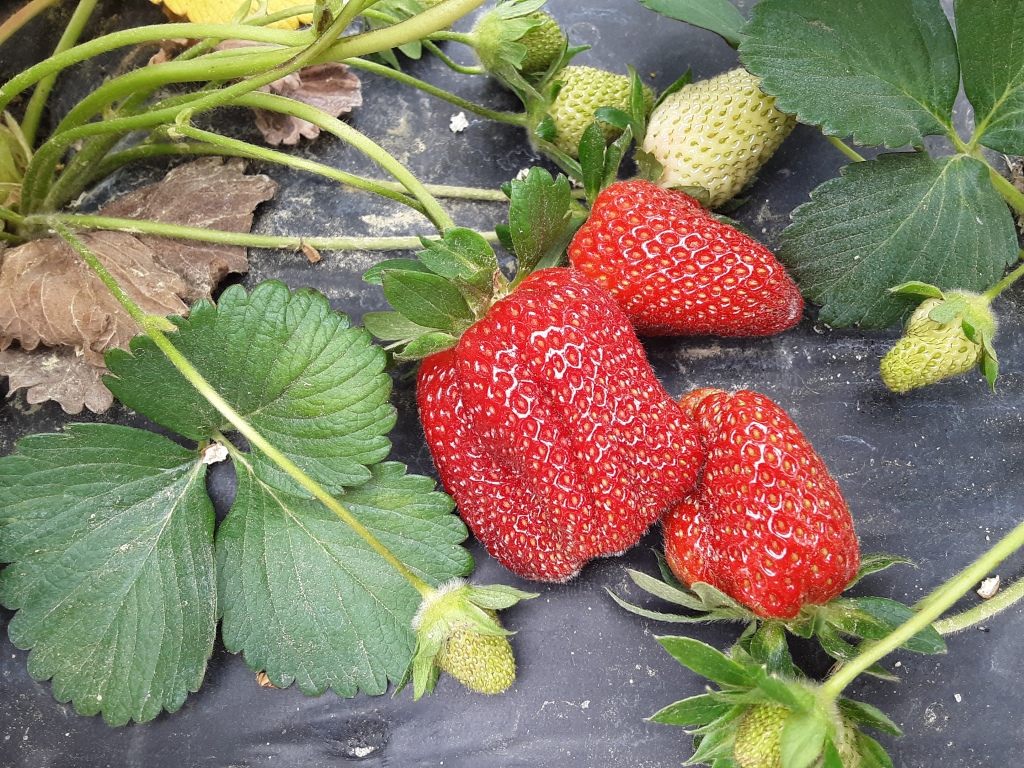
    Strawberry season has finally arrived in the Midlands. Photo from Justin Ballew.

    Sarah Scott reports, “We are still assessing peach crop damage from freeze events happening between April 1 and April 3. It looks like anywhere from 1/4 to 1/3 of fruitlets were damaged by the cold event, but with no additional damage we should still be on track for a good crop this year. Strawberries were delayed a bit from the cold but are recovering nicely. Planting continues for crops like kale and other spring greens.”
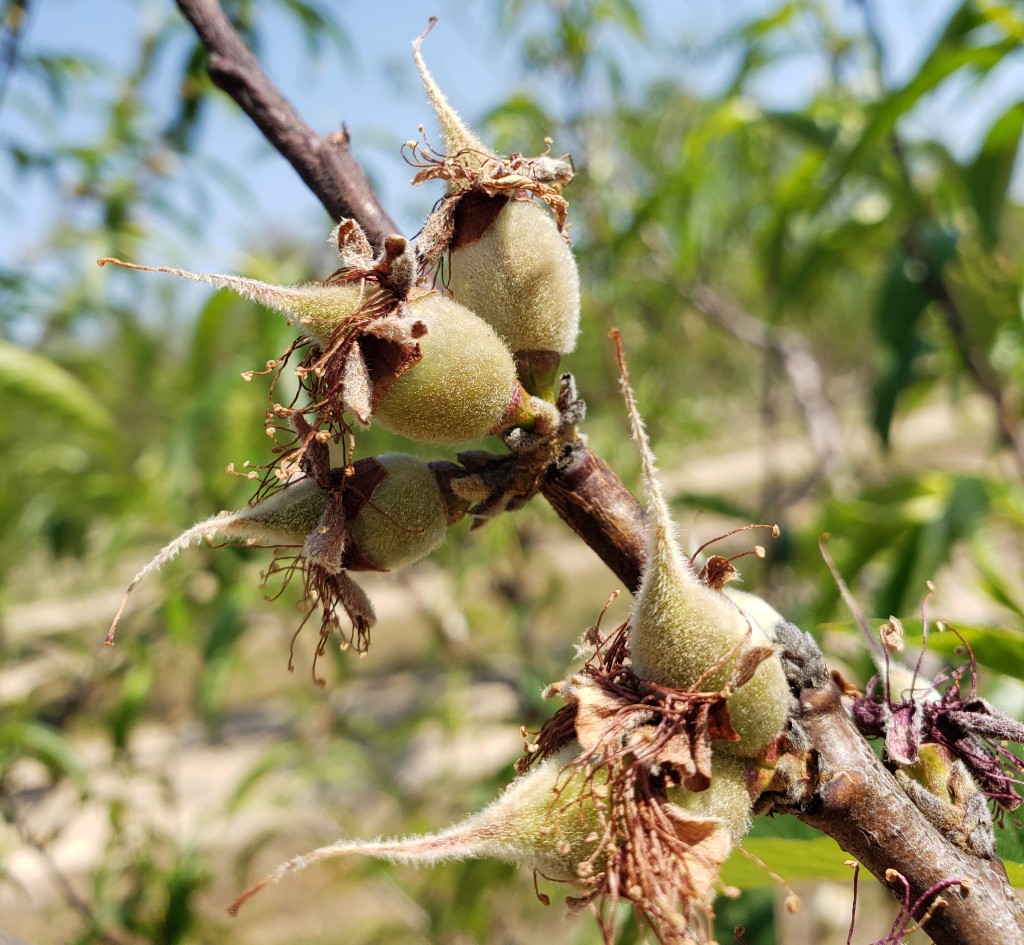
    Peach fruitlets at shuck off. Photo from Sarah Scott.

    Pee Dee

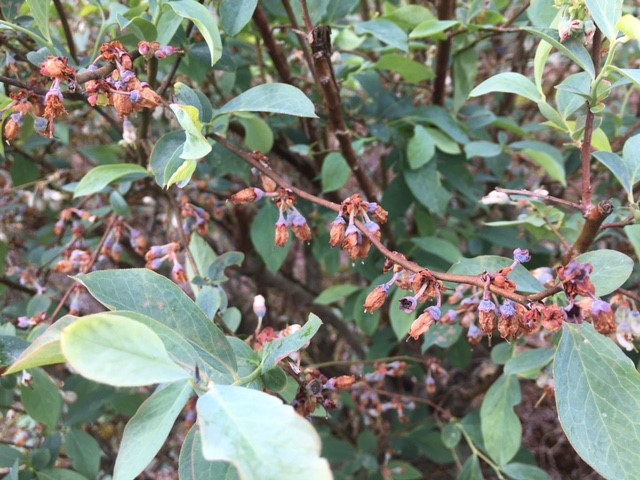
    Bruce McLean reports, “Strawberries are really starting to come off. The quality is very good, and the plants are in good health. Disease is relatively low, and spider mite activity is moderate. Damage was minimal from the freeze before Easter. We did see some damage on blueberries, though. Blueberries without frost protection (in especially cold locations) did see some significant injury to both early southern highbush and early rabbiteye cultivars. Injury of 80% was observed in Star and O’Neal (southern highbush) and Premier (rabbiteye). Blueberries with frost protection fared much better. This shows the importance of having well-designed frost protection if you are going to grow early-blooming cultivars. Muscadines, being at budbreak, did not show any significant injury. Farmers are taking advantage of this absolutely beautiful weather to plant vegetables. Sweet corn, peas, butterbeans, cucumbers, squash, melons, tomatoes, etc. are going in the ground as fast as they can. Blueberries are being planted now, too.
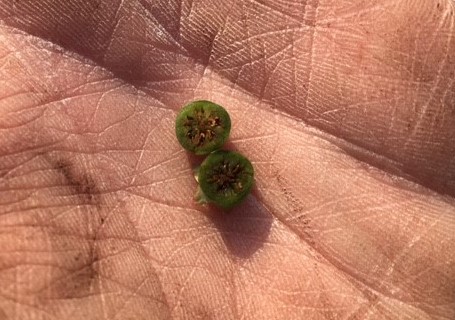
    Black and brown seed and tissue within the berry shows that the fruit was injured from the freeze and will not develop. Photo from Bruce McLean.
    Damage to early fruitlets on rabbiteye blueberry. Photo from Bruce McLean.

    Tony Melton reports, “Most strawberries are doing well and really starting to produce a lot of fruit. Cabbage is starting to head and is growing well. Brassica growers are applying products for diamondback moth and Sclerotinia. Some pickles are emerging and many acres will be planted this week. Some butterbeans are up, and more are being planted. We will start to plant peas this week. Cool temperatures slowed sweet potato slip growth a little, but most beds are covered with slips. Collards, turnips and kale are growing fast. Hundreds of acres of tomatoes and peppers are already planted. A few acres of watermelons and cantaloupes are planted, but our main market is after the 4th of July.”

  • South Carolina Farmers Excited for 2021 Growing Season

    COLUMBIA — Who wouldn’t love juicy red strawberries, sweet watermelons, refreshing cucumbers, ripe peaches, fresh butter beans or vibrant basil? It’s that time of year again in South Carolina. Specialty crop farmers are growing and harvesting fresh food to feed their communities across the state.

    Weathers

    “Our farmers worked hard to sustain us through the pandemic, and in 2021, I hope South Carolinians will show them some love,” said Commissioner of Agriculture Hugh Weathers. “You can support local farmers by choosing Certified South Carolina foods at the grocery store and farmers market and seeking out Fresh on the Menu restaurants.”

    “Everybody has a favorite preacher and mechanic, but they need to find their favorite farmer,” said Josh Johnson of Old Tyme Bean Co., an Elloree farmer and chair of the South Carolina Specialty Crop Growers Association.

    “When you support your local agricultural community, you’re not only investing in the future but providing yourself with nutritious food,” said LauraKate McAllister, executive director of the South Carolina Specialty Crop Growers Association.

    Specialty Crops

    Here are some of the specialty crops South Carolina farmers will harvest in the coming months:

    April: Arugula, Asparagus, Beets, Blueberries, Bok Choy, Cabbage, Carrots, Cilantro, Collards, Fennel, Kale, Kohlrabi, Leeks, Lettuces, Microgreens, Mushrooms, Mustard & Turnip Greens, Onions, Parsley, Peas (sugar/snap), Radishes, Rutabagas, Strawberries, Swiss Chard, Turnips

    May: Arugula, Asparagus, Basil, Beans (Snap/Pole), Beets, Blueberries, Bok Choy, Broccoli, Cabbage, Carrots, Cauliflower, Cilantro, Collards, Cucumbers, Fennel, Green Garlic, Kale, Kohlrabi, Leeks, Lettuces, Microgreens, Mushrooms, Mustard & Turnip Greens, Onions, Parsley, Peas (sugar/snap), Potatoes, Radishes, Rutabagas, Strawberries, Summer Squash, Sweet Corn, Swiss Chard, Turnips, Zucchini

    June: Basil, Beans (Snap/Pole), Blackberries, Blueberries, Bok Choy, Broccoli, Butter Beans, Cabbage, Cantaloupe, Carrots, Cilantro, Collards, Cucumbers, Edamame, Eggplant, Fennel, Garlic, Herbs, Kale, Kohlrabi, Microgreens, Mushrooms, Okra, Onions, Peaches, Peas (sugar/snap), Peppers, Plums, Radishes, Strawberries, Summer Squash, Sweet Corn, Swiss Chard, Tomatoes, Watermelon, Zucchini

    For more information on what’s in season, visit certifiedsc.com.

    Farmer Quotes

    Nathan Vanette, Growing Green Family Farms, Anderson: “COVID has hit all of us hard in unexpected ways. Knowing your farmer and the local agriculture community has become vital to nourishing our bodies while supporting the heart of community. There has been a breach in the knowledge of where food comes from. As a farmer, this has made telling our story all the more important as we work to bring you food with more nourishment, flavor and diversity.”

    Tim Rowe, Blue Sky Sunny Day Farm, Walterboro; and a board member of the South Carolina Specialty Crop Growers Association: “When you buy direct from a farmer, you are engaging in a time-honored tradition. Your support of local farmers provides you with seasonal vegetables grown in your area that are picked at the peak of flavor and ensures there will be farms in your community tomorrow.”

    Gregory Brown, Greenleaf Farms, Columbia: “Buying local means buying fresh, rather than worrying about how old it is or where it came from. Your money supports the local economy and not a far-off corporation.”

    Ron Robinson, Ron’s Roots, Summerville; and a board member of the South Carolina Specialty Crop Growers Association: “You can never really understand the meaning of ‘fresh’ until you have the opportunity to enjoy vegetables ripened on the vine. Please take the time to visit your local farmers market as these men and women love what they do and always try to ensure their customers’ satisfaction with the best taste and quality.”

  • Crops Update: Clemson Extension Agents Provide Updates Across State

    Clemson Extension agents provide updates in the The South Carolina Grower this week about the status of various crops being produced throughout the state.

    Weekly Field Update 4-5-21

    Coastal

    Zack Snipes reports, “Temperatures checked in at 28 degrees Fahrenheit at the northern end of Charleston County one night this past week. Strawberries were covered, but some blossoms are showing damage. The weather this week should really push berries and give us our first big flush of the season. Lots of acres of tomatoes are planted, and before the cold were looking pretty good. Time will tell how much the cold will slow them down. It has been very windy in the Lowcountry as well, which I think has slowed down development on some crops. Spring brassicas are looking great with very low worm pressure right now. That does not mean we should stop scouting. Populations can jump very quickly.”

    Tomatoes were looking okay before the cold nights. Photo from Zack Snipes.
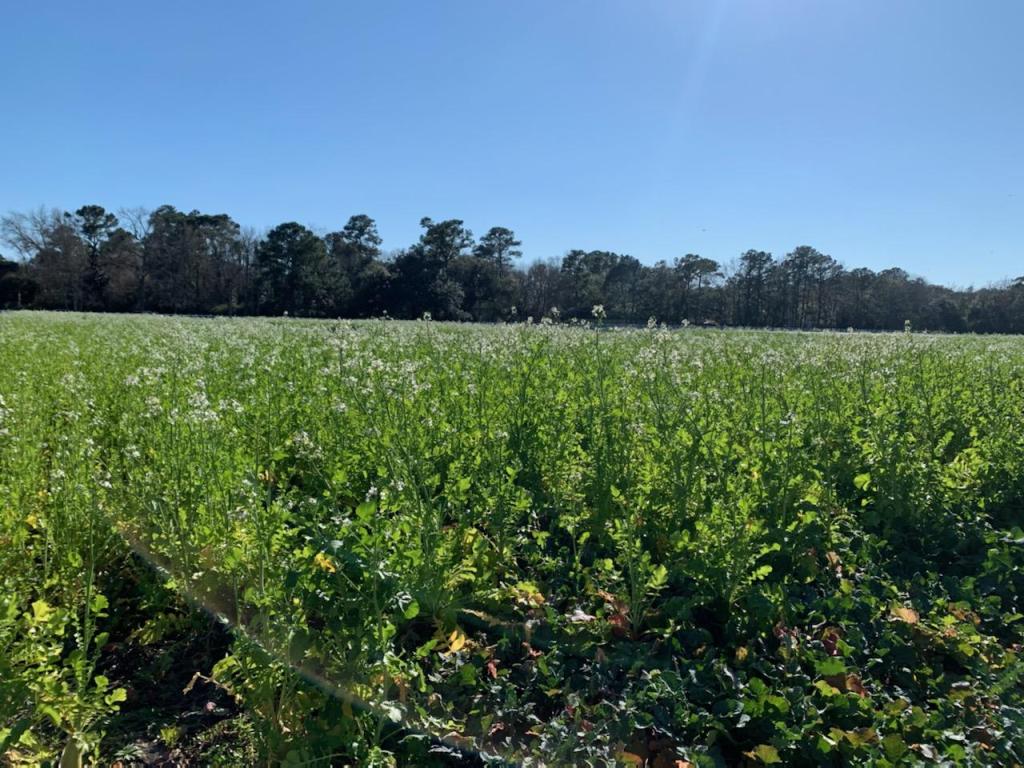
    A fall seeded brassica crop beside strawberries is blooming. The thought behind this cover crop is the early blooms will encourage beneficial insects that will prey on the early season thrips which have been causing lots of cosmetic damage on strawberries the past few years. Photo from Zack Snipes.

    Midlands

    Justin Ballew reports, “We had a couple of frosts late last week and the temperature got down to 30 degrees at my house. Growers covered their strawberry fields, so we don’t expect to see any damage there. We’re getting very close to picking on a larger scale. I’ve seen some nutrient deficiencies in a few strawberry fields, so be sure to tissue sample periodically and adjust fertigation accordingly. Now that we’re into April and the forecast looks warm, many growers will begin planting cucurbit crops this week. A few already had seed in the ground before the frost. The first plantings of sweet corn are up and growing well.”

    One of the first plantings of sweet corn is up and looking good. Photo from Justin Ballew.

    Pee Dee

    Tony Melton reports, “Still determining damage from frost. One grower had 40 acres of butterbeans emerging – sprayed with a frost control product. Sweet potatoes slips are up, covered with plastic, and beds are covered with slips (about a month out from planting). Cabbage is beginning to cup, head and touch in the rows. Asparagus was hurt by cold and most harvest is over. Starting to plant pickles, peppers and tomatoes. Picked all ripe fruit and sprayed for disease before frost – this coming weekend will be a good harvest for most growers.”

    Upstate

    Kerrie Roach reports, “With some very cold nights last week in the upstate, the apple and peach crops took a significant hit. With extreme differences in topography, each grower has different severities of loss, but the overall consensus is not great. It will be another week to tell for sure on the apples and a little over a week to tell on the peach crop with certainty. One orchard recorded a low of 25 degrees Fahrenheit on the first night and 26 degrees the following night. Night one was actually less damaging because of a persistent wind, where night two was calm and allowed the cold air to settle in. As we assess damages in the orchards, here is a great explanation of how it is done: https://extension.psu.edu/orchard-frost-assessing-fruit-bud-survival

  • South Carolina Crops: Clemson Extension Agents Provide Updates Across State

    Clemson Extension agents provide updates in the The South Carolina Grower this week about the status of various crops being produced throughout the state.

    Weekly Field Update

    Coastal

    Rob Last reports, “Strawberry crops continue to develop well with sustained flowering and fruit set. Early crops are ripening well with crops coming to market. Just a note of caution, the weather last week can be conducive to gray mold development, so fungicide programs are going to be key. Thrips are active in some crops too, so keep scouting. Melon transplants are going in the ground over the last week with development looking very promising. Peaches in the area are all but finished flowering with great fruit set. Finally, as we are looking at a cooler week for flowering fruit crops, keep an eye on the forecast temperatures to determine if protection is going to be required. Fruit and closed buds can tolerate cooler temperatures than flowers, but damaged flowers can increase gray mold development.”

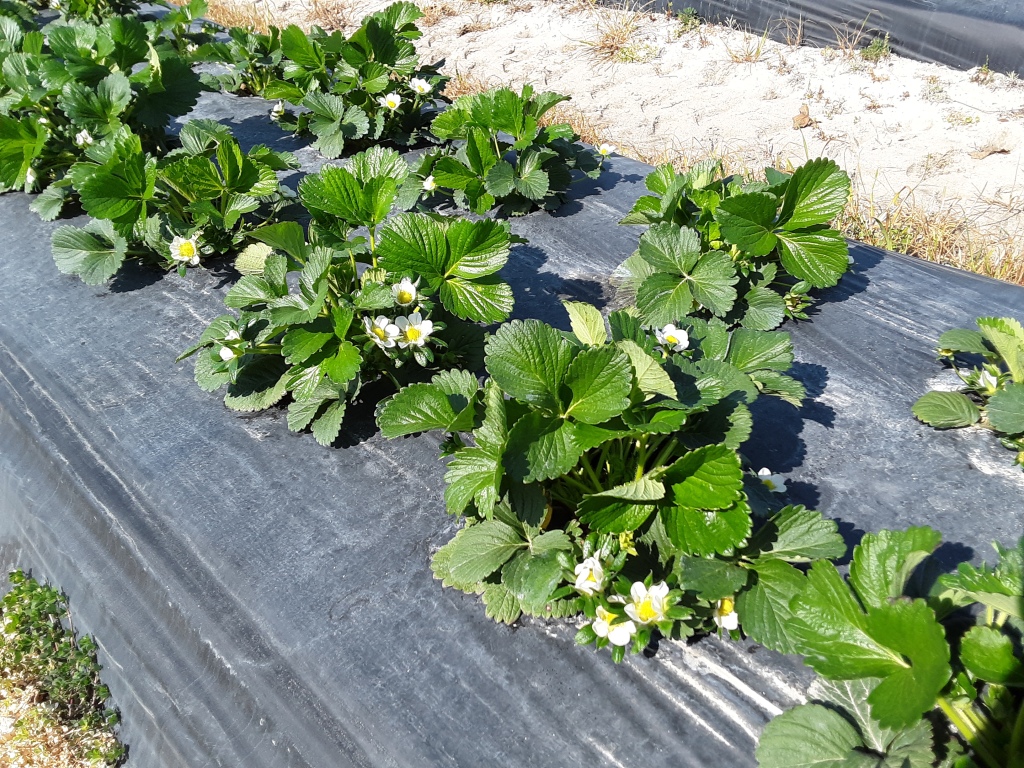
    Strawberries continue to develop well in the Coastal region. Photo from Rob Last.

    Zack Snipes reports, “We have had pretty good weather as of late and it has really made things jump here. Spring greens, onions, radishes, carrots and strawberries are really pushing out hard. I counted 57 green berries+flowers on one strawberry plant. If someone can beat that number, I will give you a Free Crop Handbook. The blueberry crop is looking great with a good fruit set on highbush varieties and tons of flowers right now on the rabbiteye types. We planted around 30 citrus trees on Friday as part of a Specialty Crop Block Grant. We have around 75 more to plant next year. All in all we will plant somewhere around 40 varieties with varying scion and rootstock combinations. We are looking at cold tolerance in both the lab and a field setting and monitoring for citrus greening. We will plant everything from kumquat to grapefruit to finger limes.

    Newly planted citrus trees at the Coastal REC this past week. Photo from Zack Snipes.

    Midlands

    Justin Ballew reports, “Last week was pretty cloudy, but we had a couple of beautiful days that reached the 80s. Though we’ve had a little bit of rain, the air has been thick with pine pollen. We’re seeing a few strawberries ripen, but we’re still not at the point where we can open the U-Picks. We’re running a little behind where we’ve been in the past few years, and I suspect all the cloudy weather we’ve had over the last month is partially to blame. I’m seeing a good bit of misshapen fruit, which is normal for the very first fruit that develop. This is usually related to pollination, but make sure you tissue sample to make sure boron levels are where they need to be. Watch out for the cool nights in the forecast later this week. We may need to cover. Spring planted brassica crops are looking good. Diamondback moths are showing up in places, especially near fields where a fall crop was grown through the winter, so be sure to destroy those fields once harvest is finished.”

    Misshapen fruit are pretty common early in the season. Its usually related to pollination, but can be a sign of low boron. Tissue sample to make sure boron levels are adequate. Photo from Justin Ballew.
    Spring planted brassicas are growing well and looking good. Photo from Justin Ballew.

    Sarah Scott reports, “Peaches are progressing quickly with small fruit forming on early varieties. Georgia has reported plum curculio activity in the middle part of the state, so orchards in the Ridge of SC can expect to see activity in about 2 weeks. Check the 2021 management guide for control options which include Imidan, Actara, Belay, and Avaunt. Strawberries farms are on track to begin picking regularly April 1. Spring greens are being transplanted as well.”

    Pee Dee

    Tony Melton reports, “Strawberries are ready to burst forth, and there are already some fruit on Ruby June. Working to protect strawberries and peaches later on this week. A lot of summer crops will be going into the ground after Easter. Pickle growers are biting at the bit.  Most greens are just emerging. Cabbage is enjoying the weather and getting to what I call the whirl stage so hope we have no damaging winds to wring them off. Sweet potatoes slips are just emerging on the beds.”

  • Clemson Extension Offers Tips for Tissue Sampling in Strawberries

    According to The South Carolina Grower, it is important for strawberry producers to tissue sample their crop now. This ensures an adequate supply of nutrients are available for the crop, which maximizes yield and quality of the fruit.

    Justin Ballew, Clemson Commercial Horticulture Agent, said the best method in tissue sampling is randomly select plants. These should be selected across the whole field.

    It’s important to pick off the youngest and fully expanded leaves. Those leaves usually have a more gloss look than others.

    Ballew stresses that farmers need to ensure they leave plenty of petioles on those leaves.

    Once all the leaves are collected, it is important to separate the petiole from the leaflet. The petioles are used to sample the nitrogen content. The leaflets are used in sampling for other nutrients.

    Tissue sample regularly through the end of harvest.

  • Crop Updates From the Palmetto State

    Clemson Extension agents provide updates in the The South Carolina Grower this week about the status of various crops being produced throughout the state.

    Weekly Field Update

    Coastal

    Rob Last reports, “Strawberry crops in the area are developing well with good fruit set. I am seeing a little gray mold around, so sanitation is going to be key as well as fungicide applications. There are also a few thrips in some crops, so scouting for these pests will be very important. Peaches and blueberries are blooming with little evidence of any chill injury from last week’s overnight lows in the upper 20’s. Asparagus crops are beginning to come to market with some chill affected spears early last week. With the dry weather conditions, field work and land prep is going well with plastic being laid for melon crops.”

    Zack Snipes reports, “Great week of weather in the Lowcountry which has really improved the way things are looking. Greens, lettuces, root crops and strawberries are looking good. The strawberries are absolutely loaded up with blossoms right now and are still putting on crowns. Fall planted cover crops are finishing up and being turned under. A bit of sad news this week as Author “Ikee” Freeman passed away. Ikee was a huge supporter of Clemson Extension and the farming traditions in the Lowcountry of South Carolina. His friendship, mentorship, leadership and sense of humor will be missed by many.”

    A fall planted daikon radish cover crop is flowering which provides early season nectar, pollen, and habitat for beneficial insects and bees. Photo from Zack Snipes.

    Midlands

    Justin Ballew reports, “We had another beautiful week of weather last week that really pushed plants along. Strawberries have a ton of blooms on them now. The weather has been pretty dry the last two weeks, but with a few days of rain in the forecast for this week, now would be a good time to throw one of the site specific fungicides into your fungicide rotation. Temperatures are still in the perfect range for Botrytis spore development (60-70 degrees F), and with moisture returning, we could see a lot of Botrytis in the next week or two.

    Lots of blooms present now that we need to protect from Botrytis. Photo from Justin Ballew.
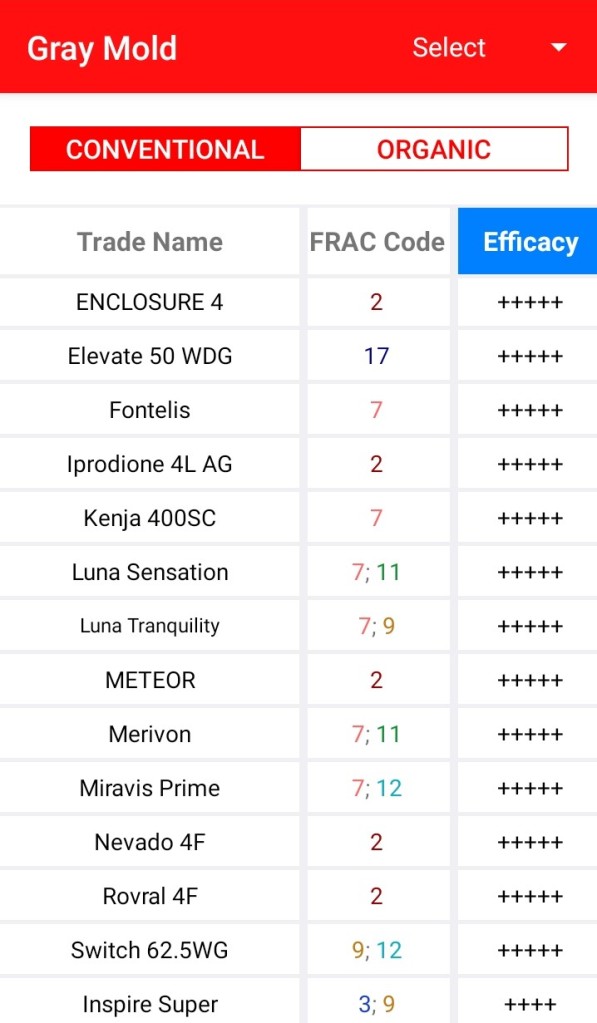
    These are the site specific fungicides listed on the MyIPM app with the best efficacy for Botrytis control on strawberries. It would be a good idea to apply one of these ahead of the rain this week.

    Sarah Scott reports, “Last week’s warm temperatures have pushed peaches into bloom. There was a significant increase in open buds from the beginning to end of the week. Early varieties are near 90% bloom. Temperatures look like they will level out in the next seven days which is good, as temperatures that are way above normal can lead to developmental damage for fruit set. Some pruning is still underway, as well as bloom sprays for blossom blight using products like Captan or chlorothalonil.”

    Upstate

    Andy Rollins reports, “So far peach season is off to a great start. We got all of our chill hours in and are between pink and 5% blooms on all large scale varieties, with a few oddballs further along. Plum growers are even further along and many are preparing for bloom fungicide applications with primarily Bravo (Chlorothalonil). I will be repeating last year’s testing of new biological, Ecoswing, in bloom this week, compared with Bravo. Strawberry production is progressing nicely. This week looks good as far as frost but things change quickly, so all growers will be intimately aware of every weather change at this point. I was very happy to help with a new 10 acre pecan orchard planted last week. It encouraged me because several local growers, a University of Georgia specialist, a retired NRCS conservationist, and myself all worked together to help a widow in need. Her planning and execution was impeccable and diligent.”

    Ten acres of new pecan trees planted last week. Photo from Andy Rollins.
  • What’s Happening? Clemson Extension Agents Provide Crop Updates Across State

    Clemson Extension agents provide updates in the The South Carolina Grower this week about the status of various crops being produced throughout the state.

    Weekly Field Update-3/8/21

    Statewide

    Dr. Matt Cutulle reports, “Anyone planting spring broccoli should be wary of the cold weather we have had regarding soil herbicide interactions. Be careful with Pre-transplant applications of Devrinol and to a lesser extent Dual Magnum, as they can cause some stunting when soil temperatures are cooler. Goal or Goaltender is the safest pre-transplant herbicide applied when the soil temperatures based on field studies in Charleston.”

    Coastal

    Zack Snipes reports, “We had some sunshine last week which really brightened everything up. The last few nights have been cool with some frost on the ground in the mornings. Things are starting to green up, and fields are drying out enough to plant. We are still direct-seeding crops around the region and will begin transplanting tomatoes in some areas this week. I spent last week checking strawberry fields to make sure things were good to go before they really bust out. I have been helping folks calibrate their drip fertigation systems for the upcoming season. If you think you need a hand with this please let me know. Dialing in exactly how much fertilizer to use each day or week can really increase yields and lessen the amount of fertilizer that is leached. Leaching fertilizer means your plants aren’t taking it up, thus costing you money.”

    Venturi type fertigation injector on a strawberry farm.  Dialing in your fertility can really increase yields and reduce leaching of fertilizer. Photo from Zack Snipes.
    A nice patch of ball clover in the drive row of strawberry.  We planted this to hold the soil, reduce sand on the berries, withstand foot traffic and bring in early season beneficial insects to help with thrips control. Photo from Zack Snipes.

    Midlands

    Justin Ballew reports, “We had several beautiful, sunny days last week. The warm days seemed to really push the plants along. Last night, it got cool (29 degrees at my house), and strawberry growers had to pull row covers over the fields to protect the blooms. We have some small, developing fruit now that would easily be damaged without row covers. I’m seeing very few spider mites in fields, even though conditions have turned dry here in the midlands. Remember that Botrytis spore production is high when temperatures are in the 60-to-70 degree range, so we need to be staying on top of our spray programs right now. In other news, brassica planting continues, and for now, caterpillar pressure seems to be light.”

    Small developing strawberries like this one can be damaged easily by the cold. Photo from Justin Ballew
    Internal discoloration of the two strawberries on top indicate cold damage. These fruit will not ripen and will become excellent sources of Botrytis inoculum. Photo from Justin Ballew.

    Pee Dee

    Bruce McLean reports, “Boy, it got a bit chilly last night. Still looking at temperatures for the area, but it would be a safe bet that much of the area saw 28 degrees or lower. Strawberries were covered, so little problems there. Blueberries did see some damage on blooms that had fully opened. Most of the flowers were still in the Early Pink Bud stage or at budbreak, so no damage to those blooms. Frost protection could have saved those flowers and potential fruit, but it is still early in the season. Keeping our fingers crossed that we don’t see any more nights of freezing temperatures.”

    Early pink stage in blueberry flowering. Photo from Bruce McLean.
    Damaged corollas (flowers) on blueberries. Likely experienced 28 degrees or lower. Photo from Bruce McLean.
  • Crop Updates: Clemson Extension Agents Discuss Latest Developments Across State

    Clemson Extension agents provide updates in the The South Carolina Grower this week about the status of various crops being produced throughout the state.

    Weekly Field Update-3/1/21

    Coastal

    Rob Last reports, “Following a few days of warmer conditions, crops are moving on strongly. Flowering and fruit set is occurring in strawberry crops. At present, spider mites in treated crops are at very low populations, but with warmer weather, populations can increase rapidly. As we are entering flowering and fruit set, sanitation and fungicide applications will be required to keep gray mold managed. Remember to rotate FRAC codes to avoid resistance build-up. Fertigation is being applied and it will be well worthwhile taking a tissue test from crops. Blueberries in the area are showing bud swell with early varieties showing open flower.”

    Zack Snipes reports, “With the warm and DRY weather last week and for most of the week this week, farmers have been able to get out and work in the fields. Spring crops are going in the ground where it is dry enough to plant. The warm weather this past week and this coming week will probably push 2020 brassicas to bolt (flower). If you have any left in the fields, it might be best to get them out as soon as possible. Stay on top of sanitation for berries and it’s time to start fertigating them if you haven’t started that already.”

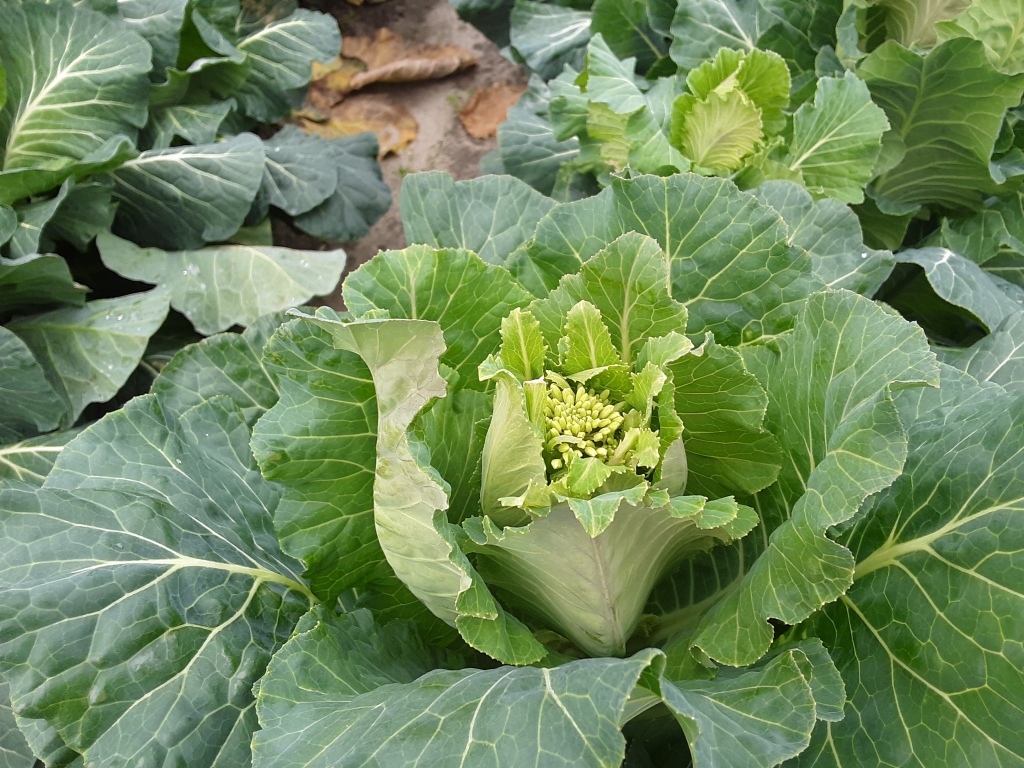
    Warm weather can cause collards that have grown through the winter to bolt (flower). This plant is just beginning to develop a flower head. Photo from Zack Snipes.

    Midlands

    Justin Ballew reports, “We had several beautiful, warm days last week. Strawberry growers used that opportunity to pull the row covers off the fields, allowing the plants to catch some rays. Growth is starting to pick up and I’m seeing many good blooms. The weather conditions are favorable now for Botrytis development (high moisture and temps in the 60s-70s), so we need to begin protecting our blooms with preventative fungicide sprays. Check out this great video put together by Dr. Guido Schnabel’s former student Madeline Dowling for a refresher on the Botrytis life cycle. Download the MyIPM app for more disease and fungicide information. Now is also a good time to start tissue sampling to make sure we’re fertigating the right amounts of nutrients.

    Starting to see plenty of blooms on the strawberries around the midlands. Photo from Justin Ballew.

    Sarah Scott reports, “Growers took advantage of some sunny, dry weather and continued to apply copper and dormant oil sprays in peach fields to combat potential bacterial spot issues, as well as scale in the coming season. Pruning and orchard floor management continue as well as some late planting, due to wet field conditions. Strawberries have been covered to give them a pre-season push. Some mite issues are present but under control.”

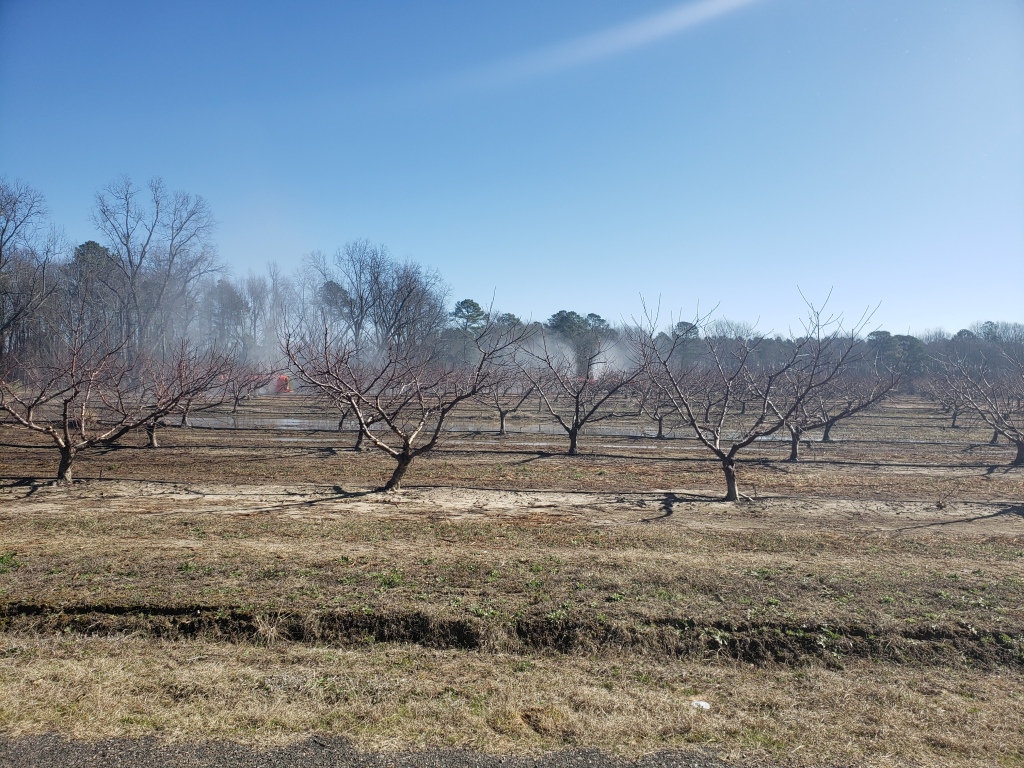
    Workers apply a dormant oil application on peach field in Edgefield Co. Photo from Sarah Scott.

    Upstate

    Kerrie Roach reports, “Growers are working between the rains to finish up pruning. The South Carolina Apple Grower meeting was held on Thursday afternoon virtually with lots of great presentations and discussion. During the meeting, Mike Parker (NCSU) mentioned the distinct difference in apple and peach pruning, and how using the same crews can sometimes lead to problems. Peaches fruit laterally along limbs which means heading cuts (pruning off the tip of a branch) is the common and acceptable practice.  Whereas apples fruit terminally, so heading cuts could potentially remove a significant amount of potential fruit. Make sure crews are well aware of the difference!”

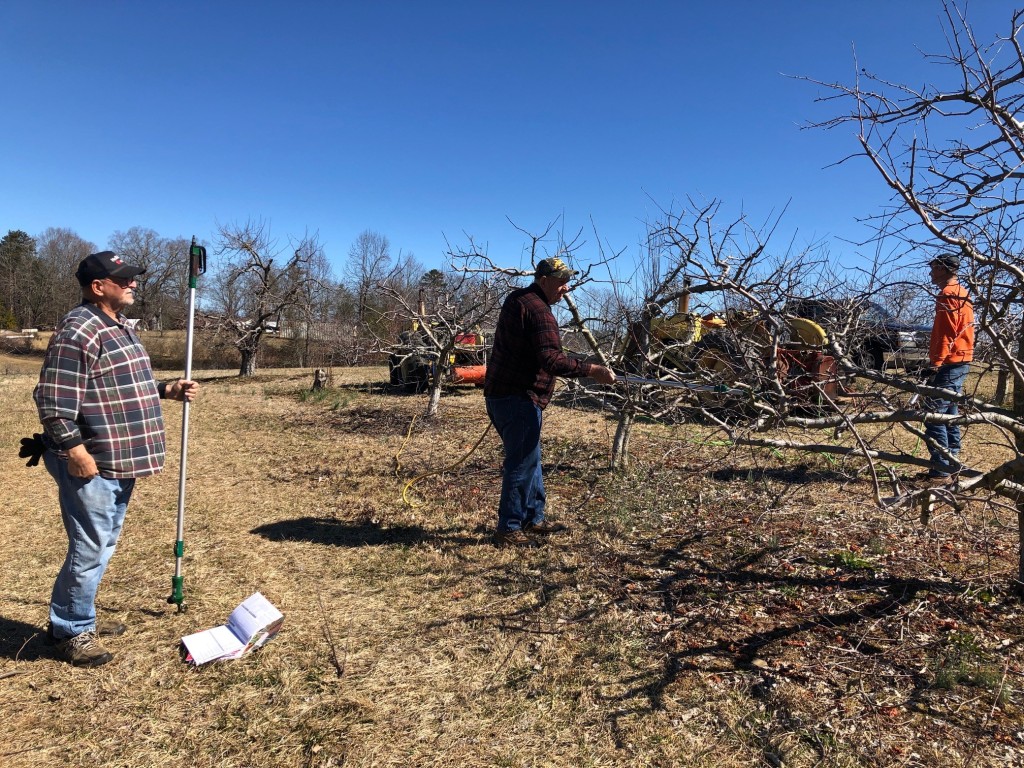
    Pruning apples at Hollifield’s Orchard with pneumatic pruners. Photo from Kerrie Roach.
  • Feeding South Carolina: Food Hub Network Helped Farmers Feed More in 2020

    COLUMBIA — From the field to the table, food distribution in South Carolina was strengthened in 2020. It was due in large part to the South Carolina Food Hub Network. It assisted food distributors in the Palmetto State buy and distribute more than $1.3 million of food grown in South Carolina.

    Weathers

    This strengthened local food systems and aided farmers during the COVID-19 pandemic.

    The Food Hub Network staff collaborated with four South Carolina distributors on their successful applications for contracts through the U.S. Department of Agriculture Farmers to Families Food Box program. Distributors bought, boxed and distributed more than $5 million in fresh food, $1.3 million of it from South Carolina farmers.

    “The South Carolina Food Hub Network has helped build capacity for the state’s food hubs, ultimately helping farmers grow more and feed more people,” said Commissioner of Agriculture Hugh Weathers. “We’ve supported the Network through our Agribusiness Center for Research and Entrepreneurship (ACRE) and Specialty Crop Block Grants, and so far, it’s been a great investment for South Carolinians.”

    Food hubs connect farmers to buyers like restaurants and grocery stores, increasing consumers’ access to local food. Hubs often help identify marketing opportunities and support farmers in crop-planning accordingly, while shouldering some of the burden of marketing and reducing the carbon footprint of buying local through logistics and distribution coordination.

    For more information, see South Carolina Department of Ag.

  • Clemson Extension Agents Provide Crop Updates

    Clemson Extension agents provide updates in the The South Carolina Grower this week about the status of various crops being produced throughout the state.

    Weekly Field Update

    Coastal

    Zack Snipes reports, “Another rainy, wet and cold week last week. Some sunshine and warmer temperatures coming this week. All of our fruit crops have received their chill hours and are just waiting to burst out for spring. I expect to really see fruit crops take off this week. Make sure that you have a fertility plan for the spring crop. Don’t let your crop be without fertility at the critical moments. For more information on fruit fertility, visit https://smallfruits.org/ipm-production-guides/. For smaller farms, Clemson’s Home Garden and Information Center is a wonderful resource as well.”

    Early varieties of highbush blueberries are in bloom right now. Photo from Zack Snipes.

    Midlands

    Justin Ballew reports, “To say last week was wet would be an understatement. We received about 4 inches of rain at my house last week, and the ground was already saturated before it started. I’ve seen water standing even in sandy fields. On the bright side, irrigation ponds are looking full. Most strawberry growers have covered their fields to protect the blooms now. This means we should start seeing our first ripe fruit around mid-March. Don’t forget to start tissue sampling so we can make sure the plants are getting everything they need as they are beginning to produce fruit.”

    Row covers on a strawberry field protect the blooms from late winter/early spring cold. Photo from Justin Ballew.

    Pee Dee

    Bruce McLean reports, “Wet, wet, wet… Last week’s rain has caused some significant ponding and flooding throughout the Pee Dee. Last week, I had a number of conversations with growers concerning application of fumigants for early crops – timing, too wet, how effective? Not a lot of good options with soil moisture being so high, right now. We really need some sunshine and a steady breeze to help dry fields out. Wet fields are preventing spraying, hindering application of row covers and hindering pruning of perennial crops (blueberries, muscadines, and blackberries). Some crops are starting to “back up” due to the wet soils. An application of mefenoxam (Ridomil) or phosphorous acid (K-phite), in locations where root rot is suspected, would be beneficial.”

    Upstate

    Kerrie Roach reports, “A beautiful weekend of weather was much needed for fruit tree growers getting in orchards and finishing up dormant pruning for the year. Pruning out dead, diseased, and damaged limbs, opening the canopy, and reducing overall vegetative growth is extremely important for tree fruit integrated pest management (IPM). Pruning increases light penetration and air movement, reducing disease potential, and also allows for better spray coverage during application. More rain today and even more projected toward the end of the week will continue to delay any kind of field work, as the ground is oversaturated. Don’t forget, this Thursday is the SC Apple Grower Meeting via Zoom from 2 p.m.- 4 p.m.! Check it out on the upcoming events page!

    Andy Rollins reports, “Found major scale problem on large scale muscadine producer’s farm. Scale was identified on the main scaffolds and also on last year’s wood. Mineral oil (Damoil) is labeled but is recommended at much lower rate than other fruits. Only 1% by volume or 1 gallon per 100 gallons of water, but needs 200 gallons of total solution applied per acre to get sufficient coverage. This is because the oil needs to get into very tight areas where the scale can reside. We also recommended the use of a labeled insecticide with the oil to increase efficacy. Once the plants come out of dormancy, other products are available but determination will be made at that time if necessary. Peach and strawberry production had no major issues to address. One strawberry farm began picking the last week of January this year in high tunnel production and picked 30 flats of fruit and is still producing.

    Scale on the main scaffolds of muscadines. Photo from Andy Rollins.